Gentleman Dave

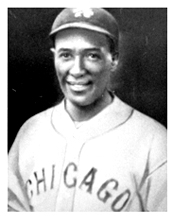
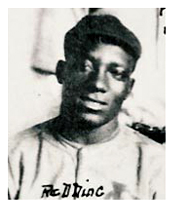
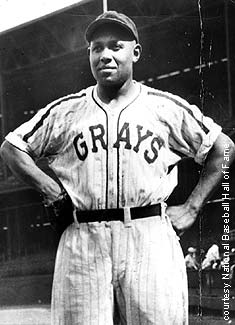
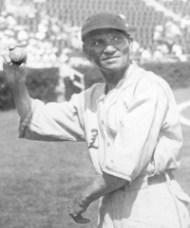
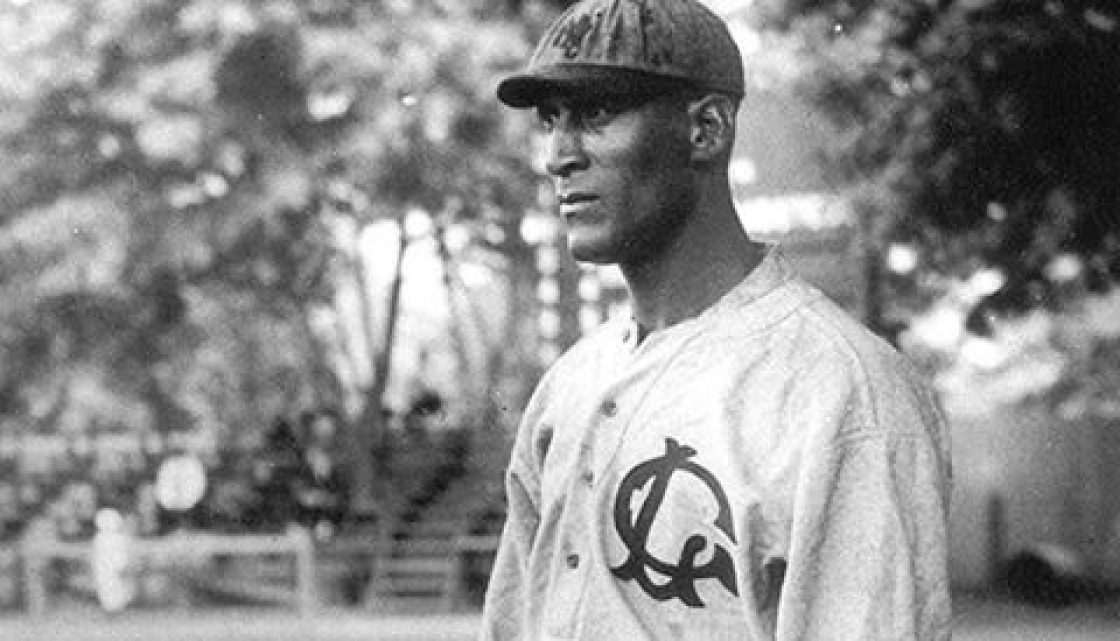
ImageAbove is a photo (courtesy of the Negro Leagues Baseball Museum’s biography on the K-State Web page) of Gentleman Dave Malarcher, one of the most underappreciated figures in Negro Leagues history. A native of tiny Union, La., and a graduate of New Orleans University, Gentleman Dave was respected by, I dare say, every single one of his peers in the Negro Leagues. An intellectual as well as a talented ballplayer and, later, manager supreme, Malarcher was a true Renaissance man. Here’s a link to an article I wrote about him for the Dillard University alumni magazine:

http://www.dillard.edu/index.php?option=com_content&view=article&id=1396:new-orleans-university-produces-baseball-great&Itemid=890

I’ll write more on Gentleman Dave tomorrow.

Also, a quick update on the mysterious, mental-hospital deaths of Sol White and Dick Redding: I’ve mailed an official request to Pilgrim State Hospital on Long Island for the release of both of their records. I’m waiting to see what becomes of that. It might involve a whole lot of legal red tape; many medical records are covered by privacy laws that vary from state to state.

I also need to inquire about receiving full death certificates for both of them. But again, New York State might throw up legal barriers to that because I’m not a direct relative or descendant. We’ll see.

Woo hoo!

Image

Imagine that being said by Homer Simpson. That’s the type of excitement I’m shooting for here …

I know I said in my post yesterday that I’d follow up on the mysteries of Sol White and Cannonball Redding, but I just got some good news … my proposal on Detroit native and early-20th-century player William H. Binga has been accepted for a presentation at the Society for American Baseball Research’s annual Jerry Malloy Negro Leagues conference in Detroit in August!

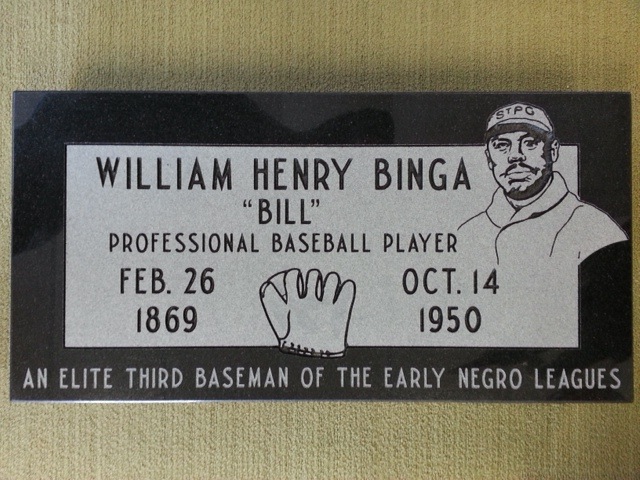
This will be my third Malloy conference as an attendee but my first as a presenter, so I’ll be both nervous and excited. The theme of the presentation will be two-fold: One, the Negro League Baseball Grave Marker Project’s success in placing a burial stone at Bill Binga’s grave (the marker is pictured above, courtesy of NLBGMP founder Jeremy Krock); and two, Bill Binga’s place in an extensive family tree that includes escaped slaves, Underground Railroad “engineers,” one of the most successful African-American bankers in history and a legendary athlete-turned-groundbreaking doctor.

Generously assisting me in the presentation will be Detroit native and Binga family member C. Rae White, who has done extensive genealogical research into the Binga family’s history: Here’s a link to C. Rae’s own blog, Life is Good:

http://stylesource01.wordpress.com/

Here’s a link to SABR’s Negro Leagues Committee page, with includes early info on the Detroit Malloy conference:

http://sabr.org/malloy

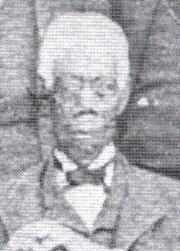
Many thanks to Dr. Leslie Heaphy and the rest of the Malloy committee that reviewed and selected the presentations for the conference. In the coming weeks and months I’m going to try to post some more info about Bill Binga. To sign off, below is a photo from (if my memory serves) the mid-19th century of Anthony Binga Sr., who was sort of the patriarch and wellspring of the extensive Binga family. The photo is courtesy of C. Rae’s blog.

Image

Blackball mystery(ies)

ImageImageThe photo on the left (courtesy of the Society for American Baseball Research, of which I’m a member) is King Solomon “Sol” White, a Baseball Hall of Famer and legendary pre-Negro League player, manager, owner, author and historian. Some say that if Rube Foster was the “Father of the Negro Leagues,” then Sol White was the “Grandfather of the Negro Leagues.”

On May 10, the nationally known Negro League Baseball Grave Marker Project (NLBGMP), headed by Jeremy Krock, will hold a dedication ceremony for the stone the charity has placed at Sol White’s previously unmarked grave at Frederick Douglass Memorial Cemetery on Staten Island. For more information on the NLBGMP, check out researcher/historian/author/SABR committee chair Larry Lester’s “Krock Watch” here (hope the link works, I’m new at this):

http://www.larrylester42.com/krock-watch.html.

As a side note, I’ve actually done a couple stories about other beneficiaries of the NLBGMP:

http://www.nuvo.net/indianapolis/the-first-female-negro-leagues-owner-here-in-indy/Content?oid=2720964#.Uz4a0BxiDg4

http://www.philly.com/philly/sports/phillies/Philly_Negro_League_star_Bill_Francis_to_have_grave_marked_.html

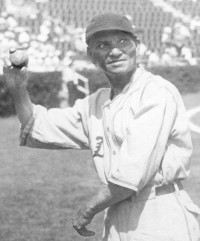
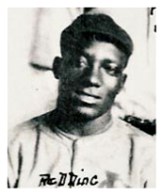
The photo on the right, courtesy of the Negro League Baseball Museum’s bio on the Kansas State U. Web site, is famed Negro Leagues pitcher Cannonball Dick Redding, whose fastball was known to rival those of Hall of Famers Joe Williams and Satchel Paige. However, Redding isn’t in the Hall himself, which many in the Negro Leagues committee consider a huge oversight on Cooperstown’s part.

The fact that Redding, unlike Sol, isn’t in the HoF is one way their stories differ. In addition, unlike White, Redding does have a grave marker; thanks to his service in World War I, Cannonball was afforded a full military burial.

But the two Negro League legends are alike in one key way: They both died in state-run psychiatric hospitals in Suffolk County, N.Y., on Long Island. Sol White passed away at Central Islip State Hospital in 1955 after nearly six years at the institution, while Redding died at nearby Pilgrim State Hospital in 1948. Pilgrim and Central Islip, by the way, were, at their peaks, the largest and second-largest psychiatric institutions in the world. They were both quite literally their own self-contained, self-sufficient villages. That’s how massive they were.

The catch: It’s unlike why exactly either Sol White or Dick Redding — who both lived in Harlem after their retirements — were committed to state “mental asylums.” It’s also very unclear exactly how each of them died.

That’s the mystery, and it’s one I’ll explore a little bit in tomorrow’s post.
 

Warning: Self-serving post ahead

This post will, quite frankly and essentially, be an advertisement. In addition to being a writer, I’m also a (more or less) professional researcher. If anyone would like some help and/or guidance doing research on a Negro Leagues subject, or any broader sports history subject, I can help for a little scratch. Just contact me through this blog or at rwhirty218@yahoo.com.

What cost Thorpe his medals

NO_2014-03-28__C06_SPOR_FI___

A PDF of a story I did last week for the Raleigh News & Observer about Jim Thorpe and why he lost his medals. It’s technically not a Negro Leagues subject, but it is about ethnicity in baseball.

Looking for dignity in death

Looking for dignity in death

Here’s an article I did recently for the Detroit alt-weekly about Cecil Kaiser, a high-profile Negro Leaguer who is nonetheless buried in an unmarked grave. Maybe there could be a grass-roots movement to give Mr. Kaiser some dignity in death.

NLBM Hall of Game

NLBM Hall of Game

The Negro Leagues Baseball Museum is about to unveil its Hall of Game, which will induct and honor baseball figures who represent and exude the spirit of the Negro Leagues and the men and women who made African-American baseball happen.

Hello from the shadows of the game

Well, this is it. This is what I’ve been hoping to do for a long, long time — start a blog about the Negro Leagues and other pre-integration African-American baseball. For a few weeks, I’ll doubtlessly be shaking out the kinks and learning the WordPress ropes.

However, I won’t waste any time delving into what I’m setting out to do — spread the word about the history of the long-forgotten men (and a few remarkable women) who for so long were forced to play the American pastime under the shadow of segregation.

The name of my blog — Home Plate Don’t Move — comes from a quote from the one and only Satchel Paige, who was giving advice about pitching to win by placing the ball were you want it because, well, home plate don’t move. It’s stationary, and it’s yours to master. Home plate is the same in every baseball game, at every level of the sport and in every far-flung locale in which the game is played. The plate is universal.

And for decades — roughly a century, in fact, — home plate was the same in the Negro Leagues as it was in so-called “organized baseball.” African-Americans played the exact same game whites did. They just did it, as many authors and historians have said, in the shadows.

That should pass for an introduction to what I’m doing. I’ve included in this post a famous picture of my favorite Negro Leagues player — Hall of Famer Walter Fenner “Buck” Leonard, with whom I had the extreme pleasure and thrill of talking before he passed away in 1997. During his Hall induction speech in 1972 — when he and Josh Gibson became the second and third Negro Leaguers enshrined in Cooperstown’s hallowed halls, after ol’ Satch — Buck exuded the humble, self-effacing, proud dignity that countless African-American players displayed throughout their careers despite the indignities and traumas of segregation. “I will do everything in my power,” he told the assembled throng of fans, “to honor and uphold the integrity of baseball.”

What more needs to be said?

leonard_buck_1

Go back

Your message has been sent

Warning
Warning
Warning
Warning

Warning.