Geddy doesn’t want to talk to me

Image

I was hoping to somehow land an interview with Geddy Lee, the singer/bassist for the classic/prog rock band Rush because of his love of baseball and its history and, especially, his massive donations to the Negro Leagues Baseball Museum. So I e-mailed the band’s talent agency, SRO-Anthem, and got this reply:

Thank you, but we’ll politely have decline the request at this time.”

I was a huge Rush fan in high school. My favorite album was “Hemisphere.” Now I’m a sad, sad panda.

The truth is out there

I just traded e-mails with a couple very knowledgeable sources about the 1925 murder in Harlem of South Carolina native Benjamin Adair and the possible connection to the incident of baseball stars Dave Brown, Frank Wickware and Oliver Marcell.

One of the people I’ve been e-mailing with is Gary Ashwill — who just today published a post to his blog much like mine here — one of the most dogged researchers of the Negro Leagues and other baseball topics I have ever met. He’s blogged in the past about Dave Brown at one time being charged with Adair’s murder and the apparent arrest of Brown roughly a dozen years later in Greensboro, N.C.

But Gary isn’t positive that the Dave Brown nabbed in the Tar Heel state on a totally unrelated charge is, in fact, the great Dave Brown, Negro Leagues twirler extraordinaire. It simply remains a mystery regarding whatever ended up happening with Dave Brown.

The second person I traded messages with was an ex-NYPD officer who said that the Adair case would, at this point, be housed in the NYPD Cold Case unit because it technically remains unsolved. He also warned that matters “things not always being what they appear to be, don’t rule out mistaken identity.  Not every murderer kills the person he/she intended to kill.” 

Perhaps that fact, he said, is why such incidents as mysterious murders are so intriguing to people. Just look, for example, at the unbelievably massive research/writing/speculation/fictionalization that has been done on Jack the Ripper in the last 150 years.

The Adair case, combined with my probing of the last years and deaths of Sol White and Dick Redding in Long Island mental hospitals — a challenge that Gary has offered to help me with, btw — as well as several other subjects, has just finally made me realize how much mystery and just plain unknown there is in the history of the Negro Leagues. Just so, so much remains unsolved, and perhaps always will be.

And some of it just makes no sense on the face of it. Take, for example, the case of 19th century St. Louis businessman, political activist, gambler and base ball mogul Henry Bridgewater. The guy was a titan in the 19th century blackball scene. He was also extremely wealthy. And yet he’s on the list of possibilities for the Negro Leagues Baseball Grave Marker Project. Professor James Brunson, the preeminent expert on black base ball in the 1800s, told me the fact that such a successful rich man is seemingly buried in an unmarked grave just, well, makes no sense. Perhaps, James said, Bridgewater’s headstone was stolen or otherwise lost. The situation just begs the simple question: Why?

Another case in point: The origins of Hall of Fame hurler Cyclone Joe Williams, a subject that has piqued my interest because Joe was reportedly of mixed black and Native-American ancestry. We know that he came from somewhere in Guadalupe County, Texas, probably the small town of Seguin and was born sometime in the 1880s.

But the following information just amazes. With the aide of Bill Staples Jr., I’ve found that the 1900 Census lists two families in Guadalupe County that could be the ones we’re looking for. One family has a “Joe William” (no s) born in 1886, with a mother named “Lillie William.” But the other family has a “Joe Williams” born in 1880 with a mother named “Lottie Williams.”

Given that at the time, birth certificates weren’t required in Texas, and that, unfortunately, both families were African-American, and the establishment in the South, including Texas, didn’t exactly concern itself too much with anything to do with their black residents — as long as they stayed away from whites, of course — the ongoing confusion about Cyclone’s roots is as understandable as it is frustration.

ill, by the way, tends to believe that the “Joe William” born in 1886 is, in fact, the one that went on to a Hall of Fame pitching career, and I definitely agree with him.

But the mysteries don’t end there. If Cyclone was, in fact, part-Native American, exactly what tribe is he linked to? Some biographies say he was part Comanche; others say Cherokee. Two very distinct and unique cultures.

And trying to chronicle Joe’s Indian ancestry will almost certainly enter into a rat’s nest of mystery, given the massive upheaval in the American West in the 19th, caused by our country’s theft of the natives homeland and livelihood, all in the name of “Manifest Destiny” and “the White Man’s Burden.” What are country did in the 19th century was, quite simply, genocide.

So, when you take the two strains of Joe Williams’ heritage, one is almost certainly rooted in slavery, and the other is grounded amidst a backdrop of genocide. How can anyone possibly prove where Joe Williams came from?

I apologize for rambling here. It’s just that at times like these, it’s hard not to get overwhelmed with all the work we researchers, historians and journalists have to do, and with the knowledge that, no matter how hard we work, we might never know who killed Benjamin Adair, or why Dick Redding was committed to and died in an insane asylum/house of horrors, or if Joe Williams was Comanche, Cherokee or even Indian at all.

But while it’s overwhelming, it’s all the more reason to keep at it, to keep pursuing the truth. Not to veer too far off the path, but to quote one of my heroes and favorite TV shows (Fox Mulder and “The X-Files”), “The truth is out there.”

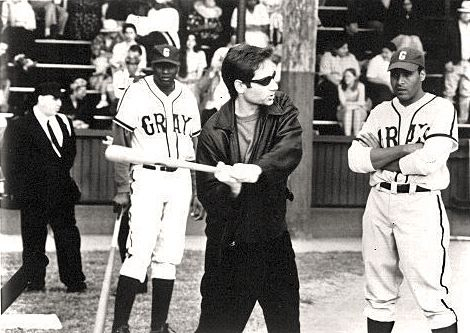
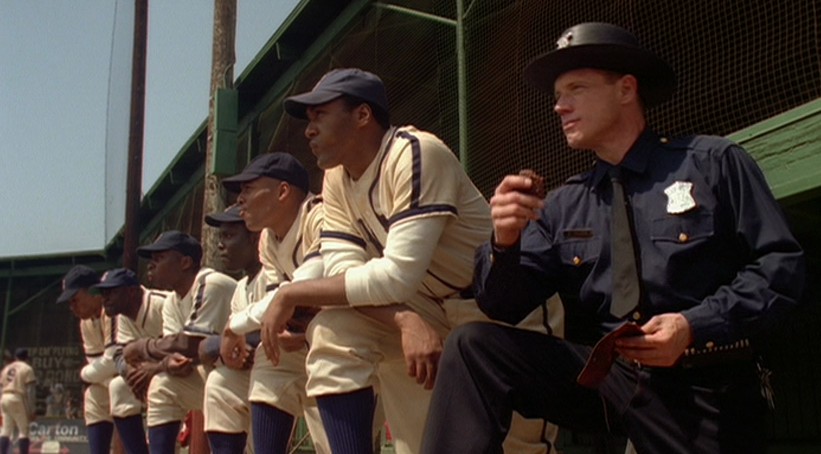
Obviously the truth we as Negro League historians doesn’t involve little green men or flukemen … or does it? tumblr_lkjr66r2Cc1qg6jp5o1_500 There was an episode of The X-Files called “The Unnatural,” which was a brilliant look at the Negro Leagues placed in the context of alien visits. I know, it seems impossible, but if you can ever watch it, definitely do. It’s very touching and might even choke you up in the end.

It also features David Duchovny wearing a Josh Gibson jersey. Pretty cool. (And yes, that is indeed Jesse L. Martin, aka Det. Green from “Law & Order,” playing the role of Josh Exley, an homage to the real Josh). ExleyGreysDale

Bukka the baseball player?

Image

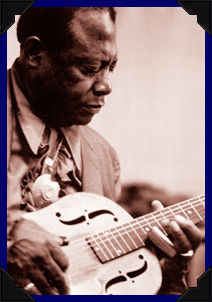
In addition to being a baseball history enthusiast, I’m also a major music fan, and my favorite genre is the blues. Those two interests might intersect with the guy above, Booker T. “Bukka” White, a singer/guitarist/occasional piano player who recorded and played live for roughly a half-century, beginning in the late 1920s and running until his death in 1977. Bukka was an early purveyor of the country, i.e. largely acoustic guitar-based, blues as espoused by everyone from Blind Willie McTell to Son House to Blind Lemon Jefferson.

As it turns out, the stories of many early blues musicians are very similar to those of Negro Leaguers — fascinating and mysterious, thrilling but clouded by fragmented memories and tall tales. In White’s case, one of those tall tales and points of braggadocio might have been an apparent boast that at one point, he supplemented his music income by playing semipro/professional baseball with all-black, segregation-era teams.

This assertion has been repeated so many times biographers that it’s become accepted fact. But the true fact is that there’s just about zero actual evidence to support such a claim. In the book, “Traditional Tennessee Singers,” edited by Thomas G. Burton, White is quoted as saying he starred for the stellar Birmingham Black Cats.

The problem is, however, if such a team even existed — let alone included Bukka on its roster — there is pretty much nada in terms of a record of it. I scoured several online newspaper and other databases, and all of the Negro Leagues experts to whom I spoke had never come across any evidence that White did, in fact, play pro ball and had never heard of a team called the Birmingham Black Cats.

There was, of course, the Birmingham Black Barons, that city’s primary Negro Leagues team for years, and there was the lower-level, barnstorming team, the Laurel (Miss.) Black Cats. Dr. Layton Revel of the Center for Negro League Baseball Research, who would know if anyone did, says it’s possible that White meant the Laurel Black Cats, given that he was born and raised in Mississippi. Dr. Revel adds that he’s never found any mention of a Booker or Bukka White with the Birmingham Black Barons.

So did Bukka White play in the Negro Leagues? It’s of course possible, given that White is a very common name that whows up in countless game box scores over the years. But on the other hand, there is zero evidence that any of those Whites are him.

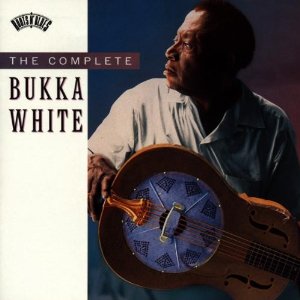
But, man oh man, his music is fantastic. If you want a starter CD to test out Bukka’s stuff, try this one, a popular Columbia compilation:

Image

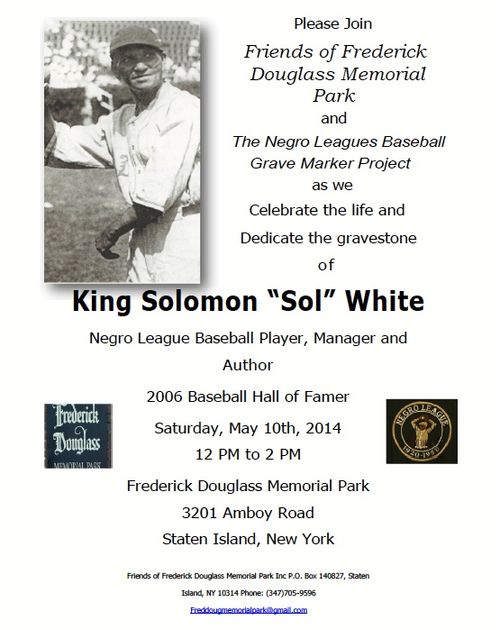
Dignity at long last for Sol White

Here’s an article I had published Sunday in the Staten Island Advance on the grave marker dedication for Sol White this coming Saturday:

Thanks to Gary Ashwill, Patricia Willis of the Friends of Douglass Park and Jeremy Krock of the NLBGMP for being willing to answer some questions for my story. If you’re within a day trip’s driving distance of Staten Island, think about attending the ceremony Saturday. I wish I could be there, but, alas, NYC is a wee bit of a drive from NOLA.

Here’s a poster/flyer for the event, courtesy of Gary’s blog:

6a00d8341ccce053ef01a73dbb9089970d-500wi

A murder in Harlem

Here’s something I’ve been investigating and slowly pulling together for a couple months. I’ve written up the start of a possible freelance article. It’s an intro, so it hasn’t filled in a bunch of questions and plot points. However, hopefully those will come in time. Anyway, without further ado, here’s the text:

On Sunday, April 26, 1925, New York City’s Lincoln Giants opened their Eastern Colored League season by sweeping Atlantic City’s Bacharach Giants in a doubleheader, 6-1 and 4-3, as about 7,000 fans watched at New York’s catholic Protectory Oval.

In the first game, Lincoln Giants pitcher Dave Brown out-dueled the Bacharachs’ “Rats” Henderson on the mound in Game 1. While the Atlantic City crew outhit the Big Apple bunch, 7-6, the hits Brown did give up were scattered, while the Lincolns were able to efficiently bunch their blows off Henderson.

Taking the field for the Lincoln Giants in both games was also Oliver Marcell, one of the best third basemen in blackball. But on this day, the Louisiana native couldn’t manage any hits and only scored one run.

The Lincolns roster at the time also included pitcher Frank “Rawhide” Wickware, who, at his prime, was the equal of any hurler in the game, black or white.

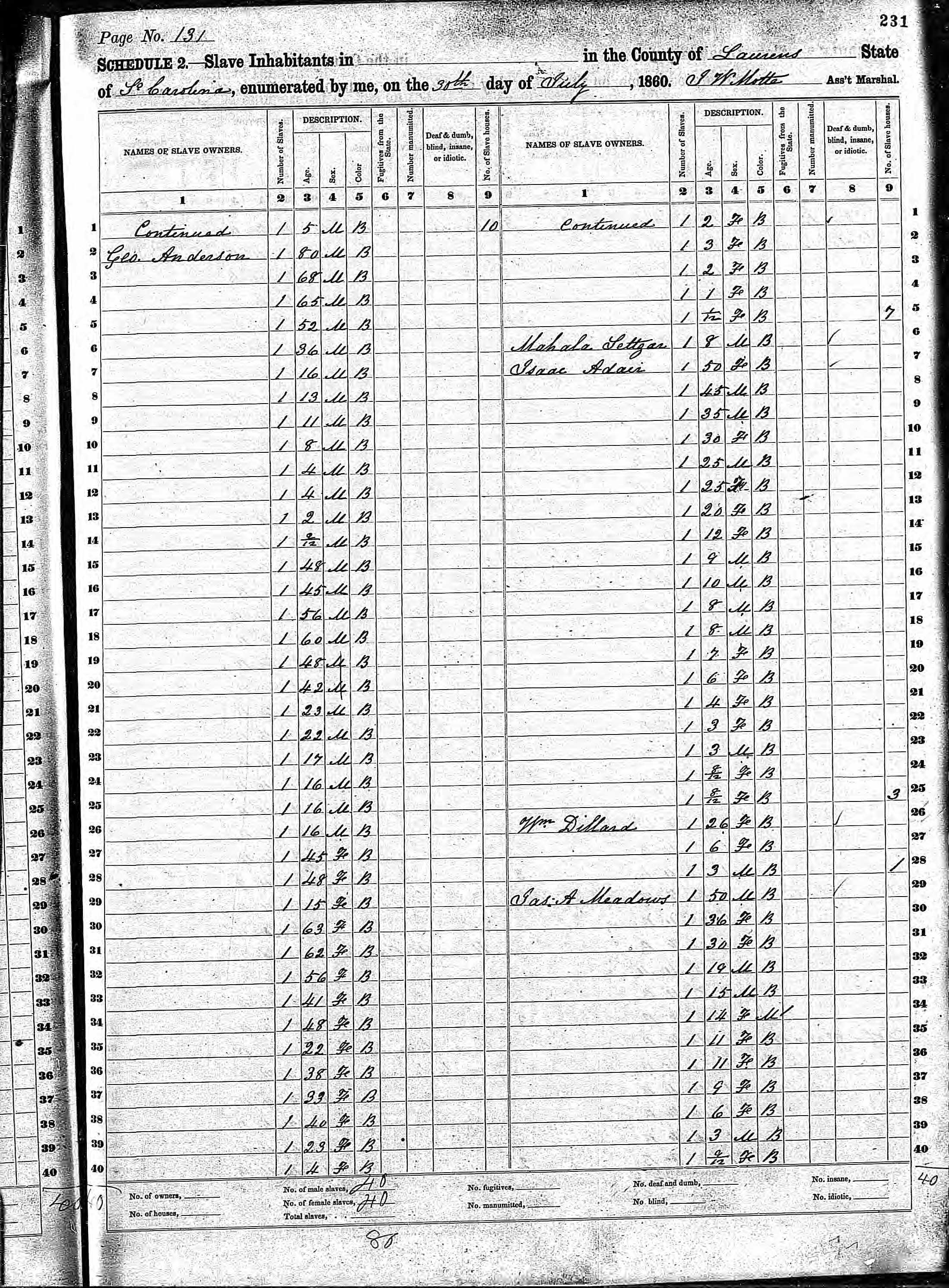
About a day and a half later, in the wee hours of April 28, local longshoreman Benjamin Adair — a 29-year-old Harlem resident who had migrated to New York from rural Laurens County, South Carolina, and was living at 61 West 135th Street — was shot once in the chest just a few doors down from his home as he was walking with friends.

The bullet was powerful enough to pierce Adair’s sternum, heart and esophagus. According to early media reports, a total of four shots were fired. Immediately after the blasts rang out and Adair crumpled to the ground, a quartet of mysterious, unknown assailants hopped in a taxi and fled the scene.

NYPD patrolman William XXXXXXXXX, a beat cop, rushed to the scene, and police manhunt was quickly launched in search of the alleged murderers. However, any sort of reason was completely unclear in the immediate wake of the crime. “[Adair’s] three companions said they saw no one,” stated the May 2 Philadelphia Tribune in an April 30 report, “and police could not find the revolver or discover any motive for the killing.”

Adair, meanwhile, was rushed to Harlem Hospital, where he was pronounced dead at 3:45 a.m. the same morning by city medical examiners, who conducted an autopsy and confirmed Adair’s death as a homicide.

Adair left behind a widow, 28-year-old Florida native Claudia Adair, and was buried five days later.

A couple weeks following Adair’s murder, law enforcement authorities were searching for Dave Brown, Oliver Marcell and Frank Wickware in Atlantic City in relation to the crime.

They were not immediately successful in finding the trio of star ballplayers, and the exact circumstances of the killing were still cloudy more than two weeks after Benjamin Adair had a hole blasted in his chest in front of his home. Were the three athletes suspects in the crime, or were they witnesses? One press reported stated simply that the trio “are said to be connected with the killing …”

The details were frustratingly, agonizingly unclear.

At least two of the players, however — Brown and Wickware — were eventually charged with the murder. But on May 16, Wickware was freed by a Manhattan court, the charges against him dropped. “The move came after the district attorney stated,” reported the May 23 Chicago Defender, “that his office held no evidence against the accused to connect him with the murder.” The Defender article stated that at the time, Wickware was living at 508 W. 135th Street, just a few blocks away from Adair.

By the end of that decade, the careers of the three players — Brown, Marcell and Wickware — were all effectively over, the concluding precipitous slides that seemed to either begin or accelerate with the Adair incident.

Even by the 1925 murder, all three men had garnered reputations for rowdiness and a fondness for the bottle.

The same May 1925 Chicago Defender article, for example, that reported Wickware’s release from the murder charges bluntly stated that the pitcher’s “failure to keep in condition” had already cost him several career opportunities. And true enough, 1925 was to prove Wickware’s last season of professional baseball. He subsequently retired to upstate New York, faded into obscurity and died in 1967 at the age of 79.

Marcell suffered an even more ignominious decline and eventual fate. Always known for his hotheadedness, during the winter of 1927-28, while he was playing in a Cuban league, Marcell has his nose bitten off by teammate Frank Warfield after their dice game erupted into a fight. The following season Negro Leagues season, 1928, proved to be Marcell’s last, and he died penniless in Denver in 1949 and was buried in a grave that was unmarked for more than four decades.

Dave Brown, meanwhile, for all intents and purposes, vanished into the ether. His name disappeared from game reports and newspaper sports pages. Some observers — and now, in a new millennium, Negro Leagues historians — believed and still believe that Brown managed to continue his pitching career by competing under one of more aliases, such as “Lefty” Wilson.

Brown didn’t appear on the radar again until July 27, 1938, when he was detained by Greensboro, N.C., police after he allegedly clubbed with a sandbag and robbed another man in an apartment. According to media reports of the day — and dogged modern research by well known baseball historian Gary Ashwill — police in North Carolina and in New York, as well as FBI agents, put two and two together and identified Brown as the man who was still, more than 13 years after Adair’s death, wanted for the South Carolina native’s murder.

After that, no one knows exactly what happened to Dave Brown.

OK, that’s what I have so far. If you want to check out more, here’s Benjamin Adair’s NYC death certificate. While a fair amount has been written about the murder itself, as well as the possible baseball perpetrators, by Gary Ashwill and myself, nothing about the victim’s background has been explored, and to me, that’s a crucial part of the equation that’s being left out.

Also, here’s a 1920 U.S. Census page that documents who I believe is the eventual murder victim, Ben Adair:
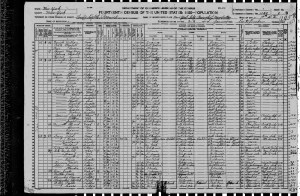
4314014-01134

And here is what I believe is a U.S. slave schedule from 1860 that reveals Adair’s roots in Laurens County, S.C.:
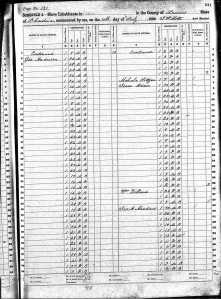
SCM653_1233-0468

I will certainly continue to pursue this. I think my fascination with this incident stems partly from my journalistic beginnings as a hard-news and investigative reporter. But it’s also just a compelling historical narrative.
Congrats to Mr. Simpson

Just a quick post or two today. I hope to have something bigger tomorrow.

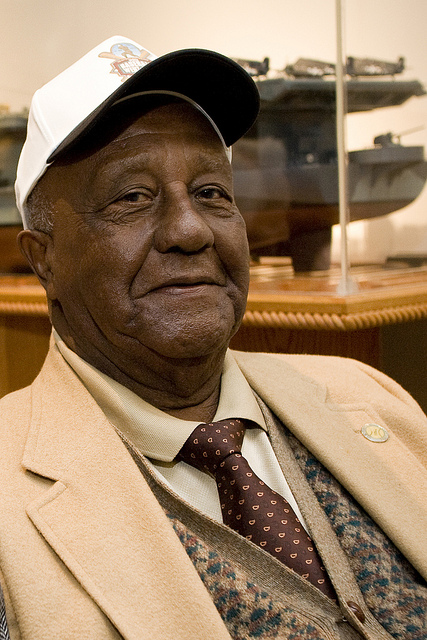
In this one, I want to congratulate Herb Simpson, a lifelong New Orleans resident (in the Algiers neighborhood, to be precise) and former Negro League player who, this past weekend, became, as far as I can tell, the first pre-integration African-American figure inducted into the New Orleans Professional Baseball Hall of Fame.

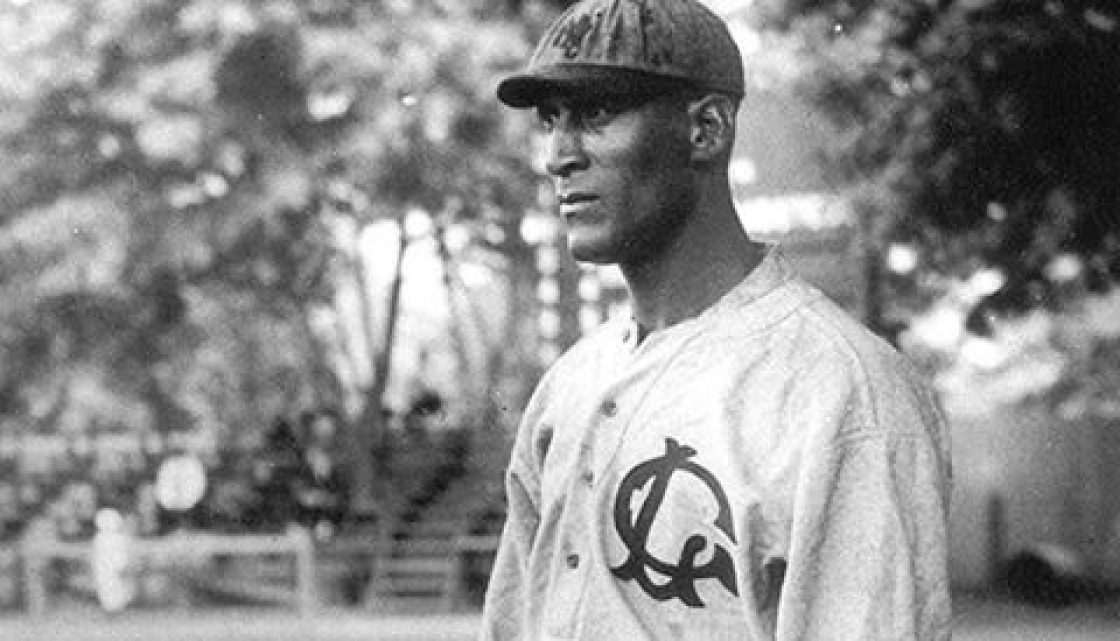
Here are a couple shots of Mr. Simpson, “then and now”:

simpson

"When Baseball Went to War"  Celebrity and Guest Event at WWII M

The NOPBHOF is sponsored by the New Orleans Zephyrs, the local Triple-A affiliate of the Miami Marlins. For years, the institution had committed a grave injustice by overlooking Negro Leaguers like Herb. Hopefully more will follow, especially Dave Malarcher, Oliver Marcell, Allen Page, Wesley Barrow, Peanuts Davis, etc. …

I’ve spoken with Mr. Simpson several times, and aside from being a bit hard of hearing, he’s a great interviewee and great person. Last year, the 93-year-old (!!!!) was honored by the Seattle Mariners as the last known surviving player from the Seattle Steelheads, a member of the short-lived West Coast Negro Baseball League in 1946. He got to meet Ken Griffey Jr., who was being inducted into the Mariners’ hall of fame on the same night. Here is a Mariners press release from that night. In addition, here is a post by Mariners club blogger Lorrie Ericson.

I also interviewed Mr. Simpson for an article last year in Seattle Magazine.