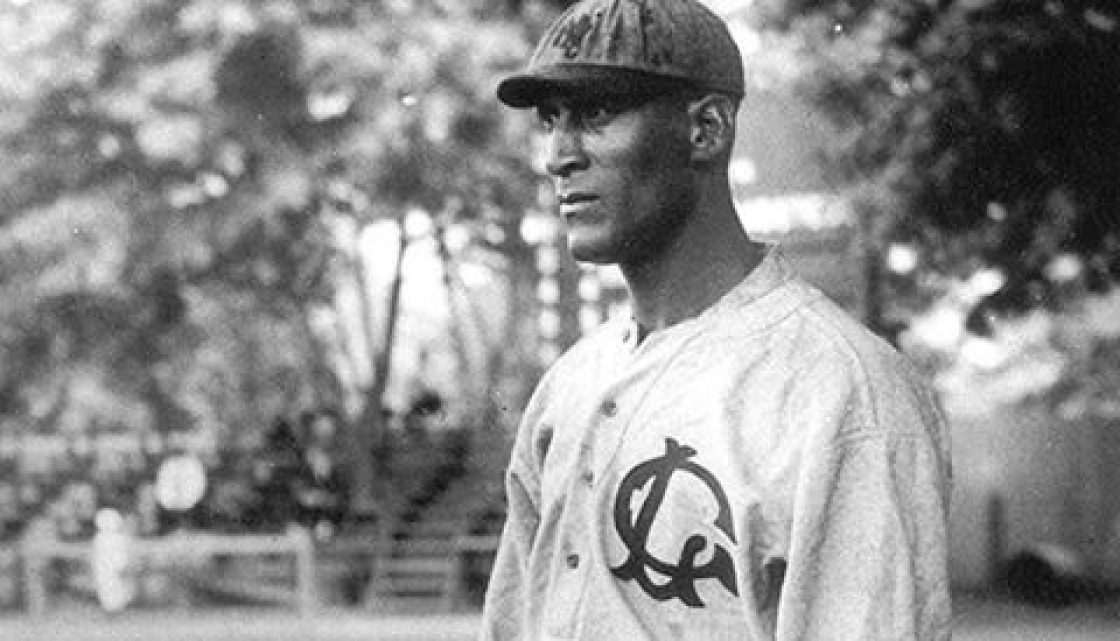
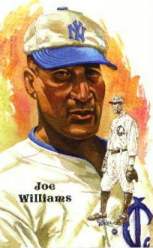
(Illustration from Negro Leagues Baseball Players Association Website)
While my writing and research focus is generally on the Negro Leagues and other African-American baseball subjects, I’m also interested in other minority baseball history, which is reflected by (bragging ahead) recent articles in Jewish player Lip Pike and Jim Thorpe’s time on a team in Rocky Mount, N.C.
I’m especially keen on Native Americans in baseball, and when that subject intersects with the Negro Leagues … whew, I’m elated!
Such is the case with Hall of Fame pitcher Cyclone Joe Williams, who is often mentioned in the same breath as Satchel Paige for the title of greatest pre-integration black twirler ever. What fascinates me is the fact that most of the more extensive biographies of Seguin, Texas, native Williams assert that he is part Native-American. Most often he is reported as Cherokee, probably on his mother’s side, or occasionally he’s tabbed as part Comanche.
I spoke with Royse “Crash” Parr, a member of both SABR and the Cherokee Nation, this morning about Joe Williams’ possible Native-American ancestry. Royse said he believes that Cyclone actually had indigenous blood on both sides of his family. However, Royse added, “It’s never been confirmed that (Williams) was part Indian” and that he (Royse) is “pretty sure he’s not on any tribal rolls or anything like that.”
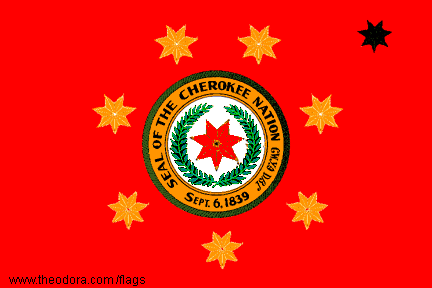
I asked Royse about the discrepancy between varies Cyclone bios regarding the pitcher’s exact Indian lineage, i.e. Cherokee or Comanche, and he said that “if I had to guess, it would be Cherokee.”
Now, there’s a significant historical and geographical difference between Cherokees and Comanches — while both modern, federally recognized nations are located mainly in Oklahoma, the two tribes have very different roots, certainly geographically and also culturally speaking. The Cherokees were originally from the southeastern part of the country and were one of the main groups forced out of their ancestral homeland on the Trail of Tears. That’s how the modern Cherokee Nation ended up in the lower Midwest. Comanches, meanwhile, were very spread out, covering parts of what is now Texas, New Mexico, Kansas, Oklahoma and Colorado.
So we have to consider that by the time Joe Williams was born, both the Cherokee and the Comanche had fairly large populations in Oklahoma and Texas, so Williams and his family could feasibly have been either. But, as Royse said, the most accurate guess is probably Cherokee.
A fair amount of research has been conducted into the details of Cyclone’s familial roots — by Gary Ashwill and others — with a lot of it focused on the fact, for example, that U.S. Census information, seemingly impossibly, has two Joseph Williams listed in Seguin in 1900. With a big assist from dedicated researcher/historian Bill Staples Jr., both Joes are listed as born in the 1880s, with one having a mother named Lottie and the other claiming a mom named Lillie.
Bill believes, with significant evidence from other official and circumstantial sources, that it’s the one listed as Joe William (as opposed to Williams) and born in May 1886 to Lillie William(s). According to that Census page (posted below), the entire family and their respective parents were born in Texas, and all of them are listed as black.
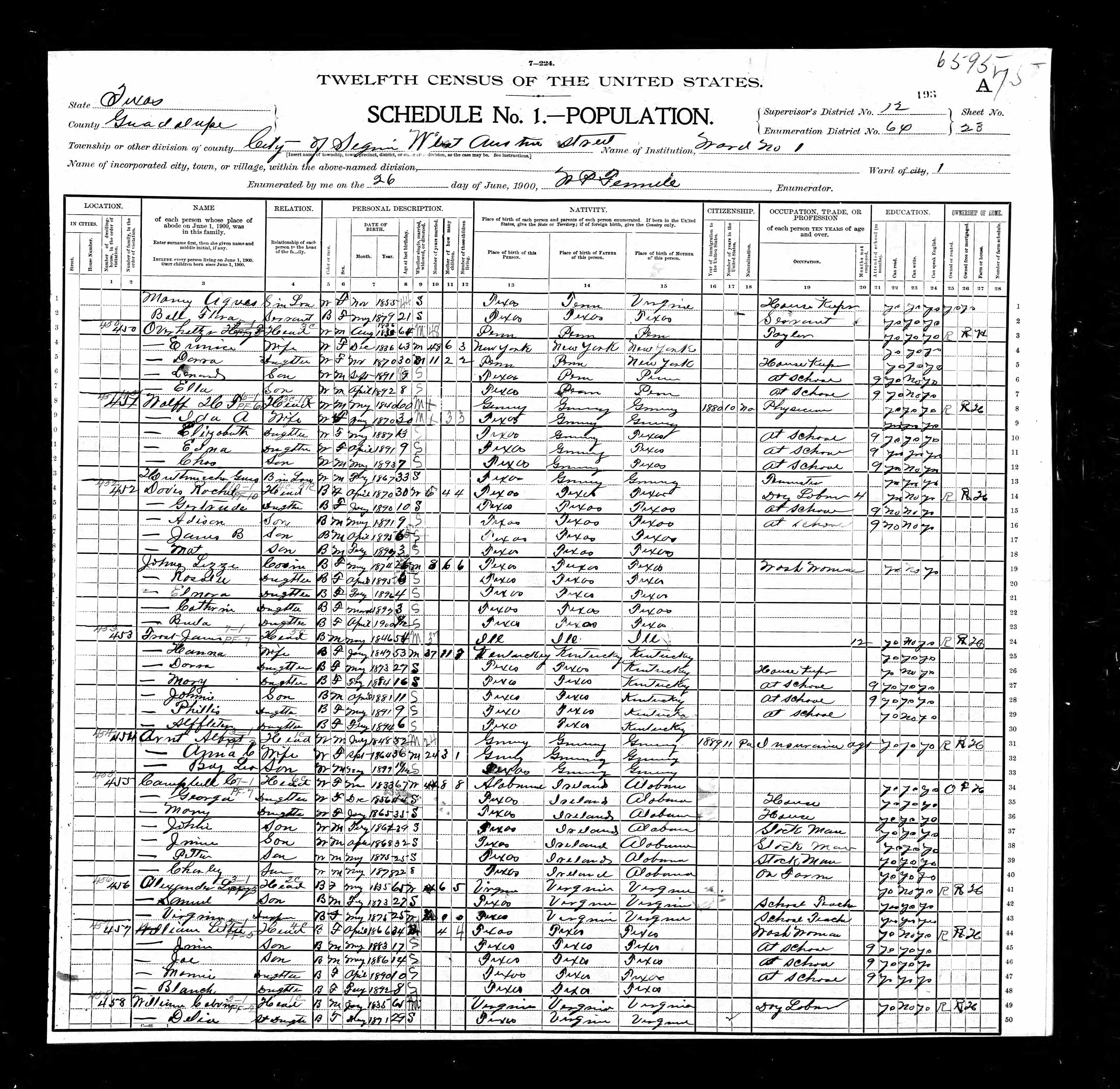
Unfortunately, though, no official documents have turned up that definitively confirm or refute the notion that Cyclone Joe Williams was part Native-American. But Bill Staples, whose father in law are a blend of several tribes, notes that, around the turn of the century, Native Americans were treated and viewed so poorly that even African Americans with indigenous ancestry found it “better to pass as 1005 black than to let others know that you were part Indian. The fact that many African Americans tried to hide or disown their Native American roots makes searches like Joe Williams’ and others even more complicated …”
In the end, Bill concludes, it might take locating a distant relative/descendant of Joe Williams so a DNA test can be performed that would, hopefully, conclusively determine the Cyclone’s true heritage.
That’s one of the mysteries associated with Joe Williams. In a future post (hopefully over the next couple weeks), I’ll try to address why Williams is buried in Maryland in the same grave as two other men who seemingly have no connection to him …

 The Negro Leagues Up Close