T-minus 6:20 …

We’re all getting prepped to head to Seattle this evening. I spent about 90 minutes at Herb Simpson’s house Tuesday, and I asked him if he was ready for the big trip. “I’ll make myself ready,” he said with a laugh.

In the meantime, I wanted to share a couple press releases and Web site links relating to Herb’s trip to the Jet City:

Here’s a link to the Mariners’ press release about African-American Heritage Day Sunday.

• And this is the Everett AquaSox’ press release about their Turn Back the Clock Night, which will honor Herb.

• The Northwest African-American Museum will host a reception for Herb tomorrow night as part of the facility’s ongoing exhibition on black baseball in the Northwest.

• Finally, here’s a link to the Mariners RBI Club, the booster group that’s hosting Herb, Felton and me.

The curious case of Benjami … I mean, Shumza Sugimoto

At least a year ago now, fellow SABR member and historian Rob Fitts, an expert in Japanese baseball history and the author of several books on the subject (seriously, the guy is good), e-mailed me to ask about one Shumza Sugimoto.

It seems that, in early 1905, media reports surfaced that Sugimoto, a Japan native and outfielder, was getting a tryout and had signed a contract with John McGraw and the New York Giants. This report was out of the blue, in just about every sense. If it was true, and especially if he did, in fact, end up playing for the Giants, Sugimoto might very well have been the first Japanese player in the Major Leagues.

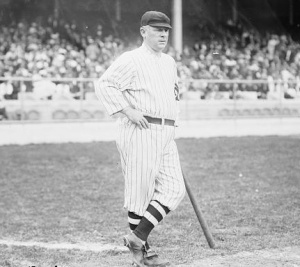
McGrawJohn-LOC-Bain-11245r_0.preview

Did John McGraw sign a Japanese player named Shumza Sugimoto?

And that would be a huge discovery among Nisei baseball historians and researchers. It also wouldn’t be a surprise, given McGraw’s well known progressive (at least for the era) on race in baseball, a fact also evidenced by his oft-stated desire to sign African-American players.

But apparently experts in Asian baseball had ever heard of this guy. Thus their shock when these media reports were dug up and uncovered.

So why did Rob reach out to me? While I’m certainly intrigued by the history of Asians and Asian Americans — I did an article or two on the passing of Wally Yonamine, the first American of Asian decent to find stardom in baseball in Japan — my actual work rarely crossed into those subjects.

Well, here’s why Rob contacted me. From the Feb. 25, 1905, Sporting Life magazine:

“Shumza Sugimoto, the Japanese ball player, who is now at Hot Springs [where the Giants held spring training] , and may be taken South by McGraw, does not like the drawing of the color line in his case, and says he will remain a semi-professional with the Creole Stars of New Orleans if his engagement by the Giants will be resented by the players of other clubs.”

First off, such news that “organized baseball” was all astir over the possibility of a player of another ethnic group competing in the system reflects that it wasn’t just black players who were shut out from white baseball for decades.

But beyond that, the “Creole Stars of New Orleans”? That’s why Rob contacted me — it seems I’m more or less, by default, the expert on African-American hardball in NOLA and the rest of Louisiana.

And the name “Creole” definitely indicates that the Big Easy team would have largely been black. So Rob was curious whether I had come across anything relating to Sugimoto in N’awlins.

My short answer: I had not. In fact, I had never seen any reference in local media to a New Orleans team called the Creole Stars. There were the Creoles and the Crescent Stars, but no Creole Stars.

And after Rob contacted me, I scoured several local historical societies, museums and repositories — including the Louisiana Research Collection and the Amistad Rsearch Center, both at Tulane University, as well as the Historic New Orleans Collection — for any reference to Sugimoto or the Creole Stars.

I found nothing. Zip. Nada. Zero.

Part of the problem certainly is that, at that time, there was no African-American newspapers in New Orleans; a few that were published in the late 19th century had ceased by then, and the Louisiana Weekly didn’t start up until 1925. So there was a huge gap in coverage that would have resulted in no mention of a Japanese player on a Negro Leagues team.

In subsequent e-mails with Rob, he revealed that he has since done a boatload of research himself into an alleged Shumza Sugimoto, including checking out dozens of high school and college baseball rosters in Japan from that time period, and found nothing else about him.

I, meanwhile, as a Japanese friend of mine from grad school, intrepid business reporter Takashi Nakamichi, if he could go through archives of Japanese newspapers during that era, and Taka couldn’t come up with anything, either.

Which didn’t surprise Rob, given his own futile efforts and research.

Then how in the world did a Shumza Sugimoto even get a tryout with the legendary John McGraw? That is the crucial question, and one that can only be “answered” by speculation and guesses.

And the notion that such a player laced up spikes for a Crescent City African-American team? Who knows, really, but all the evidence — or, I suppose, the lack thereof — says no.

“Tar Rock” Arthur

First off, I don’t know how New Orleans native Morris “Tar Rock” Arthur got his nickname.

But how can your interest not be piqued just by the name Tar Rock?

Although Arthur appears to have briefly scuttled around the upper echelons of the top-level Negro Leagues, including the Birmingham Black Barons and the Harlem Globetrotters, for several years, his name remains somewhat of a mystery, even in his hometown.

Yesterday I asked one of his contemporaries and fellow NOLA product Herb Simpson if he knew Tar Rock or remembered much about him.

“I knew him,” Herb told me, “but not very well.”

Arthur was a big enough name, though, to merit a short article, accompanied by a photo, in the New Orleans Times-Picayune when he died in November 1978. The Nov. 7 article claimed Arthur was “a former player in the Negro National Baseball League” who “began his playing career as a catcher with the Black Dots, a local semi-pro team in the late 1930s. Highly touted for his catching ability, he quickly joined the Negro professional circuit and played with such teams as the Harlem Globetrotters, the Birmingham Barons and the Cleveland Buckeyes.”

The article added, “He was regarded as one of the better catchers around during his playing days in the Negro National League.”

But I couldn’t find much about him playing with either the Black Barons or the Globetrotters.

I also did some research locally about this team called the Black Dots. It looks like their only year of existence was 1938, which does match up with what was stated in Arthur’s obituary. That year, the Louisiana Weekly, in its baseball directly, lists the Dots as owned by Armand Lescne, with a mailing address as 2410 Havana Street in New Orleans.

The Dots had pitchers named Thornhill, Degruy, Dedeaux and Ducet — several Creole names — and they played teams like the Broadway Sports, the New Orleans White Sox, the Madisonville (La.) Rebels and the (presumably New Orleans) Lumberjacks. Out of those, the biggest and best team was probably the White Sox, led by “Big Catch” Carter.

The 1938 coverage of the Black Dots in the Louisiana Weekly doesn’t make much reference to Morris Arthur; he’s listed as a batting star in 13-3 win over the White Sox in mid-April, but at no point is he mentioned as a catcher for the team.

After his active playing career, Arthur became involved with the New Orleans Old Timers Baseball Club, frequently playing in the organizations annual Father’s Day exhibition. However, instead of taking a post behind the plate, he’s listed in the old timers lineups as a second baseman.

LA-1684918-1521

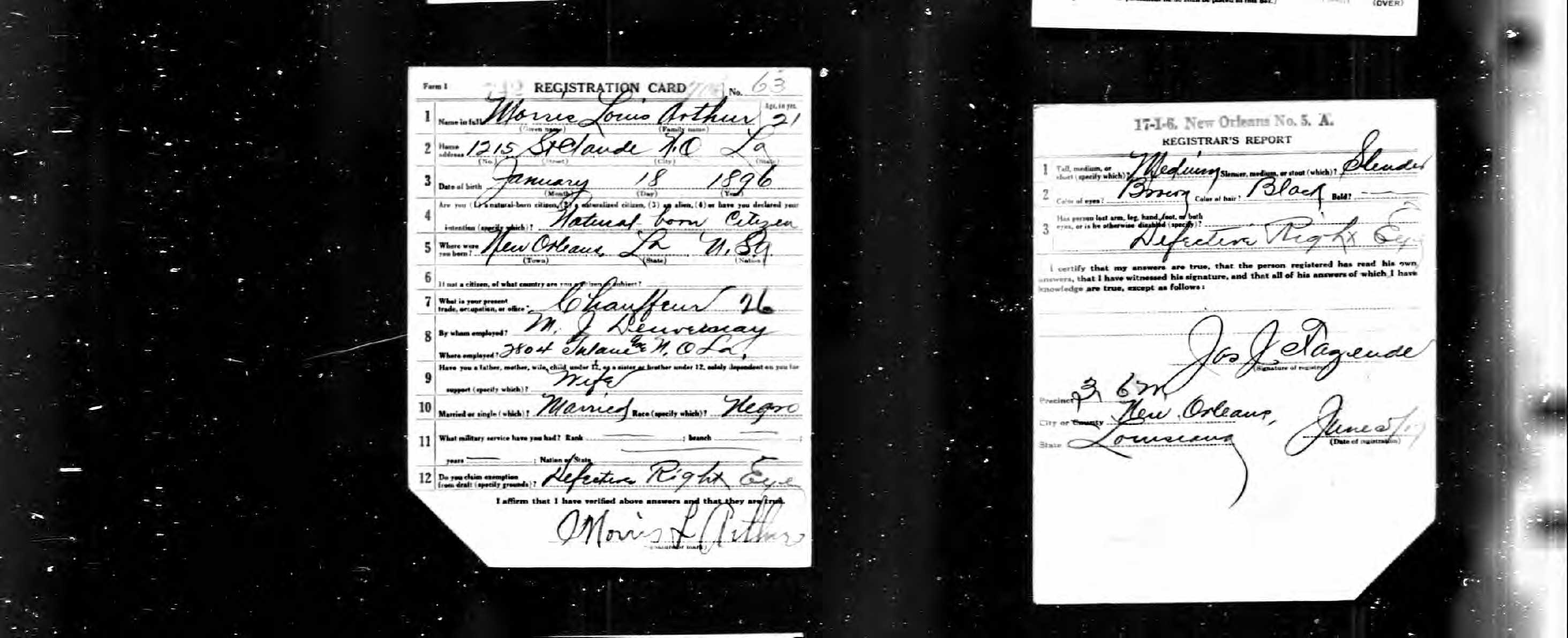
Morris Arthur Sr.’s WWI draft registration

But what’s most fascinating to me is Tar Rock’s personal life and family background. Morris Arthur Jr. was born on June 9, 1918, to Morris Arthur Sr. and the former Mary Louise Perera. Morris Sr. was born in either 1896 (as per his WWI draft card) or 1897 (according of Louisiana birth records) to Louis Arthur and Julia Coleman.

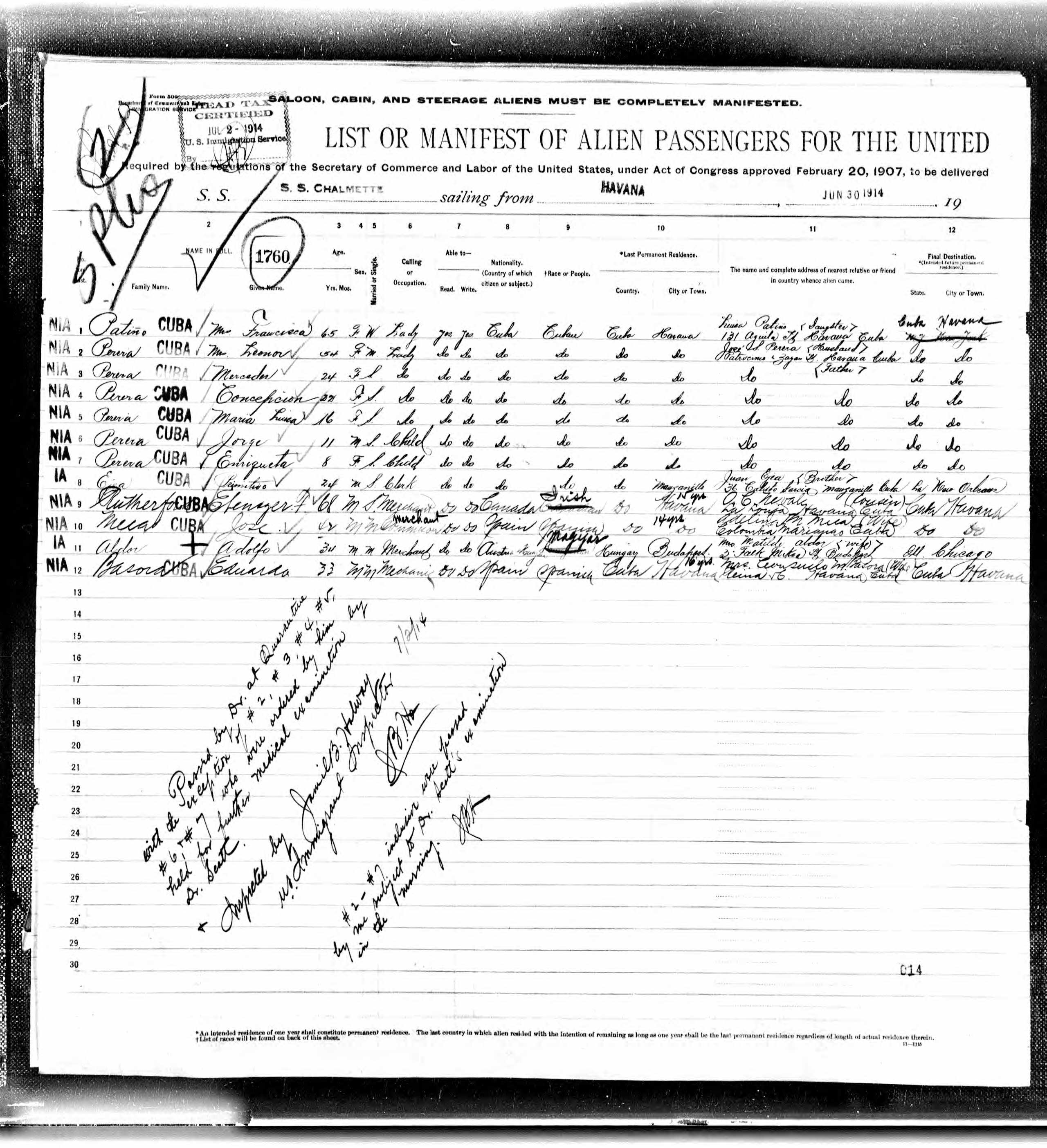
Morris Jr.’s mother, however, wasn’t a Louisiana native. In fact, she was from Havana, Cuba, born Maria Luisa Perera in about 1898, meaning she Anglicized her name upon coming to the States. She appears to have immigrated to the U.S., with several other members of her family, in June 1914. Interestingly, according to notes on a ship manifest of “alien passengers for the United States,” her family was initially quarantined for “medical examination” upon arriving Stateside.

LAT905_51-0030

Ship manifest listing Tar Rock Arthur’s mother

In federal Census records, however, Mary/Maria is listed as being born in Louisiana, which was probably yet another way of covering up her ancestry. But those same records state that Mary’s father was born in the colony of British Guiana, while her mother is listed as a Louisiana native, which is also very unlikely.

In most of the Census records in which she’s included, Mary was “black,” which is certainly historically accurate; the European colonial powers that ruled both Cuba and Guiana at various times imported slaves from Africa for work on sugarcane plantations, which were the heart of both colonies’ economies.

Anyway, Morris Sr. and Mary Louise were married in New Orleans on Nov. 4, 1916. Roughly two years later, the couple had their first child, Morris Jr., the future “Tar Rock” Arthur. However, the couple soon split; in the 1930 Census, Mary is listed as a single, divorced mother of four children, including Morris Jr. Her occupation is stated as seamstress.

But Mary managed to move on with her life, marrying again to Mr. Henry Lacour and having addition children with him (who would have been Morris Jr.’s half-siblings). According to state death records, Marie L. Lacour died on April 9, 1991. Interestingly, that same record states that she was born in 1905, which differs radically from earlier documents.

Morris Arthur Sr., seems to have remained single the rest of his life. As far as how he made ends meet, on his WWI draft card his occupation is listed as “chauffeur,” but in various subsequent New Orleans city directories, he’s simply called a “cleaner.” Morris Arthur Sr. died in August 1940, at the age of roughly 43 years old.

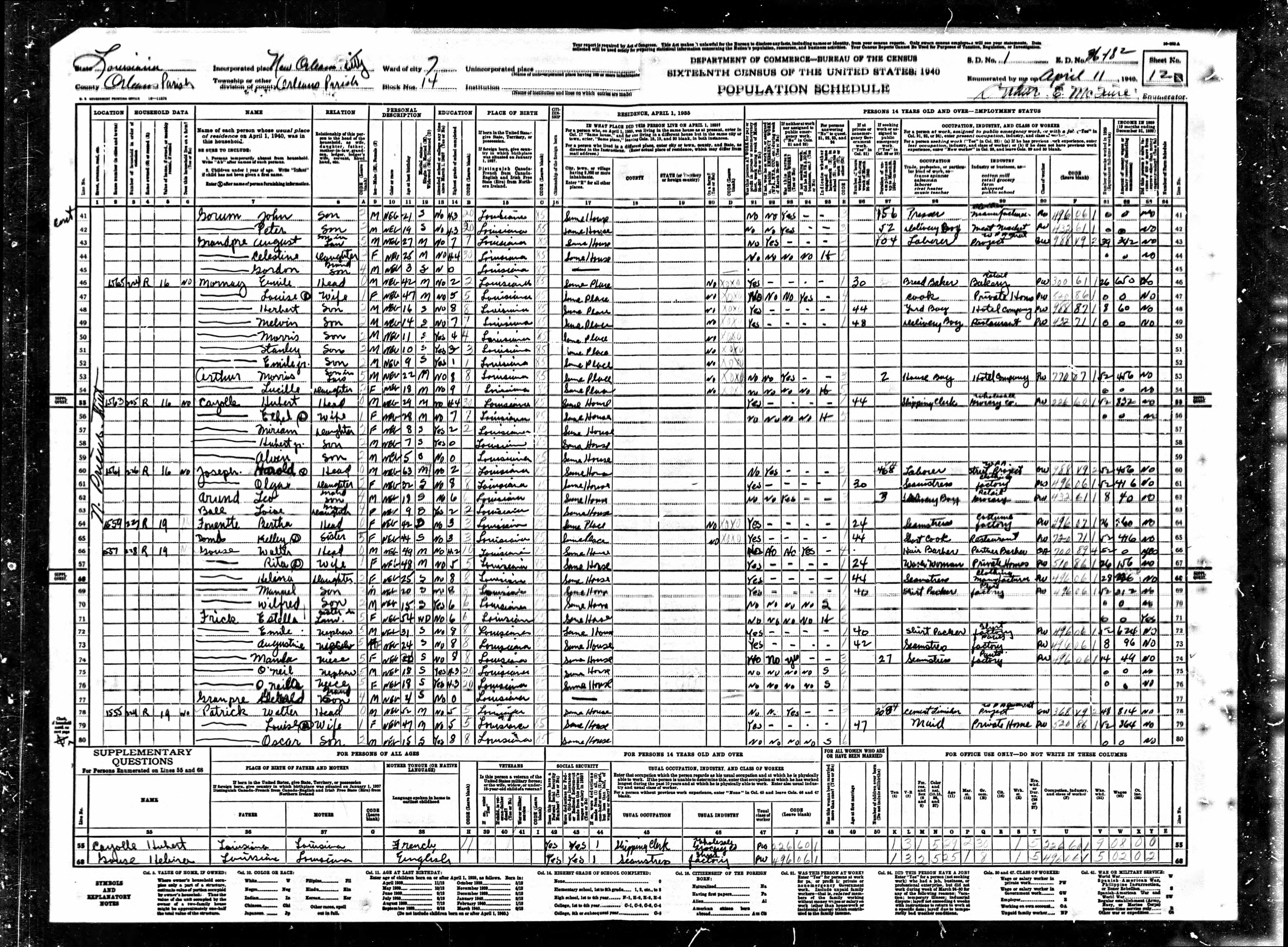
Meanwhile, Morris “Tar Rock” Arthur went on to live a busy, busy life. He married the former Lucille Mornay, even living with her parents and siblings as of the 1940 Census. That document states that Morris was a “house boy” for a “hotel company.” The fact that a 22-year-old man is listed as “boy” is reflective of the racism that African-Americans faced for decades in the Jim Crow South. Lucille’s parents, Emile and Louise, were a bread baker and a cook, respectively. Here’s that page from the 1940 Census:

m-t0627-01424-00296

One reason that Tar Rock Arthur doesn’t show up much in the black media’s baseball coverage could be that during the 1940s, he served a total of nearly five years in the military — from June 1941 through September 1945, then again from November 1946 to April 1947.

After Arthur left the military, he and Lucille lived next door to Lucille’s parents for much of their lives. The odd thing, though, is that in various New Orleans city directories from 1947 to 1960, Arthur’s occupation is never listed the same way twice — the directories alternately call him a carrier, an attendant, a driver, a packer and even a student (in 1949).

As stated near the beginning of this post, Morris “Tar Rock” Arthur died on Nov. 5, 1978. his wife, Lucille, passed away Dec. 8, 1989. They were survived by a son, Kenneth, and several grandchildren.

As a postlude, it’s definitely worth noting that Tar Rock was also a gridiron star, playing for teams in New Orleans’ Negro Independent Football League during the 1930s.

A man named Fred

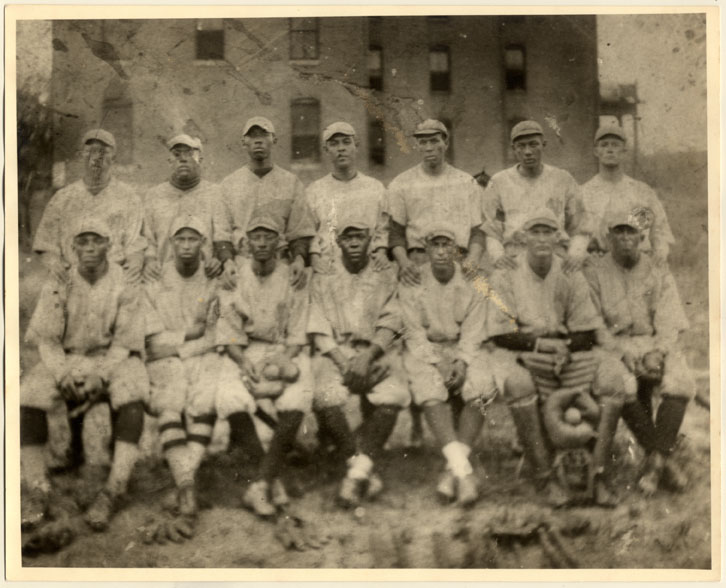
noot0011

The 1920 Caulfield Ads (from the New Orleans Old Timers Baseball Club Collection, Amistad Research Center, New Orleans, LA)

This post kind is kind of a spin-off of my one yesterday about Satchel Paige and the New Orleans Black Pelicans. During the year examined, the Black Pelicans were owned by a local businessman named Fred Caulfield, whose other endeavors included retail sales and event promotion. (The Black Pels went through various incarnations, owners, management and quality/level of play over the several decades the team name existed. That in itself is a fascinating, attention-deserving story. Maybe soon …)

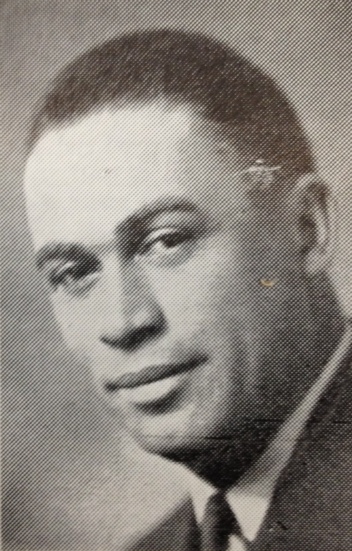
In a city of overlooked blackball legends, Fred Caulfield is easily one of the most overlooked, even by myself, an alleged “expert” on NOLA and Louisiana Negro Leagues activity. The more I read about him and the more I delve into his personal and professional life, the more I realize how important he was to Big Easy African-American baseball. He’s rapidly becoming, at least in my own weird little mind, the second-most important baseball businessman and impresario in New Orleans Negro Leagues history, second only to the great and peerless Allen Page and even greater than the 1880s figure Walter Cohen).

Caulfield’s most recognizable claim to fame, largely because of the name thing, is as the proprietor of the Caulfield Ads, a local African-American team whose origins date before 1920 and who, over the span of a couple decades, went through several incarnations that varied in both talent quality and level of play. At times, the Ads weren’t much more than one of the better sandlot teams in the Crescent City, while at other times they were arguably the best pro team in the city and members of respected regional southern leagues.

The Ads were also rivals to numerous other longtime NOLA semi-pro/pro teams — a few which, as it turns out, were themselves owned and/or promoted by Caulfield himself — such as the Black Pels, the Crescent Stars, the Algiers Giants and the Jax Red Sox.

But as his influence apparently grew, Fred Caulfield branched out to own other teams, like the Pels and, near the end of his life, the Red Sox, who, in 1938, provided him a sort of “last hurrah” as a baseball kingpin.

New Orleans native Fred Caulfield, according to his WWI draft registration card, was born July 26, 1880. His parents were Jules Caulfield and the former Marie Martinez. Jules and Marie were both born in Louisiana, but they each were both half-European — Jules’ father was born in England, while Marie’s dad was birthed in Spain. I need to do more research into Jules’ and Marie’s lives and ancestral backgrounds, something I hope to do soon. (I will note here, however, that my next post also will be about another New Orleans Negro League figure who had one parent born outside of the country.)

The fact that Fred Caulfield embodied such a cultural melange raises mysteries about his exact ethnic identity. The 1910 federal Census, for instance, lists him as a “mulatto” resident of Orleans Street in the city. His listed occupation is as a “collector” for a furniture company.

But in the 1920 Census, Fred Caulfield — as well as both of his parents — is listed as “black,” as is his wife, the former Carrie Robertson. The two couples were living next door to each other on Conti Street. Fred Caulfield ran a grocery, while his father is listed as a “laborer.”

Fred Caulfield moved from Orleans Street to Conti Street sometime between 1910-16. His draft card, signed in 1918, states that he lived at 2405 Conti Street, while his occupation is noted as “grocery & bar.” By 1930, he and Carrie were living with her parents, and the Census that year indicates that he had become a baseball man full time, a “manager” of a “ball team.”

Which leads us to his baseball career. His first and most well known outfit, the Ads, was birthed at least as early as 1918, according to reports, and in 1919 they and three other black teams joined to re-form a “Colored City League,” according to an article in the 1919 New Orleans States newspaper:

“The Colored City League has re-organized for the season and will start a 25-game series Easter Sunday at the National Park, Third and Claiborne,” the article stated. “The league is comprised of the Caulfield Ads, Fred Caulfield, manager; I.C.R.R., Leon Augustin, manager; All Stars, Walter Pittman, manager; Clio [or possibly Cico], Joseph Pye, manager.”

(The ICRR likely referred to the Illinois Central Railroad, which apparently had a terminus in New Orleans.)

The CCL opened play April 20, 1919, with the Ads playing to a 3-3 draw with the ICRR. But July, the Caulfields were leading the league. Late that month, Fred’s bunch played the All Stars in the featured game of a CCL doubleheader. After that, media coverage of the league drops off.

By the next season — the photo at the start of this post pictures that squad — the Ads had stepped up in the world, joining what an April 27, 1920, newspaper article called “[T]he negro southern league.” Here’s a little more from the article:

“[T]he Caulfield Ads of New Orleans leave Tuesday night for Pensacola to play the opening game there.

“The Caulfields will play their first 20 games on the road, making almost the entire circuit. …

“The home opener for the local negroes is schedule for May 20 with Montgomery. All games in the regular [white] Southern League cities will be played in the Southern League parks.

“Fred Caulfield has changed up his line-up considerably and says he is taking a stronger team than has played in the local games. …”

The team seems to have included Fred’s brother, Jules Caulfield Jr., as a pitcher, and Winfield Welch in left field; Welch would gradually go on to national fame as manager of the two-time league-winning Birmingham Black Barons in the mid-1940s.

Over the next decade-plus, the Ads ebbed and flowed in terms of quality, sometimes making up part of a southern circuit, other times existing as a barnstorming aggregation that criss-crossed the state and region. And, as revealed by the 1926 Satchel Paige scenario, Fred Caulfield himself also dabbled with other teams, including the Black Pelicans.

In May 1934, the Associated Negro Press reported that “Fred Caulfield, the first man to give the city a professional baseball club, plans to stage a comeback this season with his Caulfield Ads outfit. He plans the use of two parks, the Pelican park when the [white minor-league] Pelicans are not home; and the Lincoln park at other times.”

The entire time, though, Caulfield appears to have had the respect of his players, who, according to a 1979 article in the New Orleans Times-Picayune, stirred “fond recollections of businessman-sportsman Freddie Caulfield who owned the Caulfield Ads and later the Pelicans.”

The article then quoted former player Walter Wright about Caulfield: “If he gave you a contract, he’d pay it. One time they had two straight days of rain and he paid everybody.”

But by the mid-1930s, Fred Caulfield was well into his 50s and becoming the “old man” on the local baseball promotion circuit. But he didn’t give up his clout without a fight, as evidenced by what he died in 1938 …

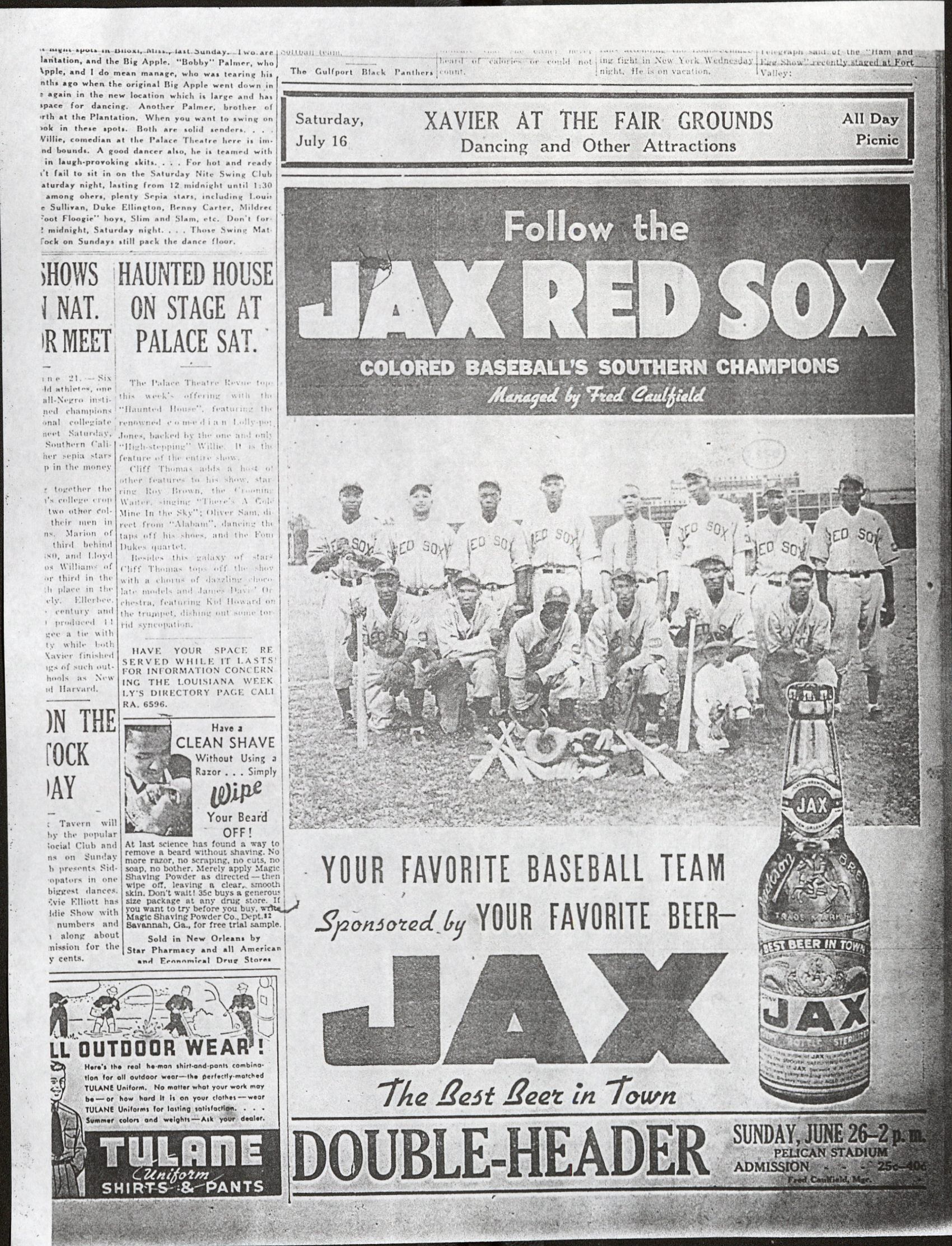
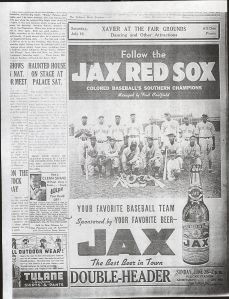
That year, Caulfield brought together and skippered the Jax Red Sox, a team sponsored by longtime and beloved Jax Brewery — the business has, however, long since been gone, and the brewery space is now a commercial/apartment complex — who, as evident in the Louisiana Weekly ad below, put forth “Colored Baseball’s Southern Champions.” The ad, umm, adds: “Your favorite baseball team sponsored by your favorite beer.”
KIC Image 9

The Red Sox played many of their home games in Pelican Stadium, where, according to the ad, admission was 25 cents to 40 cents.

The Jax squad spent the entire summer squabbling and jockeying with the New Orleans Sports for supremacy on the Big Easy blackball scene. It was, apparently, quite the heated rivalry, one played up by the Louisiana Weekly, the local African-American paper, and one that drew grousing from “lesser” teams that thought they merited a place at the local championship competition table as well.

While the Sox were dueling with the Sports locally, they also toured the state and region playing more far-flung squads — some of which Jax also hosted in NOLA — like the Galveston Grays, with whom the Sox split a late-June doubleheader at Pelican Stadium; the Houston Blackcats, who blasted the Sox 10-1 in mid-July; and the Shreveport Sports, with whom they played a pair of home-and-home doubleheaders (four games in all, two in each city) in August.

For much of the 1938 Jax season, the mound ace was famed longtime local hurler Robert “Black Diamond” Pipkins, who had an esteemed, if a bit mythical, career at various levels of local, regional and national play.

The Sox also featured the services of multi-faceted local legend Herman Roth, and late in the season, Caulfield brought in two ringers who had been plying their trade in central Canada, George Alexander and Freddie Ramie. Ramie was the prized catch — an Aug. 6, 1938, article in the Weekly had lavished praise of the well traveled local youngster, saying he “is enjoying a brilliant season as a pitcher with the Broadview Buffs in Canada. He has compiled the good record of 9 wins, 3 losses and two ties. … Young Ramie expects to leave Canada for New Orleans on August 15.”

Which was just in time to bolster Caulfield’s squad for the match-up that was apparently desired, after several rain outs and other delays, by the entire city populace: A championship showdown between the Rex Sox and the Sports. Beginning Aug. 21, it was on.

And on the eve of the clash, some in the local media, including Weekly columnist Eddie Burbridge, were already hyping it up.

“Freddie Caulfield, manager of the Jax Red Sox, will put his team against the New Orleans Sports in a five-game series for the city championship, starting Sunday with a doubleheader at Pelican Stadium,” Burbridge wrote in the Aug. 20 Weekly. “Fans are in for some great baseball, as Manager [Curtis] Tankerson of the Sports is really pointing for the Red Sox.”

While Jax had Pipkins, Ramie, Roth and other local heroes studding its lineup, Tankerson boasted his own impressive roster, including pitchers “Schoolboy” Melrose and Dan Boatner.

The showdown seems to have lived up to its billing — after a pair of split doubleheaders, by the last week of August the series stood at two games apiece. In the second DH, Boatner easily greased the Red Sox 4-0 in the opener, while Pipkins did his thang in the second game, securing a comfy 10-2 revenge win for Jax.

At that point, things get a bit clouded. The Sept. 10 Louisiana Weekly carried a surprisingly brief — it was a single paragraph with barely a headline — article stating that, “In four games played Sunday and Monday afternoon, the N.O. Sports won two and tied one with the highly touted Jax Red Sox.” After a couple sentences describing the four contests, the article didn’t even officially declare a winner of the “city championship.”

And that appears to have been it for Fred Caulfield and his team’s 1938 campaign. It also might have been Caulfield’s swan song as well: Just over three years later, the NOLA baseball legend — arguably the city’s first black hardball kingpin — was dead at the age of 61, passing away at his Conti Street home Dec. 17, 1941, a week and a half after Pearl Harbor.

“Mr. Caulfield was one of the best-known and best-liked baseball promoters in the South,” stated the Dec. 27 Louisiana Weekly, “having managed such outstanding teams as the early edition of the Crescent Stars. For the past several years, he managed the Jax Red Sox. He was also well known in the business world, having conducted and beer parlor at Conti and Dorgenois Streets for a long period of time.”

He left behind his wife, Carrie; his brother, Jules Jr., and two aunts. But when he died, a crucial era of New Orleans Negro Leagues history ended with him. For more than a decade, Fred Caulfield was black NOLA baseball, a torch that subsequently was passed to Allen Page, who carried the flame into the 1950s and the end of segregation.

Caulfield was hugely responsible for restarting top-quality African-American baseball in the Crescent City, which had suffered a lull in such matters since the 1890s, when Plessy V. Ferguson formalized Jim Crow in Louisiana and the rest of the South and put an end to the first era of fantastic black baseball (as played in the 1880s by the Pinchbacks, Cohens, Dumonts and others).

I continue to be ashamed that I overlooked Fred Caulfield’s contributions for such a long time. Hopefully, this blog will help to start rectify that grievous oversight.
Mixed feelings about Satch and the nature of journo-research

I was laying in bed last night, and I realized that I was probably a bit too harsh on Satchel Paige yesterday in my post about his connection to New Orleans Black Pelicans.

So I adjusted some … terminology in the post to make it more, well, professional. I apologize about that.

But Satchel Paige stirs major feelings in me. Also while I was in bed last night, the gerbil on the wheel in my head started running a lot, and I also realized that my post yesterday was fairly harsh on a guy whose famous quote I used to name this very blog. So maybe I was being a bit of a hypocrite.

And yes, I probably was. But conversely, the fact that on one hand I honor him and on the other hand I snarkily criticize him perfectly symbolizes the extreme mixed feelings I have about him.

It’s impossible to ignore not only the notion that he is probably the greatest pitcher in all of baseball history, but also his many good character traits — his charisma, his sense of humor, his confidence, his honesty, his laid back and philosophical attitude toward life …

But in my mind it’s also hard not to see him as an egocentric mercenary whose primary concern was always himself and his payday, not the welfare of the teams and teammates for and with whom he pitched. He was a narcissist who was only looking out for himself.

However, that’s at least somewhat true of so many players today and, whether we like to acknowledge it or not, more than a few of the stars — both black and white — of yesterday that we research and write about.

As a journalist of 20 years, I’ve met, talked to, gotten to know and written about hundreds, if not thousands of people, and there’s a handful of lessons about human nature I’ve learned, one of which is this — the vast majority of people, including athletes, are very complex, sometimes self-contradicting characters. There’s very little black and white when it comes to the human soul and psyche.

My belief in that fundamental theory has only deepened as my career as a historical researcher has blossomed. People, athletes included, have always been complicated and not easily painted with one or two brush strokes.

And that’s what mesmerizes us, fascinates us, intrigues us about them, and part of the fun of being an historical researcher — and a journalist, for that matter — is unraveling all the layers to the people we place under a microscope. The thrilling challenge is simply finding out who these people were, and are.

So how do I truly feel about Satchel Paige? I couldn’t give you a clear, concise answer beyond one word: conflicted. And, to be honest, that’s fine with me.

Satch and the Black Pels?

paige

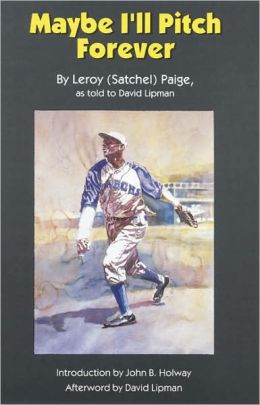
It’s a long-held tale, one spun originally in 1962 by the ultimate baseball legend/showman/huckster in his autobiography, “Maybe I’ll Pitch Forever,” and one, so far, relegated to a mere footnote in that man’s glorious and often self-inflated history.

But it’s also one that, ever since I started researching the Negro Leagues scene in New Orleans many years go, has held a certain, almost inexplicable fascination for me.

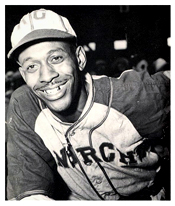
We all know that Satchel Paige’s first season in fully professional baseball was 1926, when he initially took the hill for the Chattanooga Lookouts. It’s also generally accepted and largely proven that Paige’s first professional mound duty took place, of all locales, in New Orleans, when he hurled for ’Nooga against the host Black Pelicans, a game he won, 4-1, on May 21, 1926.

But then there’s the thing that has always gotten under my skin: the belief that after Satch pitched against the Black Pelicans, he then competed, ever so briefly, for them, when he temporarily bailed on Lookouts owner Alex Herman and laced up the spikes for the Pels for a glorious run of … one week.

Where did this tale have its origins? Why, apparently with Satch himself, naturally. He uncorked the gem in “Maybe I’ll Pitch Forever,” his dictated memoirs. In the yarn, Paige said he was drawn to the NOLA diamond not by bucks but by … a car. That’s right: a set of wheels. A ride. The first vehicle he reportedly ever owned. But let’s let the man himself tell it, via his autobiography, beginning on page 30-something:

“Near the end of the season, I jumped the Black Lookouts for a few days and hopped over to New Orleans. But this time it wasn’t money that got me to jump.

“The real reason was that they offered me an old jalopy. The eighty-five dollars they gave me for a month of pitching wasn’t anything. I was up to almost two hundred a month with the Black Lookouts by then.

“That jalopy was something else. It was my first. But the money ran out pretty quick and I hopped out of New Orleans. Those guys still probably are waiting for me to pitch that last week of ball.”

Hardy har har, Leroy. He then added, with his trademark arrogance: “It didn’t worry me.”

Now you see why I’m not exactly a huge fan of Satchel Paige. His disloyalty to anyone or anything but his own greed and his supreme conceitedness just seem to rub me the wrong way. To me he’s something just short of, well, let’s be honest here, a jerk.

But I digress. Noted historian and writer Larry Tye, in his biography, “Satchel: The Life and Times of an American Legend,” penned:

“It was his first set of wheels and the beginning of his love affair with motorcars. He was back with the White Sox a week later but the restlessness would never go away. Already he was a celebrity. He had the means to move to greener grass, and the grass almost always looked greener to him someplace else.”

alexander_leo_herman_claver

Chattanooga Lookouts owner Alex Herman

But here’s the rub (and there’s always a rub, isn’t there?): I’ve come across no proof that it actually happened.

Well, yes, there’s proof that Satch pitched against the Black Pels. But I’ve uncovered nothing showing decisively that he ever pitched for the Crescent City squad. Just lots of stories, memories, vague recollections.

The mainstream daily newspapers of the day don’t include any such coverage, and unfortunately, the African-American paper, the Louisiana Weekly, was still in its nascence and barely provided any sports coverage in 1926, including none that I could find of the Black Pelicans.

Here’s what I did find, via the May 22, 1926, Times-Picayune:

“The inability of Fred Caulfield’s Black Pelicans to hit the ball and their unfortunate knack of producing ill-timed errors gave that Black Lookouts a 4 to 1 victory over the local negro nine in the opening of [the] Colored Southern League at Heinemann Park yesterday.

“Willis, on the hill for the Black Pels, gave up but three hits, but he and his mates mixed errors with a lone blow and the visiting nine won the contest with a big second inning splurge.

“A lanky hurler named Satchell worked for the Black Lookouts. He kept six hits well scattered and fanned six men while his teammates were making the six Pelican bobbles work to their advantage.”

9780803287327_p0_v1_s260x420-1

According to the box score, Satch also cracked one of the Lookouts’ three hits. So if this was indeed Paige’s proffesional debut, he did all right. However, he tells a slightly different story in “Maybe I’ll Pitch Forever”:

“Alex let me get the feel of Chattanooga before pitching me. My first game out with the Black Lookouts was against New Orleans, who had a guy called Diamond throwing for them.

“It don’t make much difference who throws when Ol’ Satch’s in there. We won, one to nothing. I gave up two hits.”

Again, such modesty.

The “Diamond” he mentions was most likely local NOLA product Robert Pipkins, nicknamed “Black Diamond.”

Even at such a tender age, though, Satchel displayed his legendary endurance: the very next day, May 22, he took the hill again for the Lookouts. But it didn’t go nearly as well this time around — Paige got shelled, and the Black Pels romped, 8-0. Said the Times-Picayune: “Fred Caulfield’s team showed a disposition to hit the ball hard and this coupled with tight hurling of Powe gave them the contest.”

It doesn’t appear as though Satchel pitched again in New Orleans in 1926, at least not for any Chattanooga team.

But tales of Paige taking the mound against the Pelicans at various other times were handed down from generation to generation of black baseball figures in N’Awlins. In a May 15, 1983, article in the Times-Picayune, reporter Marty Mulé, wrote that “[T]he Black Pelicans, in fact, were the first professional lineup to be mowed down by the legendary Paige.”

Mulé quoted Walter Wright, one of New Orleans blackball’s most important figures, who said the Black Lookouts manager told the Pel’s helmsman, Herman Roth (himself a towering personality from the Big Easy), “We gonna beat ya this time, Herman.” This was allegedly in the summer of 1926.

Wright reported to Mulé that the Black Pelicans had been tearing through the Negro Southern Association membership with merciless zeal, leaving Roth to wonder why the Lookouts were so confident now. Mulé penned:

“‘That lo-o-o-ng boy out there,’ said the Chattanooga manager, pointing out to the field. Roth saw for the first time a gangly, loose-limbed pitcher warming up. ‘Baby-faced Satch,’ recalls Roth, now 87, ‘he had such a baby face. And doggone if he didn’t beat us 1-0. he had nothing but a fastball then, but it looked like an aspirin tablet.’ He hastens to add that Edward Benjamin outpitched Paige and beat Chattanooga 1-0 the next time they saw Satchel, in New Orleans.”

Then, in 1994, T-P writer Ted Lewis, an early chronicler of Louisiana’s black baseball tradition, authored a lengthy, detailed recounting of the city’s Negro Leagues history, filled with the recollections of living blackball vets.

“Satchel Paige, the most famous of the Negro Leaguers, played briefly with the Black Pelicans early in his career in 1926 …,” Lewis wrote.

“‘Satchel was gone, and I was left in Chattanooga,’ said Lawrence ‘Fats’ Nelson of New Orleans, who had been signed by the [Chattanooga] White Sox earlier that year after catching for Paige in an exhibition game. ‘He was just getting started, but he already had that hard, straight fastball and a good curve.

“‘He also had his hesitation pitch that would slack up a little when it was coming at you and then take off again. He was usually putting a little something on it.'”

It should be noted that it appears as if the names of the Chattanooga Lookouts and the Chattanooga White Sox were often confused with each other, perhaps used interchangeably or maybe because they were two distinct teams.

While Satchel Paige probably didn’t climb the hill in the Big Easy again in 1926, he did occasionally return to the city as his career, and life, went on. For example, he pitched once or twice in the North-South All-Star game, an annual affair created and perpetuated for at least a decade by New Orleans promoter and black baseball impresario Allen Page.

And in 1977, five years before his death, Satchel came back to NOLA for the Old Timers Baseball Club‘s 21st annual old-timers’ game. The club was a local New Orleans organization created and helmed by Walter Wright with the purpose of keeping the memory of the Negro Leagues alive. Leading up to the June 19 contest, Wright issued a press release trumpeting the impending arrival of the fabulous Hall of Famer:

“Just one more time is what Satchel Paige is saying as he prepares to pitch in the 21st annual Old Timer’s Baseball game which will be played in the superdome [sic] prior to the Pelicans-Denver game on Father’s Day. …

“Plans are being made for ‘Satch’ to see mound duty for either the North or the Southside in the annual game that is designed to pay tribute to those stars of yesteryear who really paid their dues toward making the game what it is today. …

“‘Satch’ will be surrounded by some former team mates who saw action with him in the Negro American and National Leagues as well as some who opposed him in the old Southern League when he was a member of the Chattanooga White Sox or the Birmingham Black Barons.”

A few days after Paige died on June 8, 1982, Mulé wrote an essay in the T-P about the pitching great, and he quoted another New Orleanian, Milfred Laurent, who crossed paths with Satch on an occasion or two:

“He could do just about anything he wanted with a baseball. That hesitation pitch was something else again! He would cock his leg, unwind, throw the leg down, and his arm would come across, and he’d still have the ball in his hand! Once I saw him throw the pitch, and the batter committed himself before the ball left Satch’s hand. The umpire said the swing was legal, and Satch had a strikeout before he even threw the ball.”

JB Spencer goes big-time

KIC Image 5

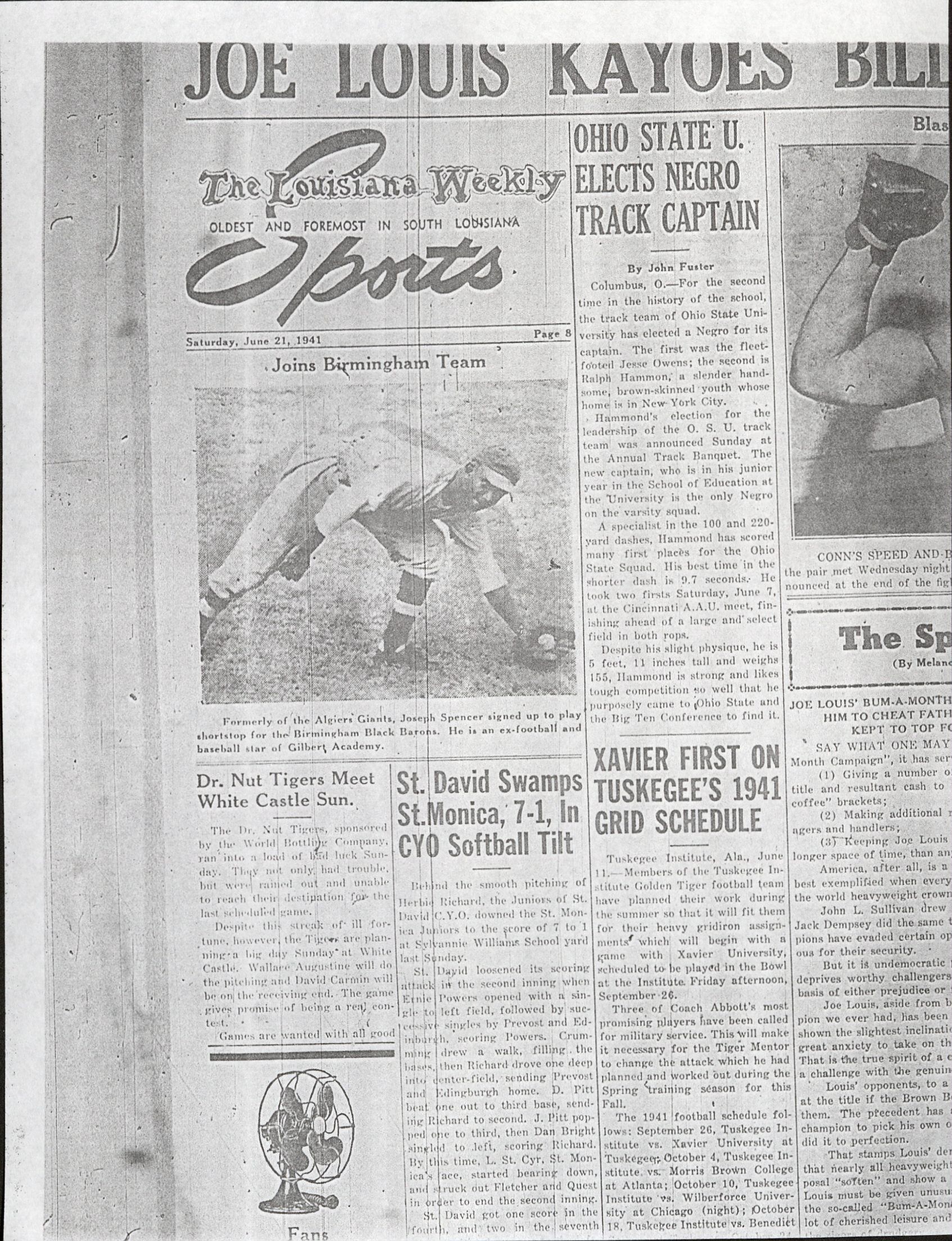
I had a chance to go through a couple years of the Louisiana Weekly, NOLA’s long-time African-American newspaper, and I came across this from December — a photo announcing Gretna, La., native J.B. Spencer’s signing by the Birmingham Black Barons, who were, at the time, managed by another Louisiana native, Winfield Welch, who used his new gig in Alabama to open a pipeline to NOLA talent.

Anyways, I thought this was pretty cool.

Operation: New Orleans

Just wanted to give a quick preview of what I’ll have over the next couple weeks. Basically, I’ll be focusing on significant Negro Leagues figures from New Orleans, an overlooked, unappreciated hotbed of black baseball activity.

The series will be highlighted by reports from Seattle about Herb Simpson’s trip there next week, but I’ll also try to have posts about figure like Allen Page, Winfield Welch, J.B. Spencer and others. So order some jambalaya and gumbo, settle in on Bourbon Street and get ready for the straight dope from the Big Easy!

Official confirmation: No to Cannonball’s records

As a follow-up to this post, last week I received a phone message from Sara Kalvin, public relations official at Pilgrim State Hospital in Brentwood, Long Island, New York, who, after looking into my requests about the possible release of Cannonball Dick Redding’s records from when he was in the psychiatric facility in the 1940s (he died there in 1948 under reportedly “mysterious circumstances”), told me that yes indeed, the state’s privacy laws prevent the release of all such medical records of patients in such psychiatric hospitals and, therefore, Redding’s files cannot be forthcoming.

That leaves the the receipt of the official letter from Pilgrim denying the similar written request for the release of records I sent a couple months ago. That hopefully forthcoming communication should confirm Ms. Kalvin’s determination. Oh well.

In the meantime, I’m waiting for what could be my last hope for finding out why a legendary pitcher like Dick Redding was sent to a mental asylum and, more importantly, how and why he died there — a request for the release of his medical records from Veteran Affairs. Cannonball actively served in Europe during World war I, and I’m hoping the century of time between then and now, as well as the 66 years since his death, is enough time to allow for the issuance of his military health records. I’ll keep on this and keep you posted.

At this point, I want to mention a very insightful email of advice sent to me after I put up the aforementioned post. A close friend, confidant and great help to me work wisely recommended last week that even though I’m a trained journalist with pit bull instincts, when it comes to historical research like this, it’s often best to use the honey-instead-of-vinegar approach and take it easy when approaching official sources and institutions like Ms. Kalvin and Pilgrim hospital.

He suggested I ease off a bit for a while on the Dick Redding matter, and after reflection, I think it’s advice I will definitely heed. I’m still trying to find the right balance I’m trying to strike between journalist and historical researcher, and my friend’s suggestions were extremely timely and needed to kind of get me back on an even keel. many thanks to him.

Getting Ready for Herb’s trip to the Pacific Northwest

image

Hi all, many apologies about the lapse in posts for a little while. I actually had a medical emergency and was in the hospital for a bit, but I’m getting back into the swing of things now …

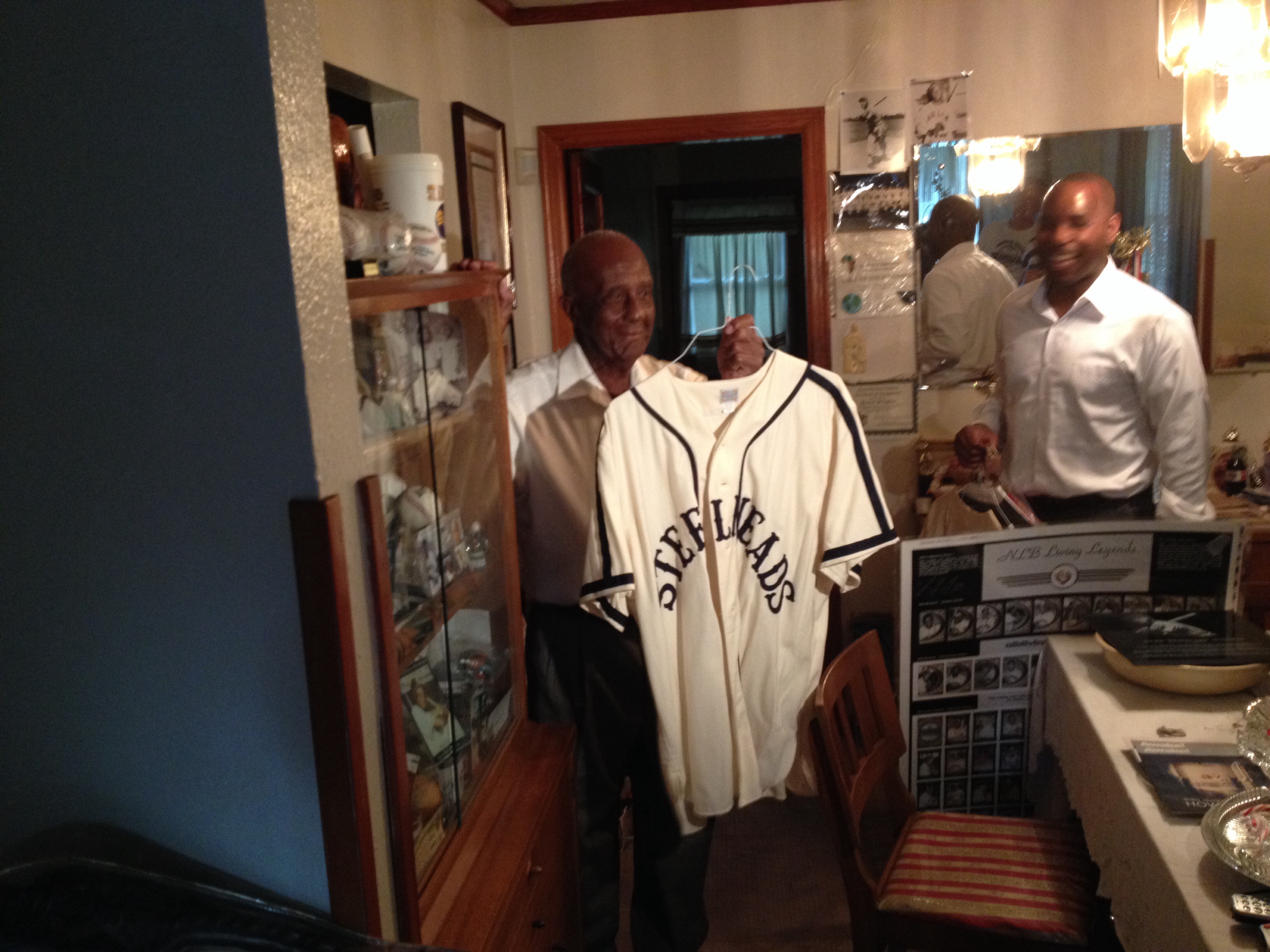
And, to start of with the Return of the Ginger (that’s me), the picture above is from a gathering at Herb Simpson’s house last Wednesday with Herb, me, WWL TV reporter Bryan Salmond (he’s on the right in the picture), and Lorri Ericson and Pete Bellmar for the Seattle Mariners booster organization, the RBI Club, which will be hosting Herb and his nephew (and yours truly) for the team’s African-American Heritage Day July 28.

Bryan interview the ever-loquacious Herb as well as Lorri for a piece that’s going to be broadcast this coming Sunday on WWL. Bryan was a great guy, and Lorri and Pete were fantastic. It was great to finally meet them all.

In the photo, Herb is showing his actual jersey from his time with the 1946 Seattle Steelheads of the short-lived West Coast Negro Baseball League. To the left of him is a display case choked full of priceless and fascinating mementos from Herb’s storied career in the Negro Leagues and then in the minor leagues.

It was a pretty fantastic afternoon, and thanks to everyone for coming to honor Herb. If you get a chance, check out Bryan’s piece, which, as noted, is scheduled to air Sunday.