‘One of the most cruel slave owners …’

“Le Chevalier Louis Malarcher fled the [Haitian] revolution in St. Domingue and established a plantation on the East Bank of the river in St. James Parish. Malarcher became one of the most cruel slave owners in Louisiana. An enormous number of slaves ran away. Two of his slaves were killed in the slave revolt of 1811.”

— “On to New Orleans!: Louisiana’s Heroic 1811 Slave Revolt,” by Albert Thrasher

“Slavery here as elsewhere had its attendant evils, but there is little to prove that the slaves were grossly mistreated. Certainly the abundance of the St. James Plantations provided enough food, clothing, and care for all.”

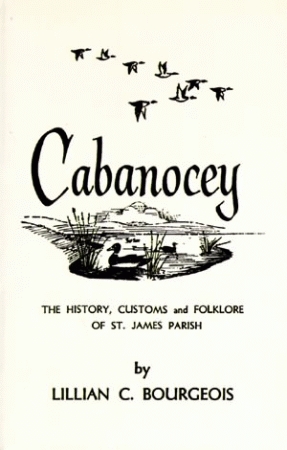
— Cabanocey: The History, Customs and Folklore of St. James Parish,” by Lillian C. Bourgeois

Seem like something doesn’t jibe there? It certainly appears like it doesn’t. But then let’s add another quote from Thrasher’s book about the “German Coast” slave result along the Mississippi River and into New Orleans proper that became the largest slave uprising in American history:

“What was most remarkable, was that several of those listed as being killed or executed were owned by planters whose plantations were in St. James (Malarcher, Chapduc) and upper St. John the Baptist (Bechnel, Daniel). This fact supports the conclusion that the revolt was started up in St. James Parish.”

Using Thrasher’s book — which is extremely comprehensive and research-based, with many supporting evidence and documents — I, I have to say, come to the conclusion that Lillian Bourgeois’ book, which includes only one chapter on the massive institution of slavery that existed in the sprawling sugarcane fields of antebellum St. James Parish, is basically an apologist’s take on a thoroughly reprehensible social, cultural and economic atmosphere that permeated that parish before the Civil War.

In addition, Thrasher’s well supported tome makes it clear that the Chevalier Louis Joseph Malarcher, a French nobleman, treated his slaves horribly — horribly enough to cause them to play a part in the 1811 revolt.

So why is this important to the story of Negro Leagues legend Gentleman Dave Malarcher? Well, the surname says it all — the baseball great was descended from the slaves who witnessed and experienced horrors while owned by the Chevalier like chattel. In fact, it’s also quite possible that David Julius Malarcher himself was a direct descendant of the Chevalier or one of the latter’s sons, who very well might have used their female slaves as mistresses at best and as rape victims at worst. (I previously detailed this connection in this post.)

Gentleman Dave Malarcher was born and raised, for much of his childhood (before he moved to New Orleans to attend New Orleans University), in St. James Parish, one of Louisiana’s bastions of slavery. (I traced his ancestry to St. James in this post.)

Chevalier Louis Joseph D’Asprement Malarcher was indeed a wealthy man and an extremely successful sugar planter, possibly by building on the business skills he learned as a sugar planter in Haiti before the successful slave revolt there. According to the 1810 U.S. Census, he owned 40 slaves; by 1830, that number had increased to 57.

4409672_01060

1820 U.S. Census

By the 1840s, the Chevalier and his estate — the records I have, via ancestry.com, say he himself died in 1841 in the hamlet of Convent in St. James Parish at the age of 87 — had amassed enough wealth to, in 1847, possess 1,461 of previously public land, a transfer approved by President James K. Polk himself:
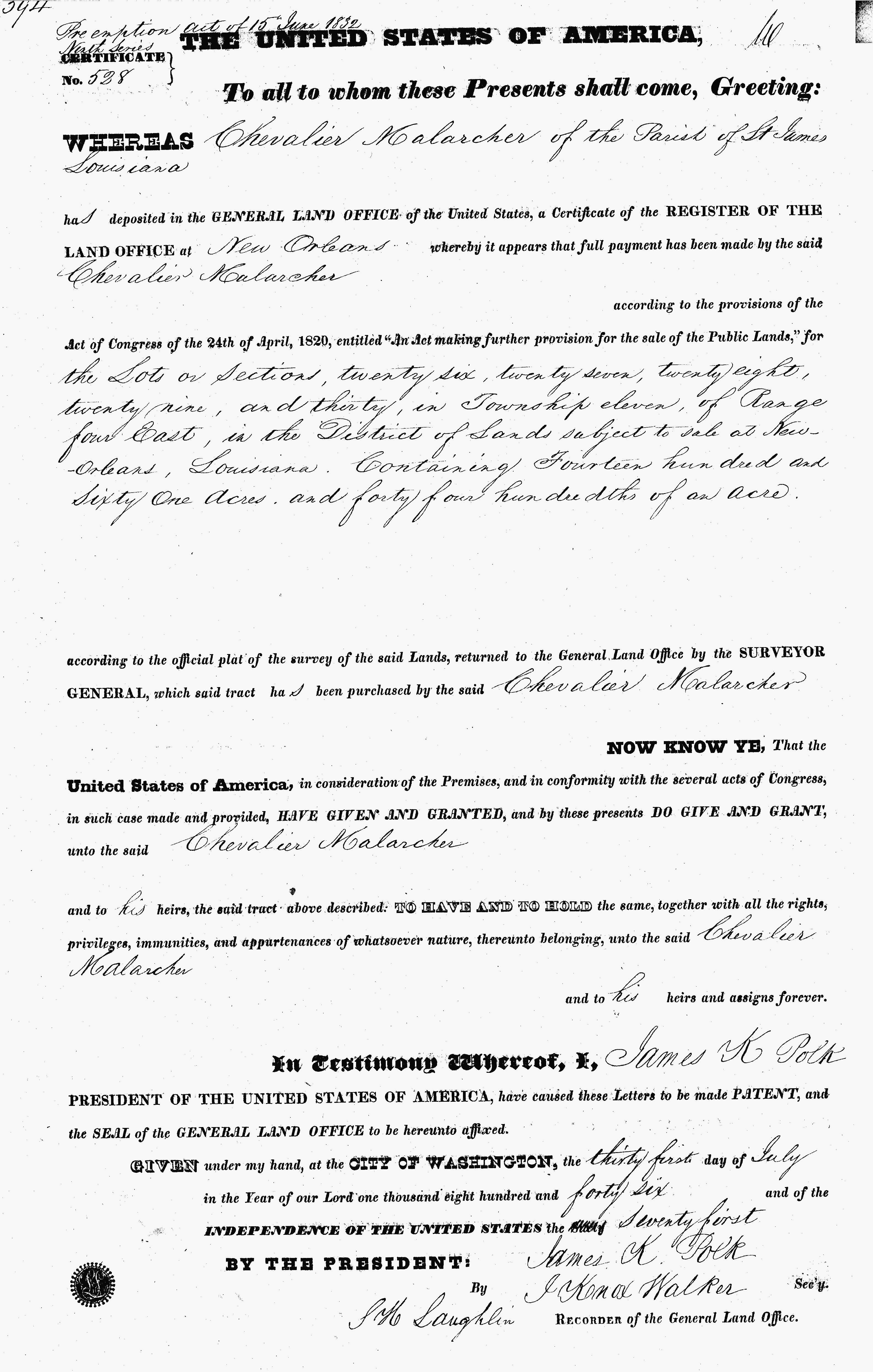
RHUSA2007B_LA0160-00394

Louis also didn’t flinch at shelling out shekels for his human property. In 1805, he purchased a slave named St. Pierre for $340, or nearly $5,300 in today’s dollars. That might have been a lot of money for “property” at the time, but to buy a human being for any price, let alone that much money, just reflects how inhuman slavery was and how cavalier slaveowners were.

As a side note, the seller is listed as Jean Druilliet. That could be a distorted spelling of Jean Druilhet, who would go on to become the grandfather-in-law of the Chevalier’s son, Adolphe, who inherited the family business from Louis after the latter died in 1841. (More on Adolphe later.)

The uprising of 1811 — as well as the fact that it involved at the very least two of his slaves — certainly didn’t deter the Chevalier from buying more and more slaves, and for greater and greater amounts of money. In 1815, for example, he purchased a 35-year-old man named Michel for $1,100, or almost $14,000 today. One of his most exorbitant purchases was a 30-year-old man dubbed Ned (as a group of five inventoried slaves) in 1812, just a year after the uprising, for $1,900 — $26,000 today.

Thrasher’s assertions that Malarcher was one of the most vile slaveowners in Louisiana could be supported by the large number of slaves who tried to escape from his plantation. Thrasher includes in his book advertisements and notices — personals, basically — of dozens of slaveowners posting rewards for lost “property,” and a lot of them are underwritten by the Chevalier. Here’s an example, posted in the Moniteur newspaper in April 1809:

“MAROON SLAVE: There left from the plantation of the undersigned, on March 29 … young negro, named APOLLON, of Congo nation, five feet, three inches, twenty-two years, good figure, name of owner tattooed on chest, speaks French and English, attired in blanket coat and black Kerseymere trousers. It is assumed he went to New Orleans. Honest reward to finder who will return him to M. Claude Treme, New Orleans, or to the undersigned on his plantation …”

Other ads include language that bluntly describe the treatment to which many slaves were subjected. One posting from April 1813 lists the escape of a male Creole “stamped on the breast C. Malarcher, has his tongue split.”

Some postings featured authorities announcing the capture of runaway slaves belonging to various masters, including one such ad in May 1816 announcing the capture of two runaways from the Chevalier’s plantation. One of them, a 30-year-old named Jack, had managed to evade capture for two years before being caught in New Orleans. The announcement describes Jack as “of a weak constitution, a thin long face, has the end of the right ear split, and a wart on the right arm, four feet and eleven inches high …”

In the 1840 federal Census — the last one taken before Louis’ death — he is listed as owning 55 slaves. The document also includes one free white male between the ages of  20-29. That was most likely the Chevalier’s son, Jean Baptiste Adolphe Malarcher, the successor to Louis’ business and plantation. My next post will discuss Adolphe and his children, a family that went through the Civil War and lost their slaves and thus, in a dose of poetic justice, much of their wealth.

Gentleman: the plantation connection

michel14

In my previous post, I asserted that Negro Leagues legend (and should-be Hall of Famer) Dave Malarcher was the descendent of the slaves of a transplanted French aristocrat who owned a sprawling sugarcane plantation in what is now officially St. James Parish but what has been colloquially known as Cabanocey, according to author Lillian C. Bourgeois.

In this post I’ll attempt to prove the connection between David Julius Malarcher, a.k.a. Gentleman Dave; Chevalier Louis Joseph D’Aspresment Malarcher; and Cabanocey, modern-day St. James Parish.

David Julius Malarcher unequivocally was born — and is now buried — in St. James Parish. He is a native of Cabanocey, a settlement originally monikered with a Choctaw Native-American word, Kabahannossé, a settlement that, over the decades and centuries, become home to both numerous sugar plantations and thousands of displaced Acadians from Canada.

When, in an undated transcript from a conversation with noted Negro Leagues historian John Holway, Dave Malarcher stated that his father worked a plantation along the river called “Charbony,” it’s likely that the name of that sprawling sugar farm was distorted from that original Choctaw word, a word that eventually became commonly known as Cabanocey.

On a note that seems tangential at best but is actually crucial to the Dave Malarcher story, different biographies of Gentleman Dave give his birthplace as alternately “Union” or “Whitehall,” Louisiana. In fact, in his conversation with Holway, he stated:

“I was born in 1894; that’s a long time ago, a long, long time ago. Union, Louisiana, that’s my home, about 57 miles from New Orleans and about 30 to 35 miles from Baton Rouge, right on the River Road, as we call it, Route 61. I was born right there, right under the Mississippi River levee.”

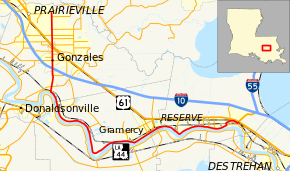
In that context, Route 61 refers to a portion of current LA state highway 44 that historically was called the River Road by locals in St. James Parish. One of the road’s major intersections is in the St. James community of Convent.

LA_44_map.svg

Likewise, in an interview with Robert Peterson for Peterson’s seminal tome, “Only the Ball Was White,” Dave Malarcher stated:

“The first baseball team I played with was called the Baby T’s. That was in the country around Union, Louisiana, where I grew up. This was prior to 1907. It was a little boys’ team and our mothers made suits for the kids. We played the boys about 10 miles up from Union, and we played teams across the Mississippi River, and then another team across the river farther south.”

Then, in a Hall of Fame questionnaire held in the archives of Dillard University in New Orleans, Malarcher listed his exact place of birth as “Whitehall (near Union), Louisiana.”

There are several communities in Louisiana dubbed Union and Whitehall, and I when I wrote this story for the Dillard U. alumni magazine a few years back, I deduced — erroneously, I now know — that Malarcher meant Union Parish, Louisiana.

However, Union Parish is way up on the northern edge of the Pelican State, far away from the fertile alluvial soil of the Mississippi River from which the Malarcher family sprung — and where many descendants continue to live to this day.

What I didn’t realize when I wrote that Dillard article — and what many historians don’t understand about Southern historical research, is that, in long-past eras like the one in which Dave Malarcher spent his childhood, in rural agrarian society many people of both races identified their birthplaces and hometowns not in terms of formal municipal boundaries — which, certainly pre-1900, were often still very undefined, if they existed at all — but by their proximity to the nearest social and population centers, which in the historical South were quote often large plantations — sugar, cotton, tobacco, citrus fruit, what have you.

After a while, when I couldn’t find any real, defined municipalities or even census-designated places named Whitehall or Union in Louisiana, I began to suspect that those names — the ones to which Dave Malarcher referred to as his birthplaces and “hometowns” — were actually plantations and the social communities that congregated around them.

That’s when I hit the books and libraries at Tulane University, especially the Louisiana Research Collection (LaRC). I thus discovered a handful of books about the history, culture and traditions of St. James Parish. The one that is perhaps most useful in this case is “Cabanocey: The History, Customs and Folklore of St. James Parish,” by Lillian C. Bourgeois.

9781565545182

In one chapter of her book, Bourgeois lists and describes numerous plantations located in now-St. James Parish. One of those sprawling farms? White Hall. She writes in her book:

“White Hall, which extended for a mile along the river, was one of five plantations belonging to Marius Pons Bringier. He came to Louisiana from France, via Martinique, and in 1785 settled in St. James, where his French Gothic home became known as Le White Hall. … in its heyday, White Hall equalled, or surpassed, any plantation in Louisiana and the tales which are handed down to us are as fabulous.”

And, fortuitously enough, Bourgeois notes that another plantation in Cabanocey was dubbed … Union! But wait, there’s more — there’s even an intimate connection between the two planter’s paradises!

Seems that Marius Pons Bringier, somewhat forcibly and without her consent, arranged a marriage between his teenage daughter Betsy and a wandering, worldly, ne’er-do-well named Augustin Dominique Tureaud.

At first Betsy was shocked and dismayed — and Tureaud himself was a little taken aback by Bringier’s offer — but both, whether they really wanted to or not, eventually acquiesced. And, oddly enough, it worked out, and in the process it helped connect the plantation dots. Writes Bourgeois:

“But stranger still was the fact that Betsy fell in love with her husband and they lived very happily on Union Plantation — a wedding gift from her father, who named it thus because of this strange union in marriage.”

And thus White Hall and Union — the communities, I argue, to which Gentleman Dave Malarcher always referred as his place(s) of birth — were connected by history. States Bourgeois:

“White Hall was divided and subdivided into many small farms and today White Hall-Union is one of the most thickly populated rural areas in America.”

All of which, I firmly believe, explains Dave Malarcher’s place of birth and childhood, which is definitely placed among the plantations of what is now St. James Parish.

So how do Chevalier Louis Joseph d’Apresmont Malarcher, his descendants, his slaves and his slaves’ descendants — whom I contend include David Julius Malarcher — fit into all of this? That, my friends, is for another post …

The Gentleman Dave story: a French aristocrat, a slave revolt …

germc1

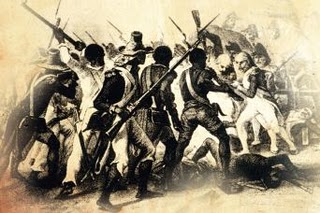
Between Jan. 8-10, 1811, a group of slaves from different plantations along the Territory of Orleans’ “German Coast” — a portion of the Mississippi River through present-day St. Charles, St. John the Baptist and St. James parishes — took part in a rebellion against their masters.

The revolt came just over a year before Louisiana became a state in the Union of the United States, and it was brutally suppressed by both government forces and white militias comprised of plantation owners and other authority figures.

By the time the rebellion was quelled, nearly 100 slaves — mostly mixed-race men — had been killed, with many being summarily tried and executed via beheading and their heads being placed on stakes at the entrance to plantations as well as public places in New Orleans proper.

1811-battle-scene

Eight days after the complete suppression of the rebellion, Louisiana territorial records documented the “sale” of an unnamed slave by an owner named “Malarcher.” In reality, the document was essentially the official recording of a financial loss written off by Malarcher. The slave, quite obviously, had fatally taken part in the revolt. Stated the document:

“Slave listed as dead. This slave was involved in a conspiracy or a revolt against slavery. … Malarcher, 2 killed in battle, no name given. Listed on census of slaves killed during revolt, executed after judgment, in prison in the city or in the countryside, or missing before revolt.”

This seller named Malarcher was in all likelihood Chevalier Louis Joseph D’Aspremont Malarcher, a wealthy white planter born in France in 1753 who shifted to the then-French colony of Haiti by the early 1790s.

Records show, however, that the Chevalier — an honorific title for French upper-crust nobility — fled Haiti almost as soon as Toussaint Louverture instigated a successful slave rebellion in the colony that led to the creation of the free republic of Haiti.

Malarcher arrived in New Orleans in 1791 at the age of 38 and lived for a time in Orleans proper before, sometime between 1805 and 1810, taking up residence and launching a sugar plantation along the Mississippi River in what is now St. James Parish.

The Chevalier probably owned many slaves. Some he might have brought with him when he fled Haiti in 1791. Several others, documents state, he bought in Orleans Territory after he arrived the the still-nascent United States.

The Malarcher slave killed following the German Coast Uprising could have been imported with Louis from Haiti or purchased thereafter. There might never be any way of knowing for sure.

However, what is almost certain is that the unnamed, martyred slave was a distant ancestor of David Julius Malarcher — Negro Leagues legend “Gentleman” Dave Malarcher, who was thus the descendent of the family of a wealthy, white, sugarcane planter who became one of the pillars of society in the region named Cabanocey — modern-day St. James Parish, according to a book by Lillian C. Bourgeois.

How can we be sure that it was this strain of Malarchers to which Gentleman Dave belonged? We’ll leave that for the next post. For now, let’s conclude this beginning of the David Julius Malarcher story here …

A focus on Gentleman Dave …

malarcher

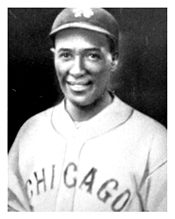
Gloria Malarcher Youngblood never met her great-uncle, David Julius Malarcher, but she’s heard other family members talk about the man dubbed Gentleman Dave ever since she could remember.

That reverence among her fellow Malarchers for the man who rose up from humble beginnings in St. James Parish to become one of the greatest third baseman and managers — not to mention one of the most genuine, educated and gentlemanly figures — ever to grace the diamonds of the Negro Leagues permeates family discussions about David.

“We’re very proud of him,” Mrs. Malarcher Youngblood told me last night. “Very, very, very proud, I can tell you that. He’s a legend in our family.”

Gloria lives near Convent in St. James Parish, right near the east bank of the Mississippi River, maybe a little over an hour west of New Orleans. There are numerous Malarchers still living in that area, and someday soon I hope to venture to Convent to meet some of them and visit Gentleman Dave Malarcher’s grave in the cemetery at St. Michael’s United Methodist Church.

I’m in the process of working on a story on Gentleman Dave for the New Orleans Zephyrs‘ annual game program, and I’m working on nominating him for the New Orleans Professional Baseball Hall of Fame.

In addition, I’m formulating a possible book-length project on the man who was given the ultimate amount of respect from teammates, opponents, fans and the media during and after his days with the New Orleans University varsity squad to the semipro New Orleans Eagles to the Indianapolis ABCs to the world champion Chicago American Giants.

I’ve already dug a great deal into Dave’s familial and ancestral roots in St. James Parish, as well as the historical context in which the Malarcher family story rests. The Malarcher tale traces back to a French aristocrat and slave owner who arrived in Louisiana around 1800 after fleeing the Toussaint Louverture-led revolt in Haiti.

Over the next couple weeks, I’ll focus on telling that story, starting, naturally, at the beginning with Chevalier Louis Malarcher d’Aspremont and ending with Gloria Malarcher Youngblood and her fellow living relatives of Gentleman Dave Malarcher.

The narrative winds from slavery on the sugar plantations that made St. James one of the most prosperous parishes in Louisiana before the Civil War, though Dave’s surprisingly pleasant youth on the banks of the mighty Mississippi through a near-legendary career as player-manager of the great Chicago American Giants teams of the late 1920s.

It’s a tale that, says Gloria Malarcher Youngblood, has been extensively explored by her relatives.

“My cousin did that research,” she says. “He’s been digging and digging and digging, doing research for years. The Malarcher line goes deep, and it’s long. There’s a long line of Malarchers.”

Thus, in the end, the story of a legendary Negro Leagues figure is about family.

“You call him Gentleman Dave,” she says. “We call him Uncle.”

So for the next couple weeks, I’ll explore the Gentleman Dave, and Uncle, narrative in a series of blog posts about him, his roots in rural Louisiana and his connection to New Orleans. I’m going to try very hard to do something at least every other day.

For now, I’ll conclude this post with a quote from a narrative Gentleman Dave related to groundbreaking writer and journalist John Holway that I found in the Dillard University archives:

“Propaganda is a terrible thing. The propaganda of segregation and bigotry is evil. It deceives people. I used to have Negroes occasionally tell me, ‘Do you think Negroes can play in the Major Leagues?’ And do you know what I would say to them? ‘Do you think so and so here, who is a barber, can cut hair like a white man?’ I would say, ‘Do you think Doctor so-and-so, who is teaching in a medical school, can teach a white professor?’ Well, certainly. And I would say, ‘What’s baseball that I can’t play it like a white?’ And I used to say occasionally that if they say that the Negro is the nearest thing to the savage, I think he would play better than a white, because baseball is only running and jumping and throwing a stick. He would be better. But the whole point is that the propaganda of keeping the Negro out of the Major Leagues made even some of the Negroes think that we didn’t have the ability. It started them to thinking it too. But I said, ‘Just wait until we get in there, and see what happens.’ And they used to ask me, ‘When do you think we will get in?’ And I said, ‘When we can prove to the white man that we can bring him something, that’s when we will get in there.'”

A Hornets’ nest in Montgomery

KIC Image

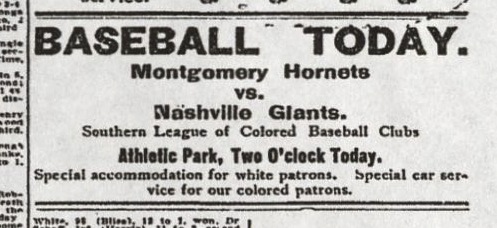
Advertisement from the July 15, 1905, Montgomery Advertiser

In one final post (at least for now) on the short-lived 1905 Southern Colored Baseball Association, I found a some bits of interesting stuff about another one of the league’s members, the Montgomery Hornets. I didn’t uncover much, mind you, but enough to pique my interest.

The Montgomery Advertiser newspaper provided a bit of scant coverage of the Hornet’s 1905 campaign. Like many newspapers of the day, articles about sporting events, especially African-American confabs, the Advertiser didn’t include the first names of the players on the team that year, which frustratingly makes it difficult to find out much background about those players, at least not immediately.

The Hornets played several of the other members teams of the SCBA, with apparently decent results. In late June, the Stingers squared off against the Nashville Giants and came away with a “W.” According to the Advertiser:

“The Montgomery Hornets of the Colored Southern Association played again yesterday at Washington Park, defeating the Nashville Giants by a score of 7 to 4. Both teams played good ball.

“Batteries for Montgomery, Terry and Brown, for Nashville, Church and Watkins. Time of game 1:55.

“The next visiting club will be Beaumont, Texas, playing here Monday and Tuesday.”

The result of the Beaumont clash was a 9-0 thrashing of the Texans by the Hornets at Washington Park in a game that was called in the middle of the eight inning. Despite that lopsided score, the Advertiser reported, “Both teams played fast ball.” On the mound for the Hornets was a twirler named Baugh, with Brown doing the receiving.

On July 11, 1905, the Stingers clobbered the Pensacola Klondykes, 9-0, at Athletic Park, with Lamar doing the hurling for the Montgomery squad. Stated the Advertiser:

“Announcement was made yesterday that hereafter the negro league teams will play at Athletic Park when the southern league team is on the road.”

Such an arrangement was extremely commonplace through segregation-era black baseball; African-American teams often picked up the scraps left by the local white pro teams, including scheduling their contests around those of the white squads and even, at times, wearing used, hand-me-down game uniforms from the “organized baseball” club. (In this case, Montgomery’s representatives in the Southern Association were the Senators.

The last mention I could find of an actual Hornets game in 1905 was in the July 15 Advertiser, which included an ad for an upcoming game at Athletic Park against the Nashville Giants, as well as a couple paragraphs on the Hornets’ loss the night before to the said Nashville aggregation. Reported the paper:

“Again the Hornets, or the Montgomery team of the Southern Negro League were defeated yesterday by the Nashville Giants. The score was 2 to 1. Lamar, the Hornet pitcher, struck out fourteen men and walked none. Still he lost through poor support.”

So it seems like this “Lamar” was the ace of the Stingers’ staff, but I couldn’t find any information about the ‘Nets’ prowess at the plate of any references to the fielders behind the team’s hurlers.

In late July, the Hornets, like so many other teams in the Deep South, were negatively affected by New Orleans’ massive yellow fever epidemic and the resulting quarantine around the Crescent City. Noted the July 27, 1905, New Orleans Item:

“Owing to the quarantine the Hornets of Montgomery have cancelled their dates here. They are very sorry to disappoint the colored baseball fans, but are afraid they would have to remain here the same as Birmingham did and not be able to fulfill their other dates.”

So that was the unfortunately brief and rather undocumented tale of the Montgomery entry in the 1905 SCBA, and I didn’t really uncover any references to the team in any years before or after 1905.. If anyone out there has any further info on the Hornets and/or the SCBA, float it might way!

Steel City, here we come!

sabr

2014-Malloy-Conference-logo.preview

As Leslie Heaphy said in the announcement of the news, the 2015 Society for American Baseball Research Jerry Malloy Negro League Conference has been slated for Aug. 6-8 in Pittsburgh at the Wyndham Grand Pittsburgh Downtown. More news will be forthcoming soon, but mark it down on your calendars!

Pittsburgh, of course, wasn’t just the site of such legendary pro teams like Cum Posey’s Homestead Grays and Gus Greenlee’s Pittsburgh Crawfords, but also thriving sandlot, semipro and industrial leagues that sprouted up around the city’s famous steel factories and forging plants. For more about baseball and other African-American sports in the Steel City, check out Rob Ruck’s seminal “Sandlot Seasons: Sport in Black Pittsburgh.”

A date for the Barrow dedication — April 25!

IMG_0826

Wesley Barrow’s grave in current state

We’ve set a date! The official, formal dedication ceremony for the new grave marker for NOLA Negro Leagues legend Wesley Barrow is slated for 10 a.m. on Saturday, April 25, at New Hope Baptist Church Cemetery in Gretna, located at the corner of Lafayette Street and the Westbank Expressway.

We hope to have a lineup of speakers to give brief talks, and we’ll have a minister to do an invocation and prayer. Beyond that, we’re still working on details — more to come.

But everyone is invited! Like I posted earlier, the marker is completed and ready to go in the ground, something we are working toward as I write this.

Like I said, more later!

Sorry, ain’t got ’em

KIC Image 0001

Something unexpected happened to me last week, something about which I had, quite honestly, completely forgotten.

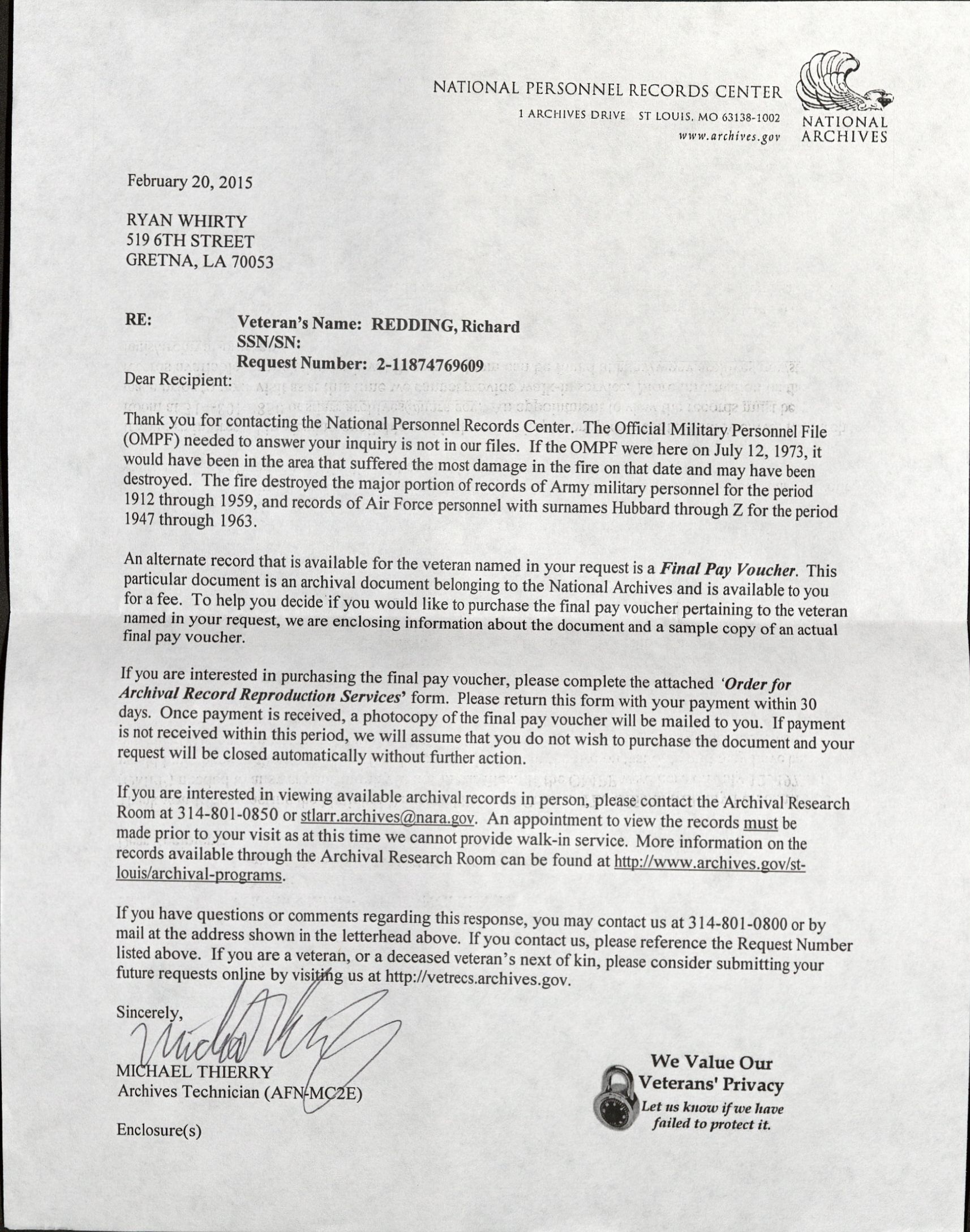
I got a mailing from the National Personnel Records Center, with which I had applied for a copy of Cannonball Dick Redding’s military service file from World War I. I was hoping the files might explain why he was hospitalized and died at Pilgrim Psychiatric Center on Long Island in the 1940s.

I can’t even remember when I sent the application — or what the amount of the fee was I had to pay to submit said application. I just assumed, frankly, that my request would get lost in the massive shuffle of the equally massive bureaucracy of the federal government and the U.S. military.

But hark! I got a response, dated Feb. 20, 2015 and signed by archives technician Michael Thierry. I was ecstatic, despite the fact that, in the interim between my sending the request and receiving this response, Gary Ashwill received an unedited copy of Cannonball’s death certificate, which revealed that Redding died from the debilitating effects of syphilis.

Even with that, though, I was excited to receive any sort of documents or records from the government about this legendary pitcher and should-be-Hall-of-Famer.

But, after opening the mailing and reading the letter, which I posted above, I just had one thing to say.

D’oh!

Here’s the first paragraph of the letter from Mr. Thierry:

“Thank you for contacting the National Personnel Records Center. The Official Military Personnel File (OMPF) needed to answer your inquiry is not in our files. If the OMPF were [sic] on July 12, 1973, it would have been in the area that suffered the most damage in the fire on that date and may have been destroyed. The fire destroyed the major portion of records of Army military personnel for the period 1912 through 1959, and records of Air Force personnel with surnames Hubbard through Z for the period 1947 through 1963.”

So, I suppose, that is that. The letter went on to suggest that I apply and pay for Redding’s “Final Pay Voucher,” and the packet included a description of an FPV and an example of what one looks like and what it includes — and, of course, a blank application with a note that the fee is $25.

So I’m not sure if I should sink the money, time and energy into trying to get something that won’t tell me much that I a) already know, or b) how much Cannonball earned from his service, which would be interesting but perhaps not all that earth-shattering.

What do you think? Should I go for it?

The needs of the many …

Minoso-Soxyswgkmhkfttitefwnmps

Brothers in arms?

… outweigh the needs of the few, or the one.

A classic line from Star Trek II: The Wrath of Khan, spoken by Mr. Spock as he’s dying after saving the Enterprise by fixing the nuclear reactor.

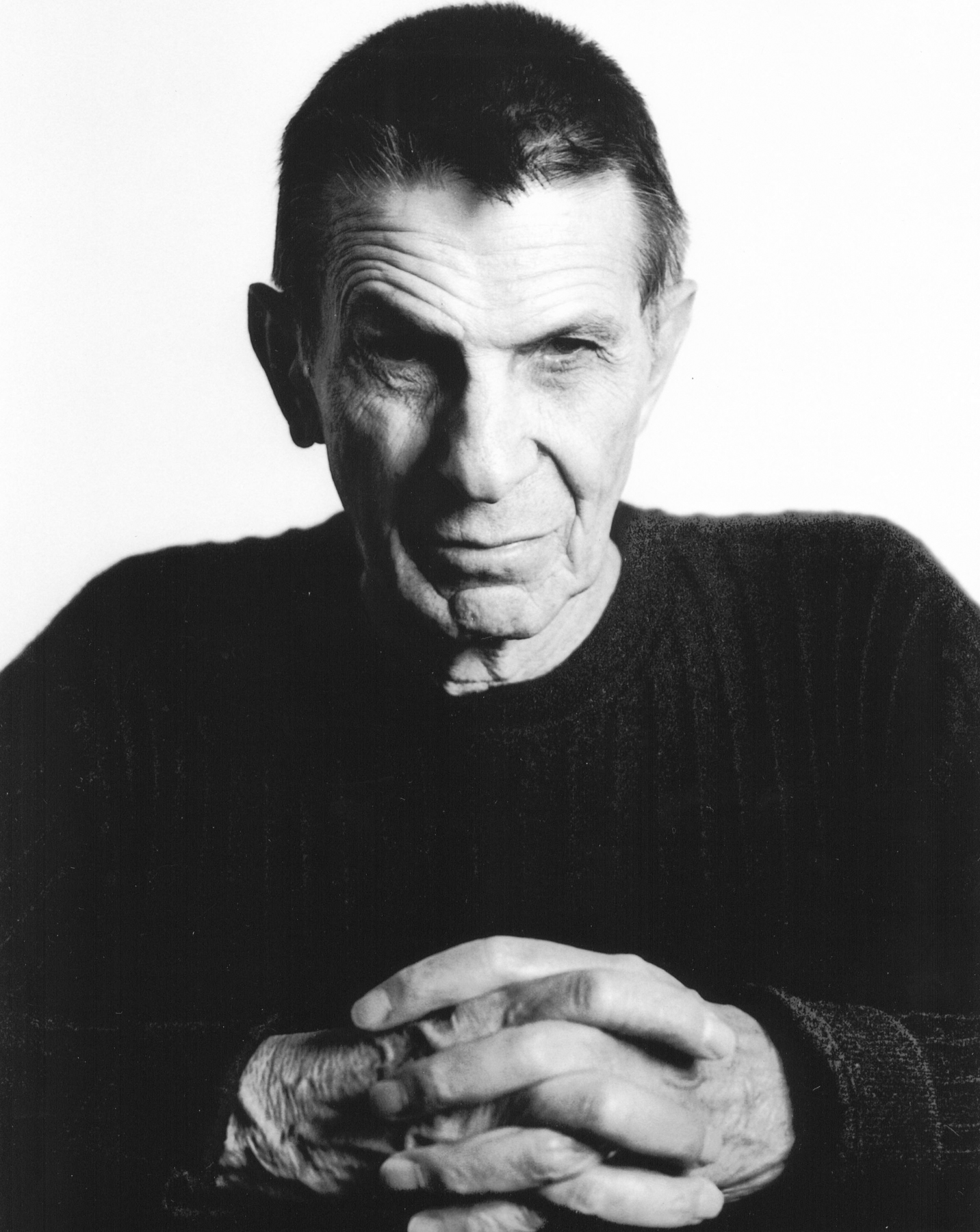
Leonard Nimoy, a.k.a. Spock, died a few days ago. I’ve always been a casual Star Trek fan. I watched it with my family in reruns when I was a kid. It was always followed by another fabulous Nimoy show, In Search Of …

So Nimoy’s death kind of hit me harder than I ever might have expected. In addition to his acting career, he was an accomplished artist and author, and he always had a quiet, humble dignity about him, but when he spoke, people listened. He also guested on The Simpsons multiple times, which automatically doubled his already sparkling cool factor.

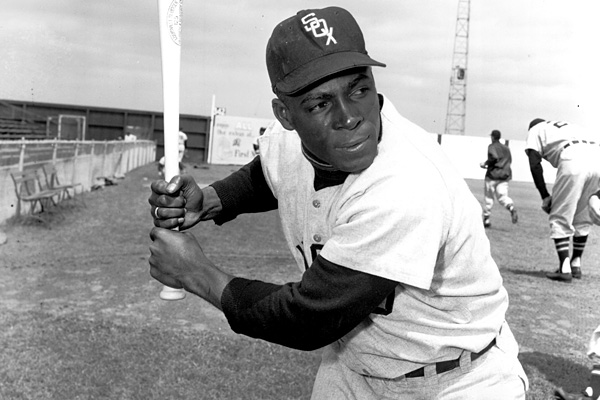
And then Minnie Minoso, Mr. White Sox, a trailblazing black Latino who broke down so many barriers in the Major Leagues, died this weekend. And it happened just a couple months after another groundbreaking black baseball player — Mr. Cub, Ernie Banks — died.

So we have a trio of deaths that affected me personally. I will dearly miss all of them. But I’ve been trying to find some connection between Minnie, Ernie and Leonard, and it definitely was a challenge.

But I think I’ve come up with one or two. It might seem like a stretch but I see a certain poignancy in it.

First, just like Ernie and Minnie, the original Star Trek series broke down racial barriers multiple times, becoming one of the first mainstream TV shows to, as they said, boldly go where no one had gone before and address such sensitive issue. Take the episode where William Shatner, a.k.a. Capt. Kirk, kissed Nichelle Nichols, Lt. Uhura, whose very presence on the show was itself show-stopping in its courage.

Leonard also, on several occasions, stood up for the abilities, opportunities and rights of his minority co-stars, Nichols (who is African-American) and George Takei (who is Asian-American and gay). Reportedly, Star Trek creator Gene Roddenberry dubbed Nimoy “the conscience of Star Trek.”

Then there’s the quote to which I referred at the beginning of this post. I did so because I believe it directly relates to what Minoso and Banks achieved in the baseball world. Just like Spock made the ultimate sacrifice to save his ship and crewmates, Minnie and Ernie put their own well being on the line and endured a slew of trials and tribulations as ethnic trailblazers in organized baseball so the multitudinous generations that followed them could prosper and benefit from their personal sacrifices and courage.

Again, maybe a bit of a stretch. But I do see a line that can be drawn from the two baseball legends to the acting legend — who also, by the way, faced prejudice himself because of his Judaism.

The needs of the many do indeed outweigh the news of the few, or the one. Spock knew that, but I firmly believe that our two African-American hardball heroes, Ernie Banks and Minnie Minoso, experienced it first-hand, too.

Max-ed out in NOLA

005152062_00316

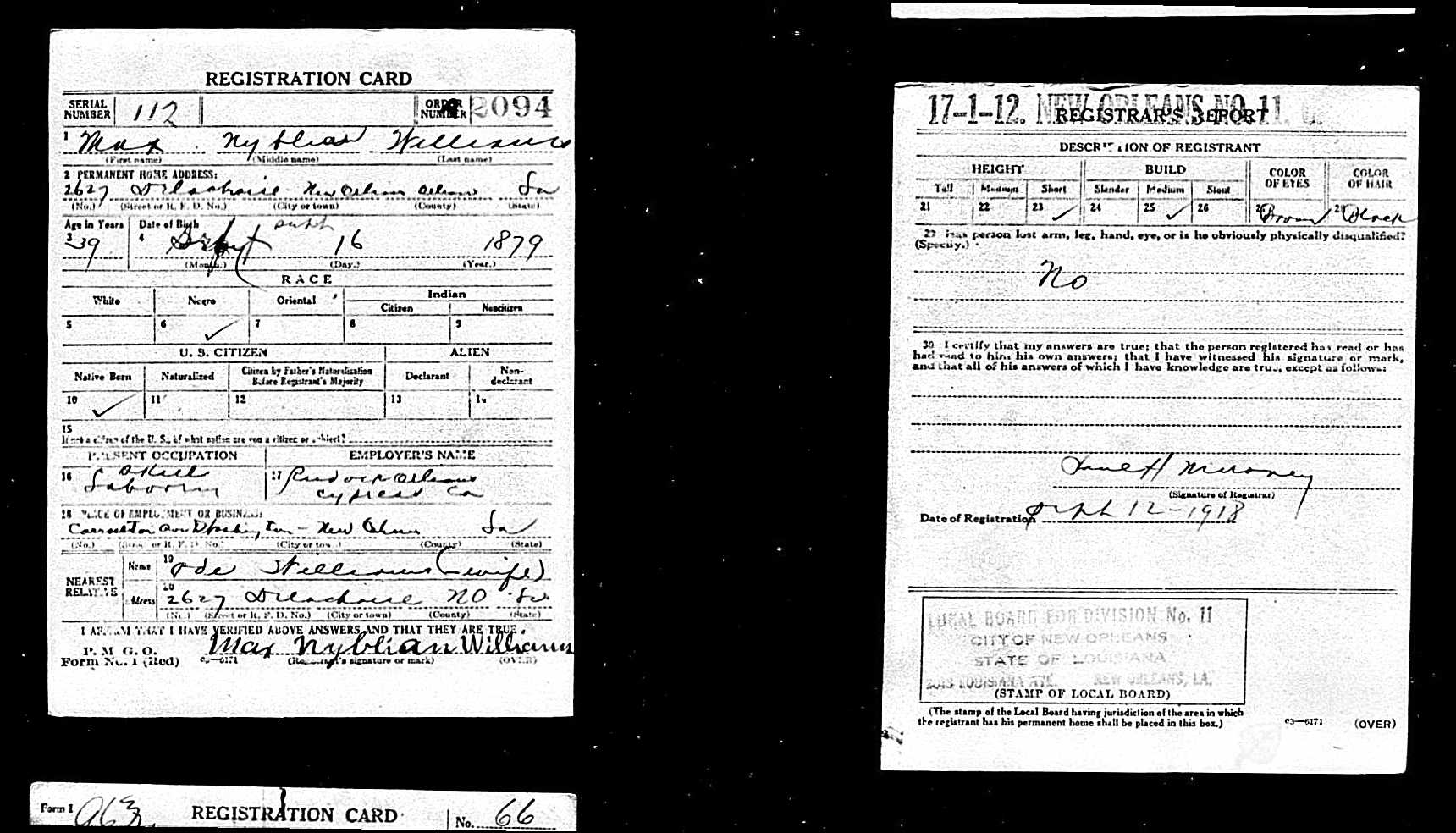
Max Williams’ WWI draft card

Did Max Williams have cahones?

That would be a resounding “yes.”

In September 1907, the pitcher for the Iroquois, a “colored” team in New Orleans, called out every other black hurler in the Big Easy. Stated a brief in the New Orleans Item:

“Max Williams, pitcher for the Iroquois Club, leaders for the pennant in the Crescent Social Club’s baseball league, to show his superiority over others, would like to pitch twenty innings against any pitcher in the league. A Dewey pitcher preferred.”

The Deweys were another squad in the African-American sandlot circuit and apparently the somewhat bitter rivals of the Iroquois.

Why do I bring up Max Williams? Because of his connection to the Southern Colored Baseball Association of 1905, which I discussed in my previous post. The SCBA was a short-lived attempt by Dixie’s best black hardball teams to once again organize a regional league. Unfortunately, by all appearances the association crashed and burned before the ’05 summer had drawn to a close.

The NOLA representative in the association, though, was the Brooks Club, and Williams was the team’s ace hurler. By all accounts, btw, Williams’ challenge passed without a response, at least not directly. But a little while later, as I’ll mention later in this post, Williams did get a crack at the Deweys.

The Brooks themselves seem to have formed in or around 1903, when they’re first mentioned in the New Orleans Item in early September. In the Sept. 5 issue of the paper, an article states that the Brooks Club will face the Klondykes of Pensacola, Fla., for what the publication dubbed a sort of Southern title set. The clash was best two-out-of-three, with a pot of $50 on the table for each game. Stated the paper:

“The contest will no doubt be close and exciting, as it will be for the colored championship of Louisiana and Florida.”

The results of the diamond collision couldn’t be immediately discerned. However, from then on, the Item referred to the New Orleans aggregation as “the Champion Brooks.” (The Klondykes, as it turned out, would be Pensacola’s entry in the SCBA in 1905.)

That media-dubbed appellation began in 1904, when the Brooks squad tore through a series of rival clubs from across the Gulf coast. The team faced the Olivers of Biloxi, Miss., in April of that year, and in July, the Brooks squeaked by the crosstown rival Crescents, 5-4, before launching a scheduled, epic, five-week road trip beginning in Atlanta. “New Orleans,” claimed the Item, “has the fastest colored team [in the] South.”

Apparently, though, the Brooks hung around the NOLA area long enough to beat the Plaquemine Young Americans a couple times later in July. That’s when Max Williams first shined for the Big Easy “champions.” Reported the July 26, 1904, Item:

“The Champion Brooks defeated the Young Americans in a stubborn contest in yesterday’s double header by winning both games. The feature of the game was the pitching of Max Williams of the Brooks, who shut out the visitors, letting them down with two hits and ten strike-outs, none reaching third base in the first game. … Max Williams retired from the club holding the championship record for amateur pitchers.”

For the Brooks, then came the heretofore chronicled 1905 season in the SCBA, when Williams continued to establish himself as the city’s best African-American hurler, at least at the sandlot level, by becoming the ace of his team’s staff.

Once the SCBA dissipated, the Brooks continued to take on all comers in the region in 1905, including the Birmingham Blues in late August in what the Item, as usual, hyped as a sort of “colored” title clash:

“This will be the last chance to see the two strongest colored teams in the South in action. Sunday will decide which is the best team.”

The article also reported that the clashes — the Birmingham/Brooks game was the second of a doubleheader — “have been arranged for a benefit to the Birmingham team, which had the misfortune to be caught in the quarantine here.”

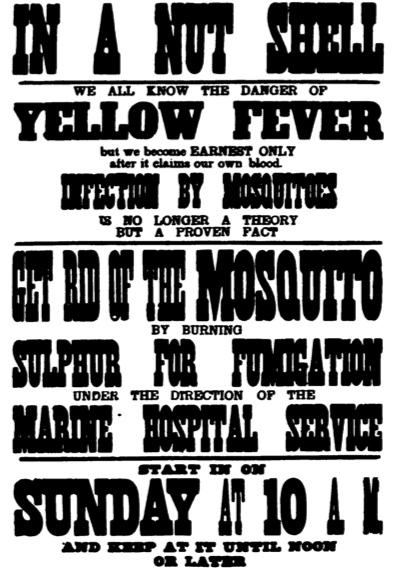
The line is no doubt a reference to the horrible yellow fever epidemic that decimated much of the population of New Orleans that summer. The benefit doubleheader perhaps helped pay for the Blues’ food and lodging while they were stuck in New Orleans, as well as their travel arrangements back to Alabama.

YellowFeverPoster

The Brooks appear to have forged ahead for another season or two, but all mention of them in the local NOLA press dropped off by the end of 1908. The last mention I could find of them was in Daily Picayune in July ’08, when they took park in a doubleheader that christened a brand-new diamond, Oleander Park, for African-American baseballists in the city.

If the Brooks did fold, Max Williams evidently remained in hot demand, because he was snapped up by the Iroquois club in ’07. That season appears to have culminated in early October, when Williams got his wish — a showdown with the Dewey club. Reported the Item in a front-page story, a placement in the paper that was an absolute rarity for black baseball in the city:

“… The race between the two clubs has been very close since the beginning of the league season, and now that it is to be finished, it finds both clubs tied for first place. Both clubs will put out their strongest team, and no doubt the rooters will be out in full force. … Max Williams, the Iroquois star, will do the twirling for them, while ‘old man Sheridan’ will be on the firing line for the Admiral Dewey crowd.”

But the results of the impending title contest don’t appear to have been reported, so perhaps no one will know for sure whether Williams did indeed make good on the boast he issued to all other local twirlers early in ’07.

And I couldn’t find any references to Max Williams in terms of baseball following that year. All I could do was put together a little biographical sketch, but even then there’s a lack of clarity …

Williams’ birth date is the primary question mark — in his WWI draft registration card, Williams claims that he was born on Sept. 16, 1879, but his 1953 California death record — he and his wife, Odile, appear to have moved to Los Angeles later in life — lists his birth date as Sept. 16, 1884, a full five years later than his draft card reported.

On top of that, various Census entries and other documents give his birth annum as various other years in the 1880s; his marriage record, for example, states that he was birthed in about 1881.

There’s also the issue of his middle name — his draft card calls him Max Nyblias Williams, but his death report gives his middle moniker as Nivlin.

While living the majority of his life in New Orleans, Williams, like many African-American men of the time, toiled as a common laborer for various employers, including a saw mill.

In December 1908, Williams married 21-year-old Odile Harding in New Orleans, and the couple had a son, Max Jr., just about nine months later. The family lived with Odile’s mother, Lillie, on Delachaise Street in New Orleans proper before the couple and Max Jr. moved later on.

31111_4329986-00396

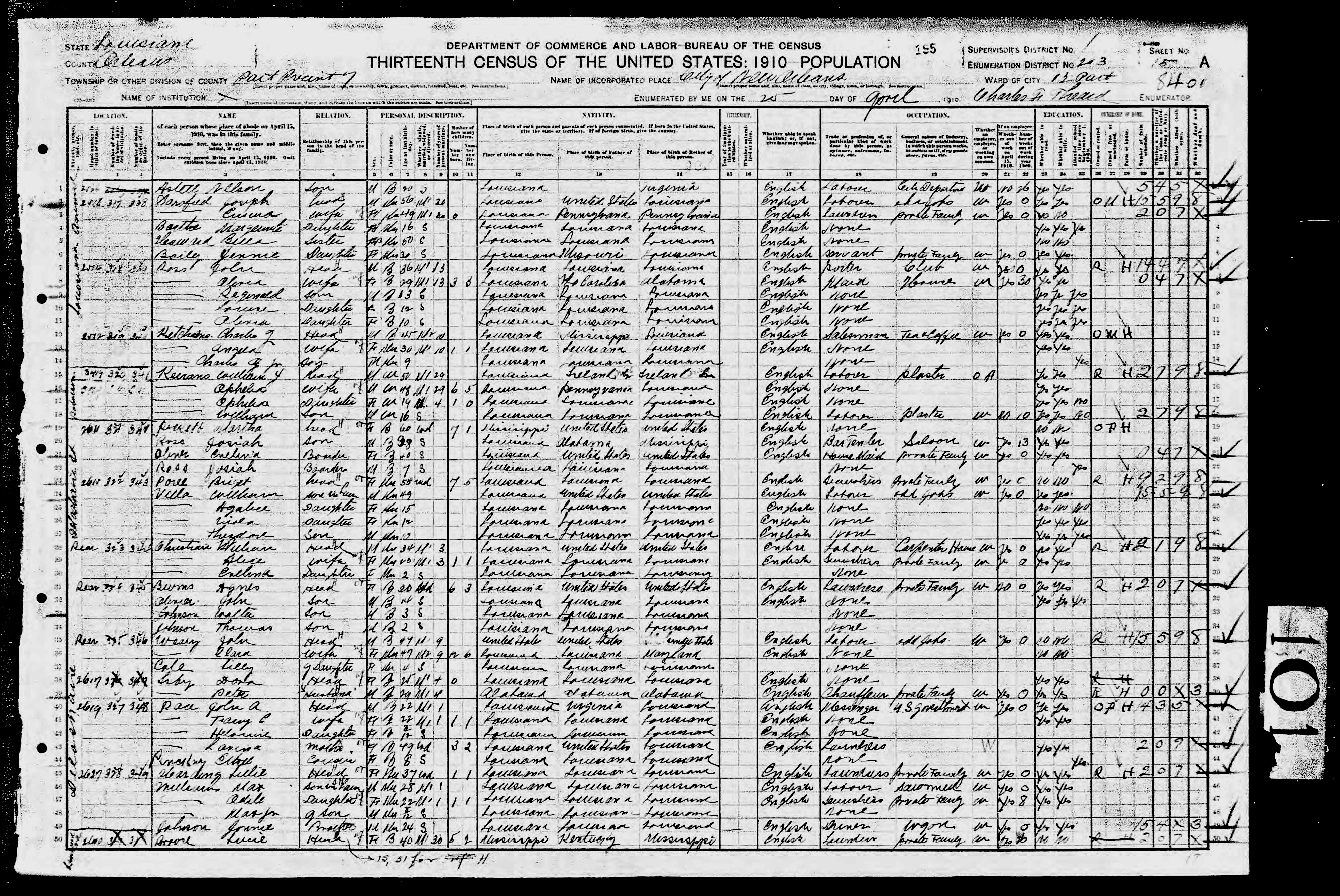
1910 Census record for Max Williams and family

While in Los Angleles, Max Sr. labored as a janitor, and Junior became a linotypist at a newspaper — a job that is now, eight decades later, long since extinct. Max Williams Sr. died in 1953, having been predeceased by Odile, who passed in 1944 at the age of 58. Given the massive lack of clarity surrounding his birth date, Max Sr.’s age at his death is likewise unclear. Max Williams Jr. died in Los Angeles in 1979 at the age of 69.

One final but in no way unimportant note about Max Williams and his family: they were, in all likelihood, extremely light-skinned, so much so that they could, and apparently did, pass as white …

In the 1910 Census, the entire family, including Lillie Harding, is listed as “mulatto,” but in the 1920 report, the Williams’ and Lillie are stated as white! However, 10 years later, when they were recorded in the 1930 Census in L.A., Max, Odile and Max Jr. are recorded as … Negro!

It’s indeed quite puzzling. But Max Williams, for the purposes of African-American baseball history, was a small but important cog in the 1905 Southern Colored Baseball Association, one in a long string of valiant but ultimately doomed attempts by black hardball enthusiasts to organize into a viable circuit.

And, if only by virtue of his priceless challenge to the resting of the NOLA baseball twirling community, Williams has earned a place in the long but underappreciated tradition of, shall we say, unique Negro League pitchers from the Crescent City, one that continued with luminaries like Iron Claw Populus, Groundhog Thompson, Peanuts Davis … it’s a pretty amazing list.