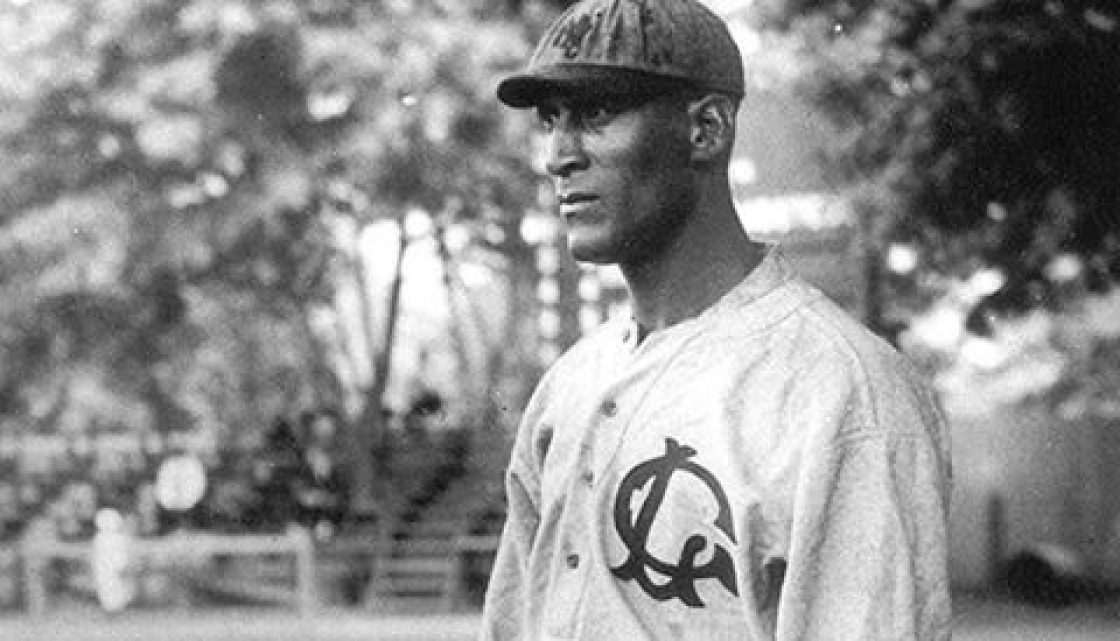
McNulty Park and the intersection of Black sports and trauma

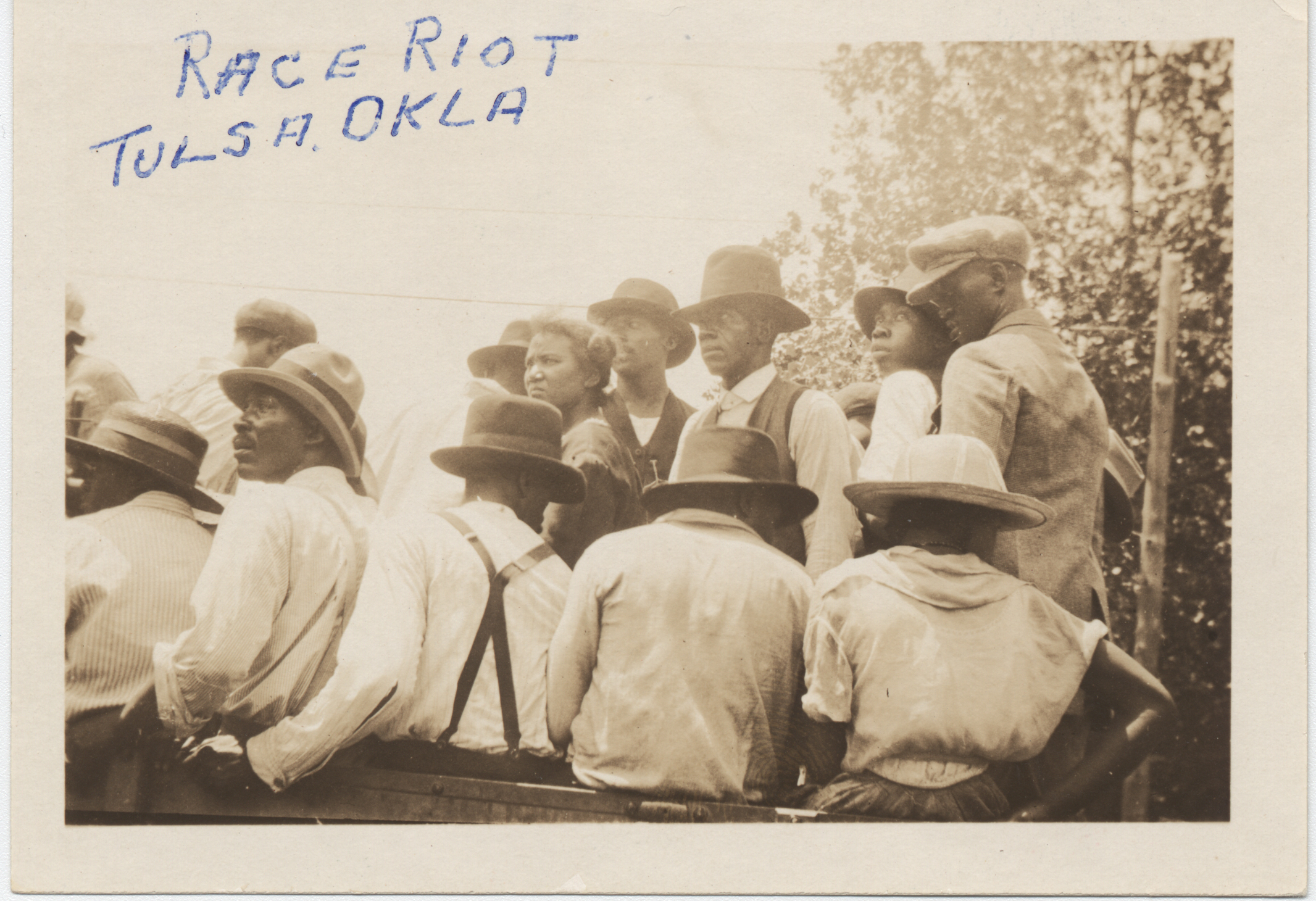
African-American residents of Tulsa being detained during the 1921 race massacre. (Photo from University of Tulsa Department of Special Collections.)

Editor’s note: The following essay was written and graciously submitted by my Facebook buddy and fellow baseball historian Johnny Haynes. It’s a pretty fascinating and saddening look at how baseball, race relations and tragedy collided in May 1921 in Tulsa. I’ve only lightly edited it.

Just like the Superdome in New Orleans during Hurricane Katrina, sports venues have long borne witness to non-related pain and trauma throughout history. As baseball is the original American pastime, so too have baseball diamonds. 

In 1919, McNulty Park opened for the new Tulsa Oilers of the Class A Western League and was soon a frequent destination for white major league teams and players, including Babe Ruth.

Negro League baseball had been played in Tulsa for well over a decade, and in 1920, an unnamed Tulsa team was listed as a member of the Texas Colored League. The north end of Tulsa was home to the Greenwood community, a prosperous area that housed most of the city’s Black residents.

On May 31, 1921, the white Oilers and the Oklahoma City Indians finished a doubleheader, unaware of what was happening beyond the ballpark’s walls.

One day earlier, a young man named Dick Rowland tripped walking into an elevator, accidentally landing on a white woman named Sarah Page. A bystander who heard her scream called police and he was arrested, with a sensationalized story printed in the newspaper the next day.

As the Oilers were boarding the train and the Indians were waiting for the next one, a group of armed Black residents from Tulsa who were concerned that Rowland would be lynched collided with a group of white residents at the courthouse. As the white group attempted to disarm the Black group, a shot rang out and a gun battle ensued that would envelop the entire city.

McNulty Park in its earlier days. (Photo from Tulsa Historical Society.)

Almost simultaneously, houses caught fire, stoked by arsonists on the ground and airplanes dropping crudely made incendiary bombs. Residents who came out with their hands up were either forced back inside, shot or whisked away by civilians. Bodies were also thrown back into the burning houses, a scene witnessed by Oklahoma City players who had their train out of town delayed. Trains themselves, for that matter, were attacked, and hospitals caring for the injured stormed. The National Guard arrived and was subsequently deputized alongside “all whites” and became officially sanctioned to join the mob.

The Black residents who weren’t killed were rounded up, detained and marched by gunpoint into the city convention hall, then the baseball stadium as their homes burned. Women and children were allowed to take seats in the grandstands, while the men were held on the ballfield. None could leave until white employers came to vouch for them.

McNulty Park was photographed on that day, depicting what would look like a capacity crowd at a game were it not for the strange formation of men sitting on luggage and standing around hopelessly under armed guard. Other photographs show men being unloaded from trucks outside the stadium like cattle. The Coffeyville, Kan., Morning News described conditions in the park:

“Inside the park was color and heat – stifling, odorous heat – the crying of babies, the sound of many voices and the moaning of women; and negroes [sic] – thousands of negroes [sic] huddled together as far as the eyes could see from one end of the grandstand to the other. The majority of them accepted the inevitable in good part; crowded and hot and sticky as it was.”

Martial law was declared the following day, and perhaps because there was nothing left to burn, the riots ended. 

The toll will probably never be fully accounted for. Thirty-five city blocks of homes, businesses, churches and schools were razed, resulting in a reported $4 million in property loss. An estimated 10,000 residents were homeless overnight. The Oklahoma Bureau of Vital Statistics officially reported 36 deaths, though modern estimates range from 75-300. At least 800 people were hospitalized. Predictably, only the names of the white residents who died were printed in the newspapers.

Just 10 days later, McNulty Park was back to hosting ball games, like the massacre never happened. The Tulsa Tribune advertised a doubleheader between the Elks club teams of Tulsa and Oklahoma City on June 12. Returning too would be Blackball.

On June 4, with smoke still literally hanging in the air, the Black Texas newspaper The Dallas Express announced that “the Tulsa White Sox has organized a very fast team and will be heard from soon.” The very act of forming a baseball team seems out of place given the tragedy, but it was one of the only acts of defiance left for people who lost everything.

In 1922, the Black Oilers were incorporated and were members of the Texas Colored League in 1923 and 1929, spending most of their time in independent ball. One of the teams the Black Oilers would host in late September 1922 would be the Wichita Monrovians, who would take on and outplay the Ku Klux Klan’s team in Wichita.

In 1925, the Chicago American Giants and Kansas City Monarchs were juggernauts of the still young Negro National League when they linked up for a three-game set in Tulsa from Aug. 19-21. Despite receiving no compensation from insurance or otherwise, the Black residents who stayed did their best to rebuild, and seeing two big league teams was a welcome distraction.
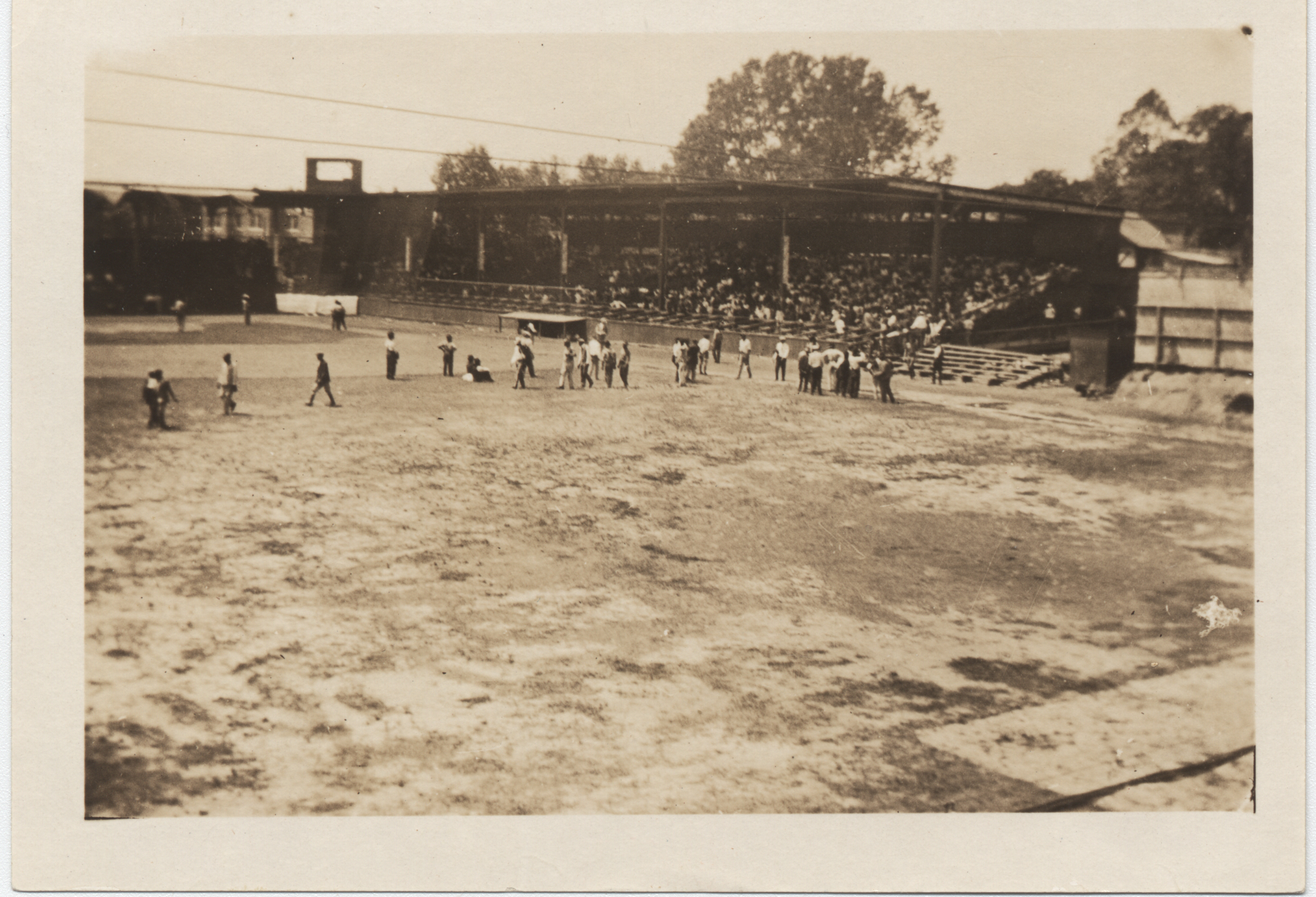
Another scene from McNulty Park on June 1, 1921, show African-American men as detainees. (Photo from U. of Tulsa Special Collections.)

The games coincided with the 26th annual convention of the National Negro Business League, a meeting of Black entrepreneurs and businessmen from across the country. “The games played at Tulsa, Okla … between the American Giants and Kansas City, will not count in the official standing,” reported the Chicago Defender. The Tulsa Tribune stated the opposite in their advertisement of the game. 

Negro National League founder and American Giants owner and manager Rube Foster was not unaware of what happened in late spring 1921 at the ballpark. The “Red Summer” that saw violence occur in 26 cities across the country, including Chicago, precipitated the formation of the NNL in 1920. For Foster, a calculating man who had a reason for every single thing he did, the decision to visit Tulsa was likely formed by several things. For one, it was an opportunity to flex for Negro League baseball, which was quickly becoming the largest Black business in the United States, to other business owners.

The NNL teams’ appearance at McNulty also seemed cathartic and offered both healing and an act of defiance in a city where so much sadness and buried anger still lingered. For the Monarchs’ future Hall of Famer Bullet Rogan, the game was a homecoming of sorts – Rogan spent his childhood in Oklahoma City.

In the opening game of the series, the Monarchs routed the American Giants, 10-4, on long home runs by George Sweatt and Newt Allen. Game two went to the Monarchs again in a 13-9 slugfest, reported in the Enid Daily Eagle. No score has been found yet for the third game.

The American Giants would finish just behind the Monarchs in the NNL standings in 1925, who would go on to win the league pennant over the St. Louis Stars but lose the Negro World Series to Hilldale, five games to one. Several Black teams would subsequently call Tulsa home, including the Black Oilers, T-Town Clowns and Tulsa White Sox.
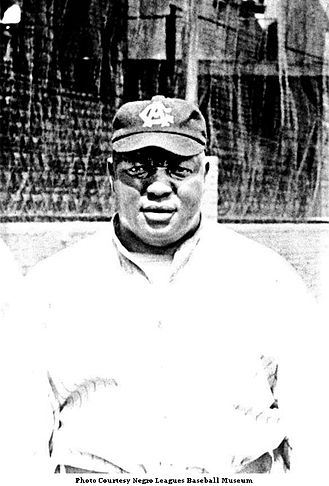
Rube Foster

Just a few years after the massacre, in 1929, McNulty Park was torn down and replaced by a grocery store. Today, a Home Depot parking lot sits on the site.

This story, however, underscores a few things. This history still must be taught, beginning to end. I’ve considered myself a longtime baseball fan and history nerd but never knew any of this story. The Greenwood Massacre is required teaching in Oklahoma schools as of 2020, but not anywhere else.

If the white players who were playing at the time were shaken by the terror they witnessed, then one can imagine that the Black players who just lost their homes, businesses and livelihoods faced even more unfathomable heartbreak. And yet, as generations of Black players would do in the face of oppression, they played ball anyway.

Editor’s note: If anyone else would like to submit something for publication on this blog, definitely feel free to emails me at rwhirty218@yahoo.com. Thanks, and special thanks to Johnny Haynes for today’s post!

Negro League family celebrates NOLA legend

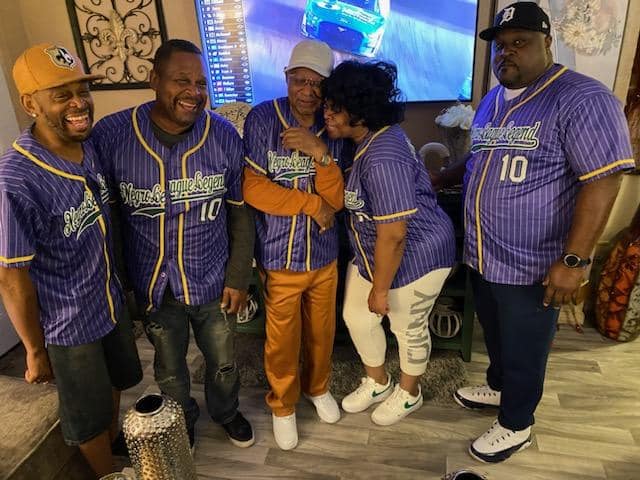
John Bissant’s descendants show off the jersey made in his honor. (Photo courtesy Charisse Wheeler)

Since the beginning of this year, I’ve been in contact with Charisse Wheeler, a New Orleanian and the granddaughter of local Negro Leagues great John Bissant. I originally broached the subject of Bissant on this blog a few years ago with this post, about the ramshackle, anonymous nature of his grave in Carrollton Cemetery.

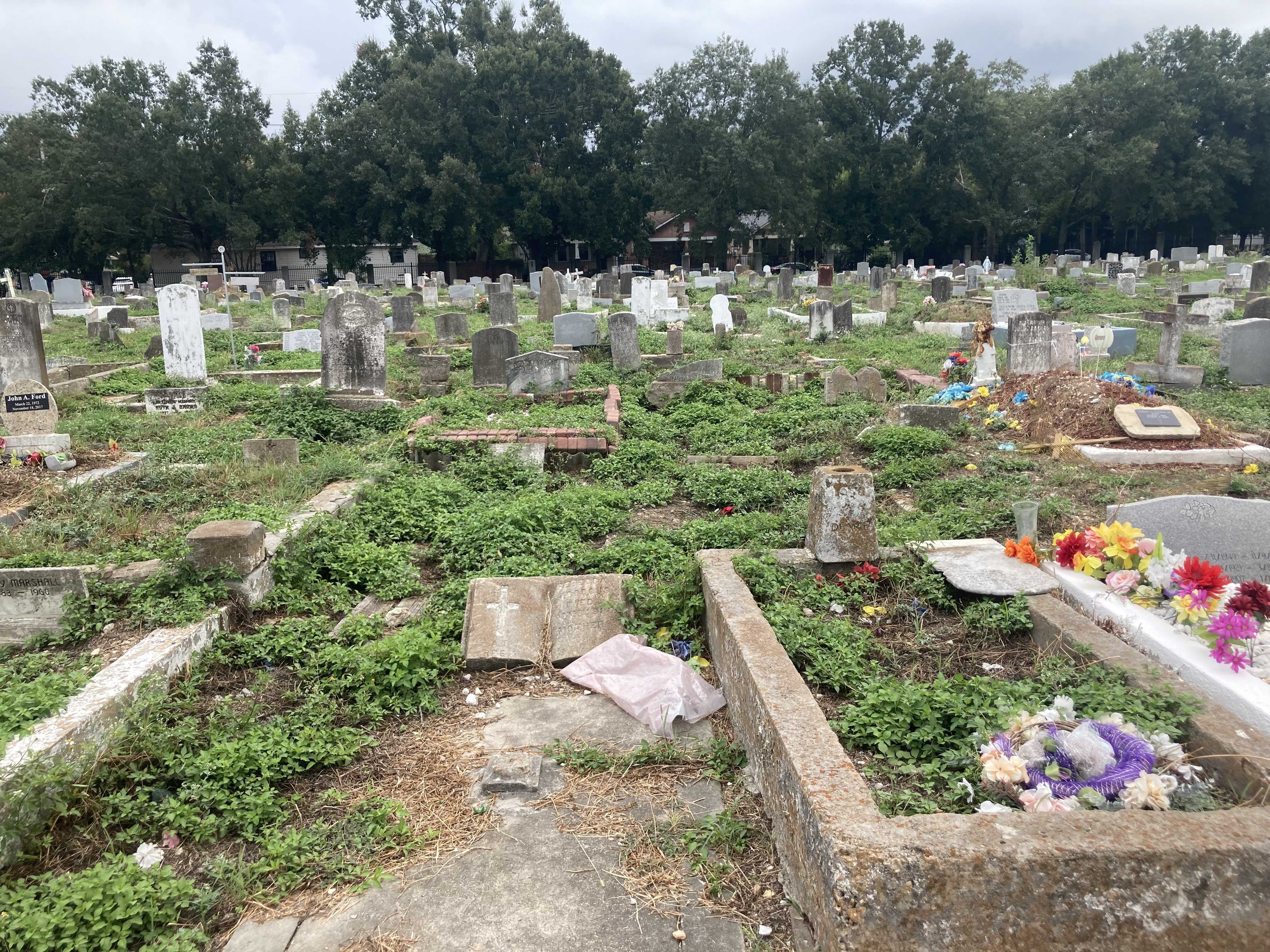
The cemetery, located in the Carrollton/Uptown neighborhood of New Orleans near the main campus of Tulane University, was historically divided into white and Black sections; the white area took up the vast majority of the graveyard, with people of color related to a small corner of the area.

Not surprisingly, the white section is today a much cleaner, nicer, and well maintained one than the Black section, much of which is untended, shambling, muddy and filled with many graves that include more than one family member.

The “colored” section of Carrollton Cemetery, Sept. 2, 2023. (Photo by Ryan Whirty)

While the white section includes numerous spacious, gleaning, well-kept crypts and mausoleums, the area for people of color contains many simple headstones, many of which are titled, toppled or askew. A lot of the stones are so eroded and obscured by nature that the names are practically illegible, rendering the graves’ occupants as essentially and sadly anonymous in death.

Such is the case with John Bissant’s grave, located on a family plot in the Black section. Resultantly, I’ve hoped that John’s grave could be the subject of another effort by the Negro League Baseball Grave Marker Project, but because his grave contains multiple people and cannot be specifically and conclusively located, it makes for a tough case for the NLBGMP.

I’ve also hoped that I could attract the attention of various local media in publicizing the location and ramshackle status of Bissant’s final resting and, by extension, the entire “colored” section of the cemetery. 

However, it’s proven a difficult road to getting any articles or pieces undertaken on the local Negro Leagues, aside from The Louisiana Weekly newspaper, which has been gracious enough to publish several Negro Leagues stories of mine, such as this one about Creole Pete Robertson, this one about John Wright and this one concerning Gerald Sazon.

(Most media types to whom I’ve reached out here have either ignored me or come up with excuses why they can’t be bothered, namely the supreme, unquestioned importance of the Saints and LSU football. Some have also been quite hesitant to do on-air pieces because I’d have to be interviewed on camera, and my stuttering has also served as a convenient excuse for not doing so.)

Soon after my original post, though, Charisse posted a comment on the post introducing herself and saying she’s liked my work. We’ve since traded emails and messages and hope to talk in person or over Zoom soon.

But in the meantime, Charisse has filled me in on some stuff she and her family have been doing to honor John Bissant and his contributions to baseball history and to the city of New Orleans.

In particular, the family gathered to celebrate John’s life on Resurrection Sunday (Easter) this past April. In addition to Charisse, one of John’s sons, Lawrence Bissant, also attended, as well as several other grandchildren, a great grandson and a great great granddaughter. They also had jerseys and shirts made up.

“We still very much keep him and his memory alive,” Charisse told me via email. 

She added: “We still very much talk about our grandfather and the many memories we had with him. I actually have a box of letters, where people would write [to] him from all over the world to get his signature.”

The Bissant family. (Photo courtesy Charisse Wheeler.)

Bissant’s most prominent stint in Negro Leagues baseball came with the legendary Chicago American Giants, from 1939-1947. At that point, the G-men were members of the Negro American League and a decade or so removed from their greatest era in the 1920s under Rube Foster and then Dave Malarcher.

Beginning in 1937, the American Giants were owned by Dr. J.B. Martin, a dentist from Memphis who owned the Memphis Red Sox before shifting to the Windy City. He also served as president of the NAL. Unfortunately, the American Giants were largely mediocre at best during Bissant’s tenure with the club, never winning the NAL pennant and finishing last a whopping five times. 

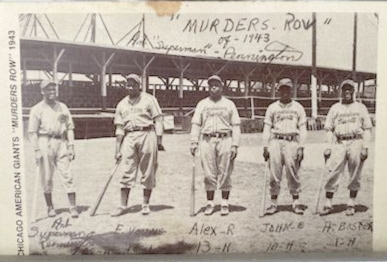
However, that American Giants club of the mid-1940s was, at times, fairly stacked. At various times Bissant’s teammates included standouts like Ted “Double Duty” Radcliffe and Duty’s brother, Alec/Alex Radcliffe; Art “Superman” Pennington; Gentry Jessup; Walter “Rev” Cannady; Lester Lockett; Willie Cornelius; Ted Trent; John “Mule” Miles; John Ritchey; Lyman Bostock Sr.; and fellow New Orleanians Billy Horne and Lloyd “Ducky” Davenport.

As it turned out, as an outfielder, Bissant had the good fortune to team with other standouts – including NOLA lad Davenport – to form fearsome lineups in the outer garden for the American Giants. In June 1943, an Illinois paper noted that Bissant and Davenport were joined by Art Pennington in an “outfield [that] is considered the best in the [NAL].”

Actually, during and after Bissant’s playing career, newspapers often referred to Bissant together with Ducky Davenport as a duo of greatness; because both of them were outfielders from New Orleans – they competed against each other in high school here – and were both speedsters who prowled the outfield for the American Giants, it was natural to mention both in the same breath.

However, even then, Bissant garnered the highest praise, partially because he was so well rounded as an athlete.

“Bissant was a natural, as was Davenport,” stated the Louisiana Weekly in April 1970, “but [Bissant’s] wonderful physique, speed and power gave him the advantage, and his best sport was probably football, although he lettered in track [and] basketball, as well as baseball and football.”

A vintage photo of the Chicago American Giants’ killer lineup, with John Bissant second from right. (Image courtesy Charisse Wheeler)

Anyway, those CAGs aggregations also included, at different times, numerous Black baseball legends who were in the latter stages of their careers, including Willie Wells, Pepper Bassett (a Baton Rouge native), Jimmie Crutchfield, Chet Brewer and Cool Papa Bell. In addition, several esteemed veterans served as American Giants managers during Bissant’s stints with the club, including Ted Radcliffe, Bingo DeMoss and Candy Jim Taylor.

In 1996, writer Ross Forman interviewed Bissant for an article in “Sports Collectors Digest” magazine, and the piece chronicled a great deal of Bissant’s memories and recollections about his career and some of the Black baseball stars with whom he played, with a focus on his time with the CAGs.

“We had a lot of traveling experiences, meeting other clubs,” Bissant told Forman. “They were very fond memories of the Negro Leagues. I guess the highlight of my career was the year [the Chicago American Giants] made me captain of the team. We had quite a few young ballplayers coming in then and, to be a leader on that ball club was quite an honor.”

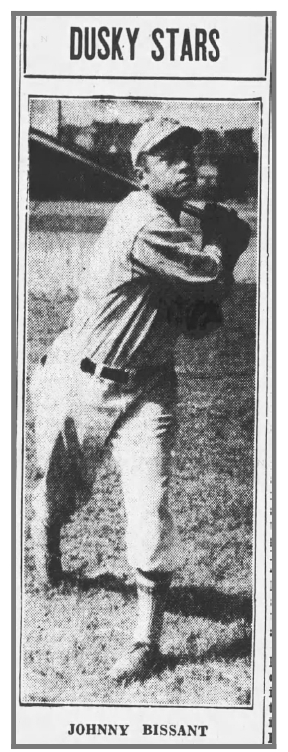
The St. Joseph, Mich., Herald-Press, June 2, 1942.

Bissant said that in the Windy City, “In Chicago, I think I was quite a hit with the fans because I hit really well. At the time when they took me, I had been playing infield, they turned me into an outfielder.”

Bissant added that traveling the country remained a career highlight.

“I still remember playing in the major league ballparks, such as Yankee Stadium and Polo Grounds,” he said. “That was nice. We also played in some small parks, some very small parks, places that never would compare to a major league stadium. My favorite was Comiskey.”

John’s career, while not as stellar as other Black ball legends who are waiting for induction in Cooperstown like Dick Redding and Rap Dixon, was certainly successful enough to make him one of the best baseball products of New Orleans, white or Black — a fact that requires his induction to the Louisiana Sports Hall of Fame and the Greater New Orleans Sports Hall of Fame at the very least. While spending most of his career as an outfielder (playing in all three outer garden positions at different times), he could also man second base and even take the mound if needed.

According to James A. Riley’s exhaustive book, “The Biographical Encyclopedia of the Negro Baseball Leagues,” Bissant batted and threw right-handed, stood at 5-foot-8 and weighed 180 pounds. Riley wrote that John was “[A] good outfielder [who] could run and throw, but is probably better known for his hitting.”

Newspaper writers also described Bissant as a standout with all-around talent and adaptability. A July 1944 article in the Belleville (Ill.) News-Democrat, for example, called Bissant “the team’s ace outfielder, and is a hard hitter as well as a great ground-coverer.”

The South Bend, Ind., Tribune, in previewing a game between Bissant’s Chicago Brown Bombers and a northern Indiana semipro team, offered a concise but glowing estimation of the New Orleans legend. At the time Bissant was usually stationed in left field.

“Bissant is tagged as the fleetest of the Bombers’ outfield,” the newspaper stated. “Because of his fleetness he sometimes patrols center giving the Bombers added protection on the strength of Bissant’s ability to roam into right or left to haul down apparent hits. He is death on [the] bases and specializes in base thievery to the chagrin of rival catchers.”

According to Seamheads.com, across all or parts of eight seasons in the major Negro Leagues with the Cincinnati Tigers and Chicago American Giants between 1937-47, Bissant played in a total of 139 games, amassing 477 at bats, with 74 runs, 131 hits, 16 doubles, nine triples, two homers, 44 RBI and nine stolen bases, showing that he wasn’t really a power hitter and wasn’t quite speedy enough to swipe bases by a pile like Cool Papa Bell and Sam Jethroe, but he slapped out hits at a very solid  clip. His BA/OBP/SLG/OPS line was .275/.323/.358/.681. 

“I don’t brag on myself,” Bissant told Forman. “I leave that to other people to do that, and staying up there in the lineup for most [of] my career was an honor. …

“I was a decent hitter, very fast; I stole quite a few bases. I can’t remember yoo many catchers stopping me. Sure, I was thrown out (trying to steal), but not any rash of stolen base tries. Most of the catchers when I played, had very good arms, not like the catchers now.”

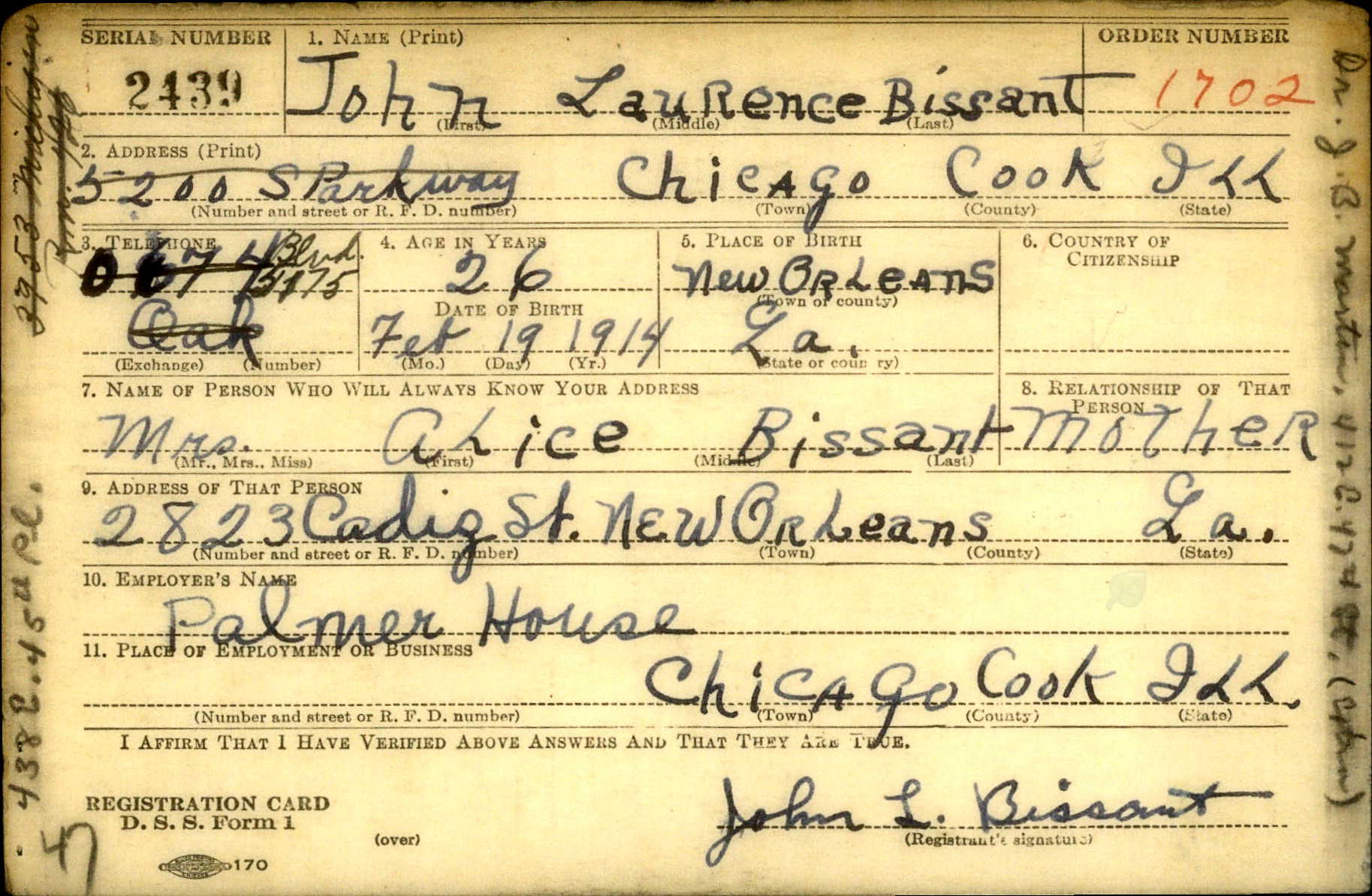
John Bissant’s World War II draft card.

He said he had a good relationship with fans, including those in Chicago.

“I think they appreciated my effort, and I enjoyed baseball,” Bissant said.

Unfortunately, Bissant was one of hundreds of Black players who never got a chance to compete in so-called Organized Baseball; he noted that “[W]hen they started taking Negro Leaguers into the major leagues, I was too old.”

But, even in his later years, the memories of his time in Negro League baseball remained sharp and sweet.

“Yep, it’s been over 50 years, yes indeed,” he told Forman, “even though I sometimes remember things like they happened yesterday.”

After retiring from baseball, John Bissant worked at several jobs in the New Orleans area, including at NASA’s Michoud Assembly Facility; Lykes Brothers Steamship Company, a shipping business; Glazer Steel and Aluminum; and a security guard firm.

John Bissant died on April 1, 2006, in Houston, Texas, at the age of 92; he had evacuated to Houston from New Orleans because of Hurricane Katrina. In its obituary of Bissant, the Times-Picayune called him “a Negro League Baseball Legend.” 

I’m working on additional John Bissant posts that gets more detailed about his career and accomplishments, so hopefully that’ll be done soon. Fingers crossed!