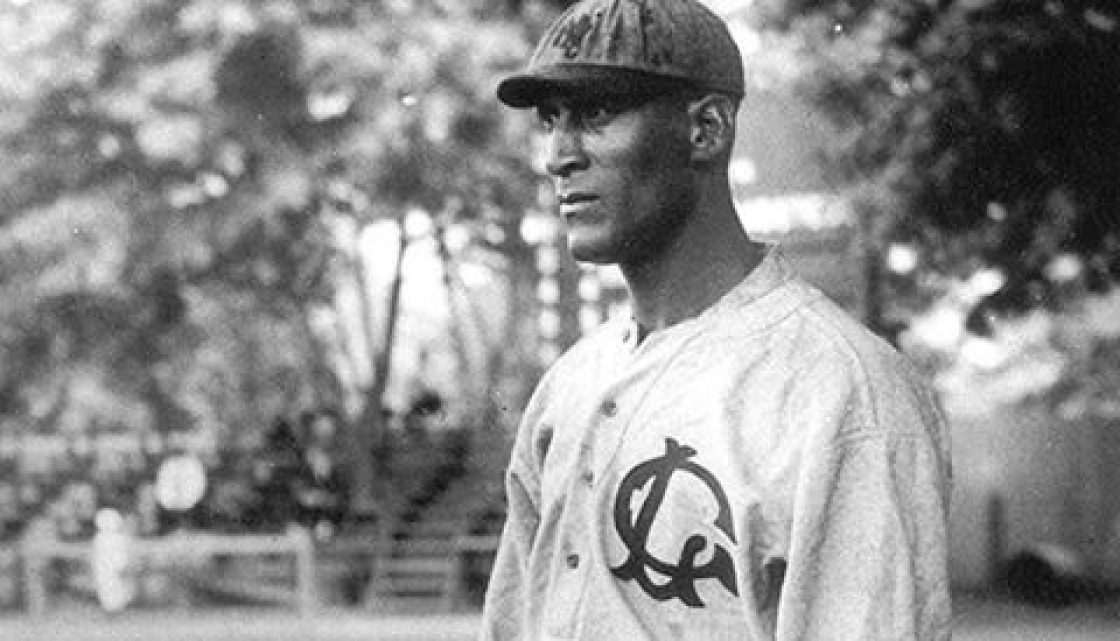
I recently chatted with Jeremy Krock, the founder of the Negro League Baseball Grave Marker Project to see what projects the NLBGMP has in the pipeline. I also wanted to ask him about the possibility of the NLBGMP working toward getting markers placed at the graves of a couple players here in New Orleans — particularly John Bissant and Lloyd “Ducky” Davenport, both of whom I’ve discussed fairly frequently on this blog, such as posts here, here and here.

And, as it turns out, both subjects had connections to one of the top touring teams in the 1920s, and they both died tragic, early deaths, demises that underscore the sadness surrounding their anonymity when they were buried.
One of the efforts on which the Marker Project has focused is that for George Jess “Cannonball” Jackson, one of the great African-American pitchers in the Midwest in the 1920s. Jackson, who was born around 1891, pitched for Gilkerson’s Union Giants, a largely barnstorming team based in Spring Valley, Ill., in the 1910s and ’20s. He also suited up for other teams in the Midwest — including the All-Nations, a professional barnstorming team whose lineup included Black, white, Native-American, Japanese, Hawaiian and Latino players; Brown’s Tennessee Rats, a barnstorming team based in, ironically, Missouri; and the Minneapolis-St. Paul Gophers — and ended up in Dubuque, Iowa, where he pitched against the Dubuque White Sox, among other clubs.
Unfortunately and sadly, Dubuque is where the Cannonball Jackson story ends. On Dec. 14, 1924, Jackson was struck on his head with a blunt instrument by an acquaintance, a blow that fractured his skull. He staggered to the boarding house in which he was staying. According to news reports, Jackson arrived at the home in “a dazed condition,” and when he didn’t regain consciousness the next morning, Jackson was taken to a local hospital where he died early on Dec. 16. He was subsequently buried in an unmarked grave in Dubuque’s Linwood Cemetery. He was 32 or 33 years old.
After less than a week of police investigation into the crime, a man named Frank Johnson confessed to the crime with a charge of manslaughter and was quickly sentenced to eight years at the state penitentiary at Fort Madison.
All of this took place in less than two weeks, which, compared to today’s criminal justice system, represents lightning speed and really takes the Sixth Amendment right to a speedy trial seriously.
Krock contributed an entry on the Web site Find A Grave for Jackson that reads:
“Legendary pitcher in [B]lack [s]emi-pro/barnstorming baseball. Played for Tennessee Rats, All-Nations, Gilkerson’s Union Giants, Minneapolis Gophers. Killed by skull fracture inflicted by an acquaintance in Dubuque.”
However, not much is known beyond his tragic demise. His Iowa death certificate, for example, features several lines filled out with “don’t know” or left blank; such designations are shown for his marital status, date of birth, names of father and mother, and birthplace.

Even when lines are filled out, the mysteriousness of Jackson’s life are reflected. The line for residence says “Floater,” which probably indicates that he was a drifter with no fixed home and a clouded backstory. His occupation is stated as “baseball player and laborer,” while space for the informant’s name shows “stranger.” Cause of death is stated as “skull fracture (hit over head with a club,” with “hemorrhage” as a secondary cause.
(I want to note that George “Cannonball” Jackson shouldn’t be confused with Bill “Cannonball” Jackman, an African-American pitcher who freelanced for several teams and gained fame, especially in the Northeast, particularly New England, in the 1920s and into the ’40s.)
Another project on the burner for the NLBGMP is a stone for the grave of the owner and manager Gilkerson’s Union Giants, Robert Gilkerson. Gilkerson played the keystone sack for several teams in the first two decades of the 20th century before taking the helm of his eponymous barnstorming, semipro club, which was originally based in Chicago.
A December 1936 article in the Kansas City Call, a prominent African-American newspaper, “Gilkerson has been identified with the national pastime since 1903. … he showed a lover for the game and developed into one of the best second basemen in that section [western Pennsylvania].”
The paper reported that he joined the Smoky City Giants, a Pittsburgh-based team founded by none other than newly minted National Baseball Hall of Famer Bud Fowler, in 1904, then eventually joined the Leland Giants, owned and managed in Chicago by another Black baseball legend, Rube Foster, and Gilkerson then hooked up with the traveling Union Giants, operated by W.S. Peters. Gilkerson played for the Union Giants for several years before buying the team in 1917 and eventually moving it to Spring Valley, Ill., where it thrived as a traveling team into the 1930s.
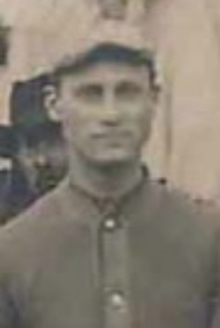
The Call article also included some comments from Gilkerson himself about the current state of the American pastime at the time, and his words help illuminate Gilkerson’s personality and beliefs. He commented:
“The dry spell this summer throughout the nation [presumably the Great Depression] put a big dent in the popularity of baseball. However, I believe the game is come back into its own. Baseball leagues will go a long way in reviving the sport. Although we are a traveling club, having played in 38 states at various times during the last 20 years, still I believe in organized baseball.”
In the article, Gilkerson also plays the curmudgeon when discussing what he viewed as the state of the national pastime:
“[T]here isn’t the same fight in these fellows today as there used to be. There is too much handshaking, too much socializing. When the old guys used to take the field against each other, there was blood in their eyes and murder in their hearts. They went in there to battle to the last ditch. Then again money was not emphasized so much in those days as it is now among the younger players. Still this generation of players has a world of possibilities and I hope to live to see the day when Negro ball players once more reach they had when the immortal Rube Foster was in his heyday.”
Gilkerson, who was born in Newtown, Va., in 1886, was apparently held in high esteem where he and his team ventured. Wrote Joe Ryan, for example, the sports columnist for the Sioux City (Iowa) Journal newspaper in July 1929:
“One of the most interesting men in semi-professional baseball is Robert Gilkerson, owner of Gilkerson’s Union Giants, who will play a two-game series against the Stock Yards club [a local team], starting today. For more than 20 years ‘Gil,’ as he is called, has been touring this section with [N]egro baseball clubs and all of them have been good. He always manages to get together a great bunch of baseball players. They take their opponents as they come, asking no favors from anybody, and when the season ends you usually find that they have won about 90 per cent [sic] of their games.”
Curiously enough, “Gilky” also operated a barnstorming basketball team under the Gilkerson’s Union Giants moniker. According to the Chicago Defender in April 1931, Gilkerson’s hoopsters had compiled a record of 66-14 so far that season, including a winning streak of 38 games. The following year, in March 1932, the Quad-City Times of Davenport, Iowa, asserted that the Union Giants were “claiming the colored basketball title of the country” and added that “[f]or the two games played in this city by Gilkerson’s quint the Turner gym was packed and they have been one of the most popular teams to appear here this year.”
Sadly, much like Cannonball Jackson, Bob Gilkerson suffered a tragic fate — although Jackson was murdered, Gilkerson committed suicide.
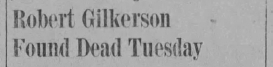
Gilkerson was found dead on the floor of the kitchen in his house in mid-morning on March 21, 1944, by a neighbor. Gilkerson had apparently shot himself in the head with a .38-caliber revolver. He was 58. The Bureau County Democrat newspaper of Spring Valley wrote, “‘Gil,’ as he was popularly known by a wide circle of friends here and throughout the base ball [sic] world, was one of the pioneers in the barnstorming business.”
Gilkerson was buried in an unmarked grave in at Miller Cemetery in Spring Valley.
(While Gilkerson’s suicide might have come as a shock to some, there might have been early indications that he suffered from some sort of mental illness, possibly undiagnosed — a Chicago Defender report from January 1922 stated that Gilkerson was a patient at a hospital under the care of the family physician, “being treated for a nervous breakdown.” The Bureau County Democrat article from March 1944 claimed that at the time of Gilkerson’s death, he “had been in poor health” and had a neighbor helping to care for and assist him at home.” Other media reports asserted that Gilkerson might have been worried about finances, according to Gil’s attorney, but added that Gilkerson had recently been relieved by positive developments related to money.)
Shifting topics a little bit, I also asked Jeremy about the possibility of the Project working on markers for one or more New Orleanian baseball greats like Bissant and Davenport. Jeremy said such efforts on the part of the NLBGMP would certainly be a possibility.
However, he noted that as with most of the Project’s beneficiaries, the owners/administrators of the cemeteries involved in the targeted graves — in both the cases of Bissant (Carrollton Cemetery No. 1) and Davenport (Holt Cemetery, a potter’s field), that would be the city of New Orleans itself — would need to give permission and/or lay down rules and guidelines for the NLBGMP to follow with the installation of markers.
Jeremy also noted that, obviously, the surviving family members/loved ones would need to be on board as well. In John Bissant’s case, his family are definitely on board, but Davenport’s family situation is a bit murkier at this point. But we shall see. …
 The Negro Leagues Up Close