So close, and yet still so far.
That’s the thought that has kept floating through my head since the recent news that Major League Baseball had finally merged statistics from several top-level Negro Leagues with the existing numbers for Organized Baseball that, at the time those Black leagues operated, was strictly racially segregated.
The integration, pardon the expression, of Negro Leagues statistics into the official MLB record books has finally and rightfully formally placed the segregation-era accomplishments of men like Oscar Charleston, Satchel Paige, Buck Leonard and many other excellent athletes alongside all-time white greats like Lou Gehrig, Nap Lajoie, Ted Williams and, of course, the most famous baseball player of all time, Babe Ruth.
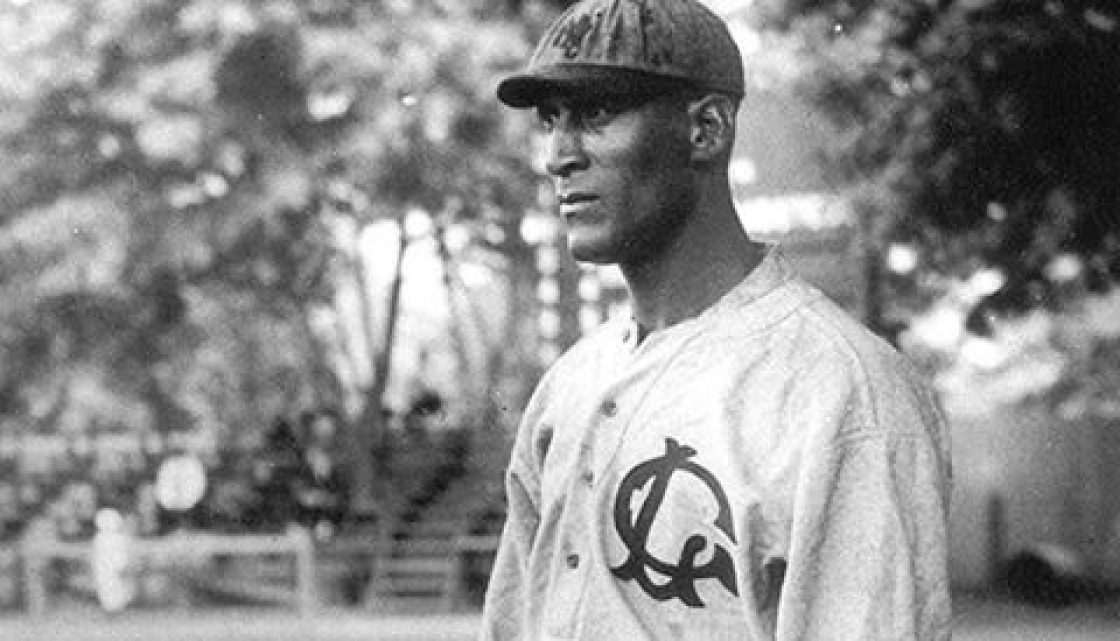
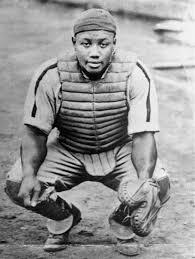
But the biggest headlines were reserved for the most breathtaking change of all – legendary Black slugger Josh Gibson is now the career batting leader, eclipsing the immortal Ty Cobb. (More info and varied commentary on the big news can be found here, here and here.)
The merging of statistics was a long time coming – decades and decades – and took many years of dedicated hard work on the part of several Negro Leagues researchers, who combed old newspaper archives and other historical sources to compile numbers and data that meet the rigorous standards of excellence that were required of them, and that they demanded of themselves. (For articles on that process, check out this, this and this.)
The combining of data represents another step toward righting the racist wrongs that were inflicted on our national pastime – and the players, managers, executives and owners of color who were shut out of Organized Baseball for six decades – by segregation.
Progress toward achieving true racial and social justice in baseball history have been periodic and ongoing for well more than a half-century; the highest-profile of these advancements has been the gradual and (hopefully) ongoing process of inducting deserving Negro Leagues figures into the National Baseball Hall of Fame. (For background on that HOF induction effort, go to this, this and this.)
Naturally, accompanying those steady, periodic advancements has been criticism and reluctance to fully and justly honor Negro Leaguers, beginning with stubborn resistance to inducting pre-integration African-American greats into the NBHOF.
Such recalcitrance and skepticism has ranged from outright, ugly, naked bigotry to more subtle, fairly well argued points, most prominently the criticism that the Negro Leagues simply couldn’t measure up to the quality of play and voluminous of statistics that already existed for Organized, i.e. white, baseball.
Those concerns about whether the Negro Leagues were worthy equals to the Major Leagues generally boil down to two lines of thought, in my opinion:
One, that the shortage of official records and the limited amount of formal “league” games just hasn’t produced enough Negro Leagues data to merit equal comparison to the record or Organized Baseball.
And two, that the Black leagues simply weren’t as good as the white leagues and therefore cannot be compared to Organized Baseball. The argument goes that Satchel Paige didn’t have to pitch to Joe DiMaggio or Jimmie Foxx, and that Cool Papa Bell and Willie Wells didn’t have to face Walter Johnson or Grover Alexander.
The first line of questioning, in my mind, is certainly valid. I disagree with the criticism, but in a sport that depends on statistical analysis and numerical precision, I definitely understand the argument about an inadequate sample size.
My primary response to that argument is that, while there certainly are a fair amount less of Negro Leagues statistics compared to Organized Baseball, we need to remember why that is – because of a tragic, sad situation that occurred through absolute no fault of the Black players’ own. There are fewer numbers because of bigoted segregation that was forced on Black society. Despite the significant challenges institutional racism presented for African Americans, Black baseball did the absolute best it could given the situation. Moreover, why should we continue to punish these men and minimize their greatness for something that wasn’t their fault? To continue to do so is patently unfair and unjust.
The second track of criticism against bringing the Negro Leagues its rightful due and equality – that the Black leagues simply weren’t as good as the white organizations – is at best ignorant and illogical, and at worst virulently racist and hateful.
If someone possesses such bitter, angry emotions, there’s not much any of us can say to change their minds. Someone who’s that hateful just doesn’t want to change.
But if one’s belief that the Negro Leagues just weren’t as good is more based in ignorance instead of outright racism, that’s something with which we can work, because even after decades of progress made in unearthing, evaluating and promoting the history and legacy of the Negro Leagues, it would be understandable if simply more people had heard of Ty Cobb and Babe Ruth than Josh Gibson or Buck Leonard. In that case, I encourage those who are willing to expand their horizons and knowledge to start by reading the work of Robert Peterson and John Holway, and proceed from there, because there’s a lot of awesome stuff writing about or covering the Negro Leagues.
Then, finally, we can argue for the Negro Leagues’ worthiness by just using logic – it might be true Black players didn’t play the best possible competition pre-1947, but if so, that also means that neither did the white players. To cite an oft-quoted comment from writer, journalist and author Ken Rosenthal:
“If you want to argue that Josh Gibson didn’t face the best competition, well, neither did Babe Ruth.”
But even if we as advocates for the Negro Leagues can continue to crusade for and research segregation-era Black baseball, that quote by Rosenthal raises a whole different concern, one that unfortunately continues to weight heavily on the pursuit of true fairness and equality and one that, sadly, might never be completely or even adequately resolved.
Because if neither the Black leagues nor white leagues of pre-1947 baseball featured the best possible competition because each structure omitted one whole demographic, wouldn’t that naturally de-legitimize both types of leagues and garner each set of statistics and other quality-centric evaluation huge, eternal asterisks?
This could lead us to one painful conclusion – that, in a way, it’s pointless to truly examine and evaluate any pre-1947 baseball, and that those segregated decades are forever simply lost and wasted for everyone. We may be able to evaluate and study history in different, ever-evolving ways, but we can’t change it.
Such a realization is truly saddening, and truly frustrating. It seems to imply that no matter what anyone does, no matter how much work we do, no matter how committed we are to achieving fairness and justice, we’ll never completely achieve such goals.
The notion that the greatness of Cy Young and Joe Williams and Pop Lloyd and Tris Speaker and hundreds of others just, in a way, doesn’t matter, at least when it comes to accurate evaluation of their accomplishments and greatness feels like a knife in the heart for all baseball fans. To even consider the idea that the work of all those players, well, that it doesn’t fundamentally matter, has me fighting back tears writing this.
Because of the stupidity and bigotry and limitations of our ancestors, the wrongs of history will never be truly resolved, and that the chasm we face toward achieving justice and equity will never, ever, be completely bridged. The damage, as they say, is done.
And guess what? That’s not just the case in baseball, either. Baseball springs forth from and embodies our larger American society as a whole, and, as a result, those 60-odd lost years of our national pastime that forever taint the sport that we embrace as our American game symbolizes the 500 years our land has been scarred by bigotry and hate and oppression.
Just as the sport of baseball can never truly be reconciled with our ideals, then that half-millennium has likewise caused lingering and irreparable damage to American society as a whole.
How can we, as a people and as a nation, ever hope to fully compensate and address the centuries of slavery, genocide, segregation and violence that mar our history? Have we simply dug ourselves too big a hole to ever climb out of? Is true societal equity and justice ever even possible, or, well, is the damage already done?
I’ll admit that I am an eternal pessimist and cynic. I fully acknowledge that I usually view life with shit-covered glasses, and that I always expect the worst out of humanity. That’s a weakness of mine, and I continue to battle against it.
And maybe I’m wrong, or at least that I worry way, way too much, about the status and future of our society. Maybe I’m underestimating us and our ability to make lasting, equitable change. I sure hope I am.
And where hope exists, the chance of something better persists. We cannot stop striving, and that includes achieving fairness and justice in our national pastime and its long, imperfect, stained and steller history. We owe that to all the great Negro Leaguers, and we owe it to all those white players who were likewise robbed of an opportunity to compete against the best.
We owe it to all those who came before us to do our best by digging deep down and finding our better selves. We owe it to ourselves as researchers, writers and fans.
 The Negro Leagues Up Close