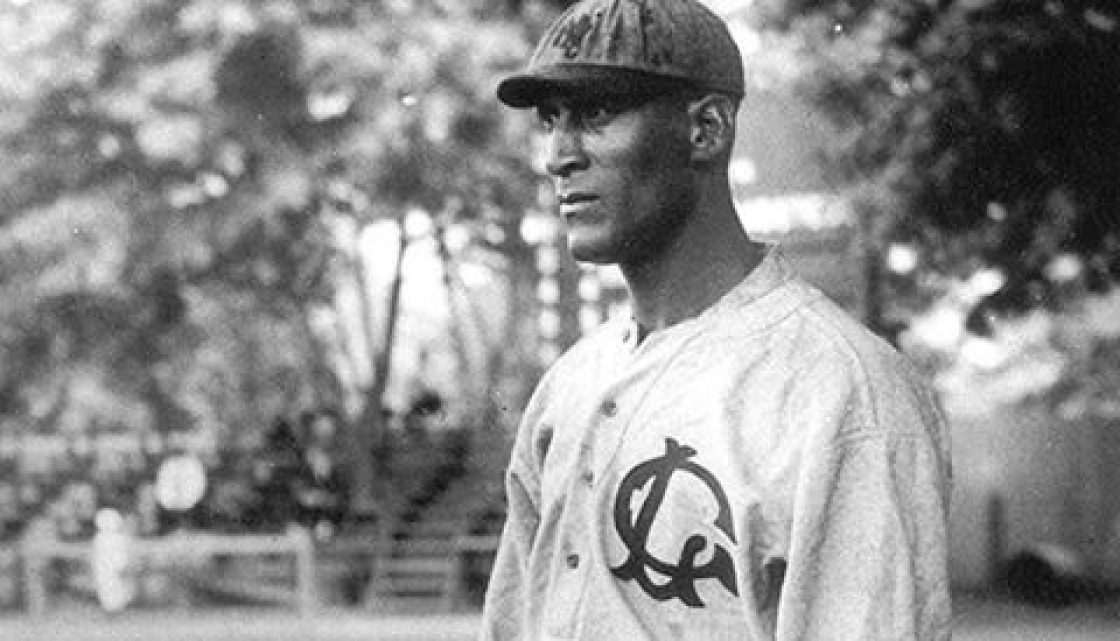
Editor’s note: Earlier this month, the National Baseball Hall of Fame’s Classic Baseball Era Committee elected Dick Allen and Dave Parker to enter the Hall. While both Allen and Parker definitely deserve their induction into the hallowed confines of Cooperstown, the two Black candidates from the segregated era of the national pastime, pitcher John Donaldson and manager Vic Harris, weren’t selected for induction – and, in fact, received less than five votes each.
The failure to elect Donaldson and Harris means that it’s now been nearly 20 years – since the massive 2006 class of pre-integration African-American figures – that no such early African-American players have earned a place in the Hall of Fame.
The continued snubbing of such worthy segregation-era players prompted me to get the thoughts of good friend Ted Knorr, a Negro Leagues historian and longtime member of SABR’s Negro Leagues committee. Below are those thoughts, lightly edited for clarity.
Ted Knorr: It is an extraordinarily important topic and an area where the biggest beneficiary – even more than long dead players – will be the National Baseball Hall of Fame and Museum. I intend, hope and trust that nothing of what follows is seen as critical but rather suggestive. Thanks for the time.
Before addressing your specific questions, I must respond to the big picture.
There are 137 Hall of Fame players debuting prior to April 15, 1947, and playing in the traditional Major Leagues; according to the Hall of Fame’s yearbooks and Web site, there are only 28 players in the Hall of Fame based on Negro League play – an almost 5-to-1 ratio.
That’s despite the fact that, by virtually all accounts, Black stars [at the time] defeated the white Major League stars [in exhibition games] more often than not. Such a gap in Hall of Fame Black players cries out in 2025 for serious attention, if not total closure.
Now to your questions.
Ryan Whirty: Why do you think Donaldson and Harris not only weren’t elected to the HOF, but also received so few votes overall?
TK: I note that Donaldson/Harris got at least 75 percent against them versus the requisite 75 percent for them required for induction. Seventy-five percent for induction was going to be difficult for all the deceased players not named Richie or Dick. The members of the committee and the deserving names on the ballot doomed the Negro Leaguers.
RW: Do you think everyone on the committee knew enough about Donaldson and Harris to vote objectively and fairly regarding the two candidates?
TK: Clearly not. For candidates of that stature to receive at most eight votes (combined) informs all of us of [committee members’] knowledge about that pair. To be fair, however, with seven or eight deserving candidates on the ballot and a prohibition against voting for more than three, it would have been very difficult to get more inductees than what they did.
RW: Why or why not?
TK: Larry Lester, Leslie Heaphy [both respected Negro League scholars] and, I assume, Steve Hirdt certainly had the requisite knowledge [of Donaldson and Harris]. Of the other [voters], I’m not so sure.
Ozzie Smith, Lee Smith, Eddie Murray, Tony Perez, Joe Torre, Paul Molitor, Sandy Alderson, Terry McGuirk, Dayton Moore, Arte Moreno, Brian Sabean, Bob Elliot and Dick Kaegel all knew very well, though life experience, the other six candidates, and the six [current] Hall of Fame members [of the committee] had varying degrees of overlapping careers with Allen, Parker, [Tommy] John, [Luis] Tiant and [Steve] Garvey.
RW: Many Negro Leagues researchers, writers, historians and fans have consistently and for many years for a more transparent, fair and inclusive Hall voting system, one that adequately realizes, acknowledges and sincerely wants to remedy the extreme, disproportionate dearth of segregation-era Black members of the HOF. But has the Hall been even bothering to listen?
TK: The BBWAA vote is more transparent than it ever has been, although that is likely more due to certain intrepid baseball historians, researchers and fans who have done preemptive questioning of voters, which removed most of the mystery in that set of voters.
Now, with a much smaller and higher profile set of voters [on the Classic Baseball Era Committee], it is more difficult to probe their opinions. By delaying the announcement of the ballot until early November and announcement of the voting panel membership until even later (almost last minute), the Hall does all it can to prohibit such [public scrutiny] with the era committee’s ballot.
By delaying the announcement of the ballot until early November and announcement of the voting panel membership until even later (almost last minute), the Hall does all it can to prohibit such [public scrutiny] with the era committee’s ballot.
Thus, I think the Hall remains consistent in the approach [to induction] that it’s had since 1936, with any openness [in the process] either beyond their control or due to outside pressure.
I do feel the Hall of Fame component of The National Baseball Hall of Fame and Museum needs to get past 2006 to the same degree that Major League Baseball has. After 2006, again according to the Hall’s Web site/yearbooks, the number of Negro League Hall of Famers has been stuck on just 28, while Major League Baseball has declared seven specific Negro Leagues and spans as Major and also included Negro League statistics into the Major League canon.
Action speaks louder than exhibits. The 2000-2006 work of the combined efforts of both MLB and the Hall of Fame that resulted in both 17 new Negro League Hall of Famers and paving the way for today’s continually improving Negro League statistical database needs a revival.
RW: What is the solution to this recurring, unjust method of Hall selection? How can we finally achieve racial parity in the Hall’s inductee membership? What will it take to finally, at long last, achieve full justice for the African-American men and women who pursued America’s pastime before 1947?
TK: The first thing to do is to determine what full justice or racial parity means. As I began to allude to above, the Museum component of the NBHoF & M has done spectacular work. Its exhibits for 40 years have been great, their new exhibit continues such, and the East-West Classic [exhibition game] in ’24 was a thing of beauty (not sure if they plan on continuing but not doing so would be an unforced error). In addition, inviting SABR’s Negro League Committee (i.e. the Jerry Malloy Negro League Conference] to hold their annual convention was another 2024 achievement.
However, let us be real … it is a great museum, one of the world’s best sports museums, but to the common baseball fan it is a HALL OF FAME first, and the five-to-one ratio of traditional Major League players debuting under segregation to 28 Negro Leaguers in the Hall sends a bad (and incorrect) message, one I trust can be rectified, in quick order, by (ideally with MLB’s financial involvement, perhaps by providing funds directly to Seamheads and Retro sheet [databases], as they did to the Negro League Researchers and Authors from from 2000 to 2006) revisiting the highly-successful-among-historian-types approach (if not the average fan; who after all is the most important target group then and now, the group that the NBHoF&M, as a 501 c 3 educational non-profit, is to educate, and one that’s becoming more and more diverse, i.e. non-white, annually).
But back to the question. Despite the resulting disparity, I feel that there should be at least 55 total Negro League players in the Hall of Fame – five per position plus 15 pitchers. To get there, beginning next December, I recommend a ballot of at least 21 candidates (ideally 39 in honor of the 2006 effort, which concluded with that many not elected by that year’s election process) should be considered, on an up/down vote, by a 12- or 16-person, diverse, knowledgeable voting panel.
These 21 candidates can be found in the 20 remaining on the ’06 ballot, plus Vic Harris. In the only change from 2006, I’d recommend that failure to garnish 75 percent should remove the candidate from the next ballot. I see no reason why such elections should not take place as early as next December and continued annually until justice is reached.
Again, at least 55 total segregation-era Black players – 28 of whom are already inducted – would be justice in my mind, but I’m one person and I’m sure opinions will vary on the number of Negro League players that should be in the Hall. (The 75-percent requirement will remain thus ensuring that no one is inducted who’s not deemed deserving.)
In closing, at 74, I’m very aware that I’m not the same judge on this topic that I was even a decade ago; accordingly, I’m not a candidate for that voting panel but … I’d love to assist the National Baseball Hall of Fame & Museum in developing both a diverse, knowledgeable voting panel and a 39-person candidate ballot.
 The Negro Leagues Up Close