A ghost story that continues to haunt

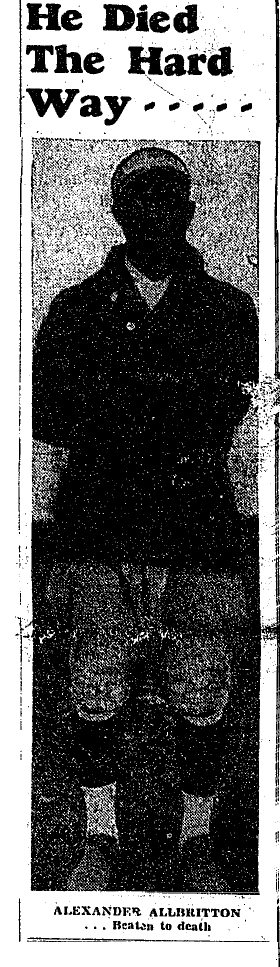
Philadelphia Tribune, Feb. 8, 1940

Before I complete the tale of the 1947 New Orleans Creoles (first two installments here and here), there’s a few other cool things I want to get to, including today’s post.

For this piece, I’m going to jump way back to something I discussed and wrote about in fall 2014 – that’s right, more than a decade ago. Here’s my article in the Philadelphia Inquirer, and this and this are the blog posts I wrote.

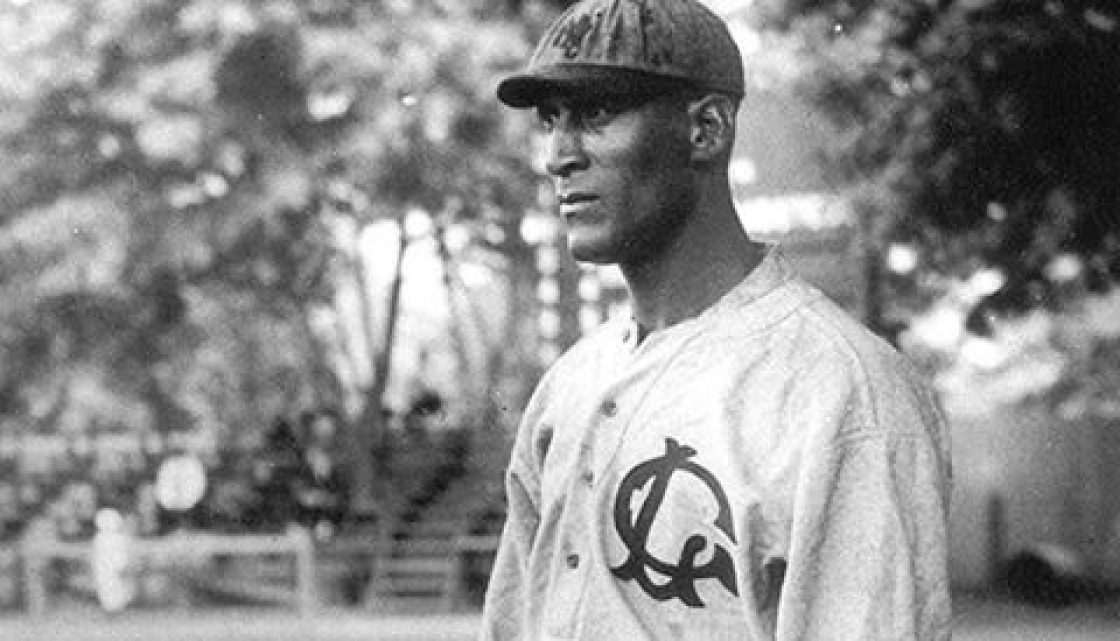
At that time, I somehow learned about (I can’t recall how, exactly) Alexander Albritton, a pitcher whose career in the upper echelons of Black baseball was mainly during the 1920s. I wouldn’t necessarily call his career brief, but it was generally unremarkable. He seems to have been a decent flinger of the horsehide, but he was far from a Hall of Famer. He could have brilliant outings, but he got just easily got shelled.

But his quality as a pitcher doesn’t really figure into the main thrust of his story.

What Albritton is most remembered for – the thing that makes his life truly remarkable – is his tragic death at the age of 45.

That death came in February 1940 while he was a patient at Philadelphia State Hospital, a notoriously decrepit, filthy and horrific public psychiatric facility commonly known as Byberry Hospital.

Albritton died at the hands of Frank Weinand, an orderly at the hospital who beat poor Alexander to death, allegedly to subdue Albritton during a psychological breakdown.

In addition to Byberry’s troubled, corrupt existence during its time – it finally closed in 1990 after numerous investigations into the deplorable conditions and questionable methods of its staff – several questions and mysteries remained, such as where exactly he was buried (I was unable to confirm his final resting place back in 2014).

But the biggest blank space in Albritton’s saga was what precisely caused his death. News reports at the time weren’t able to offer any clarity, mainly because on Albritton’s death certificate, the lines for the principal cause of death just stated “inquest pending.”

So it was apparently unknown, or at least unverified, exactly what Weinand did in his physical altercation with Alexander that killed the latter on Feb. 3, 1942. 

Since I wrote the article on Albritton for the Philadelphia Inquirerer and the corresponding posts I penned on the sad incident, I hadn’t really revisted the Alexander Albritton tale for many years.

But a couple weeks ago, something made me circle back to the tragedy just to see if anything new had developed or emerged since 2014. I’m not sure what prompted me to check it out; it just kind of struck me one day. I had a feeling.

Turns out it was a good thing, too, because I did indeed find something new.

Namely, a second death certificate! One that included the actual results of the inquest/autopsy of Albritton’s body!
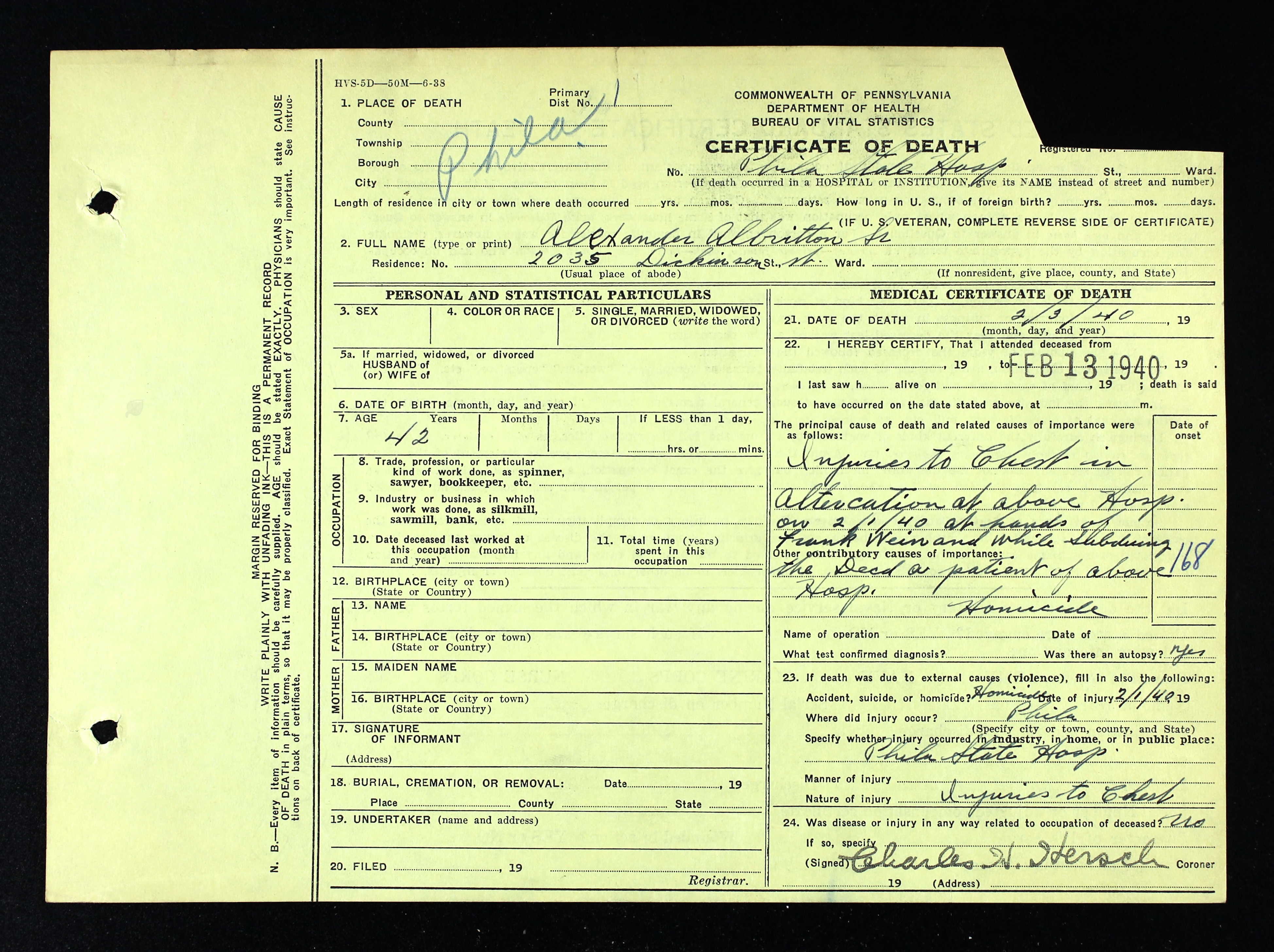
When I did take a return dive into the story a couple weeks ago, I hopped on Ancestry and did a search or two on Albritton’s life, including looking up the death certificate for the heck of it.

At first, what I found was the same document I came across in 2014 – with the same old “inquest pending” rubber stamp on it.

Curious as to whether there might be any addendums or anything attached to the primary certificate page, I clicked to see the next page of records that had been uploaded to Ancestry. 

Lo and behold, there was now a second death certificate following the original, and it was one that had filled in the lines for the exact cause of death.

I don’t know precisely why I hadn’t uncovered the follow-up certificate 11 years ago, i.e. whether I was sloppy or careless in my reporting or if the additional document had been filed and uploaded since 2014.

Regardless of how it happened, it happened, and now, with a decade of additional lessons learned about journalistic investigation and historical research, I’d found something big.

So what caused Alexander Albritton’s death? States the newfound document: “Injuries to chest in altercation at above hosp. [sic] on 2/1/40 at hands of Frank Weinand while subduing the decd [deceased][,] a patient at above hosp. [sic].”

The ruling of the coroner, Charles H. Hersch: “Homicide.”

Murder was the case, indeed.

Now, as reported by the contemporaneous media of the time, Weinand was charged with murder on Feb. 5, 1940, but eventually he was largely cleared of wrongdoing by the investigation into Albritton’s death; the post-incident probe determined that Weinand had acted in self-defense when Albritton allegedly attacked the orderly with a broomstick. (The charges appear to have been downgraded at some point to manslaughter.)

However, even with the completed autopsy results, the second death certificate leaves a lot of curiosities and questions about what all happened. There’s also a lot of details about the case that, whether due to unavailability of information or lack of time on my part, I wasn’t able to fully explore and write about over a decade ago.

First, there’s other differences between the two death certificates. The most noticeable is that the spaces for background information about Albritton, or any deceased person – sex, race, relatives, spouses, addresses, birthday and place, etc. – are filled out on the initial document but left largely blank in the second one, probably because it would have been roughly the same information.

Philadelphia Tribune, Feb. 8, 1940

Another key difference between the two versions is the listed date of death; on the first one, it’s stated as Feb. 3, 1940, but on the ensuing one, it’s Feb. 1, 1940.

The variation can most likely be attributed to the gradual discovery and revelation of the complete and accurate account of what had taken place between Albritton and Weinand. In the particular case of date of death, it eventually came out that Albritton’s body – indeed, the fact that he was dead – wasn’t discovered for a couple days by hospital staff.

What seems to have happened is that Albritton’s body was likely found on Feb. 3, at which time staff and investigators probably just assumed that he had died that same day, but subsequent multiple investigations by the State Police, the Philly police and others found that the altercation between Albritton and Weinand actually occurred two days earlier.

It then took staff, doctors and others to not even realize for two days that Albritton was dead and hadn’t been treated at all for the injuries – which included, it seems, four broken ribs, a punctured lung, and constusions to the torso and arms – sustained by the altercation. It would seem that whatever Weinand did to Alexander, it was severe, even with the former’s exoneration.

Another aberration between the two death certificates is the date they were filled. The first one indicates that it was logged on Feb. 6, 1940, but, curiously, there is no filing date on the updated document version, only that Hersch had “attended the deceased” on Feb. 13. 

Yet another discrepancy is Hersch’s signatures – they look substantially different. 

Moreover is the uncertainty about where Albritton’s body ended up. The initial death certificate states that the dispensation of the body took place on Feb. 9, 1940, at Eden Memorial Park cemetery of Collingdale, Pa. However, back in 2014 I called Eden to confirm, and the staff there said they had no such record of Albritton. (I also called three other possible cemeteries, none of which had any record of him, either.) Then, in the second edition of the death certificate, all of that information is left blank.

The details of the fatal incident are intriguing, and hopefully I’ll be able to talk about those at some point. I also hope to follow up on where Alexander was buried, as well as examine his family background.

But next up will eventually be a look at Alexander’s career on the diamond.
The 1947 New Orleans Creoles, part 2

The Town Talk (Alexandria, La.), July 23, 1947

Editor’s note: This is the second part of a three-part series on the New Orleans Creoles. The first installment is here.

We’ve covered the Creoles’ barnstorming, charity and other non-league contests. Now, we have to look at the team’s actual Negro Southern League games and the Creoles’ performance in the circuit.

But just like most years and most leagues in Black baseball, the NSL’s in-circuit season was irregular, unpredictable and nigh near willy nilly.

By the time the dust cleared and the 1947 Negro Southern League season wrapped up, there was, not completely unexpectedly, a lack of clarity as to who’d won the darn thing. 

Thanks to the same challenges that plagued Black baseball and their leagues, teams and players for decades and at all levels of the game – erratic news coverage, incomplete or altered game schedules, small crowds, team-jumping players – the conclusion to the 1947 Negro Southern League campaign is a little cloudy, to say the least.

And the Creoles had for themselves a front seat on the roller coaster ride.

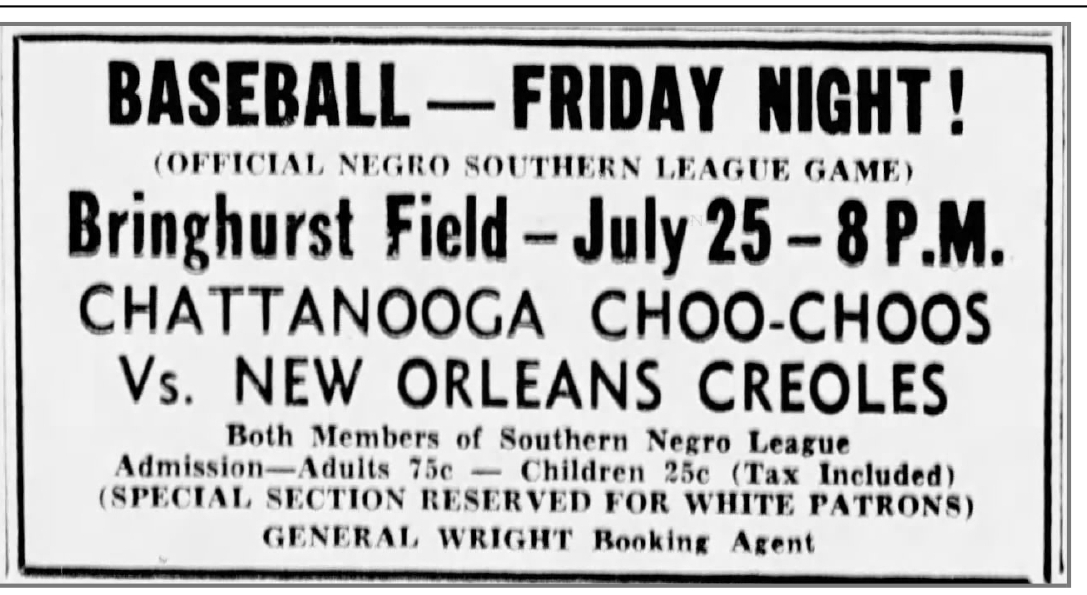
The Crescent City team opened its league schedule on May 11, with a doubleheader at Little Rock, where they split with the Memphis Blues, a club that existed for a single year in 1947 and played in the NSL for that season.

(As was usually the case in the Negro Leagues, NSL teams often played at neutral sites as a way to maximize revenue by bringing the gameday experience to different places, including those that currently didn’t have a team in the loop.)

After two more divided road series – a doubleheader against the Atlanta Black Crackers that the foes split, and a 2-2, four-game set with the Raleigh Tigers at different venues in North Carolina – the Creoles arrived in the Smoky Mountains of western North Carolina in the first week of June to face the Asheville Blues, the defending NSL champs.

Unfortunately, the Blues flexed those superpower muscles and swept the four-game set, and it didn’t get much better after that – a four-game series at Chattanooga against the Choo-Choos ended with the home team taking the set, three games to one.

Then came an example of a frequent practice that made the Negro Leagues wholly unique in professional baseball at the time – an extended, paired road trip, in which two teams accompanied each other on a jaunt to different locales, often across multiple states, as a traveling attraction, a road show of shorts.

In this case, the Creoles traveled with the Black Crackers, beginning with a doubleheader in Atlanta on June 15; the clubs ended up splitting that twin bill, then headed west.

Where, finally, at long last, the Creoles came home.

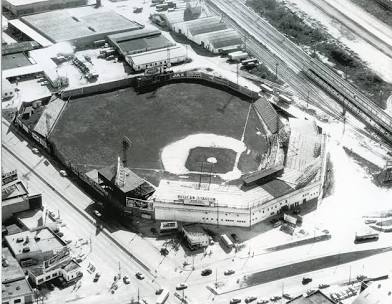
The Big Easy boys had their league home opener on June 17 at Pelican Stadium against Atlanta, and The Louisiana Weekly of June 14 stated that the event would hold tremendous significance for local baseball fans.

Pelican Stadium

“Two long months of endurance and waiting by New Orleans fans will end on Tuesday night when the Creoles clash with the strong Atlanta Black Crackers at Pelican Stadium,” the paper said. “This will mark the first time a stable, chartered league [in recent years] has had a representative from New Orleans.

“Twice on occasions in the past,” the article added, “New Orleans has had entrants in semi-organized circuits. … In days past it was such names and officials as Moss, Geddes and [Fred] Caufield [actually spelled Caulfield] that vanguard the movement to establish New Orleans as a baseball city.

“Tuesday and Wednesday nights, Allen Page will trot out one of the greatest young teams ever assembled and certainly one of the best that ever wore a New Orleans uniform.”

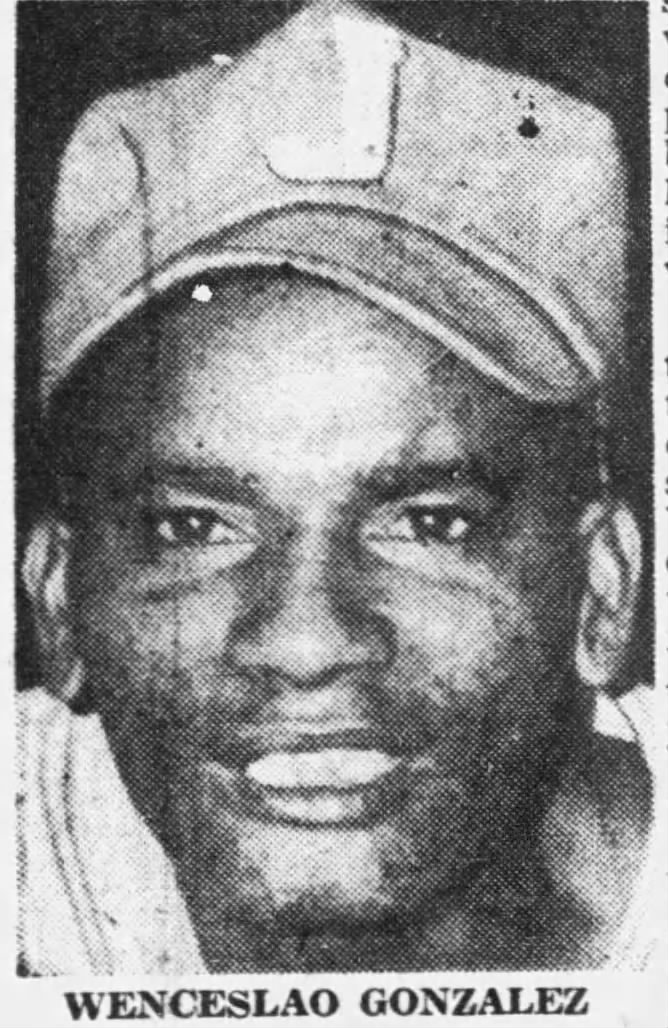
Thanks to, ahem, cracker jack pitching, the Creoles won both contests, held on consecutive nights. In the Tuesday game, the Creoles’ Cuban ace, Wenceslao Gonzales, hurled a four-hit, 1-0 shutout, and Billy Horne scored the lone marker on a Cracker fielding error in the sixth inning. An estimated 5,100 folks showed up to see the game.

Arizona Republic, May 28, 1954

The following night, New Orleans pitcher Wild Bill Chapman allowed six hits and only a lone tally in the first inning, followed by airtight, shutout ball the rest of the way in a 6-1 triumph. With the win, the Creoles (by my calculation) moved ahead of Atlanta and into sole possession of third place in the NSL, behind first-place Asheville and second-place Jacksonville.

The two clubs then embarked on their pair journey through the South and headed north and west to Shreveport, where the Creoles nipped the Crackers, 8-7, in a contest played on the home diamond of the white Shreveport Sports of the Texas League.

New Orleans then swept a doubleheader over the Black Crax in Houston and followed up by edging out the Atlanta aggregation, 3-2, in 11 innings at the American Legion ball field in Longview, Texas, on June 24.

Beginning in late July, the Creoles faced a grueling slate of league games that at some point paired them against (in order) Nashville, Chattanooga, Asheville, Raleigh, Jacksonville and Nashville again. The regular-season league schedule didn’t conclude until the last week of August.

And during those roughly six weeks, the Creoles enjoyed only eight home dates at Pelican Stadium in New Orleans. The rest of the time, the Big Easy lads were scheduled for contests at Longview, Texas; Alexandria, La.; Baton Rouge, La.; back to Longview; El Dorado, Ark.; again to Longview; another one in Longview after a quick trip home; El Dorado; Houma, La.; Shreveport, La.; back to Houma; to Nashville, Tenn.; and to Dayton, Ohio.

A couple notes on that schedule:

  • Only three of all those games were played at the home field of the Creoles’ given league opponent. That would be the ones for the last series, at the famed Sulphur Dell in Nashville against the Nashville Cubs. 
  • Those contests at Nashville were billed in advertising in The Tennessean newspaper as “official championship playoff games,” but I’m not sure why. It could have been a series to determine the winner of the NSL second-half pennant and the right to play the first-half winner and defending champion Asheville. (More on that in the third and final installment of this blog series.)
  • While numerous games being played at neutral sites certainly isn’t surprising in the slightest for the Negro Leagues, I don’t know why these particular locales were chosen. However, since Shreveport is in northwest Louisiana, Longview is in northeast Texas, and El Dorado is in southwest Texas, all three of those places are relatively close to each other, which might have facilitated traveling between them. As to why Dayton was selected, your guess is as good as mine.
  • Houma is only about 60 miles and an hour’s drive to the southwest from New Orleans. The medium-sized town was at that time home to the Houma Indians, a team in the low-level, professional circuit Evangeline League, which, despite its rookie-level status, was an extremely colorful, beloved, scandal-plagued league contained entirely in the southern half of Louisiana.
  • Remember that this is a Black team traveling through the South at a time when segregration was still in full effect, which often meant rickety vehicles, sketchy hotels and meals grabbed on the fly wherever they could. It was a trying existence for the team, players and management. 

As a way of concluding this installment, we’ll take a look at the off-field measures of success for a baseball team – gate receipts, attendance and public support? Did the Creoles draw good crowds, or did the local community not give the type of attention to the club that the Creoles for which the Creoles were hoping?

Basically, it was solid, but it certainly could have been better, something on which The Louisiana Weekly then-sports editor Jim Hall emphatically expounded in his regular column from July 26, 1947.

Coming shortly after the Creoles drew just 2,300 spectators to a doubleheader at Pelican Stadium against Chattanooga, Hall’s piece lamented the languid state of Black baseball in the Crescent City and the African-American citizenry’s apathy toward the situation.

We have one team (Creoles) that can play their games in Pelican Stadium and we don’t fully support it. Fans, colored baseball needs you and ‘Brother’ it needs you very badly.

Jim Hall, Louisiana Weekly columnist

“Judging from last Sunday’s twin bill affair at the Pelican Stadium,” Hall penned, perhaps, lots of the baseball fans or followers don’t know about the New Orleans Creoles … For years, local fans have been shouting the question, when are we going to have a home team, a team which will represent our city in one of the organized leagues in our country? …

“Now that the out-of-town teams games have been cut down and one of the baseball magnets [Page], who by the way, is a colored citizen, has invested nearly $10,000.00 in a baseball team called the New Orleans Creoles, which is a member of the Negro Southern League, the attendance is still fading. …

“At the present time,” Hall added, “there is [sic] some twenty baseball teams in New Orleans without a place to play their games, these teams must stay on the road and play their games. We have one team (Creoles) that can play their games in Pelican Stadium and we don’t fully support it. Fans, colored baseball needs you and ‘Brother’ it needs you very badly.

“In New Orleans, there is little incentive for colored players to give their best to baseball when the home town [sic] fans will not come out and see the team in action. Whether the [white] New Orleans Pelicans win or lose, the crowd is always giving full support. Why can’t the colored fans support a team of their own?”

That, unfortunately, is a common theme running through just about the entirety of African-American baseball history in New Orleans. In 1947 specifically, those citizens who declined to support their own Negro League team missed one helluva conclusion to the season. That, plus a focus on three of the 1947 Creoles themselves, will be in our next, final installment of this series.