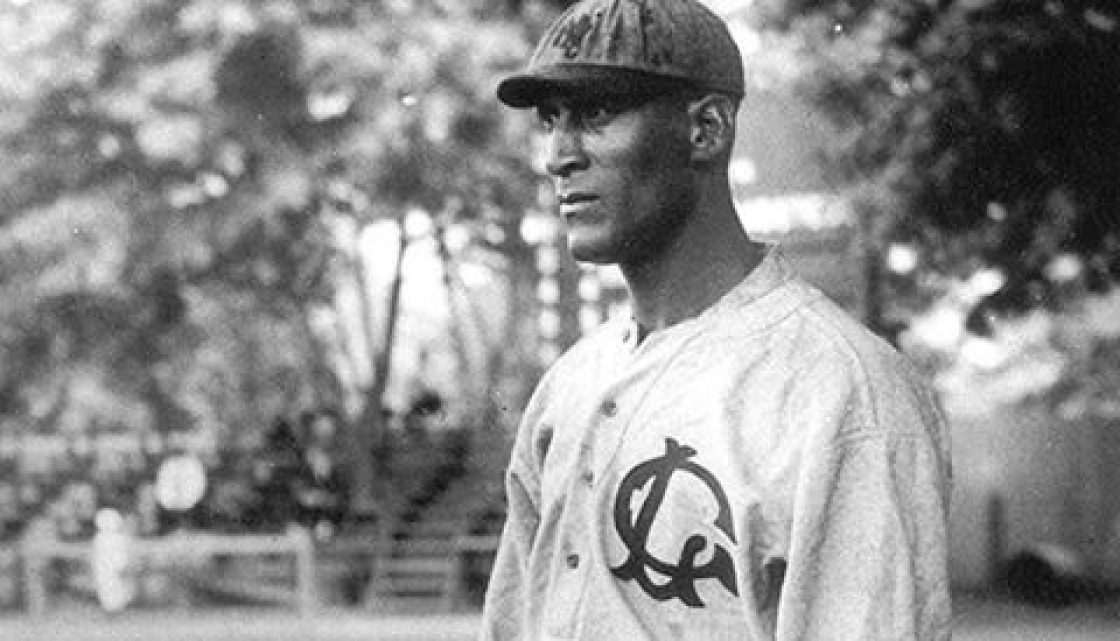

This post represents the closing of the book, several months overdue, on the Alexander Albritton saga that saw Albritton go from Negro League pitcher to tragic victim at a psychiatric hospital.
Albritton, who pitched for several African-American baseball teams during the segregated era in the 1920s before seemingly having a nervous breakdown and being committed to the horrific Philadelphia State Hospital, a notoriously inhumane psychiatric facility, where he was beaten to death by an orderly in 1940.
In addition to the article I wrote in 2014 for the Philadelphia Inquirer, I’ve discussed Albritton’s life, career and death on this blog several times, such as here. But this current post is a continuation of the one here in which I examined his actual performances on the baseball diamond.
In the baseball-centric Albritton post, I initially concluded that, despite a significant career as a pro and semipro pitcher, he was never an official major-leaguer because he never pitched in any official league games, i.e. games between teams in the same league that counted to league standings.
However, after I’d drafted my post, my SABR friend Kevin Deon Johnson emailed me that my conclusion – that Alex Albritton was never a major-league player – wasn’t accurate. Kevin, it turns out, did find several official league contests in which Albritton competed, meaning that yes, Albritton was, in fact, a major league pitcher.
Kevin found nine such games that took place between 1923 and 1925, all in the Eastern Colored League. Four of the games were from the 1923 season, while Albritton was hurling for the Baltimore Black Sox. Then three of them happened in 1924, when he took the mound for the short-lived Washington Potomacs. The final two contests took place in 1925, while Alexander pitched for the recently-moved Wilmington Potomacs.
Across those nine contests, Kevin’s spreadsheet shows, Albritton went 0-2, with one save. His only complete game came on Oct. 7, 1923, when Albritton pitched for the Black Sox against the Hilldale Club. The Darbyites tagged Albritton for 11 hits and eight runs over the nine innings, with Alex picking up the loss in the 8-3 contest.
Albritton was hung with his other major-league loss on Aug. 25, 1923, against the New York Lincoln Giants, when he pitched four innings, gave up four runs (all earned) and got tagged for five hits.
He then notched his sole major-league save a couple weeks later, on Sept. 9, 1923, versus the Lincoln Giants after hurling for a single inning during the contest, which the Black Sox ended up winning, 12-8.
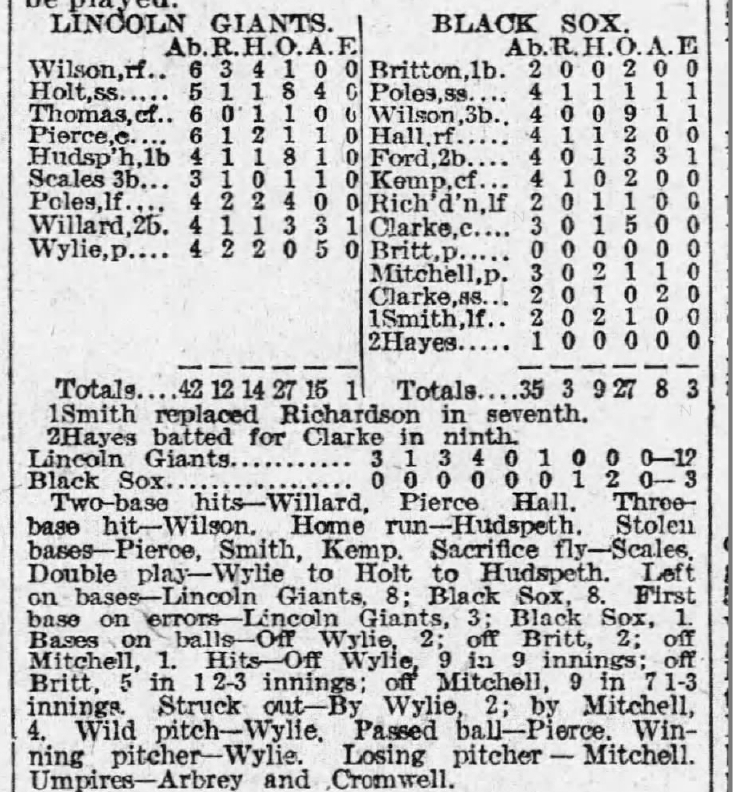
One of the reasons I had trouble identifying Albritton in game coverage was that he frequently went under different names in articles and in box scores. At times, box scores for the games in which he played as an official major leaguer listed him as “Allbritton,” with two Ls; as “Britton”; or even just “Britt.” One article identified him as “Al Britton.”
To make extra sure that all of these names and spellings referred to the same person, Alexander Albritton, I double checked with Kevin Johnson, who told me via email that there were Negro Leaguers with those shorter surnames, such as George Britt and John Britton.
And in fact, George Britt, as a utility player, did suit up for the Black Sox while Albritton did in the early to mid-1920s. Moreover, to muddle things up even more, Alex Albritton’s common nickname was “Britt,” while apparently George was listed in game reports as “Britton.” (Fortunately for our purposes, John Britton played professionally in the 1940s and ’50s, well after the primes of Alex Albritton and George Britt.)
All of that confusion can make it even more challenging to parse through box scores and game reports, a task already made difficult by the lack of comprehensive record keeping and reporting during the heyday of the Negro Leagues.
Now, tangential to the spelling of his name in game coverage was his relative versatility on the diamond; many times boxscores had him playing first base, for instance, on days he wasn’t starting on the mound.
Here’s an example … in the Baltimore Sun’s Aug. 26, 1923, coverage of a clash between the Lincoln Giants and Black Sox (the former won, 12-3), the Baltimore section of the score listed a “Britton” leading off and playing first base for the Black Sox. However, “Britton” only had two at bats.
Then, further down in the chart, a pitcher named “Britt” is listed but shows no at bats or other hitting statistics. These listings could be interpreted to mean, say, that Alexander Albritton started the game at first base but was later called on in relief on the mound. Or it could be read to mean that George Britt pitched in relief but Albritton manned the initial sack for much or all of the game.
Other moniker oddities: during the summer 1924, the Wilmington Evening Journal, in its box scores of Washington Potomacs games, listed Albritton as Albritt, particularly when he pitched. Meanwhile, the Harrisburg papers referred to him in box scores as Britton.
Thus ends my haphazard, somewhat comprehensive retelling of the tale of Alexander Albritton, a man whose fortunes shined for a brief stanza of time before everything turned horribly, horribly wrong and tragically fatal. I wish I, and we, knew more about exactly how his life crumbled and his mind decayed, about the man who ended Albritton’s life, about Alexander’s all-too-brief career as a major-league pitcher, about the decrepit, horrific, inhumane institution in which his life was snuffed out by madness and medical malpractice.
 The Negro Leagues Up Close