John Donaldson: Greatness on film and how to help

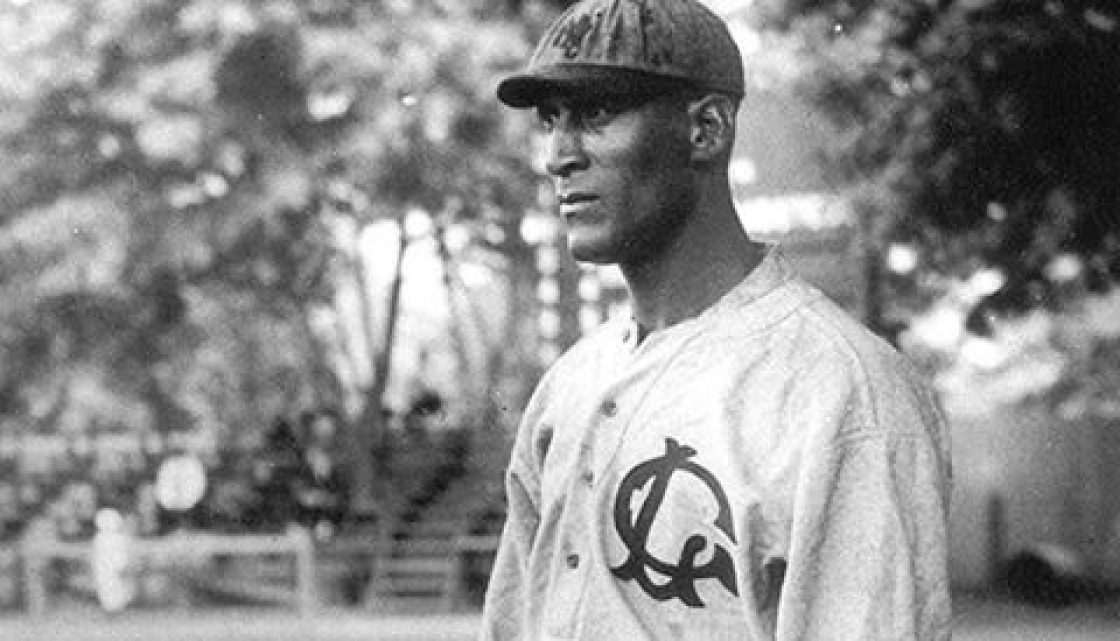
Photo courtesy the Donaldson Network

I’m taking a break from my Buck Leonard series to highlight a really neat process taking place about one of the greatest but arguably least-appreciated black baseball legends — pitcher John Donaldson — and how you can help with the effort …

It is, perhaps, an eternal conundrum for Negro Leagues researchers, fans and former players and owners — how to get the average layperson to care about the history of black baseball.

All of us within the Negro Leagues community already know the ins and outs, the large and small, the challenges and successes to be found in the Negro Leagues of yore. We’re familiar with the names, the monikers, the stadiums, the managers and owners, the classic games. Why, because we love it, plain and simple.

And even enthusiasts of baseball history in general are knowledgeable of some of the towering figures and teams — Satchel, Josh, Cool Papa, Cyclone Joe, the Monarchs, the Grays and American Giants.

But then there’s the general public, folks who maybe check the MLB standings once in a while, or who watch a game on TV if they can’t find anything else to check out, or who go to minor league games for something to do on a Friday night. They enjoy baseball occasionally, but it’s only on the their periphery.

These are the ones we need to reach.

And Peter Gorton and the rest of the Donaldson Network just just be onto something in that regard.

John Donaldson was a fireballing, curve-balling African-American pitcher who, over the first few decades of the 20th century, became the first great barnstorming black player. He was Satchel Paige before there was Satchel Paige. The man traversed much of this country — including pretty much all of the Midwest — earning the respect of white and black fans with his immense talent, keen savvy and impeccable character.

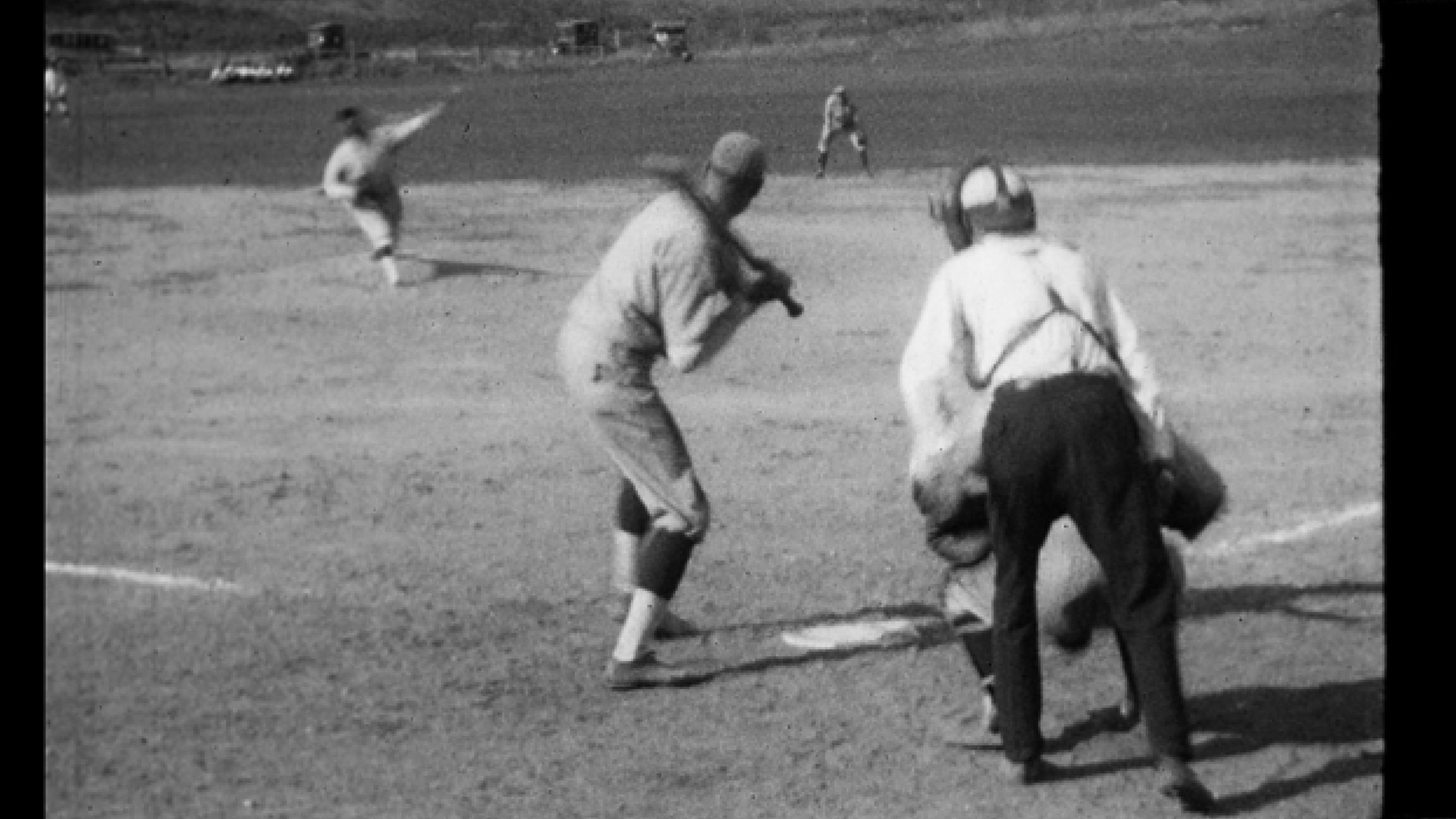
What’s more, unlike many early barnstorming stars, Donaldson was caught on film, and a snippet of such footage — 39 seconds, to be precise — was discovered in 2011.

Which, quite naturally, thrilled Gorton, the founder and director of the Donaldson Network, which for nearly 20 years has worked tirelessly and toiled persistently to research every nook and cranny of Donaldson’s life and career.

Not only has the Network uncovered hundreds and hundreds of articles and box scores, but it’s also filled out a picture of the man behind the pitching greatness. Gorton and his peers have been able to draw a portrait of Donaldson’s character and his life, and in so doing have amassed a massive collection of information with which to spread the gospel and Donaldson’s overlooked, underappreciated legend.

The group succeeded in getting Donaldson inducted into the Missouri Sports Hall of Fame last year (the player was a Missouri native), and the Network continues to lobby for his election to the National Baseball Hall of Fame in Cooperstown (and many pundits, including this one, believe Donaldson does indeed belong in those hallowed halls).

But once the 39 seconds of film footage of the pitching great emerged, the Donaldson Network struck gold in its efforts. With the film in their (pardon the pun) satchel of documentation, Gorton and his compatriots feel they have something — namely, something dynamic and visual — that can’t help draw in the general public to Donaldson’s story.

“It’s a key part of [their effort],” Pete told me. “We see the film as a stepping stone … We can take it to a different audience.”

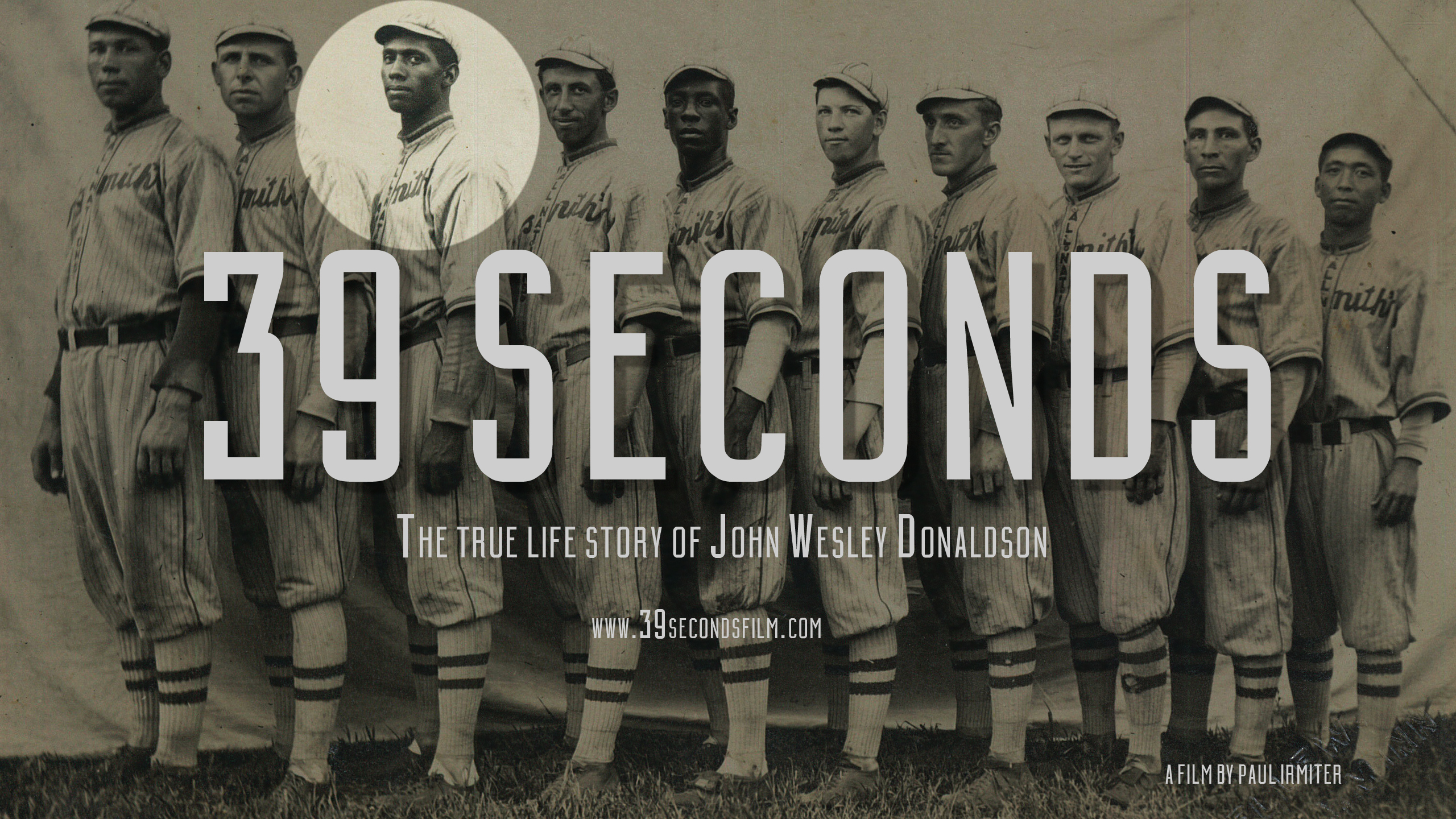
As such, the Network has recruited a film production team to produce a documentary about Donaldson called, “39 Seconds,” which, as the title suggests, will center around the discovery of that vintage, rare film footage. (Information about the project can be found below, in the text of a press release sent out by the Donaldson Network recently.)


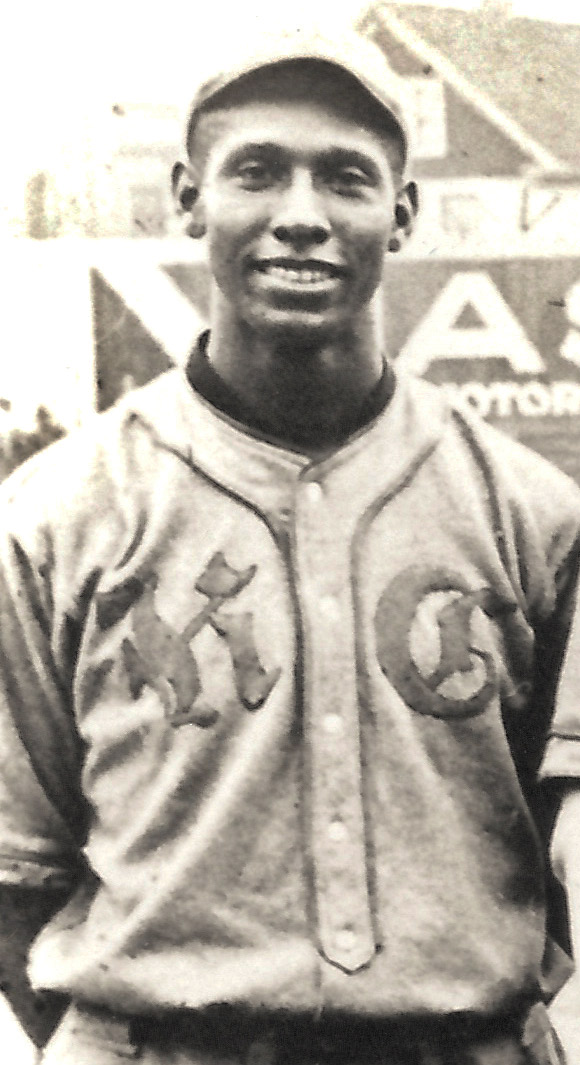
Courtesy the Donaldson Network

Gorton said he believes the documentary — which is slated to film this summer — could be a key component in the group’s efforts to expanded awareness of Donaldson and his legacy to the general public.

“We’re trying to take an extremely bold step,” he said. “We’ve got to get it out to everybody who’s never seen [Donaldson’s] story before. We’re going to be able to tell the story of John Donaldson and his greatness to more people.”

Part of that mission is to move Donaldson’s tale out from the shadow of more widely known figures for whom Donaldson actually served as a prototype and inspiration.

“We’re trying to push the envelope and tell people that way before Satchel Paige, there was John Donaldson,” Pete said.

The documentary will also show how Gorton and the Donaldson Network has been striving for 17 years to delve into and uncover the pitcher’s stats and his story. Pete said the group has piles of information from box scores and game covers — 403 career wins and more than 5,000 strikeouts, for example — to satiate any baseball nut’s curiosity and queries.

It’s been a long haul, he said.

“We are rock solid in our analysis of the baseball part of it,” he told me. “Let’s also tell a story about that challenge.”

Gorton acknowledges with a laugh that his mission crossed over into “a crazy obsession” a long time ago, and that he’s spent years and years pursuing his passion. He says that, yeah, a few people raise an eyebrow at first glance when they encounter him, but eventually, those doubters understand and support him.

“People say, ‘He’s nuts,’” Gorton said. “It is the ultimate obsession to tell this American story. We’ve worked so hard to figure out that story every day of the last 17 years.”

A still image from the film footage (courtesy the Donaldson Network)

The key is to allow the public relate to Donaldson and the pursuit of history.

“Yes, there’s baseball in [the story,” he said, “but baseball isn’t the biggest story. John Donaldson’s story can resonate with every single person out there.”

You (the general public and my readership, that is) can help bring the film production together. On Feb. 20 (Donaldson’s birthday), the group launched a Kickstarter campaign to raise $43,000 to help fund the production of the documentary. Gorton said the raised money will be used to gather interviews with experts that hopefully will be part of the film.

While the $43,000 would only be a portion of the production budget, Gorton said it will nonetheless be a crucial part of the process.

You can link to the Kickstarter page here, and more information about the Donaldson Network and the film production can be found here. Recently published article about Donaldson, the Network and the documentary can be perused here, here and here. For any questions, contact Peter Gorton at pwgortonmb@hotmail.com.

Below is a lightly edited version of press release issued on March 5 by the Donaldson Network giving details of the film:

LIFE AND LEGACY OF THE GREATEST UNKNOWN BASEBALL PLAYER RESTORED

Tru Ruts Films and 612IM to produce 39 Seconds documentary film

Minneapolis — The film “39 Seconds” will star leading Twin Cities actors, Tru Ruts Films announced today. The film will shoot in in the summer of 2018.

John Donaldson, born in Glasgow, Mo., on Feb. 20, 1891, played ball all the way up to 1949, when he became the first black baseball scout for the Chicago White Sox. Then he disappeared, only to be buried in a unmarked grave in Alsip, Ill.

This documentary film will tell the incredible story of his life as a ball player and consider the hardships a black man at that time had to overcome — and why such a great man and legendary ball player just disappeared from the American story.

The documentary will highlight the career of John Wesley Donaldson, a left-handed pitcher known as “The Greatest Colored Pitcher in the World.” The Donaldson Network’s research techniques have been labeled by the Center for Negro Leagues Baseball Research as “the most extensive research project that has ever been undertaken related to black baseball.”

Donaldson’s legacy required more than 500 researchers from around the world to make it happen. John Donaldson is known to have won 403 games, the most of any segregated pitcher in history. Combined with 5,034 documented strikeouts from over 550 different cities, the numbers are impressive.

The creative team for the film includes director Paul Irmiter; assistant director and casting director Kevin D. West; Tru Ruts executive producers E.G. Bailey and Sha Cage; researcher/story master Peter Gorton; editor Dane Whitehead; and leading actors and creative talent.

ABOUT TRU RUTS FILMS: Tru Ruts operations encompass motion picture production, theatrical and music production, film curation, and acquisition and development of new entertainment products. Its latest film, “New Neighbors,” premiered at Sundance in 2017.

The company’s film areas of interest include narrative shorts and features, Web series, music videos and documentaries. With a 15-year history, current Tru Ruts programs include the “America Now!” international program; Next Wave film series; the Sankofa Festival; and the Brown Cinema Cafe. For more information, see www.truruts.com.

ABOUT 39 SECONDS FILMS: 39 Seconds Films is a partnership between Irmiter 612IM and The Donaldson Network.

Related Links https://www.kickstarter.com/projects/1039747489/39-seconds.

I’ll conclude this post with a quote from Donaldson himself, as uncovered by the Donaldson Network effort:

“I am not ashamed of my color. There is no woman whom I love more than my mother. I am light enough so that baseball men told me before I became known that I could be passed off as a Cuban. One prominent baseball man, in fact, offered me a nice sum [$10,000 in 1917] if I would go to Cuba, change my name and let him take me into this country as a Cuban. It would have meant renouncing my family. One of the agreements was that I was never again to visit my mother or to have anything to do with colored people. I refused. I am clean morally and physically. I go to my church and contribute my share. I keep my body and mind clean. And yet when I go out there to play baseball, it is not unusual to hear some fan cry out, ‘Hit the dirty n—–.’ That hurts, for I have no recourse. I am getting paid, I suppose, to take that. But why should fans become personal? If I act the part of a gentleman, am I not entitled to a little respect?”

My Buck story: The book that started it all

The next installment of my project about meeting Buck Leonard. Check out some earlier installments here, here and here.

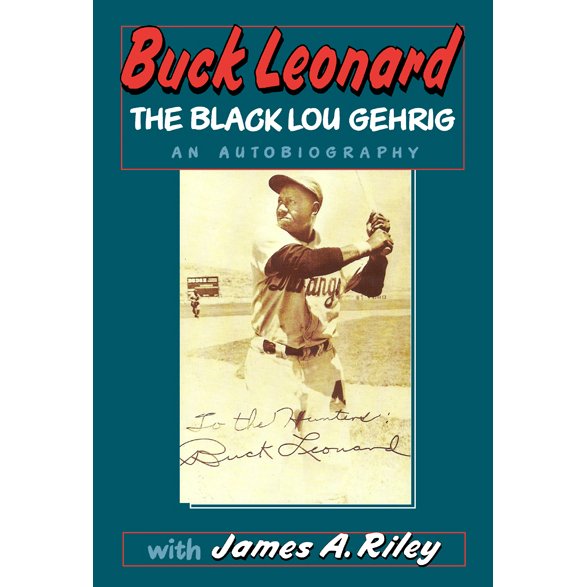
I don’t remember in which particular bookstore I found “Buck Leonard: The Black Lou Gehrig,” the autobiography of the Homestead Grays great that was co-authored by James A. Riley and released in early 1995. It might have been the Indiana University bookstore, or maybe it was a random Barnes & Noble (which, if it was indeed the source of the volume, is quite possibly closed now, a victim of the terrifying juggernaut known as the Internet).

But where I found the book isn’t as important as when I discovered it. That would be May 1995, shortly after my IU graduation ceremony. And even more significant was the emotional weight and psychological impact it had on me, for it came at a time when, despite receiving a bachelor’s degree — which I somehow managed to complete in the wake of my spiritual crises — I had tumbled into the absolute nadir of my life up to age 22.

In the months leading up to my graduation, I’d suffered two different mental breakdowns that, combined, completely wrecked my life, crippled my self-worth and decimated the hard-earned, carefully-established future I had made for myself in the world of journalism. Gone was my editorship of the Indiana Daily Student. Gone was my impending internship with the Louisville Courier-Journal. And gone — obliterated, really — was any internal sense or belief that life would somehow hold meaning from then on out. Optimism was swept away, hope was crushed into cinders.

However — and it took me years and years to finally wise my thick head up and realize this — what did remain was an incredibly deep and devoted support network of family and friends, people who had somehow weathered the shock of seeing their loved one mired in mental hospitals and receiving cryptic, morbid hints that I was thinking of ending my life. They’d held in their, more bravely than I realized at the time, and they had caught me as I was in free-fall, preventing me from disappearing into the foggy abyss of nothingness.

In addition to that blessing, one other good thing did come from the preceding few months — a deepening interest in baseball history, specifically the Negro Leagues. As I previously detailed here, one of my mentors, the late Dr. William Wiggins, had provided the spark of knowledge in me and then sponsored an independent study honors grant I’d received to study black baseball history during the spring 1995 semester.

While I pursued that research, I became further and further enthralled by the history and characters that had toiled and triumphed behind the curtain of segregation. It was then that I tripped over the name Buck Leonard, via a book about Josh Gibson. I learned that Leonard had been Gehrig to Gibson’s Ruth, that he batted cleanup behind the star-crossed, doomed slugging catcher — and that had come from and retired to Rocky Mount, N.C.

Which just so happened to be where I was headed to rebuild my life and my psychological foundation.

And, what’s this? I read. Buck Leonard just released an autobiography? Like last month? No freakin’ way! I gotta get that shit!

And, by golly, I did.

As I departed Bloomington, Ind., for North Carolina, as I burrowed into the back seat of my dad’s Explorer, that book was my reading material — and my initial, tentative steps back into the real world. In many ways, that book was one of my lifelines back to sanity and hope for the future, whatever it may be.

I was simply spellbound.

I now had an image of Buck Leonard coalescing in my head, not necessarily just a visual portrait of him, but also in terms of his personality, his character, his way of carrying himself. I formed a picture, even just casually through his own words on the written page, of a soft-spoken, reserved, modest man who bore the burdens and injustices of an age gone by — or one that we like to tell ourselves has gone by, not completely, but at least to the point where fairness, respect and understanding (however grudgingly on the part of some) have evolved enough to provide Buck Leonard the accolades, honors and recognition he so deserved after nearly a lifetime.

In addition to providing me with an introduction to Buck — the athlete, the man, the citizen — reading Riley’s book introduced me to the ever expanding, always passionate world of Negro Leagues research and writing.

The next step for me, naturally, was Robert Peterson’s seminal “Only the Ball Was White,” a brilliant revelation of another world that echoed across baseball history like a cannon in 1970. I then learned of all the writers and researchers — many who themselves have reached (although they’d never admit it) legendary status. Riley. Holway. Lester and Clark. Hogan. Heaphy. Dixon. Burgos. Coates.

There’s a whole bunch more, of course, but those are just the ones who have made the biggest impression on me, those who have further influenced my work, my passion, my view of the world around.

But Ground Zero, so to speak, was Jim Riley, Buck Leonard and Rocky Mount.

By this time, I was chomping at the bit to meet Buck Leonard. I had some info, I had an exuberant thirst for knowledge. I had goals, and purpose, and a light at the end of the tunnel.

Naturally, this excitement was tempered by a not-insignificant amount of nervousness. I mean, how to you even approach a Baseball Hall of Famer? How do you introduce yourself to a living embodiment of history? How do you, well, talk to a legend?

You start with the phone book. Actually, I didn’t expect a Hall of Famer to be listed in the white pages.

But, yeah, he was. Walter F. Leonard on Atlantic Avenue. Right there on the page.

I was astounded but also giddy with joy.

Which, of course, transitioned rather rapidly into anxiety as i stared at my parents’ phone. You know, the whole meeting a legend thing.

But I somehow managed to lift the receiver, albeit with trembling hand, and dialed the number. It rang a couple times …

A friend gets on board with Buck

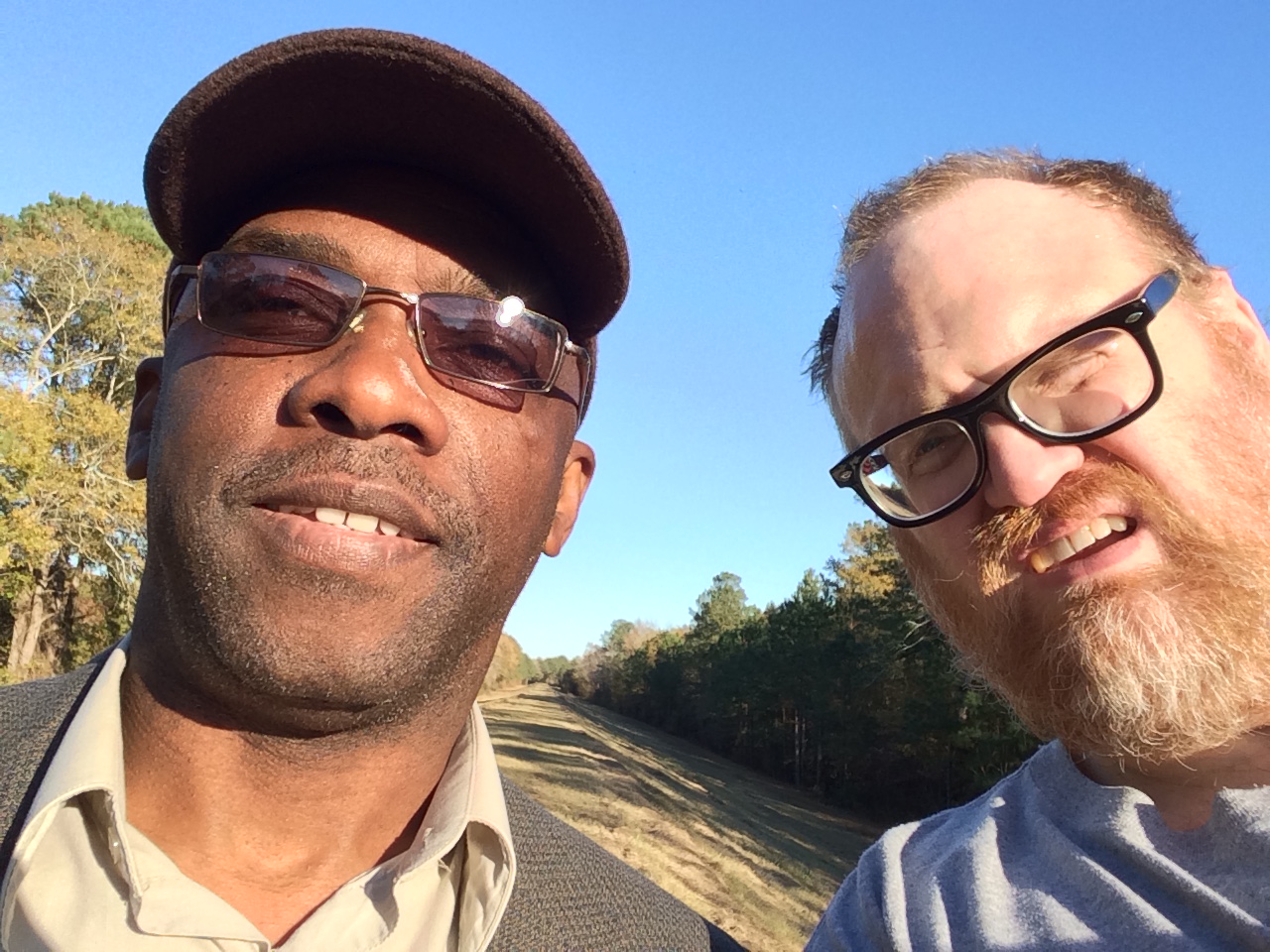
Me and Calvin

For this post/installment of my Buck Leonard series (a couple earlier installments here and here), I wanted to highlight how the subject of the Negro Leagues and their history is so infectious that enthusiasm for it spreads from person to person effortlessly, including on a especially personal level.

The following essay is written by my dear friend Calvin Adkins, whom I met in 1995, right after I graduated from IU and moved to eastern North Carolina. Calvin and I worked together for a couple years in Tarboro, N.C., where, as it happens, Baseball Hall of Fame pitcher Bill Foster lived for a couple decades after retirement.

When Foster was elected to the Hall in 1996, Calvin and I worked on a story about Foster’s connection to Tarboro for the Daily Southerner newspaper [which has, sadly, subsequently closed after nearly two centuries of publication]. As part of our reporting, we ventured to Rocky Mount to interview Buck Leonard about Foster and a host of other topics.

Below is a narrative penned by Calvin about that incredible day in which I passed on my love of the Negro Leagues to someone who has since become a lifelong, close friend. After his essay, I’ll add a few more notes about Tarboro:

When my good friend Ryan Whirty asked me to pen a column concerning our experiences in 1996 as journalists for The Daily Southerner assigned to write and photograph a feature story of Walter Fenner “Buck” Leonard, I immediately said, “That’s been so long ago that I can’t remember anything.”

Since 1996 many birthdays have come and gone and pushed my age to six years over half of 100. At times it seems like I have forgotten more than I can remember. But I do remember shaking the hands of Walter Fenner “Buck” Leonard.

I met Ryan when he was working at our rival paper, The Rocky Mount Telegram. Back then it was called the Evening Telegram. It was probably one of Ryan’s first full-time journalist jobs. [Editor’s note: It was indeed my first.]

More than likely, we met while covering the same story. All I can say is we became friends instantly. It wasn’t too long afterward that Ryan left The Telegram to work with us at The Southerner. I never understood why he left a paper with the circulation of about 30,000 to work for a paper with the circulation of about 10,000. I never asked him why, but just a little part of me would like to believe that he changed jobs because of our friendship.

Ryan was younger than I, but he was a gritty, intelligent, aggressive and thorough reporter. His investigative skills were like that of a veteran journalist. I covered cops and courts and was the main photographer for the Southerner. I also covered sports.

It was Ryan’s investigative skills and his love for the Negro League Baseball that led him to Mr. Leonard’s feature. Mr. Leonard lived in Rocky Mount on the Edgecombe County side of town. I heard of him, but the light bulb didn’t come on about his significance in the baseball world until Ryan shared his experience in the Negro League.

To be honest, I felt a little dumbfounded because a red-headed white man from Indiana had to tell me about an African-American Hall of Famer who lived in my home county. Mr. Leonard’s sparkling career should have been first-hand information for me because I am an avid sports fan and I am an African American.

From the time I received the assignment until the day that Ryan and I were going to travel to Mr. Leonard’s house, I was over the fact that Ryan had beaten me to a significant story. But most of all, I was thrilled to be assigned to take pictures of a Hall of Famer.

Since I knew more about the county than Ryan, he asked me to drive. During the trip, I can’t recall talking too much about Mr. Leonard as much as thinking about what type of pictures were best suited for Ryan’s featured story. We were shooting film back then. I had already placed a roll in my camera along with a fresh set of batteries for my flash. I was a little nervous but, if I had any solace, it was knowing that my job was going to be easier than Ryan’s.

When we arrived at Mr. Leonard’s house, I didn’t know exactly what to expect. I recalled a very polite elderly lady opening the door. She greeted us with a pleasant, articulate Yankee accent with a small touch of a Southern flavor. She was expecting us and after a short greeting, she led us to Mr. Leonard who was sitting in his trophy room.

I can’t remember what he was wearing or whether or not he wore glasses. What I do remember is looking around in awe of the memorabilia that he collected. There were pictures, posters, bats and balls, and jerseys. It was the coolest little museum that I had ever seen. Other than on a baseball field, I couldn’t have asked for a better place to take pictures of Mr. Leonard.

During the formal introduction, I looked Mr. Leonard in his eyes and shook his hand. The handshake was proof that the then-89-year-old National Baseball Hall of Famer wasn’t feeble, but father time had taken some of the strength from his hands. Although the greeting formality lasted just a few seconds, it was something majestic about that handshake that I just didn’t understand.

In an effort to allow Mr. Leonard to get comfortable with Ryan and I invading his space, I waited a few minutes before I began taking pictures. Ryan did a great job of introducing us and easing into the interview. It wasn’t long before Mr. Leonard was talking to us like we were one of his teammates. I can’t remember the exact conversations, but I do remember that Mr. Leonard’s memory was quite phenomenal.

Ryan’s interview had Mr. Leonard’s undivided attention, which made my job that much easier. I took wide angles shots of Mr. Leonard showcasing his memorabilia in the background and also close-ups that detailed the personality of an aging Negro League player. While looking through my viewfinder, I realized that this was a special moment.

Mr. Leonard was a Negro League superstar who was good enough to have played in the Major Leagues but didn’t because of the racial divide in America. But he persevered. Because of his dominance, he was called the Black Lou Gehrig. In fact, Negro League star Monte Irvin said that if Leonard had been allowed in the Major Leagues, baseball fans “might have called Lou Gehrig the white Buck Leonard.”  

Ryan’s story was published in The Daily Southerner and I remember getting rave reviews from the community. The editor chose a close-up shot as the feature photo and Ryan’s word capture the essence of Mr. Leonard’s entire life. Ryan sent the story to the Associated Press, and they picked it up for other newspapers to use across America.

Approximately one year later (Nov. 27, 1997), Mr. Leonard passed away. On that day I remember reflecting back to shaking the hand of a Negro League Baseball player.

Postlude

That was Calvin’s experience, and I remain honored and delighted that he and I were able to share such a special moment through a meeting with a baseball legend.

I just wanted to add a few more thoughts to fill in some background on this tale. First off, a couple years ago I wrote a story about Bill Foster’s connection to Tarboro and the neighboring town of Princeville for the Raleigh News & Observer; you can read the piece here.

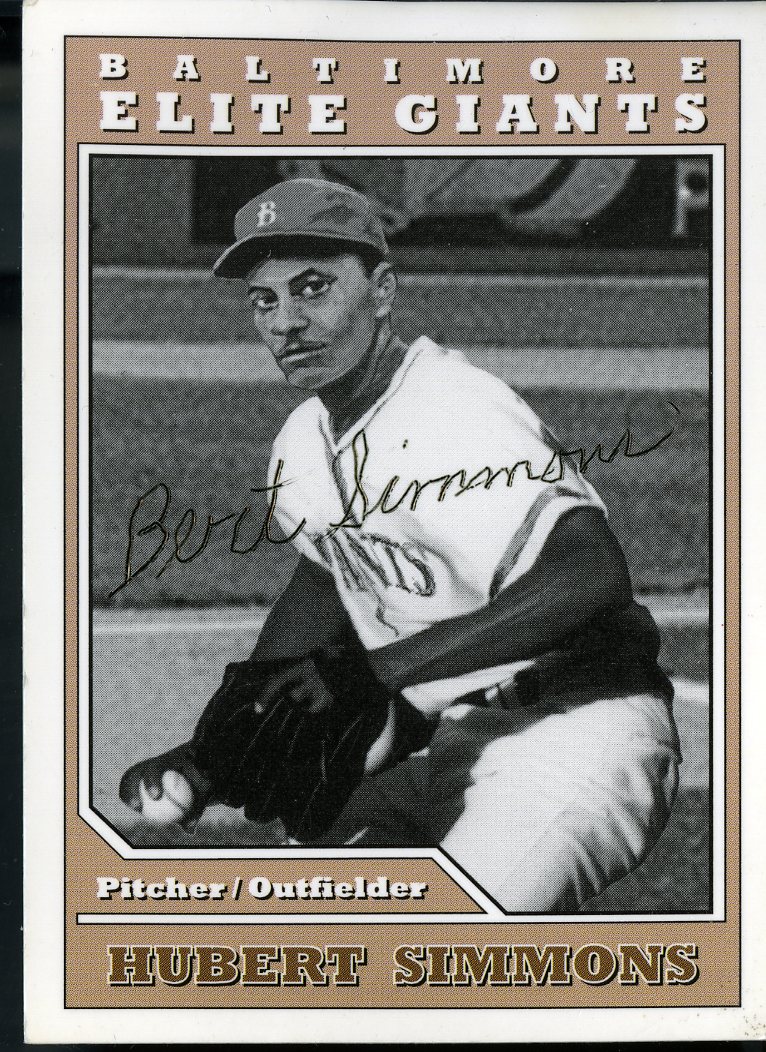
Second, Tarboro, as it turns out, has another intimate connection to the Negro Leagues, in the person of Hubert “Bert” Simmons, a pitcher/utility player for North Carolina A&T in Greensboro N.C., as well as local Negro minor league teams like the Raleigh Tigers (where he was managed by the aforementioned Foster), Greensboro Red Wings and Asheville Blues. His career culminated with in 1950, when he played for the Baltimore Elite Giants of the Negro American League.

But Simmons was born in Tarboro in 1924 and spent his youth there. Although he settled in Baltimore following his hardball career, he occasionally returned to Tarboro for reunions and such. In several post-career interviews, Simmons discussed his childhood in Tarboro, including being barred from playing organized baseball at the town’s stadiums because of segregation, as well as the fact that his school, Pattillo High School, didn’t even have a varsity baseball team (it’s now a middle school).

Simmons was able to overcome those handicaps, however, and went on to shine at NC A&T before moving on to his pro career. At A&T Simmons guided the Aggies to multiple Central Intercollegiate Athletic Association crowns in the 1940s by becoming the ace of the A&T staff as well as the consensus best hurler in the CIAA. He eventually earned his bachelor’s from the school and was elected to the Aggie Hall of Fame in 1978. (One of his Aggie teammates was Tom Alston, the first black player for the St. Louis Cardinals. Another product of A&T around that time was James Robinson.)

While in retirement in Baltimore, Simmons became a high-profile community leader and baseball coach at the Little League, high school, college and American Legion levels. His crowning achievement was helping to establish what is now the Hubert V. Simmons Museum of Negro League Baseball in the library at Owings Mills, Md. He passed away in 2009.

But as I stated, Bert occasionally returned to Tarboro, including Pattillo High School reunions, which is where my buddy Calvin met him in 2002. Calvin, with his experiences visiting Buck Leonard with me in 1996 in his pocket, interviewed, photographed and became buds with Simmons, who signed a baseball card for Calvin.

This past November, when I voyaged to North Carolina for Thanksgiving, I spent a day in Tarboro and Princeville cruising around with Calvin, and he gave me the card signed by Bert Simmons. I was extremely touched by the gift, so many thanks to Calvin — for the card, for writing this article, for all the barbecue lunches, for coming with me to meet Buck, and for being one of the best friends a guy could ever have.

Buck extras, Part 1

I’ve been compiling so much info and piles of files about Buck Leonard for my ongoing project about him and my meeting with him that occasionally I come across some pretty neat stuff that’s worth discussing for a bit but doesn’t fit into one of the main posts I write about Buck.

There’s also info, documents and articles I come across that are pertinent to posts I’ve already written, things that I would have included in said previous posts if I had known about them.

For these two types of particulars, I’m going to write some odds-and-ends side posts, of which this one is the first. So onward we go! …

The first item for this piece is an article I found in the Rocky Mount Telegram that perhaps conveys what I wrote in my previous post about the Rocky Mount, N.C., black population forming its own, self-sustaining economic and social demographic as a way of coping with and even defying the lingering racism that permeates the community there.

The article covers a May 1956 meeting and awards ceremony of a local community organization of black men called the Frontiers of America, or the Frontiersmen. At the gathering, Buck received a citation for achievement in sports, while other members were honored for their accomplishments in other fields.

However, the majority of the article involved an addressed by Dr. G.K. Butterfield, a councilman for the small city of Wilson, N.C., located about 20 miles south of Rocky Mount along I-95. Butterfield was the first African American elected to the Wilson City Council and the first black elected official in eastern North Carolina since Reconstruction.

As a dentist, Dr. Butterfield cared for men, women and children in the impoverished East Wilson community. He co-founded the local NAACP chapter and dedication himself to voter registration drives, but he lost his council seat in 1957 thanks to a form of gerry-mandering that blunted the impact of the local black vote. (Butterfield’s son, also named G.K. Butterfield, is currently a Congressman representing North Carolina; the younger Butterfield previously served on the North Carolina Supreme Court.)

G.K. Butterfield and family

Back to the elder Butterfield’s speech at the 1956 Frontiersmen meeting … the dentist and elected official challenged the men in attendance — as well as the entire black community — to establish economic success within that community that would bring local African Americans closer to achieving equal rights and respect from the white community. Here’s an excerpt from the Telegram article:

“The Wilson Councilman challenged Negroes throughout this area to do something about the economic condition of the race. He stated that the pressure had been on Negroes for the past three or four months and in order for the race to survive, members of the race would have to being now doing something about it. The speaker also stated that when a member of the other race took a bold stand for integration, he too, was subjected to the same type of economic pressure. He went on to city instances in other states where this is happening.

“Continuing, Dr. Butterfield told the group that the Negro cannot be independent unless he can furnish all the necessities of life. Because of that fact, he asserted, Negroes are treated as children. He further suggested that Negroes try to help bring in new industries into this section. This can be done, he stated, by helping to vote men into public offices who are favorable to projects of this type. In addition, Negroes must have an interest and a good attitude in the economics of the community. So far, he asserted, the race has neglected this field.”

To me, the speech seems to have included some of Booker T. Washington’s belief in racial uplift through self-reliance and business success, as well as Malcolm X’s message of establishing a separate, successful community apart from the white society that heaped scorn and hate on blacks.

The article, I think, also reflects how those beliefs have been present in Rocky Mount’s African-American community for decades and have helped form the current situation I discussed in my previous post.

The second chunk of info I want to relay in this post is much more upbeat and sunny than Butterfield’s speech from 60-plus years ago. My first post in this Buck Leonard series served as a introduction by chronicling the reaction of the Rocky Mount community and media upon Leonard’s death in November 1997.

The genuine and heartfelt expression of sadness as well as joy in celebrating Buck’s life and legacy that came from the entire Rocky Mount community revealed that, after decades of wrangling with the ideas of integration and equality, Buck had truly been embraced as Rocky Mount’s favorite son, an icon for the city and a symbol of how far the city had come toward achieving full racial reconciliation.

Well, now it’s time to show how Buck Leonard fully and passionately reciprocated that positivity and acceptance he received. Despite all the trials of segregation and the challenges posed by ongoing racism, Buck did love his hometown and never considered living anywhere else during his life. That included eschewing the possibility of a residence in Pittsburgh while becoming a Homestead Grays legend.

Rocky Mount Telegram, Aug. 16, 1970

These excerpts come from various other articles in the Rocky Mount Telegram in which the writer expounds on Buck’s love for his hometown. I want to note that right now, as of this moment, I don’t have much personal testimony on this subject from Buck, i.e. him in his own words, for various reasons, but I will uncover them at some point. One example is his autobiography, written with James Riley, the book that inspired me to get up the gumption to call Buck in the first place; I’ll discuss that in my next post.

So here are some of those article excerpts …

Staff writer Mike Hixenbaugh, Nov. 30, 2007, issue, upon a celebration and remembrance on the 10th anniversary of Leonard’s death:

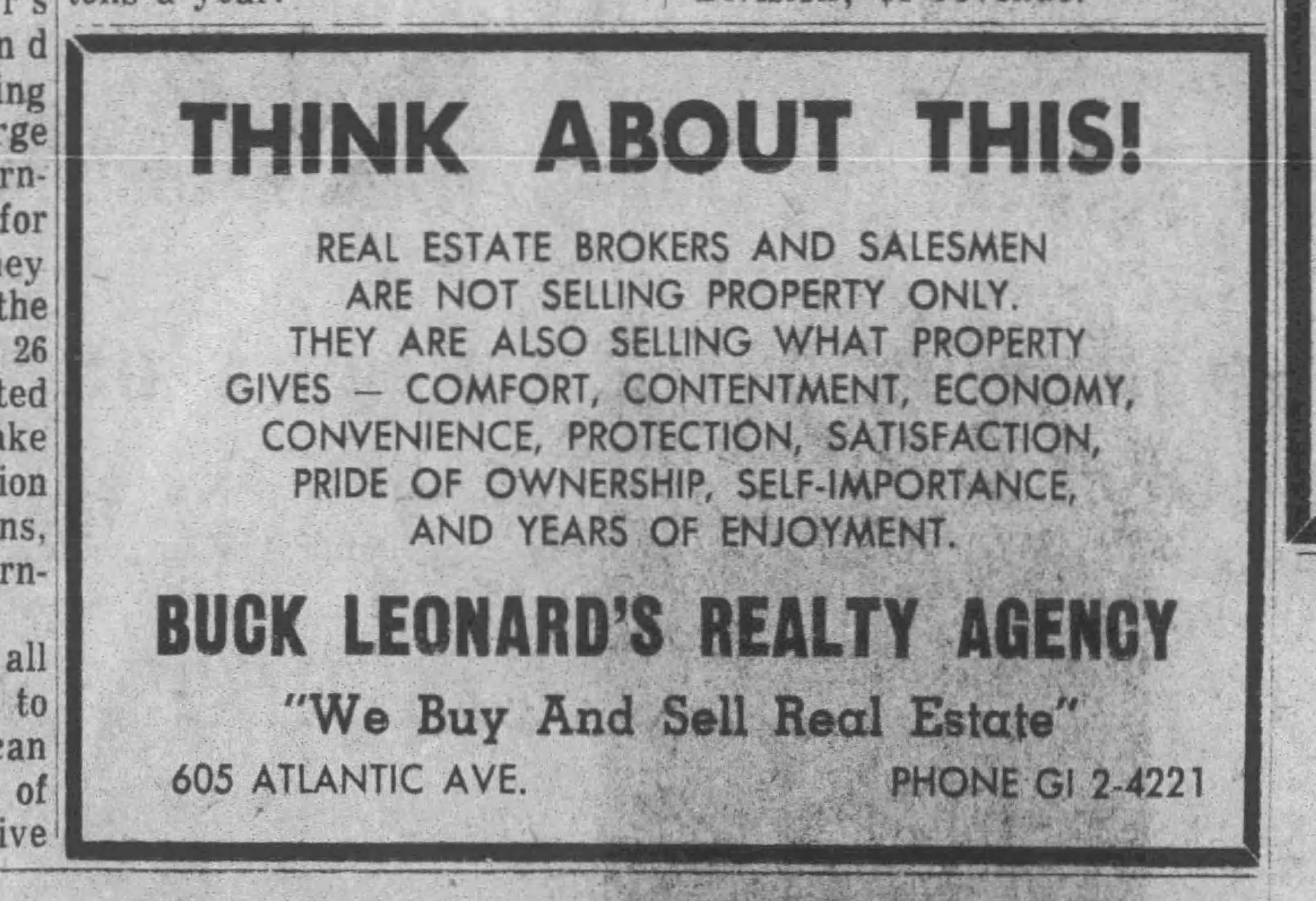
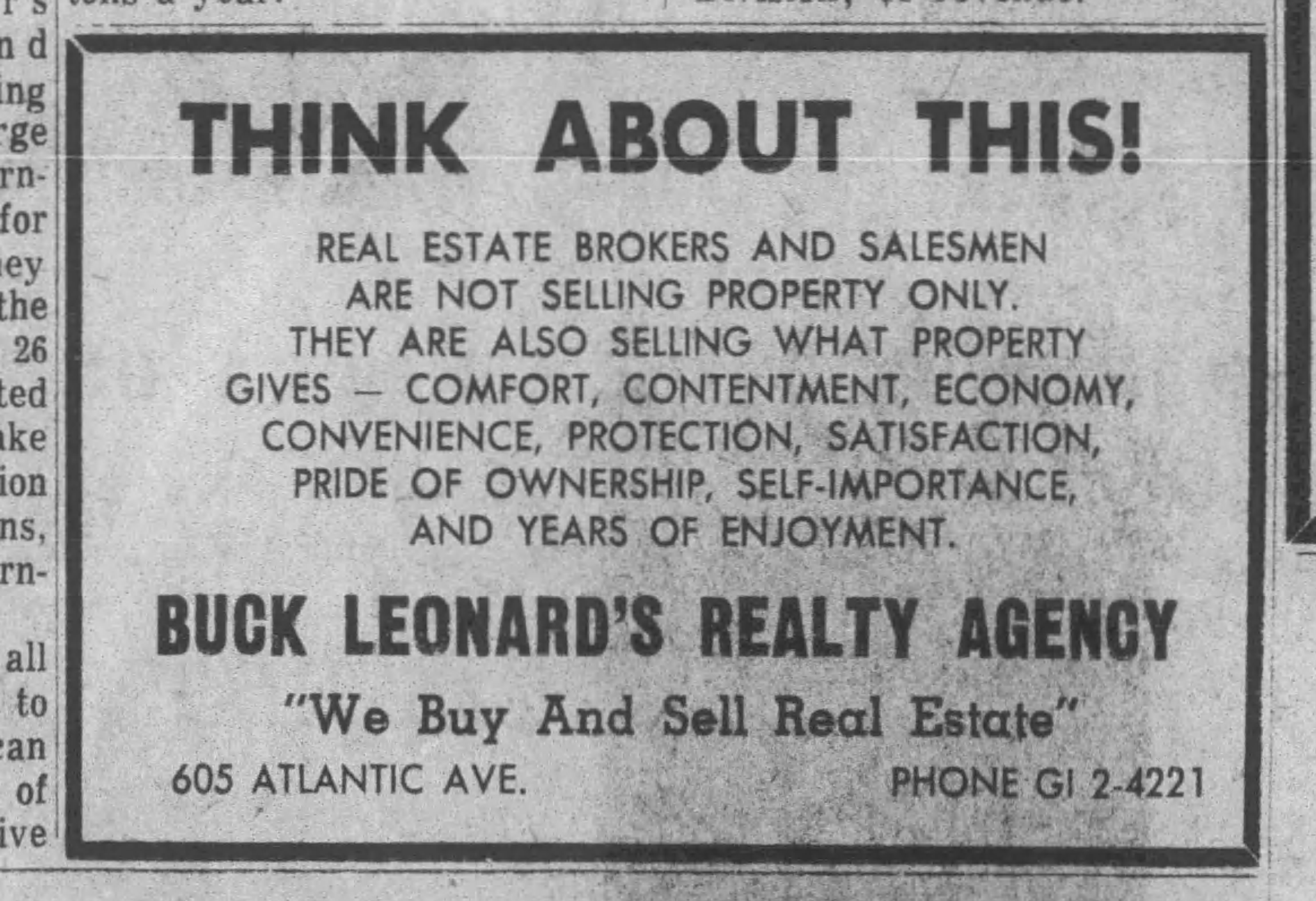
“If there was one thing the baseball legend loved above all else, it was the town he grew up in. After his 1972 induction to the Baseball Hall of Fame, Leonard was offered a job in the Major League Baseball Commissioner’s office, but refused the position to stay in Rocky Mount — avidly supporting little league, running a local minor league team and also working as a truant officer and real estate broker.”

Sports editor Jessie Nunery, Oct. 10, 2010:

“To understand Walter Fenner ‘Buck’ Leonard was to know that no matter where life took him, Rocky Mount was home. …

“Leonard always came home to Rocky Mount, no matter his accomplishments.

“‘As a man, he was a good man, a good community man,’ said Rocky Mount native Henry Barnes, who lived in the same neighborhood as Leonard’s family, an area known as ‘Little Raleigh.’ ‘The one things we always say is, ‘He went off an accomplished quite a bit, but he did not forget where he came from.’ He didn’t build a house on the hill. He was always right here.’” …

Nunery also discusses Buck’s activities and impact during the years after his baseball career; I’m going to have a couple posts of my own down the road focusing on this topic. Wrote Nunery:

“Those who missed out on Leonard’s playing days were able to learn about him as a man here in Rocky Mount. …

“These years were about giving back to Rocky Mount. Little boys who didn’t know it was possible to play baseball for a living were exposed to the game when Leonard made the rounds at black elementary schools on a weekly basis. For many, Leonard’s visits were the first time they swung a bat. At that time, physical education was not a part of the curriculum. …”

The final article comes from just under a year ago, on March 12, 2017. This story is particularly special because it’s authored by Rose Hunter, Buck’s step daughter and director of the Buck Leonard Association for Sports & Human Enrichment, an organization created in 1999 to provide athletic opportunities and personal enrichment services to children of low-income families in Rocky Mount. I’ll discuss the BLASHE and hopefully interview Mrs. Hunter and other family members and community volunteers down the road.

These final quotes begin to examine Buck Leonard’s formative years and how they affected the man he became and his love for Rocky Mount. Wrote Hunter:

“To begin to unveil the making of North Carolina’s first baseball Hall of Famer, we begin with a look at the early and formative years that most likely contributed to Leonard’s ascension to prominence both and and off the baseball field.

“Leonard enjoyed what he believed an idle family life with his father, mother and five siblings. His mother ran a strict and immaculate household while his father worked with the Atlantic Coastal Railroad. …

“The path of Leonard’s life was dramatically altered with the death of his father. At the behest of his mother when he was 12, he became male child head of the household. Working at the local hosiery mill and later on the local railroad, Leonard took on the responsibility of his succession with the aid of his siblings until the Great Depression led to his unemployment. …

“Leonard was not the flamboyant, bombastic jock seeking the limelight, but one who approached the game in a very methodical manner, a thoughtful practitioner; he was a critical thinker — sure in the clutch and almost never left a man on base. Possessing a calm demeanor, Leonard was a near-perfect fielder; his pull-style hitting resulted in both power and average.”

That wraps up this here post. Like I noted at several points during it, I still have much, much more to do for this project, and my goal is to do as much of it as I can — namely, interviewing folks, getting personal information and presenting some of Buck’s own words. This is a work in progress, and it’ll hopefully continue to gestate into something special.

My Buck Leonard story: A return to Rocky Mount

The air on the northwest outskirts of Rocky Mount was crisp but not frosty, a gorgeous fall day, the type a typical Rochester kid misses from his youth and savors once he resides well below the Mason-Dixon line. Summers in eastern North Carolina — not to mention the heavy, seemingly endless and sultry type that said upstate New York boy slogs through in New Orleans with resignation and a series of sweat-stained ballcaps — are oppressive enough that the arrival of what passes for autumn in those summer climes is met with unrestrained joy.

It was, I guess is what I’m sayin’, a gloriously resplendent day. Beautiful. Fantastic. Quite gnarly.

It had taken me a couple hours or so to drive — with a rental car, because my stepmother’s Audi is off-limits and my dad’s SUV is frightening — from Atlantic Beach to the cemetery, surprisingly quickly.

The majority of the graves in Gardens of Gethsemane are small but dignified, flat stone markers nestled amongst the well manicured grass. A good portion of the rest of the graves are identified with modest tombstones, few of them taller than waist-high, if that. Most of these such graves are located toward the rear of the cemetery, shaded by longleaf pine trees that steadily drop enough brown needles to thinly blanket the ground below.

Rising from this prickly, arboreous crust are a pair of mausoleums that, aside from their contents and stony scripts, are pretty much identical to each other — four crypts high and two crypts wide. (I don’t remember how many crypts deep they are, and of course I didn’t bother to take a picture of the whole thing.) On this day, the sun’s brilliant rays glint off the brown marble of the ends of the mausoleums, adding a muted radiance.

The most notable facet of the modest cemetery for me is the white stone sculpture of Jesus that stands guard at the entrance to the Gardens. Hands at his side and facing forward, his head bowed slightly, the short but affecting figure stands atop a brick foundation with a small bed of flowers in front and a flagpole rising above Jesus’ head and topped by an American flag. The statue is similar to ones that stand sentinel at countless cemeteries large and small across the country, but the one at the Gardens of Gethsemane fits seamlessly into the overall mood, scope and spiritual impact of the cemetery.

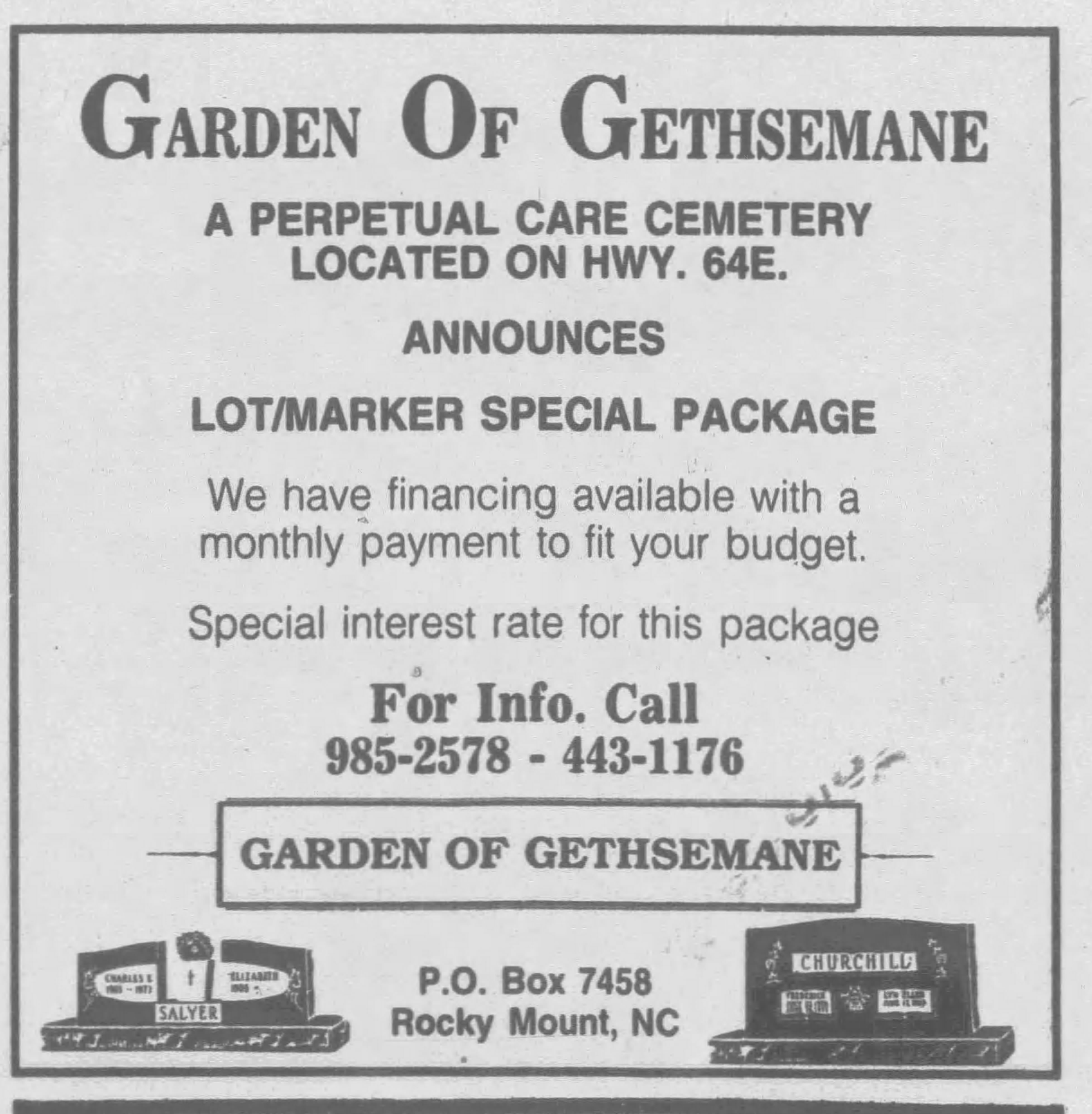
(The perpetual-care, privately owned cemetery is actually a fairly new one — it was created in 1991 despite some grumblings from adjacent property owners who worried that groundwater from the graves would contaminate the neighbors’ drinking water. Then-Edgecombe County Board of Commissioners Chairman Rev. J.O. Thorne endorsed the proposal, and landscape contractor A.B. Rose called it “a good project, and I think it’s going to be a good asset to the community.” Actually, it seems like the cemetery was initially supposed to be much bigger than it turned out, from a proposed 10,000 graves down to roughly 2,400, with wetlands issues playing a role. I write about these picky details out of nostalgia from my early days as a journalist in small-town North Carolina, covering planning boards and county commission meetings. It seems like a whole lot of drudgery, and it was in some ways. But it was also kind of fun and compelling getting to see how government works on a small scale. And by and large, local governmental systems — especially in small-town America, work much more smoothly and with a minimum of acrimony, certainly compared to what we see in D.C. It was surprisingly reassuring. That doesn’t mean things were completely devoid of controversy, personal grudges and administrative volatility; that stuff was there, no doubt. But municipal and county-level government tends to be much more responsive and attentive to the needs and concerns of the populace, which is pretty cool.)

In all, the Gardens of Gethsemane covers about … honestly, I don’t know how many acres of land along U.S. 64 Alternate, otherwise known as East Raleigh Road. (I was going to call the cemetery office and ask weirdly specific but non-burial questions like that, but I figured I’d come off a little, umm, weird. I’ll get the exact acreage in the revision to this opus.) While the cemetery is roughly three miles out from the center of town, it’s situated far enough out to the west that the surroundings have a slight country field; across the road is the dilapidated, overgrown, rusted Rocky Mount fairgrounds (the facility has been idle since the 2016 Rocky Mount fair, which had been a century-old local attraction before its demise), and flanking the cemetery are a roller skating rink and custom car shop. Dotting the stretch in between the businesses are single- and double-wides, and modest but neat, one-floor homes with brick siding. In all, it’s a typical, “eastern North Carolina” kind of vibe.

(Editor’s Note: In a coda to this post below, I discuss US 64 and how a part of it was renamed after Buck Leonard.)

Truth be told, I hadn’t been to Rocky Mount for at least a dozen years, but, aside from the propagation of generic commercial (fast food, dollar stores, pharmacies), the landscape hadn’t really changed — or at least from how I remembered it.

When I lived in Rocky Mount for about six months after graduating with my bachelor’s, the city — I’d call it a very large town with delusions of enormousness, but why quibble — wasn’t hurting economically, per se, but it wasn’t a boomtown, either. It had its anchor employers — RBC Bank, restaurant conglomerate Boddie-Noell Enterprises, Sara Lee Bakery and MBM Corp., the food distribution company my dad worked for a spell — but those sources of employment and revenue didn’t necessarily translate to a hopping business community or happening social scene.

Downtown Rocky Mount was, for all intents and purposes, dead, with shuttered businesses and very little traffic — auto, foot or otherwise. The downtown wasn’t blighted and didn’t qualify as a proverbial ghost town, but it was just, well, dead. Most of the population growth in the latter half of the 20th century occurred on the outer rings of the city, including the middle-upper-class neighborhood on the west side in which my parents lived.

Judging from what news and stats I can glean, I’m not really sure how Rocky Mount is doing financially these days. Recent Department of Labor numbers pegs the unemployment at around 6.5 percent or so, representing a significant drop from the mid-14-percent level of circa 2010.

However, the area’s largest employer, a Pfizer pharmaceuticals plant that (as of 2016) employed roughly 2,400 people, instituted drastic layoffs beginning in fall of that year, and the planned construction of new, $150-million-plus production facility by the firm reportedly doesn’t come with any new jobs.

Moreover, word in 2016 of a $160-million investment in a railroad terminal by CSX quickly evaporated, with the rail company stalling on implementation of the intermodal hub that allegedly would create at least 150 new jobs.

Rocky Mount Telegram, June 19, 1991

On the other hand, city officials and business leaders in spring 2017 crowed about the groundbreaking of a 175,000-square-foot, 12- acre, up-to-$41-million downtown community facility right smack downtown. Whether such a public enterprise, though, can spur the local economy — including the redevelopment of a long-dead downtown — well, we’ll see.

Buuuuuuuuuut, I undertake all that blathering to come back to my day last November visiting the Gardens of Gethsemane Cemetery near Rocky Mount and the crypt of its most famous denizen and the city’s favorite son.

To wit: at the entrance to the cemetery that day labored the owner and a few employees of the mega international conglomerate of Hunter’s Maintenance & Repair Service.

Well, of course not. Walter Hunter’s landscaping and general-labor business isn’t a global financial superpower. It’s not a substantial local corporation. In fact, whether it’s actually incorporated under the North Carolina government might be in question.

But there, in his work-worn, beat-up white pickup sat the man himself, Walter Hunter. With feet dangling from the driver’s side of the vehicle and his forearm draped over the steering wheel, Walter chomped on a cigar and picked at a late-afternoon sandwich. Various work equipment — a lawn mower, maybe? A generator? A magician’s trunk filled containing trick rings, colorful handkerchiefs, a top hat and at least two, possibly three bunnies? I don’t really remember — was piled up in the bed.

Adorned with neon green-yellow worked vests and calf-high brown leather boots, toting massive, yardwork plastic bags, and fanning out from the cemetery’s dirt driveway entrance, Walter’s subordinates meandered along the small ditch along East Raleigh Road, scooping up lawn clippings, branches and leaves and depositing them in the said plastic bags.

(As a clarification, for the rest of this post, when I refer to “Walter,” it’s to Walter Hunter, not Buck’s given first name — Walter Fenner Leonard.)

With the sun slipping down and the work day nearing its conclusion, it struck me that — railroad depots and drug plants and rec facilities aside — Walter’s little operation embodied what I recall as a truly Rocky Mount and eastern North Carolina business.

Because during all my time living in eastern North Carolina and working for small daily newspapers — a little over two years in the mid- to late-1990s — one of my biggest, clearest impressions of the social and cultural setting there was that the black community was extremely tight-knit. Surnames were often and widely shared, extended families were vast and geographically far-reaching, church congregations were devoted and deep, and black businesses were small but ubiquitous, from barbecue joints to barber shops to real-estate agencies to computer support firms to little landscaping operations like Walter’s.

In some ways, the African-American population in eastern North Carolina has been forced to develop such a cohesive network thanks to the unspoken, denied but persistent racism that permeates the region.

Although pockets of eastern North Carolina (including Edgecombe County, in which the Gardens of Gethsemane and Buck Leonard’s former house rest, and Halifax County to the northeast) are majority African-American and feature numerous black members of government or law enforcement, the real power and control of the region sits with the white population. The two groups mix and mingle with each other on a daily but casual basis, but that interaction is only formal, commercial and perfunctory in nature — almost as if it’s an economic and political necessity to keep local society functioning smoothly, without any disruptions.

But below that shallow, commercial surface layer, eastern North Carolina — at least when I lived there — was split by informal but strict segregation, a de facto cultural separation that affected living areas, religious life, social clubs and even schools to a certain extent. The fact that, unsurprisingly, many of the black neighborhoods and communities were among the poorest and most disadvantaged probably goes without saying.

Rocky Mount, my dad told me recently, presented one of the clearest examples of how institutional segregation can linger in impact and practice for decades after such racial division is banned under the law. Actually, it’s almost eerie.

Bisecting Rocky Mount right down the middle are lines of railroad tracks. To the east sits black-majority Edgecombe County, white-majority Nash County to the west, and to paraphrase my father, if you stand straddling those tracks facing north, you can look left (west), then right (east), and be witness to two completely different worlds — worlds in which the cliche of “wrong side of tracks” isn’t cliche — it’s real. I’ve rarely, if ever, seen one municipality so completely hewed in half along rigid geographical boundaries.

Thus the tight-knit, semi-insular nature of an African-American community that has battled and continues to battle segregation, economic disparity and social isolation by developing a self-contained community that supports, nurtures and grows itself. Such an evolution helped, in many ways, to shield the black population from often withering racism-cum-paternal sanctimony from local whites.

And, as I spoke with Walter Hunter this past November, I realized that Buck Leonard was a member of this black community, the one isolated by unspoken social segregation and compelled to develop a self-sufficient, intricate system of economics and spiritual unity. In fact, that closeness was perfectly exemplified by Walter’s remarkable connection with the legendary first baseman.

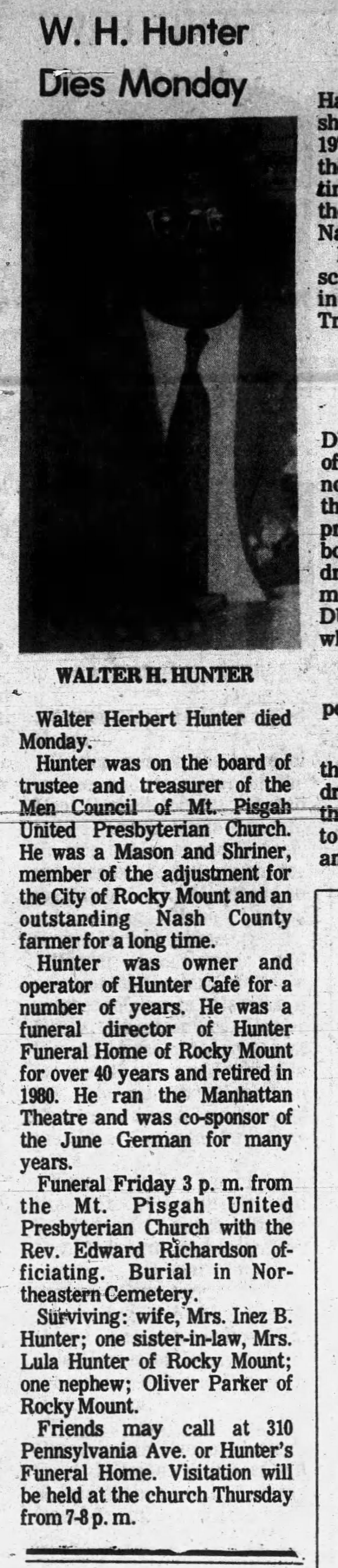
Walter’s father, Herbert Hunter, for decades operated a funeral home on the 200 block of Atlantic Avenue in Rocky Mount — just four blocks down from Buck’s home on the same street. So it’s not surprising that the Hunters, including young Walter, were good friends with the then-retired baseball star.

(On a neat little aside, both Buck and Herbert Hunter served on the 1972 campaign committee for Rocky Mount City Council candidate George W. Dudley; both men help positions on Dudley’s finance committee. Herbert Hunter passed away in 1982.)

Rocky Mount Telegram, April 14, 1982

Walter said he knew Buck when the Hunter Jr. was a wee one, and a popular, African-American-run business was often the catalyst for Walter’s frequent contact with the future Hall of Famer.

In fact, Walter recalls Buck dropping by Hunter’s Funeral Home to, well, just hang out and shoot the breeze. The mortuary served as a social gathering place for the almost all-black neighborhood, and Buck would smoke cigars with Herbert Hunter and just catch up. Many nights, Walter told me, the junior Hunter would jaw with the hardball legend, slowly realizing that through his father’s friendship with Leonard, little Walter got a chance to sit at the feet of greatness — modest, unassuming greatness.

“Everybody knew him,” Walter said. “He was very quiet. Almost every day he’d turn up at our office. I was a small boy.”

Mostly, Walter told me with a grin, he just listened to the retired great, a big bear of man who toward over the youth.

“He talked about baseball, talk about business,” Walter said, referring to Buck’s real-estate firm. “I was just a small boy, and back in those days, children didn’t get up in grownups’ business.”

My conversation with Walter Hunter that November day — as well as, in the interest of full disclosure, a follow-up interview with him over the phone a few weeks later — was both illuminating and comforting; it made me happy that Buck Leonard played such a large part in the everyday lives of his Rocky Mount neighbors.

However, my later phone conservation with Walter Hunter ended on a slightly doleful note — when I asked him if the city has done enough to recognize Buck Leonard and the star’s contribution to the city, Hunter was unequivocal in his response.

“They don’t do a whole lot in the city for him,” he said.

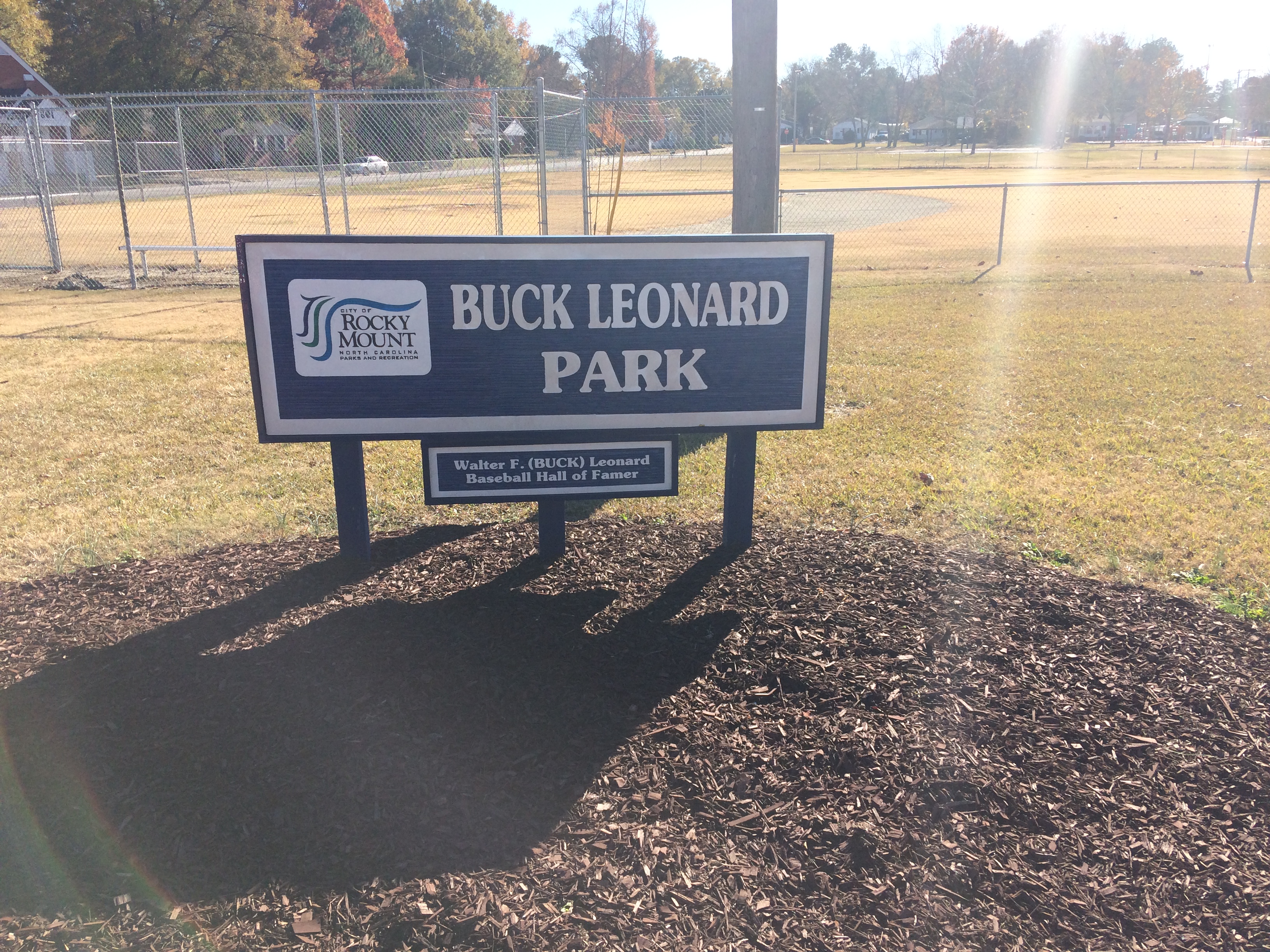
Which is a sentiment that comes across as a bit jarring, given the city’s record of honoring Buck — he has a park named after him; a significant thoroughfare has been renamed Buck Leonard Boulevard (a move that was made in the years after I left North Carolina in 1997); several community awards have are named and bestowed in his honor; and, in many ways, 20 years after Buck’s death, the Hall of Famer is, without hyperbole, Rocky Mount’s favorite son.

That left me wondering — is there a disconnect there? Has the city truly done enough? What exactly is Buck Leonard’s legacy in his hometown?

Perhaps the most important question to ask about how Buck Leonard impacted his hometown — especially in light of the lingering effects of segregation — is whether his fame, success and character went beyond inspiring and encouraging Rocky Mount to play baseball and to develop the same type of vibrant moral code Buck himself had?

Did Buck’s popularity across cultures and races actually help ease racial tensions and socioeconomic divides? By accepting an older black man as their city’s favorite son, were the whites of Rocky Mount given more than a cursory glimpse into the lives of the average black man, woman or child in the city? And were those whites spurred to thus open their minds to the historical realities that still faced minority populations in Rocky Mount? Was Buck not just a window into the lives of “the Other,” but also an active conduit for reconciliation, understanding and bonding?

Likewise, was Buck’s career and life — including not only his athletic achievements but his later-life roles as a school truant officer and successful businessman — enough evidence to show the city’s black residents that success was and still is possible? Was his example enough to give the socioeconomically downtrodden the type of inspiration and hope that, when coupled with helping hands from government programs and community organizations, could spur them to similar success as the baseball legend?

Being 20 years removed from my period of residence in eastern North Carolina — and, as such, viewing the situation with the jaundiced, admittedly somewhat sanctimonious eye of a Northern liberal and Negro Leagues scholar — I’m probably not the best person to render judgment here.

So, here we are. However, I’ll (try to) quickly offer up an example of the unspoken, persistent division and discord in Rocky Mount, one that happened a few years after I left eastern North Carolina for parts elsewhere, but also that, like those train tracks, involved a visible, pressing symbol. … 

In 1999, the Rocky Mount city government announced its plan to memorialize Dr. Martin Luther King Jr. with a new park and statue of the great civil rights leaders. Sounds well and good, right?

Well, according to University of Maryland professor Renee Ater, city officials bungled the process from the start — most significantly by failing to solicit much input from neighborhood residents or African-American organizations, giving Rocky Mount blacks the distinct feeling of, yet again, being ignored by a white power structure that, to them, feigned interest in the black community and operated with a sanctimonious patriarchy and pandering.

That allegedly callous official attitude was then couple, wrote Ater, when “Rocky Mount’s economy [took] a downward turn in early 2000, with a disproportionate impact on the African-American population.”

Asserted Ater in the Indiana Magazine of History in March 2014:

“As a result, the Martin Luther King Jr. Memorial became a lightning rod for the divisive racial politics of Rocky Mount — a town that was 56 percent black at the time but had been ruled by the same white mayor and a majority-white city council for 30 years. … All of these issues formed a combustible mix, and deep emotions erupted to the surface in heated public discussions — on the surface about the statue and the artist [Erik Blome], but on a deeper level about local politics and the future of Rocky Mount.”

The irony was overpowering — the memory and image of a man who strove his entire life and succeeded (in varying degrees) to unite people was suddenly and tragically now the source of further division, anger and resentment.

Maybe somewhere in all that is a valid comparison between the nationally revered, outspoken orator, minister and revolutionary (King) and the quiet, unassuming local kid who happened to play baseball really well and, in so doing, practically stumbled in fame and importance in his hometown. But, maybe, that’s a further discussion for another day …

OK, having written all of this, including painting in some detail everything else about my November trip to visit Buck Leonard’s grave — the weather, the history of the cemetery, the social setting in Rocky Mount, my chat with Walter Hunter — I feel weird and somewhat guilty finally getting to the point of my venture that day.

That being visiting and actually seeing his grave. Which, strangely and possibly ruefully, I discuss now as a seeming afterthought. But it wasn’t an afterthought, please believe me. The moment I stood in front of the mausoleum that includes Buck’s crypt, with the sun beaming warming rays on my face, I felt a sense of … Satisfaction? Belonging? Tranquility rooted in the now confirmed knowledge that, at the very least in death, Buck Leonard is remembered, albeit (and quite properly, given his legendary humility) humbly, at least in death.

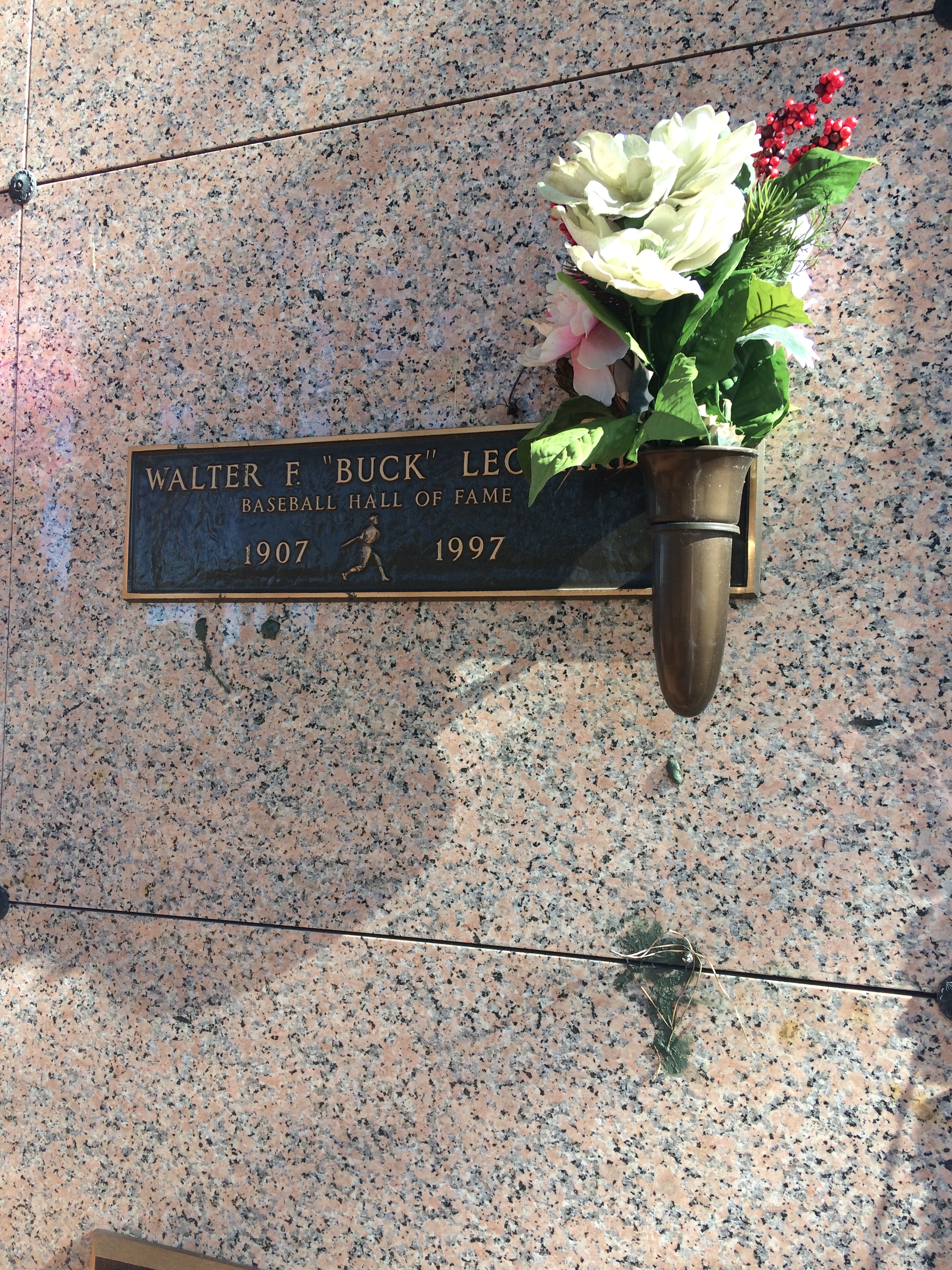
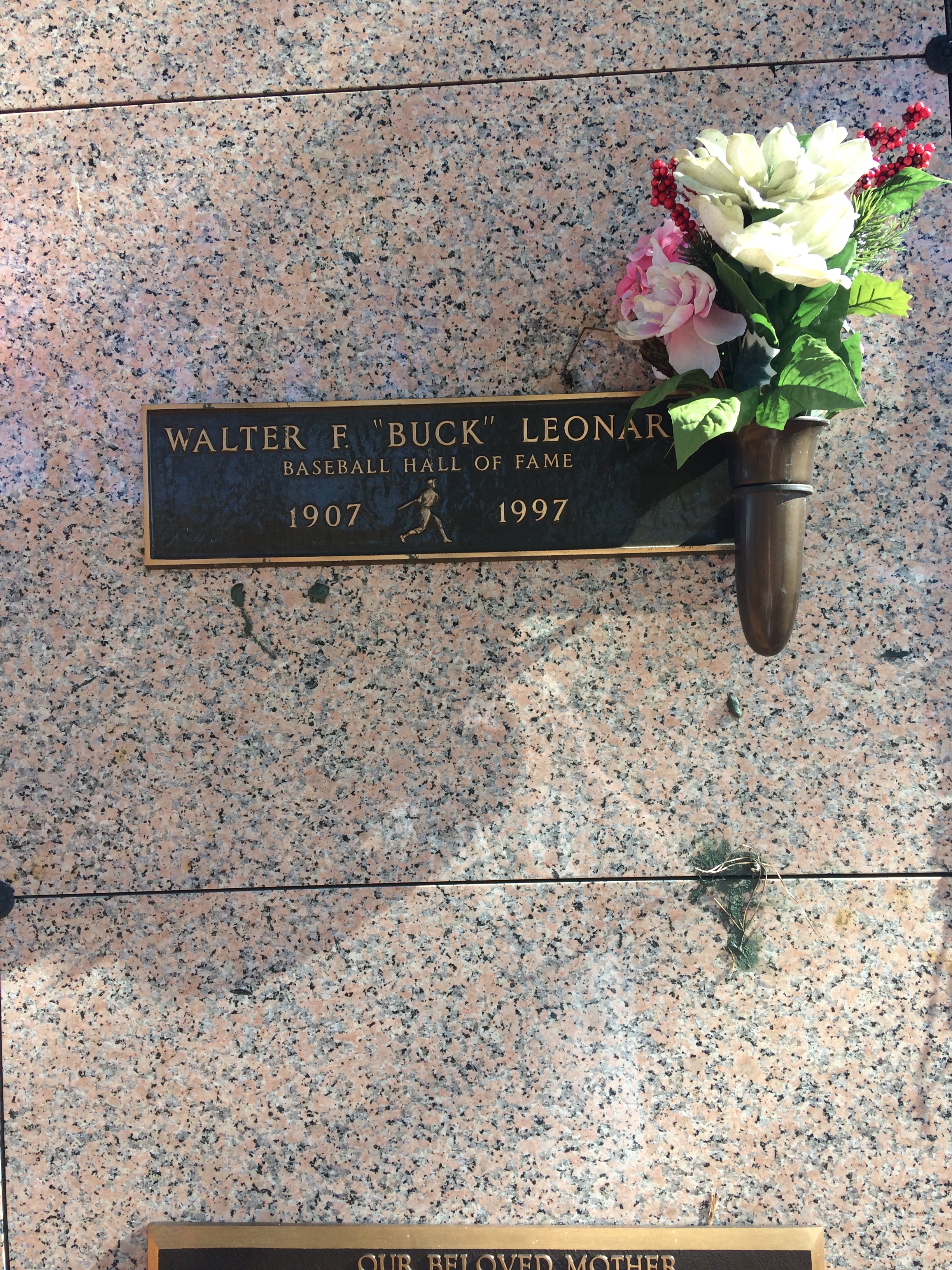
Buck’s crypt features a rectangular bronze plaque reading, “Walter F. ‘Buck’ Leonard, Baseball Hall of Fame, 1907-1997.” A little relief of a swinging baseball player separates his years of birth and death. Affixed to the right side of the plaque is a little vase holding white, red and pink artificial flowers; the floral arrangement, on this day, casts a shadow on the name plaque (which, at the very least, made it a bit challenging to get a decent picture of the grave).

(Another note: When I arrived at the cemetery I spoke briefly with the facility’s family services manager, Elsie Ricks, one of the company’s three employees, in a modest office building on the edge of grounds. I asked her if many people come to see Buck Leonard’s grave, and she kind of shrugged and gave a blase mumble of affirmation. To be fair, she was busy working on arrangements with a bereaved family on their loved one’s final burial place, so, sure, technically I was butting in on a very important conversation and being kind of a putz, but I was hoping for at least one or two nifty quotes. Phooey.)

After paying my respects (and yakking with Walter Hunter), I left the Gardens of Gethsemane and began the two-hour drive back to my folks’ place. My noggin rattled with errant reflection, trying to bring the whole day’s experience together. And I couldn’t. I couldn’t come to any sort of a conclusion about what I had just experienced. One overarching thought muffled any such attempt at satisfying contemplation.

I wasn’t done yet.

Nowhere near.

Rocky Mount Telegram, Nov. 19, 2005

Coda

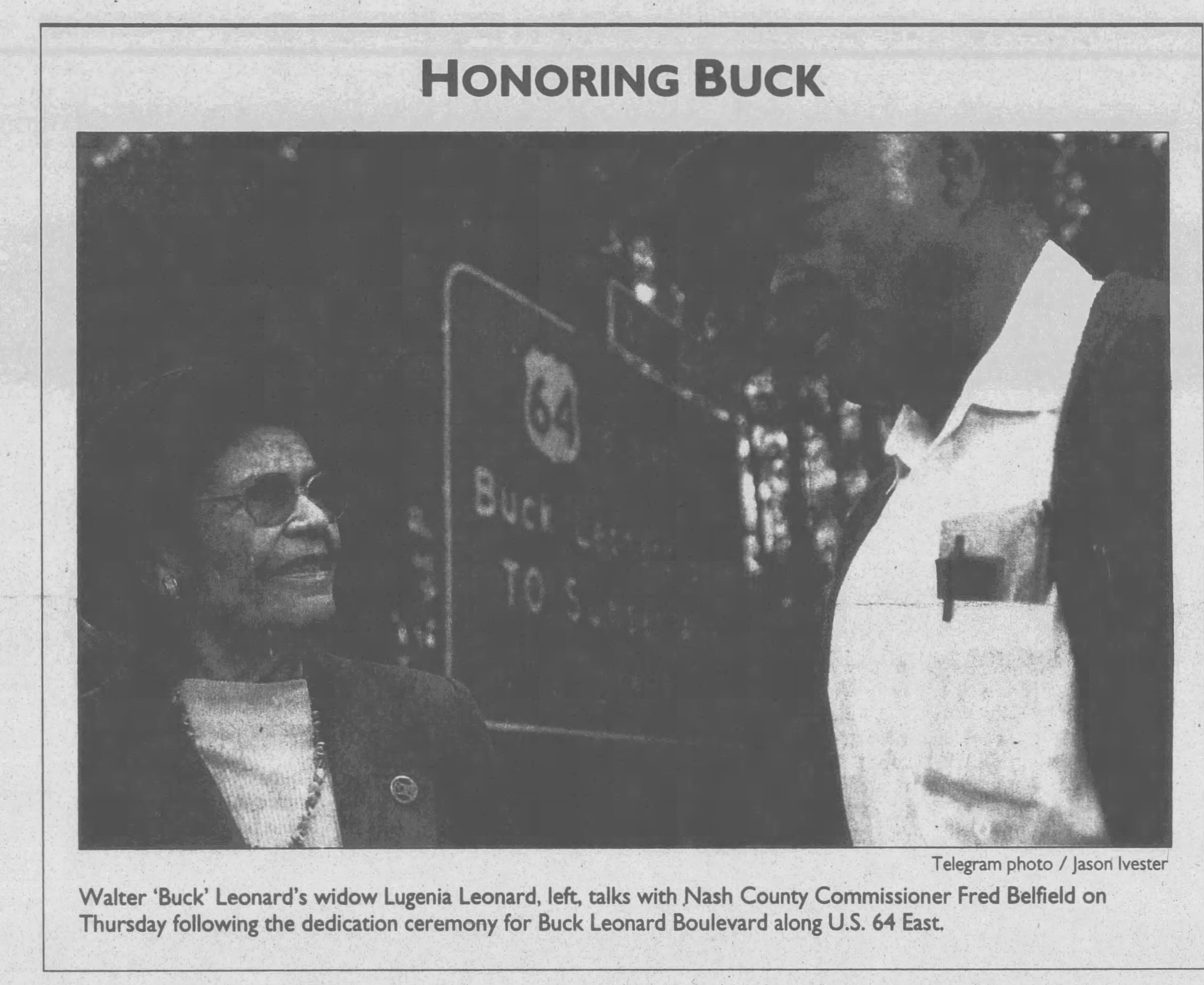
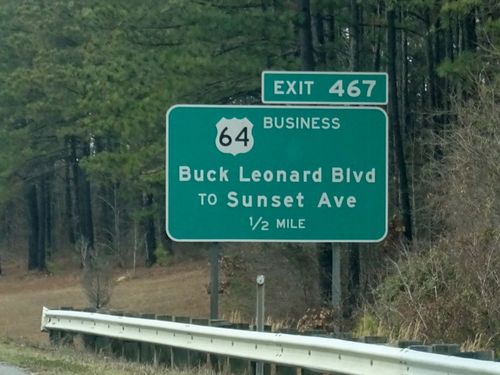
In June 2004, roughly seven years after Buck Leonard’s death, the Rocky Mount City Council passed a resolution calling for the North Carolina Department of Transportation to rename Ramp Road —  a portion of U.S. 64 Business between the U.S. 64 Bypass, which runs east-west through Rocky Mount, to Sunset Avenue — Buck Leonard Boulevard. The DOT approved the alteration at its Sept. 2, 2004, meeting to restyle a fairly significant local thoroughfare into permanent memorial to the baseball legend.

In November 2004, a formal ceremony was held featuring remarks from the mayor pro tem and the unveiling of a massive sign along 64. The change was recommended by local attorney George Whitaker.

“He was just somebody I knew and thought a lot of, not because of what he had done in baseball,” Whitaker told the Rocky Mount Telegram at the time, “but just things other than that. … He was just as fine a gentleman as you’d ever want to meet.”

(Interestingly, what’s now Buck Leonard Boulevard sits in the Nash County side of the city, through a generally middle- to-upper-class area — and a hefty distance from Buck’s old neighborhood in the Edgecombe section of Rocky Mount.)

This pic is actually from Gary Ashwill’s Agate Type blog. I hope he doesn’t mind if I use it for this. His site, which is one of the best Negro Leagues blog out there, is here. Please check it out.

Traditionally, U.S. 64 has sometimes been described as “Murphy to Manteo,” entering the Tar Heel State at its very western tip in the Smokies near the former city, and concluding near the latter town, which sits in the middle of Roanoke Island, just west of the famed Outer Banks. And yes, it is that Roanoke Island, where some people got lost or some such.

I’ve traversed U.S. 64 innumerable times; it runs directly between Rocky Mount, where my parents lived and where I briefly worked at the Telegram, and Tarboro/Princeville, where I lived and worked at the Daily Southerner for a year and a half. The highway also runs right to Raleigh to the west, where my parents lived for several years after leaving Rocky Mount, and where my brother attended N.C. State.

(Tangential to this tangent is the story of Princeville, the first town in the U.S. chartered by blacks, which I’ve covered and written about a lot over the last 23 years, and which is the home of my lifelong friend Calvin. Both Princeville and Calvin — as well as none other than Hall of Fame pitcher Bill Foster — will figure into my Buck narrative in a bit.)

The renaming of a significant Rocky Mount thoroughfare and U.S. 64 connector to Buck Leonard Boulevard roughly corresponded with other, even more substantial adjustments. When I lived in Rocky Mount and Tarboro (circa 1995-1997), 64 was a limited-access, four-lane highway from Raleigh to Tarboro, but from there on east to the Outer Banks, it was a two-lane or four-lane, full-access road.

But that’s since changed — the four-lane freeway portion was extended to Williamston, about half-hour east of Tarboro and couple hours west of Manteo. The whole stretch from Raleigh eastward to Williamston — including through Rocky Mount — is in the process of being turned into Interstate 87. As it turns out, that’s significant because north-south I-95 runs just a few miles west of none other than Rocky Mount — in fact, it could be argued that Rocky Mount exists as a city largely thanks to I-95 traffic — which means there will be an intersection of interstates at Rocky Mount.

It also means that Buck Leonard Boulevard will soon become an important connector between Rocky Mount and an interstate, which would bring with it all sorts of developmental and commercial prospects, which, in turn, could make the name Buck Leonard a lot more well known to the general public. Which is quite good.

But there’s a little more to the U.S. 64/Buck Leonard story … Way back when the highway was first established, 64 was a simple two-lane road that ran right through downtown Rocky Mount; that changed when the 64 Bypass was built in the mid-1980s, and the old 64 became U.S. 64 Business/Alternate.

Connecting the dots, Buck Leonard Boulevard is, in fact a stretch of old U.S. 64, now 64 Business. From the end of the Buck Leonard Boulevard portion, 64 Business continues to run westward through the heart of Rocky Mount, from Nash County into Edgecombe County — through black and white neighborhoods, through well-off and working-class areas — until it exits the city with the name East Raleigh Road. Nestled along East Raleigh Road/64 Business?

The Gardens of Gethsemane cemetery.

My Buck story begins here

A sunny November day in Rocky Mount.

I apologize greatly that I once again left this blog fallow for an extended period of time. I was temporarily employed by a local New Orleans TV station on a big investigative project, and, well, it paid really, really well.

Plus I still seem to be at a personal and career crossroads, the same one that’s stymied me for well more than a year now. I’ve flopped around like a fish on the floor of a boat, gasping for air and desperately trying to hop my way to water and security. I just can’t figure out which way to flop, professionally speaking.

What I have been doing is trying to write longer-form pieces, and, for my return to the Interweb is the first part of a narrative about the time I met the great Buck Leonard. I’m hoping to post a new part each week, fingers crossed. I hope you like it.

********************

On Sept. 5, 1997, former U.S. Rep. Bob Etheridge of North Carolina read into the Congressional Record a tribute to Walter Fenner “Buck” Leonard, the Hall of Fame first baseman who would be celebrating his 90th birthday three days later.

Etheridge explained that he regretted he couldn’t be there in person — the Congressman’s district included much of Edgecombe County and the eastern side of the city of Rocky Mount, Buck’s hometown and lifelong residence — but that he wished the Negro Leagues legend all the best on Leonard’s big day. Read the Congressman:

“I only wish that the whole world could have seen the talents of Buck Leonard in the major leagues. Although that national recognition came too late for Buck Leonard, he is enshrined today in the National Baseball Hall of Fame in Cooperstown. There is no player more deserving of that great honor than Rocky Mount’s own Buck Leonard.

“Though Buck was forced to leave Rocky Mount to pursue his professional career, he never forgot his beloved hometown. It is only fitting that today, the city of Rocky Mount honors Buck Leonard not merely for his many baseball talents and accomplishments, but also for what he has done for this fine community.

“Buck, I wish you a happy birthday. Though I missed this celebration, reserve me a seat for your 100th birthday celebration.”

(As a side note, Etheridge, a seven-term Democrat, flamed out three or so years later, after a dust-up with a “gotcha” style journalist followed by an upset loss in his 2010 re-election campaign. He subsequently and unsuccessfully ran for governor.)

That centennial birthday bash never came. Buck Leonard died less than three months after Etheridge honored him in Congress, on Nov. 27, 1997. Upon his death, his hometown paper, the Rocky Mount Telegram — for which I had briefly worked a couple years earlier — dedicated the majority of its front page to his passing, and to what he meant to the city. Under a large-font headline stating, “‘Buck’ Leonard dies at 90,” ran a three-column photo of Buck with his wife, Lugenia, at the 90th birthday fete thrown for him. In the photo he was wearing a Homestead Grays cap. He might have been a Rocky Mount native, but Buck was also a Homesteader until the end.

Wrote Telegram sports reporter Bill Barnhart in the paper’s Dec. 2, 1997, issue:

“Buck paved the way for other athletes of color by playing with class on and off the field, not letting small-minded people affect his play or love for the game. Everyone I’ve ever talked to about Leonard uses the same words to describe him: class, dignity, grace. …

“His passing isn’t really a ‘sports story,’ although he truly was a great sportsman. It’s more of a people story. Buck gained his fame with his prowess on the baseball diamond, but he was an even better person off the field as he was on it. And that’s really saying something.”

Such glowing eulogies flowed forth from eastern North Carolina newspaper, penned by white men who had met Buck and come away impressed by a man who, despite his speech patterns and mobility severely impacted by a stroke suffered years earlier, exuded a mix of enthusiasm, humility and wisdom that drew people to him, almost if by a magic spell.

Then-Rocky Mount Telegram editor Mark Aumann (for whom I’d briefly worked as a high school sports reporter) declared that Buck “gained his fame for the most part playing in the same stadiums as the major leaguers but enjoying none of the widespread adulation. … But Leonard’s indefatigable attitude and outstanding ability forced whites … to notice the talents of black ballplayers.”

Ben Casey, sports columnist for the Graphic of Nashville, N.C. (a town located about a dozen miles west of Rocky Mount), recounted his encounter with Buck, a photography session that allowed Casey to meet the legend. After lamenting what he viewed as the arrogance and greed of modern-day players, Casey regaled his readers with his impressions of Leonard, a man, Casey said, embodied the strengths and grace that such current players sadly lacked.

Casey explained how, back in the days of Jim Crow, Negro Leaguers like Buck faced not just racial bigotry, but severe and stark economics and dire financial straits:

“A man that can survive that kind of failure off the field, a man that can survive exclusion on the basis of skin color … a man that can survive that while maintaining a gentle manner … that man is a major league human being … whether he ever played in the major leagues or not.”

I learned about the baseball legend’s passing while sitting in my spartan apartment in Holyoke, Mass., where I was the editor of the weekly Holyoke Sun newspaper. From what I recall I was sitting in what was more or less my living room — it consisted of a cushioned wood chair and a TV on a table — watching SportsCenter, when a news flash about Buck’s death appeared on the scroll at the bottom of the screen.

It seemingly came out of nowhere, amidst ESPN talking heads’ braying about that week’s NFL games and Plays of the Day. I have no doubt that the vast majority of ESPN viewers had no idea who Buck Leonard was, even though the crawl at the bottom of the screen noted that he was a Hall of Famer. For most of the TV audience, it was surely just more noise and babble they could easily tune out.

But for me … For me, it was a dispiriting gut punch, a shock to the system that instantly cloaked my evening with a disheartening pall that covered my mind for a week.

Because, like those journalists in North Carolina — and like hundreds, if not thousands of adoring Negro Leagues fans and awestruck little kids in the state for whom Buck was a near-mythic figure of inspiration — I had met Buck Leonard. I sat in his den, a room crammed from floor to ceiling with memorabilia, mementos and personal treasures from not just his playing days, but from his entire life.

I witnessed him struggle to walk without a wheelchair. I’d struggled through a conversation between a severe stutterer (me) and a man coping with the effects of a stroke (Buck) that, while labored at times, was a thrill of a lifetime.

As a journalist, I had gone to Buck’s house to interview him for a prospective article. I’d recorded our talk, I’d taken copious notes from the encounter.

But I subsequently decided to abandon the idea of an article. I just didn’t feel right. It didn’t feel right to exploit such an extraordinary moment by selling a story about it. When I got home, I placed the tapes and notebooks on a shelf and have since lost them. Actually, I lost them many years ago.

And although I’ve regaled many people about my visit with a baseball legend, I’ve never written about, at least not beyond the occasional email or text. I’ve never written about it, choosing instead to preserve the spellbinding experience in my mind for more than 20 years.

But I write about it now.

*********************

When I arrived in Rocky Mount, N.C., in May of 1995, I was, in certain ways, a broken man, and I was only 22.

After three and a half extremely successful and rewarding years at Indiana University, I had placed myself in an enviable position poised on the verge of a rosy future. I was editor in chief of the Indiana Daily Student, an award-winning campus paper, and, having wrapped up my undergraduate work a semester early, I was already enrolled in a couple graduate courses.

In addition, I was ramping up for a summer copy-editing internship at the Louisville Courier Journal, an endeavor that could very well have launched a decent career in the troubled newspaper business.

But in February 1995, just a week after my 22nd birthday, I suffered a nervous breakdown triggered by the development of severe obsessive-compulsive disorder augmented by the onset of clinical depression.

After a week in a psychiatric hospital, I learned I had lost my editorship of the Daily Student, and I decided to withdraw from the courses I had been taking. But I still had my internship to look forward to, and I’d already earned my bachelor’s degree, so I plunged ahead after receiving what I thought was sufficient treatment to overcome the psychological collapse.

But a second breakdown less than two months later scuttled any hope I had left — my internship evaporated, leaving me with nothing on the horizon, nothing on which to pin any optimism for the future, professionally or personally.

I had nothing left.

Except for one thing.

One strand of optimism on which to cling.

I had an encounter with an octogenarian Baseball Hall of Famer.

******************

Part Two (hopefully) next week!

You want some Malloy? I got some Malloy!

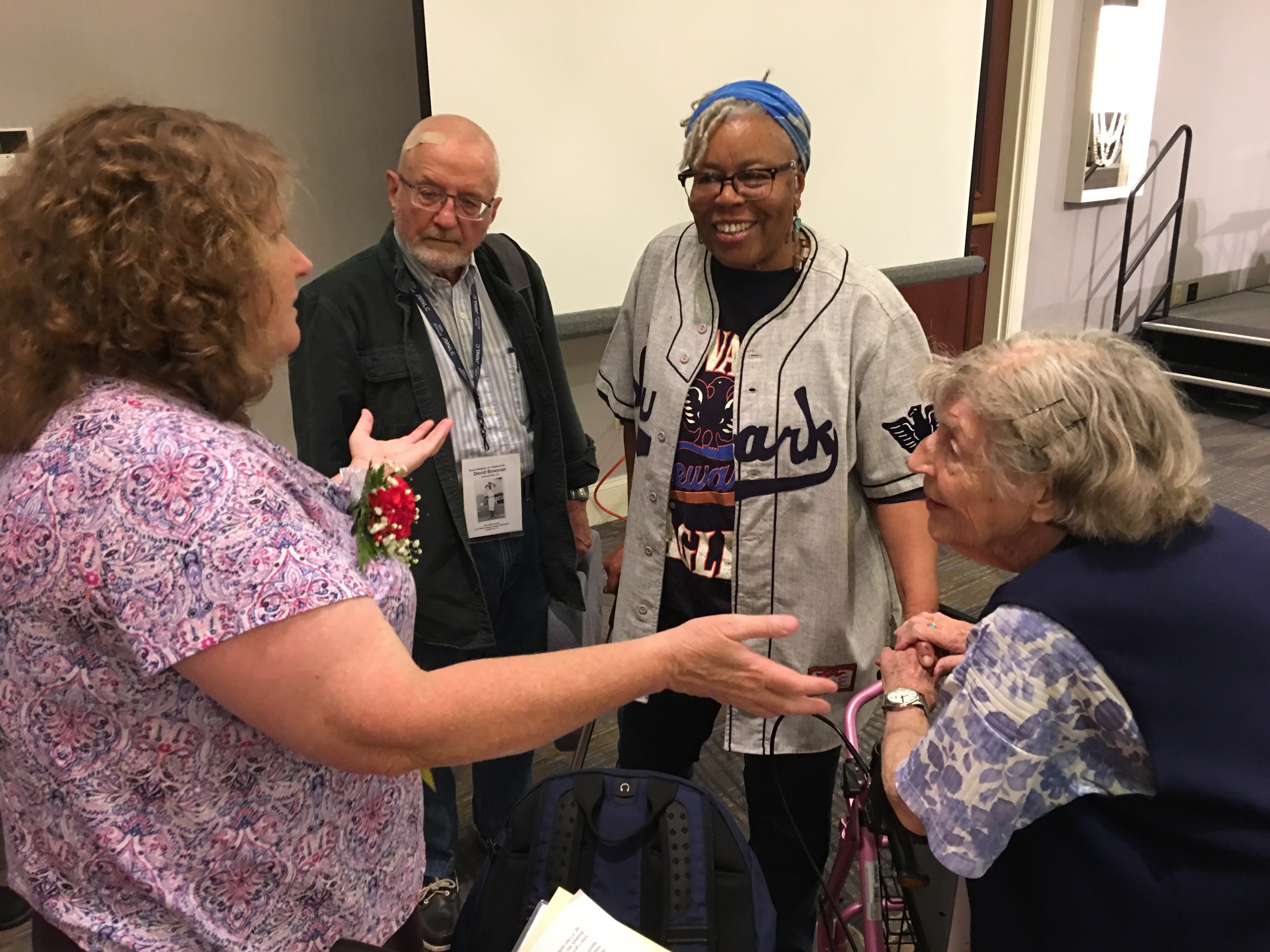
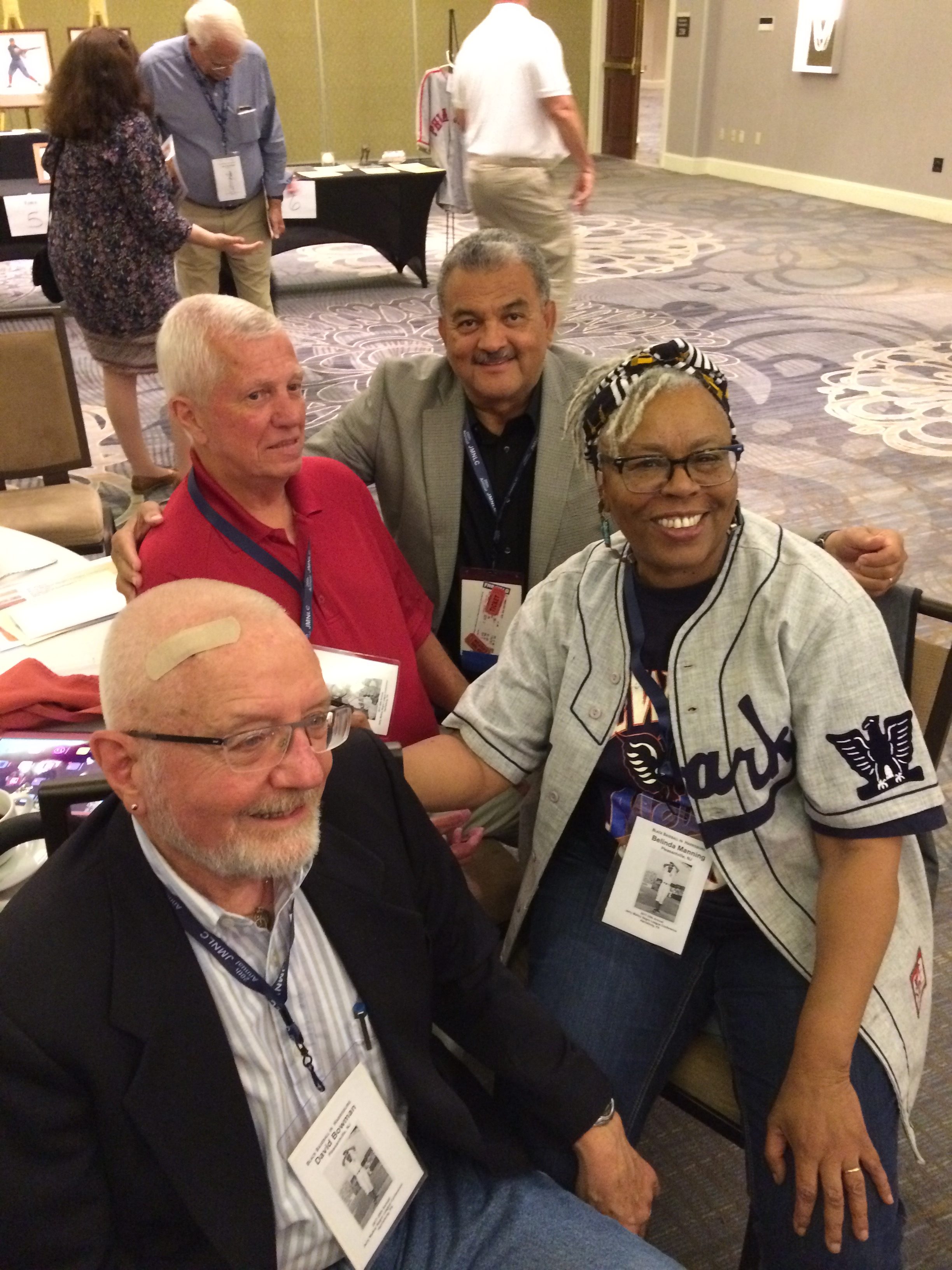
Margie Peterson (far left) and Peggy Peterson (far right) talk with David Bowman and Belinda Manning (daughter of Newark pitcher Max Manning) talk about Robert Peterson‘s landmark book, “Only the Ball Was White,” after listening to a recording of Robert’s stirring address at the very first Malloy Conference 20 years ago. Here is a passionate essay by Larry Lester describing the influence of the book on Larry and his work.

Derrick Jones (left) presents a surprised Larry Lester with a beautiful, hand sewn, Negro Leagues-themed quilt for Larry’s years of dedication and efforts.

Other than taking forever to put together this post, I’m still riding high on the wave of coolness — wave of coolness? — that was SABR’s 20th annual Jerry Malloy Negro Leagues Conference, held this year in Harrisburg from July 27-29.

In my previous post, I kind of let loose with some emotional thoughts about how important the Malloy conference — and similar efforts to promote, preserve and teach folks about the legacy of the Negro Leagues, as well as our very American history in general — to our both those who attended and to the mission of baseball research.

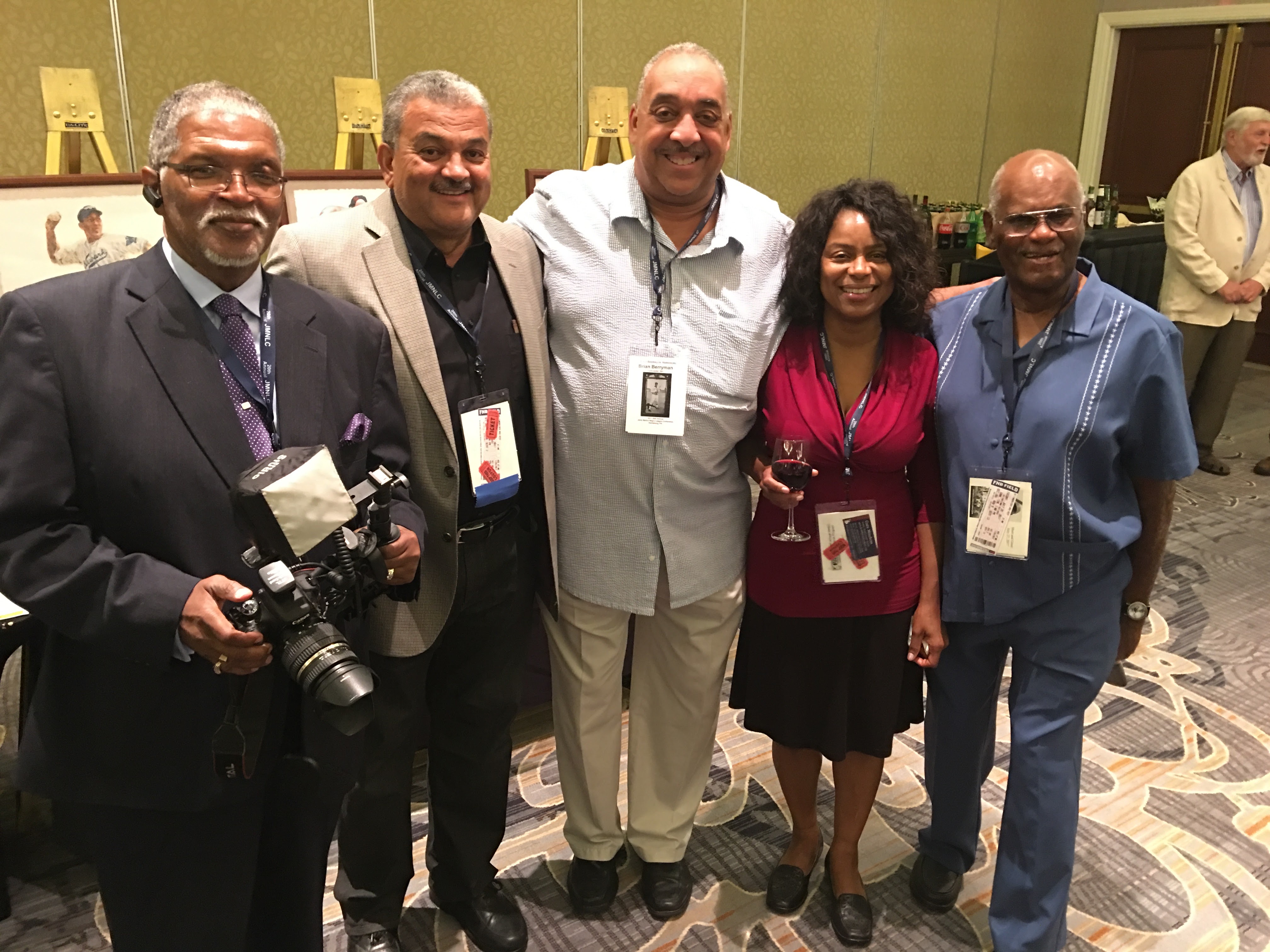
So I’ll try to keep this one light-ish in tone and heavy on picture. In addition to some I took, there’s a whole lot snapped by other attendees, including Missy Booker, Ted Knorr, Leslie Heaphy, Sherman Jenkins and Rodney Page. I lost track of who exactly took which one, so I hope it’s OK if I just give a general photog credit here. Also diligently snapping photos the entire weekend was official conference photographer Louis C. McKinney, who owns a photography business in Marietta, Pa.

If I included photos by anyone else I neglected to list, let me know. Many thanks to all!

And, of course, thanks to the dedicated folks who planned, plotted and prepared this year’s edition – you know who you are!

Just a quick note … the Harrisburg Senators game on July 28, at which the former players were honored, was rained out, which was quite the bummer. I love minor league baseball — you do not even know — so this was a disappointment. As the Louisiana Weekly sportswriters of yesteryear might say, ol’ Jupe Pluvius had his way that night.

One more comment … A bunch of media outlets either previewed or covered this year’s conference, including the New York Amsterdam News, PennLive.com, The Burg community newspaper, WN.com and Gameday Gold (by Thomas Tuttle).

Oh, also … thanks to the ever-gracious and ebullient Phil Ross for the breakfast bagel and cream cheese! Also, many humble thanks to all the new friends I made at the conference, as well as the folks whom I had known or communicated with over the years that I finally had a chance to meet this year. There were many of you, a fact of which I’m extremely grateful.

OK, let the festivities begin!

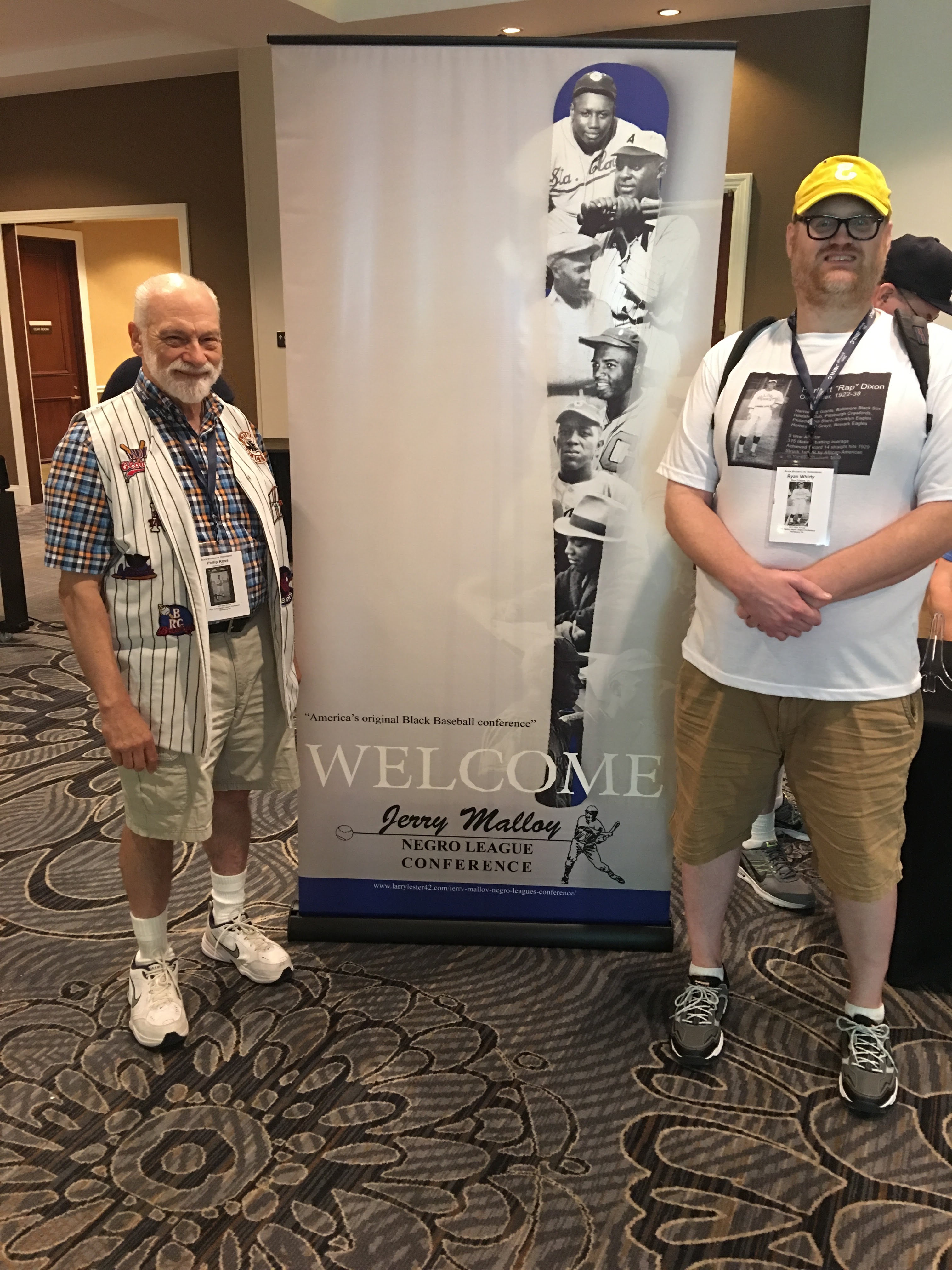
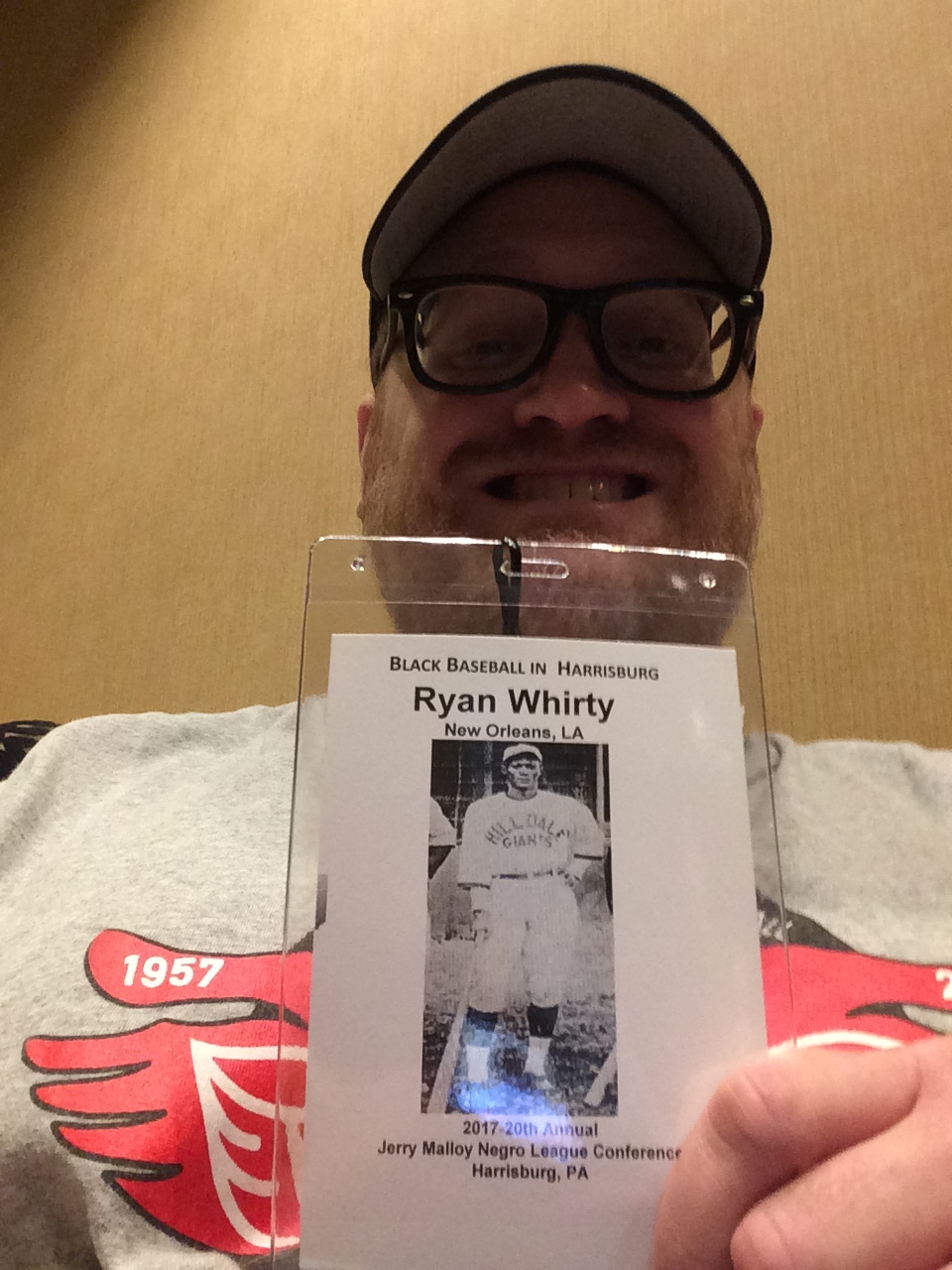
My good buddy Phil Ross and me. He’s obviously the handsome one here.

Floyd Stokes (left) and Ted Knorr (Harrisburg kid and my annual Malloy roomie, along with Lou Hunsinger Jr.) present their children’s Negro Leagues activity book at the conference’s education forum.

The highlight of the conference for me was undoubtedly the attendance of my good friend Rodney Page, son of legendary team owner/manager/league executive/sports promoter/hotelier Allen Page, who served as a chairman of sorts of the New Orleans Negro Leagues scene for 30 years.

I hope to write more about Rodney and my friendship with him soon, but for now, I’m extremely glad that I was able to convince him to attend the Malloy this year — he lives in Austin, Texas — and I know he had a blast. So thanks to Rodney for attending, and to everyone else who made him feel so welcome at our “family reunion.” He learned a lot, shared a lot and probably even cried a big over the three days.

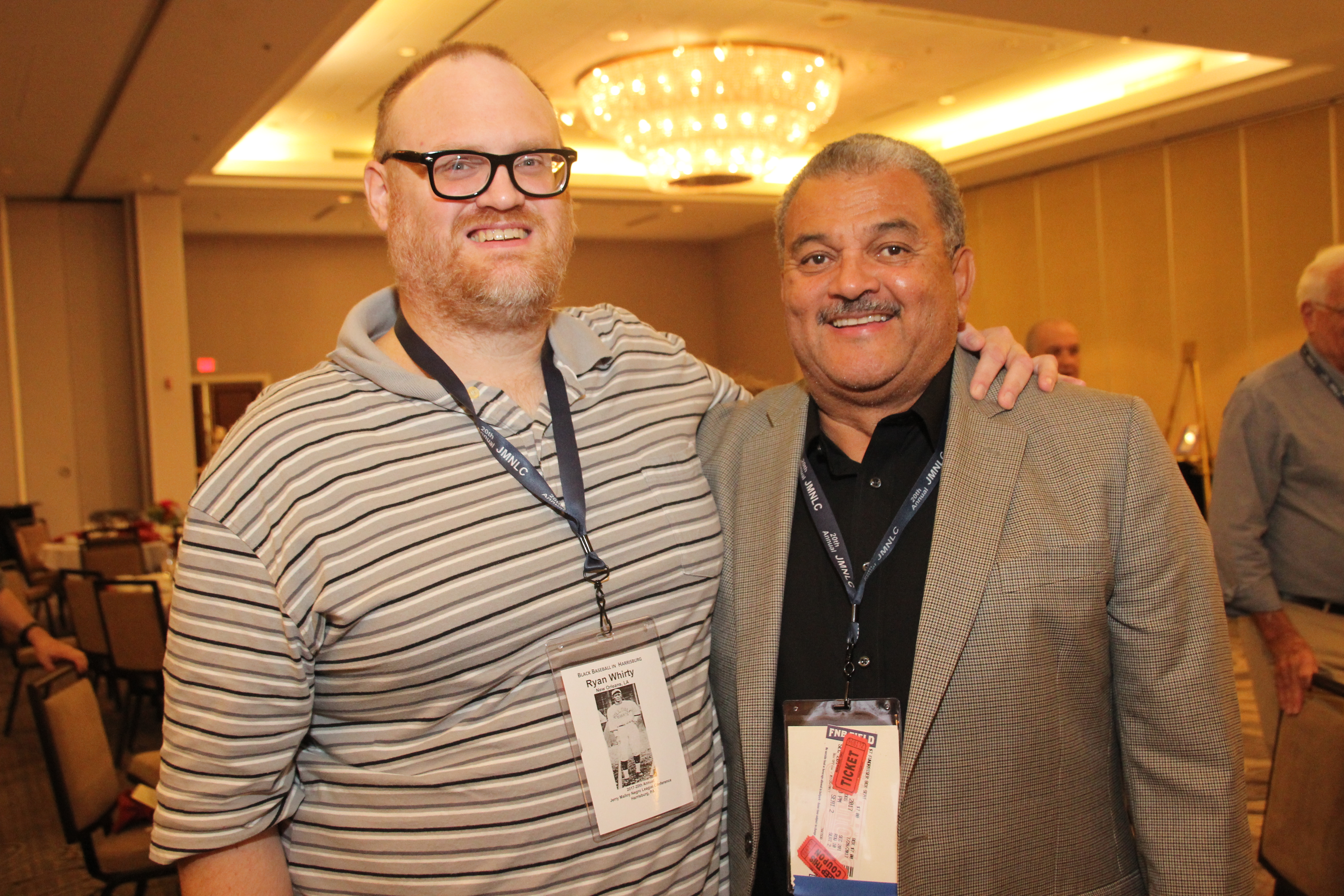
Rodney and I at the meet-and-greet.

Rodney with Belinda Manning, David Bowman and Jim Myers at the banquet.

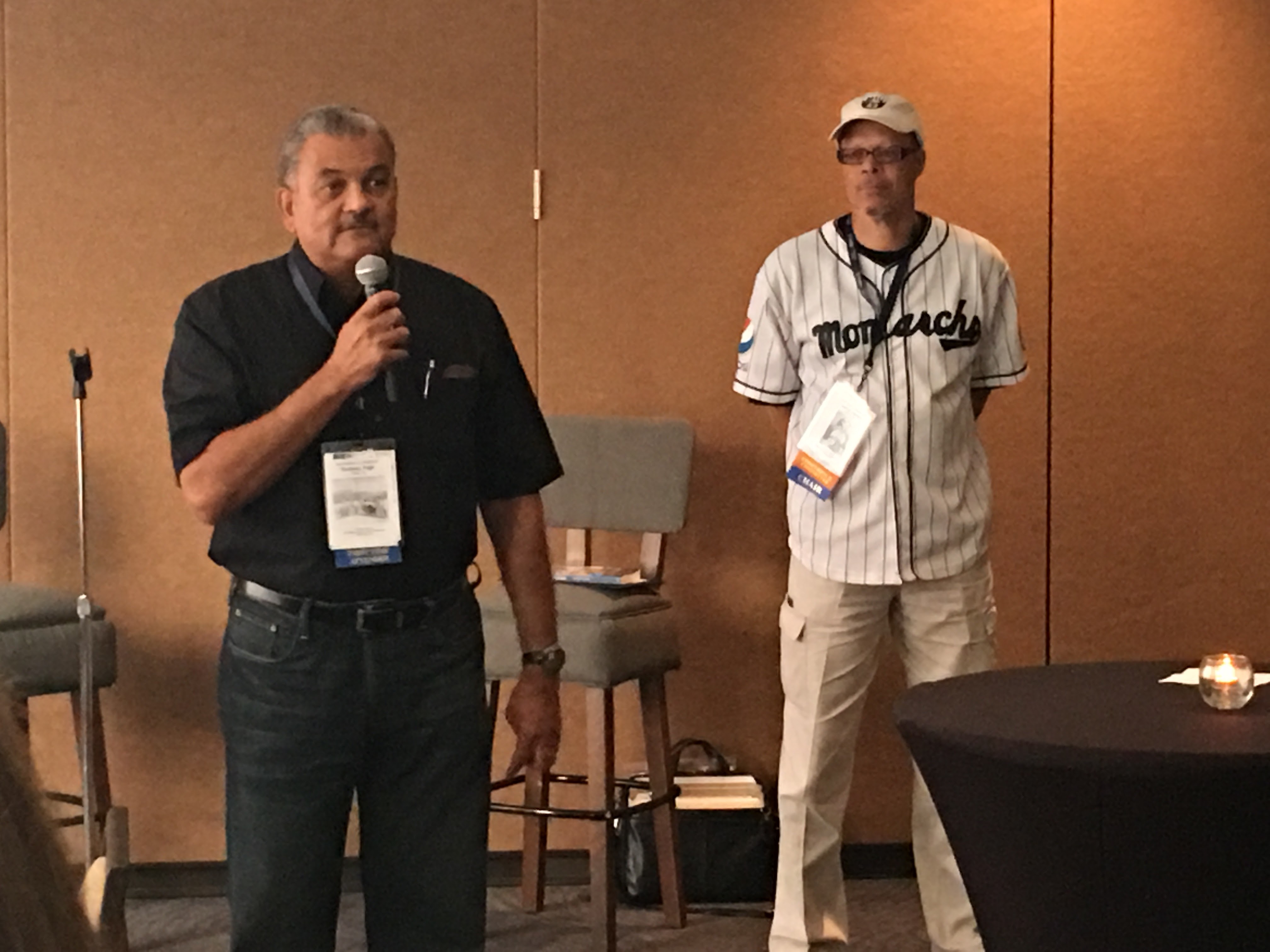
Rodney providing moving comments at the meet-and-greet, with Larry looking on.

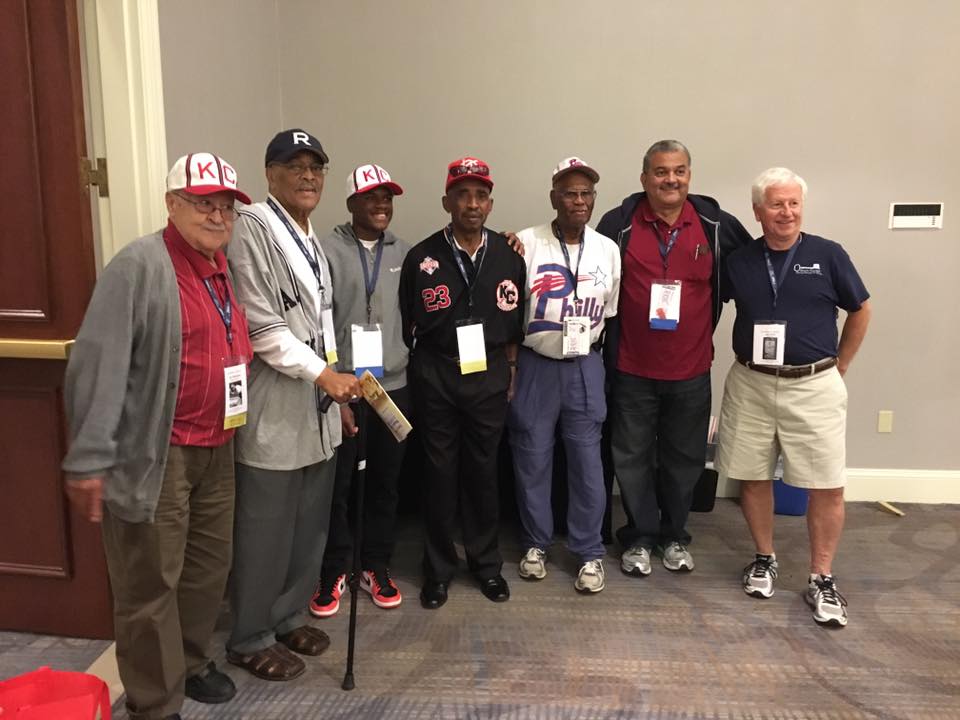
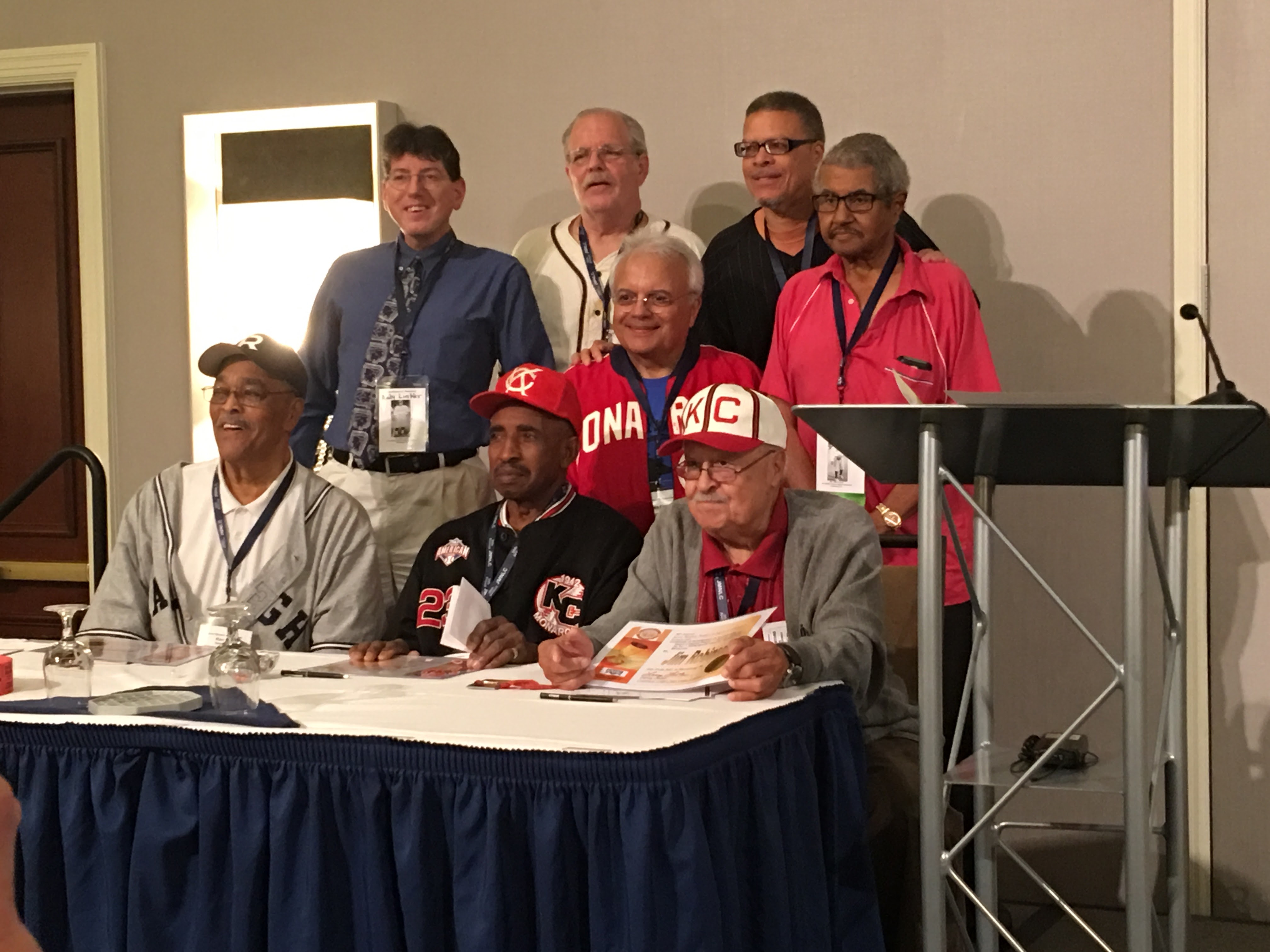
Rodney (second from right) with former Negro Leaguers Sam Allen, Jim Robinson and Ken Free, along with other descendants of Negro League figures. The members of the group were recognized, thanked and given certificates for their gracious attendance.

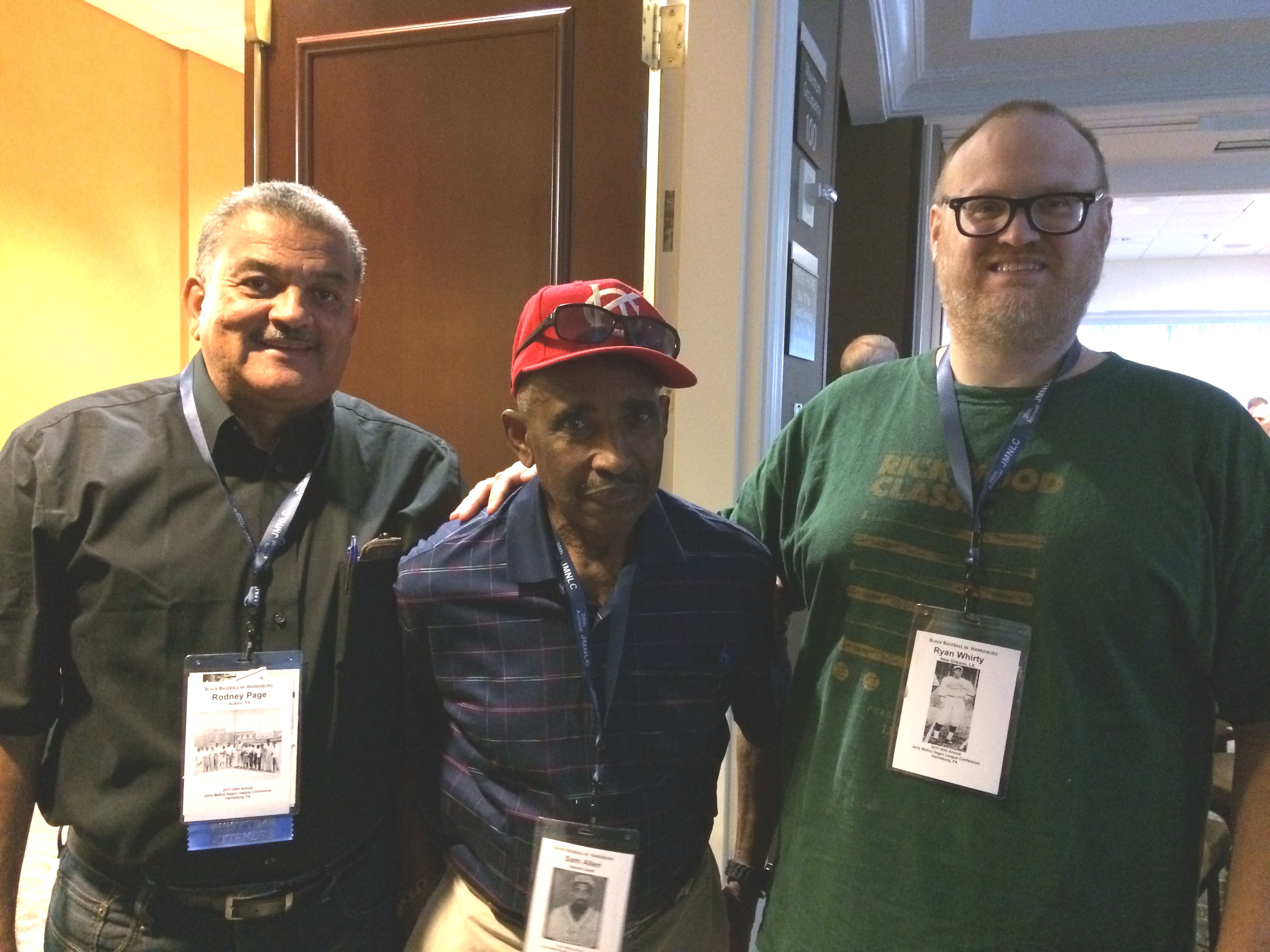
Rodney and I with KC Monarch Sam Allen.

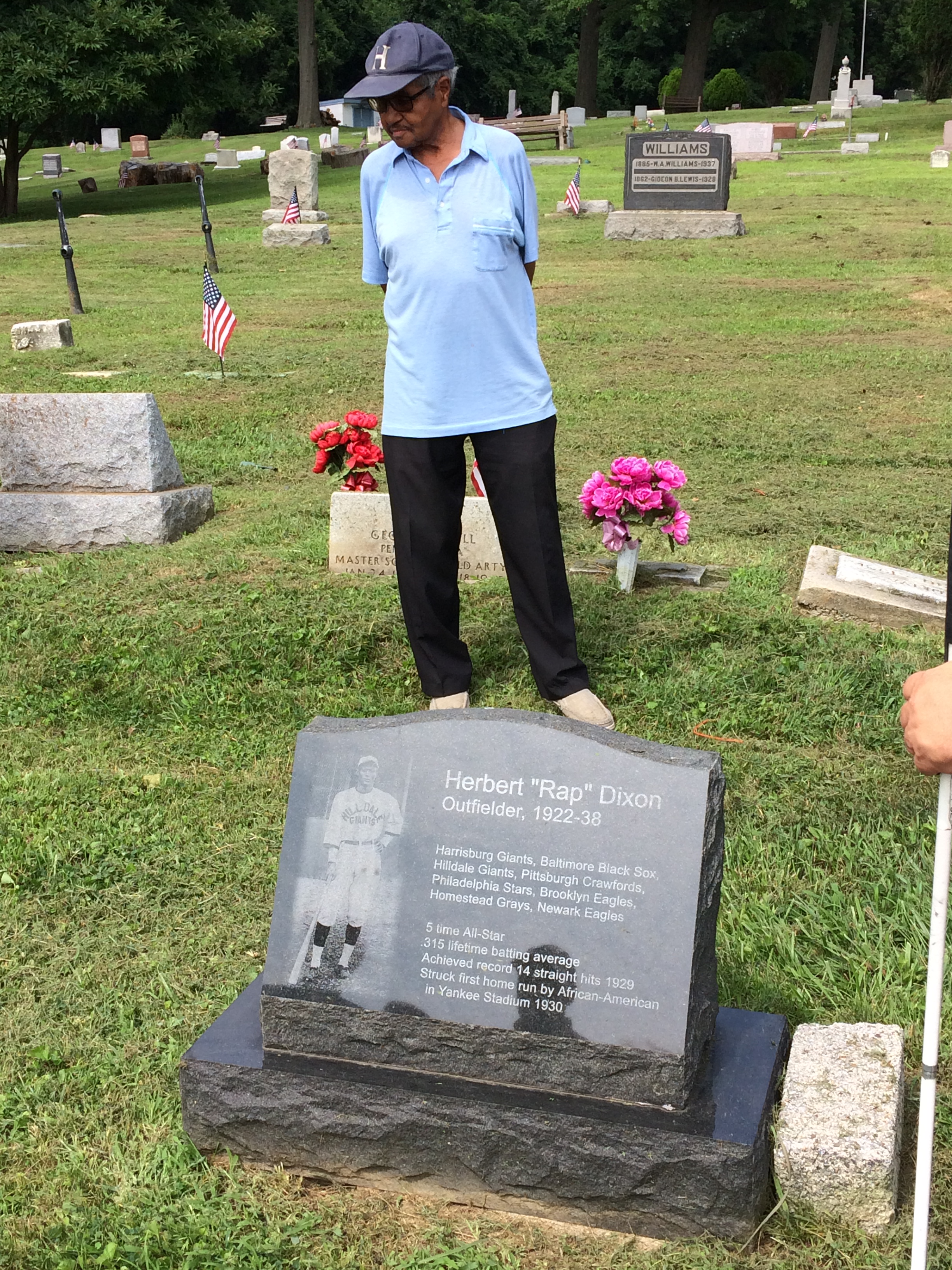
One of the highlights of the conference was the Rap Dixon tour, led by local experts/researchers Ted Knorr and Calobe Jackson. It was a muggy day, and I ended up absolutely soaked with sweat, but it was worth it. Rap was a stupendous outfielder for the Harrisburg Giants, among other clubs.

Dozens of us piled onto a specially rented school bus for the trek, which included key stops on Adams Street/Hygienic Hill in the borough of Steelton, where Rap Dixon and many other black residents lived, went to school and worshiped; and historic Midland Cemetery to pay respects at Rap’s grave, which a couple years ago received a stunning tombstone after going unmarked for decades.

Here is a TV report about our tour.

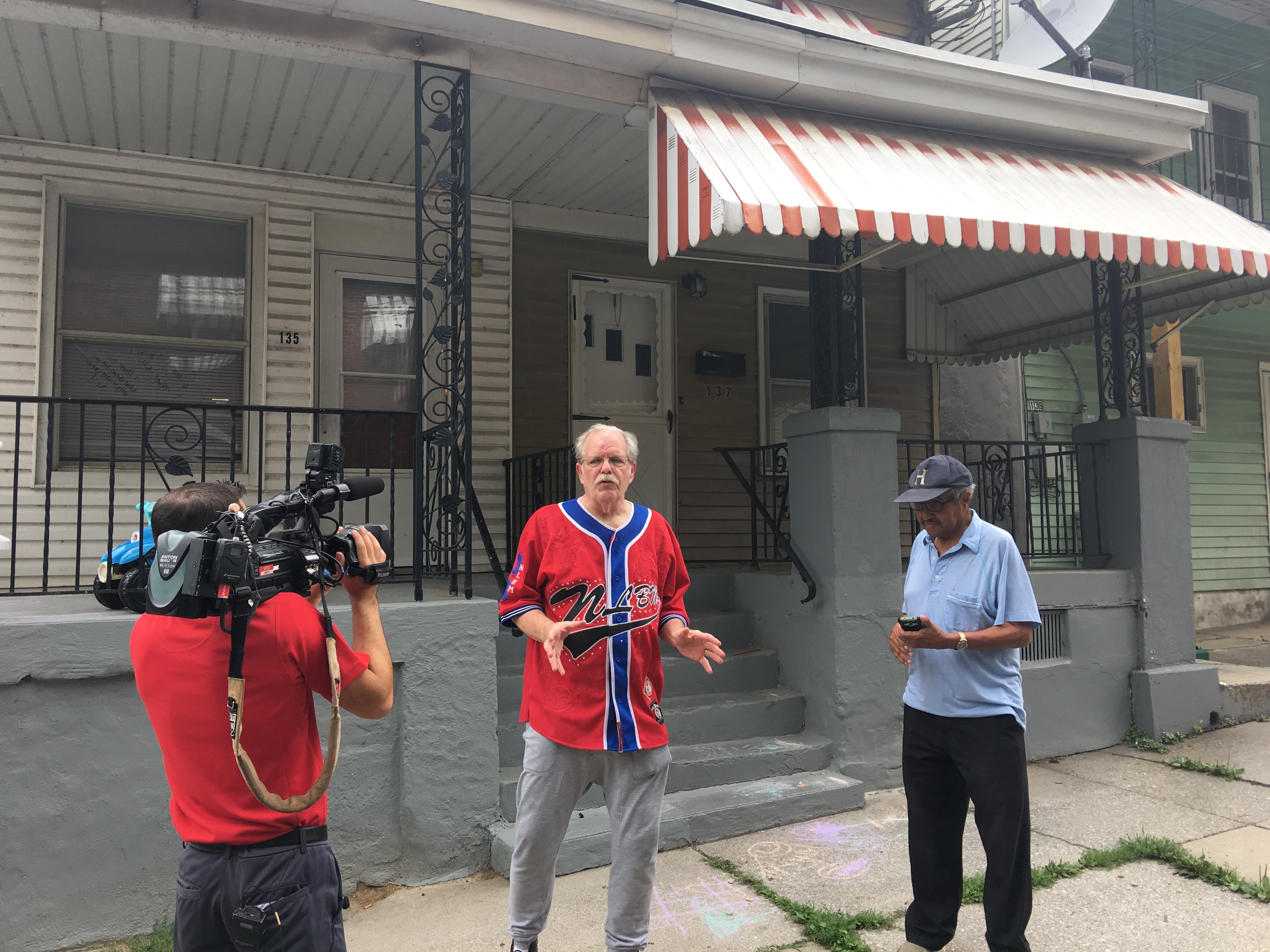
Ted speaking in front of Rap Dixon’s home while a TV fellow films him and Calobe looks on.

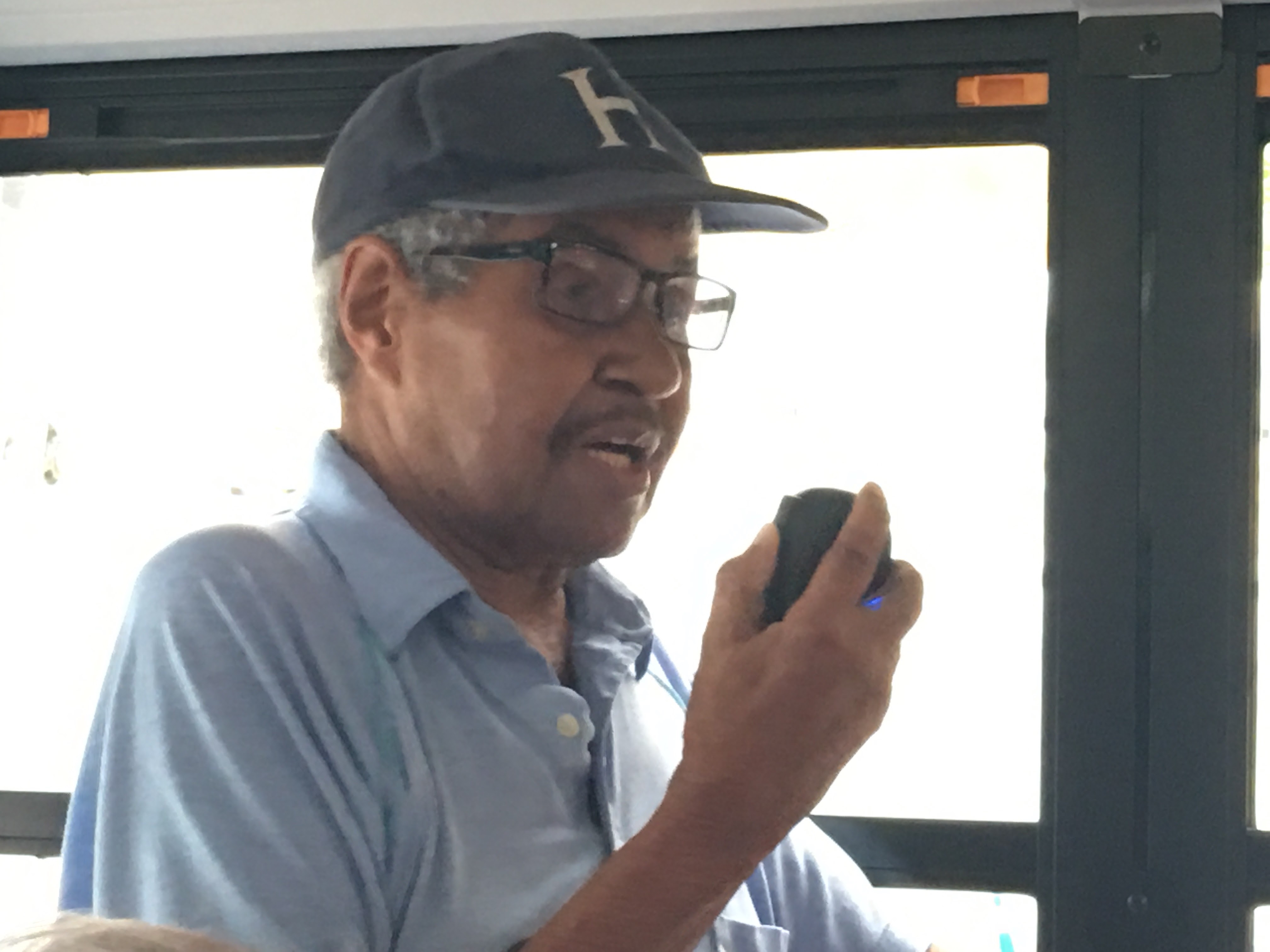
Calobe giving the tour bus rich details about Rap.

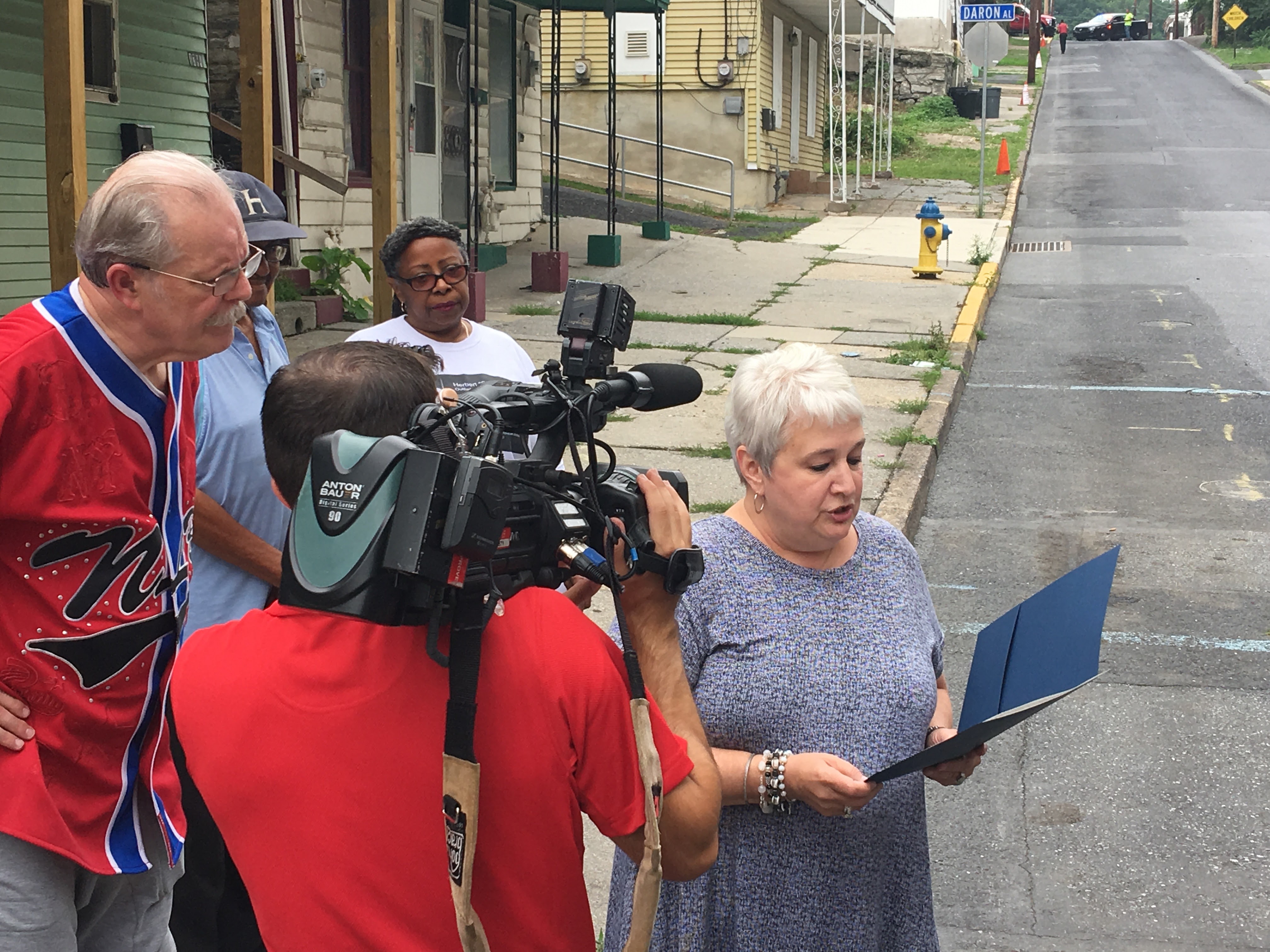
Steelton Mayor Maria Romano Marcinko reads the borough’s proclamation honoring Rap and declaring Rap Dixon Day. Here is a borough press release on the event.

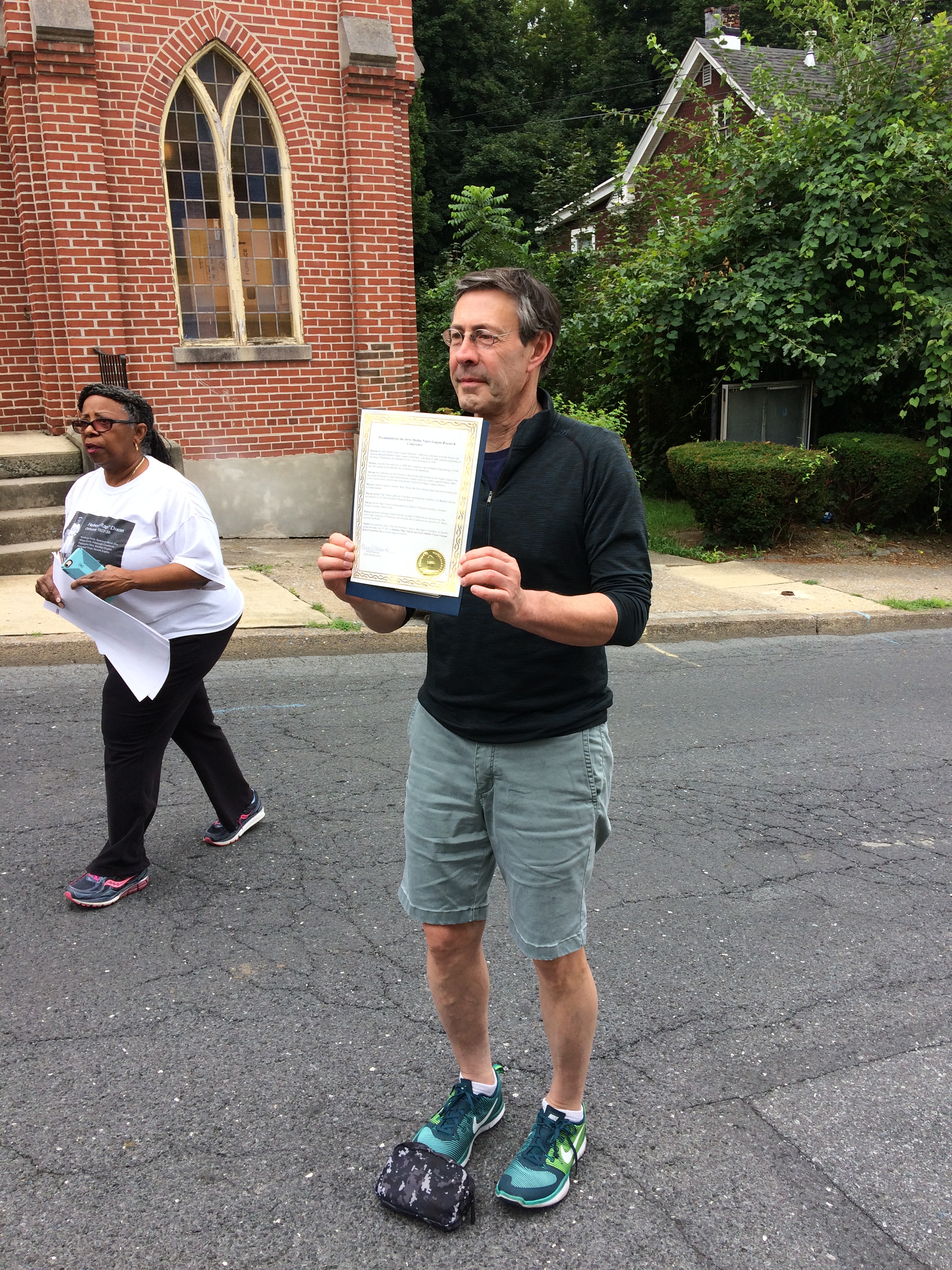
SABR CEO Marc Appleman with the Rap proclamation. Marc is a regular Malloy attendee.

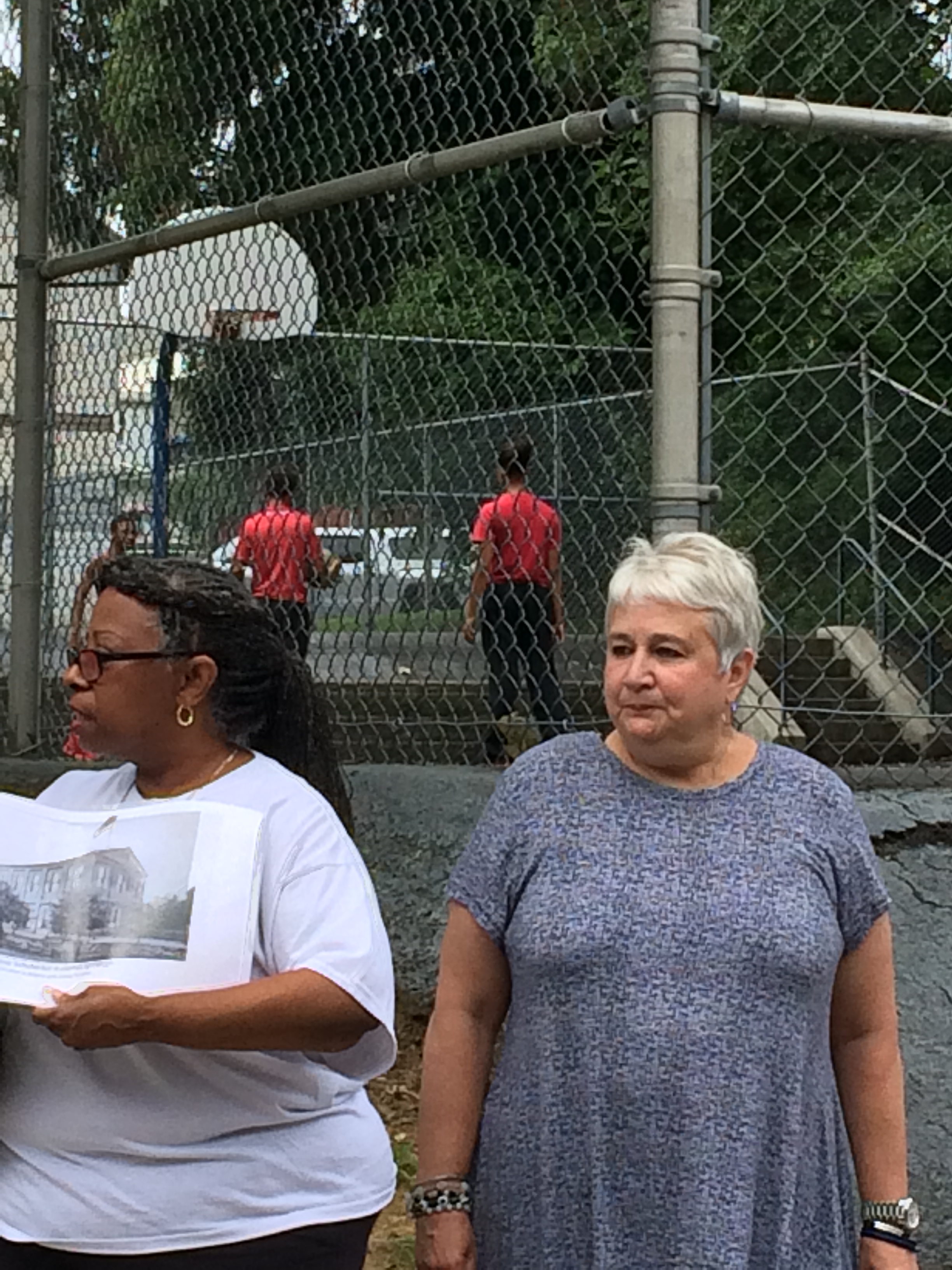
Community activist Barbara Barksdale filling the tour crowd in about the Hygienic School, the school Rap attended as a youth as Mayor Marcinko listens in. In the background, local kids play to-on-two on the court that sits where the school used to stand.

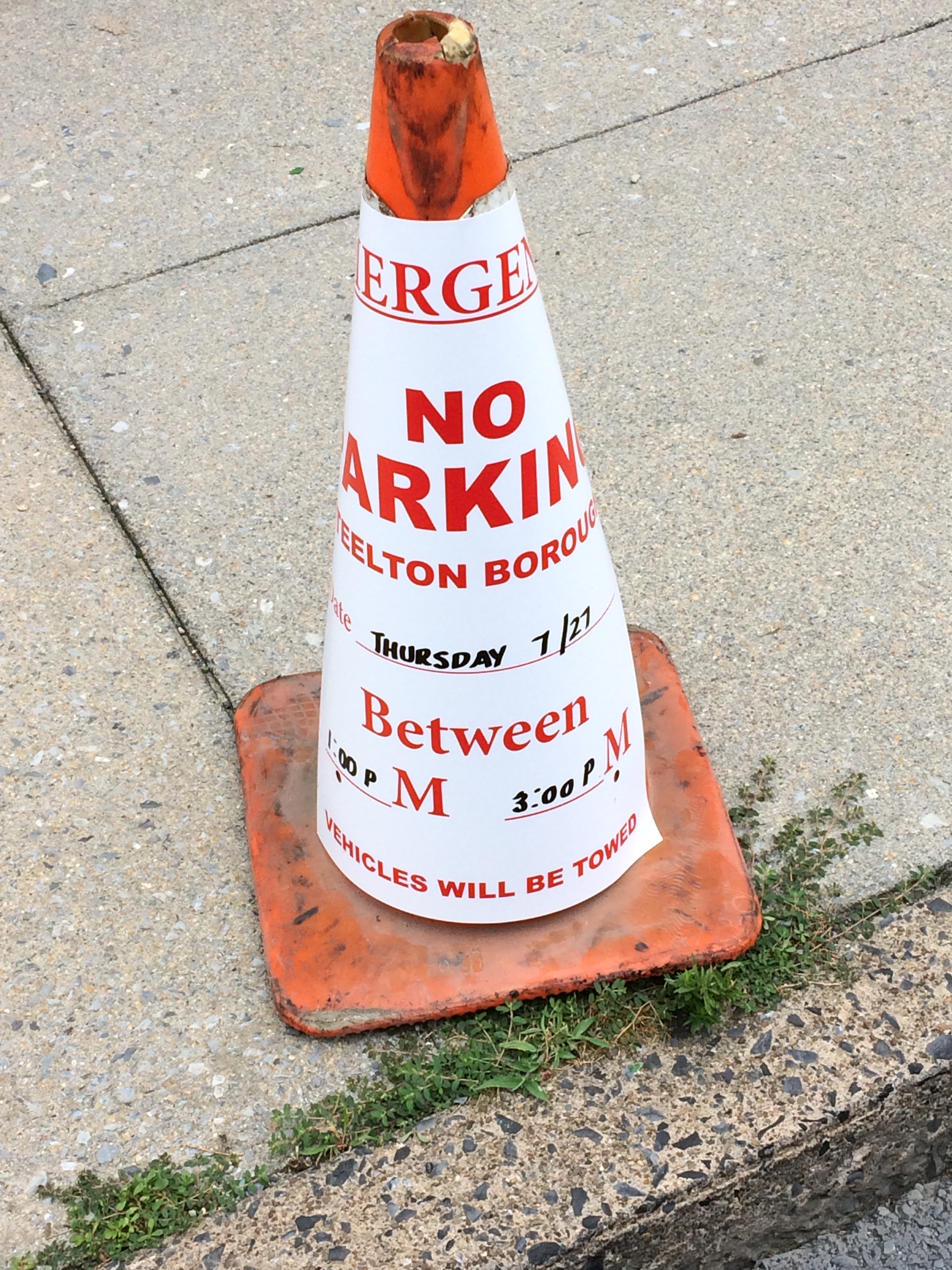
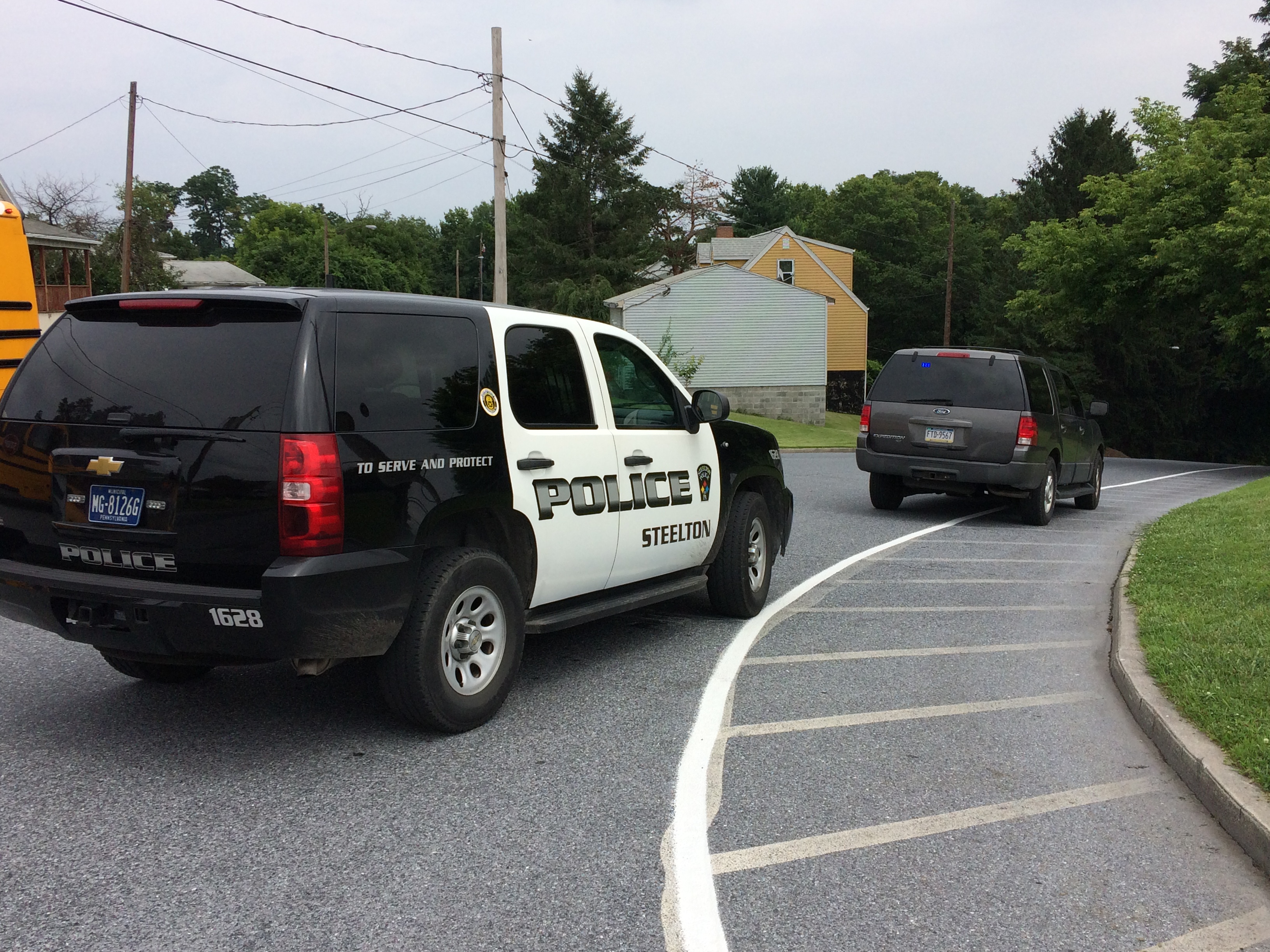
Borough parking staffers and Steelton police rolled out the red carpet for us. We had a police escort!

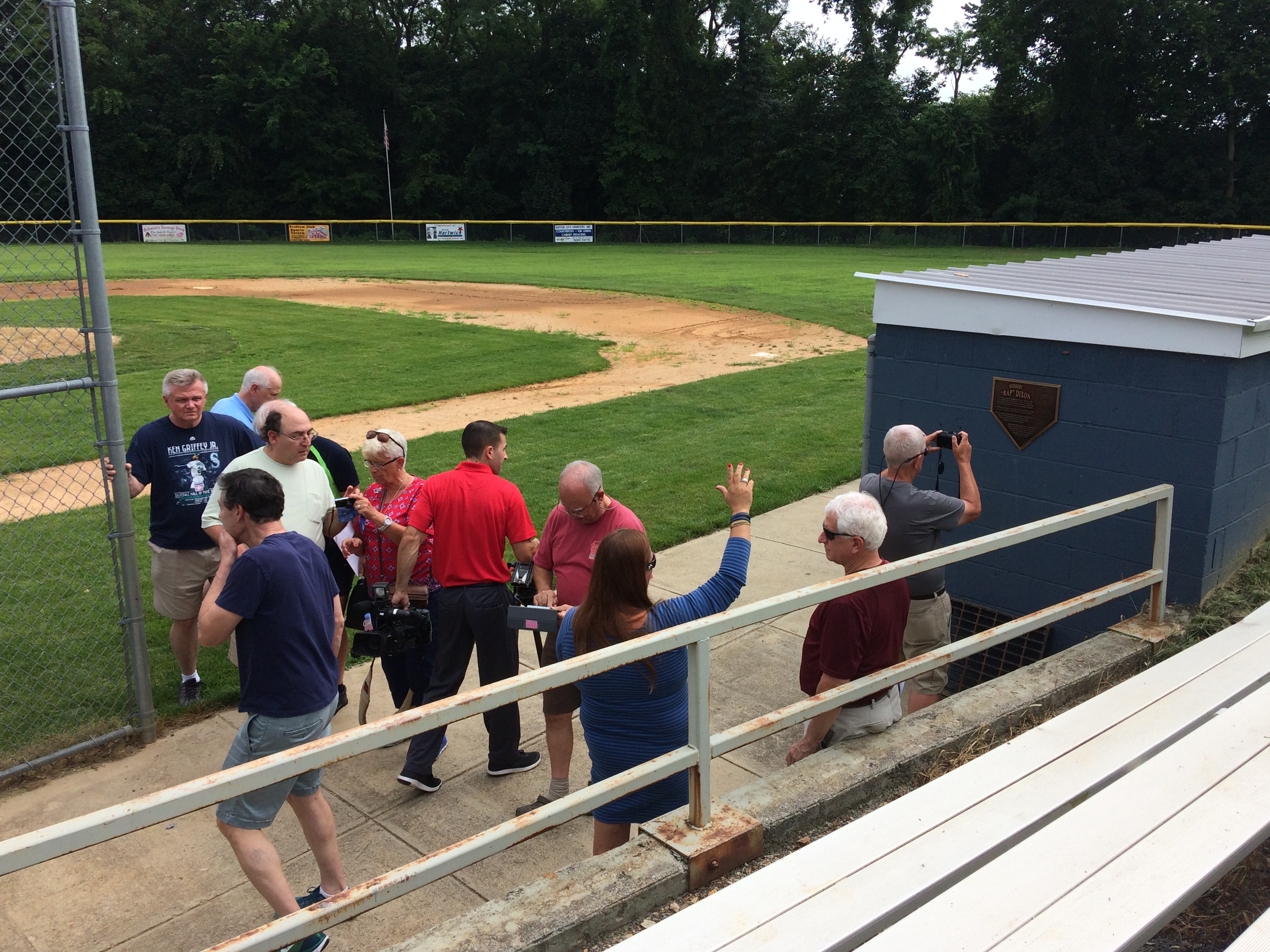
The following three photos show Reich Field in Steelton, which honors Rap.

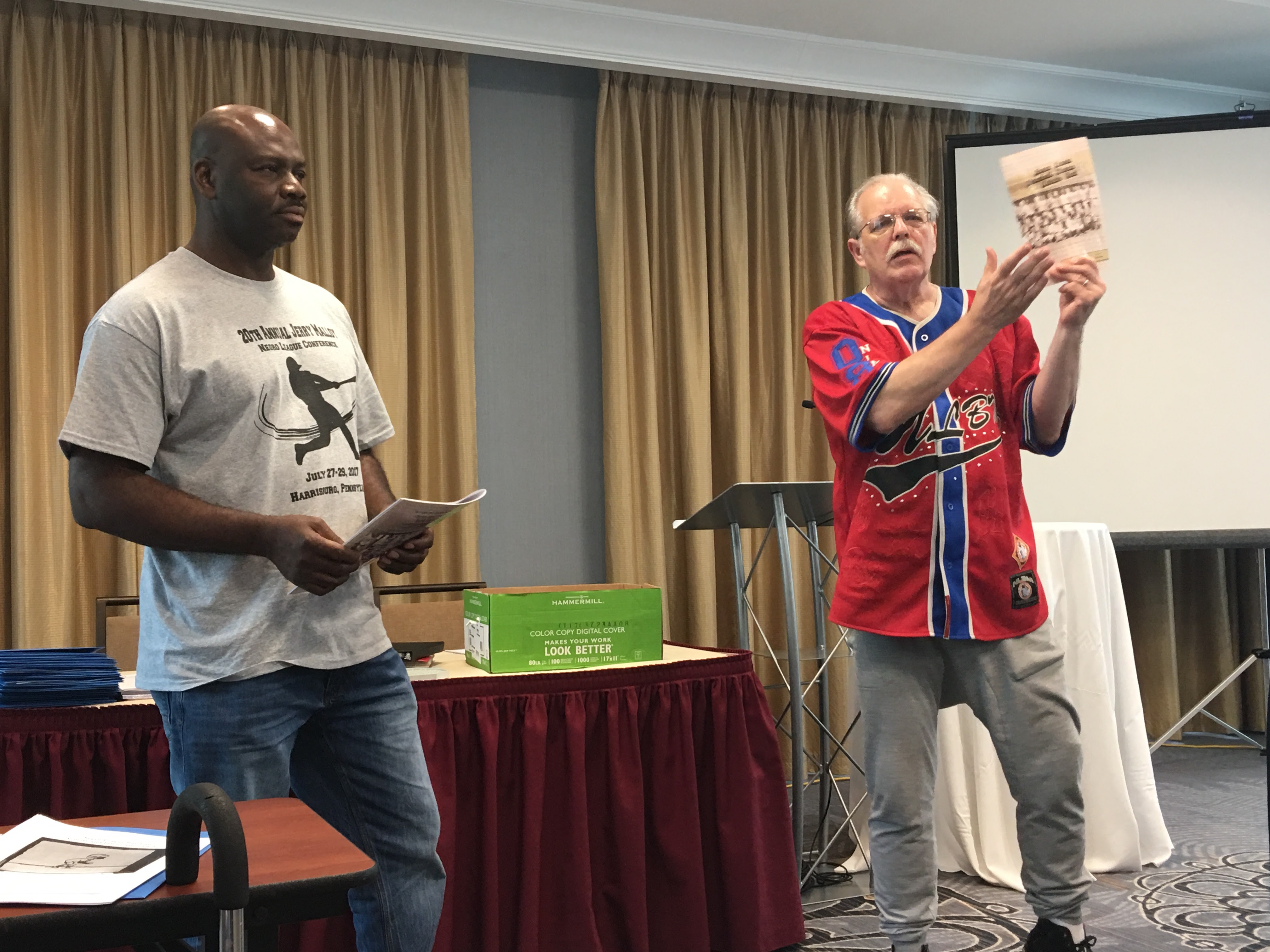
The presentations, as usual, were splendid and quite educational. In addition to the ones mentioned in the captions to the photos below, we had:

  • Rich Puerzer’s relating of the importance and legacy of Colonel William Strothers in Harrisburg blackball;
  • Jeremy Beer‘s revealing look at the man and off-the-field personality — the true personality, not the one glorified by writers of back then and today — of Oscar Charleston;
  • An alternative history of Negro League baseball, in which presenters Ed Edmonds and Michael Cozzillo tantalizingly speculated on what would’ve happened if Major League Baseball had expanded by accepting entire black teams;
  • Gary Sarnoff’s look at the role Bill “Chick” Starr — as executive of the then-PCL members Padres — played in the integration of baseball. In 1948 Starr signed catcher John Ritchey as the first black player in the PCL.
  • Mary E. Corey’s and Mark Harnischfeger’s fascinating presentation called, “Byways, Segues, Digressions and Detours,” which, according to their proposal, “focuses on a variety of off-the-beaten-path connections to our research into the social and economic impact of the Negro Leagues”;
  • Ken Mars’ summary of his in-depth baseball archaeology of pre-1890’s black baseball, including the city’s participation of the 1887 National Colored League. Here’s a link to some of his work;
  • One of my faves from the weekend — Paul Spyhalski‘s examination of the role black baseball played in early-20th-century Iowa resort tourism and how blackball helped make the tourism industry boom in the Hawkeye State.
  • Todd Peterson’s exhaustive statistical analysis of Negro Leagues’ top-level players to prove, numbers-wise — that blackball stars were indeed of Major League-level;
  • Bill Johnson’s heartfelt, personal look into the life and career of the great Art Pennington, who …
  • A similarly passionate examination of outfielder Jim Zapp by Bill Nowlin, Rick Busch and James Zapp Jr., who told the crowd how much Zapp Sr. inspired them personally;
  • A discussion by Emily Rutter, who made possibly the most intellectual and philosophically challenging presentation — the emotional and historical implications and impacts of August Wilson’s Pulitzer Prize-winning and Tony Award-winning play, “Fences,” as well as the Oscar-nominated movie directed by and starring Denzel Washington (who got robbed of his second Best Actor Oscar).

Melissa Booker (here with Derrick Jones) gave a nifty presentation on influential but overlooked Pittsburgh Courier writer William Nunn Sr.

Jeff Williams discussed the political philosophies and connections and how those factors influenced him and his dream of integrated baseball.

John Graf presented a fascinating hypothesis — what if a Satchel-led group of dozens of black ball players competed in a “fantasy league” for a season?

On top of the research presentations, the conference included three power special panels — a Q&A featuring Negro Leagues veterans Jim RobinsonKen Free Sr. and Sam Allen, moderated by Carmen Finestra and also featuring historians Calobe Jackson and Andy Linker; the Ted Knorr-hosted discussion on the stellar short film by emerging filmmaker Scott Orris, “There Were Giants,” about the 1954 Harrisburg Giants; and a culminating playing of Robert Peterson’s moving and immortal address at the very first Malloy conference (Peterson, of course, is the author of the seminal, “Only the Ball Was White”).

One more items: At Thursday’s meet-and-great, author Michael G. Long of Elizabethtown College narrated his efforts toward his new book, “Jackie Robinson: A Spiritual Biography,” about Jackie’s religious convictions and how he applied them during his career.

I’ll close out this photo-ganza with a handful of other cool pics, a lot of them from Saturday night’s dinner and award ceremony that featured a massive silent auction, a delectable barbecue buffet and music by the Mark Hunsberger Quartet …

Sherman Jenkins (with his stellar new biography of Ted Strong) and John Wakelin. John and I, tangentially, had a neat discussion earlier in the conference about a 1940’s-era photo John uncovered from Kosciusko, Miss., and John’s efforts to track down the photo’s baseball-related details.

Three generations of Charles Crutchfields (Junior, III and IV) after Charles III received the prestigious Fay Vincent MVP Award. The Crutchfields are relatives of the great outfielder Jimmie Crutchfield.

Donald Conway, Ruby Berryman and Phil Ross.

Jay Hurd, Susan Rayl, John Graf and Sherman Jenkins. Rayl’s in-the-works PhD dissertation is on the Harlem Rens, the legendary “black five” basketball team.

The last two are just really cool shots of the Malloy family.

Finally, here’s a couple self-indulgences — a beautiful signed print of Double Duty Radcliffe that I couldn’t afford but splurged on nonetheless during the silent auction at the banquet, and my goofy mug.

Really quick … some the other award winners:

  • Significa contest titlist — Rich Puerzer (his second title). Runners up were Todd Peterson and John Graf;
  • First registrants — Dan D’Addona, Jay Hurd and Roy Langhangs
  • Farthest Distance traveled — Missy Booker from Portland, Ore.;
  • Scholarship winners Jakez Smith, Sophia Dossin, Niger Reaves and Isabella Baynard;
  • Robert Peterson Recognition Award — Duke Goldman and Makayla & Jeff Klein;
  • John Coates Next Generation Award — Sherman Jenkins and Courtney Michelle Smith;
  • Tweed Webb Lifetime Achievement Award — Jim Overmyer, Calobe Jackson and Bryan Steverson;
  • Fay Vincent MVP Award — Charles Crutchfield III.

If anyone knows/remembers the other award winners, please let me know. I was too stuff with barbecue to retain memories!

Post-script: 2018. Where are we goin’ next year? The scuttlebutt has several locales tossing their hat into the ring, including St. Paul, Daytona Beach, Birmingham, D.C. … We’ll see who nabs the honors. Personally, I’d like Birmingham, cuz it’s in driving distance for me.

But, my hometown of Rochester, N.Y. — home of the Luke Easter SABR chapter — has expressed interest! Obviously, that would be my ideal choice, because my hometown is, well, awesome. The Red Wings (the Twin’s Triple-A team) would doubtlessly be glad to help out, or at least host us for a game. There’s also the short-season, Single-A Batavia Muckdogs (they’re in the Marlins system) maybe an hour away, and I might be willing to take a contingent out there for a game if possible.

OK, post-post-script: I wanted to point out links to some other neat posts put up on the Malloy Facebook page over the last few weeks. Check ’em out if you can! …

Unity in passion, strength in numbers

It’s been more than two weeks since the conclusion of the 2017 Jerry Malloy conference in Harrisburg, and I’m just now putting fingers to keys in reflection. It’s taken me so long, I think, because there’s been so many other things flitting through and swirling around in my head.

This year’s conference was a fantastic, rewarding experience — just what I needed as I tried to rebound from my crash-and-burn experience at last year’s version. It was incredible to see so many friends and fellow black baseball historians again this year. As the one and only Larry Lester says, “It’s nice to see family again.”

Plus, my roomie Ted Knorr put together and pulled off a remarkable, educational and inspiring event in his hometown. The poor guy ran himself ragged for four days — and that’s not counting the year of lead-up prep work he did before July 27 rolled around — but he hung in there and, with help from a whole bunch of compatriots and supporters, it was a smashing three-day experience. So, many congrats and huge thanks to Mr. Knorr and even else involved.

Since I returned to NOLA, however, I’ve been viewing this year’s experience in Harrisburg as a reprieve of sorts from what else has been going on in my life. In addition to the usual financial challenges — the perpetual woes of a freelance journalist and researcher are always floating over my head — the atmosphere and state of our nation as a whole has weighed upon me heavily, much as it has many others. Watching the incremental dissolution and crumbling of rational, respectful discourse, then our cherished electoral process, then our journalism, then our international relations, and finally our very spirit of generosity and understanding … it’s just been very hard to witness and process the decay of the soul of our nation without feeling a draining of my own optimism and faith in the future of our society.

And then what happened in Charlottesville Saturday … well, I can’t really speak for anyone else, but the violence and terrorism inflicted upon peaceful protestors by fearful, hate-filled bigots has affected me very deeply. Combined with the sudden, frightening threat of actual nuclear war with a poverty-stricken, despotic dictatorship halfway around the world, the Virginia tragedy has, in some ways, driven me into my own head, unable to understand or even grasp what’s happening around me, and around us as a country. It all seems like a nightmare, a horrific dreamscape from which I just want to withdraw and hide.

Nothing seems real, and nothing seems important, other than physical and psychological survival. Thus, over the last few days, it’s been very difficult to see how researching and writing about baseball history matters much right now.

The fact that Saturday’s eruption of evil was rooted in and fed by ethnic, cultural and racial hatred makes me ponder whether the dedication and work of me, you and others passionate about the Negro Leagues has really, truly made a difference. For years — and decades, for many of us — we’ve striven to learn about our nation’s cultural past, to understand our country’s mistakes in order to prevent them from happening again.

As black baseball historians and enthusiasts, we’ve tried to show people, through the lens of the American pastime, that all people are capable of great, courageous, honorable things, that wondrous achievements can be forged in the crucible of fear and hate, and that, ultimate, love, understanding and bravery can eventually triumph over darkness.

Because of this dedication — and the overwhelmingly positive response from the public, SABR and the average baseball — we, as a family of researchers, writers and fans, have come to believe personally in the notion that every one of us can always strive for knowledge, for learning, for personal betterment and the betterment of our society. We believe that one man or one woman — a Jackie Robinson, an Effa Manley, a Rube Foster — can make a difference, can change minds and win over hearts. We learn about such legendary figures, and they inspire us as individuals to make ourselves and our country better.

And then something like Charlottesville happens. Over the last excruciating few days, that tragedy — especially when laid upon all the other hate and fear that has piled up on our national psyche since a fool with fake hair and false notions of reality rode down an escalator to announce he wanted to be our “leader” — has made me wonder, “Jackie’s stoic pride, his potent bat, his fleet feet, his Herculean endurance of hate and bigotry, his steely character … was it all ultimately for naught? This is what he — and Rube and Sol and Josh and Effa and Oscar and Bud and so many others — fought for? For it all to come to this? To a nation torn apart at its very ideological and spiritual source?

Why bother trying to educate people, whether it be about baseball history or any other subject, if a stubborn, fearful, hardened minority will always do whatever they can to destroy any learning the rest of us try to offer and experience?

Why bother telling folks about how, for decades, black men and women who were shunned and rejected by white society and its Organized Baseball and forced to form their own units, their own teams, their own hardball families and scramble and scratch and claw to establish their own leagues, their own tours, their own identity? Why relate to folks about how African-American teams had to tirelessly criss cross the country, playing one or even two games every single day just to put food on the table and play the sport they love because white society refused their talents and passion?

Why relate tales of having to go around to the back of restaurants to accept scraps of food, about having to eat crackers and sardines on a cramped, smelly bus at 2 in the morning, day after day, night after night? Why tell people about these men and women who were sometimes literally just one step ahead of a hateful mob in white sheets and carrying torches, just because those men and women loved baseball — loved the American pastime — so much that they’d risk such challenges and terrors?

Why even bother telling people about those terrifying scenes — and the resulting triumph over them — that took place so long ago, when similar scenes are playing out at this very moment? Why try to show people the historical error of our ways when those errors are, in reality, not even history, but are now? This is how far we have come? This?

Why even bother?

Why even bother to pursue your passion, if that pursuit occurs in a societal vacuum of ignorance? Why bother to spread your enthusiasm and love of learning to others when so many won’t even listen?

Why even bother when horrific things like this keep happening? Why even bother to teach people who don’t want to learn? Why preach understanding when so many persist in hating?

Why care about history when that very history keeps leading to violence and fear, when that history continues to be irrelevant for so many? Why teach of the past when the present, the here and now, is so bewildering, dark and dispiriting?

Why?

Because of the Malloy. Because our annual conference reminds us, even briefly and in the darkest times, that togetherness and respect united behind a shared passion and faith can still make a difference. Because the love found in a family can truly be a beacon in the night, a lighthouse in a swirling, raging storm, a guide to better things.

Because in just three days, the 100 or so of us who gathered in Harrisburg showed what love and learning and respect can do. It can bring together people of different genders, different races, different sexual orientations, different backgrounds in the spirit of baseball — the true spirit of our nation.

Because the Malloy conference renews that spark of inspiration within all of us. Those 72 hours together reminds us that we are not alone, we are never alone in our pursuit of truth, knowledge and understanding.

And as long as we can hold on to that — and I know we all will — we collectively can find the strength and courage and passion to push forward with our mission. We can continue to fight for what we believe, for what we know, deep down, is true and just. We can, both individually and as a team, tap into and channel the spirit of No. 42 and show the world that, dammit, our souls will not be drained, our devotion to our fellow man and woman will never be dimmed, our lives will never lose focus or purpose.

We will soldier forward. We will not give up. And we will never, ever stop spreading the message of love and respect.


OK, with that out of my system, I’ll spend the next few days putting together a post about the Malloy that’s decidedly less serious and more fun. I’ll again put out a call for any pictures or other submissions folks would like to send me. I’d be grateful for whatever you want to share! Just email me at rwhirty218@yahoo.com. Thanks!

Malloy Conference: New Orleans, Rap Dixon and Gentleman

Rodney Page with Stella Wells. Thanks to Rodney for the photo.

Editor’s note: I wrote most of this post a couple days ago, but I’m just now posting it tonight (Wednesday evening) from the Harrisburg Hilton. Yep, I made it in one piece, and the friendly faces are trickling in. The festivities start tomorrow.

Giddiness is a funny state of being, a blend of joy, anticipation and mania that both excites and exhausts. When it strikes, barely contained happiness verges on irrational, reckless optimism. Any anxieties about the possibility of ultimate disappointment is shoved out of the mind and replaced by a somewhat forced belief that everything is going to be freaking awesome. It’s a frame of mind perhaps best vocalized by the late, much missed Flounder: “Oh boy, is this great?!?!”

Alas, I find myself unequivocally giddy right now. In about 24 hours, I board a plane en route to Baltimore, where I’ll then procure a rental car and motor to the Harrisburg Hilton for the 20th annual Jerry Malloy Negro Leagues conference.

It’ll be my sixth straight Malloy — following Cleveland (2012), Newark (2013), Detroit (2014), Pittsburgh (2015) and Kansas City (2016) — and every time I attend one, it’s like a homecoming. The Negro Leagues community is indeed a big family, and the Malloy conference is a joyous reunion.

Old friends exchange hugs, voluminous knowledge is exchanged, and passions are shared and celebrated. At the Malloy conference, one eternal truth becomes evident — fans are historians, and historians are fans. When you love the history of African American baseball, there’s really no distinction. Just the way it should be.

Unfortunately, for me, at times, attending the Malloy has been challenging for me. As someone who deals with bipolarism, mood disorders and anxiety issues, I become susceptible to periods of mania — such as giddiness — followed by crippling crashes into exhaustion and depression.

That’s happened a couple times with me at the Malloy conference. I’ve simply crashed and become unable to function and enjoy the proceedings like I wanted to. It’s a crushing, draining and embarrassing turn of events that triggers guilt for letting people down and depression for demolishing my plans, and the plans of others.

It happened last year at Kansas City, and it was not good.

As a result, I want this year’s conference in Harrisburg to be an amazing experience. I want to share the fellowship, savor the experiences and learn some pretty cool stuff.

Thus my current giddiness. And because, with me, giddiness often leads to crashing and burning, I’m also anxious about the conference. So, at this moment, I’m trying to mentally multi-task — tempering the negativity and anxiety while, at the same time, keeping a lid on the mania and, well, giddiness.

It’s a taut high wire to walk, but I know I can do it. We shall see.

Because there is indeed lots of cool stuff to look forward to this week …

First off, I convinced my very good friend Rodney Page to attend the conference this year. Rodney’s father was New Orleans promoter/owner/entrepreneur Allen Page, arguably the most important figure in black baseball history in these parts.

The gathering (including me and Rodney) to dedicate Wesley Barrow’s tombstone.

Allen was more than just a sports impresario and kingpin for three decades in the early to mid-20th-century Negro Leagues scene, but he became a player on the national stage as well — by creating and hosting the annual North-South All-Star Game, becoming president of the Negro Southern League, by buying and bringing the St. Louis Stars to the Crescent City (making them the only major league-level baseball team in Big Easy history).

Unfortunately, Allen Page is greatly overlooked, not just in New Orleans, but nationally as well. NOLA hasn’t really developed a reputation as a Negro Leagues hot spot, a disheartening situation that simply belies the rich, expansive blackball history here. For nearly a decade now, I’ve been working to change that.

Rodney has been a partner in that effort. He contacted me after I published this article in the Times-Picayune, and from there, we developed a close bond and friendship. I helped arrange an interview a few years ago with Rodney by a reporter at WWL in New Orleans, and Rodney gave much time and money toward the effort to place a headstone on the grave of NOLA manager extraordinaire Wesley Barrow.

Thus I’m thrilled that Rodney will be there in Harrisburg, especially because he’s agreed to share some of his memories of and reflections on his father and Allen’s legacy on New Orleans baseball. That will undoubtedly include tales of meeting the great Willie Wells as a child — El Diablo a close pal of Allen and a regular face at the Page Hotel on Dryades Street here — as well as his continuing friendship Willie’s daughter, Stella. (Both she and Rodney live in Austin, Texas.)

There’s even more NOLA Negro Leagues related stuff — this article I wrote for the Times-Picayune that came out today about the blackball in the Big Easy, including Allen Page.

And I know I’m piling side note on top of sided note at this point, but earlier this month I nominated Allen Page for induction into the Louisiana Sports Hall of Fame. If Page were to get the call from Natchitoches (where the LSHOF is), it would be pretty much the first time Allen would have received any sort of formal honor — at least over the last half-century — in Louisiana. Like I said, Allen Page has been overlooked, and massively so, for far too long, and that has to change.

There’s another reason the impending conference will be a milestone. With this edition, the Malloy marks its 20th anniversary, and it also comes full circle — the very first gathering two decades ago was in Harrisburg as well!

This year’s landmark conference is being arranged, coordinated and hosted by another good friend of mine — and yearly Malloy roommate — Ted Knorr, who hails from the Pennsylvania state capital. Along with Larry Lester and other SABR stalwarts, it looks like Ted has put together a bang-up baseball brouhaha.

Ted was instrumental in getting the first Malloy off the ground 20 years ago, and he’s been a dedicated, knowledgeable member of the committee ever since (including running, and providing many of the questions for, the annual Significa contest on the final day of the conference). For his longtime, hefty contributions to the Malloy and to SABR, last year Ted received the prestigious Fay Vincent Most Valuable Player Award from the Negro Leagues committee at Kansas City. In a massive understatement, it was well earned.

Ted at Rap’s grave

Part of Ted’s extensive involvement in the Negro Leagues commitment is his signature mission — to teach, promote and honor the legacy of Herbert Allen Dixon, better known as Rap, one of the most accomplished and talented outfielders in Negro Leagues history. (Here and here is info about Dixon.) Rap was a key cog in the great Harrisburg Giants teams of the 1920s, and, like Ted, he called Harrisburg home.

On Thursday, Ted will lead a tour visiting some of the key locales in Rap’s life, such as his grave, which now has a beautiful headstone thanks to the efforts of Ted and a whole crew of fellow volunteers.

On top of the Malloy news, I’ve experienced a bunch of other happenstances over the last few months …

That right there is a copy of the contract Gentleman Dave Malarcher signed with the Chicago American Giants for the 1926 Negro National League season. And yep, that’s the one and only Rube Foster’s signature on it as well.

I had the opportunity to dig this treasure out — along with a whole bunch of other Malarcher nuggets — when I visited the archives of Dillard University to research a story on DU’s founding. Dave was a Dillard alum — actually, he was a graduate of New Orleans University, one of the two NOLA HBCUs that merged to form Dillard — and he donated many of his personal papers and photos to his alma mater later in life.

This was actually the second time I’d seen the Malarcher file — I dove into it several years ago for an article I whipped up for the Dillard alumni magazine about Gentleman Dave.

Pluuuuuuuus, earlier this summer I visited the mighty metropolis of Union, La., Dave’s hometown along the Mississippi River levee. While I was there, I tracked down and trekked back to his brand new tombstone that was erected after he was posthumously inducted into the Louisiana Sports Hall of Fame. Here’s that pic:

I’ve since been mulling over working on a longer project about Malarcher, maybe even a book about the wily third baseman and manager. So we’ll see where that heads. …

Finally, many thanks and congratulations to Doug Schoppert, who gave a remarkable presentation about Louis Armstrong and Satchmo’s love for baseball last month at the SABR 47 conference in NYC. I was happy to help out Doug out, very humbly, with preparing for his presentation by offering my research about Louis’ own semi-pro baseball team in 1931 New Orleans, the Secret 9. A link to an audio recording of Doug’s presentation is here — just scroll down some to find the paragraph on him.

Alrighty, that’s enough damage to your retinas for now. I’ll try to blog a bit from Harrisburg when I can, but I make no promises. There’s just too much cool stuff on the agenda.

Catharsis in Frankfort, courtesy of Bud Fowler

The drive between Albany and my hometown of Webster, N.Y. (just east of Rochester along Lake Ontario), is interminable. It really is. I’ve made that tedious, seemingly unceasing trek down I-90 — otherwise known as the illustrious New York State Thruway — dozens of times.

I made numerous trips home from Holyoke, Mass., where I worked for two years at a weekly paper. Then, when I was living in Rochester again, I had to drive east from ROC on I-90, then head up the Northway, a.k.a. I-87, to visit a good friend in Plattsburgh.

Errgh! I hate driving the Thruway. Loathe it. Not only is it supremely boring, but the exorbitant tolls amount to state-sponsored highway robbery.

Thus what happened last month. I spent six days in early June in Millinocket, Maine, for my grandmother’s funeral. For several reasons, it was an exhilarating, emotional, sorrowful, celebratory and draining six days, and by the time I was ready to drive home in the spiffy minivan I bought from my grandmother’s trust — for a single buck — I was quite weary but excited to spend a few days visiting my mom in Rochester.

I split it up into two days — I used to be able to drive 14 hours in the dead of night to various destinations, but I ain’t no spring chicken nowadays — and the first one was miserable, largely because good chunks of Massachusetts just outright suck.

For the second leg, I drove from a hotel just west of Worcester — that’s pronounced “Wuss-ter,” you know — to my hometown of Webster, a benumbing stretch that included the aforementioned part between Albany and Syracuse.

And I wanted to break that expanse up somehow. Naturally, my personality being a pleasant blend of morbid and reverent, that meant stopping in Frankfort, N.Y., for a black baseball legend’s grave — that of none other than the progenitor himself, Bud Fowler.

First, another lengthy sidenote … There’s two basic New Yorks. There’s “downstate,” which is essentially New York City, Westchester County and Long Island, in my view. Then there’s everything else — and that’s a lot more than many people realize — that’s known as upstate. Pretty much everything to the north and west of the Big Apple is considered “upstate,” although there are different distinct regions, such as western New York (Buffalo, Niagara Falls, Rochester, Jamestown; central New York (Syracuse, Utica, the Finger Lakes, although the lakes could also be considered western NY); the Southern Tier along the Pennsylvania state line (Binghamton, Elmira, Ithaca), the capital region and Tri-Cities (Albany, Rome and Schenectady), the North Country (the entire Adirondacks and stuff along the St. Lawrence River) and the Hudson Valley (between Albany and Westchester County).

And these two parts of the Empire State … They’re simply two different worlds. Downstate is, of course, very urbanized and wealthy suburbanized, while much of upstate is pastoral, farming country, with lots of cool natural and recreational outdoorsy-type opportunities.

There’s also an overarching perception among upstaters that downstate — namely, New York City — perpetually screws upstate be draining all of the government’s resources and causing the absurdly high property tax rates across the state. In essence, there’s a bitterness among upstaters toward NYC based on the idea that upstate essentially subsidizes all the “elites” in New York City. (Many conservative white upstaters, too — let’s face it — loathe downstate, especially NYC, because of their perception that the various minorities “in that hellhole” are freeloading mooches who siphon off the hard-earned money of diligent, honest — read: white — upstate folk.)

What’s my biggest New York demography-based pet peeve, though? Frankly, I often resent the fact that when I’m in other parts of the country — and this is more my frustration with the the hordes of non-New Yorkers out there in the big wide world — and people ask me where we’re I’m from, I can’t simply say “New York,” because many of outsiders automatically assume I mean New York City. I don’t, dude. And that’s really, really irritating, you know.

As a result, whenever I’m asked where I’m from, I never say just, “New York.” I say “Rochester” or “upstate New York,” because 1) I’m very proud of my hometown, and 2) I don’t want people to think I’m a typical New York City dude.

(You can place whatever characteristics and demographics you want on what “New York City” people are, because, as I said, there’s bitterness and distrust, including from the rest of the country as well. Oh, also, an anecdote: Sept. 11 happened early in my first semester of grad school at Indiana, and that’s when I perhaps became most keenly aware of the rest of the country to conflate “New York” as just the city. One evening I was getting a tasty beverage at a mini-mart, when a Bloomington townie noticed my New York license plate and, out of an earnest, heartfelt effort at national unity, said, “You’re from New York? Oh man, I’m sorry about what happened. Well, we stand with you, man. We love New York.” I was very touching, and I couldn’t be angry at the guy because he was obviously sincere, but Rochester is about five or six hours away from Ground Zero. However, and at the risk of sounding like an ungrateful snot, pre 9/11 many people from the rest of the country sneered at New York as a bunch of liberal elites and welfare queens who didn’t care about or respect “real Americans,” as Sarah Palin would so perceptively note. Then 9/11 happens, oh, and everyone’s lovey-dovey with the Big Apple. Yeah, and that goodwill didn’t last very long — within a couple years after 9/11, it seemed like everyone was back to the New York-bashing. The hypocrisy burned my bottom. Or, as Peter Griffin says, “You know what really grinds my gears?”)

But holy cow, I digress …

Thus, in my caffeine-addled mind, Bud Fowler is undoubtedly an upstater like me, and I like to think that Bud was just as proud of his original stomping grounds as I am mine.

Born John W. Jackson in Fort Plain, N.Y., in 1858, and raised in Cooperstown, Fowler was, I believe, an upstate New York kid at heart. It’s why he always seemed to return to the Empire State time and again. No matter how far he ventured, no matter how many teams in no matter how many states, Bud always came home. As sort of an appendix, I included a few examples of newspaper and other reports, both contemporary and modern, of Fowler’s baseball activity in upstate New York post-1900 at the end of this article.

Arguably his most well known — and infamous — venture in New York came in late 1886, when he signed with Binghamton of the International League, one of the country’s top minor-league loops.His already sterling record as a player and teammate, gained from nearly a decade of sweat and dirt on diamonds across the Northeast and Midwest, didn’t matter — during the 1887 season, his white teammates pitched a bigoted hissy fit and demanded Fowler get the boot.

So gone he was. And very swiftly, and semblance of integration in Organized Baseball was gone as well — by 1890 or so, the racial curtain had fallen on the national pastime, and people of color were shut out of the game’s mainstream, a state of affairs that would painfully drag on for well more than a half-century.

Interesting, 21-years-too-late post-script: In January 1908, the Binghamton Press and Sun-Bulletin published a gushingly laudatory commentary by a dude dubbed Forty-Niner, who credited Bud with being a brilliant advertising impresario, making particular note of his Page Fence Giants venture. It’s probably an accurate assessment — in addition to be a multitalented athlete and a vigorously ambitious entrepreneur, Fowler was an incredibly savvy promoter and skilled self-marketer, a fact evidenced by his ability to solicit media coverage for his various ventures across the country.

The newspaper commentary, however, dives neck deep into duplicitous historical revisionism by claiming that Binghamton was proud of Bud’s association with the city, an assertion that, to say the least, completely glosses over the way the same city used bigotry to run him out of town 21 years earlier. Forty-Niner, whoever he (or she) was, even has the chutzpah to ludicrously claim, “The fact that ‘Bud’ is from Binghamton is not allowed to be overlooked. Hence it is that, in his modest way, Mr. Fowler has been, through his wide travels, a very effective advertiser of his home town.”

Right.

The article adds:

“Be it known that Bud is, or rather was, a baseball player of parts. During an active career of 25 years on the diamond he played in about every city in the country where baseball is admired, and played with or against a good share of the baseball phenomenons of the day, many of whom still loom large in the baseball sky. ‘Bud’ is a ‘man and brother’ whose skin is black but whose heart is white, and whose manners and conversation testify to a good life. …”

So for 1908, I guess that’s more or less a compliment, if a bit patronizingly, although it strongly insinuates that having a “heart that is black” (as in African-American, not evil) isn’t a good thing.

So, after leaving Binghamton, Bud Fowler became a baseball nomad, venturing hither and yon and back again in search of a way, any way, that he could play the game he cherished. He sporadically trying to establish black leagues in various states (none of them got off the ground), and hitching with white teams outside of Organized Baseball when and where he could.

Probably the apex of that lifestyle came in 1895, when Fowler became a founding member and manager of the Page Fence Giants in Adrian, Mich. The Giants, for a few fabulous years, became one of the best 19th-century black baseball clubs, a star-studded superpower that barnstormed across the Midwest and Northeast, taking on all comers.

However, Bud jumped off the Page Fence train in 1896, beginning what was described researcher/author Peter Morris as Fowler’s “lost years.” In an exhaustive study published in the fall 2009 edition of the journal, “Black Ball,” Morris noted that, even well into the 21st century, much of Bud’s final 18 years of life had been clouded in mystery. For his article, Morris delved into newspaper and magazine archives, Census records and testimonies from Fowler’s contemporaries to assemble many of the pieces of Bud’s post-1895 puzzle. Wrote Morris:

“While many questions remain, the overall picture of those years has come into much clearer focus, Bud Fowler remained devoted to baseball and tried to remain involved in the game through promoting a wide variety of imaginative ventures. In the years after 1895, when daunting obstacles of racism and insufficient capital thwarted many of his attempts to promote baseball clubs and barnstorming tours, he turned increasingly to the idealistic notion of the far west as a land of equality of opportunity. Despite the treatment he received, Bud Fowler never lost his passion for baseball and never gave up hope that the day would come when ballplayers would be judged on their merits rather than the color of their skin.”

We’ll jump ahead to the last few years of Fowler’s life, when he returned to upstate New York — Frankfort, to be precise — to live with his sister, Harriet Odams (several other spellings, such as Odum, of her last name exist), who had married a man named John Odum, a tool grinder (not sure what that is, but it sounds like a job in which one’s extremities might always be in jeopardy of being separated from the rest of him)  in roughly 1901. By 1910, John and Harriet — who, at 50 years of age in that year’s Census, was 14 years older than her husband — settled in Frankfort, N.Y., in Herkimer County, on the Tow Path, or Tow Path Road. (Tow paths were pathways running along the Erie Canal that allowed mules to pull, or tow, ships and boats down the Erie with rope from the shore.)
The 1910 Census report with Harriett and John Odum/Odams in Frankfort. Bud isn’t listed on it.

And that’s where Bud headed after he realized that, at long last, he’d come to the end of his baseball career as he headed north of 50 years old. He wasn’t in the best of shape, either — a debilitating malady racked his body by the end of the 19-oughts. It was first believed, thanks to a sensationalistic article in Sporting Life magazine in 1908, to be consumption, or, as it’s known today, tuberculosis. That report proved erroneous, and in 1909, Sporting Life reported that the cause of Fowler’s affliction the puncturing of a kidney by a broken rib earlier in his life.

(The source of the injury appears to be in question; Sporting Life asserted Bud received the pulverizing blow during his career with a particularly nasty collision when stealing second, but Morris and others speculate the critical blow when he was brutally beaten and robbed by a gang of tramps on a freight train in 1898.)

Bud’s condition deteriorated, and he died at his sister’s house in Frankfort on Feb. 26, 1913, officially from pernicious anemia, a rare blood disorder that’s apparently rare in the black population.

Soon after Fowler’s death, scattered obituaries — many of them a single paragraph — appeared in newspapers in the region. The Amsterdam Evening Record and Daily Democrat, for example, noted that for a year or so Bud operated a barbershop in that town “in the Flatiron building at the corner of Market and Shuler streets … and was well known here.”

The Gloversville Morning Herald, meanwhile, under the headline, “Was Well Known in This Vicinity,” related some surprisingly detailed local anecdotes:

“Jackson was well known in this city, having spent some time in this vicinity two years ago. He camped at Vandenberg’s pond at that time and had a number of boats which he rented to fishermen. During the cold weather he came to this city where he worked at the barbershop of Adelbert Dana … He left here for New York, where he was taken ill and later left the metropolis for Frankfort, where he died.”

Up in Watertown, along the east shore of Lake Ontario, one paper (I can’t figure out which one right now) erroneously dubbed Fowler “the last negro to play on a major league club before the edict against members of that race taking part in organized baseball went into effect” (Bud never played in the majors, a snag that’s probably kept him out of the Hall). The article went on to call him a former member of “the Boston team,” adding that Fowler “was playing with the then world’s famous White Sox” before organized baseball gave him the heave ho. The article doesn’t detail what it meant by those team references.

Bud was buried in an unmarked grave details in Oak View Cemetery in the village of Frankfort, just up a small hill from the village’s downtown.

Fortunately, 70-plus years later, resolute SABR members raised enough funds to erect a modest but elegant tombstone on Fowler’s grave. The dedication seems to have earned modest coverage from the local and national media. Here’s an excerpt from a July 23, 1987, United Press International wire story written by Elizabeth Shogren:

“On Saturday, the day before the Baseball Hall of Fame in Cooperstown inducts Jim ‘Catfish’ Hunter, Billy Williams and former Negro League star Ray Dandridge, the game will remember Fowler in a most basic way.

“A simple tombstone will be erected on Fowler’s grave in a pauper’s field in Oak View Cemetery, just a few miles from where Alexander Cartwright invented the game.

“‘If it hadn’t been for fellows like him, breaking the color barrier would have been delayed a long, long time,’ said Monte Irvin, a star of the Negro Leagues and the New York Giants who is enshrined in Cooperstown.

“‘It was quite a fight for blacks to play. Fowler had such vigor and desire to participate, he didn’t mind taking the abuse,’ said baseball historian Bob Davids. ‘But he is buried in an unmarked grave. He should get some recognition.’”

With that, Davids touched on a key, recurring theme — and perhaps touched a nerve within modern Negro Leagues circles — about the way Fowler has been remembered (or hasn’t been) in his native region in upstate New York.

It’s now three decades after that, and, sadly, Frankfort itself has done little to recognize, remember and honor Bud Fowler and his baseball legacy. When I visited Bud’s grave during my trek across New York State, I stopped to ask for directions at a small mini-mart/gas station, and no one I spoke with there had ever heard of Fowler.

Thus, I reached out to a couple village of Frankfort officials, including Mayor Rick Adams, who answered me with an enthusiastic but disheartening e-mail, one that confirmed my suspicions about the status on the ground there. Adams wrote:

“I am aware of him but truly don’t know much about him other than the fact that he is possibly the first African American Major League Baseball [Bud never played in the majors, a thorny fact that’s largely responsible for his failure to be inducted into the Hall of Fame in Cooperstown] player, and my understanding is he passed away in Frankfort after an illness. I’ve heard he is buried here but never confirmed that for myself.

“We do have a very old cemetery within the village of Frankfort so it’s possible he is there. The town of Frankfort is very large in square miles so if he was in the town I really don’t know if many cemeteries other than one on Higby Road. Unfortunately we do not currently do anything special. I’m not sure if he’s very well known other than maybe some long time residents and sports enthusiasts.”

While Adams’ answer is a bit dispiriting, it’s certainly understandable; in terms of general history, Bud Fowler isn’t exactly found in history textbooks in the nation’s classrooms.

Still, it’s perhaps emblematic of upstate New York’s dereliction in honoring one of its most influential native sons. On that note, I emailed Jeff Laing, whose comprehensive 2013 tome, “Bud Fowler: Baseball’s First Black Professional,” is now the definitive biography of the man and the legend. And, as it turns out, Jeff is an upstater, too — he was born and raised in Troy; got married and went to college in Albany; and earned his first teaching job in Schenectady.

Partially inspired by his shared geographic roots, Laing researched and wrote his book, and, not unexpectedly, came to a similar conclusion as me — Fowler’s native state, including Frankfort, has done a woefully inadequate job of recognizing Bud. Jeff emailed:

“I believe that Bud Fowler is an untapped historical resource in the Herkimer-Ilion-Utica area. I never found anything of substance on local awareness (though I never focused much on Fowler’s personal life and Upstate NY presence). … SABR’s 1987 grave service with Monte Irvin is all I ever found.”

This is all in contrast to the impressive job Fowler’s birthplace, Cooperstown, has done in venerating Bud’s connection to that village, including a festive 2013 ceremony in which one of the streets leading to legendary Doubleday Field was renamed Bud Fowler Way.
File photo (I wasn’t there)

About 10 local politicians and roughly 50 fans and residents turned out for the the celebration as Bud’s legacy was marked with the unveiling of a permanent plaque and information kiosk on the formally-declared Bud Fowler Day in Cooperstown. In his April 25, 2013, article covering the event for the Cooperstown Crier, reporter Greg Klein quoted several officials who commented during the ceremony.

John Thorn, Major League Baseball official historian: ”It strikes me that this is Jackie Robinson week but Jackie walked across a bridge that others built. If Jackie Robinson walked across a bridge, he also would have walked across Fowler Way.”

Then-Congressman Chris Gibson: “I don’t think I can fully appreciate what his life was like. We all have challenges in life. I know I have had my share of challenges, but none of them compare to the challenges he faced in his life. He refused to accept someone telling him no. When he died, he left this world a better place because of the challenges he faced.”

Cooperstown Mayor Jeff Katz: “I certainly think of myself as a serious baseball fan but it was not until I moved to Cooperstown that I learned the story of Bud Fowler.”

(In addition, the Doubleday Field hosts the Bud Fowler Tournament, an annual high school baseball gathering featuring several local and regional teams.)

Katz learned, as did the whole town of Cooperstown, about Bud Fowler. Why can’t others?

A momentary divergence for a brief rundown on Frankfort and Herkimer County, which is crucial to picturing the atmosphere in which Bud Fowler found himself at the end of his life …

The county itself is a thin, north-south area between the Tri-Cities to the east and Utica to the west, with the northern half containing a portion of the Adirondack Mountains and the lower half extending just south of what’s now the Thruway. Today, its population sits at roughly 64,500; in 1910, when Fowler lived there, it was about 56,300. The black population seems to always have been relatively miniscule; on the 1910 Census record for the Odums, the entire rest of the page, except for a neighboring family, is white, and today, African Americans represent less than 1 percent of the county’s population.

Meanwhile, the village of Frankfort — different portions of which rest on the south banks of the Erie Canal and Mohawk River, respectively — is a separately designated municipality as the surrounding town of Frankfort. In 1910, the total population stood at about 3,300; it’s just 2,600 these days, with a paltry 0.04 percent being African-American.

According to an online history on the town and village of Frankfort, an Ancestry.com-sponsored genealogy site states that shortly after Frankfort’s inception way back in the 1790s, early saw, paper and grist mills popped up, but eventually dairy farming, especially cheese production, became the backbone of the local economy. Dairying is extremely common throughout New York State, with farms large and small covering the hilly, verdant landscape.

As for the village of Frankfort’s industrial and commercial development, states another Ancestry piece, whiskey, gunpowder and sulphur factories popped up at first, but when a railroad line was created in the village, a foundry, paint and carpentry shops, creating a flourish commercial and economic base downtown. But the departure of a few industrial facilities created some financial disruption and reassessment by the time Bud Fowler arrives in the 19-oughts.

Demographically speaking, German migrants formed much of the town’s population, but the arrival of the railroad and its construction attracted a large influx of Italian immigrants who sought employment. Today, more than 44 percent of the village’s current residents have at least some Italian ancestry, so the village seems to always have had a fairly diverse populace, at least in terms of white ethnicities.

In terms of sheer population figures, in 1910 (when Bud lived there) the village boasted about 3,300 residents; in 2010 that number was pegged at about 2,600.

However, drawing out gave outward a bit more, Frankfort — and Cooperstown, Fort Plain and other towns associated with Bud Fowler — rest in the geographic region called the Mohawk Valley, so named after the Iroquois tribe that populated the area before being pushed out by German, Italian and other European immigrants.
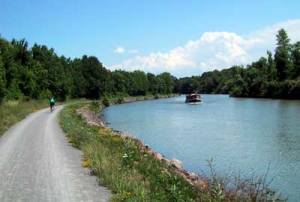
Erie Canal and tow path

Located pretty much smack dab in the center of New York State, the Mohawk Valley is often described as tying together — much like the Dude’s rug — the Capital region, the Southern Tier and the Hudson Valley, and serving as a bridge between the Adirondacks and the Catskills. The region is sprawling — it incorporates six counties (Oneida, Herkimer, Otsego, Fulton, Montgomery and Schoharie) and small-size urban hubs like Utica, Rome and Amsterdam.

But the Mohawk Valley, beyond its geographic significance, holds just as much cultural and, especially, economic import; as the home to the Mohawk River and the innovative Erie Canal, for the last two centuries the region has been a vital shipping, transportation and industrial link in the state. Here’s how the travel Web site mohawkvalleyhistory.com describes it:

“The Mohawk River corridor through the center of the region is the easiest, most direct route between the Atlantic seaboard and heartland America. This key geographic passage was hotly-contested territory, and a huge factor in shaping the history of our American nation from earliest times. …“The legendary Erie Canal, a technological wonder of its era, was built here taking advantage of the convenient path nature carved through the eastern mountain range to construct a more modern transportation waterway. This reinforced national ambitions, expansion of America’s western frontier, and the westward spread of eager settlers, commerce, and the Industrial Revolution. Construction of the New York Central Railroad and New York State’s I-90 Thruway followed. Millions of people now wend their way through this picturesque landscape year-round.”

So that hopefully draws a basic, and admittedly a very novice one, of the atmosphere in which Bud Fowler found himself.

Now, more than a century later, I hopped off the Thruway at exit 30 (the tolls were a perfectly reasonable $5 and change) to track down the grave of John W. Jackson, aka Bud Fowler, in Frankfort.

Using Siri, that most lovable of iPhone guides, I motored west on State Route 5S, parallel to the sleepy Mohawk River, weaving through rolling hills and past cow pastures, then veered off onto Main Street in Frankfort.

The village is relatively small and modest, maybe a two or three miles in length down Main Street. I know because I got to see it three times — in search of a cemetery, any cemetery, I drove all the way through the village, into some more rolling hills and cow pastures and realized that my powers of perception probably were as good as a professional, working journalist needs them to be.

I turned around in a gravel driveway and headed back into town, inexplicably passing up the road marked “Cemetery Street” a second time and necessitating the aforementioned stop at a gas station.

The small parking lot included a truck or two with Trump bumper stickers — I told you upstate is a whole different world from the Big Apple — and inside was an extremely friendly but not particularly helpful cashier who, as previously stated, hadn’t heard of Bud Fowler and wasn’t sure to which cemetery I was referring.

I was a bit flustered — a normal state of mind for me — but fortunately a customer directed me to the only cemetery of which he was aware. He instructed me, with a somewhat quizzical look on his face, left down Main Street and then left up a steep hill. “You can’t miss it,” he said. “It’s a big hill.”

Of course, I’d apparently missed this hill twice already, which didn’t inspired confidence in myself to find it this time. But I shook his hand and thanked him for the help, somehow resisting the urge to buy at least two Snickers bars in the process.

Fortuitously, I actually saw the indications for the cemetery and headed up a hill. The road, lined with ranch houses and well kept lawns, ran right past Oak View Cemetery, which was laid out on the right (north) side of the byway.

I turned down the westernmost dirt and gravel driveway into the burial ground, which appeared to be well kept — if a little time-worn and weather-beaten — and nestled in a shallow valley. The plots, like most stereotypically pastoral cemeteries, were a mix of tall, ornate obelisks and simple, flat, rectangular grave markers, some dating back a couple centuries, several just a year or so old. Here’s a pic I took looking down a path:
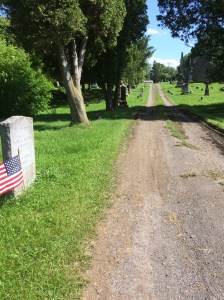
I loved it. I was absolutely heavenly.

(Yet another “quick” side note … Oak View Cemetery apparently fell on some hard times in the years after the SABR ceremony for Fowler. In 2011, the Utica Observer-Dispatch reported that, because the non-profit association in charge of Oak View ran out of money, causing volunteers to take care of maintenance, especially lawn mowing, themselves. However, they couldn’t keep up with what was needed, and the cemetery board eventually dissolved, kicking responsibility for the work to the town government, which now awards annual mowing contractors to an outside firm that then performs 10 mows a year.)

Alas, I’d chosen the wrong path to go down, because, contrary to common sense and all of my experience finding famous graves and just wandering blissfully through these testaments to history, I hadn’t done any prep work beforehand and failed to remember that simply wandering around aimlessly through a cemetery in search of a single grave usually doesn’t result in, “Hey, here it is! Imagine that!”

It was a bit warm as well, but at least not steaming-sauna boiling (i.e. normal New Orleans weather), so at least I hadn’t turned into a human version of those commercials featuring delectable, frosty cans of refreshing soda just dripping with luscious condensation (i.e. my normal state in New Orleans).

Plus there’s Find A Grave! Find A Grave is one of the coolest things to ever be invented by anyone. The entry for Bud Fowler’s burial locale states that the plot is along the “northernmost entrance, right side.”

So I drove down the prescribed alley — and couldn’t find it. I even hopped out of the car and started wandering, a strategy that had worked so well just five minutes earlier.

But wait! Find A Grave has a picture of the tombstone! Seriously, this Web site is more stupendous than six hours of cartoons on Saturday mornings. (They still have that, right?)

From the pic, I deduced that the grave was right along the side of the driveway, and, suddenly, voila! There it was.

I stood in front of the marker for a few minutes, paying my respects to one of the most influential yet overlooked figures in the history of our national game. The air was breezy, and the trees that came right up to the edge of the cemetery — and, in fact, had engulfed some of the older, forgotten graves — swayed silently.

These are the moments I relish. For me, cemeteries and grave sites symbolize and embody the memory of those interred there, hopefully in a modest but stately way. (I say “hopefully” because, as anyone who’s involved in or even just familiar with the Negro League Baseball Grave Marker Project, such a serene state in death frequently eludes many people, both famous and obscure.)

Plus, this was my second cemetery within a week. Just a few days before, I had stood at my grandmother’s grave in the dying mill town of Millinocket, Maine, on a day when the miniscule, swarming black flies typical to early summer in the Pine Tree State swirled frantically in my family’s faces, and a steady drizzle of rain held off just long enough for us to finish the memorial service for Gram and get in our cars for the slow drive back to my grandparents’ house.

My few days in Maine had been fulfilling — it gave me, for example, an opportunity to hang out with my whole family, including my niece and nephews, and I was able to go through my grandmother’s photo albums and family records, including those relating to our Newfoundland ancestry, of which I’m fiercely proud and which will hopefully lead to a written project in itself.

But my time in Maine was also draining and dour. In addition to saying goodbye to our grandmother, the visit to Millinocket represented what in all likelihood be our last visit to a place that had played such a vital role in our lives. When we were kids, our family would spend a week every other summer at our grandparents’ cozy cabin right on the idyllic, forested shores of South Twin Lake, our days spent swimming in water that was clean enough to drink straight from the source, lazily fishing for white perch on a rowboat (it’s where I fulfilled most of the requirements for my Fishing merit badge) and sitting on the dock at desk, gazing at majestic Mount Katahdin in the distance as the sun slipped below the horizon and lit up the northern Maine sky like flame in a campfire.
That’s Katahdin in the background. That’s my sis on the right. And my dad’s arm. Plus water and rocks.

And this trip to Millinocket, the one in which we sadly buried our grandmother and said goodbye to our uncle, was also our last one, and that stung. It all did.

So by the time I stood in front of Bud Fowler’s grave, I was still recovering from that exhausting experience. In truth, it wasn’t the boring drive along the New York Thruway that sapped my strength and attention. It was the reluctant acceptance of loss — creeping, crushing loss.

Because of that, I feel like I needed to stop at Bud Fowler’s grave, not really because I needed a break from driving, but because I needed a catharsis, a way to release the pent-up sorrow and hurt I’d pent up the week before — the sadness I held in because I wanted to seem strong for my family, to show them that I could stand tall amidst emotional trial, especially given my often crippling mental illness, depression and anxiety.

After about five minutes of quiet reflection at Bud’s burial site, I got back in the minivan and wound my way back to the Thruway. (I deeply apologize to the two women I impatiently accosted for directions after getting severely lost — thanks a lot, Siri — and worked up into a minor lather of frustration and exhaustion.) I made it to Rochester, where I visited my mom for six days and had a relaxing, reinvigorating time. Then it was a three-day drive back here to NOLA.

Now, with the Jerry Malloy Negro Leagues conference coming up in just a couple weeks in Harrisburg, I’m getting rested and ready to move forward, cautiously yet confidently. It’s what my grandmother did during her long but frequently arduous life, and it’s what Bud Fowler did, time and time again, in baseball. Especially in upstate New York, time and again. Fist bump to you, Mr. Jackson.

APPENDICES

I.

As promised, here’s compilation of some early 20th century articles about Bud’s activities in his home state. I want to note that for some of the dates, scores and other numbers, I gave my best approximation when the type on the page was too blurry or obscured for my feeble, Coke-bottle glasses to discern.

I also stress that this rundown is by no means comprehensive, and in many cases it’s just the bare bones description of the events in question, sometimes without all the background and contest. For such detail, I highly recommend the work of Laing and McKenna, among others. Beyond that, my notes are in brackets:

May 14, 1895, Elmira Star-Gazette — The paper stated: “Anson [presumable Cap Anson] has a rival. Bud Fowler, the second baseman of the colored Page Fence Giants, is forty-eight years of age [actually not even close]. He has been playing ball since 1869 [also not close, unless his team wanted a second baseman who didn’t shave yet].”

May 21, 1901, Auburn Bulletin — Barnes’ American Colored Giants — piloted by Fowler, “late of the Cuban X-Giants” — preps for a three-set series at Norwood the week. The slate will have the Giants budding heads with, among other, a club from Weedsport that apparently had been shifted in its entirety from Allentown, Pa. — so essentially a bunch of ringers, maybe?

April 15, 1909, Ilion Citizen — The Citizen, in a front-page cluster of baseball articles no less, noted: “‘Bud’ Fowler is getting together at Frankfort an all colored team who will open the season with the typewriter artists [probably from the Remington Typewriter Works] Sunday, April 25th.” The article references the Utica State League and claims that the Ilion Typewriter Works team “is the strongest semi-professional team in the valley.” It’s not entirely clear whether the Utica State League references a city-wide circuit or Utica’s entry in that year’s New York State League, the Pent-Ups. (This baseball coverage, by the way, shared the front page with, among other items, an article about a two-headed calf.)

April 16, 1909, Syracuse Herald — The Herald previews the impending launching of the 1909 baseball season in the city of Oneida by highlighting an upcoming clash between Fowler’s Black Tourists and the local Holihan’s Pets club at Citizens’ Park. The Pets squad includes a bunch of studs from Syracuse, included the Syracuse U. varsity team. Holihan’s is prepped to “cross bats with the fast Colored Giants of Frankfort. This team has been gathered together by ‘Bud’ Fowler, an old-time colored ball player, and is said to be the equal of other colored teams touring the country.”

April 19, 1909, Utica Herald-Dispatch — Bud just organized another incarnation of the Black Tourists with the help of a dude named “Tead” Pell of the Deerfields [likely a squad from Deerfield in Oneida County]. The aggregation, scheduled to report the following Sunday and its slate on May 1 against the Ilion Typewriter team, is composed of “Pell, Williams, Northrup, Douglas, Jackson, Williams, Taylor, Frasier, Green, Shepard, McKinney, Dana, Williams, Bradley.” Potential foes are requested to contact Fowler in Frankfort.

April 30, 1909, Utica Daily Press — It appears that, around this time, the barnstorming Black Tourists helped christen the summer hardball season in several towns and for many teams in the Mohawk Valley. Here, we have Fowler’s troupe launching the baseball slate in Bud’s own Frankfort by squaring off against the Remington Typewriter team from Ilion the following morning. The first attempt to play the match was nixed by a rainout.

May 12, 1909, Olean Times Herald — An unnamed squad (but most likely the Tourists) led by Fowler gets thumped by the St. Bonaventure University team, 17-3. Opined the paper: “The colored men played a dopey, slow game … Usually the colored teams are full of snap and ginger, and their coaching is half the show; but yesterday they were speechless, and there was nothing doing.”

June 3, 1909, Utica Observer — Fowler’s Black Tourists are scheduled to arrive in Utica to cross bats with a tip-top team from the local Remington firearms factory. The Observer reports that the Tourists “have just returned from a western trip … They have defeated many of the strongest semi-professional teams in the State.” A news brief item in the Ilion News from the same day also previews the match, saying that “the Colored Tourists are one of the fastest teams now touring and are under the management of ‘Bud’ Fowler.”

June 4, 1909, Utica Observer — Stated this issue: “Bud Fowler’s Colored Tourists will play the Remington Typewriter team at Devenpeck Park Sunday.”

June 6, 1909, Utica Observer — Reports the paper: “The Remington Arms team won an easy victory from Bud Fowler’s Tourists at Frankfort yesterday afternoon. Brown for the Arms team only allowed the colored men two hits and the score was 11 to 4.”

June 8, 1909, Utica Daily Press — Yeah, that game against those gun guys didn’t pan out too well. Reported the Press: “Bud Fowler’s Tourists must have wished that they were still en route when the Remington Arms finished with them this afternoon in a one-sided game played at Frankfort, in which Bud’s [players] were defeated by the score of 11 to 4.”

June 10, 1909, Ilion Citizen — Bud’s bunch didn’t get their mojo back in another contest against the Arms aggregation. Reports the paper: “Bud Fowler’s Tourists came to grief Monday at Frankfort when the Remington Arms team made the score 11 to 0.”

April 29, 1910, Hudson Columbia Republican — Bud visits relatives in town. Noted the publication: “‘Bud’ at one time pitched for a Hudson nine against Stottville when the nines were bitter rivals, and he has not forgotten that game.”

Aug. 8, 1911, Amsterdam Evening Recorder — Here’s the scoop: “Henry B. Jones, of St. Louis, a Western promoter of amusements, has purchased a one-third interest in the all star colored team ‘Bud’ Fowler of this city, and at one time one of the best players in the country, is going to take with him on a tour of the Pacific coast. The deal was closed recently in New York.”

June 20, 1914, Hudson Evening Register — The paper describes an apparently important game between two [presumably] white teams that turned out to a lopsided victory for “Bobbie Storm’s aggregation” and Homestead park. Why this particular contest was important — and not just one randomly plucked from the local sports almanac — is unclear, but the kicker is that the article claims “‘Bud’ Fowler umpired.” Although the Fowler we know did occasionally crouch behind home plate, especially in his later years, there’s no indication whether this Bud Fowler in question is the famous one, i.e. there’s no reference to his race, age or prominence.

A March 1916 issue of the Ogdensburg Journal — Three years after Fowler’s death, this paper asserts that Bud, not noted major leaguer and Hall of Famer Roger Bresnahan, pioneered the use of the shinguards in baseball. Stated the Journal:

“But even this pet theory [for Bresnahan] that was all settled and everybody satisfied, has been upset by the revelation that one Bud Fowler, a gentleman of color, with played with Binghamton back in the eighties, wore the first shin-guards. Bud had his troubles, we are now told, for there were those who resented the intrusion of the smoke [yikes!], and it was a regular thing to come into second base spikes first. Bud found he couldn’t last over five innings in any one game, so he got some barrel staves and put on armor.”

Aside from the cringe-worthy term “smoke,” it’s a good theory, but a more popular one nowadays is that it was actually Chappie Johnson, a turn-of-the-century pre-Negro Leagues catcher. Another paper from around the same time, though also smelled a scoop when it came to who was at the forefront of the shin guard revolution — a 1916 article in the Syracuse Herald asserted:

“‘Bud’ Fowler, a gentleman of color, if you please, was the first ball player to wear shinguards, and the players of the old Binghamton International league club of 1884 were the first to utilize the feet-first slide when stealing bases. All parties involved had a motive — in other words, they had a method to their madness. Fowler was about three shades darker than a raven’s wing, but was such a clever ball player that he found no difficulty in hooking up with clubs playing in organized ball, and was duly signed as a second baseman by the Binghamton club of the International league back in 1886. Players in that circuit didn’t take very kindly to this son of Ham, and so Fowler had to wear his shin guards.”

Putting aside the (what the writer probably thought were clever) racial connotations — the son of Ham Biblical reference and the whole raven’s wing deal (not sure if Poe was involved in that allusion) — and possible detail quibbles, that paragraph — written by a reporter named simply “Bob” (we’ll, ah, we’ll talk to Bob) in his “On the Sport Firing Line” column — does pretty capture what actually happened during Fowler’s sour experience in Binghamton.

II.

I also wanted to include a JPG of this article from the June 14, 1908, Binghamton Press and Sun-Bulletin. It’s a relatively comprehensive bio and career record — reportedly dictated by Fowler himself to the reporter — of the man who, more than 20 years early, was given the bigoted boot from the city. It’s absolutely crucial to note that the article makes no reference to the 1887 brouhaha that led to his premature departure from the home team. There’s too much in the article to write up in this already painfully long blog screed, so here’s the actual article:

The article, interestingly, ends with: “He is now located in Binghamton, operating a barbershop at No. 135 Washington street, but has by no means retired permanently to a quiet life. Indeed he is even now dreaming dreams of further travels.”

III.

Finally, I want to reference an article from the January 1992 issue of the journal, Afro-Americans in New York Life and History, by William M. Kimok. In the essay, Kimok gives a comprehensive, detailed and fascinating study of black baseball activity from 1907 to 1950 in New York’s Capitol District (Albany, Schenectady, Troy), which is adjacent to the Mohawk Valley and was well traveled by Bud and his various aggregations. In his conclusion, Kimok writes:

“Throughout most of the period between the turn of the century and 1950, professional and semi-professional baseball in New York State’s Capital District followed the national trend and remained a segregated activity, as all black ballplayers experienced much of the bigotry seen by their non-ball-playing brethren. Yet, it appears playing baseball locally did provide advantages for some blacks — even for those who were not fortunate enough to have been recruited to play ball for big-city teams in the professional black leagues.

“But the most important finding of this study is that the attendance figures, the enthusiastic newspaper reports, and the obvious affinity white clubs demonstrated for attracting black ball clubs as opposition all serve as undeniable proof that blacks, throughout the first half of the twentieth century, were among the greatest promoters of baseball in the Capital District.”

Final note (I swear): Harriet Odums, Bud’s sister with whom he lived the last few years of his life, ended up living a long, full life. After her husband, John, died — I couldn’t pin down the exact date of his passing — Harriet moved shuttled around upstate New York, living in Utica in the 1930 Census and in St. Johnsville in the ’40 Census. And actually, John and Harriet are listed in the 1905 State Census as living in St. Johnsville with Sarah Lansing, a relative of Bud and Harriet’s mother. (Harriet might have even spent a few years in New Jersey, but I’m not certain.)
St. Johnsville is in Montgomery County, as is Fort Plain, where her brother Bud was born and her family lived before moving to Cooperstown, where she was born. Harriet died on June 7, 1956, in Canajoharie, also in Montgomery County. She was interred in Fort Plain Cemetery, where — Find A Grave again! — it appears several other family members (including her, and Bud’s, father’s and mother’s lines) are buried.

In fact, it looks like Montgomery County (the town of Mohawk, specifically) is where John H. Jackson (Bud and Harriet’s father) was raised with his parents, Prince and Diana Jackson, for at least part of his life.

OK, that’s it. I totally swear.