John Bissant’s descendants show off the jersey made in his honor. (Photo courtesy Charisse Wheeler)
Since the beginning of this year, I’ve been in contact with Charisse Wheeler, a New Orleanian and the granddaughter of local Negro Leagues great John Bissant. I originally broached the subject of Bissant on this blog a few years ago with this post, about the ramshackle, anonymous nature of his grave in Carrollton Cemetery.
The cemetery, located in the Carrollton/Uptown neighborhood of New Orleans near the main campus of Tulane University, was historically divided into white and Black sections; the white area took up the vast majority of the graveyard, with people of color related to a small corner of the area.
Not surprisingly, the white section is today a much cleaner, nicer, and well maintained one than the Black section, much of which is untended, shambling, muddy and filled with many graves that include more than one family member.
The “colored” section of Carrollton Cemetery, Sept. 2, 2023. (Photo by Ryan Whirty)
While the white section includes numerous spacious, gleaning, well-kept crypts and mausoleums, the area for people of color contains many simple headstones, many of which are titled, toppled or askew. A lot of the stones are so eroded and obscured by nature that the names are practically illegible, rendering the graves’ occupants as essentially and sadly anonymous in death.
Such is the case with John Bissant’s grave, located on a family plot in the Black section. Resultantly, I’ve hoped that John’s grave could be the subject of another effort by the Negro League Baseball Grave Marker Project, but because his grave contains multiple people and cannot be specifically and conclusively located, it makes for a tough case for the NLBGMP.
I’ve also hoped that I could attract the attention of various local media in publicizing the location and ramshackle status of Bissant’s final resting and, by extension, the entire “colored” section of the cemetery.
(Most media types to whom I’ve reached out here have either ignored me or come up with excuses why they can’t be bothered, namely the supreme, unquestioned importance of the Saints and LSU football. Some have also been quite hesitant to do on-air pieces because I’d have to be interviewed on camera, and my stuttering has also served as a convenient excuse for not doing so.)
Soon after my original post, though, Charisse posted a comment on the post introducing herself and saying she’s liked my work. We’ve since traded emails and messages and hope to talk in person or over Zoom soon.
But in the meantime, Charisse has filled me in on some stuff she and her family have been doing to honor John Bissant and his contributions to baseball history and to the city of New Orleans.
In particular, the family gathered to celebrate John’s life on Resurrection Sunday (Easter) this past April. In addition to Charisse, one of John’s sons, Lawrence Bissant, also attended, as well as several other grandchildren, a great grandson and a great great granddaughter. They also had jerseys and shirts made up.
“We still very much keep him and his memory alive,” Charisse told me via email.
She added: “We still very much talk about our grandfather and the many memories we had with him. I actually have a box of letters, where people would write [to] him from all over the world to get his signature.”
The Bissant family. (Photo courtesy Charisse Wheeler.)
Bissant’s most prominent stint in Negro Leagues baseball came with the legendary Chicago American Giants, from 1939-1947. At that point, the G-men were members of the Negro American League and a decade or so removed from their greatest era in the 1920s under Rube Foster and then Dave Malarcher.
Beginning in 1937, the American Giants were owned by Dr. J.B. Martin, a dentist from Memphis who owned the Memphis Red Sox before shifting to the Windy City. He also served as president of the NAL. Unfortunately, the American Giants were largely mediocre at best during Bissant’s tenure with the club, never winning the NAL pennant and finishing last a whopping five times.
As it turned out, as an outfielder, Bissant had the good fortune to team with other standouts – including NOLA lad Davenport – to form fearsome lineups in the outer garden for the American Giants. In June 1943, an Illinois paper noted that Bissant and Davenport were joined by Art Pennington in an “outfield [that] is considered the best in the [NAL].”
Actually, during and after Bissant’s playing career, newspapers often referred to Bissant together with Ducky Davenport as a duo of greatness; because both of them were outfielders from New Orleans – they competed against each other in high school here – and were both speedsters who prowled the outfield for the American Giants, it was natural to mention both in the same breath.
However, even then, Bissant garnered the highest praise, partially because he was so well rounded as an athlete.
“Bissant was a natural, as was Davenport,” stated the Louisiana Weekly in April 1970, “but [Bissant’s] wonderful physique, speed and power gave him the advantage, and his best sport was probably football, although he lettered in track [and] basketball, as well as baseball and football.”
A vintage photo of the Chicago American Giants’ killer lineup, with John Bissant second from right. (Image courtesy Charisse Wheeler)
Anyway, those CAGs aggregations also included, at different times, numerous Black baseball legends who were in the latter stages of their careers, including Willie Wells, Pepper Bassett (a Baton Rouge native), Jimmie Crutchfield, Chet Brewer and Cool Papa Bell. In addition, several esteemed veterans served as American Giants managers during Bissant’s stints with the club, including Ted Radcliffe, Bingo DeMoss and Candy Jim Taylor.
In 1996, writer Ross Forman interviewed Bissant for an article in “Sports Collectors Digest” magazine, and the piece chronicled a great deal of Bissant’s memories and recollections about his career and some of the Black baseball stars with whom he played, with a focus on his time with the CAGs.
“We had a lot of traveling experiences, meeting other clubs,” Bissant told Forman. “They were very fond memories of the Negro Leagues. I guess the highlight of my career was the year [the Chicago American Giants] made me captain of the team. We had quite a few young ballplayers coming in then and, to be a leader on that ball club was quite an honor.”
The St. Joseph, Mich., Herald-Press, June 2, 1942.
Bissant said that in the Windy City, “In Chicago, I think I was quite a hit with the fans because I hit really well. At the time when they took me, I had been playing infield, they turned me into an outfielder.”
Bissant added that traveling the country remained a career highlight.
“I still remember playing in the major league ballparks, such as Yankee Stadium and Polo Grounds,” he said. “That was nice. We also played in some small parks, some very small parks, places that never would compare to a major league stadium. My favorite was Comiskey.”
John’s career, while not as stellar as other Black ball legends who are waiting for induction in Cooperstown like Dick Redding and Rap Dixon, was certainly successful enough to make him one of the best baseball products of New Orleans, white or Black — a fact that requires his induction to the Louisiana Sports Hall of Fame and the Greater New Orleans Sports Hall of Fame at the very least. While spending most of his career as an outfielder (playing in all three outer garden positions at different times), he could also man second base and even take the mound if needed.
According to James A. Riley’s exhaustive book, “The Biographical Encyclopedia of the Negro Baseball Leagues,” Bissant batted and threw right-handed, stood at 5-foot-8 and weighed 180 pounds. Riley wrote that John was “[A] good outfielder [who] could run and throw, but is probably better known for his hitting.”
Newspaper writers also described Bissant as a standout with all-around talent and adaptability. A July 1944 article in the Belleville (Ill.) News-Democrat, for example, called Bissant “the team’s ace outfielder, and is a hard hitter as well as a great ground-coverer.”
The South Bend, Ind., Tribune, in previewing a game between Bissant’s Chicago Brown Bombers and a northern Indiana semipro team, offered a concise but glowing estimation of the New Orleans legend. At the time Bissant was usually stationed in left field.
“Bissant is tagged as the fleetest of the Bombers’ outfield,” the newspaper stated. “Because of his fleetness he sometimes patrols center giving the Bombers added protection on the strength of Bissant’s ability to roam into right or left to haul down apparent hits. He is death on [the] bases and specializes in base thievery to the chagrin of rival catchers.”
According to Seamheads.com, across all or parts of eight seasons in the major Negro Leagues with the Cincinnati Tigers and Chicago American Giants between 1937-47, Bissant played in a total of 139 games, amassing 477 at bats, with 74 runs, 131 hits, 16 doubles, nine triples, two homers, 44 RBI and nine stolen bases, showing that he wasn’t really a power hitter and wasn’t quite speedy enough to swipe bases by a pile like Cool Papa Bell and Sam Jethroe, but he slapped out hits at a very solid clip. His BA/OBP/SLG/OPS line was .275/.323/.358/.681.
“I don’t brag on myself,” Bissant told Forman. “I leave that to other people to do that, and staying up there in the lineup for most [of] my career was an honor. …
“I was a decent hitter, very fast; I stole quite a few bases. I can’t remember yoo many catchers stopping me. Sure, I was thrown out (trying to steal), but not any rash of stolen base tries. Most of the catchers when I played, had very good arms, not like the catchers now.”
John Bissant’s World War II draft card.
He said he had a good relationship with fans, including those in Chicago.
“I think they appreciated my effort, and I enjoyed baseball,” Bissant said.
Unfortunately, Bissant was one of hundreds of Black players who never got a chance to compete in so-called Organized Baseball; he noted that “[W]hen they started taking Negro Leaguers into the major leagues, I was too old.”
But, even in his later years, the memories of his time in Negro League baseball remained sharp and sweet.
“Yep, it’s been over 50 years, yes indeed,” he told Forman, “even though I sometimes remember things like they happened yesterday.”
John Bissant died on April 1, 2006, in Houston, Texas, at the age of 92; he had evacuated to Houston from New Orleans because of Hurricane Katrina. In its obituary of Bissant, the Times-Picayune called him “a Negro League Baseball Legend.”
I’m working on additional John Bissant posts that gets more detailed about his career and accomplishments, so hopefully that’ll be done soon. Fingers crossed!
Here’s a bunch of pics from the 2023 SABR Jerry Malloy Negro Leagues Conference a couple weeks ago in Detroit. The first set are from the opening reception at historic Hamtramck Stadium. (For info and background about Hamtramck and its incredible preservation and revival, check out this, this and this.)
This second group is from the July 21 Detroit Tigers game, at which the team celebrated its annual Negro Leagues day.
I’m also including a couple pics of the team’s statue and memorial to Hank Greenberg, who also faced hate and bigotry in a city rife with anti-Semitism at the time he played. (Detroit was home to automobile and manufacturing magnate Henry Ford, as well as Father Charles Coughlin, who spouted bigotry on his radio show. They were both notorious anti-Semites.) Hank is one of my favorite all-time players.
Attendees of New Allen’s grave marker dedication gather in Cincinnati’s Union Baptist Cemetery. (Photo by Paul Debono)
Editor’s note: I recently asked a couple SABR buds if they might be able to write a short essay detailing the dedication of a new grave marker on second baseman Newt Allen’s burial site earlier this year in Cincinnati. Below is such an article by Paul Debono, author of multiple fantastic books on the Negro Leagues, who was gracious and kind enough to unspool the story of providing a gravestone for the formerly unmarked grave of an overlooked Negro Leagues legend.
Jackie Robinson Day, April 15, 2023, a grave marker for Newt Allen was dedicated at Union Baptist Cemetery in Cincinnati, Ohio. Initially I felt a little awkward guiding the effort to place a marker on Newt Allen’s grave. I have always believed it is the historian’s duty to report history and not to change it.
I came across the fact that Newt Allen was buried in Cincinnati’s Union Baptist Cemetery years ago, which seemed odd as Newt was known almost exclusively for his storied career with the Kansas City Monarchs.
It was during the Covid-19 lockdown that I found some time to research the story behind how Newt Allen was laid to rest in an unmarked grave in Cincinnati.
He was born May 19, 1901, in Austin, Texas, the son of Newton and Rose (Baker) Allen. After the death of his father in 1910, Newt’s mother Rose picked up and moved to Cincinnati with four children.
While he was still just a young boy, Newt visited his aunt in Kansas City. His aunt had recently lost a young son, and the way things worked out Newt would stay in Kansas City. His auntie brought Newt into her home and adopted him.
He grew up in the historic Black neighborhood of 18th and Vine in Kansas City – very close to the current site of the Negro Leagues Baseball Museum. Newt discovered his true calling on the sandlots of Kansas City, working his way all the way up to the Monarchs in 1922. By 1924 he was the regular second baseman for the storied franchise.
Photo by Paul Debono
Not described as a “natural,” he was known for hard work and dedication. He mastered bunting and terrorized opposing infielders with aggressive tactics on the basepaths. Allen put in the work to become an excellent fielder on an excellent Monarchs team and helped the team to win the first-ever Negro League World Series against the Hilldale Club of the Eastern Colored League in 1924 – the first of many pennants for Allen and the Monarchs.
Newt Allen was one of the greatest second basemen in baseball. Buck O’Neil said he “never saw a second baseman with as good an arm as Newt Allen.” Legendary New York Giant manager John McGraw said, “Allen is one of the finest infielders, white or colored, in organized baseball.”
Along the way, Allen played baseball in Cuba and Mexico during the winter. He even toured China, Japan and the Philippines as a member of an “all-star team.” Newt Allen had a swan song as manager of the barnstorming Indianapolis Clowns in 1947 and then finally left the game he loved.
When he left baseball, he had a career as a repair foreman at the Kansas City courthouse. As an elderly gentleman in declining health, he moved in with his younger brother in Cincinnati and later into a nursing home. Newt was loved and respected. When Newt Allen died in 1988, the Kansas City Times printed a short article on the passing of the legend, but no obituary was published in the Cincinnati newspapers. And, probably due to a lack of money, no grave marker was placed.
Newt Allen (photo from the Negro League Baseball Museum)
I found a story online about a researcher who had previously been frustrated looking for Newt Allen’s burial place. Newt’s death certificate listed the place of burial as Union Baptist Cemetery, but the record of his precise burial place could not be found.
It seemed like that might be the end of the story. I was lucky though, and discovered a local historian, Chris Hanlin, who had taken on a project documenting Cincinnati’s historic black cemeteries.
The subject of most of Chris’ work was Cincinnati’s African-American pioneers in art, business, civil rights, education, law, medicine, religion and other fields going back to the early 19th century. Chris had never heard of Newt Allen, and he too initially thought that Newt Allen’s resting place might be unlocatable.
As a long-time student of Negro League baseball history, I appreciated just how important Newt Allen was to the game. Years ago, I made the acquaintance of Dr. Jeremy Krock, who founded the Negro Leagues Baseball Grave Marker Project in 2004. I knew that, given Newt Allen’s prominence, his resting place would be on the list of graves worthy of placing a marker for the NLBGMP.
A breakthrough happened when Hanlin, who had over time built a relationship with the trustees of Cincinnati’s Union Baptist Church, was able to sift through the church records and find a record for the Allen family showing exactly where Newt Allen was buried.
While tracking down where Newt Allen was buried, we managed to learn a little bit more about his life story. We were also able to locate living relatives in Kansas City. While these pieces fell into place, it took time and work to create the grave marker.
Lest we forget, Covid-19 restrictions meant that in-person meetings were canceled, supply chains were slowed down, cemetery workers were laid off. We had Zoom meetings. We corralled support online. I did not meet my virtual colleague Chris Hanlin until we had both received our Covid vaccine six months after our online introduction.
Paul Debono, Alex Painter, Louise Stevenson and Dr. Orlando Yates at the dedication ceremony. (Photo from Paul Debono)
I told the story of how the Kansas City Monarch legend Newt Allen was buried on the west side of Cincinnati to anyone who would lend me an ear. I was asked several times, “Why are you doing this?”
That story always started with a short explanation of Negro League baseball, the significance of the Kansas City Monarchs, and then just who Newt Allen was and what he accomplished. I had some help telling that story – there were past voices inside my head guiding me.
Knowledge was passed on to me by big personalities like Buck O’ Neil and Ted “Double Duty” Radcliffe, whom I was privileged to meet many years ago. I came across Buck O’Neil’s “All- Time Negro League Team” posted online, in which he names Newt as his second baseman; everyone else on Buck’s team and now Buck himself is enshrined in Cooperstown.
Once it was determined where Newt Allen was buried, there was really no question that his grave would eventually be marked.
A grave marker is a simple slab of rock with an inscription that can last for hundreds of years – a small but important monument. The Negro League Baseball Grave Marker Project stepped up and coordinated the creation of the grave marker. It was delivered to Cincinnati’s historic Union Baptist Cemetery in the late summer of 2022. On December 1, 2022, the former sexton of the cemetery was lured out of retirement for a day to install the grave marker.
Jackie Robinson Day was chosen for the dedication because of Newt Allen’s special connection to Jackie. In his 1983 book, “Invisible Men,” writer/historian Donn Rogosin recounts a story passed on to him about how Newt Allen evaluated Jackie for the Kansas City Monarchs:
“Allen piled Jackie and the rest of the Monarchs onto a bus and headed to San Antonio to play [a team at the military base] Kelly Airfield. In the game, Robinson hit well and he proved that he was smart by handling some complicated baserunning chores and picking up the deliberately changing signs. But Allen recalled, ‘he couldn’t play shortstop.’ … Allen met with team owner J.L. Wilkinson … Wilkinson agreed, and Robinson was made a utility infielder, with the idea of grooming him as Newt Allen’s successor at second base.”
Since 2004 MLB has celebrated Jackie Robinson Day, in which all players wear No. 42 jerseys (a tradition started by Ken Griffey Jr.). Cincinnati is rich in baseball history and baseball history appreciators.
A group of about 50 people gathered at Union Baptist Cemetery at noon on April 15, 2023. Among the aficionados were a few baseball history buffs, including the director of the Cincinnati Reds Baseball Hall of Fame; church members; the son of a Negro Leagues player,; and friends and neighbors.
The day started off overcast with a few sprinkles, but by noon the splendor of a sunny Appalachian springtime came over the hallowed grounds. The dedication began with the Pledge of Allegiance – a tradition at the Union Baptist Cemetery, where the souls of over 100 Black Civil War veterans lie.
From the Negro Leagues Baseball Museum
We sang “Take Me Out to the Ball Game,” and the Union Baptist Church Pastor Dr. Orlando Yates gave a moving eulogy to Newt Allen – peppered with reminders of why history is important now! Newt’s accomplishments were recited and flowers placed on his tombstone.
While trying to gain support for the Newt Allen grave marker, I spoke with a few baseball historians. When you mention the name “Newt Allen” in certain circles, the conversation quickly turns to Cooperstown. The sheer number of games that Newt Allen played puts him in the National Baseball Hall of Fame discussion. The number of championship pennants he accumulated as a Monarch is more than any other player. The fact that there is not a true Negro League second baseman in Cooperstown also strengthens the case for his induction.
Regardless of whether Newt Allen winds up in Hall of Fame, he deserves to be remembered. We did our small part. We placed a simple marker on Newt Allen’s burial spot in hopes that he will never be forgotten. And the work of the Negro League Grave Marker Project goes on – since 2003, more than 50 markers have been placed, and there are more in progress.
Paul Debono (Cincinnati resident since 2000) is the author of two histories of Negro League baseball teams: The Chicago American Giants (2007) and The Indianapolis ABCs (1997) and currently working on a history of Negro Leagues baseball in Cincinnati.
As a final side note, Paul pointed at a little bit about Newt Allen’s connections to Cincinnati, where Paul has lived for many years. Here’s what Paul wrote on that:
Newt Allen was a Kansas City Monarch who was laid to rest in a different Queen City, however he did play a handful of games in Cincinnati. Newt played shortstop and was the leadoff hitter for the Monarchs May 25, 1934, at Crosley Field for a game against the Cincinnati Tigers. He went 2-for-5 and hit a double. It would be interesting to know if his Cincy family was able to attend the game.
Once again it’s been much too long since my last post. I’ve been working on posts but none of them seem to get done, unfortunately, but I really wanted to get something published about this particular subject.
That being the flood of state laws across the country that are banning the teaching of Critical Race Theory and outlawing in schools even the suggestion that systemic racism has always and continues to cripple our society by holding back a significant portion of the population – namely, non-white people.
(Here in Louisiana, Republicans in the State Legislature have tried to enact various anti-CRT measures but have fortunately been unsuccessful. Check out this and this.)
The basic truth of systemic racism remains that it has had and will continue to have a devastating impact it has on this country, and no amount of denying or ignorance can make it all disappear.
The notion that several well overdue laws like the Civil Rights Act and Voting Rights Act of the 1960s, court rulings like Brown v. Board of Education, and even three Constitutional amendments simply and magically erased all the horror, evil and consequences of hundreds of years of codified racial oppression of slavery and segregation in matters of instance is laughably, erroneous and deeply, deeply flawed, offensive and injurious.
Hiding our heads from reality in the sand doesn’t make systemic racism go away, and such pathological avoidance of the truth only reflects the fear and cowardice of those who ban the teaching of Critical Race Theory. Just like with segregation, such laws reveal the moral weakness and terrified existences of those leaders and their supporters. People like Ron DeSantis are, quite simply, cowardly little children and bullies.
Pictured: The derpy face of white American cowardice
But with that screed of mine out of the way, we need to get at one of the fundamental questions springing from such draconian, ignorant laws – what practical effects will such bans have on education in America? What can now be taught and acknowledged, and not taught and unacknowledged, in schools in Florida, Texas and other reactionary states?
Specifically in relation to this blog, we must conjecture whether the history and impact of the Negro Leagues can be taught to our children? Many people in the modern Negro Leagues community and fandom have worked hard, with a mix of determination and opportunity, to go into schools and clubs across the nation to teach folks about the bittersweet glory of the Negro Leagues.
For decades these baseball missionaries have exposed Americans, young and old, to the wonder and greatness that was segregation-era Black baseball. But would such efforts be allowed today? Could a teacher or guest in a school introduce “Only the Ball Was White” to students? Could the brilliant work of many subsequent Negro Leagues researchers and writers even be mentioned in classes?
Or would such instruction be barred or punished in states like Florida?
Because it’s absolutely impossible to teach about Satchel Paige and Josh Gibson and Pete Hill and Rube Foster and Pop Lloyd and Effa Manley without relating the very reason the Negro Leagues existed at all. The history of the Negro Leagues themselves is indisputably intertwined with why they were there – oppressive bigotry, segregation and, yes, institutional racism.
As a result, I suggest that any class lessons involving these legends – and legendary teams like the Cuban Giants, Kansas City Monarchs, Homestead Grays and Birmingham Black Barons, as well as numerous barnstorming all-star aggregations – that would be taught in school in Florida and elsewhere would be viewed by DeSantis and similar Palpatines as illegal and would be punished by the very legal system that should protect them.
Pete Hill
In essence, the Negro Leagues now could not be taught in Florida. They simply couldn’t without vigorous, bigoted backlash.
But all this reveals another basic, unfortunate, tragic truth – that so much of what’s known as Black History in America is indeed the fight against institutional racism and oppression. The beliefs, writings and efforts of so many great African Americans were undertaken and put to paper as part of the centuries-long battle against bigotry, both codified and understood.
The people who are counted as important Black politicians and elected officials are, in part, remembered because they were racial pioneers in government. And from Shirley Chisholm, Barbara Jordan, John Lewis and John Conyers to Barack Obama and Kamala Harris, these trailblazers used their influence and power to affect achievements of tremendous social justice and political infrastructure.
Even someone like Michael Jordan, who although wasn’t an athletic trailblazer like Bill Russell or the Harlem Rens were, became such a crucial figure in America, and indeed the world, because he was a Black man who was able to leverage his sporting achievements into an entrepreneurial juggernaut and massive economic success. Folks like Jordan, Tiger Woods and Serena Williams represent the mythic American Dream itself by becoming millionaires and billionaires, something that even early pioneers like Marion Motley, Joe Louis or Jesse Owens couldn’t achieve.
Which brings us back to baseball, the national pastime, the oldest American sport, and the oldest American athletic business and, quite necessarily, to the Negro Leagues and their sad reason for being.
And, progressing from that, we come to the one and only Jackie Robinson. While Jack Roosevelt Robinson was undeniably an incredible, accomplished athlete regardless of color or era – he would have been a star and Hall of Famer in any league or in any decade – the driving reason he’s held up as an American hero is because he was the first player of color in the modern-era Major Leagues.
And moreover, his greatness and legend and importance also stem from the way he withstood withering hate and abuse when he suited up for the Brooklyn Dodgers in 1947 and beyond. He proved himself not just a good baseball player, but as a supremely strong, proud, resolute, honorable person and American. He was himself a Civil Rights pioneer who forever changed America for the better and bolder. That’s why he’s held up as a legend and an American hero today.
But, again, could his life, career and impact even be taught in the schools of Florida, Texas and other states today as a result? Would DeSantis-ites object to any mention in classes of a man who became a great American because of his battle and triumph over segregation and institutional, systemic racism, topics that are now feared taboo by weak, scared whites?
Frederick Douglass
Then extend the example of Jackie Robinson to other American Civil Rights legends. How could a teacher in Florida similarly instruct kids about why Frederick Douglass, Dr. King and Rosa Parks are important if those educators can’t even teach about someone – a “mere” baseball player – as fundamental to the last hundred years of American history and the lingering impact of that history?
When a nationwide movement calling, happily often successfully, for the removal of Confederate and Jim Crow statues, names and titles from the public sphere several years ago, reactionary whites leveled panicked cries of “how history was being erased.” They blustered and bloviated sanctimoniously about how Confederate history was, for better or for worse, American history, and thus shouldn’t be relegated to obscurity.
Overdue, to say the least
But now, these same reactionaries are now hypocritically doing the very thing they decried as an American catastrophe – effectively erasing history by banning its teaching. They’re deleting most of Black history from classrooms and textbooks across the country because teaching the reality of that history and the continuing, tragic impact of people of color would make them, and their precious white children, uncomfortable and sad. Snowflakes, indeed.
Black history – and therefore all of American history – is effectively being blotted out from lesson plans. We can’t teach about heroes like Jackie Robinson or MLK without accepting why they’re heroes – their heroism is defined and even exists because of systemic racism.
And without teaching the painful, ugly, centuries-long history of system and institutional racism in America, we cannot even begin to hope for the type of social and cultural reckoning that is absolutely necessary in order to affect nationwide healing that is so feared and almost pathologically avoided by people like DeSantis and his myopic, bigoted, cowardly supporters.
That reckoning with reality then necessarily envelopes the lives of, accomplishments made by and lessons imparted by American athletes like Jackie Robinson – and unavoidably, the Negro Leagues and Black baseball history.
It’s that Black baseball history that, sadly, stands as an emblematic microcosm of the entirety of American history and current American society. And if we can’t teach about Satchel Paige, Cum Posey, Sol White and Rube Foster – themselves relatively benign subjects compared to the shameful legacy of lynchings, mass murder and other violence – then how can we even teach the whole of Black history, as well as, then, the way that terrible, bittersweet history continues to cause the systemic, institutional racism that hasn’t simply disappeared in America, no matter how much some might want it to?
Jay Sokol’s new book about the history of HBCU baseball (image courtesy of Jay Sokol).
An often overlooked facet of Black baseball history is the sport’s prevalence on a collegiate level. The story of HBCU baseball, as well as African-American trailblazers at once-segregated white institutions, remains a key element in the overall Black baseball tradition.
The following is a lightly-edited email interview with Sokol about his book, the importance of HBCU hardball heritage, and the overlooked greatness of HBCU baseball.
Ryan Whirty: Where does your interest in HBCU baseball come from? What drew you to the subject?
My interest specifically in HBCU baseball, which I was totally unaware of until this time, grew from reading a simple blurb in a “Faces in the Crowd” section of a 1967 Sports Illustrated issue about Grambling College’s Ralph Garr. [It’s now called Grambling State University — ed.]
RW: How has the Black College Nines Web site developed and evolved over time? How much of a challenge has it been to keep working on, adding to and improving it?
JS: The Web site, blackcollegenines.com, was created in 2008 as an extension of a project I was working on taking a deeper dive into the life of Charles Thomas, the lone African-American ballplayer on Ohio Wesleyan Universitybaseball teams of 1903-1905 and inspiration for his then coach, Branch Rickey, to someday integrate professional baseball – which Rickey eventually did as general manager of the Brooklyn Dodgers when he signed Jackie Robinson to a professional baseball contract in 1945.
Initially, the stories were confined to Black college baseball’s past and short biographical sketches on integrators of historically white college baseball programs, like Charles Thomas.
The name Black College Nines was chosen in order to highlight the historical aspect of black college baseball since the term “Nines” was a prevalent moniker used in the 19th century.
At the time we started up, there was an existing website run by Ruffin Bell called blackcollegebaseball.com. That site reported on current HBCU baseball happenings, and we considered ourselves a sister site dedicated to preserving the legacy of HBCU baseball. Unfortunately, Mr. Bell’s time constraints forced the termination of that great Web site. In time, Michael Coker, a reporter for that defunct site, approached me about expanding our offerings to include the happenings of current day black college baseball, which we did in 2012.
Year by year, blackcollegenines.com has grown (thanks in good part to Michael Coker) to become the recognized source of everything HBCU baseball, including running polls that result in crowning mythical national champions and naming All-Elites (our version of All-American status).
RW: What was the genesis of the book? What prompted you to tackle such a complex, richly textured task of encompassing the history of HBCU baseball?
JS: For much of my adult life, I’ve been a baseball history nut. So, being an HBCU baseball enthusiast, it naturally made me a Black college baseball history buff, too.
But the impetus for the book came from a few other sources. When I originally created the Web site blackcollegenines.com, I came up with the tagline, “Preserving the Legacy of Historically Black College and University baseball.” What better way to preserve that history than to research and then record it and have it as a permanent, lasting tribute to HBCU baseball.
The 1892 Atlanta University (now Clark Atlanta University) baseball team (courtesy of Jay Sokol).
The other sources of inspiration were two quotes I once read and an email of encouragement. One quote, in response to a question posed to College Baseball Hall of Famecoach Roger Cador asking why HBCU baseball matters, Cador stated, “It’s a story that’s extremely important for the making of the history of American baseball.” Another, from Daryl Russell Grigsby, author of Celebrating Ourselves: African-Americans and the Promise of Baseball, stated, “Despite the depth and breadth of baseball, there is no comprehensive record of the role of Historically Black College and Universities in promoting baseball.”
RW: What was the most rewarding aspect of researching and completing the book? What was the biggest challenge to overcome?
JS: I found it exhilarating when I’d discover some fact that, as far as I was aware, had not previously been addressed. I think that’s true for most who do any type of historical research. As far as HBCU baseball historical research, I found it frustrating that many accounts in newspapers of the early-20th century failed to accurately identify individual performances, listing only last names – if even that. It was also disappointing that, more often than not, school archives departments had little information (other than photos) about their baseball team’s history. It was disappointing, but understandable in most cases why they didn’t.
RW: Are you pleased with how the book turned out?
JS: Since I don’t believe there has ever been nearly as much detailed information dedicated solely to the history of HBCU baseball, nor integrators of college baseball programs, I wanted to make sure I was pleased with my effort before publishing … and I’m pretty pleased.
RW: What were some of the most interesting nuggets or discoveries you made along the way?
JS: Two things that really stuck out were the number of early Black college ballplayers who either made careers of baseball, or were involved in seeking racial justice, and that quite a few historically white college baseball integrators went on to careers serving HBCUs either as presidents, professors, athletic administrators or coaches. Examples are James Weldon Johnson and Walter White, both of Atlanta University (now Clark Atlanta University), who each headed the National Association for the Advancement of Colored People (NAACP).
Ralph Garr, Grambling baseball legend (courtesy of Jay Sokol).
RW: What is the importance of HBCU baseball, and its history in particular, to overall baseball history? How has HBCU baseball contributed to the modern-day game and to those who love the sport?
JS: Well, for starters, I agree with former Southern University head coach Roger Cador, who in an interview with you [this writer] once said it is crucial to remember the sociopolitical conditions in which many HBCU baseball programs developed in the late 19th century and early 20th century. The crucible of segregation and prejudice that existed during Jim Crow shaded everything about the Black educational experience. That includes athletics, even into the mid-20th century.
The 1987 Wilberforce University baseball team (courtesy of Jay Sokol).
It’s important overall to baseball history because many stars of Negro League and Major League baseball got their starts playing at HBCUs. So to know their baseball lives means to include their HBCU playing days, too.
RW: What’s next on your agenda? What new challenge are you getting ready to tackle?
JS: It depends … do you think my wife will be reading this? Let’s just say that if there is any second edition with updates since the 2019 college baseball season and newly discovered research, I will only be a collaborator. I would like to learn more of that first HBCU game and the individuals who participated. I think that would be interesting.
That being said, the future plans include continued work with the current 52 HBCU baseball programs to promote black college baseball and to preserve its legacy via our Web site blackcollegenines.com.
For more information on Sokol’s book, “The History of HBCU Baseball and Integrators of Historically White College Baseball Program,” check out this link. To purchase a copy, go to Amazon. As for this writer in New Orleans, go Gold Rush and go Bleu Devils!
Henry Kimbro during his Moment of Salute at the 1993 Major League Baseball Game. (Photo courtesy Harriet Kimbro Hamilton)
“‘Kimmie,’ as he was known, was the best centerfielder of his day. Noted for letting his bat, arm, and glove do the talking for him, Kimbro said little.”
– Writer Bob Luke in his 2009 book, “The Baltimore Elite Giants: Sport and Society in the Age of Negro League Baseball.”
“I couldn’t express myself the way I wanted to because I didn’t go to school. It just tore me all to pieces. People started calling me ‘bad man’ and ‘evil’ and it just followed me all around my whole baseball time.”
– Henry Kimbro, as quoted by Richard Goldstein of the New York Times in 1999
“My father made me into all the things he was,” Harriet said. “All of [Henry’s traits] was what became a part of me.”
– Harriet Kimbro Hamilton
Today would have been the 111th birthday of centerfielder Henry Kimbro, a native of Nashville, Tenn., who produced one of the steadiest, most impactful and overlooked careers in Negro Leagues history.
Moreover, during the seasons that now are considered major league (1937-48), Kimbro amassed a cumulative batting line of .304/.396/.441, including the 1947 Negro National League season, in which he led all the major leagues in average (.385), and led the NNL in on-base percentage (.447), slugging percentage (.619), hits (90), runs (75), doubles (24), RBIs (52) and total bases (153).
Expounding on such sterling stats, in a comprehensive biographical article about Kimbro, CNLBR founder Dr. Layton Revel described Kimbro as “an all-around complete ball player. He was a lead-off batter who could hit for average and power. Henry possessed excellent speed. He also was an exemplary outfielder with outstanding range and a strong throwing arm.”
Revel added that Kimbro, in his prime, could hit for both power and average. In his prime he “was considered one of the best outfielders in the Negro Leagues. In addition, his speed was an asset both offensively and defensively. He truly is a ‘forgotten hero’ of Negro League baseball.”
Upon Kimbro’s death on July 11, 1999, Richard Goldstein of the New York Times eulogized the Nashvillian, calling him “[a]n outstanding hitter, speedy on the basepaths and a superb outfielder with a strong arm … A left-handed leadoff batter who invariably let the first pitch go by, Kimbro was adept at slashing low fastballs to the opposite field. …”
Goldstein attributed Kimbro’s on-field skills to the latter’s body type, writing that “Kimbro had a stocky build, at 5 feet 8 inches and 175 pounds, with powerful shoulders and arms developed from swinging on ladders in schoolyards as a youngster.”
However, in what has unfortunately become an all-too-common refrain when discussing Negro Leaguers, many feel Kimbro was, as they say, born too early to enter organized baseball. If he’d come along a few years later, Kimbro could have been a Hall of Famer.
“He is consistently mentioned as one of the men who could have done well in the white major leagues had they been integrated a few years earlier,” wrote Richard Schweid of the Tennessean newspaper out of Nashville in 1987.
A dozen years later, a 1999 issue of the Tennessean quoted former Nashville Sounds owner Larry Schmittou attesting to Kimbro’s talent and poor historical timing.
“He and [fellow Negro Leaguer and Brooklyn/Los Angeles Dodger] Junior Gilliam are probably the two best black [sic] baseball players that this city has ever produced,” Schmittou said. “Had he been born a few years later there is no doubt that he would have been a great player in the regular major leagues, too. … he was known by some people as the black [sic] Ty Cobb.”
But was Kimbro’s age when integration began – he was 34 when Jackie Robinson joined the Triple-A Montreal Royals, one of the Dodgers top-level farm teams, in 1946 – the only reason Kimbro never made it to the promised land, or was it something deeper, more complex?
Researchers and fans have always wondered if Kimbro’s personality kept him out of organized baseball? It’s a notion that Kimbro himself might have believed, at least to a certain extent, and he expressed such frustrations to writer Randy Horvick of the Nashville Scene alternative newspaper in May 1996.
“They’d have put me in there and shot me the next day,” Kimbro told Horvick, “because the first time somebody did something to me, I’d have been up at ’em. No way in the world I wouldn’t have fought back.”
Henry Kimbro (photo courtesy Harriet Kimbro-Hamilton)
Kimbro did indeed acquire a reputation as an angry, combative, ornery player – the great dual-threat All-Star Double Duty Radcliffe called Kimbro “the wildest man I ever saw in baseball and absolutely the hardest to manage” – in addition to amassing such impressive statistics, accolades and on-field accomplishments.
Kimbro earned – quite unfairly – a reputation as an aloof, quiet, ornery loner with a mean streak who had trouble bonding with teammates. But many of those who truly knew him would dispute such a labeling of the Nashville native despite the prevailing impression of him.
Such a drastic mischaracterization perhaps has been the cause, or at least one of the causes, of Kimbro’s status as an overlooked, underappreciated legend. In fact, many speculate that that contemporaneous, negative assessment of Kimbro’s nature was a factor in his never making it into Organized Baseball.
Some, such as Elite Giants teammate Butch McCord, believe that his undeserved, erroneous reputation is partially why Kimbro has never come close to entering baseball’s valhalla in Cooperstown.
“In most books,” McCord told USA Today reporter Tom Weir in 1997, “people write that Kimbro was the most evil player ever. He ought to be in the Hall of Fame, but politics are going to keep him out.”
Added Stanley Glenn, another baseball contemporary of Kimbro: “A lot of people misunderstood Henry. He was quiet and he stayed to himself and didn’t talk an awful lot. I found him a real fine baseball player.”
Journalists were also aware of Kimbro’s reputation, with Anthony Coleman of the Tennessean writing in 1995 that “[t]he only potential negative related to Henry Kimbro is possibly people’s differing views related to his personality. By his own admission, he was a loner who tended to keep to himself. In addition Henry has been described as a little unruly and reportedly didn’t get along with umpires.”
However, James Bready of the Baltimore Sun wrote in 1996 that while Kimbro might have been taciturn in nature, the longtime Elite Giant didn’t necessarily need words to prove himself an excellent ballplayer.
“When he wore the uniform,” Bready wrote, “Henry Kimbro volunteered words less often. His bat, his glove, his arm did the talking. Centerfielder and leadoff man, he was a basic asset — 13 years a Baltimore Elite, more than any other player.”
And again, those who knew Kimbro on a personal level said there was a specific reason for the way he carried himself. Dr. Revel, in his CNLBR biography of Kimbro, revealed the truth about Kimbro.
1945 Baltimore Elite Giants. Henry Kimbro is bottom row, third from right. (Photo courtesy Harriet Kimbro-Hamilton)
“Dr. Revel, the author of this essay, had the opportunity to personally know Henry Kimbro and visited with him on numerous occasions over the years,” he wrote. “Dr. Revel’s impression of Henry was that every time he saw him, he presented himself as a very humble and professional individual. Dr. Revel characterized Henry as a quiet and an unpretentious man who played the game of baseball with a fierce determination. It is Dr. Revel’s assessment that Henry being aloof was more from the fact that his lack of formal education made him uncomfortable around people and once he got the reputation of being non-social, it just stuck and followed him throughout his career.”
That brings us to someone who knew Kimbro better than anyone else ever could, or ever did – his daughter, Harriet Kimbro-Hamilton.
I feel terrible for taking so long to write something about the interview I had with Dr. Kimbro-Hamilton; unfortunately, I haven’t been keeping up with my blog like I wished I was. But I figured that Henry’s birthday would be a perfect time to write something up.
She said that Henry was so much more complex that the erroneous image people had of him.
“He was more than that person,” Kimbro-Hamilton told me. “Not too many people know about him, and if they do, they know just what’s in books [which claimed] that he was a loner, that he was mean.”
She added that as with any person, Henry was a complex man who had a depth to him that had to be viewed from all angles.
“Of course, to me he was Daddy,” Harriet said. “But you have to see people from all angles. We all evolve, and we’re not the same person [at different times].”
Dr. Kimbro-Hamilton and I spoke for over an hour, and the experience was both thrilling and elucidating. When it comes down to her father, his personality, his reputation and his legacy, she said, the key notion is education.
Because her father only went to school through the sixth grade, for much of his life he felt ashamed for what he perceived as his lack of education, which led to an inability to and apprehension about trying to express himself.
That lingering, lifelong worry led to an extreme reticence to try to interact with people, as the quote from him at the beginning of this post expressed. It was a truth that his daughter gradually learned while growing up in her family.
Young Harriet Kimbro, right, with her father, center, and brother Phillip, left. (Photo courtesy Harriet Kimbro-Hamilton)
Kimbro-Hamilton told me that her father came from a rough background, where often bleak economic realities made it impossible for him to stay in school beyond sixth grade; between needing to help bring in money to help his mother make ends meet (he was one of 10 children), and the stifling segregation that prevented so many African-Americans from things like a quality education and opportunities to reach their full potential – the nearest Black school was 25 miles away from the family home – he was forced to drop out of school and go to work as a youngster.
“He just had a lot of barriers,” Kimbro-Hamilton said. “It was impossible to go to school, so he went to work, and that bothered him. It tore him to pieces.”
She added that through his life, Kimbro saw the hardship and injustice that surrounded him because of segregation and institutional racism, but he was taught as a Black kid to be silent against all the wrongs and all the troubles he experienced.
“A lot of things happened to him,” Harriet said, “and that molded him. He saw a lot of cruel things, and he was cruelly treated when he got a job working at a gas station. It was the worst circumstances ever. Would he even be able to eat?”
This background led Henry to close himself off from others and become a man of few words.
“He was a guarded man,” she added. “African Americans were ripped off and faced threats and intimidation, and he couldn’t speak out in the Jim Crow era. He only spoke when he had something to say. That’s something he taught me.”
Harriet added that her father became resigned to the conditions under which he and his family had to live, resolving to work hard and do all he could for his family.
“He said, ‘It is what it is,” she stated. “All he could do was keep it moving forward.”
That work ethic and determination to provide for his family made him an elite baseball player, and that drive didn’t end when he hung up his cleats in the early 1950s. After stepping away from baseball, Kimbro, still needing to provide for his wife, Erbia, and their four kids, eventually purchased a gas station, and owned and operated his own successful taxi cab company in Nashville, where he’d returned after he retired from baseball.
Kimbro-Hamilton said her father worked seven days a week, usually from 5 a.m. to 7 p.m. That work ethic rubbed off on his kids, she said.
“He taught us to give everything you have, to the last drop,” she said. If you do something, you do it well or don’t do it at all.”
She added, “He was a man focused in on that moment in time. He had kids, and he had to raise them. He said his children weren’t going to grow up like he did.”
Henry laid the foundation for his children’s future success when they were young but also old enough to learn that the world wasn’t always a fair place, and that they’d have numerous obstacles – especially systemic racism – thrown at them. Harriet said her father thus engendered a toughness in his kids.
“Harshness sometimes breeds character,” she said. “He was harsh, but he was about family first. … I thank God that I had that type of father, and I was glad for it every day.”
While Henry deeply loved and provided for his family, Harriet said, he was also a stern, strict man who valued and taught discipline and achievement.
“He didn’t like people dropping the ball, she said.
She added that her father “had a button” that triggered anger when his kids didn’t work hard or screwed something up. If you did screw up, you darn well were going to fix the problems you caused.
“If you messed up, he was mad at you,” she said. “He said, ‘If I’m giving 125 percent, you are, too.’”
“He would whoop us,” she added solemnly.
But along with that strictness also came faith in his children and their ability to achieve. For Harriet, that meant that he warned her about the tough road she would have to haul as a Black woman, including in academia.
“‘You are educated, and you are a woman,’” Harriet said. “My dad said to stand up to pigtail pullers.”
She added with a smile, “[h]e knew I was the brains of the outfit,” and he didn’t want anyone intimidating his daughter and preventing her from achieving everything he knew she could accomplish.
Thus, aside from Henry becoming a successful business owner, there was another long-term benefit that came out of Henry’s own lack of education and the resulting pain it caused him – because he felt so terrible about his own educational status, he was determined that his children wouldn’t have to go through the shame and frustration that he experienced his entire life.
As a result, Kimbro made sure that, somehow, someway, all of his kids obtained a higher education. All of his children would go to college, and there was no discussion on the matter.
For Kimbro-Hamilton, her higher-education journey began with a bachelor’s degree at Fisk University, an HBCU located in Nashville, followed by a graduate program in sports administration at Florida State, an experience that shook her at first.
She was the only Black woman in the program, and the workload and classwork proved challenging, to the point that she considered transferring. She called home to talk to her mother, but her dad answered the phone. He reinforced his confidence in Harriet’s ability to overcome the challenge. She overcame it, needless to say, and her education at FSU became one of the greatest experiences of her life. Harriet then obtained a PhD at Temple University.
After obtaining her education, she became a coach at Bethune-Cookman University, an HBCU in Daytona Beach, Fla., and won the first intercollegiate championship the school ever had. Kimbro-Hamilton then embarked on another challenge, one that proved equally as formidable as anything else in her life. At Bethune-Cookman, where athletic administration at first balked at her desire to start up varsity women’s sports, including basketball.
“They just wanted a ‘yes’ person,” Harriet said, adding that the existing Fisk athletic department was a traditional “boys club.”.
She dug in her heels and, using the life lessons imparted to her by her father, eventually won out. She launched women’s teams, winning a basketball championship. “I had to fight for a piece [of the athletic program],” she said. “It was a fight, and at that time I knew how to fight because of my daddy. “I raised hell,” she added.
Returning to her alma mater Fisk University, she eventually became the university’s athletic director, the first Black woman AD at an NCAA Division III school in the country.
Harriet (far right) coaching an edition of the Fisk University women’s volleyball team. (Photo courtesy Harriet Kimbro-Hamilton)
Harriet said that she and other trailblazers in women’s sports – she noted legendary University of Tennessee coach Pat Summitt in particular – strove to help change the reputation and quality of women’s athletics. She added that the passage of Title IX, a landmark amendment to civil-rights law that prohibits gender-based discrimination in education, including athletics, provided the legal teeth that aided her obtaining jobs and helping to start women’s sports programs.
“We went in there because we wanted to make a difference,” she said.
But, through it all, Harriet knew how much her father impacted the person she became, a person who overcame odds and obstacles at every turn.
“My father taught me all the things he was,” she said. “All of that was a part of me.”
As Kimbro-Hamilton got older, received her education and embarked on a lengthy career in academia and coaching that included numerous accolades, she developed a desire to eventually tell the world about her father and his true nature. She wanted to relate that instead of being mean and aloof, Henry was an intelligent – Harriet called him “one of the smartest men I ever knew” – hard-working, caring man whose rough childhood that not only caused him to close himself off and become a man of few words, but also made him a stellar baseball player, a successful business owner, and a dependable husband and father.
Kimbro-Hamilton decided to gather up the mementos, photos, articles and other items from throughout his career that he kept in a scrapbook. She poured through the vivid, comprehensive, revealing collection of memorabilia to write a reflective, deeply personal book, “Daddy’s Scrapbook: Henry Kimbro of the Negro Baseball League, a Daughter’s Perspective,” which was published in 2015.
The volume received a great deal of coverage and drew accolades, including the prestigious Robert Peterson Recognition Award at the 19th Jerry Malloy conference. The Peterson Award honors works that further the exploration of Black baseball history and help to create public awareness about the greatness of impact of the Negro Leagues.
The book, which came out in 2020, was co-authored by Patrick Hamilton, Harriet’s son and Henry’s grandson, and is appropriate for teens and adults. In addition to relating family stories about Henry Kimbro, the volume also discussing other Nashville greats, like slugger Turkey Stearnes, who has been inducted into the National Baseball Hall of Fame; Bruce Petway, whom many observers (including the author of this post) deserves a spot in Cooperstown for his superlative defensive skills as a catcher; James Junior Gilliam, who followed up several years in Black baseball with a lengthy career with the Brooklyn/Los Angeles Dodgers that included the 1953 National League Rookie of the Year award and later stints as one of the first African-American coaches in organized baseball; and Tom Wilson, owner of the Nashville/Baltimore Elite Giants and an executive in the Negro National and Negro Southern leagues.
Harriet Kimbro-Hamilton author photo.
One of the ultimate ironies of writing about Henry Kimbro and relating his story to the world later in her life was that while Harriet was growing up, her father never discussed his baseball career, to the point that his children barely knew he played at all.
“I really didn’t have an opportunity to sit down and talk with him over a long period of time,” she said. “I didn’t know he was a ballplayer.”
When she eventually gained the gumption to ask her father about the rumors she’d heard about him playing ball, and why he didn’t ever talk about his baseball career, he dismissed the subject.
“He said, ‘Ah, yeah, I played a little bit,’” Harriet said. “That’s all he said.”
But once she fully realized that her father wasn’t just a professional baseball player but that he was also an excellent one, she became captivated by her father’s baseball story, the one that he modestly hid from his kids for so long.
In addition to writing her books on her father and the Negro Leagues, Kimbro-Hamilton’s intense curiosity and fascination about his baseball career led her to attend the Jerry Malloy conference several years ago. The experience with the Negro Leagues “family” further wowed her.
“I was writing the story of my dad, and I read all the books that said he was a terrible person. …
“So I came to the [Malloy conference] to get more information, to see and hear and to connect with people who also had the same goals as me.
“I got transfixed,” she added. “I loved it. I saw another world. Here were some people who had the same intentions I did, and I had to tell the stories.”
And, she said, “The stories are important to tell.”
Those tales included Henry Kimbro playing with and mentoring younger players on the Elite Giants, including a fresh-faced teenager named Roy Campanella, and a later-generation slugger like James Junior Gilliam.
Junior Gilliam
“That was part of my heritage because of my dad,” Harriet said.
Hopefully, Henry Kimbro was aware of that heritage and the responsibility he and his peers had to fight the good fight and pave the way for new generations to go where the elders never could. But it was still hard to play the game you loved and know that no matter how good you were, you couldn’t get to the promised land.
“I really didn’t think the game would ever be integrated,” Henry Kimbro told Larry Taft of the Tennessean in 1995.
“Trying to look ahead at baseball being integrated then was like trying to look through a mountain. We weren’t close enough to [the top] then that we could look in the distance and see the other side.”
But Harriet Kimbro-Hamilton understands how important her father was to baseball history and to the fight for justice and fairness in the national pastime.
“I’m proud my daddy could hold down the fort until Jackie Robinson came along, and all of those [after Robinson],” Harriet said.
She said she knows that her father was good enough to play in the majors had he been only given the chance, but that he and others of the pre-Jackie generation faced hurdles that ultimately kept them out of organized baseball.
But, she added, “I said, ‘I have to tell their stories.’”
This is an addendum to my previous post about Bill Greason and his tenure with the Rochester Red Wings; that piece was already too lengthy without this little nugget, and this isn’t directly related to the Negro Leagues, so I decided to break it out into a separate article. …
During Greason’s stint with the Wings in the late 1950s – specifically, summer 1959 – Greason was present when one of his teammates became a victim of the chaos of the Cuban Revolution.
Well, his level of victimization wasn’t very high – especially compared to the thousands of Cubans who lost their lives during the churning turmoil of Castro and his communists’ takeover of the island nation – but the incident does make for a nice little yarn.
So … Frank Verdi spent a virtual lifetime in the sport of baseball. During his 18 seasons as a player, the Brooklyn, N.Y., native spent almost all of his playing career – minus a single inning with the Yankees in 1953 – in the minors, but he went on to become a highly regarded manager in minor-league and independent ball. Overall, Verdi enjoyed a 24-year managerial career in the American pastime.
However, in 1959, Verdi was a 33-year-old infielder with the Red Wings; overall, he spent three years playing for the Wings, 1957-59. Greason was largely a relief pitcher during the 1959 campaign, and the Wings finished the campaign with a mark of 74-80 in the International League.
Meanwhile, the Cuban Revolution was entering its final stages. Fulgencio Batista, who, beginning in 1952, ruled the country under a corrupt, repressive, military dictatorship – with U.S. support for his authoritarian regime, part of a disconcerting but thoroughly unsurprising and hypocritical pattern of behavior by the alleged democratic “city on a hill” – fled Cuba on New Year’s Day 1959 as the forces of Fidel Castro, Che Guevara and other rebels closed in on Havana and seized control of most of the country.
By mid-summer 1959 – roughly a half-dozen years since the beginning stages of Castro’s movement – Castro and his forces had saturated the national capital of Havana, and on July 26 a massive, raucous parade in Havana celebrated the day the Castro-guided governmental Cabinet had just declared the “Day of Rebellion.”
Rochester Democrat & Chronicle, April 5, 1958.
Here’s how the New York Times of July 27, 1959, described the scene in the city:
“Cuba’s bedraggled but proud rebel army paraded today in happy confusion before its idolized leader, Dr. Fidel Castro.
“It was as gay and casual a military event as had ever been witnessed here and a highlight of an immensely busy day of celebration …
“Marchers forced their way through cheering crowds along the wide Prado promenade and past the national capitol …
“Church bells tolled, white pigeons and balloons were released and the crowd sang the ‘Rebel Hymn’ and the Cuban National Anthem. Machetes were raised in the air. …
“Tens of thousands of Cubans filled the area in front of the capitol and along the Prado. They shouted, cheered and waved.
“The ‘guajiros’ (peasants), today’s guests of honor, unsheathed their long, sharp machetes. The steel blades glittered in the sun as they saluted Dr. Castro and the passing troops. …
“Bearded rebel soldiers and policemen fought hard to keep the pressing crowds from closing in on the parade route. They finally lost the battle and, toward the end, there was just enough room in the center of the Prado for the passage of two calvarymen abreast.
“A police motorcycle caught fire in front of the viewing stand and, a little later, a helicopter made a forced landing in the middle of the crowd.
“A yellow biplane flew over the capital [sic] with a stuntman atop the wings. Jet and propellor-driven fighter planes swooped low over the parade area. Another aircraft released small black and red parachutes, the colors of the revolution.”
Now we’ll shift to another thread in the tapestry of this historical snapshot – the Havana Sugar Kings. The Sugar Kings began their existence in 1946 as the Havana Cubans, when they played in the Class C (eventually Class B later) Florida International League.
In 1953, the club was purchased by Roberto “Bobby” Maduro, who changed the team name to the Havana Sugar Kings and, concurrently, purchased the rights to the Class AAA International League franchise previously located in Springfield, Mass., then shifted the franchise to his rebranded Sugar Kings in Havana, where the team became a top-tier farm team in the Cincinnati Redlegs system.
While apparently Maduro and the Sugar Kings supporters in Cuba harbored hopes that Havana could eventually be home to a franchise in Major League Baseball, for a half-dozen years the Sugar Kings were a thriving, colorful component of the International League, and as such, they and the Red Wings became quite familiar with each other over those years.
Hopping back to Stateside and, more precisely, upstate New York, the Red Wings (along with the other IL teams) warily watched the unfolding drama in Cuba with keen interest tempered with a healthy dose of anxiety and a smidge of trepidation.
During the first several months in 1958, for example, while the IL was collectively in spring training and preparing for the upcoming campaign, hands were wringing and metaphorical bullets were being sweated as executives, management and players eyed the continuing violence and upheaval in Cuba.
In late March 1958, various IL officials, from both the league office and member teams, toured Cuba to scope out the scene in an effort to assuage fears and move forward with IL games being played in Havana, especially with a Cuban presidential election scheduled for that June, the Castro-led rebels continuing their increasingly successful guerilla war and Batista clinging to power.
An ensuing league-wide meeting in Miami with Maduro and other Cuban representatives soothed American fears and produced a commitment to keep the Sugar Kings in the league and to move ahead play in Havana as scheduled. Discussions continued, however, as IL officials continued to monitor the sociopolitical landscape in Cuba, with an April 10, 1958, Associated Press citing league officials issuing the caveat that the IL’s position and plans could be altered if “conditions [in Cuba] materially changed.” When IL president Frank Shaughnessy was then asked what he’d consider a material change, he ominously answered “shooting people down there.”
Put a pin in that sentiment for now.
Two Cuban kids play ball. (AP file photo)
Other interested observers also weighed in on the volatile situation in Cuba, including Cleveland Indians general manager Frank Lane, who had recently visited the island nation to survey and assess the atmosphere there.
The Sporting News of Jan. 14, 1959 ran a long article about Lane’s evaluation, as well as his overall support for encouraging Cubans and Latin Americans to continue cultivating a passion for baseball and to strengthen their relationship with American baseball teams, officials and players.
Lane said he didn’t believe communism would take over Cuba, adding that the further flourishing of baseball on the island would help prevent the proliferation of far-left political forces there.
However, Lane also told TSN writer Hal Lebovitz that he (Lane) didn’t think Castro would attempt to install communism under his (Castro’s) administration, adding that Castro would only serve to benefit baseball in Cuba, and that the Cuban Winter League would continue to thrive.
“From the standpoint of relationships between our country and those in Latin America,” Lebovitz quoted Lane as saying, “it gives them [Cubans] an opportunity to understand us [Americans] better. They see our young men play ball with their natives and it builds up a feeling of friendliness. It’s the finest way to bring countries with alleged communist tendencies a picture of how well-treated their sons are by Americans.”
Lane also said he felt perfectly safe while in Cuba, with mobs of looters presenting more of a challenge than Castro’s forces, who spent more focus on tracking down Batista supporters than harassing foreign visitors.
“They were very polite and refused to take advantage of their sudden power,” Lane asserted about Castro’s men.
Lane added: “I don’t know if [Castro will] be able to carry out his intentions but if he does, Cuba will be a better place.”
Nostradamus, Lane was not, obviously.
Meanwhile, Wings players and managers were in spring training in spring ’58 in Daytona Beach as the diplomatic grappling persisted, with a regular-season series in Havana slated for April 20-21, just a matter of weeks away.
During the first week of April, a Democrat & Chronicle reporter quizzed several Rochester players and officials about the Wings’ impending regular-season series in Havana against the Sugar Kings, and some of them weren’t exactly overflowing with enthusiasm.
Eddie Stevens, a first baseman who’d played in the majors for six seasons in the late 1940s to 1950 but was in 1959 in the middle of a lengthy career second act in the minors, expressed some apprehension.
“I’m really leery right now,” Stevens said. “I can’t see walking into something like a revolution. But if we gotta go, we gotta go.”
Bobby Maduro
Said another player, Tommy Burgess, when he was asked if particularly wanted to go to the island nation to play: “Positively no. I’m playing in the outfield, which makes me a very big target. How about my life insurance in a revolution? But I guess, in the final analysis, I’ll go if I have to.”
Pitcher Dick Ricketts also brought insurance into the matter, telling the paper that he had “double indemnity” coverage before adding that “if my insurance is no good, I don’t want to play there.” Fellow flinger Kelton Russell chipped in with some sly sarcasm, noting that if he’s having a rough day on the mound, “I sure don’t need to complicate it with a bullet in the back. Those bullets don’t know whether you’re neutral.”
(One player, pitcher and one-time New York YankeeBob Kuzava, didn’t like playing in Havana under normal conditions because of the island’s culinary customs: “I don’t believe the eating conditions permit a player to play at top efficiency.”)
Bill Greason, the subject of my previous post who spurred my research on this matter, was also asked his opinion. His answer was characteristically understated for a World War II and Korean War veteran who survived the hellish battle on Iwo Jima.
“It doesn’t matter to me,” Greason said. “I’ll go with the team. It wouldn’t be right to say I wouldn’t go.”
Then there was Frank Verdi, the subject of this post. What did he say about playing in Cuba?
“I very definitely do not care to play baseball in Havana with all the difficulties they are having there,” Verdi said.
Keep another pin in that point No. 2.
An emergency league meeting in Miami in mid-April settled the situation when IL executives decided to take out a $1 million insurance policy on the first four league teams to play in Havana that season. With that, the season progressed with the Sugar Kings and their much-liked owner Bobby Maduro still in the International.
But even with a resolution in place for the time being, it remained an uneasy, fragile sense of calm in the baseball world. With Batista showing a willingness to crack down on the rebellion with violence, and the rebels tenaciously persisting with their attacks on the government forces, no one was under any illusions that everything was A-OK, as D&C sportswriter Paul Pinckney noted in an April 16, 1958, column.
“No matter how minute,” Pinckney penned, “one explosive incident while Havana is entertaining International League rivals will blow the island capital off the baseball map.
“For many months, long before the political unrest there brought on armed revolt, I.L. officials had been masking in the public prints their true feelings about the Havana membership.
“Only their respect and admiration for Roberto (Bobby) Maduro … sidetracked abortive moves to drop the Cubans and admit a United States city into the oldest minor league in the game.”
The Wings ended up venturing to Havana for their three-game series against the Sugar Kings as scheduled April 20-21; they swept a doubleheader on the first day and lost to the Kings the second day. It seems the games went off without any significant hitches.
The Rochester club made a second voyage to Cuba that season; in August they lost a series in Havana with one of the Wings’ worst outings of the year. However, once again, the trip went smoothly.
Jump ahead to the 1959 campaign, and the Cuban civil war was lurching to a conclusion – the aforementioned victory by Castro and his followers following Batista’s abdication and flight from the country – leaving the International League and its member teams again coping with the ongoing dilemma of what to do with the Sugar Kings’ membership in the IL.
Maduro spent the first few months of 1959 on a lobbying blitz, traveling to various meetings and engaging in discussions with IL officials to convince the league that all was well in Havana, that they needn’t fret about the Sugar Kings, and that Castro was fully on board with preserving the Kings’ operations as well as the team’s league membership.
As part of his PR barrage, Maduro ventured to the Great White North to huddle with other IL executives at the league’s mid-winter meetings in late January, at which time he seemed to indicate that he and Castro were good buds. According to The Sporting News, Maduro went as far as to claim that if Castro and his troops had not been successful in giving Batista the boot, the Sugar Kings would have bolted to Jersey City already. It was Castro’s backing, Maduro asserted, that were keeping the Kings on solid ground.
By all appearances, IL execs readily bought Maduro’s claims. Reported the TSN:
“Maduro came here [to Montreal] prepared to defend Havana’s because of criticism from Buffalo [and that city’s IL members, the Bisons] that there is still danger of more shootings and unrest. However, no defense was necessary.
“The support was so heavily in his favor that President Frank Shaughnessy did not call for a vote on whether the franchise should be shifted. As it turned out, the Cuban situation was only a minor part of the meeting. …
“Maduro, who has always kept free of political entanglements, said he had been given assurances of complete cooperation by Felipe Guerra, Cuba’s new sports director. In fact, Maduro gave the impression that he could write his own ticket with the new government.”
TSN reporter Cy Kritzer further quoted Maduro himself on the issue of the Sugar Kings fitting into the new political landscape in Cuba.
“I have kept out of politics and intend to do so,” Maduro said. “I have worked always for the good of Cuba and not for any particular government.”
Maduro added that the new regime’s crackdown on numbers running, betting parlors and other illicit gambling operations would also boost the team’s fortunes.
The Cuban owner doubled down on the “Castro is a swell guy” line roughly two months later, when Sporting News scribe Jimmy Burns reported on the IL Miami Marlins exhibition series in Moron, Cuba.
“If Batista had remained in power,” Maduro told Burns, “baseball was finished in Havana.”
As the ’59 season commenced, Maduro made public reassurances that his team would remain in both the Cuban capital and the International League. In late April he told the New York Times, following a reported three-and-a-half-hour conference with Castro, who was now in power in the country, that the new leader and he had agreed to keep the franchise running as it was, with a plan for retaining its locale and its affiliation with organized baseball. Castro also arranged a $70,000 infusion of cash to Maduro’s team on behalf of the government.
(In fact – and this isn’t a joke – an AP story around that time even states that Castro said he’d even take the mound and pitch for the Sugar Kings if it would help keep the club in Havana. In addition to, you know, the civil war, the Kings were battling poor attendance, and Castro struck on the brilliant idea to boost turnout at games by letting him play. That didn’t happen, it looks like, but Castro did pitch in exhibitions at Gran Stadium, and he was also caught sitting in the Kings’ dugout during games.)
Such reports, coincidentally, came out just as the Red Wings were in Havana for a four-game set with the Sugar Kings. As far as the happenings on the field went, the teams split the series, and, to harken back a little to my previous post, Bill Greason contributed a stellar showing on the mound for the April 24 game. In four-plus innings of long relief, the former Negro Leaguer and future minister hurled one-hit ball. He replaced another former Negro League star, injured starter Marshall Bridges, who’d played for the Memphis Red Sox and would eventually spend parts or all of seven seasons in the majors.
Oh, and Frank Verdi – remember him? – clubbed two doubles and swiped a base. Unfortunately, the Wings lost, 1-0, succumbing to their lack of offense and a brilliant performance by Havana righty Vicente Amor on the mound.
D&C writer George Beahon was on the scene covering the whole experience. (You see, 60-plus years ago, when newspapers were daily, were dozens and dozens of pages thick and actually had lots of money, they sent their sports reporters wherever the home teams were playing to cover it. Life as a sportswriter in 1959 was pretty sweet. Today, of course, the D&C is about eight pages thick each day and couldn’t care less about the Wings, or the hockey Rochester Americans, because the paper is funneling all its meager resources into making sure the Bills are covered ad nauseum. But anyway …)
Emblematic of the Cuban people’s apparent distaste for attending Kings games was the fact that the four games against the Wings at Gran Stadium generated so little money at the gate that the Havana club was unable to pay a locally mandated $800-per-game guarantee to the visiting team.
In his coverage of the series, Beahon reported the news about the agreement between Castro (whose official title at the time was prime minister) and Maduro to keep the Sugar Kings in Havana – the discussion between the two had taken place in New York City, where Castro was giving speeches and pressing the flesh at the United Nations – as well as Castro’s offer to pitch for Maduro’s team.
In the April 23 edition of the Rochester paper, Beahon quoted what Castro reportedly had told Maduro in reaction to news reports that the Havana franchise was headed to New Jersey.
“I will solve their problems,” Castro reportedly told Maduro. “The Cubans can not [sic] leave Havana. If necessary, I’ll pitch for them.” (Insert eyeroll here.)
Beahon went on to quote Maduro, who indicated that Castro was willing to ask the leaders of the country’s economic industries – namely, sugar, beer and tobacco – to help by, among other actions, subsidizing the team’s broadcasting costs.
In a corresponding column, Beahon gushed about Cuba under Castro post-Batista. Pointing to factors like reduced food prices and costs of living for the country’s people; the end of the Batista regime’s often violent and murderous suppression of dissent; the crackdown on the corrupt black market economy; lowered or eliminated taxes and surcharges; the jovial, even helpful attitude of Castro’s soldiers; and an overall more welcoming atmosphere for tourists, Beahon painted a lovely picture of the current scene in Havana.
But that would eventually change, of course.
Two days later, in the April 25 issue, Beahon elaborated by further quoting Maduro, who said thusly:
“[Castro] and I spent over two hours alone in his hotel apartment. He threw everybody else out. … he wanted to get this baseball business straightened out. He said it would have been terrible if we had to move.”
Repeating that Castro would help the team sort out its broadcasting rights issues, Maduro also said Castro told him that Castro would be willing to establish a local player-development commission to continue to grow baseball in Cuba, with a possible goal of joining the American major leagues at some point.
“He repeatedly told me we would have no more problems with our franchise in Havana,” Maduro said.
But again, that would change.
And the reversal of the Sugar Kings’ fortunes began to unfold within a few months, because by July, apparently, Maduro was doing a fair amount of backpedaling from his public pronouncements in February and April by now claiming that he was prepared to unload the Sugar Kings if the 1959 season kept the franchise in the red.
The Miami Herald broke the story about Maduro’s comments about selling the team, and The Sporting News followed up on the matter. The media outlet reported that Maduro claimed the Sugar Kings were perpetual and perennial money losers while members of the International League, even with successful seasons on the field.
Apparently in May-ish – just a month after his proclamations of confidence – Maduro was ready to sell the Sugar Kings until Castro reportedly stepped in proactively to keep the Havana ball team going in Cuba. Maduro said he and Castro agreed that the Cuban regime shouldn’t directly subsidize the team, so alternate, more indirect means of support were undertaken.
For example, the Cuban Tourist Commission anted up some money, and Camilo Cienfuegos, the chief of the Cuban army, ponied up $10,000 for tickets for soldiers. In addition, the Sugar Institute purchased radio time to promote the team. Unfortunately, Maduro said, those funding infusions were already almost gone.
We now arrive where we started, in July ’59, when the Red Wings returned to Cuba for another series with the Sugar Kings as Castro continued to solidify his grasp on power and the atmosphere in Havana was becoming a little more fevered.
It’s July 26, and the scene on that day in Havana was as described in the previously cited article in the July 27, 1959, issue of the New York Times – festive to the edge of pandemonium.
Along with the parade, the plane stunts, the parachuters, the white pigeons and the balloons, and the surging, shrieking crowds jamming the streets of the nation’s capital, a baseball game was getting underway at Gran Stadium, where the Sugar Kings were hosting a Red Wings aggregation that somehow had to adjust to the swirling furor.
Just like what was transpiring out in the streets, inside the stadium crowds were celebrating the anniversary of the Cuban Revolution that had swept out the despotic, repressive, US-backed Batista regime and ushered in what would soon become the despotic, repressive, US-hated Communist regime.
D&C, July 27, 1959
By the end of the day, Paul Pinckney’s prophecy – that baseball in Cuba might be altered with a single calamitous event – would be proven quite accurate.
Because, with the score between the Wings and the Kings knotted at 4-4 in the 11th inning (some media reports said 12th inning), a few of those jubilant attendees packing Gran Stadium got a little reckless with their firearms.
And in one of the zaniest and frightening occurrences in baseball history, poor Frank Verdi – the minor league lifer and, on this night, the Wings’ third base coach – took a bullet to his noggin.
Don’t worry, he was fine – his headgear, coupled with an additional lining of rubber and plastic, deflected the .45-caliber bullet enough to prevent any real injury – and was checked out at Anglo-American Hospital and was released without being admitted to the facility. In fact, he was with his teammates when they skeedadled via plane for the mainland the next morning.
As it turned out, Verdi, who was left with some burning on his ear and shoulder after the grazing, had actually replaced Wings manager Cot Deal in the third-base coaching box; Deal had been ejected from the game for arguing a call earlier on. In fact, Deal later told Beahon that getting tossed by umpire Frank Guzzetta probably saved Deal’s life. The manager said that unlike Verdi, he wasn’t wearing a plastic liner in his cap and, unlike Verdi, he might have been killed by that stray bullet.
It’s an event that, even absent the particulars of that exact location and moment in time and, would seem patently bananas. But these weren’t dull times, and it certainly wasn’t a dull place.
Here’s how Beahon described it in his same-day coverage of the game:
“At midnight, the stadium erupted with side tommy gun chattering and rockets blaring off. There was firing inside and outside of the park.
“Verdi was standing in the third base coaching box. Suddenly, he wobbled and grabbed his head. Players and umpires surrounded him. He was not hospitalized.”
An ensuing United Press International article elaborated with further details about the hair-raising incident, including that Verdi was pegged in the right temple.
“If that bullet had been two inches to the left, all the team would have had to chip in five bucks apiece for flowers,” Verdo told the UPI reporter, who described Verdi as “still shaken.”
Later, The Sporting News interviewed Verdi about the incident while the Rochester club was held over in the Miami airport, and the Wings coach related his experiences with lingering amazement. Reported TSN:
“No one ever brought back a souvenir from Havana such as the one displayed by Frank Verdi, Rochester infielder …
“Verdi stuck his finger through a hole made in his cap by a stray bullet during a Rochester-Havana game … at Gran Stadium.
“‘I don’t think I would be talking to you if the bullet had hit squarely,’ he declared.
“Verdi was hit by the bullet during gunfire by celebrating soldiers in the stands, while he was subbing as third-base coach for ousted manager Cot Deal.
“‘I was wearing a rubber and plastic lining in my cap,’ said Verdi. ‘It saved my life. I have a wife and four kids at home. So as far as I’m concerned, I’ve had it in Havana. We went there to play ball, not to get shot at.”
Right after the shooting, umpires Frank Guzzetta and Harry Schwartz ordered the game suspended and telephoned IL president Shaughnessy with a full report. The UPI article went on to relate the event further:
“A Red Wings spokesman said more than 500 Rebel soldiers poured onto the playing field at the stroke of midnight Saturday, signaling the beginning of a July 26th celebration commemorating the attack on Moncada army headquarters that launched the revolution in 1953. He said the soldiers fired machine guns, rifles and pistols into the air and ‘everything was in a terrible state of confusion.’
“Police reported that 17 people were treated for bullet wounds in Havana early yesterday morning.”
Verdi wasn’t the only one to be grazed by a slug of lead – Havana shortstop Leo Cardenas also was struck by another errant bullet, causing a flesh wound in his shoulder that wasn’t serious.
For another perspective of the bizarre, unnerving experience, we’ll briefly go back momentarily to the guy who was the inspiration for these last two blog posts, I didn’t know about the Red Wings-Cuban-Verdi tale until after I interviewed Bill Greason at the Malloy conference this past June, so I didn’t ask him about the Cuban affair.
Rev. Bill Greason
However, Greason was asked about the incident for an article in June in “Rickwood Tales,” the newsletter for the Friends of Rickwood Field, and here’s how he remembered the mishap:
“We were playing in Havana, Cuba on the night that Fidel (Castro) took over Havana. He came to the ballpark with some of his troops; and they were celebrating — firing those weapons into the air. One of them (a bullet) clipped one player’s ears. They had a big writeup about it when we got back home. … They were just celebrating the liberation. I think the leader of that nation had been Batista. That’s pretty good for 94 years old [Greason’s age]! (Laughing).”
The fallout from the incident in Gran Stadium was practically instantaneous and decidedly grim. Right after the shooting, Deal pulled his coaches and players off the field, and soon Red Wings players refused to play the remaining two games of their series with the Sugar Kings in Cuba.
As the Rochester team took off from Havana for Miami the next morning, Maduro stewed and steamed about the Wings’ stance and subsequent departure. He grumbled to Beahon that the Wings had used the shooting incident as an excuse to cut off a Rochester losing skein and avoid two more potential losses in a scheduled doubleheader in Havana.
Noting that the Wings’ early exit from Cuba could have negative repercussions from Castro, Beahon wrote that everyone wrote that all parties involved would try to save face with the new Cuban premier. Maduro claimed that “Rochester’s refusal to play today will damage baseball in Cuba, in our league, and baseball everywhere.”
The reverberations of the ugly incident rippled through the rest of the International League, including in Richmond, Va., where Laurence Leonard, a columnist for the News Leader newspaper, quickly chipped in his two cents. His words resonated partially because Richmond was home to the Richmond Virginians, another IL club at the time.
While Leonard started his column with the qualification that there “is no desire to become an alarmist,” then proceeded to ring alarms, asserting that “the time has come, it appears, for the International League to give thought, and very serious thought, to pulling out of Havana.”
Leonard added: “When players are fired upon, it’s time for action. …
“Cuban revolutions, uprisings or whatever you want to call them, may be all right by the Cubans. But why should baseball players be subjected to them?
“The Cubans … may claim things are orderly in Havana, but shooting in a ball park doesn’t indicate it. The Cubans may be willing to risk their valuable players to possible injury. That doesn’t mean other teams in the league have to do the same thing.”
Meanwhile, within a day or two Shaughnessy attempted to restore order and confidence among league teams and players, many of whom were reportedly unnerved by the shooting incident, to say the least. Shaughnessy firmly stated that despite the unrest and severe trepidation throughout the league, the IL would go ahead with its 1959 schedule, including all contests in Havana, noting that no one within the league had issued or submitted any formal complaints, requests or protests concerning the prospect of going through with the schedule.
Two days after the incident at Gran Stadium, the new Cuban government – either out of embarrassment or diplomatic calculation, or both – responded to the criticism and skepticism expressed by Leonard and other critics by taking steps to mitigate the potentially severe damage done to the new regime’s image by the mishap.
The country’s national sports director, a military man named Guerra Matos, extended an apology to the Red Wings, and officials attempted to reassure International League officials and teams that any future IL series in Havana would be completely safe for players, managers, coaches and staff.
Within two days, though, the beleaguered Maduro seems to have seen the writing on the wall, or at least a first draft, so to speak, of that writing; apparently tiring of losing money and walking on political and economic pins and needles in Cuba under the new regime, Maduro announced that he now was prepared to sell the Sugar Kings if he ended up enduring more red ink in 1959 after completing that season.
Maduro’s exclamation prompted Castro to commit more aid to the team.
“The Sugar Kings are a part of the Cuban people,” Castro was quoted as saying in the July 29, 1959 Sporting News. “It is important for us to have a connection with Triple-A ball.”
But such a connection rapidly became increasingly untenable as the Castro regime ramped up the level of bellicosity with America and its allies and the amount of boldness Castro and his cohorts displayed in reshaping the Caribbean island.
Gran Stadium (AP archive photo)
While Castro and his cohorts at first disassociated themselves from the idea that they espoused communism or similar far-left ideologies – especially while the revolution and civil war were being waged – it wasn’t long after the Castro administration took control of the government that their intentions were indeed to implement a communist system were made career as the regime nationalized several industries — including, most prominently, American ones — and the economy as a whole and began to engage in the same type of authoritarian crackdowns on dissent that the Batista government had employed.
Such developments, as history bore out, were received with a blend of reproach and fear by America and its allies, a reaction that led to several of the sort of recklessly impetuous recriminations (the calamitous Bay of Pigs invasion) or nerve wracking brinkmanship (the missile crisis) that came to define a Cold War that was increasingly being waged on several continents. Overall, the U.S. placed a stifling economic embargo on Cuba that’s existed, to varying degrees, for decades ever since, formally signaling that Cuba was persona non grata to America.
Meanwhile, between the domestic policies of the Castro government and the severe souring of international relations, professional baseball in Cuba was snuffed out. The storied, venerated Cuban Winter League and other intra-national baseball traditions were terminated on the island, and Bobby Maduro was compelled to sell his beloved Sugar Kings, who as an International League franchise moved to Jersey City and abandoned the Havana background they had called home for more than a decade.
Moreover, the Castro regime, placing singular emphasis on the Cuban national team, banned Cuban beisbol players from leaving the country to pursue other, possibly professional baseball opportunities abroad. With that, the tradition of supremely talented Cuban stars playing pro ball that began with Negro League stars like Jose Mendez, Cristobal Torriente, Martin Dihigo, Alejandro Oms, Luis Tiant Sr. and Minnie Minoso dropped to a trickle.
The restricting of Cuba’s rich baseball tradition spurred derision from some in the States, where journalists viewed the revolution and its social, political and economic fallout on the island with an increasingly jaundiced eye.
The Washington Post, in an editorial published in the paper’s Nov. 15, 1960, issued under the headline, “Psychopath’s Delight,” framed the drastic shriveling of big-time baseball in Cuba as a microcosm of the steep fallout from Castro’s assumption of power in the Caribbean nation.
“No one should be surprised at the news from Havana that Cuban baseball – or beisbol as the bearded beatniks down there prefer to spell it – is a casualty of the revolution,” the paper stated. “The Cuban Winter League which in former years drew great crowds to the island’s fine ball parks is rapidly going broke.”
The editorial listed several factors in the sport’s seeming demise in Cuba – the MLB ban on American players competing in Cuba, the migration of the Sugar Kings to New Jersey, the depressed post-revolution Cuban economy, even the American embargo’s blocking of the importation of baseballs for play – but said the issue ran even deeper than those developments.
The editorial’s writers went as far as engaging in stereotypes and obliquely racist images of Latinos to make their point, arguing, somewhat speciously, that Cubans traditionally used baseball as an outlet for their alleged natural hot-headedness and proclivity for violence.
“Baseball basically, if we may put it that way, has always been a substitute for aggression,” the editorial claimed. “… But Cubans have no need for such a substitute. Dr. Castro has given them the real thing.
“When Cubans feel hostile and aggressive – and they do sometimes, you know – they just hold a public trial, quite possibly in a ball park, and send a batch of their compatriots before a firing squad. Naturally, that takes care of their inner tensions, at any rate for the moment. There is nothing, not even a ball game with Cuban pitchers, quite like a round of executions for producing a deep sense of psychic satisfaction.”
Just four days before that editorial, the New York Times ran a news story about the implosion of the Cuban baseball scene, asserting, “Baseball, once the favorite sport in this island, is about to become a casualty of the Cuban revolution.
“Baseball parks are empty of spectators. No longer do small boys play ball in vacant lots, and no longer is the latest score the top news of the day. …
“The poor attendance at the nightly games here is caused by a combination of factors, according to sports writers.
“The middle and upper classes, who were always the most ardent baseball fans on the island, have been stripped of their possessions by the Castro regime. There is a lack of good American players. And the continual marching and drilling of the civilian militia composed of workers and students that leaves them no time for recreation.”
As stated previously, by the end of the 1950s, and as the country barreled along into its transition from faux democracy to communist dictatorship post-revolution, the Havana Sugar Kings were nearing their brief but tumultuous existence in Cuba.
Castro tosses the traditional first ball at ceremonies opening the minor International League baseball season, in Havana, Cuba April 1960. (AP archive photo). At right is Rochester Red Wings manager Clyde King.
Despite this final flourish of greatness, the Sugar Kings’ days in Cuba were rapidly nearing a dour conclusion, and the franchise headed north in the middle of the 1960 season. Upon arriving in Jersey City in summer of that year, the franchise was renamed the Jerseys and took its place in the International League as the Reds’ AAA affiliate.
For his part, Maduro forlornly lamented the move to the States of the club that had been his baby in his beloved homeland for many quality years. In comments to the UPI in July 1960, Maduro said the franchise’s shift would portend the irreversible decay of baseball on the island.
“The International League is making a big mistake,” Maduro said. “Baseball was a strong link between the Cuban and American peoples, and it should never have been broken.”
Maduro further noted, though, that the Sugar Kings were awash in debt in Havana and claimed that he stood to lose even more money than he already had during his years owning the team.
Another person who didn’t receive the news of the team’s transfer was Castro himself, who, as he moved to consolidate power and establish a dictatorial communist regime, placed the move within the context of already-worsening relations between the U.S. and Cuba.
“American players when they came here got nothing but respect and admiration,” Castro declared defiantly. “The people [of Cuba] treated them cordially and there is no record of attacks on players of any kind. But violating all codes of sportsmanship, they now take away our franchise.
“It is another aggression they’ve committed,” he added. “We never told our players not to play in the United States in spite of attacks against us there.”
All along, though, both before and after the revolution, the sagas of baseball in Cuba and the man whose vision and viciousness radically altered the country’s destiny have always been entwined.
Asserting that few, if any, political leaders have exerted as much influence on their national sports as Castro, Echevarria stated that while it might be tempting to reduce post-revolution Cuban baseball and Castro’s passion for the sport to the realm of humor (especially given the very tragic conditions, economic devastation and violent suppression that caused, fueled and resulted from the revolution), the sport’s national standing post-Castro is neither frivolous nor insignificant.
“[B]ecause of the historical depth and relevance of baseball in Cuban culture and history, the commander in chief’s relationship to the national sport is no trivial matter,” he wrote. “Fidel Castro’s role in the sport during the revolutionary period is necessarily an important subject. In a sense it defines baseball in Cuba from 1959 until today …
“Given the inordinate length of Fidel Castro’s tenure in power, it is impossible to find even a close second in this aspect of his performance, and only the most ludicrous hypothetical comparisons come to mind.”
Echevarria stressed that baseball had been ingrained in the national ethos of Cuba and embedded in citizens’ personalities and lives from the nation’s inception after throwing off Spanish colonial rule in the 19th century. And naturally, as a Cuban himself, Castro possessed and nurtured his own love for the game.
“It is for all these reasons that the commander in chief wears not only his olive green military hat but symbolically a baseball cap as well,” Echevarria wrote. “He embodies the nation, and with it the martial yet ludic physical spirit of sport.”
D&C, July 27, 1959
Those long-standing situations – the national passion for the sport and its new leader’s devotion to baseball – made it not only natural and quite imperative to somehow retain the saturating presence of beisbol in Cuba.
In an article in the fall 2012 issue of NINE: A Journal of Baseball History and Culture titled, “The Cause of Baseball: Baseball and Nation-Building in Revolutionary Cuba,” Kyle T. Doherty elaborated on the situation.
“While Cubans have embraced niche sports like chess and fencing, baseball has always occupied a rarified stratum in Cuba’s sporting culture despite its historical association with American imperialism,” Doherty stated. “This has continued to be the case despite drastic changes to the way the game was organized and presented to the Cuban public after 1959. In the wake of the Revolution, the sport came to have great importance to the state as a symbol of revolutionary ideals and defiance. The nature of the game [leant] itself to politicization by state actors. … In order to better capture the hearts and minds of the Cuban public, the revolutionary government set about shaping baseball into a spectacle that was equal parts training program and patriotic theater.”
Given the wide-scale overhaul of the nation’s government and economy from a system dominated by private corporations, corrupt capitalism, powerful business magnates and organized crime to one driven by the nationalization of the island’s biggest industries (especially of the ones formerly run by U.S. corporations that bore a paternalistic and parasitic view of Cuba and its people), the eradication of the wealthy classes and the suppression of dissent, the re-imagining of the national sport meant the elimination of the professional baseball that was owned by private interests and operated on the money-making motive.
“The end of professional Cuban baseball signaled the state’s appropriation of the sport into an important facet of the Revolution’s mission to promote ideals of self- sacrifice and egalitarianism,” Doherty wrote.
“For the revolutionary government, professionalism was but another way to promote inequalities, allowing the wealthy elite to field teams to perform for their amusement, while society’s less fortunate lacked access to modern stadiums, equipment, and instruction in the game,” he added.
So, then, came the departure of the Havana Sugar Kings and their beloved owner, Bobby Maduro, roughly one year after the military forces of the new Castro regime collided with the national sport in the festivities in July 1959 that resulted in poor Frank Verdi getting his head dinged by a soldier’s errant bullet. As baseball was nationalized and all U.S. influences were ejected and purged in Cuba, so went any involvement of America’s “Organized Baseball” on the island.
For decades the Cuban League had blended the best in native talent of both races with the best of American talent, both Black and white, to form a multi-cultural, highly competitive and relatively lucrative enterprise for all involved.
The league was an egalitarian, culturally unparalleled venture in which the cream of the baseball crop rose to the top without regard to race, nationality or creed. It was an ultimate irony that such a democratic, multicultural endeavor was eliminated by a man and a regime that supposedly wanted to impose equality and fairness for all.
“When Almendares and Cienfuegos played the final game of the 1960-61 season it was obvious to people running the Cuban League that there would not be a championship the next year,” wrote Echevarria. “I do not think that anyone thought that professional baseball as it was known in Cuba was finished for good. As with everything else, changes appeared to be provisional, soon to be reversed when the new regime collapsed or was forced to correct its policies drastically. The revolutionaries were improvising under pressure. Most of those (of us) who left early believed that normalcy would return in the not too distant future … But the revolutionary leaders had other plans …”
The creation in February 1961 the INDER (Instituto Nacional de Deportes Educacion Fisica y Recreacion) proved key; “In March,” wrote Echevarria, it decreed the abolition of professional baseball, and plans to hold a national amateur championship were laid out.”
In the place of the Cuban League and Organized Baseball under Castro rose a national amateur system and network that cultivated the best Cuban prospects with the goal of forming the strongest Cuban national team as possible, one that would ideally put American baseball to shame. In place of professional teams (and the illicit gambling rings that swirled around those franchises) formed institutional teams from schools and colleges.
A key facet of the Castro regime’s overhaul of baseball structure and culture was spreading the sport into every corner of the island as a way to promote national unity, physical fitness and pride.
“Postrevolutionary [sic] Cuban baseball,” Doherty stated, “… became an insular system, retaining its finest players to represent Cuban self-sacrifice and patriotic fervor. Even the biggest stars renounced the material rewards of professionalism in favor of the purity of amateur play. Furthermore, producing athletes who could compete on the international stage served as proof that the island nation stood on equal ground with the United States, the country against which Cubans measured their progress and standing in the world. …
“The Castro government set to work transforming the game into a far-reaching state institution whose goal was both to inculcate revolutionary ideals through sports and to field all-star teams to represent the country on the international stage. Creating this revolutionary baseball apparatus required a host of changes. The revolutionary government promoted the sport as a quintessentially Cuban and nationalist pursuit.”
He added that a “principal goal of these reforms was to bring sports into the long-neglected Cuban hinterland. This new attention given to sports infrastructure in underdeveloped provinces marked a democratization of the game.”
And, of course, “[v]ictory in international competitions became the primary focus of the Cuban baseball apparatus,” stated Doherty. “The newly dominant Cuban national team was an ambassador for the Revolution— a demonstration of the nation’s vigor and also of a break with Cuba’s undistinguished performances in prerevolutionary international athletic competitions.”
Added Echevarria: “To the revolutionaries the notion of beating the United States at its own game became a cherished dream, even if it meant perpetuating an undeniable American influence. To common people the game was too deeply ingrained in everything a boy learned as soon as he was able to socialize and satisfy the need to play, to be easily abandoned. Memories of past games, even local or provincial, were too profound and could not be erased. So the decision had to be made very soon after 1959 to continue Cuba’s commitment to baseball.”
Echevarria continued, noting that the remaking of Cuban baseball established “something that many Cubans seemed to have wanted for a long time: a national championship that involved all regions of the island and that also broke down the racial apartheid of amateur baseball. To tie all this to the forging of a new sense of national identity, invested in the revolutionary government and its leaders, was a consciously followed plan that met with great success in many areas, but not without the same cost to human freedom and individual self-determination as in all other aspects of Cuban life.”
But what about the Sugar Kings and their owner themselves? All in all, the fate of the Sugar Kings, as well as professional baseball as a whole in Cuba, painted a dismal portrait of a country being dragged through more trauma, violence and decades as an international pariah.
Unfortunately, the roving IL franchise wouldn’t find any stability in New Jersey; after posting losing records in 1960 and ’61 and reaping scant success at the turnstiles, the Jerseys folded at the close of 1961.
The franchise rights were then purchased by the Cleveland Indians, who used them to launch a new club, the Jacksonville Suns, in Florida and entered the new team in the IL. The club lasted in Jacksonville through the 1968 campaign, but moved to Norfolk, Va., before the start of the ’69 season to become the Tidewater Tides, who have subsequently become stalwart members of the AAA-level IL. The franchise adjusted its moniker in 1993 and now exists as the Norfolk Tides. (The Virginia club will come up a little later in this post.)
Much of the background on the Havana Sugar Kings that I’ve included in this piece was culled from an excellently detailed article by John Harris and John J. Burbridge Jr. in the The National Pastime: Baseball in the Sunshine State, from 2016.
In the article, Harris and Burbridge ruminated on the Sugar Kings’ place in Cuban history and whether things could have been different for the country’s baseball fortunes.
“If the Sugar Kings were allowed to stay in Cuba,” they posed, “would this have been a mechanism for better relations between the United States and Cuba? Probably not, but the question is worth asking.”
Harris and Burbridge wrote that, despite the team’s tragic exit from their home country amidst historic upheaval in Cuba, “their years in Havana are quite uplifting.” They asserted that the Kings’ ability to win championships in 1959 while revolution swirled all around them “an amazing story.”
“The Sugar Kings were a team of destiny intertwined with something larger than themselves,” the pair penned. “Were they the best minor league baseball team in 1959? Probably not, but external developments created a much bigger stage on which they performed and triumphed.
D&C, July 26, 1959
“It is ironic that a team embodying a shared aspect of distinct cultures became the object destroyed by those cultures,” they continued. “The Sugar Kings were a team that straddled eras, an experiment with one shining moment but unfortunately never given the chance to fulfill its potential.”
Harris and Burbridge asserted that out of the Sugar Kings’ remarkable tale, Bobby Maduro made the best memories and deserves better recognition and plaudits for his ability to steer the franchise through the chaos.
While his team tried to settle in at its new home in the States, Maduro did his best to maintain his home and his prospects in Cuba. However, Maduro saw most of his business holdings be seized by the Castro government, which was in the process of nationalizing most of the Cuban economy and redistributing the wealth of the country’s wealthiest property owners and businessmen.
After losing his business assets and any real hope for socioeconomic survival in Cuba, Maduro found himself practically forced to leave his homeland for brighter prospects in the U.S., but it wasn’t to be – mounting debt and finances bathed in red led Maduro to divest his majority share in the Suns.
Following that, he returned as the Suns’ GM in 1964, but the sinking Jacksonville franchise folded the following year, causing Maduro to lose hundreds of thousands of dollars. Saddled with mountains of debt, Maduro secured scouting/consulting jobs with the Dodgers and the Cardinals, followed by many years working for Major League Baseball’s Commissioner’s Office as the director of MLB’s Office of Inter-American Relations, from which he helped coordinate Organized Baseball’s relations with Latin American leagues and other baseball activities.
Maduro engaged in a few other job positions and business pursuits to make ends meet before passing away in 1986 in Miami at the age of 70, but by then he was starting to receive recognition for his monumental contributions to international baseball and to the development of strong connections in the sport between Latin America and the U.S.; he was inducted into the Cuban Baseball Hall of Fame in 1985, and the city of Miami renamed a 13,500-seat ballpark Bobby Maduro Miami Stadium in 1987.
In a bio on Maduro for the SABR Biography Project, Rory Costello wrote that “[a]long with all of the wonderful Cuban players over the years, Roberto Maduro de Lima helped weave baseball tightly into his homeland’s fabric. Yet few if any men in the game’s history have had such a broad worldview.”
Costello also included a quote from Maduro’s son, Bobby Maduro Jr.: “He was a national treasure in Cuba. He loved baseball. He loved el cubanismo.”
As far as the Rochester Red Wings go, my hometown team never returned to Cuba to play a professional or league game of baseball again. The Wings finished the 1959 season six games under .500 and worked through several more mediocre seasons before winning a league championship in 1964. They shifted their major league affiliation from the Cardinals to the Orioles in 1961, to the Twins in 2002, and to the Nationals in 2021, with the multiple championships and loaded roster in the 1970s.
Meanwhile, Frank Verdi rebounded quite nicely from getting shot in the head and enjoyed roughly three more total decades in professional baseball, mostly in the minors, in various leagues and at various levels, either as a player, coach, player-coach, player-manager or manager. That included a brief stint skippering the Red Wings in the 1980s. Verdi retired in 1995 and was inducted into the International League Hall of Fame in 2008. As colleague Eric Vickrey wrote in a SABR biography of the ol’ skipper, “Figuratively speaking, Verdi gave his life to baseball.”
Verdi passed away in July 2010, and by all reports, Verdi in later life lamented the fact that he never got a chance to pilot a major-league team, a feeling re-asserted by Vickrey in his SABR bio on the manager. In the bio, Vickrey quoted Marshall Brant, who played for Verdi’s Columbus Clippers squad in 1981–82. The Triple-A Clips are a longtime International League franchise that won the league championship in ’81 under Verdi.
“He always wanted a shot to manage or coach in the big leagues,” Vickrey quoted Brant as saying. “He was just jinxed for whatever reason. Maybe he rubbed some people the wrong way. He was not always politically correct.”
Vickrey also included comments from Mike Bruhert, who pitched for a Tidewater Tides club managed by Verdi. (The franchise is now dubbed the Norfolk Tides.)
“Frank was tough but had a big heart,” Bruhert said, according to Vickrey. He was one of a kind. If you played hard, you played, and if you didn’t play hard, you didn’t play.”
Rev. Bill Greason, right, with SABR Negro Leagues Committee chairman Larry Lester at the 2022 Jerry Malloy Conference in June.
It’s been about three months since the 2022 Jerry Malloy Conference in Birmingham, and I wish I could have gotten this written and posted before now, but I’m glad I’m finally doing it because it blends two of my favorite baseball topics – the Negro Leagues and my hometown Rochester Red Wings.
While at the Malloy a got to speak with Rev. Bill Greason, whose top-level baseball career began with several seasons on the mound in the late 1940s/early 1950s Birmingham Black Barons, at the time one of the best teams in the Negro American League.
Arguably Greason’s most well known achievement while with the Black Barons was pitching in the very last Negro World Series in 1948 between the NAL champion Black Barons and the dynastic Negro National League kings, the Homestead Grays. Although the Grays overwhelmed the Barons, four games to one, Greason – who’s also celebrating his 98th birthday today! – was the Birmingham hurler to nab the Barons’ only win in the series.
Aside from his time with the Barons, Greason is perhaps best known, at least in the U.S., for, in 1954, becoming the second African-American player for the St. Louis Cardinals and the first African-American pitcher for the Cards. Greason’s debut with the Cards came roughly a month after Tom Alston became the clubs very first Black player. More on Alston a little bit further down in this post.
As for the second favorite topic in this discussion, I’ve been a Rochester Red Wings fan since I was a little pisher growing up in the Rochester area and catching Wings games at the old Silver Stadium in the 1970s and all through the ’80s. As I aged, so did Silver, which gradually became a history-filled but dingy and unwelcoming ballpark with support columns blocking views all around the stands and parking lots so close to the stadium that foul balls routinely shattered the windshields of unsuspecting fans.
I also watched guys like Glenn Gulliver, Floyd Rayford, Bobby Bonner, Storm Davis, Larry Sheets and, yes, the Ripken boys, Cal Jr. and Billy. I clearly remember staying after one game to get players’ autographs on the field, and joining the throng of kids who surrounded the talented but troubled budding superstar Alan Wiggins while he was on a short rehab assignment from the Orioles in Triple-A. (The Alan Wiggins story itself is a tragic one.)
However, it wasn’t until much later as an adult that I started to dive a little bit into the Red Wings history. I learned that the Wings, having been founded in 1889, are the oldest continuously operating franchise in North America below the major-league level.
I also learned that in 1957-58 the Red Wings administration and Rochester community revolutionized baseball ownership by selling shares in the team to members of the public through the Rochester Community Baseball, Inc. company. The process made the Wings one of the few, truly community-owned franchises, while also saving the Rochester franchise entirely.
And as a kid I knew that the Orioles were the Wings’ parent club, and that toward the end of that relationship things got pretty rocky and acrimonious between the two clubs, but I had no idea that before the Orioles era in Rochester, the Cardinals were the Wings’ parent organization.
The crux of this post, naturally then, is the confluence of these two threads – Negro Leagues legends who played for the Rochester Red Wings. It’s a topic I previously explored in this post about slugging star Luke Easter’s brilliant career and legacy with the Wings.
But while Luscious Luke is generally considered the greatest Rochester Red Wing of all time (other outside contenders are similarly slugging Russ Derry, and several members of the ’71 team, the franchise’s greatest club, such as Don Baylor and Bobby Grich), he certainly wasn’t the only Black player to make his mark with the Wings during the post-Jackie period of large-scale integration of Organized Baseball.
The Wings rosters of the 1950s were routinely dotted with former Negro League stars and other Black players, including Alston for periods in 1954; Mexico native Ruben Amaro and Bob Gibson in 1958; one time Memphis Red Sox pitcher Marshall Bridges and infielder Billy Harrell, who went from the Black Barons to play in MLB for a few seasons, in 1959; Gibson, Easter, pitcher Frank Barnes (former Indianapolis Clown), leftfielder and Tuskegee grad Leon Wagner, and outfielder Ellis Burton in 1960.
Also in that 1950s stew of talent was Bill Greason, a native of Atlanta who eventually became one of the best known, most loved figures in Birmingham, first as a baseball player, then as a minister and Civil Rights activist.
Along the way, Greason did two hitches in the Marines, including during World War II in active battle zones in the Pacific Theater, even taking part in the landing at Iwo Jima in 1945; played in multiple Negro League East-West All-Star games with the Black Barons; enjoyed numerous successful seasons in Latin America in Mexico, Cuba and Puerto Rico, including the absolutely loaded 1954-55 Santurce squad in the Puerto Rican Winter League that cleaned up in the Caribbean postseason and stands as one of the greatest winter league teams in history; became, in 1952, the first African-American player in Organized Baseball in Oklahoma with the Double-A Oklahoma City Indians to start a legendary stint in OKC; and receiving a theology degree, advocating for Civil Rights and being active at the Sixteenth Street Baptist Church in the 1960s. (The church was tragically thrust into history in 1963 when Klan members set off a bomb there, killing four little girls.)
In “The Biographical Encyclopedia of the Negro Baseball Leagues, James A. Riley described Greason as being “a successful pitcher, [but] as a batter he was relatively ineffective and showed a high strikeout ratio.” Riley added that Greason was a “right-handed hurler [who] mixed a curve and a fastball effectively.”
Frederick C. Bush, in the official SABR bio of Greason, wrote that “Greason’s major-league career consisted of only three appearances, but his contributions to baseball history should not be underestimated.”
Now, at the age of 98, Greason is the oldest living Negro Leagues player. Still living in the Birmingham area, preaching regularly and teaching Bible classes, Greason was one of the guests of honor at the 2022 Jerry Malloy Conference in Birmingham June 1-4.
D&C, Sept. 1, 1958
Rev. Greason was honored at the conference’s concluding banquet and awards ceremony on the night of June 4, when I was fortunate enough to have a few minutes with him to talk about his time in Rochester with the Red Wings. I didn’t want to take up too much of his time, because I know he’s constantly being approached for interviews, autographs and photo ops.
During our conversation I asked him to assess his experiences in the ROC, which ran from 1956-59. He didn’t talk too extensively – he’s 97 and I’m sure he gets weary from interview and autograph requests, something for which I’m not sure I’d have the patience he and other old ballplayers possess – and it was getting late after the banquet, so I kept our chat short.
To set the scene, during a preseason stint with Rochester in 1955, during spring training Greason told the Democrat & Chronicle newspaper that he was disappointed that he was able to stick with the Cardinals, but that he gave it his best.
“I went up to St. Louis last year in the middle of the season. I guess the pressure was too much, I was trying too hard. Yes, [Cardinals manager Eddie] Stanky started me early. I went against the Cubs, got out of there after the third inning. I didn’t have much of a record {0-1), but I pitched only four innings.”
However, by that time Greason was already gaining positive attention elsewhere in the baseball world, including Baltimore Orioles second baseman Bobby Young.
“He’s a good pitcher,” Young told D&C sportswriter Paul Pinckney in March 1955. “He should help Rochester a lot this season, provided the Cardinals don’t take him up.”
Greason officially pitched for the Wings from 1956-59; he was 31 during his first season in Rochester. During that span, he pitched in a total of 107 games over the four International League seasons and accumulated an overall record of 16-18.
However, only five of those appearances came in 1956, meaning the vast majority of available stats for Greason’s time in Rochester were gathered in the final three seasons. Across those three years, Greason’s ERA ranged from 3.43 in ’57 and 5.59 in ’59 as he pitched 346 innings, including six complete games. He amassed 195 bases on balls versus 266 strikeouts. Unfortunately, saves were not a recorded statistic at that time in the IL.
D&C, May 13, 1957
The reverend said he was welcomed warmly in Rochester, and he enjoyed the city and his overall experience.
“They responded well to me,” he said of Wings fans, “and I did pretty well as a pitcher.”
Unfortunately, Greason occasionally experienced elbow maladies while in Rochester – he spent several short stints on the DL and needed cortisone shots in his elbow a few times – and he probably came out of the bullpen more than he was in the starting rotation. Greason, like many Black and white players, also pitched in Latin America during the winters, putting more strain on his arm.
But despite the elbow troubles, Greason persisted, by spring training 1959 he was managing just fine and just about at full strength. He displayed his prowess during a five-inning, one-hit, winning performance in a preseason contest against the Texas League’s Tulsa Oilers in Daytona Beach. Reported the D&C:
“But Greason was the reason for [Wings manager Cot] Deal’s game-ending smile. ‘We won a ball game,’ the Rochester pilot said softly. ‘Bill had some arm trouble while pitching winter ball, but he looked fine today. One hit – that should have been caught – three bases on balls and two strikeouts – not bad. Not bad, at all.
“‘Jim Dudley (trainer) worked on Greason’s arm after the game. He told me that Bill had nothing more than the usual soreness expected at this stage. That gave me a lift after losing three games in a row,’” Deal added.
Greason reinforced the positive impression a week or so later in an exhibition contest against the Phoenix Stars of the Arizona-Mexico League, when he not only turned in a sterling performance – five innings, no runs, two walks, four strikeouts and two measly singles – but cracked a 370-foot homer himself.
D&C, April 18, 1959
Many of his appearances for the Wings came in long relief, and although he posted a cumulative losing record for the Wings, he frequently put in sterling performances on the mound, his low-scoring teammates wasted those hurling talents with paltry offense. News articles from his time in Rochester reported that Greason usually had excellent control on the mound, with lots of strikeouts.
Overall, Greason said his arm was well enough to fling the pill for the Wings.
“It was a need [for the team],” he said of relief work. “You can’t throw every day, so I didn’t mind [relieving]. My arm held out, and I enjoyed it.”
Greason was joined on the Wings’ roster by several other Black players, shortly after Tom Alston, who broke the color barrier for the Cardinals in 1954, spent time in Rochester. Alston, a native of Greensboro, N.C., who graduated from North Carolina A&T, an HBCU in that city.
Alston was very gifted and often showed flashes of excellence in his career, but as a young adult he began suffering from a neurological disorder that afflicted him with chronic fatigue, a debilitating malady that was accompanied by mental illness – likely schizophrenia – that led to him hearing voices and having other serious symptoms.
Between combating those health challenges and the intense pressure he felt integrating a franchise that had a history of racism – not to mention that in many ways, St. Louis was a Southern, Jim Crow city – Alston collapsed under the weight and didn’t last long in professional baseball. He died in poverty in Greensboro in 1993.
Greason said he could tell that despite Alston’s potential, the latter was struggling.
“We got along really well together,” Greason said of Alston. “I knew what was going on [with Alston]. I think he was kind of shell shocked, with so much pressure on him to do well, and he couldn’t do it.”
Another outsized personality Greason crossed paths in Rochester was Luke Easter, the super slugger who bashed homers for the Homestead Grays and then the Cleveland Indians before becoming a minor-league legend and folk hero with the Buffalo Bisons and, from 1959-64, the Rochester Red Wings.
As I noted in this post, Easter is beloved in Rochester and widely considered the greatest Wing of all time. He was inducted to the IL Hall of Fame in 2008. Greason and Luke were both on the 1959 Wings team.
Funnily enough, however, Greason found himself facing off against Luscious Luke during the latter’s several years with the Bisons, including on Aug. 31, 1958, at Buffalo’s Offerman Stadium, an encounter that turned rather dramatic.
Greason got the starting nod for the Wings, but it was a rough outing for the hurler – the Bison’s nicked him for eight hits and four runs, all earned, through six and two-thirds innings. Greason yanked in the seventh – well, booted is a more appropriate word for it – when Easter came to the plate right after Buffalo’s George Risley thumped a home run off Greason.
On the second pitch, a medium speed heater by Greason got away from the Wing pitcher and zipped high and very inside, forcing Luke to duck under the errant throw. Umpire Bob Smith interpreted the pitch as an allegedly angry knockdown pitch in retaliation for Risley’s round-tripper and tossed Greason from the game. The ejection apparently surprised those in attendance, including Wings manager Cot Deal and Easter himself, and it resulted in Greason getting dinged for the loss.
In addition, Greason helped mentor the great Bob Gibson in 1958, one season before Gibson made his Major League debut with the Cards. Gibson, of course, became one of the greatest and most dominating pitchers of all time, a career that earned him admission to the National Baseball Hall of Fame.
D&C, March 25, 1959
In a March 31, 1959, column from Daytona Beach, the D&C’s George Beahon pointed out Greason’s mentorship of Gibson (as well as other Black pitchers working their way through the Cards’ system). Beahon called Greason “the veteran Red Wing pitcher who always has served as a sort of counselor and housing and travel aide to the younger Negro players on the club.” The column singled out Gibson and Dick Ricketts who successfully made it to the parent club with Greason’s assistance.
A lengthy 2014 profile of Greason in the St. Louis Dispatch, reporter Derrick Goold wrote that Gibson had recently confirmed that Greason “took him under his wing.” (Rochester-centric pun likely not intended.) Crazy side note about Greason and Gibson: Before a win over Montreal in September 1959 at the Royals’ stadium, the teams held a pre-game “field day” that included, somewhat oddly, an egg-throwing contest, plus a home-run contest won by (who else?) Luke Easter, who clubbed two dingers over the outfield scoreboard. But there was also a pitchers’ foot race around the bases, in which the Royals’ Paul Lapalme beat Gibson and Greason, as well as Bill Harris.
Other Wings teammates, including white ones, credited Greason for serving as a mentor to them as well. “Fellows like Bill Greason, who have played with me, say the International League is the place to really go places,” infielder Alex Cosmidis told the D&C in March 1958. “He also told me Rochester is a good basebball [sic] town.”
Greason’s last year in organized baseball was with Rochester in 1959, when the Cardinals’ management – including former Wings manager and, briefly, Cardinals manager Johnny Keane – hassled Greason in contract talks, spurring Greason to walk away from the Wings, and soon after pro baseball altogether.
“I didn’t go back [for the 1960 season],” Greason said. “They wouldn’t sign or release me,” so he retired.
Thus ended Bill Greason’s tenure in my hometown. In the grand scheme of the universe and in Rev. Greason amazing, long life, his time in Rochester was a footnote – as great as Rochester is, I’m guessing it can’t compare to serving under fire at Iwo Jima, becoming a major league pitcher, taking part in the Civil Rights Movement, and serving his faith and Birmingham for half a century. But I’m glad he has fond memories of Rochester, and I can pretty much guarantee that baseball fans in my hometown, both back in the 1950s and now, were grateful for the work he put in with the Wings.
Bill Greason
But what about how Greason, and his other Black players, were received in the city? Greason told me that he was enthusiastically accepted by the Rochester community.
At least on the surface, the Rochester community seemed to back up Greason’s fond memories of local baseball fans and residents and the way they welcomed him – he, along with new teammates Bob Boyd, a first baseman, and Charles Peete, an outfielder, were recognized by community page columnist Clara Leonard. She wrote:
“BROTHERHOOD WEEK NOTE – Maybe it isn’t news to baseball fans, but it’s nice to know. Our city isn’t lagging behind other communities in the elimination of racial barriers in sports.
“Three Negro ballplayers have been signed for the 1955 season Red Wing team … Last year, Tom Alston, first baseman, was the first man of his race to wear a Red Wings uniform. The three new Negroes who will be on the ball club’s roster come spring training time are [Boyd, Peete and Greason].”
Such a positive reception for the Wings’ Black players in Rochester might not be that surprising, given the city’s reputations for a certain amount of Civil Rights efforts. Before the Civil War and Emancipation, Rochester and its vicinity ran numerous Underground Railroad stations that helped shepherd escaped slaves to freedom.
In addition, Frederick Douglass called Rochester home for much of his life, including the founding and publishing of his bold, abolitionist newspaper, The North Star. Douglass settled in Rochester in 1847 and was buried there in Mount Hope Cemetery after his death in 1895.
However, Rochester’s record on race relations, like many Americans, isn’t exactly unblemished. In July 1964 – just five years after Greason’s last season with the Red Wings – simmering racial tensions boiled over into a race riot that lasted three days, destroyed more than 200 stores, and left four dead, several hundred injured and nearly 1,000 arrested. The uprising – triggered by de facto segregation, police oppression and significantly higher unemployment and economic strife in the Black community – required the arrival of the National Guard to quell the violence.
D&C, April 2, 1958
But although the Wings’ African-American players in the 1950s were generally accepted in the city, it appears that at times, they weren’t so warmly welcomed elsewhere, including Jacksonville Beach, Fla., where it seems that some locals gave them some trouble while the Wings were in town for an exhibition game against the Columbus Jets, another International League team. Reported the April 16, 1959, D&C:
“Worst memories of the spring training: The Indignities [cap in original] suffered by Red Wings Billy Harrell, Bill Greason and Marshall Bridges, during the exhibition game stopover at Jacksonville last weekend, General Manager George Sisler Jr., who was not with the traveling contingent, says it will never happen again.”
Unfortunately I was unable to find any more information about the Jacksonville incident after some cursory research, and I was unaware of the event when I interviewed Greason at the Malloy conference. But like most of Florida in the middle of the 20th century, segregation was enforced in Jacksonville, and the tight grip of Jim Crow had yet to be sufficiently loosened. However, the city also was a center of the Civil Rights Movement in Florida, making the history of race relations in Jacksonville complex and multi-dimensional.
D&B, July 1, 1957
It’s all been a thrilling, rewarding life for Greason, and the reverend continues to make a positive impact on the world in general. Here’s what researchers Bryan Steverson and Layton Revel wrote in their biographical essay on Greason for the Center for Negro Leagues Baseball Research:
“From this researcher’s perspective William Greason ended on an extremely positive note because he spent the final three years of his career pitching at the Triple A level. Very few players can say they ended their career in such a positive manner.”
One phenomenon of baseball history that continues to amaze me is how so many different threads of that history coincide, intersect and deepen as they weave the complex historical and socioeconomic tapestry of the American pastime, and Bill Greason most assuredly provides another striking example.
In the three-plus seasons he hurled for my hometown heroes, Greason was witness to a whole slew of developments and occurrences that fundamentally shaped the history of one team and the lives and aspirations of numerous African-American players who were part of the courageous, talented wave of post-Jackie baseball integrators.
The greatest single event in franchise history and one of the most revolutionary economic and financial in minor-league baseball – the creation of Rochester Community Baseball and its community-based ownership of the team occurred during Greason’s tenure there, meaning he got to be on the roster of the first RCB edition of the Wings.
(The formation of RCB came about after the 1956 season – one in which the Wings won the IL championship – when the Cardinals ceased to operate and put the franchise and its stadium up for sale, threatening the franchise’s very existence. A Rochester businessman, Morrie Silver, spearheaded the drive to sell shares of the Wings to members of the public in order to save the franchise and keep it thriving.)
Unfortunately, during Greason’s three (more or less) full seasons in Rochester, the Wings finished sub-.500 and in fifth place in the league, while in 1958 they ended up 77-75, placed third and lost in the playoff semis. However, despite the Wings’ struggles during several of his seasons there, Greason remained eternally optimistic and eager about his tenure in Rochester. At the beginning of the 1958 season, for example, Greason was spotlighted by the Democrat and Chronicle in a daily feature called “Red Wing Scrap Book,” that included sketches of individual players, stats and comments from the player. In the April 2, 1958, graphic, Greason said:
“I had a good year in winter ball. There’s no reason, as I see it, why I shouldn’t continue. More than anything else, I’d like to get a starter’s job. That’s up to manager Cot Deal. Maybe he wants to use me in the bullpen again. That’s all right with me, too.
“I look forward to winning 15 games for Rochester.”
Stated a similar feature in April 1959:
“’We’ll be battling around the top of the league,’” says Bill Greason, the fastball pitcher who returns to the Red Wings line-up this year.
“’I think we’ve got a better ballclub than last season’s. We’ve got speed, which we lacked last year. And we haven’t had any serious injuries that bothered us last spring, giving us better conditioning.
“’If we escape injuries, and our pitching holds up, I think we’ll be battling for the top of the league.’”
D&C, July 14, 1956
Now, for some fascinating historical quirkiness, while Cot Deal was the team skipper from 1957-59 for all, during the ’56 campaign – Greason’s first – the Wings were managed to the league championship by, believe it or not, Dixie Walker.
Walker’s efforts have ever since tarnished his baseball legacy and continues to overshadow any personal accomplishments as a player, coach and manager, including the IL Governor’s Cup he won with the Wings in 1956.
The skipper who succeeded Walker – and therefore managed Greason and the Wings – was Cot Deal, who played in the Majors for a few years in the 1940s before embarking on a much respected, 30-year coaching and managing career at various levels and teams.
During the 1957 season – the first for the now-community-owned Wings under the Rochester Community Baseball banner – the Wings threw a Cot Deal Day at the stadium; he spent more than a decade in the Cardinals organization in total.
D&C, Aug. 22, 1956
There’s also another crucial fiber in the Bill Greason tapestry – his exact trajectory for his years after his second stint in the Marines during the Korean War and his debut for the Cardinals in late-season 1954. More precisely, it’s what he accomplished during that stretch, because it’s pretty amazing.
After Greason left the service, he was scooped up by the Oklahoma City Indians of the Double-A Texas League. When he debuted with the Indians – and in Organized Baseball – in summer 1952, he became the first African American to play for a professional baseball team in the state of Oklahoma.
By all accounts, Greason was warmly welcomed by the Oklahoma fans and residents in general, especially among the Black population, which regarded him as a hero.
But in addition, when Greason squared off against Dave Hoskins, a hurler for the Dallas Eagles and former Homestead Gray who integrated the whole Texas League earlier in the season, on Aug. 3, 1952, they became the first all-Black pitching duel in Texas League history.
In a 2020 article for forbes.com, writer Nick Duinte penned that, quite simply, “Greason became a legend in Oklahoma City, while a 2007 piece in The Oklahoman newspaper, reporter Berry Tramel called Greason “a pitching and box-office sensation in OKC in 1952-53.”
In the same article in The Oklahoman, Russell Perry, a local baseball fan and longtime publisher of the Black Chronicle, the OKC African-American newspaper, said that having the barrier-shattering Greason in town “was like Jackie Robinson was here.” Perry further described Greason’s reception in the local Black community as “jubilation. He was an icon of the black community. Everybody was very, very proud of him.”
After two years in OKC, Greason’s contract was purchased by the Cardinals organization, and he began the ’54 campaign with the Cards’ other Triple-A team, the Columbus Red Birds of the American Association. The Red Birds’ manager that season? Johnny Keane.
From Columbus, Greason got his shot in The Show in St. Louis, then spent a season and a half with the Cardinals’ AA team, the Houston Buffalos, another Texas League franchise, before getting promoted to Rochester in mid-1956. All told, Greason spent six seasons in the Cardinals organization.
Here’s a final, “small world” tidbit: on June 29, 1958, Greason took the mound in relief during a Red Wings’ Family Night clash with the Miami Marlins (which was a Triple-A franchise in the IL at the time and the Phillies top farm club) and ended up the hard-luck loser – which was a recurring theme for him – at the end of a 10-inning, 6-5 Miami win.
“It was a heartbreaker, for the home side had rallied for three tying runs in the ninth, and because an even 5,000 Family Night fans watched reliefer Bill Greason suffer the loss despite a brilliant pitching job,” the D&C stated.
Yeah, for some reason the D&C used the term reliefer, not reliever. Them’s were the times, I guess.
Anyway, to make matters worse, it was Greason himself who drove in the three runs that tied the game in the bottom of the ninth! So what happens? A bobbled bunt and errant throw leads to Miami scoring the unearned, winning run in the 10th without getting a hit. Greason pitched the last five innings and gave up just one hit yet still got tagged with the loss. He whiffed six and walked four, including one in the decisive 10th inning in dropping to 4-5 on the year.
But here’s the punch line: the Marlin pitcher who came closed the game out with one and one-third flawless innings?
That’s right, the ol’ man himself. Just one week before his 52nd – 52nd! – birthday, Paige beat Greason and the Wings when Satch was an erstwhile journeyman at the tail end of his pro career.
D&C, July 1, 1958
It all paints a complex, vibrant mural of a life lived in pro baseball. In his 2014 Post-Dispatch article, Goold stated as much about Greason: “[H]is contribution, though mostly lost to time around the club and never before honored by the team, would not be limited to his time in the majors. His legacy isn’t bound behind the buttons of a baseball jersey.”
Many thanks to Bill Greason and everyone who made my interview with him possible. I’ll wrap up with another quote from Frederick Bush’s SABR bio of Greason that sums up both my primary point about Greason’s long, full and very influential life as a Marine, as a baseball player, as a Civil Rights advocate and a minister.
Wrote Bush: “Greason’s baseball career also intertwined with other experiences to create a compelling portrait of what life was like for an African-American man during segregation, as well as in its aftermath, in 20th-century America.”
The Xavier University of Louisiana baseball team visited former Negro Leaguer Gerald Sazon for his birthday recently. (Photo courtesy Amy Sprout.)
Editor’s note: This post is an expansion of an article I previously wrote for The Louisiana Weekly. The original version ran in the newspaper’s May 16, 2022 edition.
The sounds of baseball are part of what makes America’s pastime so unique, and for those who love the game, the sounds become indelibly seared into one’s memories.
The crack of the bat on a home run. The roar of the crowd when a team scores in the bottom of the ninth inning. The guy walking up and down and through the stands, hawking hot dogs and popcorn and beer.
For Gerald Sazon of New Orleans, the auditory stimulus came when his fastball’s arrival at home plate.
“I used to love to hear that sound of the ball hitting the mitt – pow!” Sazon said.
And Sazon’s fastball, he’s proud to say, had enough zip to it to vex hitters and battery mates alike.
“I used to throw it so hard, you wouldn’t see it until it hit the catcher’s mitt,” Sazon said. “Catchers had to put extra rubber in their mitts” to protect their hands.
Although Sazon celebrated his 86th birthday recently, such memories linger clearly in his mind for the man who played in the segregated Negro Leagues in the 1940s and ’50s. As a member of local pro outfits like the New Orleans Black Pelicans and the New Orleans Creoles, as well as the national touring team, the famed Indianapolis Clowns, who in the 1950s launched the careers of players who made the jump from Black baseball to the Majors, particularly the legendary Henry Aaron.
On April 28, Sazon was feted with a 86th birthday party at St. Margaret’s at Mercy nursing home, where the ex-pitcher now lives in his golden years. Dozens of fellow residents joined St. Margaret’s staff, members of Sazon’s family, other loved ones and other baseball enthusiasts attended the party.
Prior to the event, the members of the Xavier Universitybaseball team personally visited the ex-Negro Leaguer and gave Sazon a signed ball, bat and shirt, a gesture that carried extra significance because of Xavier’s status as an HBCU.
“It was overwhelming,” Sazon later said of the party and the support he received. “They didn’t tell me that all those people would come.”
Amy Sprout, central intake coordinator for St. Margaret’s, helped organize the bash, the plans for which got rolling because the St. Margaret’s staff knew how important Sazon’s trips to Birmingham for a reunion with his fellow players at the Negro Southern League Museum.
However, such a trip wasn’t possible this year, Sprout said, so “our team thought it would be a great idea to instead bring the celebration to him.” She added that the party exceeded everyone’s expectation, as was the overwhelmingly positive response from the community.
Gerald Sazon with friends and neighbors at his party. Photo courtesy Amy Sprout.
Sprout said Sazon has become a vital part of the St. Margaret’s community, making throwing a celebration in his honor easy.
“Mr. Sazon has kind of been a ‘silent star’ within our community for the past couple of years,” she said. “A few of our staff members were aware that he had a history as a baseball player, but it was not until recently that the extent of his impact in the baseball world was really brought to light.”
Sprout said every elderly resident of the home has a fascinating, intricate life story to tell, and for Sazon, that story is the national pastime.
“We often hear stories about different trailblazers throughout history on TV and in newspapers, but to have one of these trailblazers living in our home is truly an honor,” she said. “We are grateful to be in a position to help share his story and create connections with today’s generations, particularly today’s athletes, who are directly benefiting from the efforts of Mr. Sazon and his likes.“
He also took in as many pro games as he could at Pelican Stadium, where he’d enjoy “knothole” nights. You went around the fence, and you had a hole you could look through.”
Although he attended a private school that had no formal baseball team – “Education was the thing for my parents,” he said – the promise of the diamonds had him itching to get through the school year.
“I couldn’t wait ‘til summer,” he said.
His formative, teenage years playing baseball were an experience that sharpened his skills and whetted his appetite for a life of baseball, and, he said, “by the time I got to 16, I was well groomed.”
His developing talents as a twirler attracted the attention of some of the established local pro players – more on that in a little bit – and soon he was snatched up to the big time, or at least as big as it got in New Orleans, in Louisiana and in the Deep South.
As a young man, Sazon, as did his father Irby, toiled as a longshoreman along the Mississippi River, keeping him in shape while restricting his diamond dreams to the weekends. During his playing career, some of his teammates and peers traveled to Cuba for winter ball, but Sazon was kept home by his parents, who felt their son was too young for adventures in the far away Caribbean.
When starring on the mound, Sazon complemented his sizzling fastball with a sneaky curveball – “and it wasn’t no little curve,” he said. The sharp veering of the pitch caused some batters to duck in fear of getting beaned, and prompted other hitters to step into the batter’s box wearing football helmets.
“I’d aim it at you, but when it crossed the plate, it would cut way down,” he said. “They [the batters] would freeze, and the ball would just drop in there for a strike.
Sazon said his teammates just had to produce a run or two on offense, and he could take it from there and get the win. The key for a good pitcher is control, he said; “once you get zeroed and on where you want it,” it’s all over for an opponent.
“I didn’t think nothin’ of it,” he said. “I just wanted you to hit the ball and get me a run or two,” he said.
Like countless other segregation-era Black ballplayers, Sazon and his teammates endured grueling road trips, squeezed onto buses, rolling by night through towns in the Deep South that employed “sundown” rules – formal or informal rules order people of color off the streets and in their homes as the sun set – and other draconian measures to enforce white supremacy.
“They were rough,” Sazon said of the treks. “You’d go to a little town, and there wouldn’t be any colored boarding houses, so you’d have to sleep on the bus. We’d open up the sides so we could sleep.”
He added, “We’d sleep on the bus all night, then we’d get out there on the field, and we’d be stiff as a board.” And even if a town did have accommodations for African-American visitors, such as a boarding house or “colored” motel, the players would have to squeeze three or more players in each room.
Sazon recalled one particular Mississippi town where the white sheriff, irate that Sazon’s club had beaten the local town team, met them at a bridge out of town to warn them to walk across the span and never come back.
Sazon being interviewed by a local journalist. Photo courtesy Amy Sprout
(Of course, often the games themselves presented perilous hazards, such as opponents sharpening the spikes on their cleats to slash up an intrepid infielder trying to tag someone out.)
But despite the arduous, exhausting realities of the road, there were many highlights and shining moments that made the labors of the job more than worth it.
What became “the proudest game I ever pitched” took place in the city of New Roads, La., a burg in Pointe Coupee Parish, located 110 miles northwest of New Orleans, when he recorded a shutout. Sazon lived for a period in New Roads.
“You talk about scary,” he said of competing at the House That Ruth Built. “Just to walk in there and walk around was frightening.”
Sazon’s baseball career in the South was interrupted in the early 1950s when he was drafted into the Army, where he pitched for the troops as part of his service assignment and advanced to the rank of corporal.
After leaving the service, Sazon temporarily settled in the Washington, D.C., area, where he caught on with teams in the southern Maryland League. That effectively ended his time as a star in the Southern Negro Leagues.
Unfortunately, the number of African-American players of Sazon’s generation continues to dwindle, much like the fortunes of Negro League baseball following Jackie Robinson’s barrier-shattering debut with the Brooklyn Dodgers in 1947.
Over the past few years, several prominent New Orleans Negro Leaguers have passed away; in 2019, former Black Pelican Paul Lewis Jr. died at the age of 92, and before that the city in 2015 said farewell to 94-year-old Herb Simpson, who played on several local teams before stints with national-level Negro Leagues teams and in the integrated Minor Leagues.
Because of this inevitable, bittersweet march of time, those who played the game and those acolytes who study the Negro Leagues and work to preserve and enrich the legacy segregation-era Black players and managers are constantly working to cherish the few remaining survivors and burnish their memories.
“We have come to a point in our history where many players from the ‘heyday’ of the Negro Leagues are gone, and now we are seeing those who played near the end of the Negro Leagues leave us as well,” said Dr. Ray Doswell, vice president of the Negro Leagues Baseball Museum in Kansas City. “Seeing these men ‘going home,’ in many spiritual traditions, is a time to rejoice, but bittersweet for those of us racing to preserve these stories and histories.”
Doswell added that Sazon remains a bright light in the legacy of the Negro Leagues.
“I am happy to know Mr. Sazon can celebrate one more year with folks recognizing his unique place in history,” he said. “It is also good to know he still loves baseball.”
Many of those New Orleans legends who have passed were friends, teammates and opponents of Sazon.
Simpson used to playfully call Sazon “Junior” because of the latter’s relative youth. In one anecdote, Sazon recalled running into Herb at the VA hospital, much to each of their delight and surprise.
“Herb looked up and saw me and said,’ Is that you, Junior?’” Sazon said.
Herb Simpson, one of Sazon’s friends and fellow New Orleans Negro Leaguer. Photo by Ryan Whirty.
Sazon also knew well the slugging Bissant brothers – Bob and John, who played with the great Chicago American Giants and garnered the nickname, “Champ.”
“Both of them could hit that ball,” Sazon said of the Bissants.
While he was with the New Orleans Creoles – who at the time were owned and run by the great local hotelier, sports promoter and baseball entrepreneur Allen Page – Sazon played with the trailblazing second baseman Toni Stone, the first woman to play professional baseball. Stone became a sensation, first in New Orleans, then with the Indianapolis Clowns.
“She was a star at second base,” Sazon said.
Sazon also rubbed elbows and took the field with shortstop Billy Horne, another Crescent City native. Horne spent several years with the Chicago American Giants, including one season with John Bissant who also played with the American Giants off and on through the late 1930s and early ’40s. A few other New Orleans lads donned spikes to play with Chicago during this period, including outfielder Lloyd “Ducky” Davenport (who also garnered another nickname in his hometown, “Bearman”) and catcher Ziggy Marcell, son of the irascible third baseman Oliver Marcell. The CAGs of this time also had the “Rocking Chair Catcher,” Pepper Bassett, a Baton Rouge native.
Arguably the most enigmatic, colorful figure and teammate recalled by Sazon was pitcher Robert “Black Diamond” Pipkins, a native of Mississippi who spent much of his adult life based in New Orleans, including stints with several southeast Louisiana Black teams.
Pipkins’ outsized legend has reached near mythic proportions, his flamboyance and brashness making him a must see attraction whenever he took the mound. Sazon remembered what was perhaps the Diamond’s most eccentric trait – gold teeth that would glint in the sun and vex opposing batters with the shine.
“He had all that gold in his mouth,” Sazon said with a wide smile. “He would get up there [on the mound] with the sun shining and flash those teeth. Batters would complain to the ump.”
In fact, it was Pipkins who persuaded a 16-year-old Sazon to pursue his baseball dreams. Sazon said Pipkins at one point lived on the same block as him and asked permission from Sazon’s parents to set out on the road as a professional ballplayer.
Guiding many of these players in their careers, especially in New Orleans, was the Skipper, Wesley Barrow, the crusty, gruff, endlessly experienced manager who piloted many teams, including the Creoles, with unmatched passion and skill.
Wesley Barrow Stadium. Photo by Ryan Whirty.
Sazon said Barrow – after whom the historic stadium in Pontchartrain Park, New Orleans’ first planned neighborhood for middle-class African Americans, is now named – was a strict taskmaster who shaped the career, life and character of countless young Black men and women.
“He was something else,” Sazon said of Barrow, “and he’d cuss you out, too. Wesley was a card.”
Sazon’s baseball career, as do the careers of most other men and women who swing the wood and flash the leather, eventually came to an end. As Sazon reached early middle age and was still living in the DC area after playing in the Mid-Atlantic states, he realized his team in the athletic spotlight was winding down. In addition, he missed his hometown, and his mother passed away.
“I’d been away so long,” he said. “I’d gotten sort of homesick.”
So, after more than 20 years in the Maryland-DC area, Sazon decided to come home to the Crescent City in the early 1970s. But he wasn’t going home a stranger; the former teammates with whom he kept in touch informed him that his friends and colleagues at him still remembered from his sprightlier days on the ballfields of New Orleans.
“They’d say, ‘Don’t you know they still talk about you?’,” Sazon said.
As a result of his lingering renown in his hometown, Sazon still played on a semipro basis once a month or so while he paid the bills by working at a power plant. At one point he’d saved up enough money to purchase a limousine and launched his own chauffeuring service. In his later years, Sazon worked as an administrator in a private school in Westwego, a suburb of New Orleans across the Mississippi River.
But he still remained active and visible among the graying men of the old New Orleans Negro Leagues. He played in a few reunion games put on by the local Old Timer’s Baseball Club, which was founded in 1959 by Walter Wright, a native New Orleanian and a star pitcher in 1930s and ’40s Louisiana Negro Leagues.
Gerald Sazon. Photo courtesy Amy Sprout.
For many years the Old Timers threw an annual banquet and awards dinner, followed by a game at Pontchartrain Park (now Wesley Barrow Stadium) that was preceded by a Little League all-star game. The Old Timer’s Club and its annual celebrations became so popular that they regularly attracted living legends, including National Baseball Hall of Famers Bill Foster and the one and only Satchel Paige.
Sazon also attended several of the Negro League reunions that took place annually in Birmingham, Ala. These reunions, most of them organized by Dr. Layton Revel, a passionate Negro Leagues historian and founder of the new Negro Southern League Museum in Birmingham, often included a day at Rickwood Field, the oldest functioning baseball stadium in the country. The stadium was the site of the annual Rickwood Classic, an official Double-A game hosted by the Birmingham Barons.
“I think about going to Birmingham,” Sazon said. “All the fellows would meet, and we’d be up all night talking.”
During our conversation, Sazon also mentioned the names of several star Black players would excelled in the Majors following integration, singling out one-time Negro Leaguer Dan Bankhead, one of the five ballplaying Bankhead brothers who became the first African-American pitcher in the Majors while slinging for the Brooklyn Dodgers from 1947-51; ex-Baltimore Elite GiantJoe Black, a key part of the Dodgers starting rotation in the 1950s who went on to a successful career in the corporate world; and Dominican Juan Marichal, who was a 10-time All Star for while with the San Francisco Giants from 1960-73 who eventually made it into Cooperstown.
These days, Sazon stays close to the game by following the various college teams in New Orleans, especially Tulane. He also catches major league games on TV, and like many “old timers,” he’s flabbergasted by the massive salaries, but, he adds, “the talent is there.”
He also finds the domination these days of pitch count limits for pitchers, which he feels are a little ridiculous, especially if a pitcher is doing well on the mound.
“As long as they don’t start hitting him,” he said, “they should just leave him out there.”
Plus he has the memories of his own career and experiences. As one of a rapidly dwindling number of living Negro Leaguers, making the stories he unspools and the wisdom he dispenses more vital than ever in preserving the histories and legacies of Black baseball.
And on that note, one more sound, one more story that remains crystal clear in his memory …
When his team traveled to Alabama to play the Prichard Athletics, Sazon and his mates faced Tommie Aaron, the younger brother of home run king Henry.
Tommie had similar power at bat as his brother, and during this particular game, Tommie crushed a long drive that smacked against the outfield wall, which was made of galvanized aluminum. The impact produced a thunderous “Bang!”
Sazon’s birthday cake. Photo courtesy Amy Sprout.
Not a bad memory to have, all these years – and fastballs – later. As he sits outside in the nursing home’s back courtyard recently, a gentle breeze swaying the landscaped bushes and trees and a bright blue sky overhead, Sazon – who began playing professionally at the age of 16 – recounts that and other tales that made his life exhilarating, rewarding and satisfying.
“I think about [his career] all time,” he said.
Despite all the challenges and rigors he and his teammates faced almost daily – racist police in small Southern towns, having to scrape up food whenever they could, sleeping in flea bag hotels or on the bus all night as they plunged toward their next game – Sazon recalls it as the thrill of his life.
“Hell,” he said with a sly grin, “I was young. That was all fun to me.”
Clinton “Tiny” Forge of the Detroit Stars. (Photo by Sherman Jenkins.)
It had been five years since SABR held its last in-person Jerry Malloy Negro Leagues Conference. Way back then, in 2017 in Harrisburg, we never could have anticipated all the dramatic developments that lay ahead. Our community was brought together in 2019 in Detroit, where a committed group of organizers put together a fantastic conference for the 100th anniversary of the founding of the Detroit Stars.
But despite how educational and rewarding the Detroit gathering had been, we in the Negro Leagues fandom missed the annual Malloy conference, the first of which was held in 1998 in Harrisburg. The Malloy conference was born from the brilliance and hard work of Negro Leagues Committee co-founders Dick Clark and Larry Lester, and from those humble beginnings, the Malloy — and correspondingly, SABR’s Negro Leagues Research Committee itself — became institutions that attracted the attention and respect of baseball historians, scholars and fans, many of whom, me included, would attend the Malloy conferences, some on a regular basis.
But Dick’s untimely, tragic passing disrupted the flow of the committee, then the COVID-19 pandemic put the kibosh on in-person gatherings for two solid years. So when we finally, at long last, came back together under the Malloy banner June 2-4 in Birmingham, it was a homecoming and in many ways a catharsis for all the challenges and barriers that hindered us.
Earlier this month in Birmingham, Larry said it best: “We are a family.”
And Birmingham was a reunion for the ages, and hopefully the start of many more. In this post, I won’t delve too much in depth about the conference proceedings, and I’ll save giving each presentation, discussion and other conference events in more detail in a week or two.
For now, I’ll tell the story of the 2022 Jerry Malloy Conference in photos. Many thanks to Sherman Jenkins and Signe Knutson for contribition pictures to this endeavor, and if anyone else has some photos they’d like to share, definitely let me know at rwhirty218@yahoo.com.
Scenes from the start of Friday’s conference proceedings.
Donald Spivey, James Brunson and Negro Leagues Committee Co-Chair Larry Lester. (Photo by Sherman Jenkins.)
Lamar Smith, board member of the SABR Rickwood Field Chapter in Birmingham, welcomes attendees to the conference. At the closing banquet, Smith received the prestigious Fay Vincent Most Valuable Partner Award, which is named after former baseball commissioner Fay Vincent, who has a steadfast, influential advocate for the Negro Leagues and their legacy. “I am overwhelmed by your knowledge, passion and love for the players, and for your commitment to the research,” Smith told attendees. (Photo by Sherman Jenkins.)
Author Rich Bogovich presented a paper about overlooked Negro Leaguers from rural Bullock County, Ala. Rich’s latest book is a biography of 19th-century great and National Baseball Hall of Famer Frank Grant. (Photo by Sherman Jenkins.)
Larry Lester and Alabama State Sen. Sheila Tyson, who presented a proclamation by Alabama Gov. Kay Ivey in honor of the Malloy Conference. Coleman-Madison also donated a state flag of Alabama that had flown over the State Capitol. (Photo by Sherman Jenkins.)
Larry Lester with statistical guru Todd Peterson, whose presentation ranked the top 102 Negro League players of all-time through rigorous statistical analysis. Peterson’s working in quantifying Negro League stats played a large role in the Negro Leagues finally receiving major league status in 2020. (Photo by Sherman Jenkins.)
Conference attendees received two sweet new books. (Photos by Ryan Whirty.)
The first stop on the bus tour of Birmingham landmarks was the Birmingham Civil Rights Institute. The following photos are of artifacts and installations at the Institute. All photos by Ryan Whirty.
Across the street from the BCRI sits the 16th Street Baptist Church, the site of a KKK bombing that murder four little girls in 1963. Photos by Ryan Whirty.
“This is something unique that we have that no one else has,” said State Sen. Sheila Tyson of the museum. Added Alicia Johnson-Williams, who works in Birmingham Mayor Randall Woodfin’s office as director of the NLSM: ““We don’t say that it’s [the city’s] museum. We say it’s your museum. It’s all of our museum’s, because we are celebrating that history together.”
Dr. Layton Revel, the founder and primary memorabilia benefactor of the museum, who attended the conference despite recent heart surgery, told me: “We’re proud of it. It’s nice to see your life’s work come to life”
The last stop on the tour was historic Rickwood Field, the oldest baseball stadium in America still in active use. Rickwood was built in 1910 and served as homefield for the Birmingham Black Barons, among other teams.
Conference attendee Wayne Davis takes in the stadium’s beauty. (Photo by Signe Knutson.)
Photo by Signe Knutson.
Photo by Signe Knutson.
Leslie Heaphy wings a ball on the field. (Photo by Signe Knutson.)
Phil Ross demonstrates his patented two-ball pitching motion. (Photo by Signe Knutson.)
Photo by Ryan Whirty.
Photo by Ryan Whirty.
Photo by Ryan Whirty.
Photo by Ryan Whirty.
Sherman Jenkins and Phil Dixon. (Photo courtesy Sherman Jenkins.)
Several representatives of the media attended the conference-goers visit to the stadium. (Photo courtesy Sherman Jenkins.)
The proceedings during the day Saturday included more presentations, pointed discussions and the trivia contest.
Phil Dixon, left, placed third in the trivia contest. Contest administrator and three-time winner Ted Knorr is at right. A total of 15 contestants vied for the 2022 crown. (Photo by Sherman Jenkins.)
John Graf, here with Ted Knorr, placed second in the trivia contest. He won the title in 2016. (Photo by Sherman Jenkins.)
Todd Peterson took the trivia crown in 2022. (Photo by Sherman Jenkins.)
The panel discussion titled, “Black Ball and the Hall: Justice in Cooperstown?” featured a lively, often passionate conversation about the Hall of Fame’s controversial, ever-evolving policiy regarding the induction of segregation-era Black players. Discussion participants included, from left: Gary Gillette, Leslie Heaphy, moderator Ted Knorr and Steven Greenes. (Photo by Sherman Jenkins.)
The 22nd annual Jerry Malloy Conference concluded with a banquet and awards ceremony.
Rodney Page, son of legenday New Orleans team owner, sports promoter and businessman Allen Page, was recognized at the banquet. (Photo by Sherman Jenkins.)
Dr. Jeremy Krock, founder of the nationally renowned Negro League Baseball Marker Project, updated attendees about the Project’s latest activity, which includes the placement of markers on 12 previously barren graves of Black ball greats since 2017. Efforts on the horizon include stones for Newt Allen, Elias “Country” Brown and, hopefully, Dick Lundy and Chino Smith. If a marker can be successfully placed at Allen’s grave, it would mark the 50 successful gravestone projects. Said Krock: “Some graves took a long time, but it was worth it.” (Photo by Sherman Jenkins.)
Father David Polich gave the invocation for the ceremony. It was his first Malloy conference. (Photo by Sherman Jenkins.)
Author and trumpeter Phil Dixon played a soulful version of the traditional hymn, “Lift Every Voice and Sing.” (Photo by Sherman Jenkins.)
Banquet-goers listen as SABR Executive Director Scott Bush, far center, addresses the dinner. Bush’s words were eloquent and at times emotional. Bush said SABR’s Negro Leagues was among the first such research groups organized within SABR, having been created in 1971. “Since that time,” Bush said, “the committee has been a leader in everything it does, not just within SABR but across the baseball world.” (Photo by Sherman Jenkins.)
Three former Negro Leagues players were in attendance and were recognized by Larry Lester on behalf of the committee. Here is Detroit Stars catcher Clinton “Tiny” Forge. (Photo by Sherman Jenkins.)
Birmingham Black Barons pitcher, practicing minister and Marine veteran Rev. Bill Greason, 97 years young. (Photo by Sherman Jenkins.)
Birmingham Black Barons second baseman Tony Lloyd. (Photo by Sherman Jenkins.)
Lamar Smith accepts the Robert Peterson Award. (Photo by Sherman Jenkins.)
All in all, it was a fantastic conference, especially because, in addition to the former players, several descendants of Black ball greats attended. One was Harriet Hamilton, the daughter of Henry Kimbro, and Doug Foster, the great nephew of Rube Foster and grandson of Bill Foster. Doug said he was blown away by the Malloy conference.
“It’s been a great experience for me,” Doug said. “I’ve always felt like Rube Foster is someone who’s known in baseball circles, but beyond that not too many people know about him. [The conference) is just a credit to his legend and how important he was to American history.”
I’ll close this post (hopefully another article will be forthcoming) with a comment from another descendant of Negro Leagues, Rodney Page, son of New Orleans team owner and sports promoter Allen. When introduced at the banquet, Rodney had eloquent, heartfelt words about the Malloy conference and its “family.”
“All of us are here out of a sense of justice,” he said. “It’s so important that the truth of history be spoken. There is a truth and history that has to be cherished and preserved and passed on. Each of us has a calling, a calling that has to do with justice and truth.”
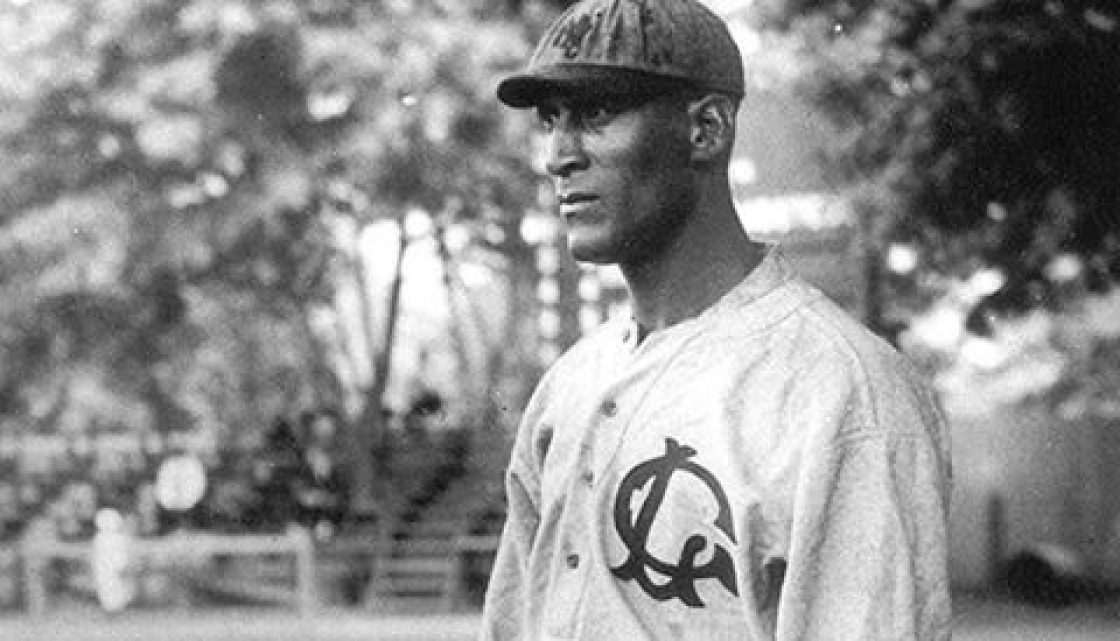

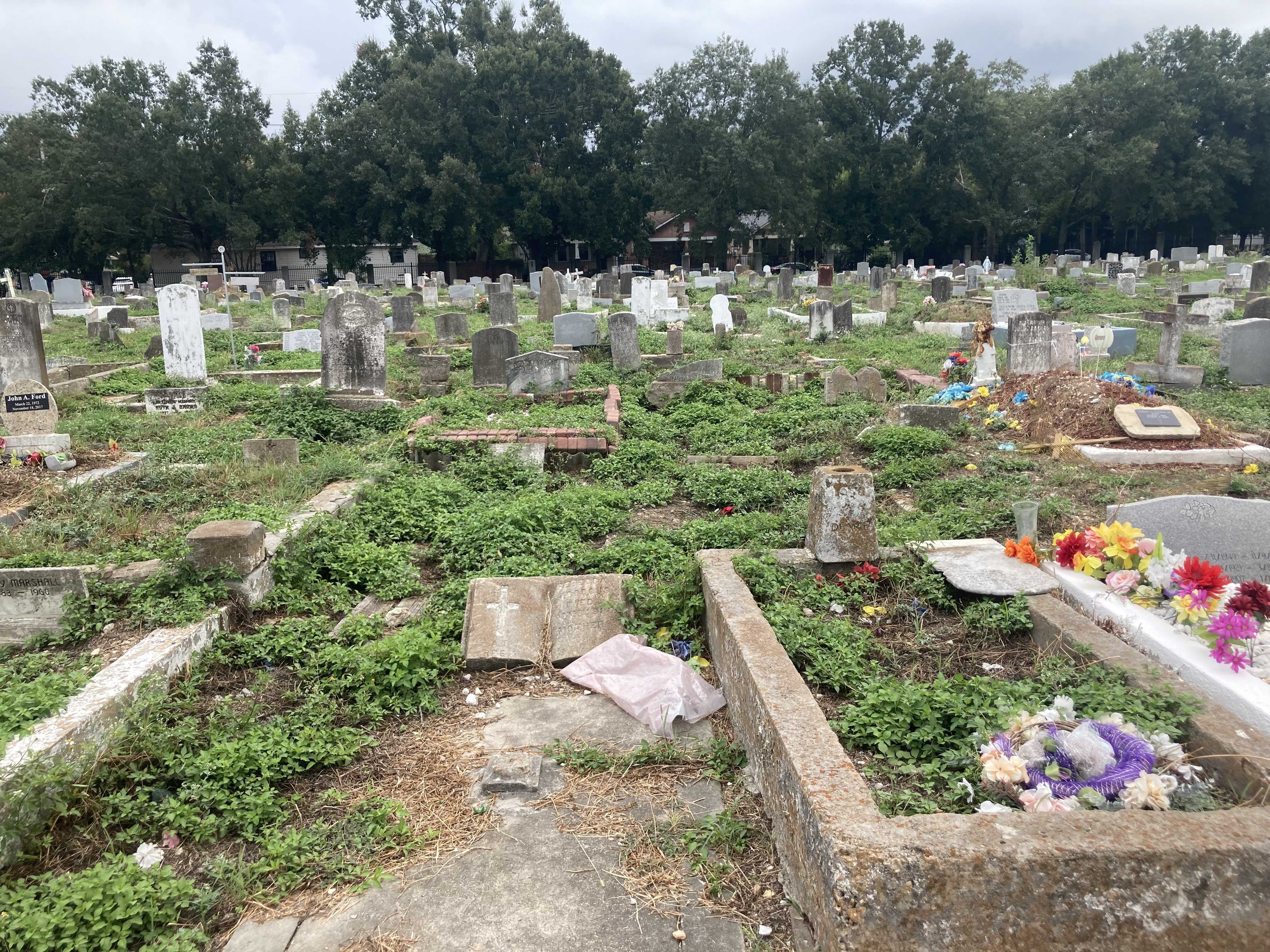
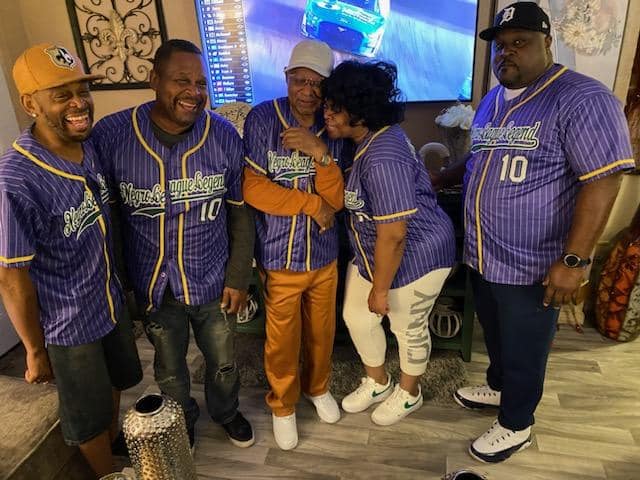
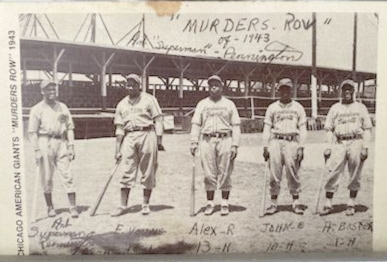
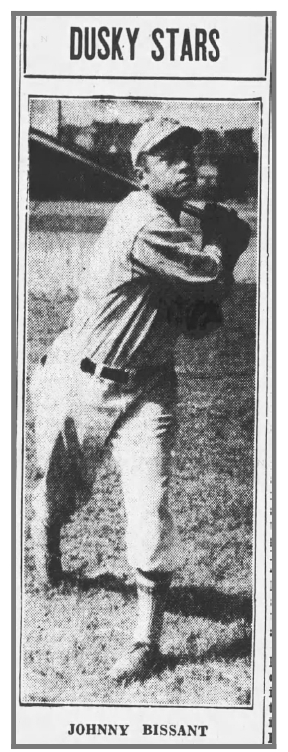
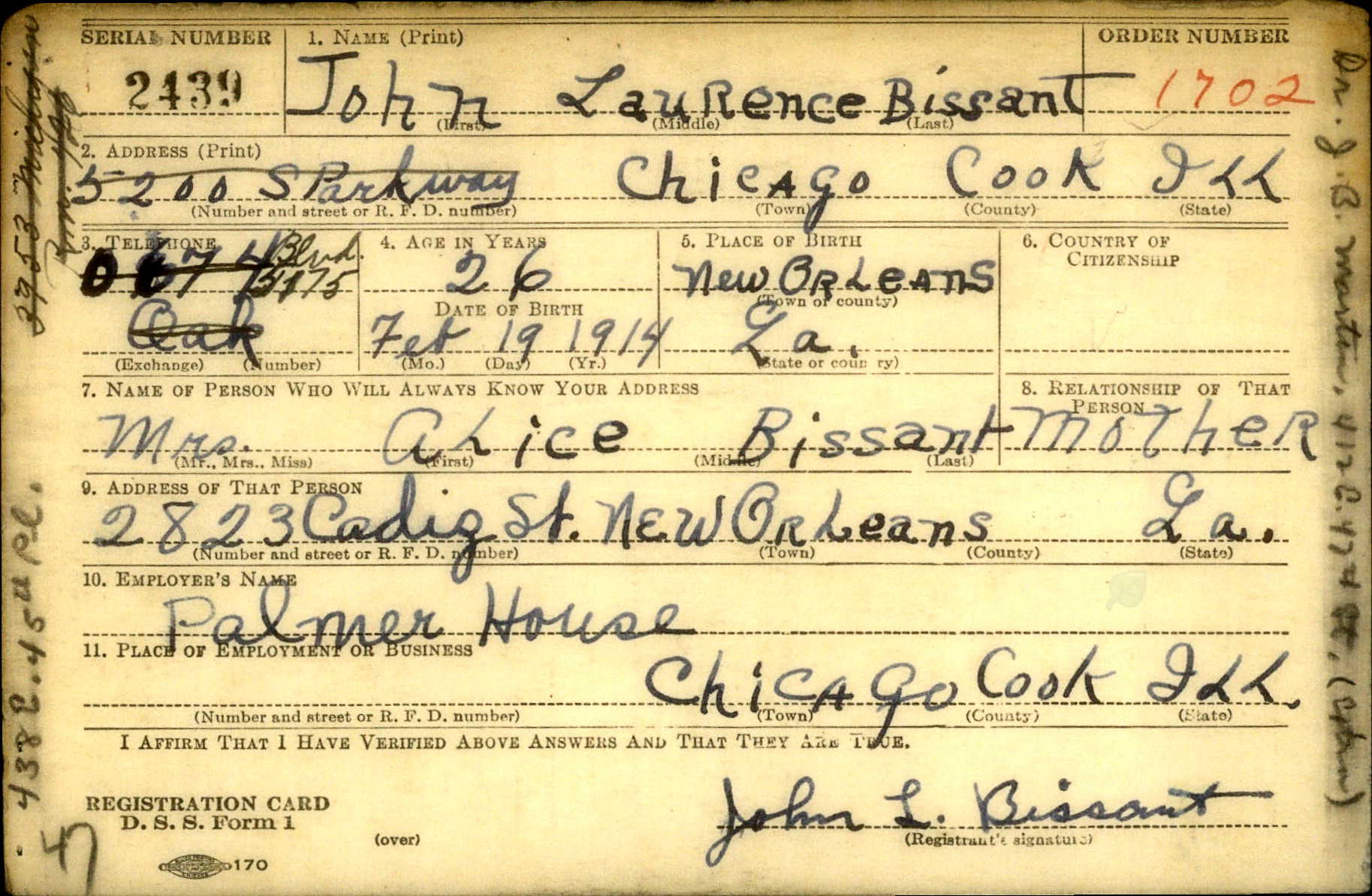
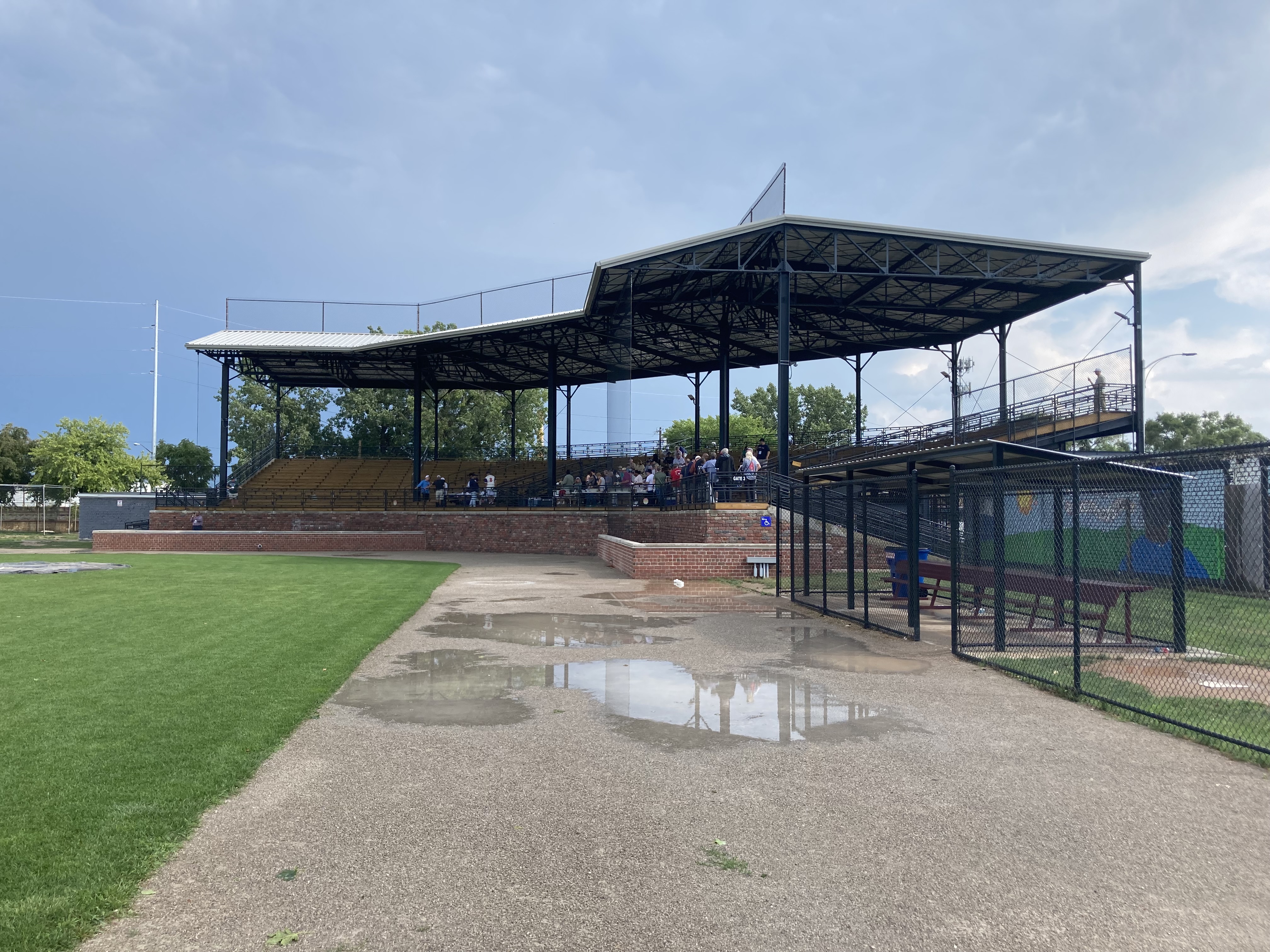
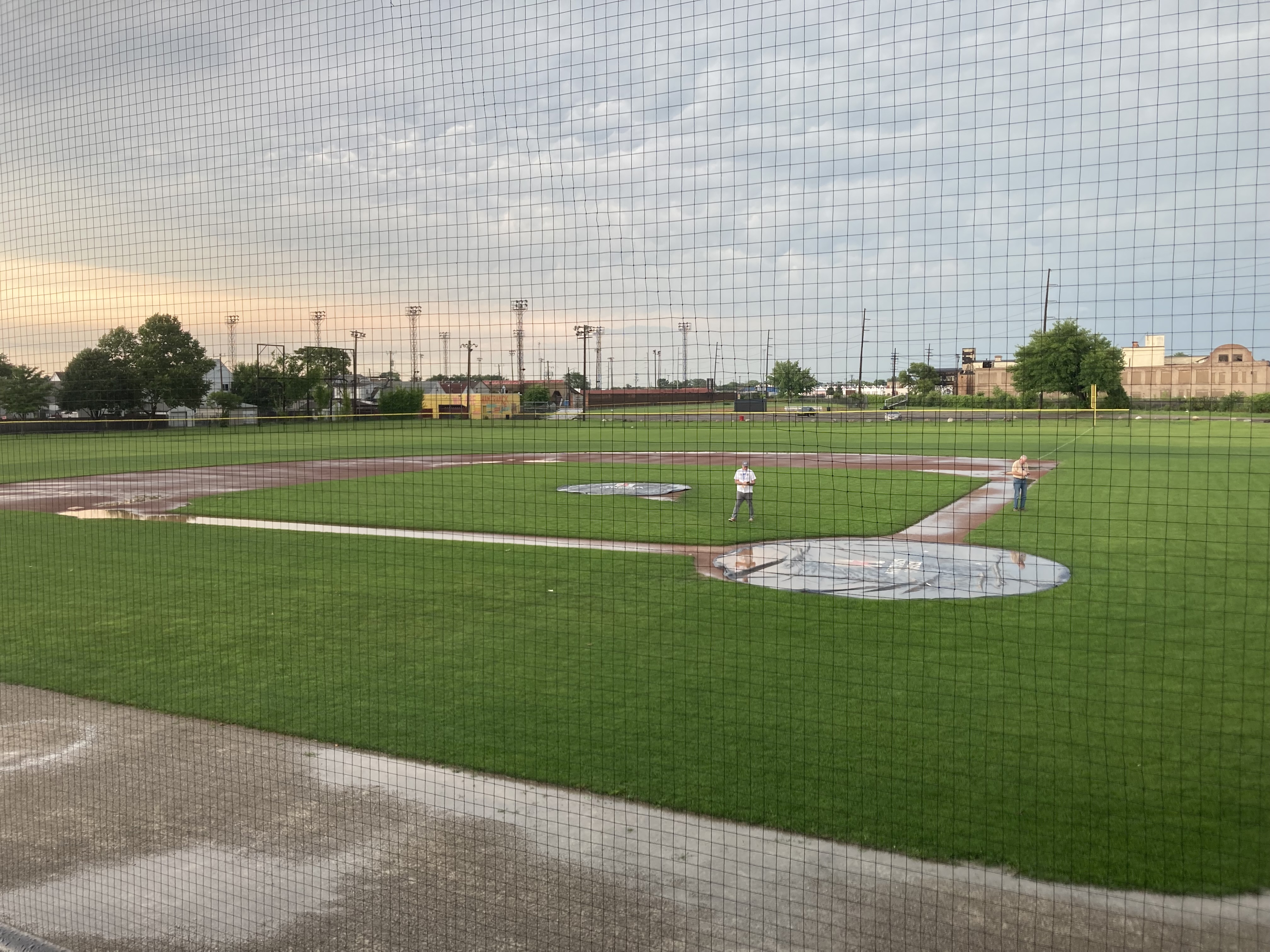
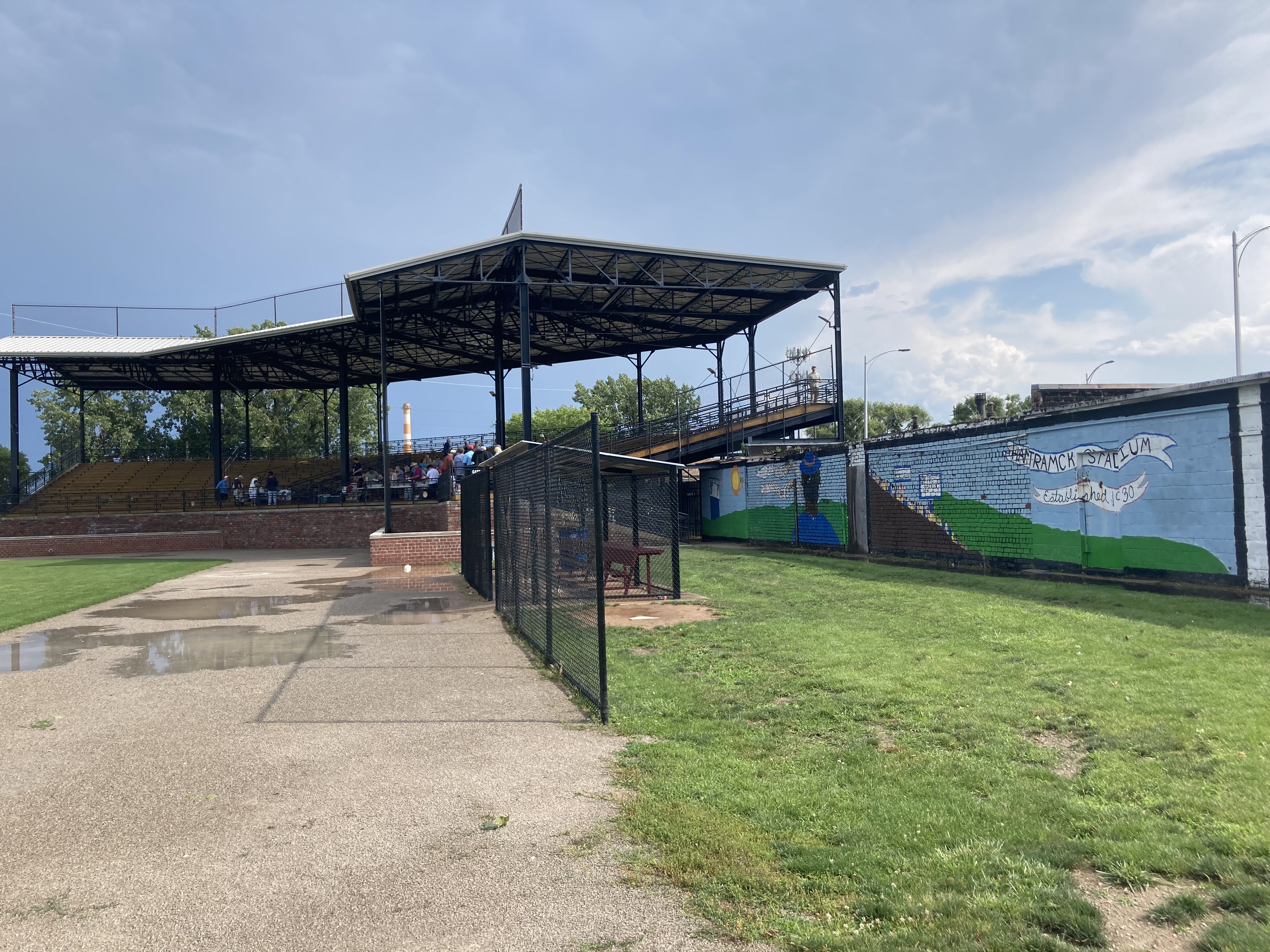
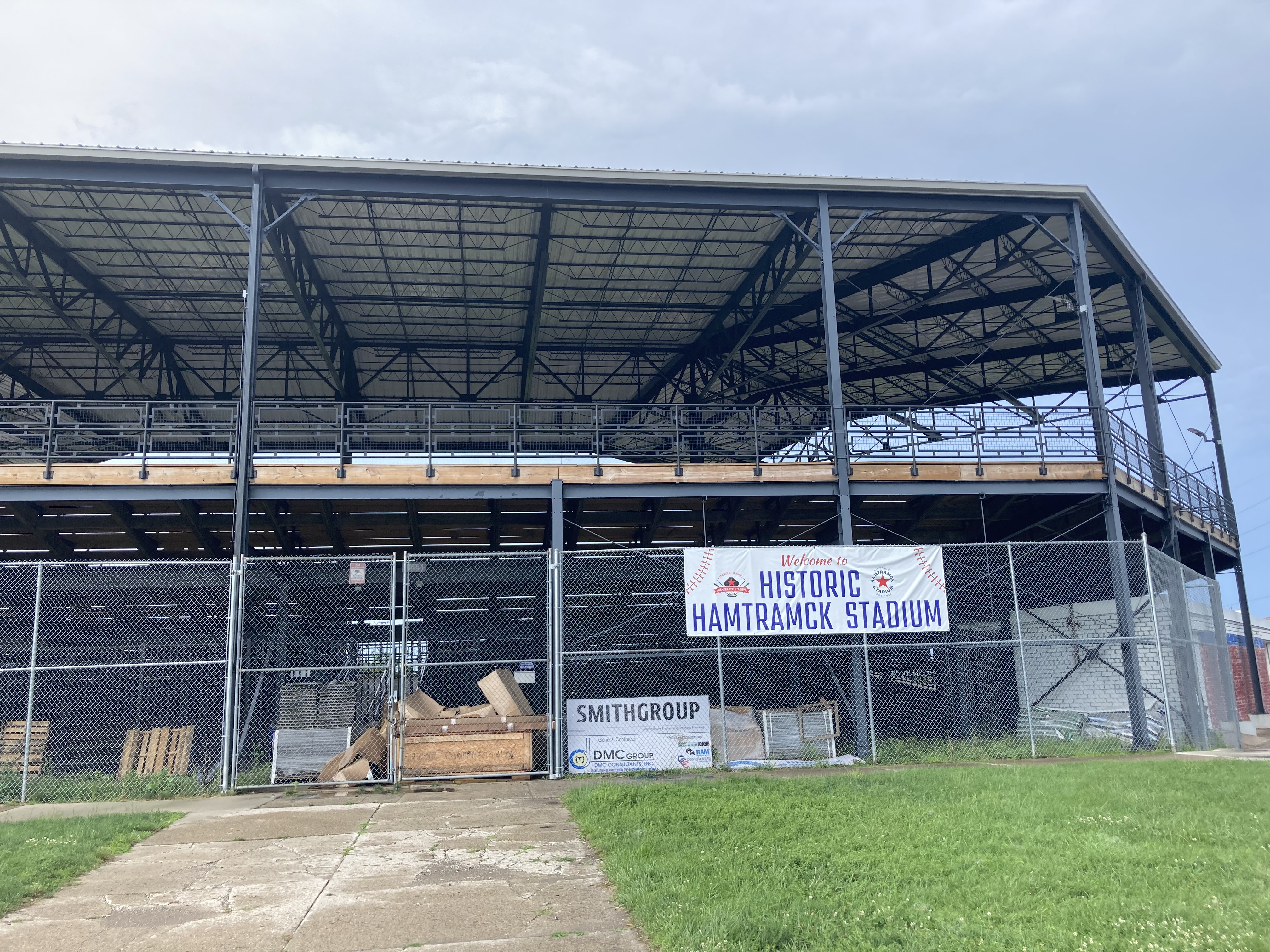
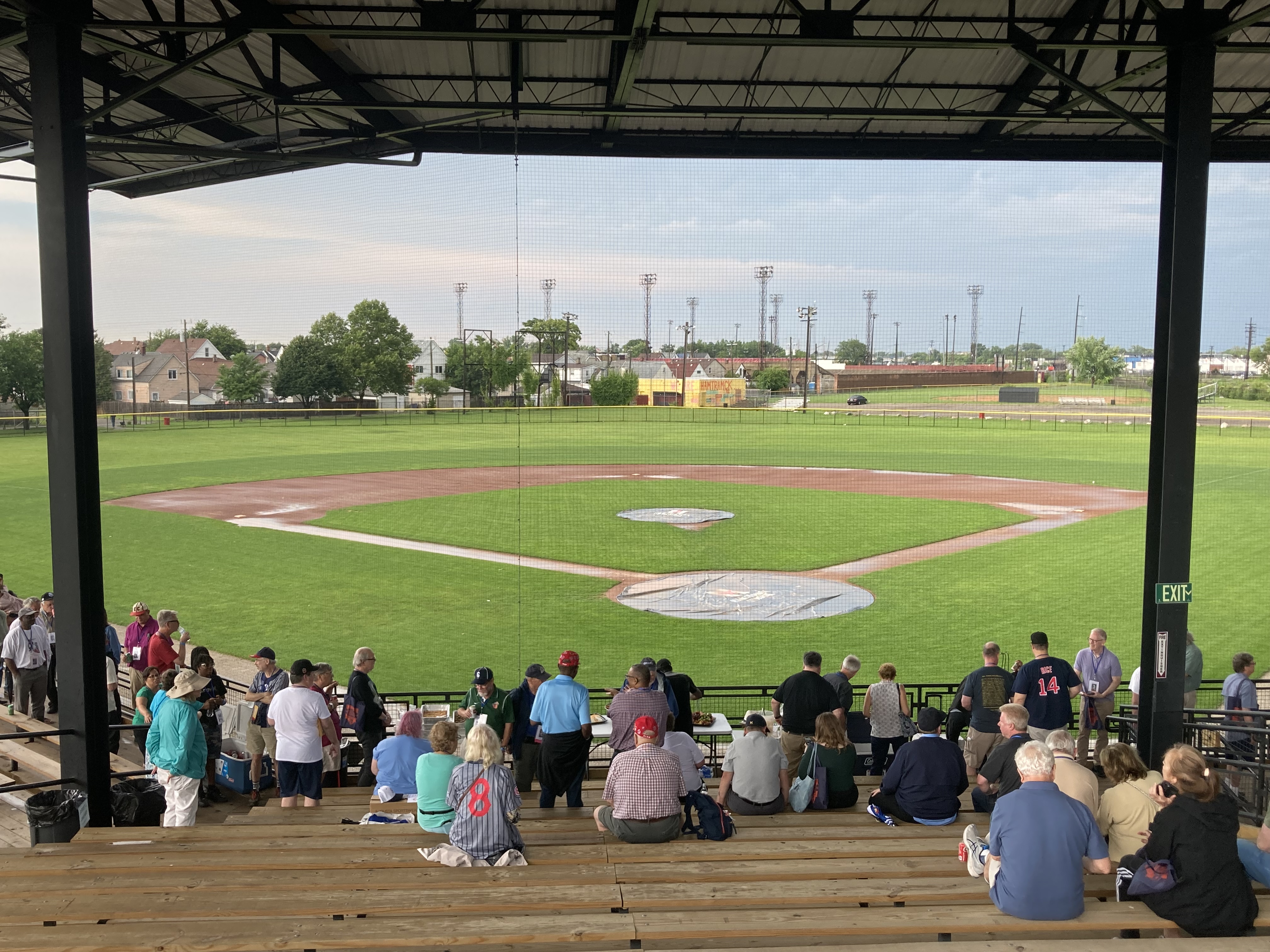
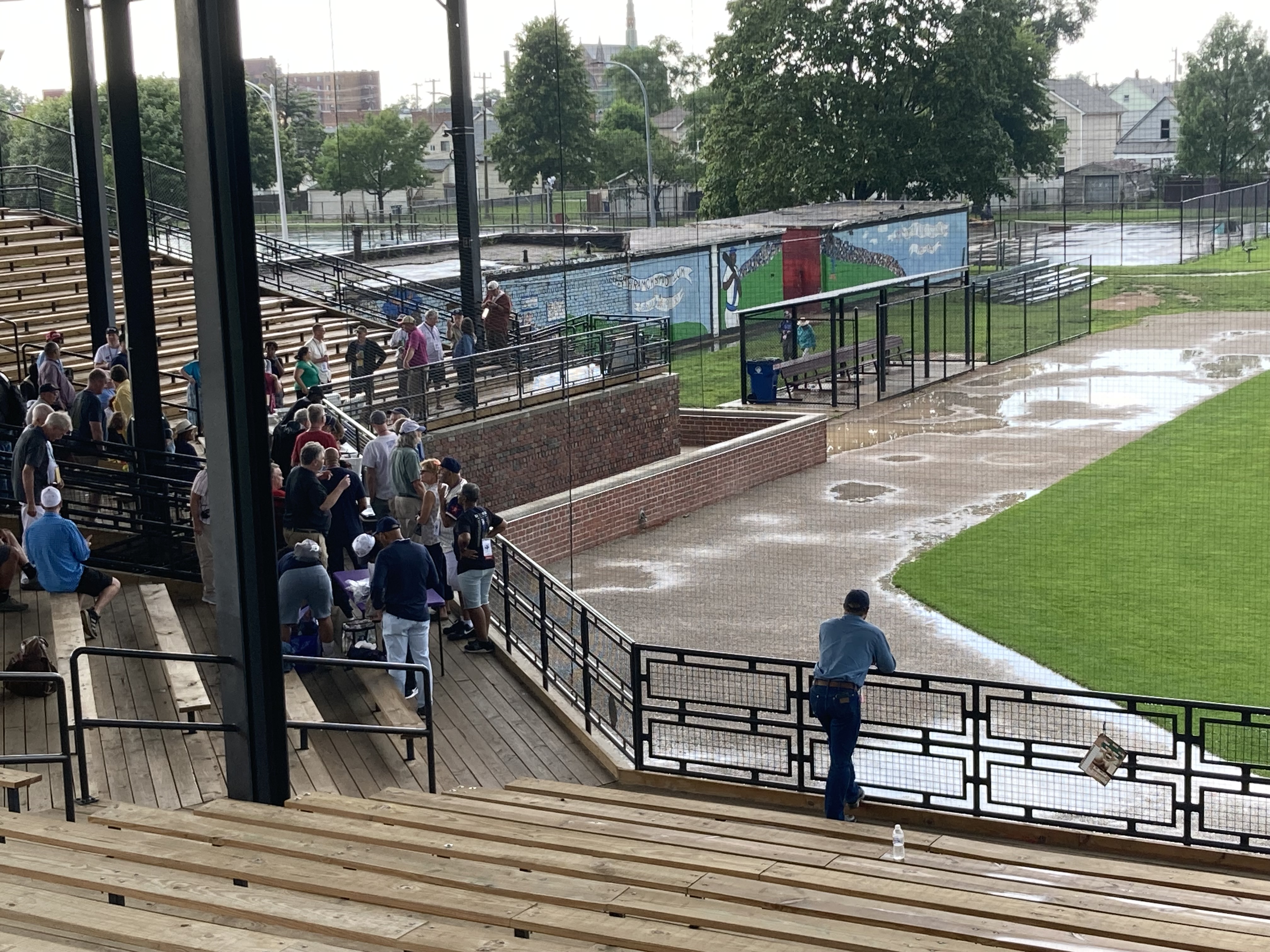
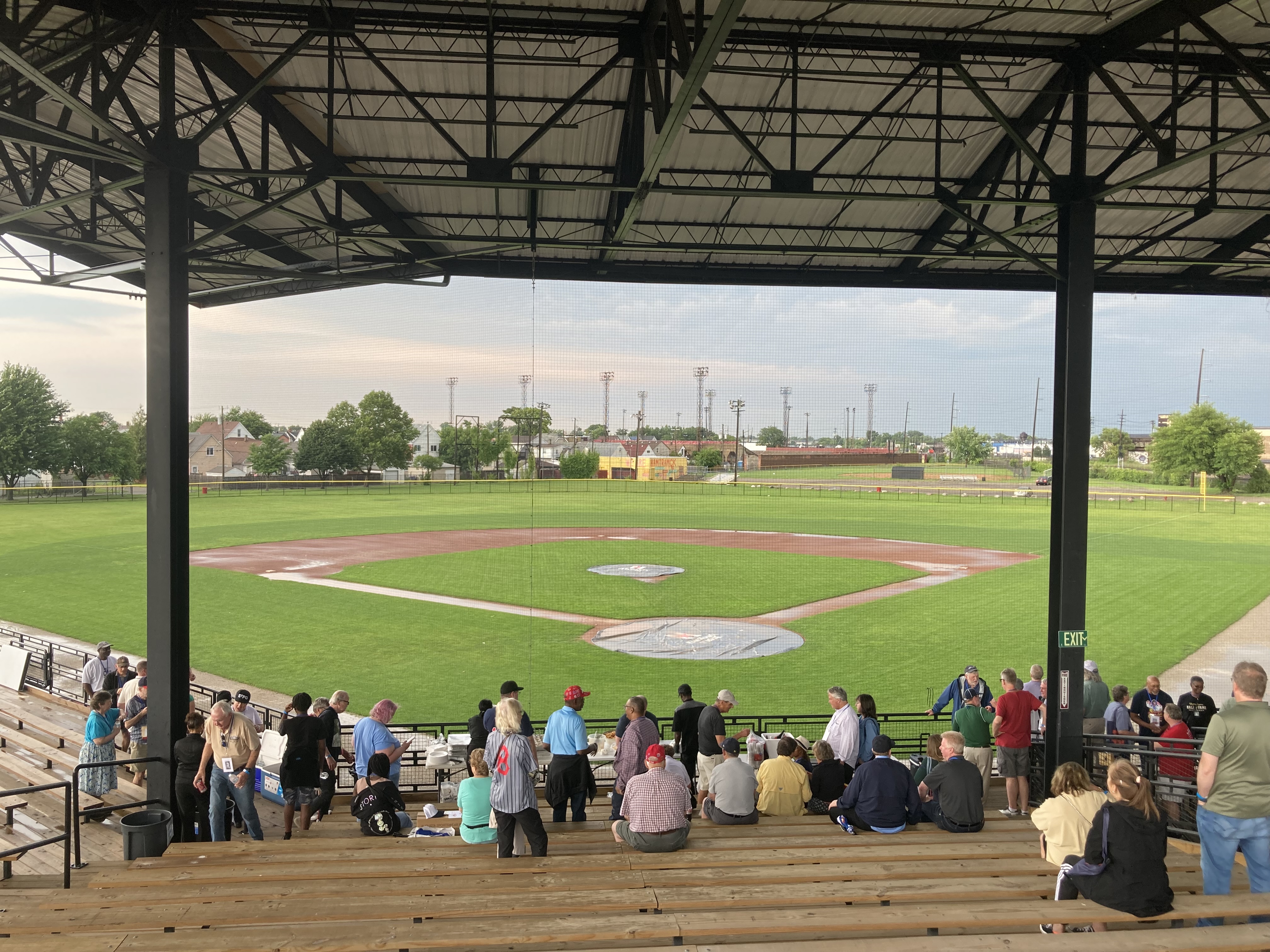
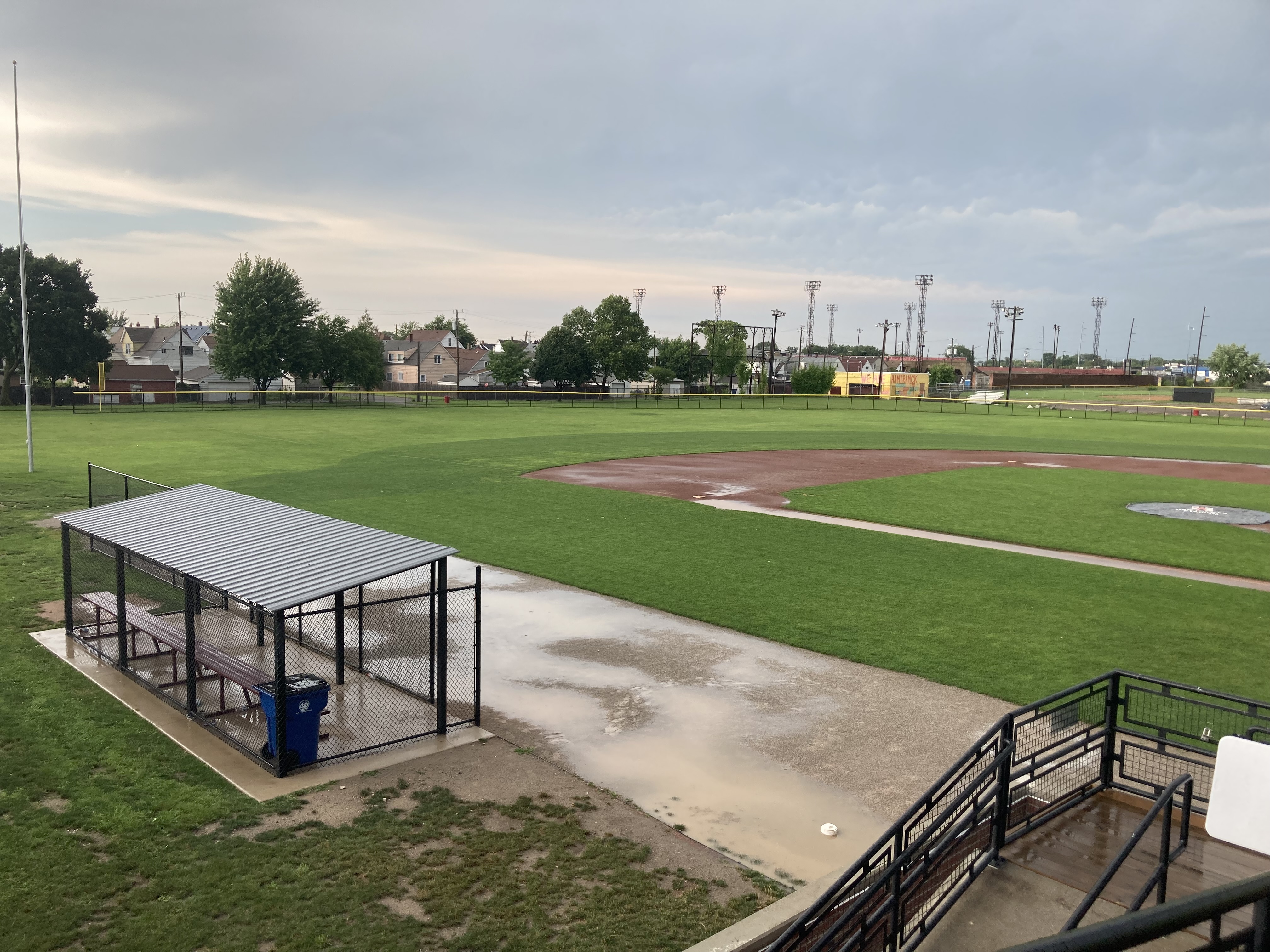


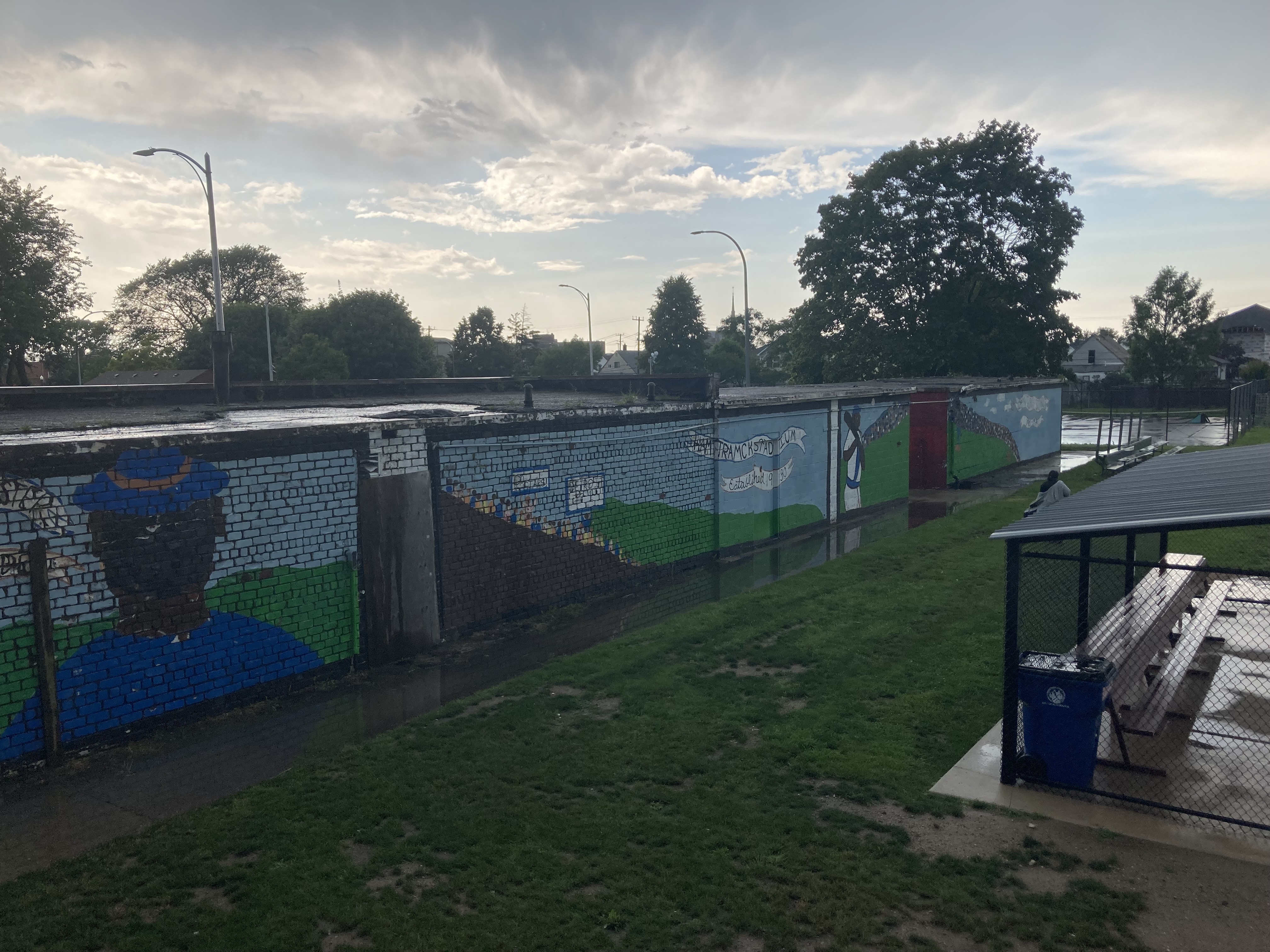
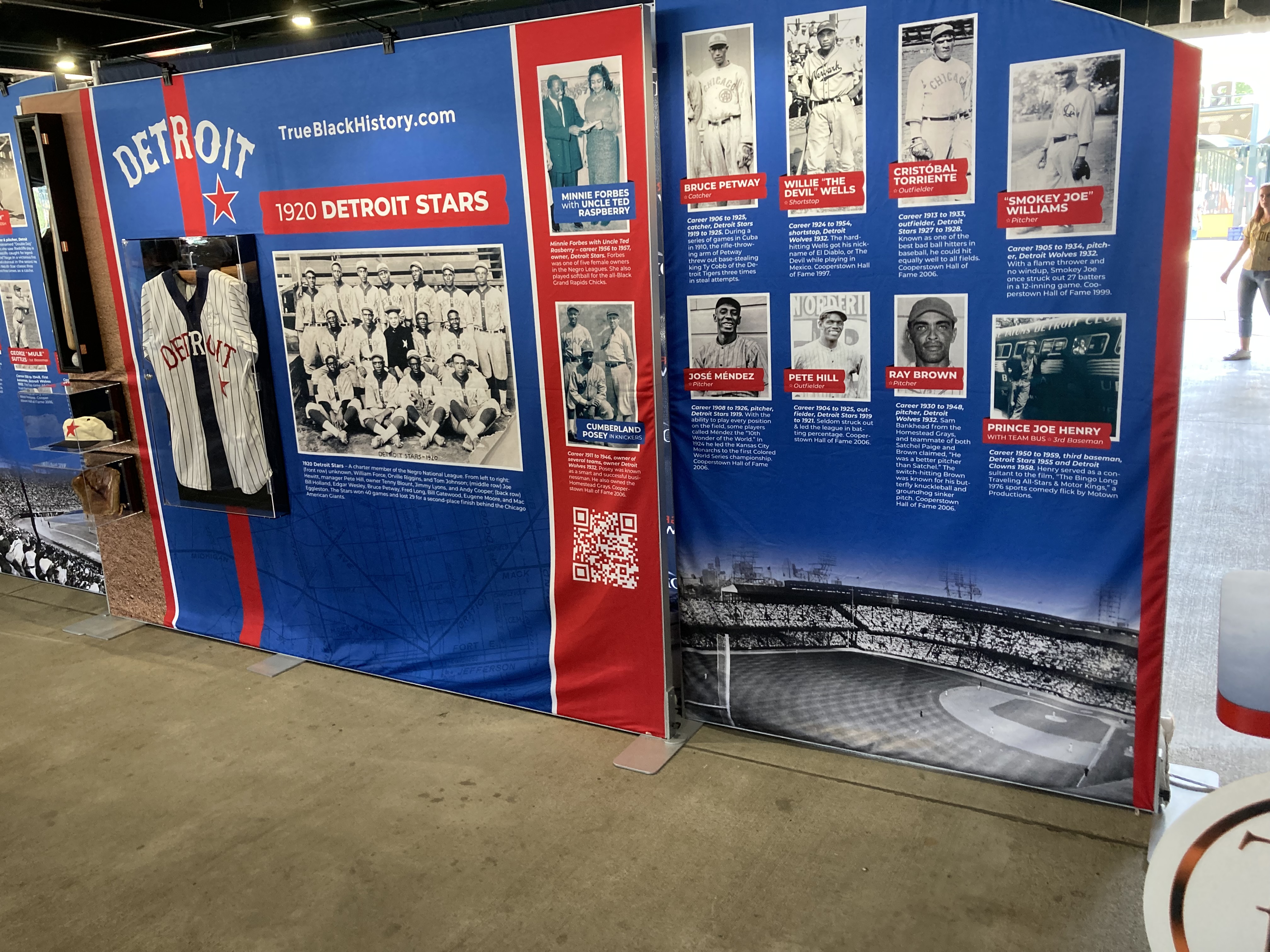
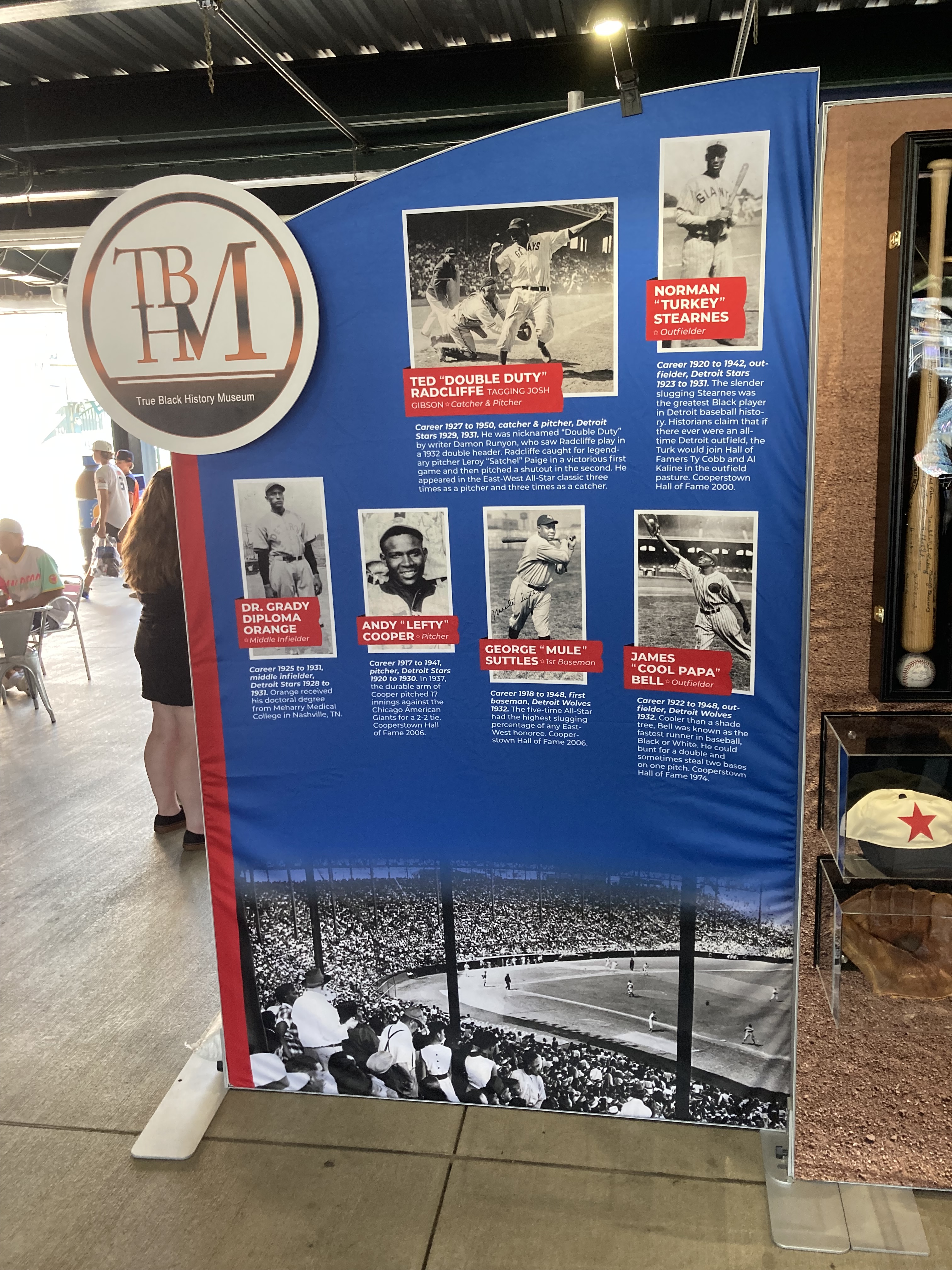
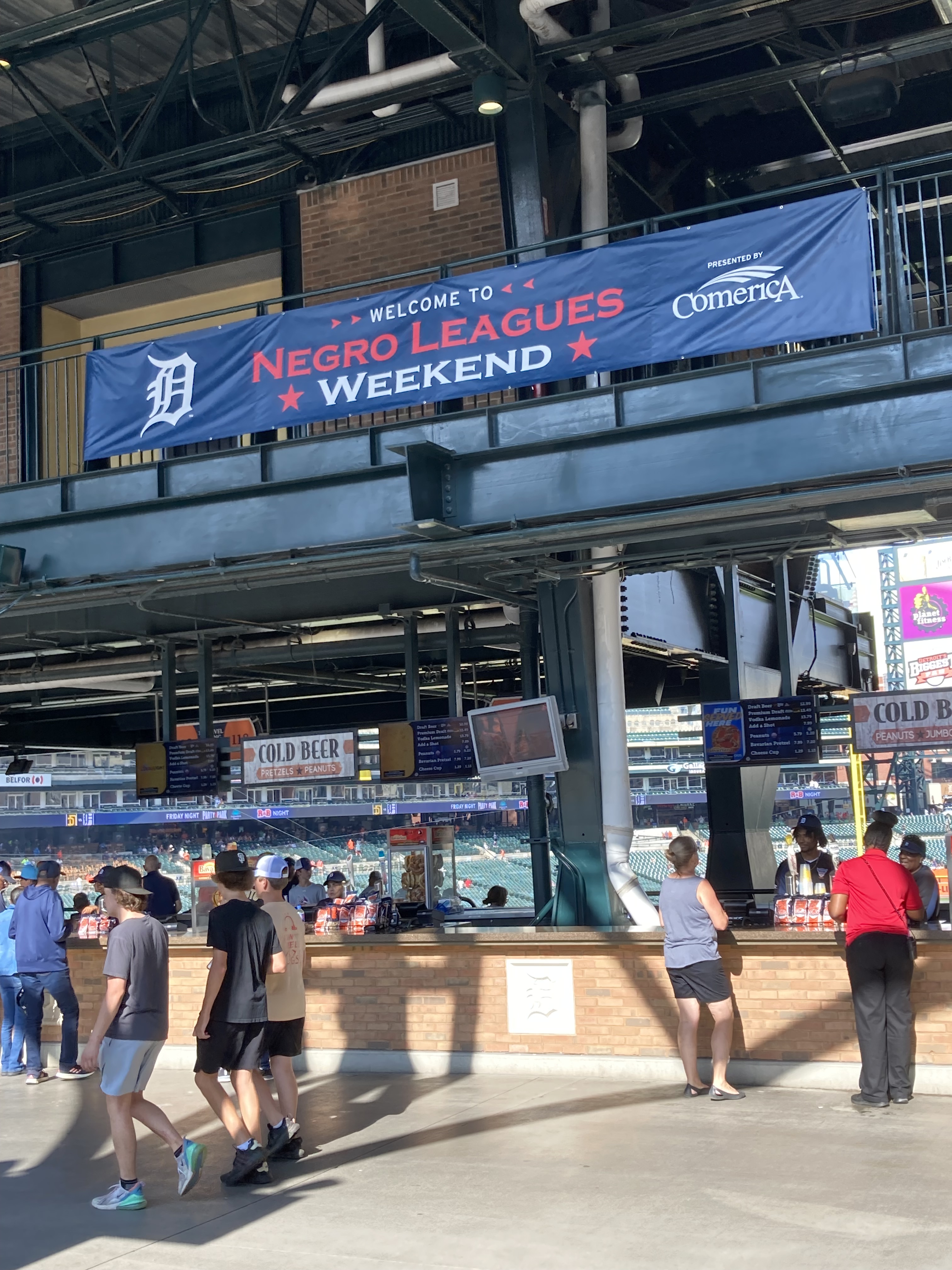
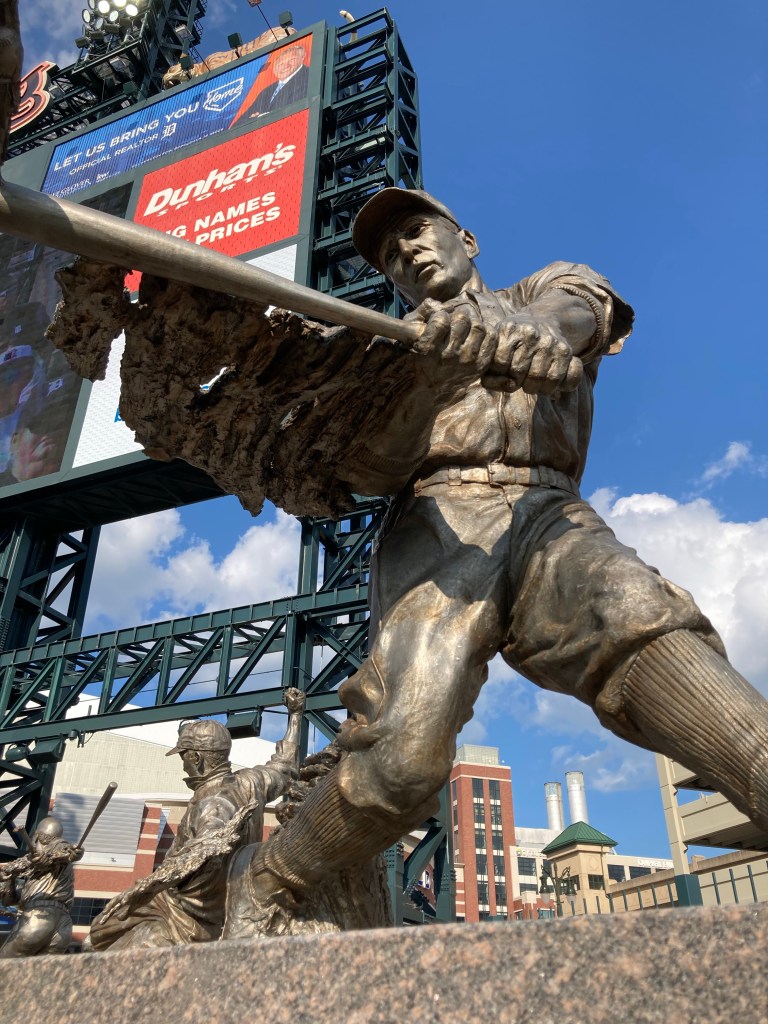
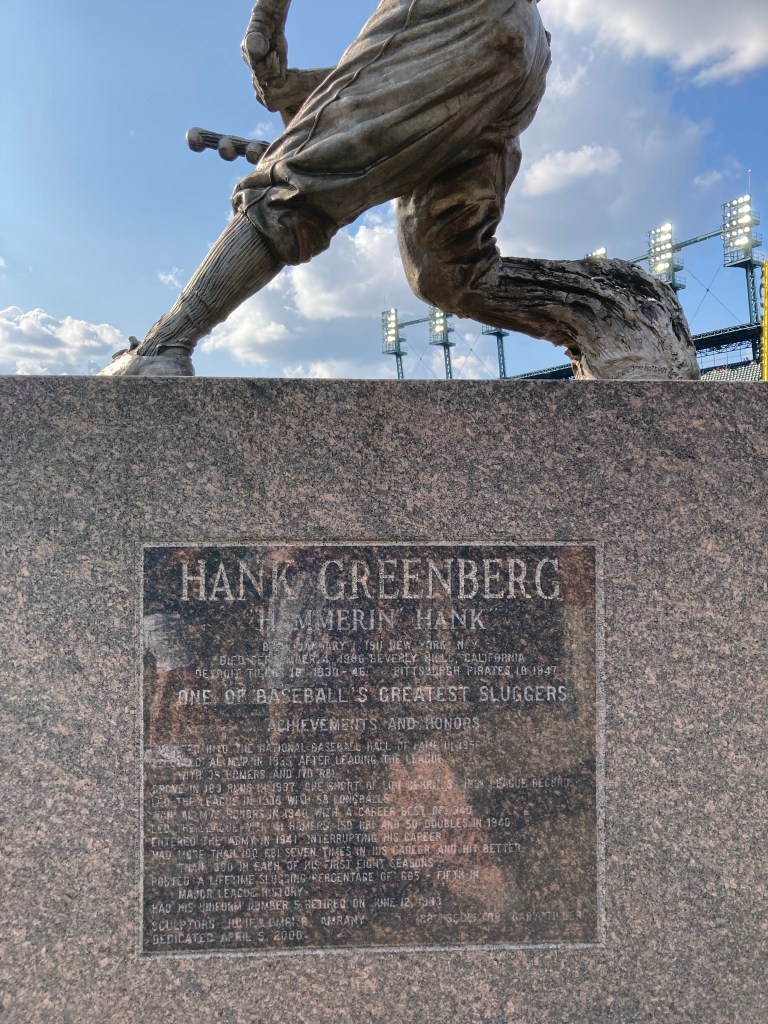
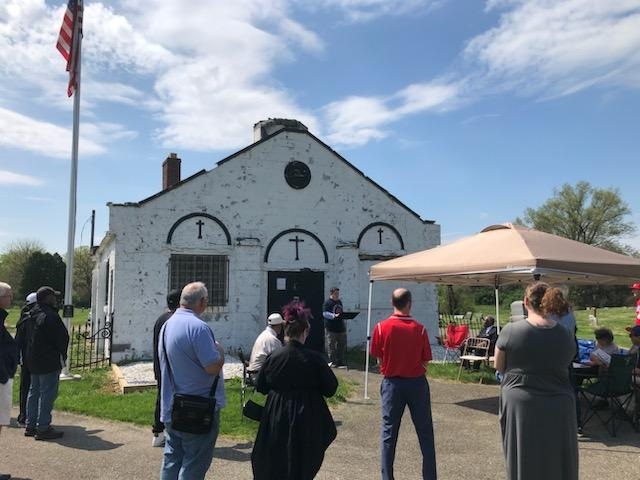

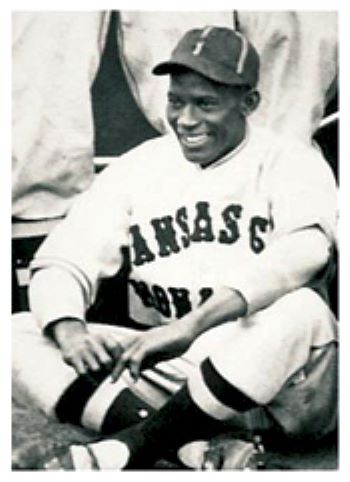
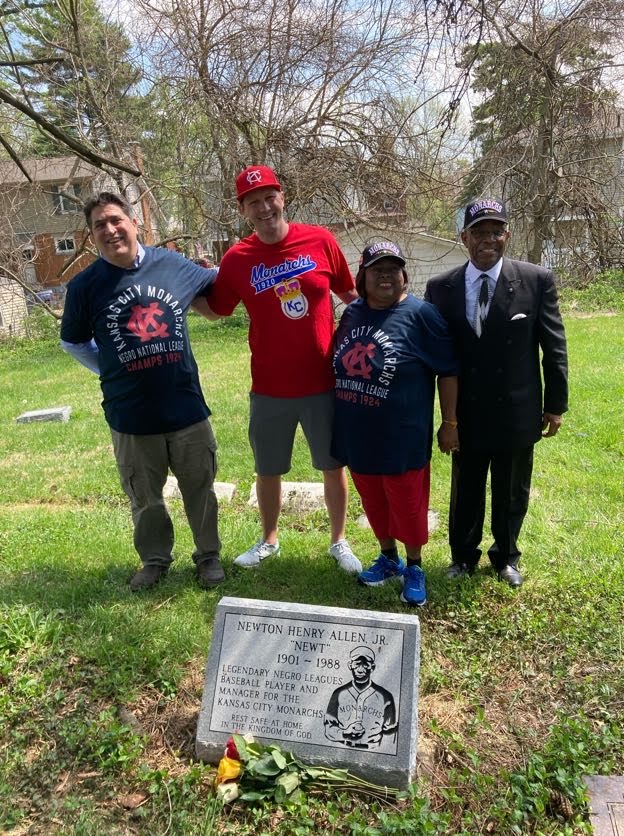

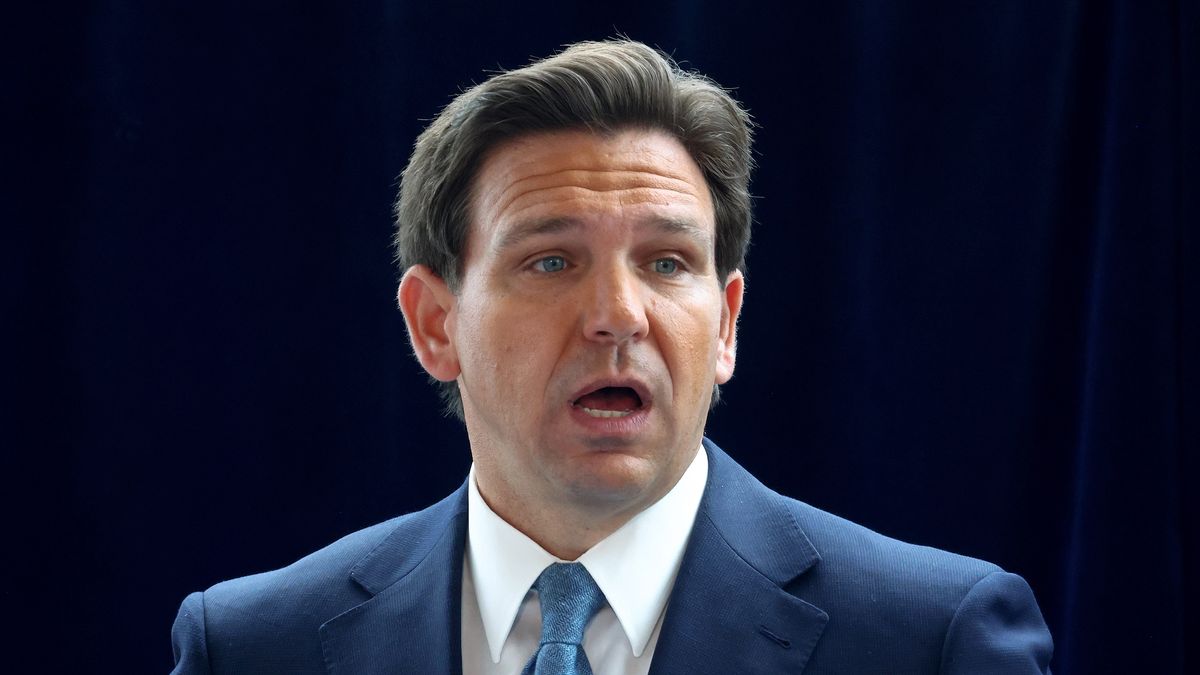
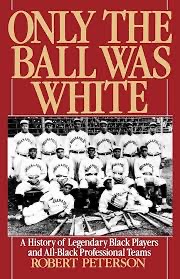
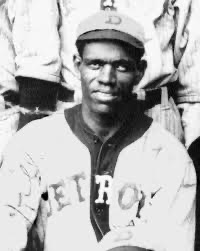
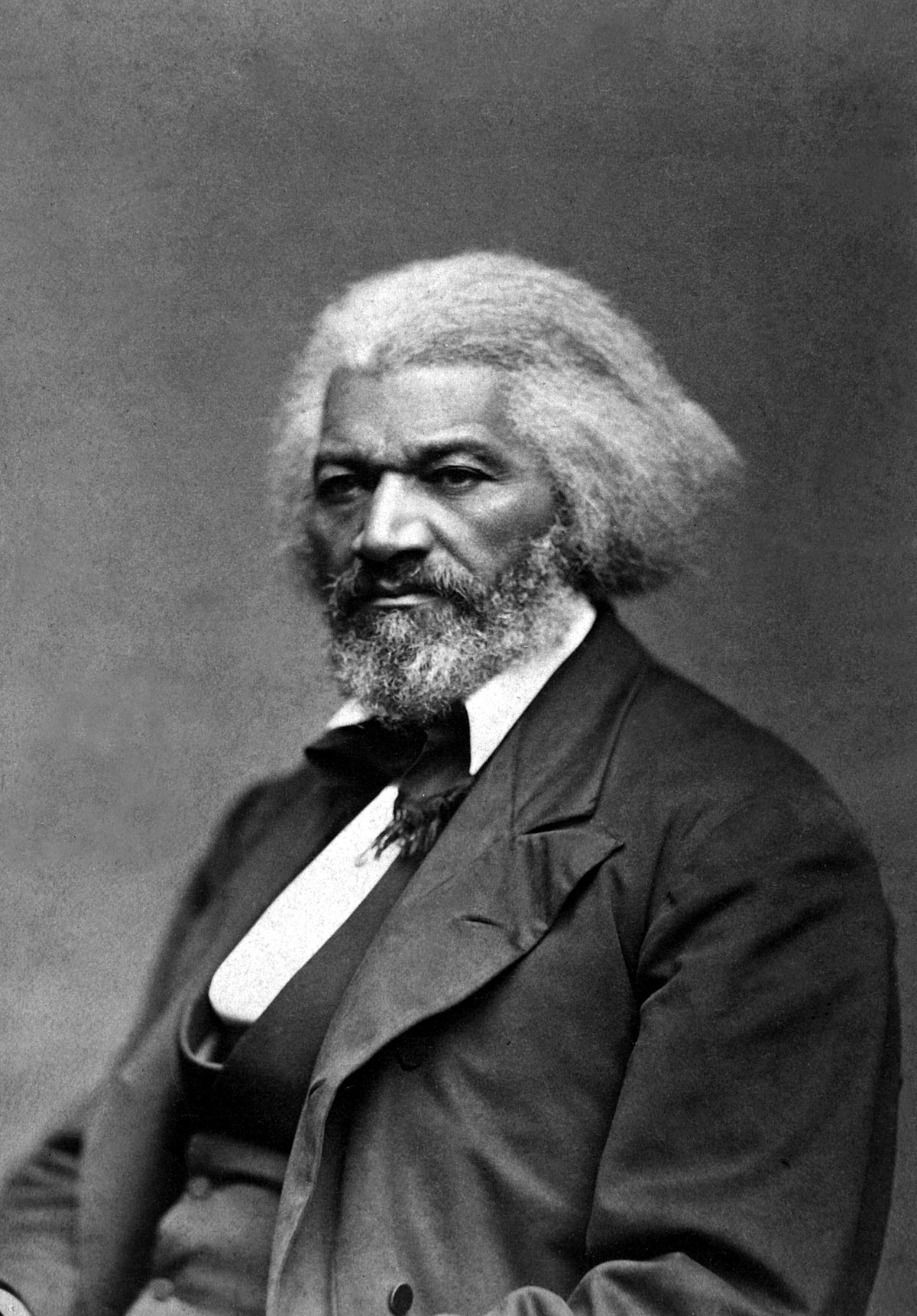
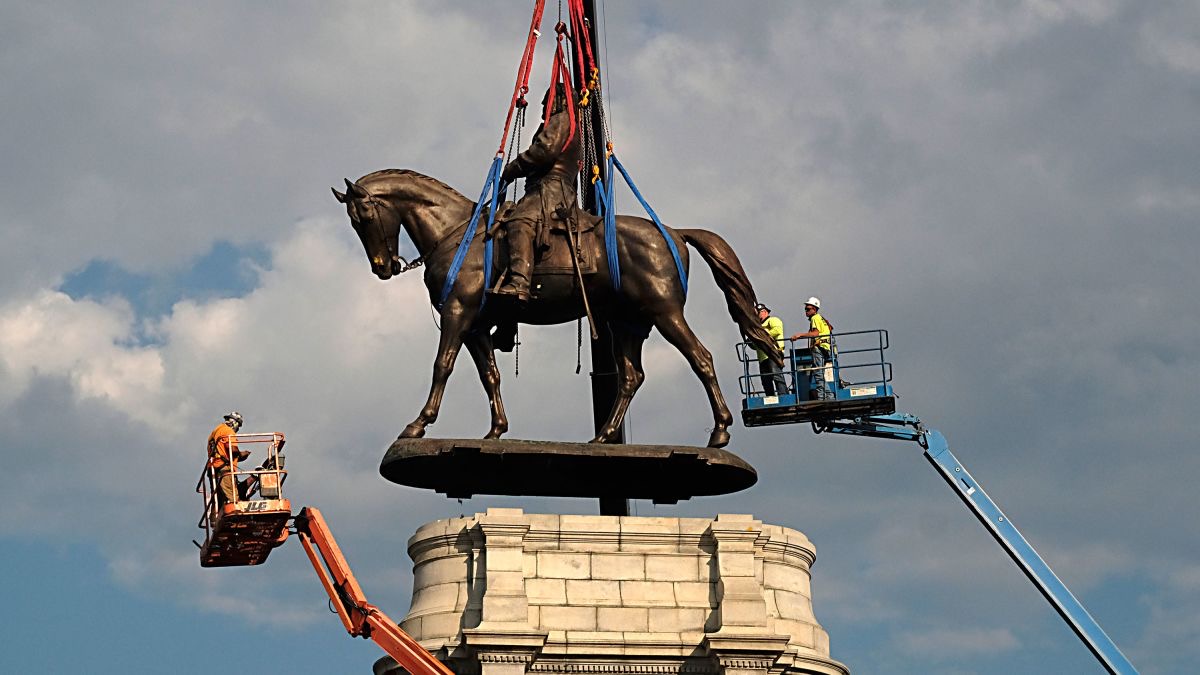

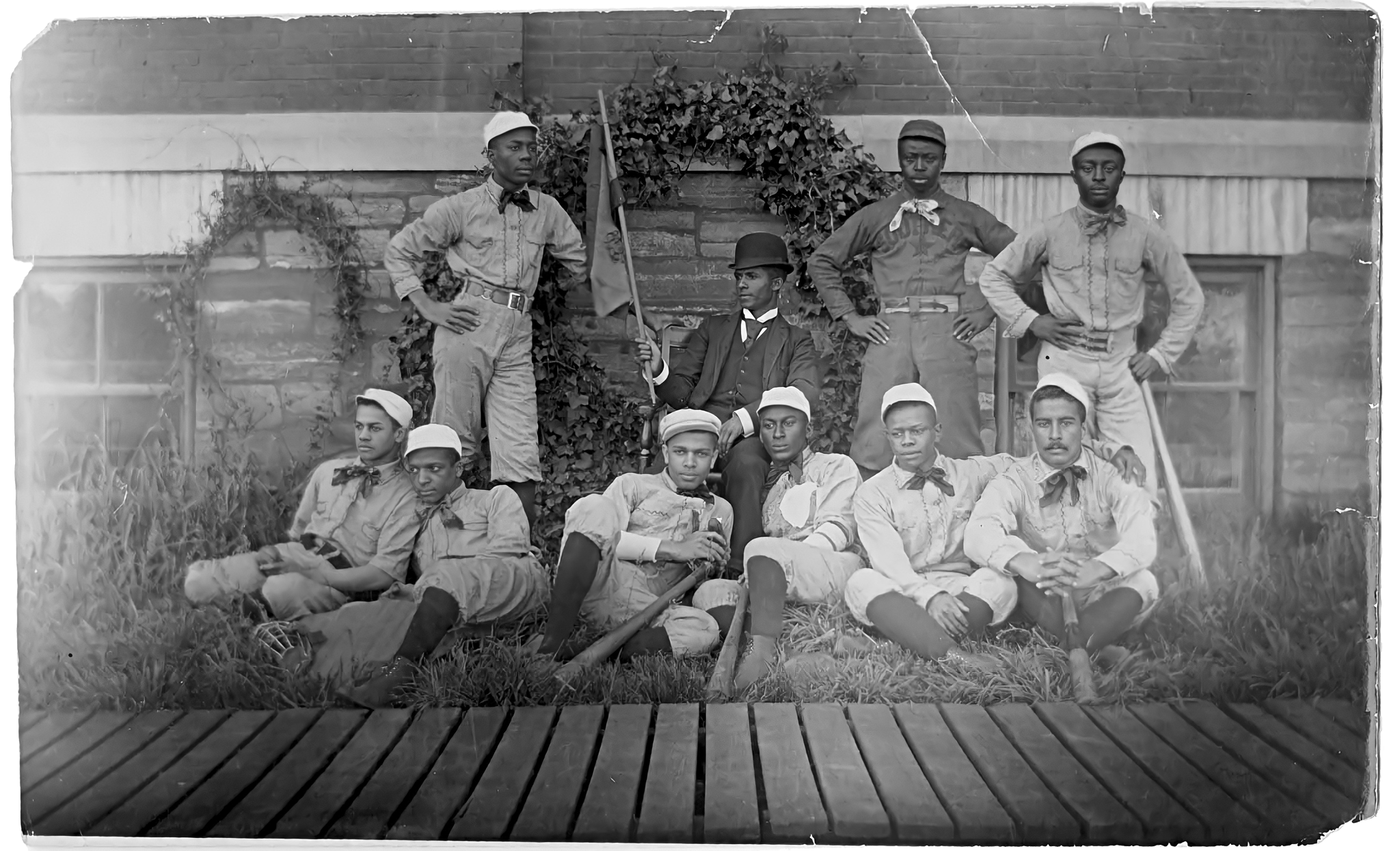
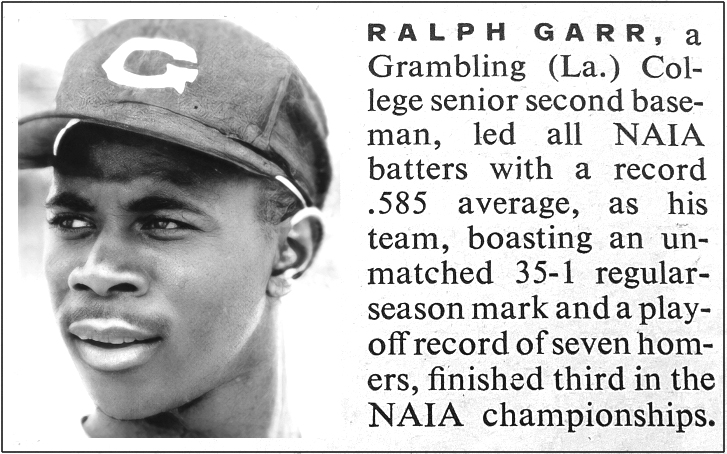

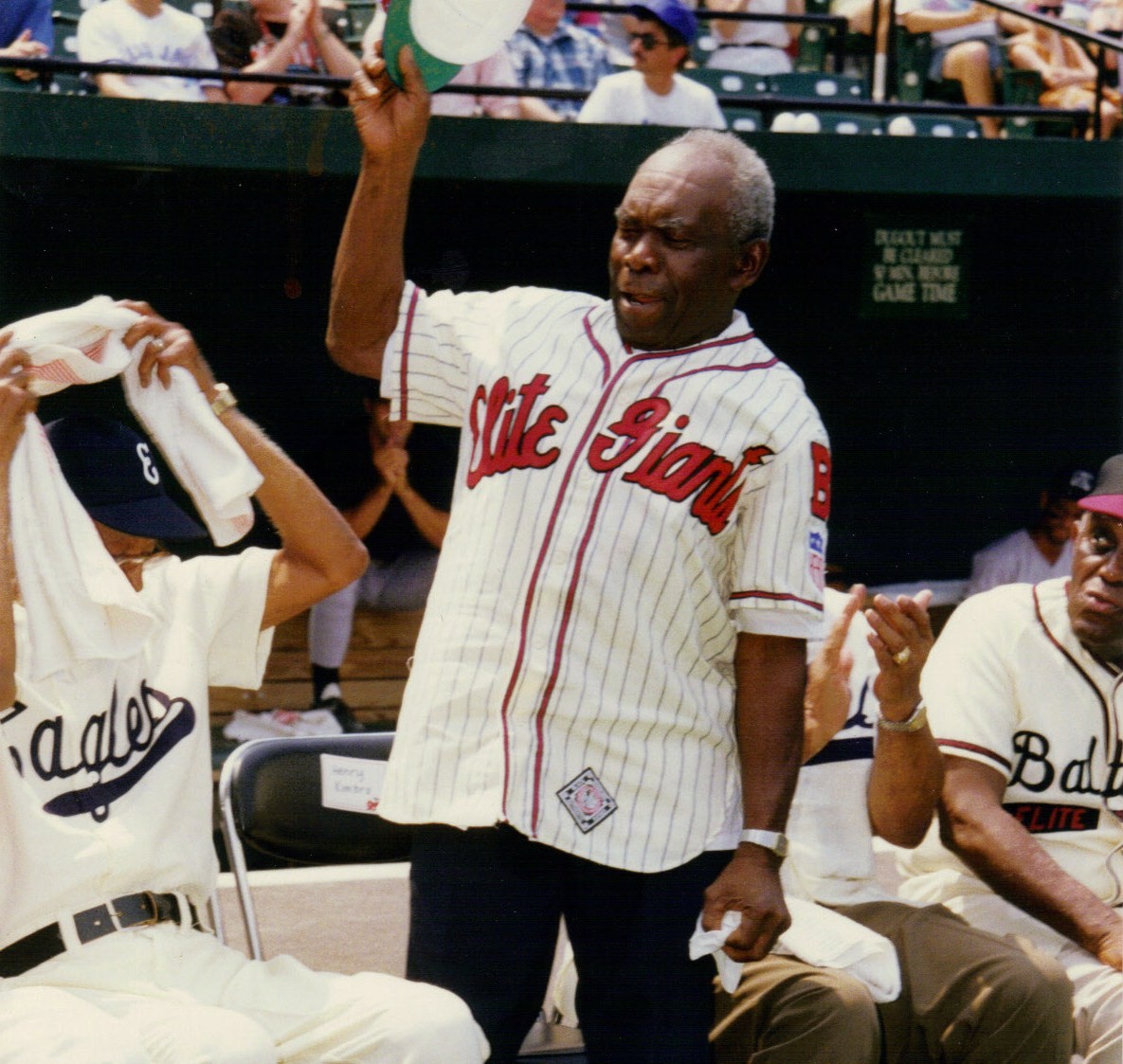

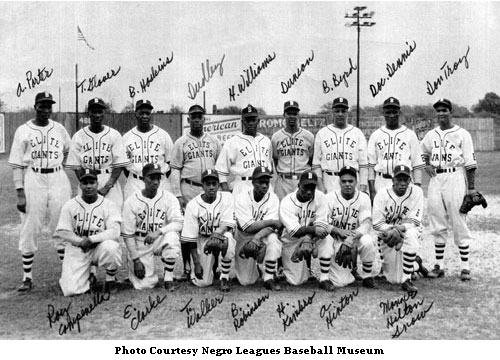
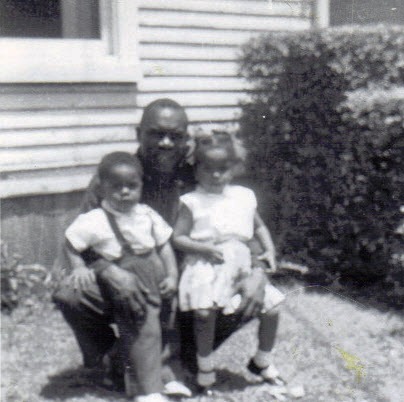

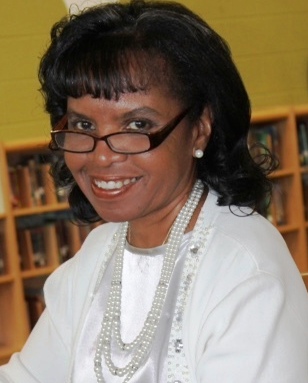
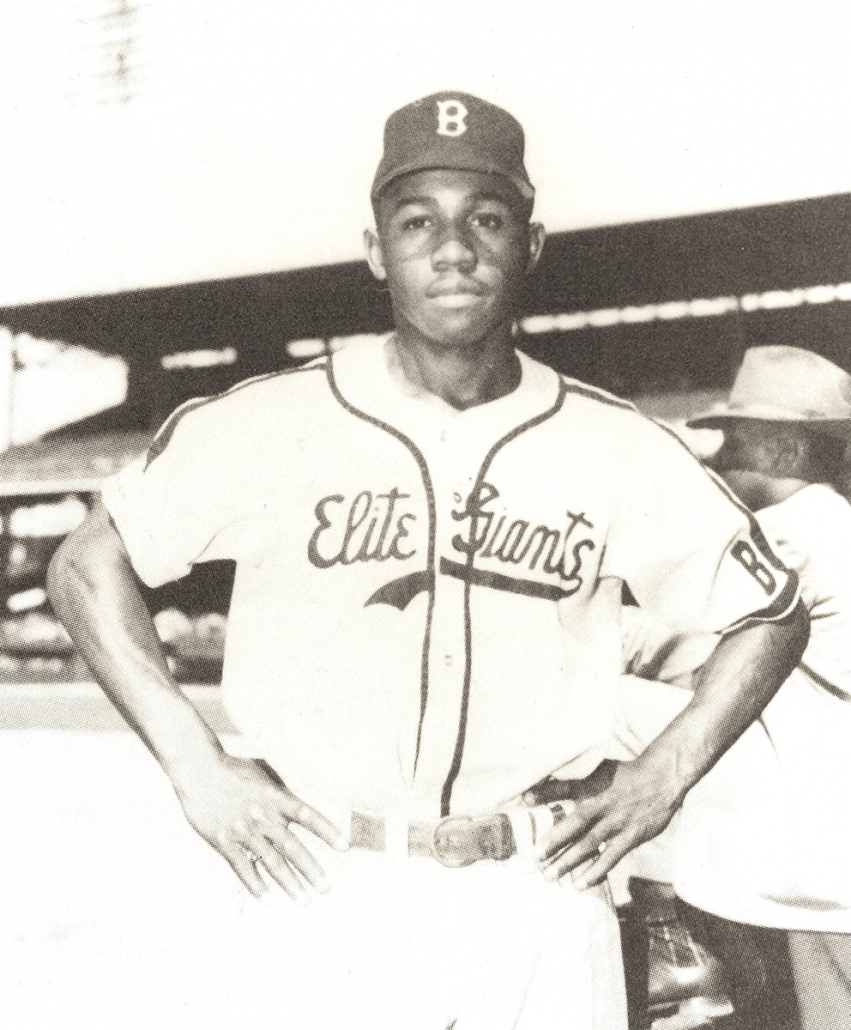
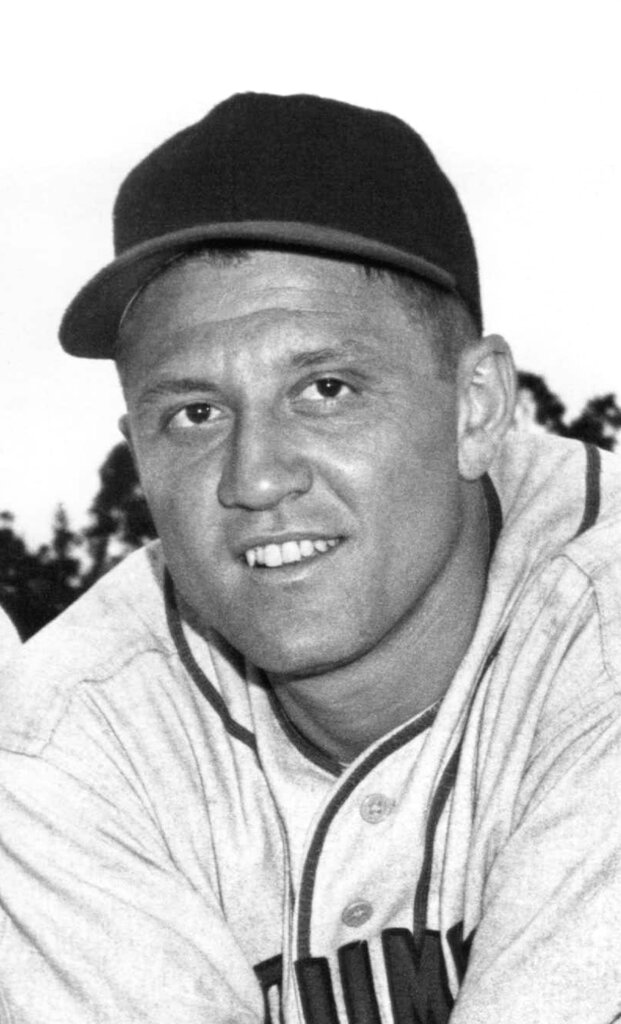

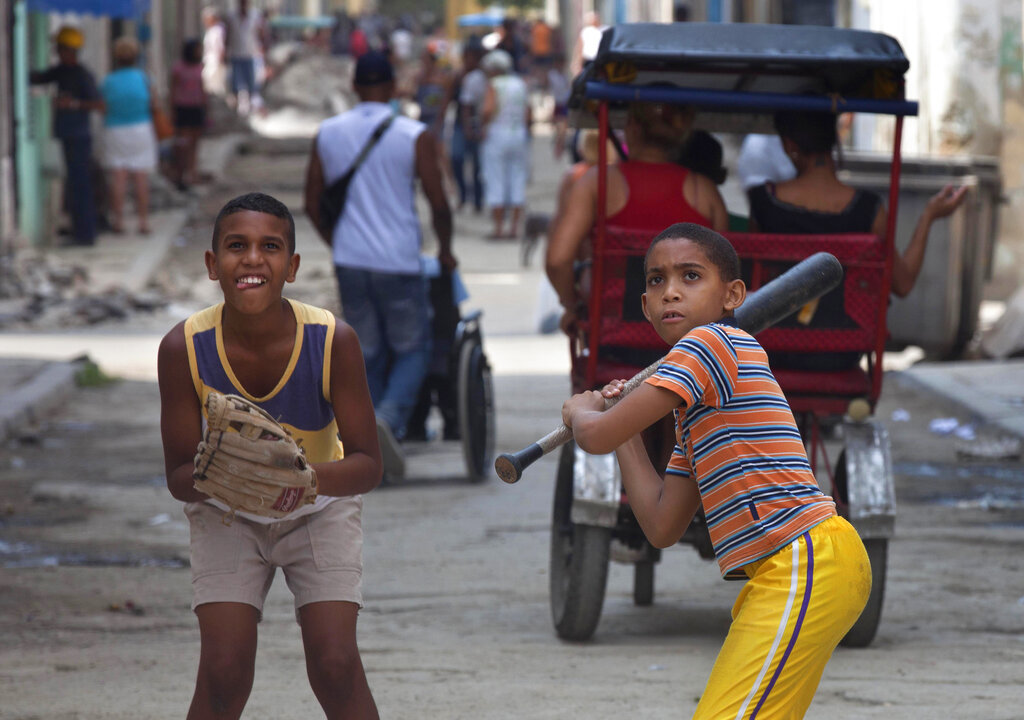
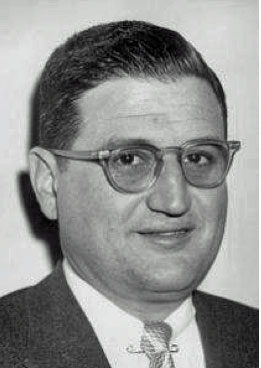
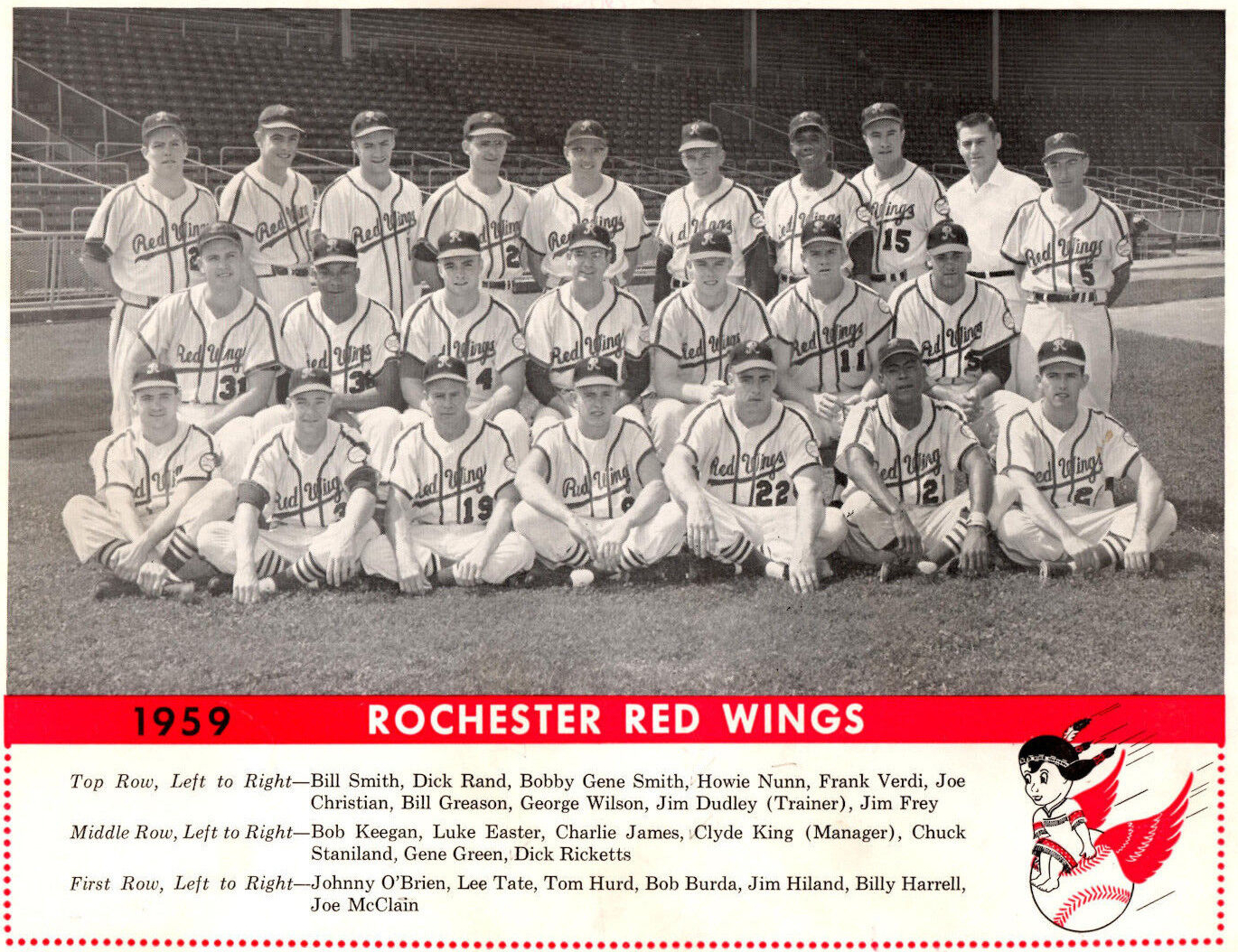
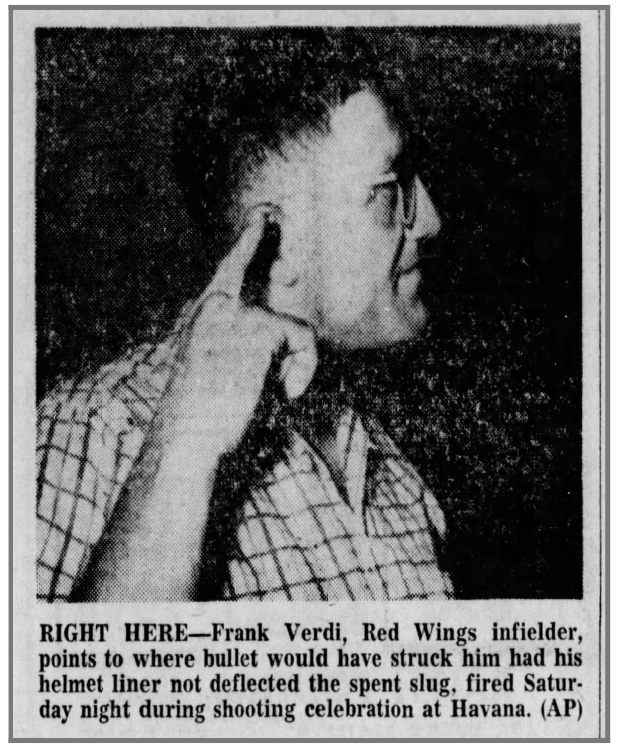
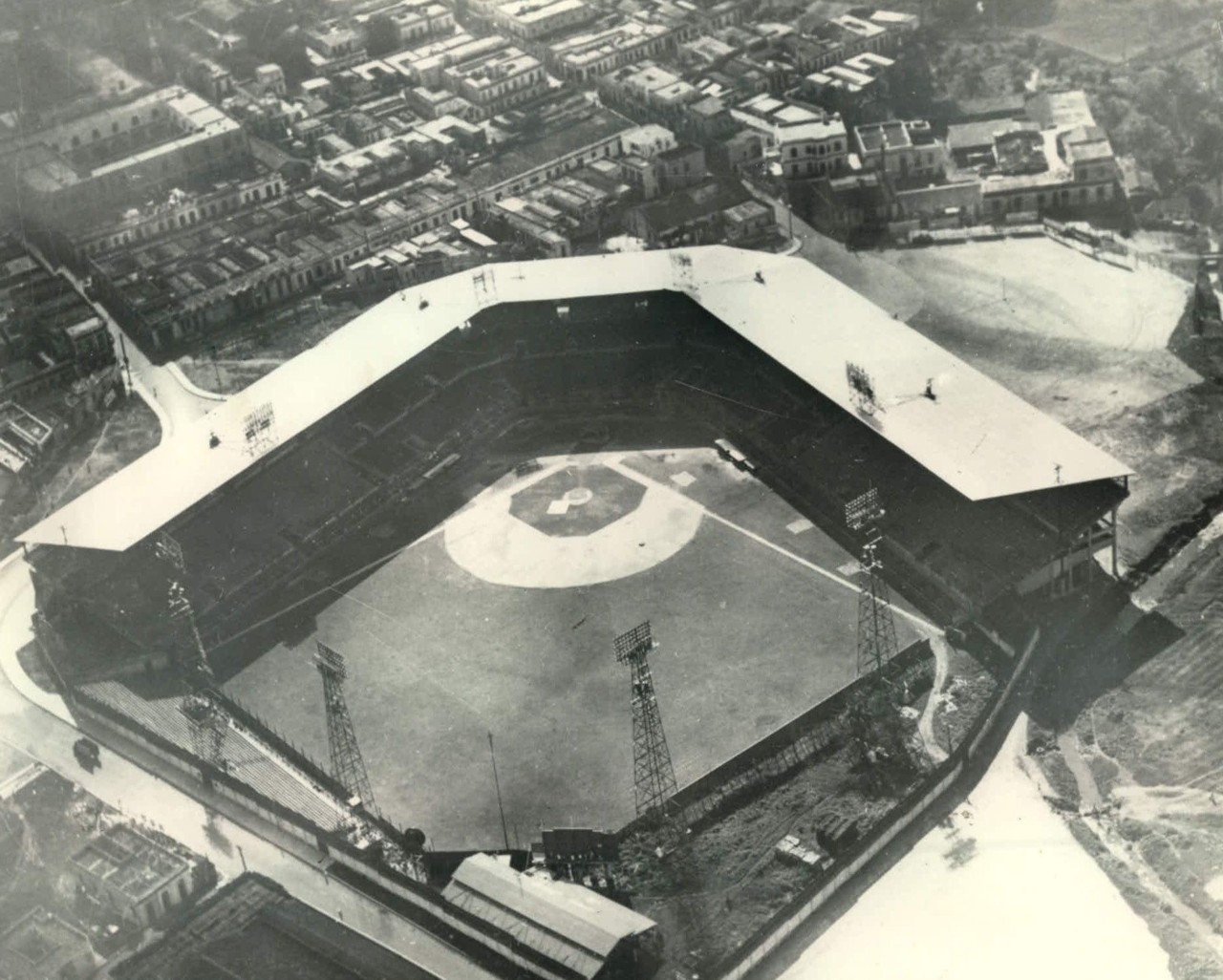

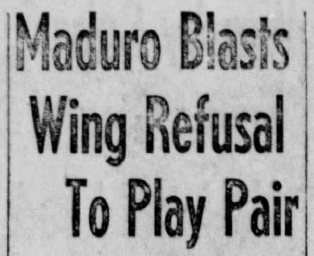

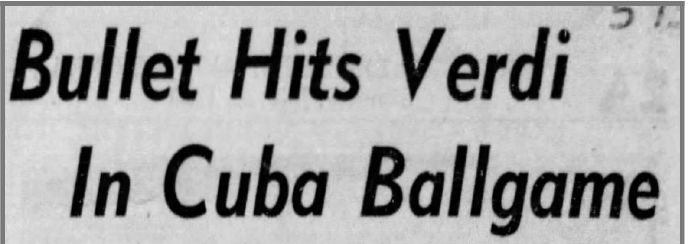
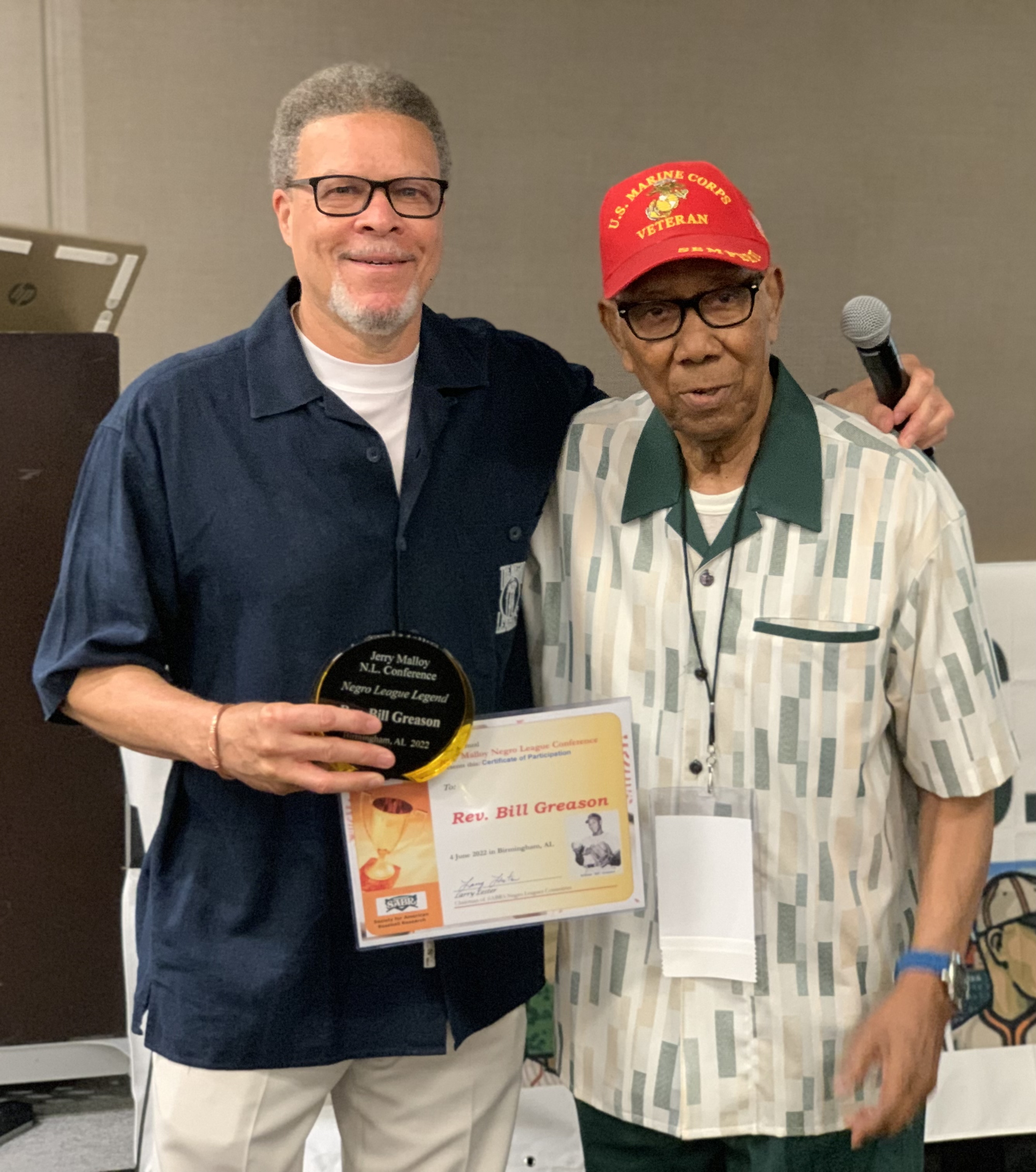


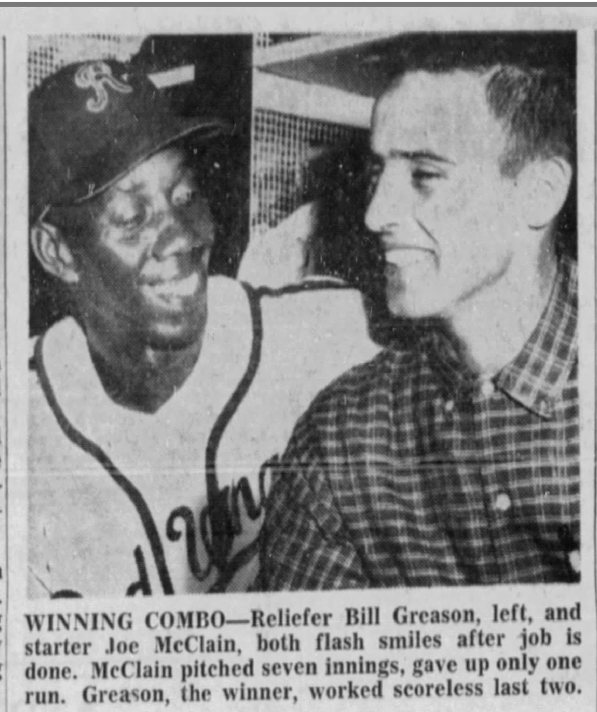

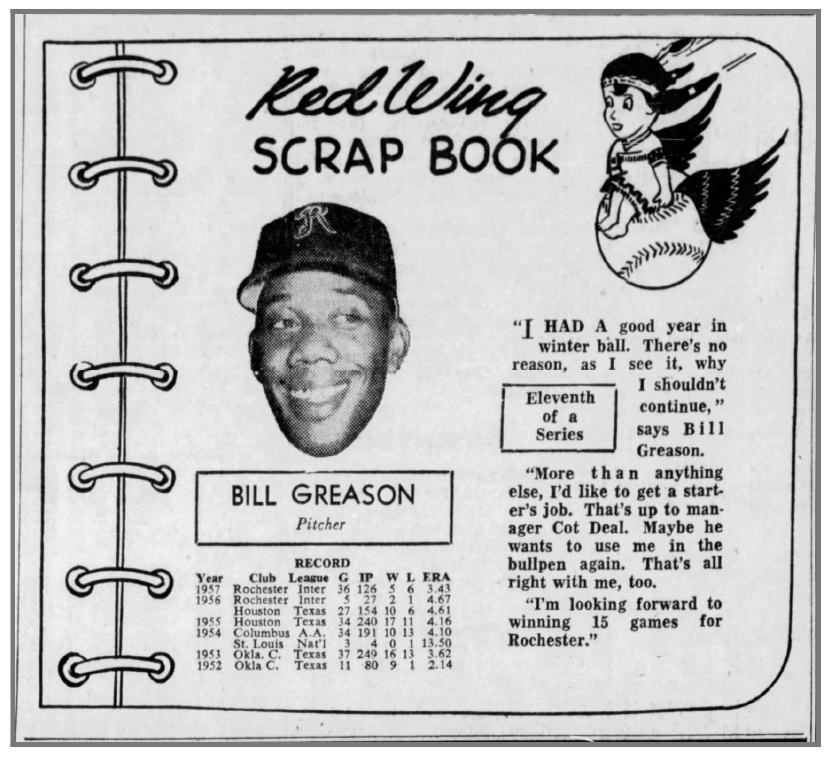
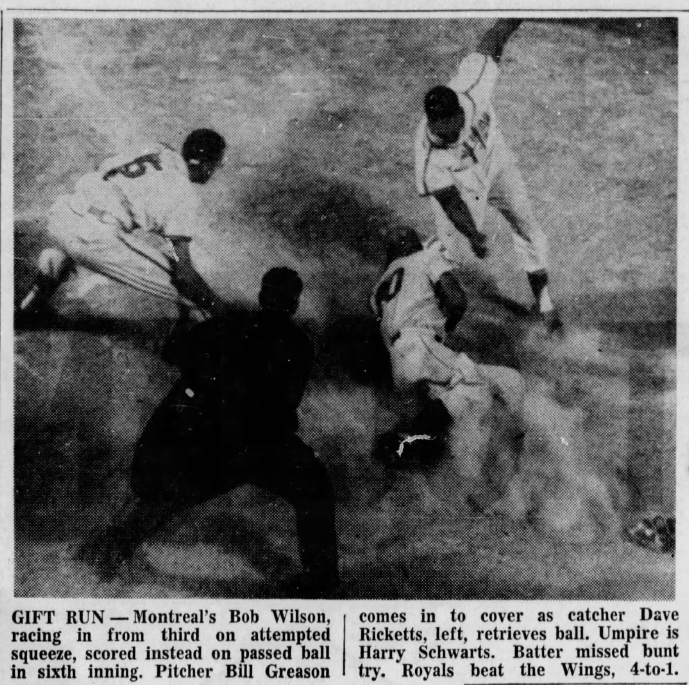

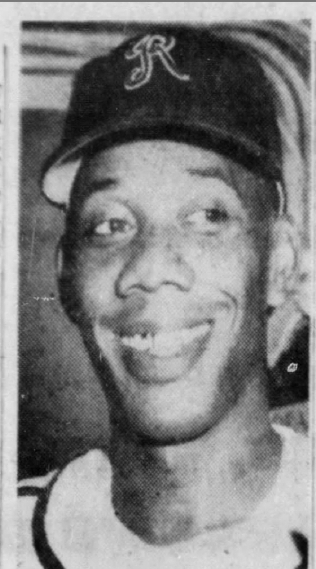

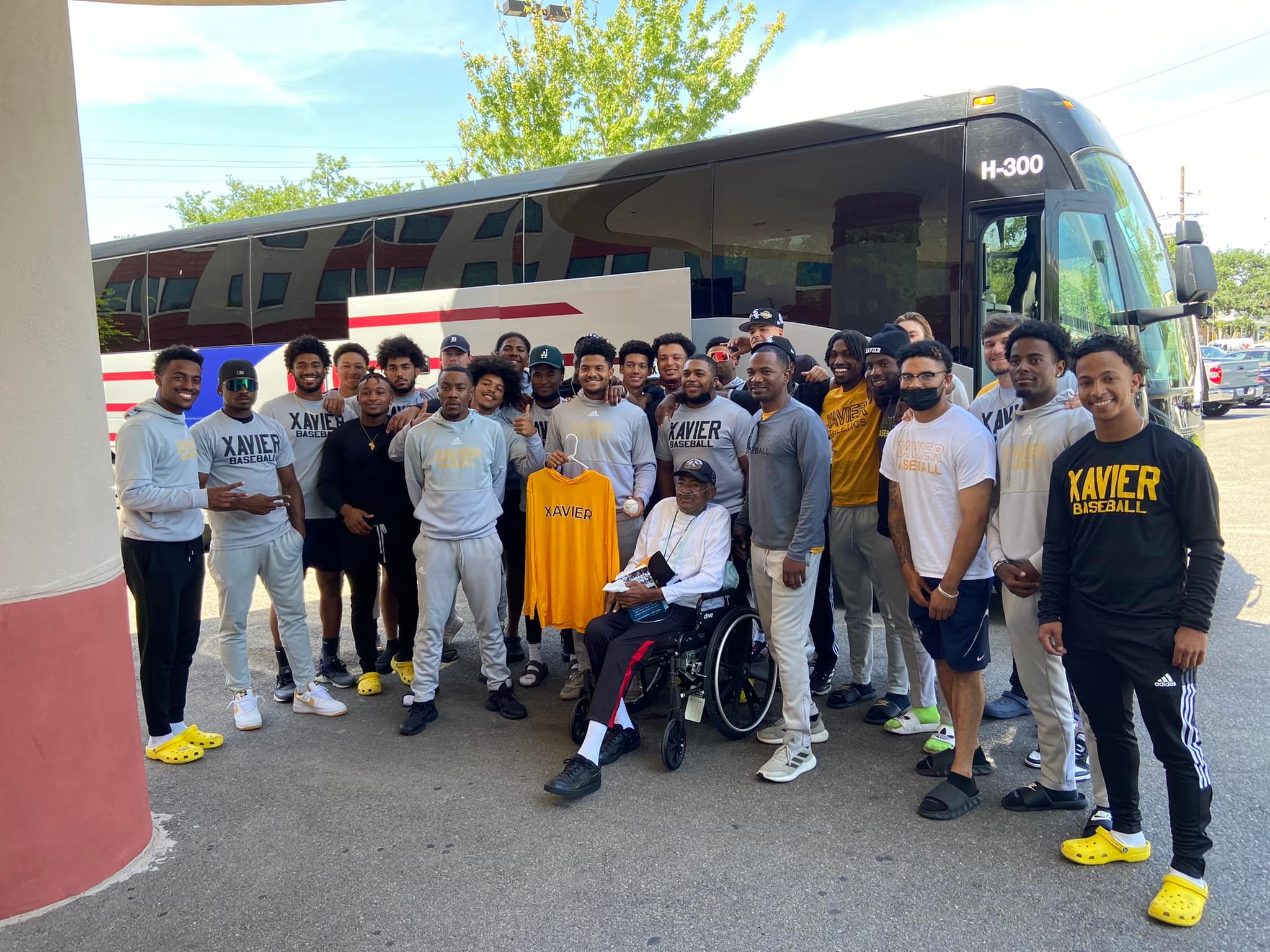

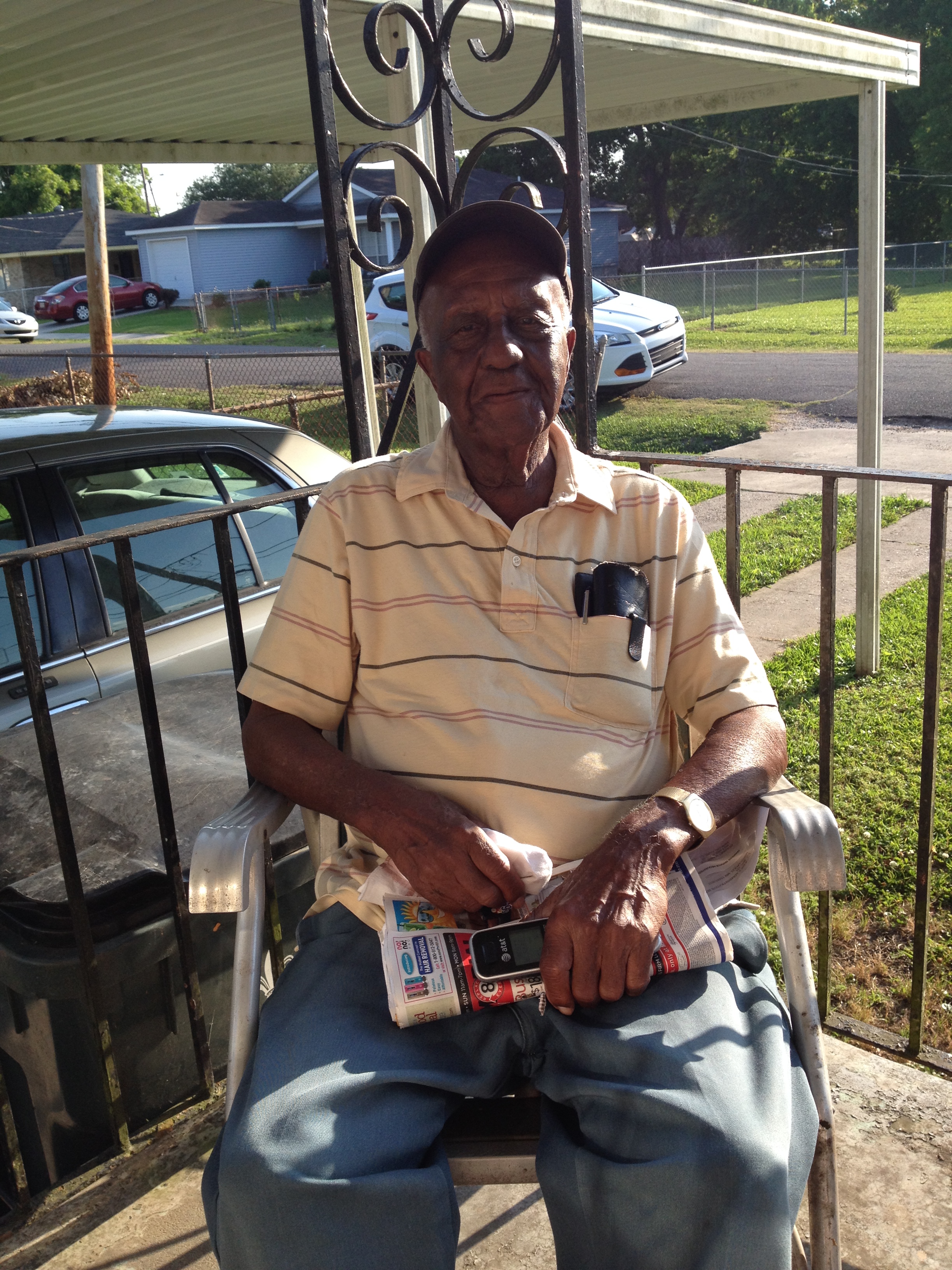

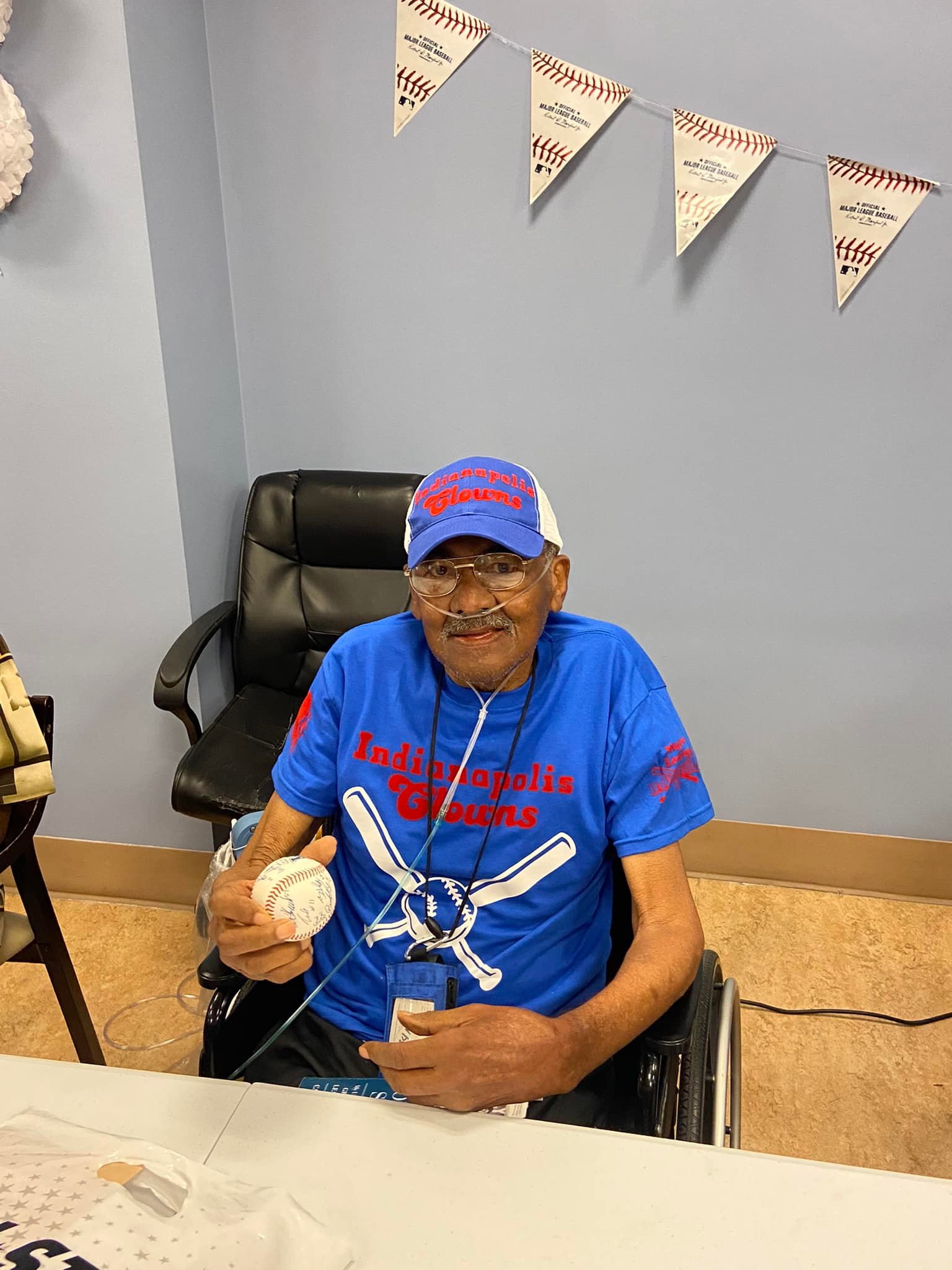
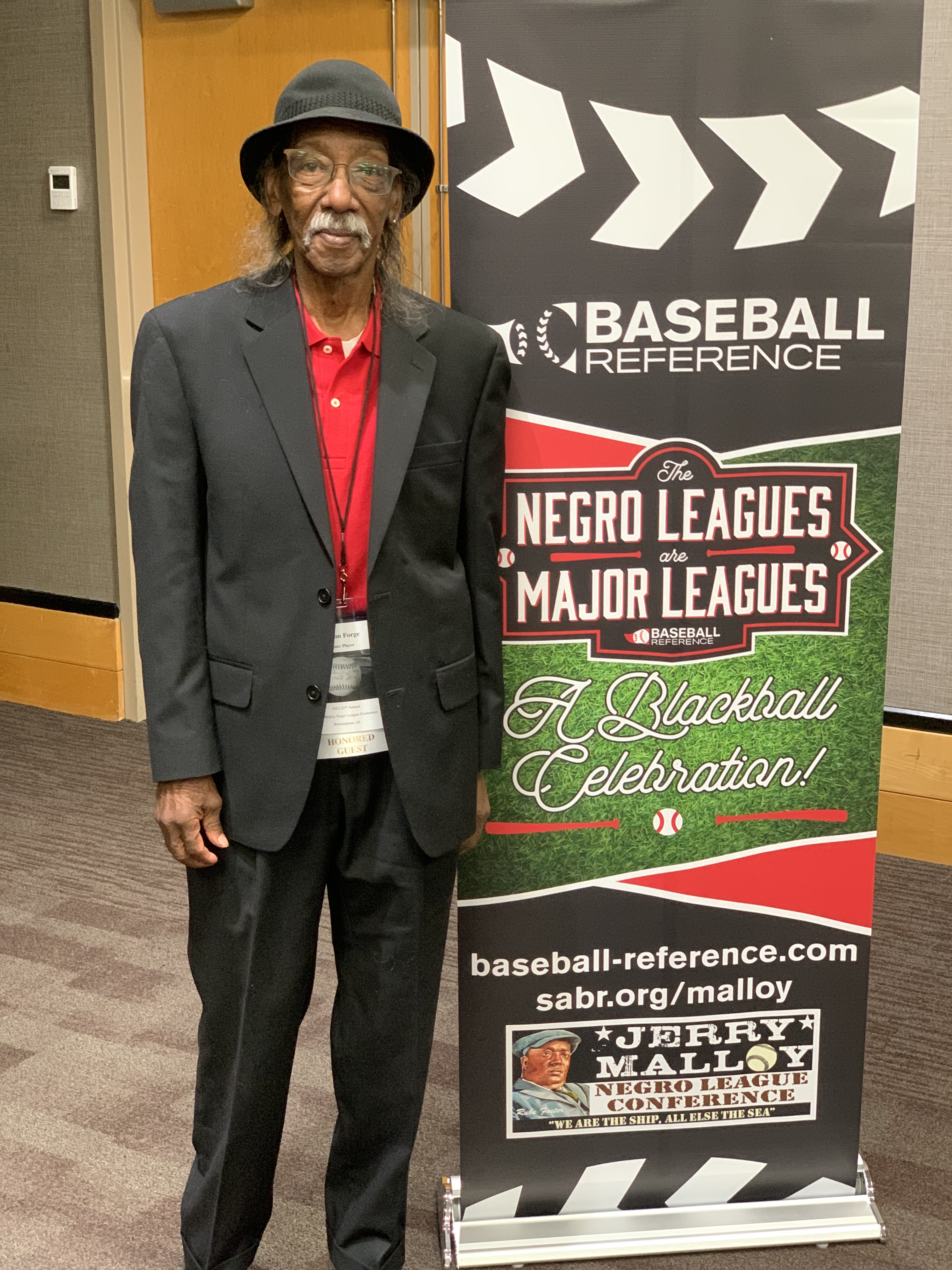



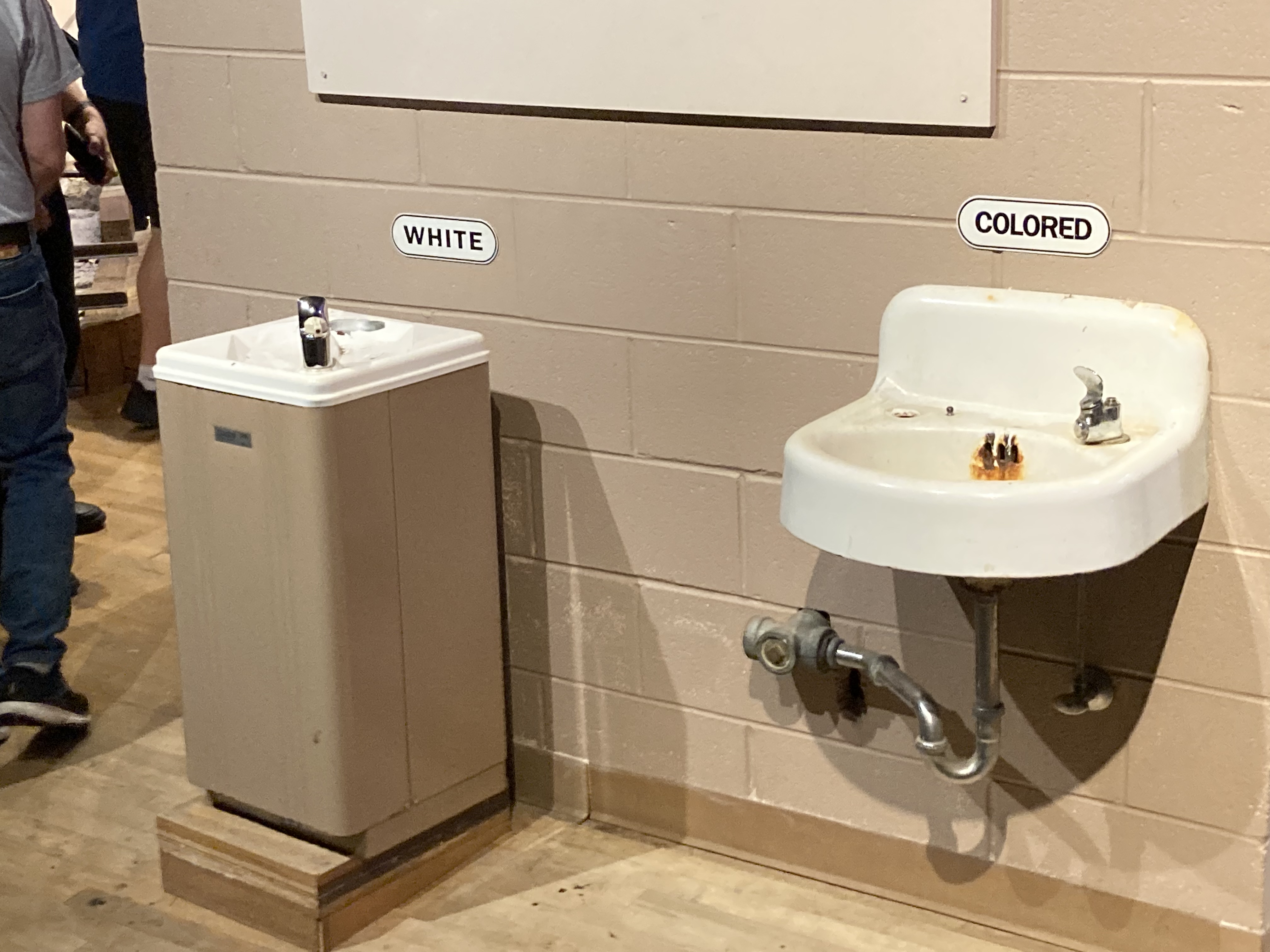

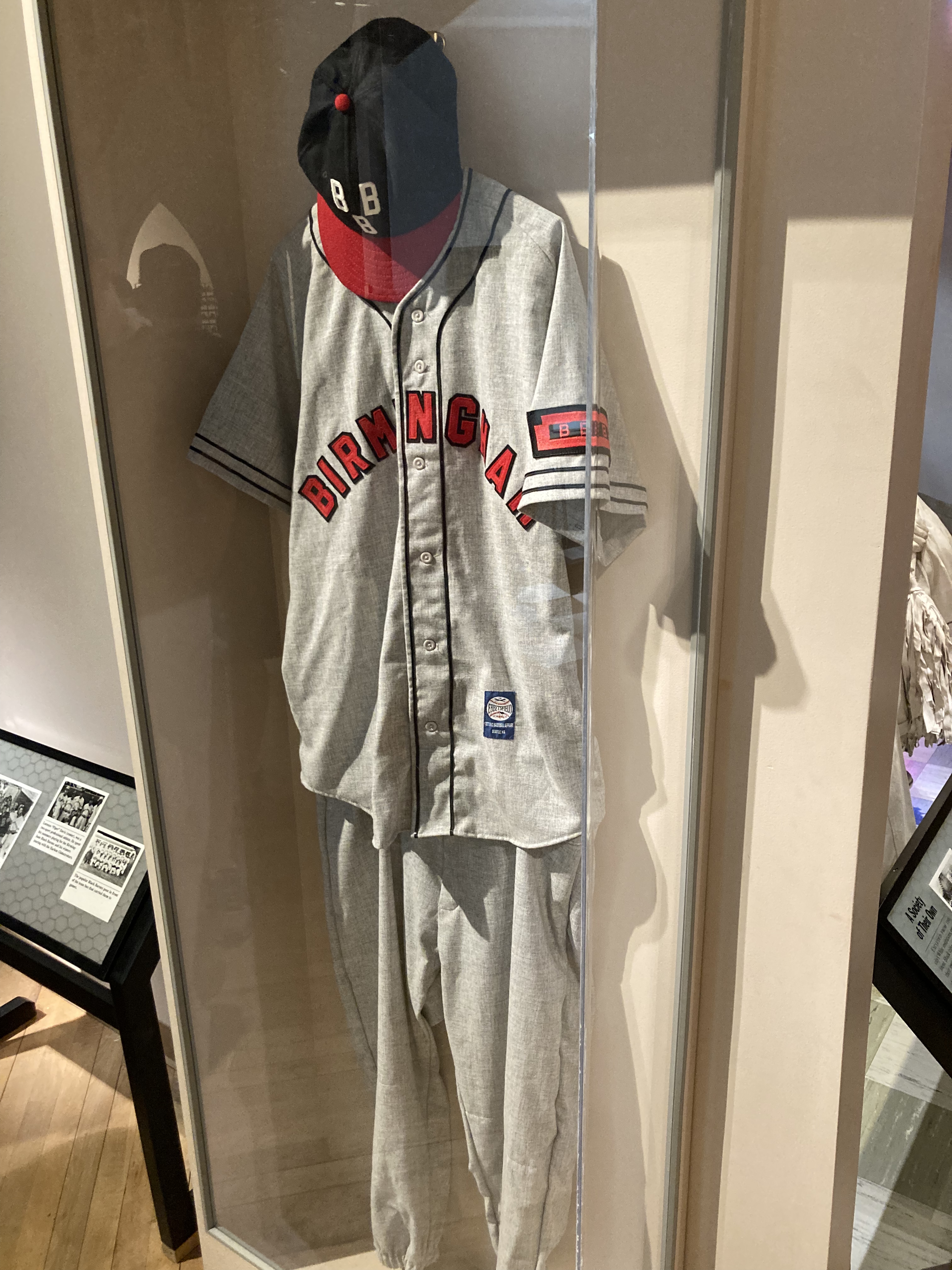
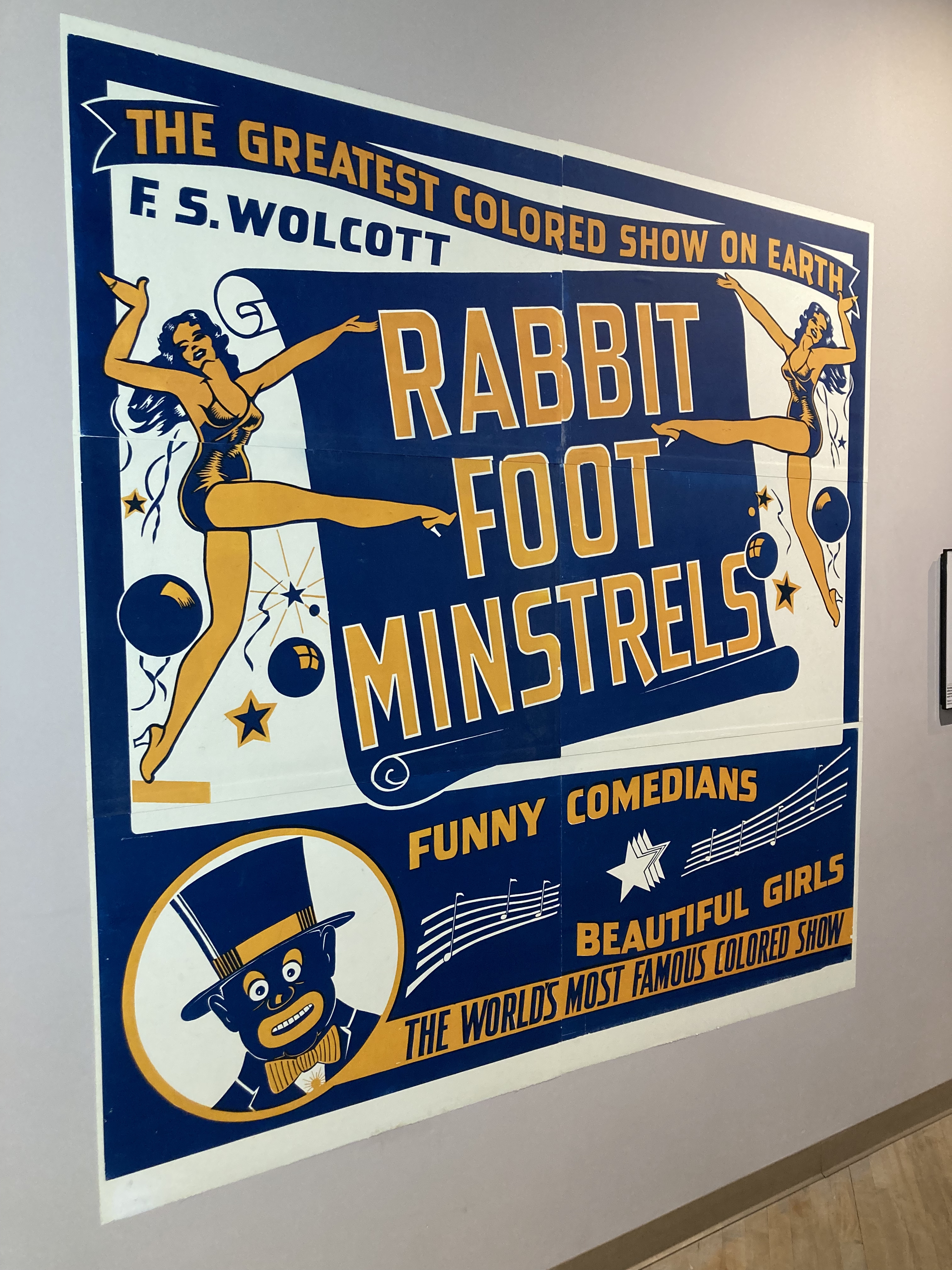



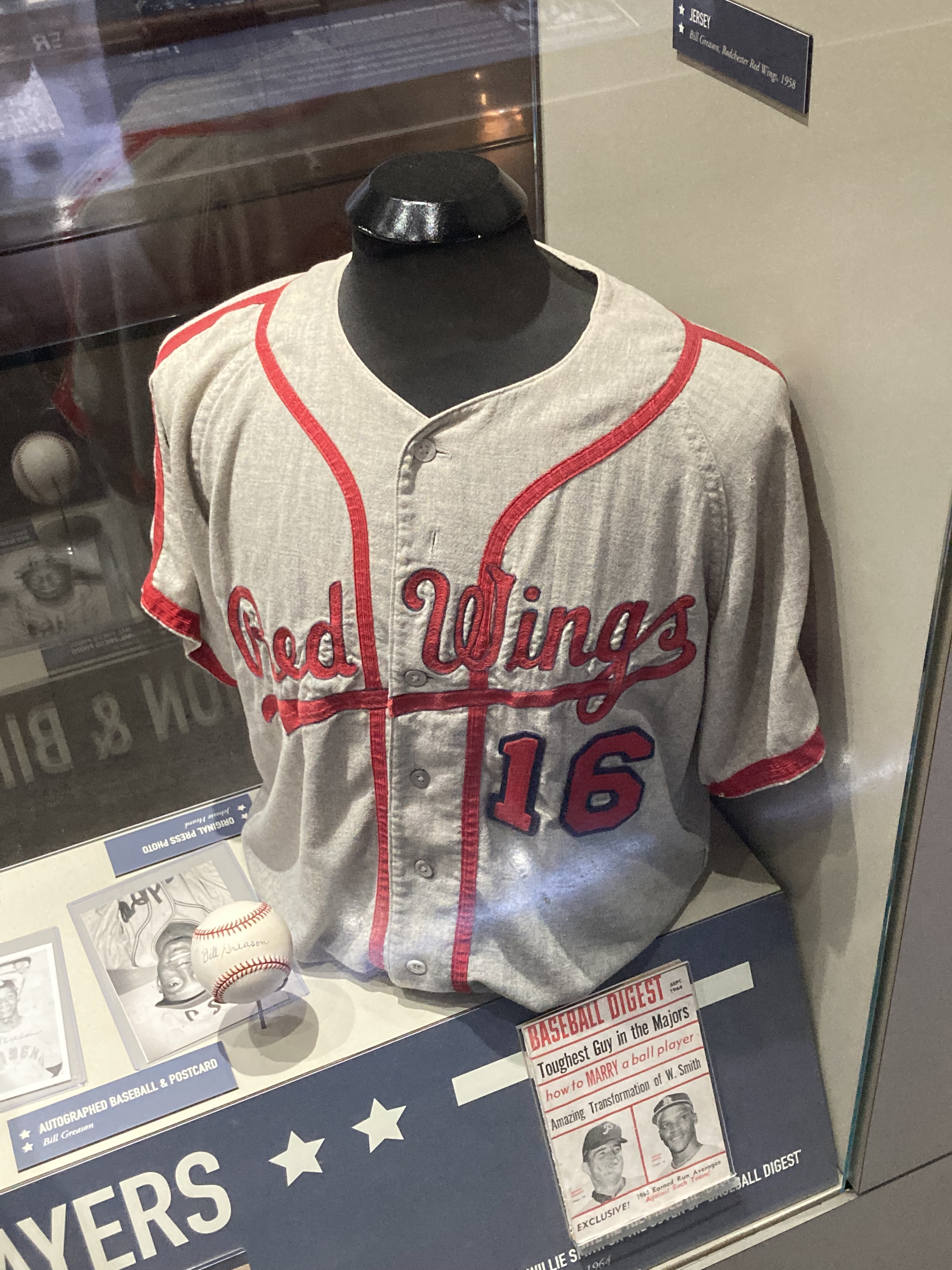
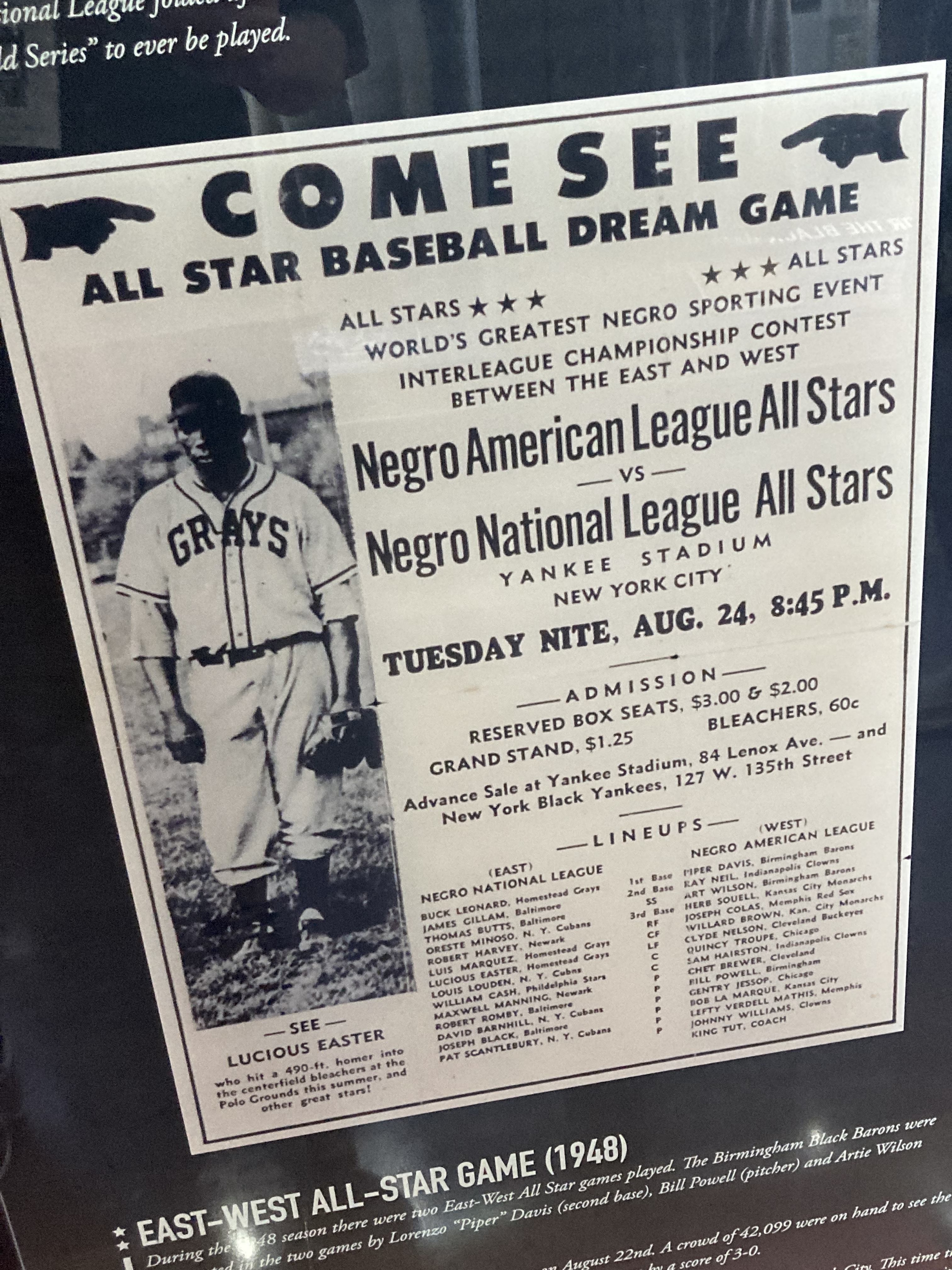
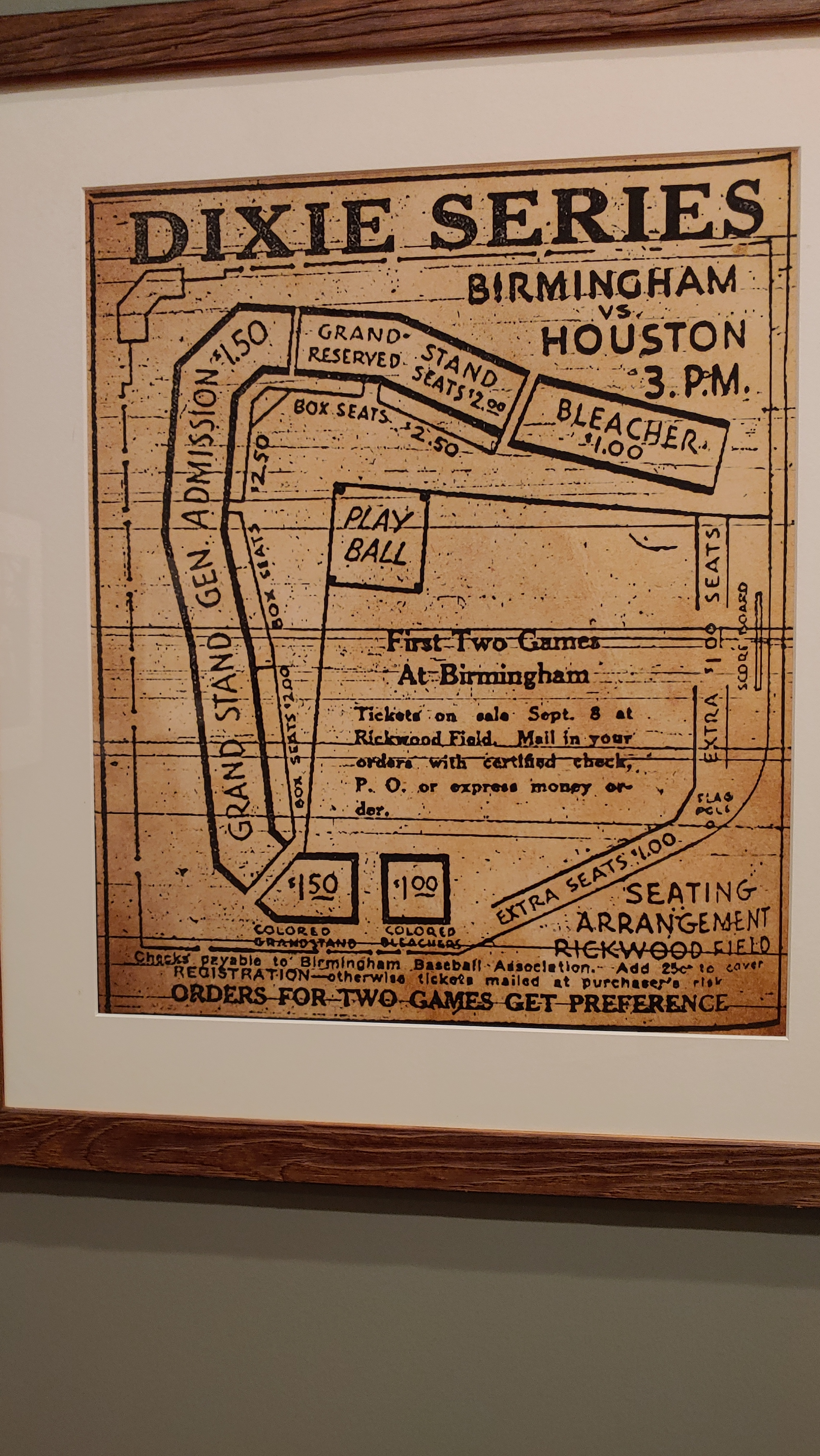




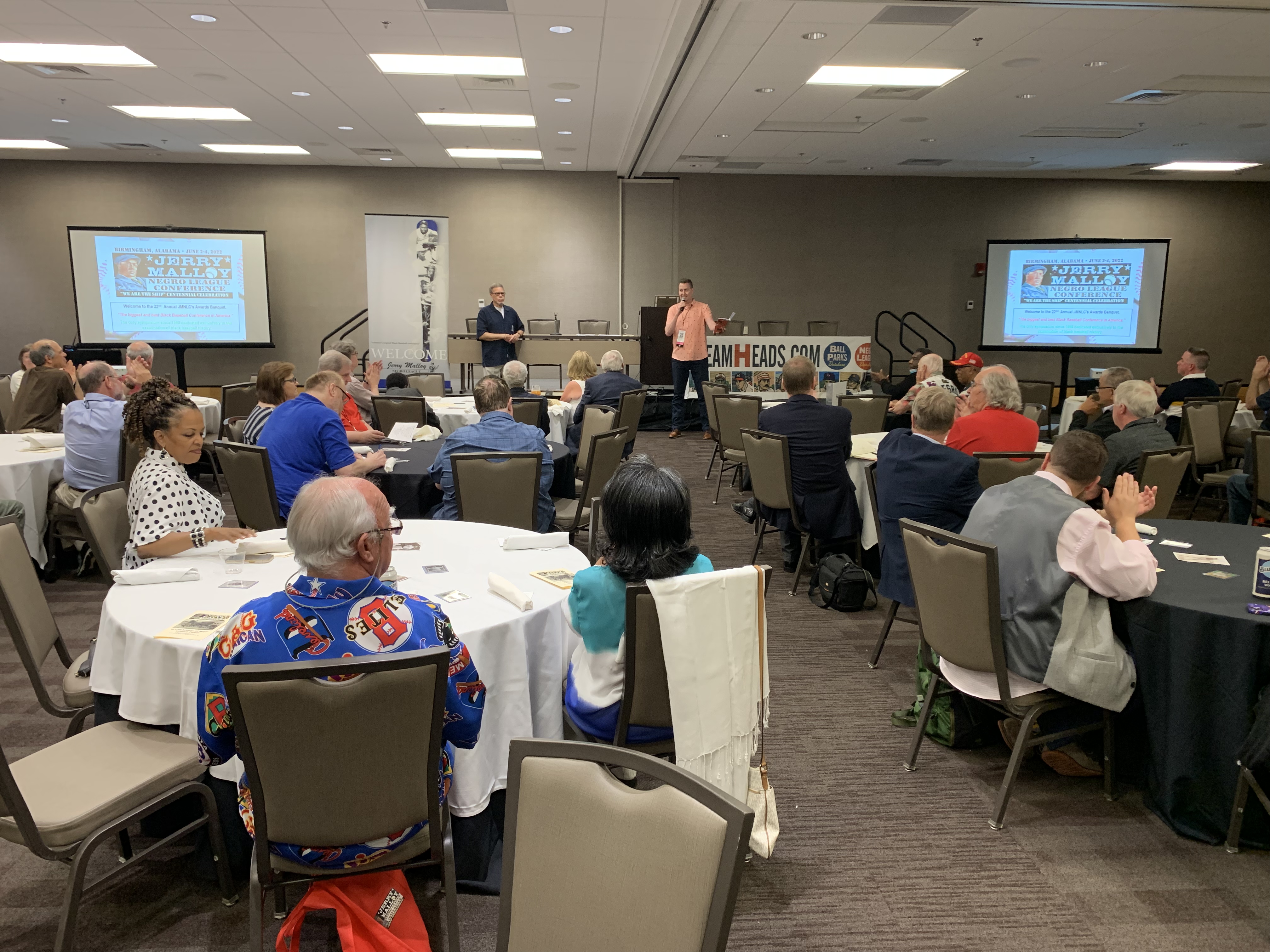

 The Negro Leagues Up Close