The 1945 Buckeyes, Part 3: Assessing the legacy

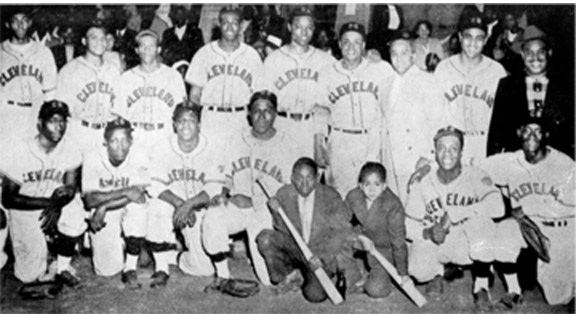
Bucks team 1

This is the third and final installment of a look into the 1945 Cleveland Buckeyes’ Negro World Series champion season. For the first post, go here, and for the second one, it’s here.

When the Cleveland Buckeyes actually did the impossible and toppled the mighty Homestead Grays in four straight contests to etch the Bucks’ name into history as the stunning victors of the 1945 Negro World Series, the Cleveland Call & Post newspaper triumphantly trumpeted that the Bucks had completed a Cinderella season with an “amazing championship.”

Fundamentally, the team’s decision to bring in a battle-hardened veteran to pilot the squad — and to harness and mould the natural talent and spirit found in the Buckeyes — might have been the most important decision team owner Ernest Wright and his management could have made. In the C&P’s Oct. 27, 1945, issue, writer Bob Williams credited the team’s talented skipper with pulling together the championship team:

“The man behind the scenes in the sensational World Series victory … was the quiet, unassuming catcher Quincy Trouppe, new manager of the Cleveland squad, whose program for the year contained the factors that spelled success and a championship.

“It was all intentionable [sic], and planned and predicted, but the person who worked it out made no fuss, and very little discussion of his program. All of [his] attention was directed towards the task of developing the team which eventually, within one season, romped through the Grays as if they were a sandlot team. …

“Trouppe’s job was a full one, playing, directing field strategy, and directing the players from the bench. On more than one occasion, he was seen to leave a position on base where he had hit safely to direct the batter, or runner on another base, what strategy to employ, and more than likely not, he was right.

“Trouppe wasn’t the most publicized or the most appreciated player on the Buckeyes by a long shot. In fact, too much of the credit for what was being done was given elsewhere. Had not this single individual been a member of the squad, it is almost a certainty that the Buckeyes would not have been in the running for the league championship this year.”

Williams asserted that Trouppe moulded the Bucks into fighting trim without fiddling too much with the roster — aside from the addition of spark plug infielder Avelino Canizares, there were few new faces in the Cleveland dugout. Williams also credited Trouppe’s magic behind the plate, especially calling for pitches, with sharpening his pitcher’s control and confidence.

But how do the Buckeyes fit into overall hardball history? Case Western Reserve University graduate student and Society for American Baseball Research member Stephanie Liscio drew a comparison between the ’45 Buckeyes’s achievement and the 2001 major-league World Series, in which the upstart Arizona Diamondbacks — whom, like the ’45 Buckeyes, used stalwart pitching as a foundation for success — skewered a previously dynastic New York Yankees team that was struggling, unsuccessfully, to retain its grasp on a title.

Liscio traced parallels between that falling Yankees squad and the declining Grays of 1945. That, she says, led, and continues to lead, pundits and historians to downplay the Bucks’ achievement that year.

But, like the ’01 Yanks, the Grays were able to mask their crumbling empire with a solid regular season, a situation that allowed the fresh-faced Cleveland squad to zoom in below the radar. Says Liscio:

“That was really the tail end of that Yankees dynasty that had a stranglehold on baseball in the second half of the 1990s. There were folks in the media in Cleveland in 1945 that thought the Buckeyes had a chance because the Grays were aging and losing a step. In many ways, the 1945 Grays and the 2001 Yankees were both powerful, talented teams, entering the back half of their dynasty, that were displaced by a young upstart.”

Still, in hindsight, nothing can take away from the achievements of the ’45 Buckeyes — achievements that, says Kent State University Professor and SABR Negro Leagues Committee member Leslie Heaphy, have only glowed more with the passing of the decades. She says:

“I’d say that the 1945 Buckeyes were a well-rounded team that managed to shut down what was a very powerful Grays offense, even if it was starting to enter its twilight. They shocked a lot of people, but maybe they shouldn’t have  — there was a lot of talent there, even if it wasn’t superstar-level talent.”

There is, of course, an interesting postlude (or two) to the tale of the 1945 Cleveland Buckeyes, one that involves a need to continue making money to stay afloat —and a wee bit of controversy.

It came in the first week of October of that year, when the Buckeyes and the Grays locked horns in a pair of exhibition clashes at none other than Yankee Stadium after the World Series was over.

The Grays swept the doubleheader with identical 7-1 scores, leading fans and pundits to stew and steam over what they viewed as some as a slack performances by the vaunted Grays during the World Series. Wrote New York Amsterdam News scribe Dan Burley in the paper’s Oct. 6, 1945, issue:

“The Grays in these two [exhibition] games came definitely to life and pinned back the collective Cleveland ears … That is what made people so salty. If, they pondered, Buck Leonard, Josh Gibson and Co. could toy with Cleveland after that team had won the championship, why in the hell wasn’t such a performance put on when our money was on the line for the Homestead crew during the series?”

Daniel, watch your language!

It should be noted, perhaps, that some observers weren’t really happy with how the whole ’45 Negro Leagues season went down. None other than legendary Pittsburgh Courier scribe Wendell Smith groused in his year-end wrap up of the sportive scene:

“On the matter of organizational function, Negro baseball left itself wide open. Once again it failed to operate according to the rules and regulations of organized baseball. Its member teams played more exhibition games than league contests; players socked and battered umpires; fines were inconsistent with violations and the officials appeared to know less about penalties than ever before; the East-West [All-Star] game was a financial success, but a disappointment from the standpoint of attendance; players were traded and re-traded with abound and the fundamental rules and regulations of the spacious baseball world were ignored with brazen regularity.”

Curmudgeonly and grouchy? Perhaps. Accurate and insightful? You bet.

The 1945 Negro Leagues campaign might or might not have been a stellar one in terms of league functionality and caliber of the product put forth for the fans. There’s little doubt that the world of blackball was more willy-nilly and seat-of-your-pants when it came to what happened on the field and in the financial coffers.

The question of whether the Homestead Grays gave their all, so to speak, in the Negro World Series perhaps still remains open for debate as well. Then there’s the matter of the supposed major-league “tryouts” Buckeyes stellar outfielder Sammy Jethroe and four other promising Negro Leagues stars, including Jackie Robinson, who would be actually be signed by the Brooklyn Dodgers near the end of the year.
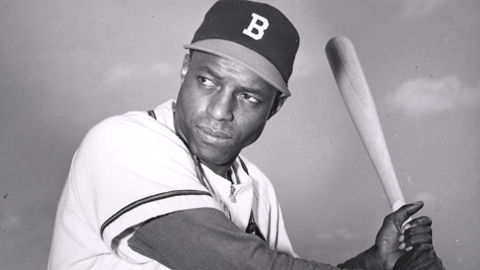
Sammy 1

Sam Jethroe

So, in hindsight, the 1945 Negro Leagues season was … interesting. But regardless, the Cleveland Buckeyes achievements that year cannot be overlooked or ignored. The Bucks were a fantastic squad, one of which even the great Rube Foster might be proud.

Cleveland was scrappy, but it was also rich with talent; while it had no future Hall of Famers or what history has dubbed true superstars — Jethroe could very well be the exception, as many historians and Negro Leagues enthusiasts believe he is one of the most under-appreciated — the roster was solid from top to bottom. They knew how to clout the horsehide, but they could also play small ball — stolen bases, bunts, timely hits. Well rounded is a word that certainly comes to mind.
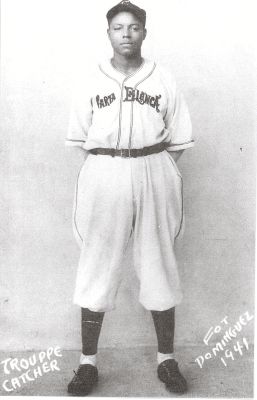
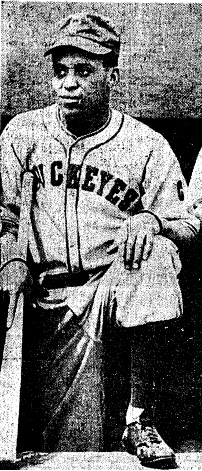
Trouppe 1

Quincy Trouppe

And that pitching crew … the whole starting rotation included four wily, skillful pitchers, all being caught by an expert catcher. And then there’s that catcher and manager, Quincy Trouppe — he brought it all together, bringing heart, smarts, experience and wisdom to a squad that was on the verge of greatness.

In fact, let’s finish this post with some thoughts from Quincy himself, via Bob Williams’ Oct. 27, 1945, Call and Post article, which included an interview with the manager. Take it away, Mr. Trouppe:

“I knew I didn’t have power hitters, with the exception of myself, so I had to utilize the speed, hit-and-run bunt and other batting techniques to the greatest possible advantage over my opposition.

“After deciding the type of strategy to employ I had to coach the players on when, how and what stage of the game to use a particular strategy.”

He added:

“When I came to the Buckeyes last year I noticed that although they were good ball players, they had missed a lot of basics, they were lacking in the fundamental knowledge of the game, they were not doing the things they should have been taught to do.

“I believe most teams in the colored leagues are sadly deficient in these fundamentals which represent the difference between a good team and a championship team. …”

Well said.

Endnote: For a deeper look at the 1945 Cleveland Buckeyes season, and every other season for the team, check out www.clevelandbuckeyesbaseball.com, operated and produced by stellar Negro Leagues and overall baseball historian Wayne Pearsall.
The ’45 Buckeyes, Part 2

Bucks team 1

This is the second in a three-part series on the 1945 Negro World Series champion Cleveland Buckeyes. For Part 1, click here.

It was with the disappointment (although Ernie Wright, Quincy Trouppe and the rest of the Buckeyes might have been a little relieved that their standout outfielder was going to be snatched up by the Red Sox) of outfielder Sam Jethroe‘s insulting tryout with the Boston Red Sox that the 1945 Cleveland Buckeyes launched their campaign.

It was a new season, and the Bucks were rarin’ to go as one of the favorites to cop the Negro American League pennant. However, their schedule wasn’t as loaded with “official” NAL contests as you might think. As discussed later, most Negro Leagues often played only a few dozen such contests each year.

The rest of their hardball campaigns — including a host of preseason warmup contests — were packed with exhausting barnstorming jaunts throughout the Northeast and Midwest. In fact, like pretty much every Negro Leagues team, those barnstorming ventures comprised the majority of Cleveland’s season — they seemed willing to play anyone, and anywhere within striking distance.

In July, for example, 500 people gathered at the famed House of David stadium in Benton Harbor, Mich., to watch the Bucks blast a popular local semipro team, Tate Edgell’s Twin City Independents, 7-3. A few weeks later, Cleveland landed in NYC top face the talented Bushwicks in a barnstorming tilt at Dexter Park. Stated the July 28, 1945, New York Age:

“It will be the first meeting between the two clubs. Cleveland captured the first half honors in the Western circuit [the NAL]. This will be [the Buckeyes’] first visit of the year in the East.”

When it came to barnstorming during the fantastic 1945 season, the Buckeyes seemed to love the towns and small cities of western and central Pennsylvania — they frequently scheduled contests, against both local clubs and other traveling big-time Negro League aggregations, in cities like Harrisburg, York and Chester.

The Bucks’ opponents for these exhibition games varied from local sandlot teams, like Lloyd’s Athletic Club in Chester, to top-level blackball squads, like the Negro National League’s Baltimore Elite Giants at the West York High School field in York.

However, it wasn’t just barnstorming tilts that saw the Buckeyes crisscross the Midwest; they also played NAL games in various locales. For example, on June 19, the Bucks squared off against the legendary Chicago American Giants, one of blackball’s most storied franchises, at Swayne Field in Toledo.

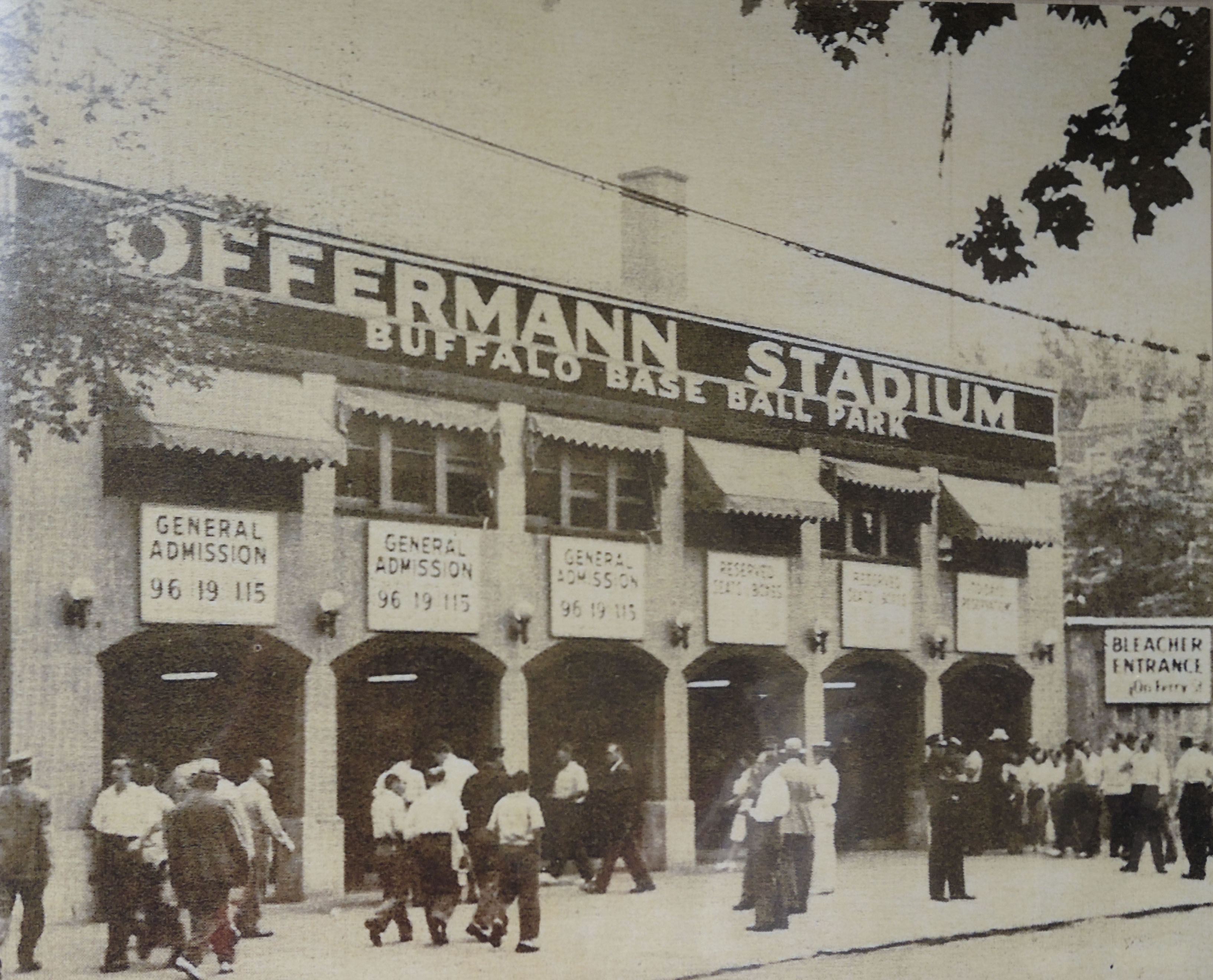
Offerman

The Cleveland crew then motored to Buffalo, another Lake Erie burg, where they fell to the Indianapolis Clowns (those most embarrassing of baseball minstrels), 4-3, at Offerman Stadium. An article in the June 23, 1945, New York Age asserted that the W was the Clowns’ second win over the Buckeyes that season, which, according to the report, amounted for half of Cleveland’s paltry four loses.

However, as was the case throughout much of Negro Leagues history, blackball teams usually played so many league games, barnstorming contests and/or exhibitions in so many locales that, in historical hindsight, it becomes difficult to ascertain the results of these dozens of games — or even whether the contests even went off as planned at all.

Take, for example, a game scheduled between Cleveland and the Chicago American Giants slated for that Aug. 9 in Harrisburg — the NAL regular season game fizzled before it started when the Buckeyes failed to make an appearance, reportedly because their bus broke down near Pittsburgh.

(Such last-minute cancellations and alterations occurred pretty frequently during Negro Leagues seasons, thanks to often less than stellar transportation, shoddy accommodations or a host of other causes. That, plus sketchy record-keeping, made it quite difficult to ascertain exactly how many league games each team had played and, therefore, what each team’s record was at any given point during the season. You’ll actually see an example of that a little bit later in this tale of the ’45 Buckeyes.)

Amidst this frenzied barnstorming chaos, the Buckeyes managed to bear down when the contests started mattering in the Wins and Losses column — league games. The Bucks’ quest began in late May, when they opened the season by sweeping the Memphis Red Sox in a doubleheader at League Park in Cleveland. The day was punctuated by a theft of home by Buckeyes third baseman Parnell Woods, the sparkling all-around play of Cuban spark plug Avelino Canizares, and the stellar mound work of the Jefferson brothers.

Woods,Parnell2

Parnell Woods

The Buckeyes followed that up by taken six of eight games against the Red Sox in a joint road trip, results that secured Cleveland’s spot in first place in the NAL. Paced by Canizares’ league-leading four home runs, the Bucks staked out first by posting the top team batting average (.316) and fielding percentage (an astounding .996), showing off their well rounded balance in the process.

Cleveland turned out its first-half coup de grace a couple weeks later, when they clobbered the great Chicago American Giants in a dominant doubleheader sweep on the road at Comiskey Park, 6-0 and 3-1. The victories secured the NAL’s first-half pennant — the league followed a split-season setup, with the winners of each half facing off for the overall league crown — as Sammy Jethroe went 7-for-9 at the plate to anchor what the Cleveland Call and Post’s Bob Williams called the Buckeyes’ “murderer’s row.”

With the first-half flag in their hands, the Bucks bore through their second-half slate in similar fashion. However, shoddy-record keeping — as alluded to earlier — nearly robbed Cleveland on the second-half crown as well.

Carswell

Frank Carswell

Despite again drubbing the American Giants in a doubleheader — this time in front of 8,000 fans at League Park at Wilbur Hayes Day, with George Jefferson claiming the 6-2 victory in Game 1 and big Frank Carswell blanking the hapless Giants 6-0 in the nightcap — during the first week of September, muddled paperwork and stat-taking at first gave the second-half crown to rival Chicago.

Why? Because league officials determined that, at first glance, Cleveland hadn’t played the required number of league games. Such a situation seems strange if one goes by Major League standards, in which every league team follows a strictly maintained scheduled and thus plays the same amount of contests as everyone else.

But with life being so harried and frenetic and even willy-nilly in the Negro Leagues — where, out of economic necessity just to survive as a franchise, teams routinely played many more barnstorming games than league matches — league officials had trouble keeping up with all the irregular records. Add to that a somewhat tenuous league administrative structure — which, again, wasn’t the case in the Majors — and at times, the league office was pure chaos.

But after some adjusting of the numbers and a review of the records, circuit honchos determined that the Bucks had, in fact, played the required number of games as well as posted more wins than the Chicago club, a skein that included 11 straight league victories at one point.

Thus, with both the first- and second-half pennants in their trophy case, the Buckeyes ended up undisputed champions of the 1945 Negro American League season. And, while field players like Woods, Canizares and first sacker Archie Ware and a stout but unheralded pitching pen, media and fans knew who was the foundation of the Buckeyes’ on-field success.

“ … [T]he top man in the Negro American League this years is again Sammy Jethroe, slight, unimpressive centerfielder who wears No. 27 on his shirt,” stated the Sept. 15, 1945, issue of the Call and Post, which added:

“Jethroe … has captured the batting championship for the second straight year with an average swat of .393, after fattening his mark 13 points in the final week of the campaign …

“King Jethroe almost finished right across the board in other departments, too … finishing on top in five other divisions, which included:

“A total of 55 runs scored, 123 total bases, 10 triples, 8 home runs and 21 stolen bases.”

Jethroe would have earned a septuple crown, but his teammate Archie Ware beat him out in RBIs. Sammy’s incredible stats in ’45 cemented his place in Negro Leagues history as a steady, dependable and incredibly well rounded player — a player who might be one of the most underrated, overlooked legends in blackball annals. If fantasy baseball had existed in the mid-1940s, Jethroe would, to say the least, be a good guy to draft.

Sammy 1

Sammy Jethroe

With Cleveland’s NAL crown, that set up the blockbuster showdown with the dynastic Homestead Grays, once again kings of the NNL but also a franchise starting the slow decline in ferocity and fortitude. A now-steadily aging squad, the Grays were formidable but flawed.

On the flip side, the Buckeyes were young, talented, balanced and getting better. With no superstars but a deep roster to go with shrewd, battle-tested but bold management on the bench and in the front office, Cleveland presented a captivating foil to the storied Grays — not to mention a Lake Erie fanbase that was dying for a successful hardball team. Stated the Call and Post’s Jimmy Jones in the paper’s Sept. 15 issue:

“Hosts of their first world series contest since 1920 when the Indians clashed with the Brooklyn Dodgers .. it is expected that record crowds of white and colored fans will see the first two of the five games now scheduled between the Grays and the Buckeyes. …

“The Buckeyes have more than an even chance to win the series from the Grays who have been steadily declining in power and flash which highlighted some of their earlier title triumphs. …

“The Buckeyes are a young and growing squad, strong in every department and surging with the thrill of early success.

“Just four years ago Manager Wilbur Hayes began to collect pro and semi-pro ball players from all over the country to begin building today’s championship title contenders. The brilliant players who hold down most berths on Buckeyes’ squad were secured only after [a] long and diligent search.”

Then came the Negro World Series and the triumph of the vaunted Grays. I actually won’t go into too much detail — please don’t be mad! — about the actual series other than what I discussed in the first post of this trio of articles. To me, honestly, it’s the Buckeyes’ preseason, regular season that are the most fascinating. We know what happened in the World Series. But how did that World Series juggernaut come together?

That’s the story I hope these first two posts have spotlighted. In the next and final installment of this opus, the Bucks’ fall victory tour and a theorem that hopes to chew over.

Back in action, and the Buckeyes are on deck

Finally! I’ve at last been able to gain a little more healthy footing and get a few things straightened out on that front. Things are still busy in the burg of Gretna, La., but I’m eager to job back into this here modest venture known as Home Plate Don’t Move.

Many thanks for hanging in there with me, as well as the beaucoup well wishes. Now, hopefully, you’ll enjoy what I’m prepared to serve up to ya.

And what I have for ya is a World Series. Not the 2015 MLB World Series, but one from a while ago — 1945, to be precise, exactly 70 years ago, when an exuberant, carefully constructed squad of unheralded but supremely talented and balanced bunch of upstarts shocked the African-American baseball community.

This is a significantly modified and expanded version of a work I submitted to a daily newspaper — I’m still waiting to see if that version of the article will be published (and if it does go to print, I’ll post the link here) — so some parts of it will have the tone and cadence of a newspaper article.

The story will be broken up into three still-very extended posts — apologies, as usual, for the relatively massive cumulative length — with the second installment (hopefully) being published this Friday and the final one going Monday as this year’s MLB World Series gets underway.

So sit back (or lean forward, depending on how you use your computational machines) and take a gander. Hope you like it …

Bucks team 1

They were the definition of underdogs, going up against arguably the greatest dynasty in Negro Leagues history. Heck, they had massively overachieved just to win the Negro American League pennant.

But 70 years ago, the Cleveland Buckeyes did it. They toppled the mighty Homestead Grays of the Negro National League, a team loaded with future Hall of Famers like Josh Gibson and Buck Leonard, with a resounded 4-0 sweep.

It was a Negro World Series for the ages, and the Buckeyes — who boasted no future Hall members in their lineup — came out on top, redefining history and stamping their indelible mark on the legacy of postseason baseball in Cleveland in the process.

“The Cleveland Buckeyes … astounded the diamond world by knocking off the Homestead Grays, long the dominant force in Negro baseball, in four straight games in the world series,” wrote legendary Pittsburgh Courier sportswriter Wendell Smith. “… Cleveland ‘breezed’ through the series in easy fashion.”

Head and shoulders of baseball writer Wendell Smith

Wendell Smith

And Cleveland did it with a balanced roster blessed with depth and quality, if unheralded, talent from top to bottom.

“The Buckeyes were considered a well-rounded team, but I’m not sure how many people outside of Cleveland really considered them a threat,” said Case Western graduate student and Cleveland Negro Leagues historian Stephanie Liscio.

“They didn’t have a ton of superstars, or people that were necessarily big names outside of Cleveland, so I think it’s how they were able to fly in under the radar, especially when you consider that their competitors, the Homestead Grays, had tons of big-name superstars. [The Buckeyes] were solid across the board, though, even if they didn’t have a couple of big names clobbering the ball every day.”

It was pitching, however, that really carried the day for the Bucks. Led by the Jefferson brothers, George and the elder Willie, and buttressed by stalwart hurlers Eugene Bremmer and Frank Carswell, the Cleveland rotation shocked the world by shutting down the potent Homestead bats.

After Willie Jefferson clamped down on the Grays for a 2-1 victory at Cleveland Stadium during game one, Frank “Bruiser” Carswell made it clear that the Buckeyes — who were only four years old as a franchise — were a team of destiny by completely dominating Homestead in a 5-0 shutout in game four.

“Winning game one helped boost the Buckeyes’ confidence,” says Kent State professor Leslie Heaphy, a member of the Society for American Baseball Research’s Negro Leagues committee. “A little sloppy play [by the Grays] and clutch hitting [by Cleveland] won them game two in come-from-behind fashion. But shutting out the Grays in game four really showed how strong the Buckeyes’ pitching was.”

Because the team was only founded in 1942, as the ’45 season began few pundits gave the Buckeyes a chance of even unseating the Birmingham Black Barons for the NAL pennant, especially because the Barons were the defending, two-time league champs.

Trouppe 1

Quincy Trouppe

But before the season commenced, the Buckeyes made two key signings — the hiring of savvy veteran catcher Quincy Trouppe as manager, and the addition of Cuban infielder Avelino Canizares.

By securing that pair and going through a rigorous round of spring training, the Buckeyes entered the campaign as a confident bunch, even though the rest of the blackball world expected little of them.

“You can take it from me …,” reported the Cleveland Call and Post’s Bob Williams  in late May, “you’re going to see a classy bunch of first rate ball players, strong in every department.

“I’ve listened to a lot of stories from executive manager Wilbur Hayes,” Williams added, “who raves about his new catcher-manager, his classy Cuban players, and the superb pitching staff, to say nothing of an ‘all around ball club, ready to make a real bid for the championship.’”

And remember the postseason plaudits Wendell Smith would heap on the Bucks after they crushed the mighty Grays in September? Well, before the season started, the famed scribe seemed to possess a remarkable prescience. As he wrote in the May 5, 1945, Pittsburgh Courier:

“In the American League, [two-time defending NAL champ] Birmingham … will be confronted with Ernie Wright’s formidable Cleveland Buckeyes, a team that has grown in prestige and power yearly because it is one of the best operated organizations in baseball. Barring injuries, the Cleveland team is destined to oust the mighty Birmingham aggregation this season. Managed by Quincy Troupe [sic], a topnotch catcher, the Buckeyes have the best balanced team in the American League. … [O]n paper, Cleveland has the best team in the Western circuit.”

But before we dig into the task of retracing the season, there’s one more thing to discuss — it’s significant and, it turns out, it also involves Wendell Smith.

It came in mid-April, and it was met with a flurry of coverage in the black press and keen interest among Negro Leagues fans — two Major League teams, the Brooklyn Dodgers and, of all organizations, the Boston Red Sox, announced they would each offer tryouts to a few African-American stars.

You’ll recall that the Red Sox were the very last MLB team to integrate, a development that, fairly or not, helped earn Boston a reputation as a racist city when it came to sports. (Just as a side note, I’d counter with the fact that the Boston Bruins were the first NHL team with a black player, Willie O’Ree, while the Celtics were the first NBA squad with an African-American coach, the great Bill Russell.)

But in spring 1945, the BoSox appeared to be on the cutting edge of race relations. The players they tried out: Jackie Robinson, then playing with the Kansas City Monarchs; the Philadelphia Stars’ Marvin Williams; and Cleveland Buckeyes outfielder Sam “The Jet” Jethroe. (Sorry, Jason Terry, but Sammy was the original Jet.) The trio had Smith, who had pushed for the tryouts, accompanying them. (The Dodgers, meanwhile, took a look at pitchers Dave “Showboat” Thomas and Terris McDuffie.)

Sammy 1

Sam Jethroe

The news of the impending tryouts seems to have been met with cautious enthusiasm, but the Call and Post was understandably excited about seeing its city’s star outfielder get a shot at The Show. As the paper stated in its April 14, 1945, issue:

“This is the first time that any Cleveland ball player has ever been given an opportunity to tryout [sic] on a major league team, following on the heels of the history-making tryouts of two Negro ball players with the Brooklyn Dodgers last week.

“Jethroe stars in center field but is a good utility catcher, led the American League in batting last year with an average of close to .350, and is one of the most valuable Negro ball players in the country.”

However, any optimism the African-American media and fan base might have had at the initial news was snuffed out almost as quickly as it had been generated — none of the players who showed up for workouts with the MLB clubs were signed, and, after the affair, many African-American pundits were actually pretty steamed, calling the tryouts an insulting sham.

The April 28, 1945, issue of the Chicago Defender ran a report on the tryout with the headline, “Boston Red Sox Impressed But Fail To Hire 3 Negroes.” By most accounts, all the BoSox management — and that of the Dodgers a week earlier — did was have the black players come out for a few minutes, just toss a couple balls and take a couple cuts at the plate. It was, scribes said, humiliating. Wrote Homestead Grays owner, NNL secretary and eventual Hall of Fame inductee Cum Posey shortly after the event:

“We will forgot the foot race between sports writers to see which hopes to be the first to place a Negro player in white organized baseball. To say that these players got tryouts by major league clubs is a travesty.

“It was the most humiliating experience Negro baseball has yet suffered from white organized baseball. It was humiliating to the writers who took these players to camps.

“Whoever heard of a player getting a tryout by hitting a few balls, catching a few balls, or in the case of a pitcher throwing a few balls?

“The first instruction a major league scout gets when he leaves to look over a prospect is: Can he run? Can he throw? If he can not do either of these, he is passed no matter how he hits or fields.

“None of these players were asked to run or throw.

“After seeing these players, was an option asked for their services? Any white rookie one half as good as any of these players would have been kept for at least a week and sent to some minor league club.”

But such disgruntlement, while stinging and seething underneath for two more years, was soon forgotten, at least for the time being. There was a season to play, and the Cleveland Buckeyes were amped up for the campaign.

Next up: The season takes flight, and the Buckeyes barnstorm up a storm.

A little medical leave

Howdy all, I just want to apologize for not getting posted lately — that trend might continue for another week or so. I’m going through a few major changes in terms of my long-term health situation, so I’m kind of struggling to get things done right now.

I’ll try to post some new stuff ASAP, so bear with me if you can! Many thanks, enjoy the playoffs, and go Cards!

Another honor for Gentleman Dave

david_malarcher

This has already been reported on a few other Web sites and Facebook pages, but I wanted to write something personally because it means a great deal to me …

Union, La., native, New Orleans University grad, Rube Foster disciple and legendary Chicago American Giants third baseman/manager “Gentleman” Dave Malarcher has been selected for the Louisiana Sports Hall of Fame! He’ll be inducted next year, an honor that comes on the heels of his being ushered into the New Orleans Professional Baseball Hall of Fame this past spring.

Such accolades are long overdue for Gentleman Dave, whom Society for American Baseball Research Negro Leagues Committee Co-Chairman Larry Lester once described thusly:

“If you mentioned Aristophanes, Pericles, Sophocles, Thucydides, Euripides of Socrates, this scholar knew of their talents. Off the playing field, Julius was known for his prose and philosophy. Rube’s star student had the gentle demeanor of a lap dog, but had a Rottweiler appetite to win. Malarcher had the purity of Black Moses, the tenacity of Black America and sanctity of Black Madonna.”

I’m working on getting some thoughts on this recognition from one or two of Malarcher’s relatives, but I also talked to Ro Brown, one of the people on the committee that chooses LSHOF inductees. Ro was a longtime New Orleans journalist and sports anchor who now works in the University of New Orleans athletic department.

malarcher

Ro said that it’s largely accepted among African-American baseball historians that, in the 1920s and early ’30s, Malarcher was an acolyte of and on-field general for Foster, the founder of the first Negro National League and arguably the most influential figure in blackball history.

“That alone says a lot,” Ro told me.

“But he was also an interesting guy to me,” Ro added. “Just his background, his lineage and his education. That was highly unusual for black and white baseball players of the time to have.

“Here’s a guy who had the nickname ‘Gentleman.’ That should tell you something right there, so he was somebody who deserves this kind of recognition.”

Here’s the official LSHOF press release from this week about the upcoming induction of Malarcher and the rest of the Hall of Fame, and I have several of my previous posts about Gentleman Dave here, here and here. Finally, here’s a story I wrote a couple years ago for the Dillard University alumni magazine. (Dillard was formed when New Orleans University, Malarcher’s alma mater, merged with Straight College.)

Catchers: apples and oranges

It’s been more than a week now since the great Yogi Berra passed away, and I wanted to hold off a bit before posting a few thoughts on Yogi and his place in the pantheon of legendary backstoppers.

The saddening news of Berra’s death last week spurred commentators and pundits of all stripes to pontificate about whether he was the greatest catcher of all time, especially offensively. It reminded me a little of a similar debate that cropped up several years ago when Mike Piazza retired from the game.

I bring this discussion up now also because last week — Sept. 22, to be precise — marked the 50th anniversary of the death of another Hall of Fame catcher, Negro Leaguer Raleigh “Biz” Mackey.

To me, the timing of Yogi’s death so close to the half-century mark of Mackey’s passing was, perhaps at the very least, eerily coincidental. It also once again snaps into focus the debate of whether Negro Leaguers and their accomplishments continue to get short shrift compared to their major league counterparts, including ones from both pre- and post-1947.

When Piazza retired, many pundits touted him as the greatest offensive catcher in history, even better than Berra or Johnny Bench. But very few of those expert commentators even raised the names of Mackey, Josh Gibson and other legendary, segregation-era backstops who could pound the cover off the ball, reflecting a vaguely racist historical hardball myopia that still exists

Surely Gibson, at the very least, was better with the stick than Piazza or Bench or, dare I say, even Berra or the Dodgers’ Campy. And that’s not to mention Biz or any other number of Negro League legends.

And that’s certainly no disrespect to Yogi or any other major-league catcher to come along after the advent of integration.

To a point, thus, we may be talking the proverbial apples and oranges, lacking any viable algorithm to fairly and accurately compare Josh Gibson or Biz with Yogi Berra — or, for that matter, segregation-era white Hall of Famers like Bill Dickey, Mickey Cochrane, etc.

So where does that leave us? I’m really not sure. Maybe we’ll have to be content with this comparing apples to apples, oranges to oranges, and bananas to bananas. It’s virtually impossible to mix-n-match players from different eras and situations.

But it’s still a fun debate. So, was Josh better than Yogi? Was Bench as good as Biz? Let the debate begin. Or, rather, let it continue …

A half-pint called Squatter

KIC Image 0001

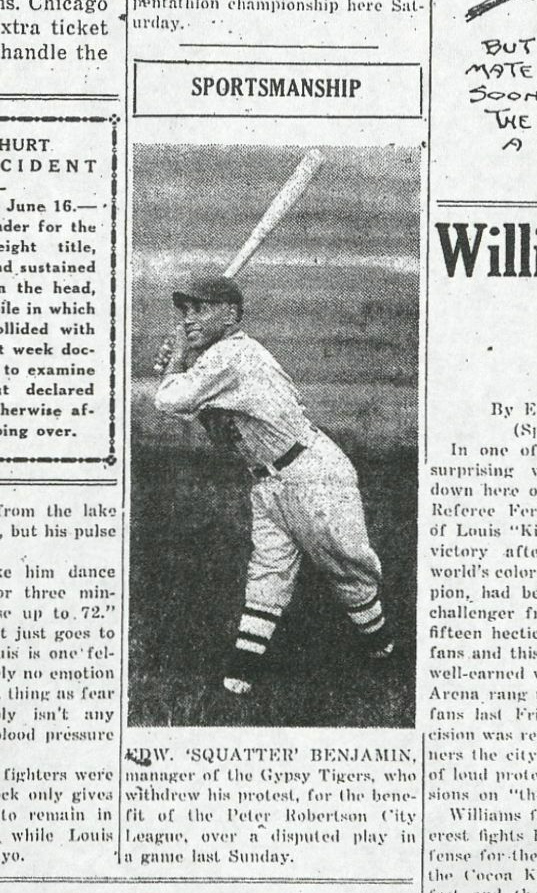
This little half-pint is Edward “Squatter” Benjamin, a NOLA native who in the 1920s and 30s-ish was a multi-sport sandlot and semipro stalwart. I tripped across this while doing freelance research for a project being undertaken by another writer — more on that later — and found it in the June 19, 1937, issue of the Louisiana Weekly.

I’d never heard of Squatter Benjamin before, but this picture was too, well, adorable to pass up. The context for the photo is the 1937 local sandlot season and a four-team city league created by Peter Robertson, a somewhat legendary figure on the Crescent City Negro Leagues scene about whom I’ve researched little up until this point.

There’s just so much rich, entrancing blackball history here in the Big Easy that I’ve never gotten around to digging much into the Pete Robertson legend. But what I do know is that Robertson managed and/or owned several baseball franchises over a few decades in the first half of the 20th century, and at least once he was involved in swirling controversies and power-struggle dramas.

But in early ’37, Robertson brought together area sandlot squads, including the Squatter Benjamin-managed Gypsy Tigers, in a citywide semipro league. At some point during the season — and I haven’t had time to glean too many details about this — the Gypsy Tigers were involved in a game that featured a controversial call that, according to some, tipped the contest against the Tigers and in favor of their opponents, the New Orleans White Sox, who won the game.

Squatter Benjamin, the skipper of the Tigers, then lodged a protest with league headquarters, such as they were, over the disputed incident. But, according to the caption from this Louisiana Weekly photo:

“Edward ‘Squatter’ Benjamin … withdrew his protest, for the benefit of the Peter Robertson City League, over a disputed play in a game last Saturday.”

As you can see with the header about the picture — “Sportsmanship” — Benjamin’s gracious move to drop his beef was well received by the local black press, which all season did its best to pump up and support the city league.

Benjamin’s decision to forgo his dispute for the good of the league was even reported in the mainstream white NOLA media at the time, including the Times-Picayune, which reported that Benjamin decided to drop his protest during a tete-a-tete between himself, Robertson and White Sox officials.

In the grand scheme of the long, complex history of the Negro Leagues in New Orleans — not to mention in the larger, gigantic, national blackball firmament — this incident is no more than a minor, barely perceived blip. But because of his tiny, sawed-off stature and goofy but absolutely appropriate nickname, Squatter Benjamin — like Black Diamond Pipkin, Iron Claw Populus and so many other fascinating NOLA Negro Leagues personalities — is worth a small historical glance …

Edward Benjamin was born, according to military records, on April 25, 1905. He was the fourth child, and third son, of Edward Sr. and Jennie — also called Lulu — Benjamin, who appear to both have been born in Alabama. Both Edward Sr. and Lulu were born during the Civil War years, which means they both could have been slaves originally.

However, Edward Sr.’s ancestral roots might be traced to Central America, possibly Costa Rica, and at one point — namely, the 1900 Census — Edward, Lulu and their burgeoning family were living in Vicksburg, Miss.

31111_4329984-00515

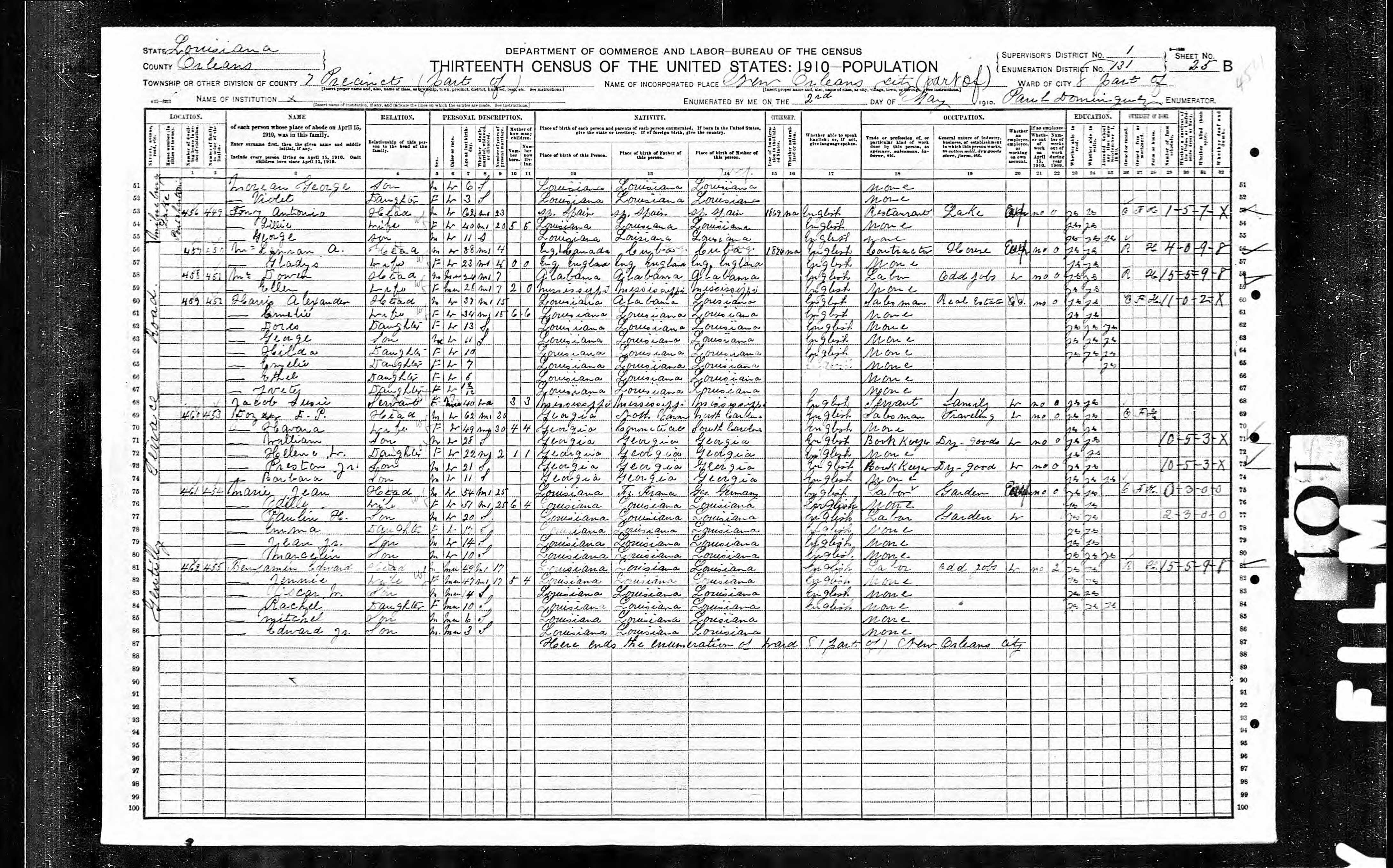
But the 1910 federal Census lists the entire family as “mulatto” living in an otherwise all-white neighborhood in NOLA. Edward Sr. was an odd jobs laborer in New Orleans; the family lived, at various points, on Gentilly Terrace Road and Allen Street. However, apparently at some point Edward Sr. became a minister but died between 1920 and 1930.

Edward Jr. went to to attend Straight College here in New Orleans — Straight was one of the progenitors or modern-day Dillard University — and became a teacher. The 1930 Census lists the 24-year-old Squatter living with his widowed mother and his brother, Roland, in New Orleans.

It was in the 1920s that Edward Benjamin Jr. became involved in the local semipro and sandlot sports scene; the little guy was a starting quarterback at Straight during his college years and for the semipro New Orleans Elks in the 1930s. On the diamond, Squatter pitched for the 1926 Caulfield Ads squad that won the Negro Southern League crown. Benjamin also appears, as the’40s arrived, to have gotten into boxing management, including handling local fistic gladiator Baby Kid Chocolate.

Then World War II came, and on Dec. 3, 1942, at the age of 37, Edward Benjamin Jr. enlisted in the Army to fight for his country. He served as a private until being discharged in August 1945. Squatter’s enlistment records list him at a diminutive 5-foot-2, 149 pounds.

Squatter returned to his hometown after the war, and by the time he reached retirement age in the 1960s and ’70s, he became active in the New Orleans Old Timers Baseball Club, an organization dedicated to preserving the memory and history of local Negro Leaguers. Benjamin participated in several of the club’s reunion all star games, in fact.

Edward Benjamin Jr., nicknamed “Squatter” for most of his life, died on Dec. 4, 1984, at the age of 79 and was buried at Corpus Christi Church.

Thus past into history one of New Orleans’ countless colorful segregation-era African-American athletics legends, but because of his college education, his service as a teacher and his valorous service during World War II, Squatter Benjamin perhaps holds a special place in local sports history.

Before white supremacy, base ball trailblazing in Wilmington

The_Wilmington_Post_Thu__Aug_22__1867_

Of all the cities in the newly repaired Union, why, of all places, was the Southern coastal burg of Wilmington, N.C., one where African Americans actually led the way in baseball?

This was, after all, the place where one of the most open and violent coups d’etat in U.S. history occurred — in 1898, a group of white insurgents bloodily overthrow a democratically elected, biracial city council, in what many historians now believe was the final nail in the coffin of Reconstruction and the official ushering in (along with Plessy v. Ferguson) of a new era of severe Jim Crow political and social policies and white supremacy in the South.

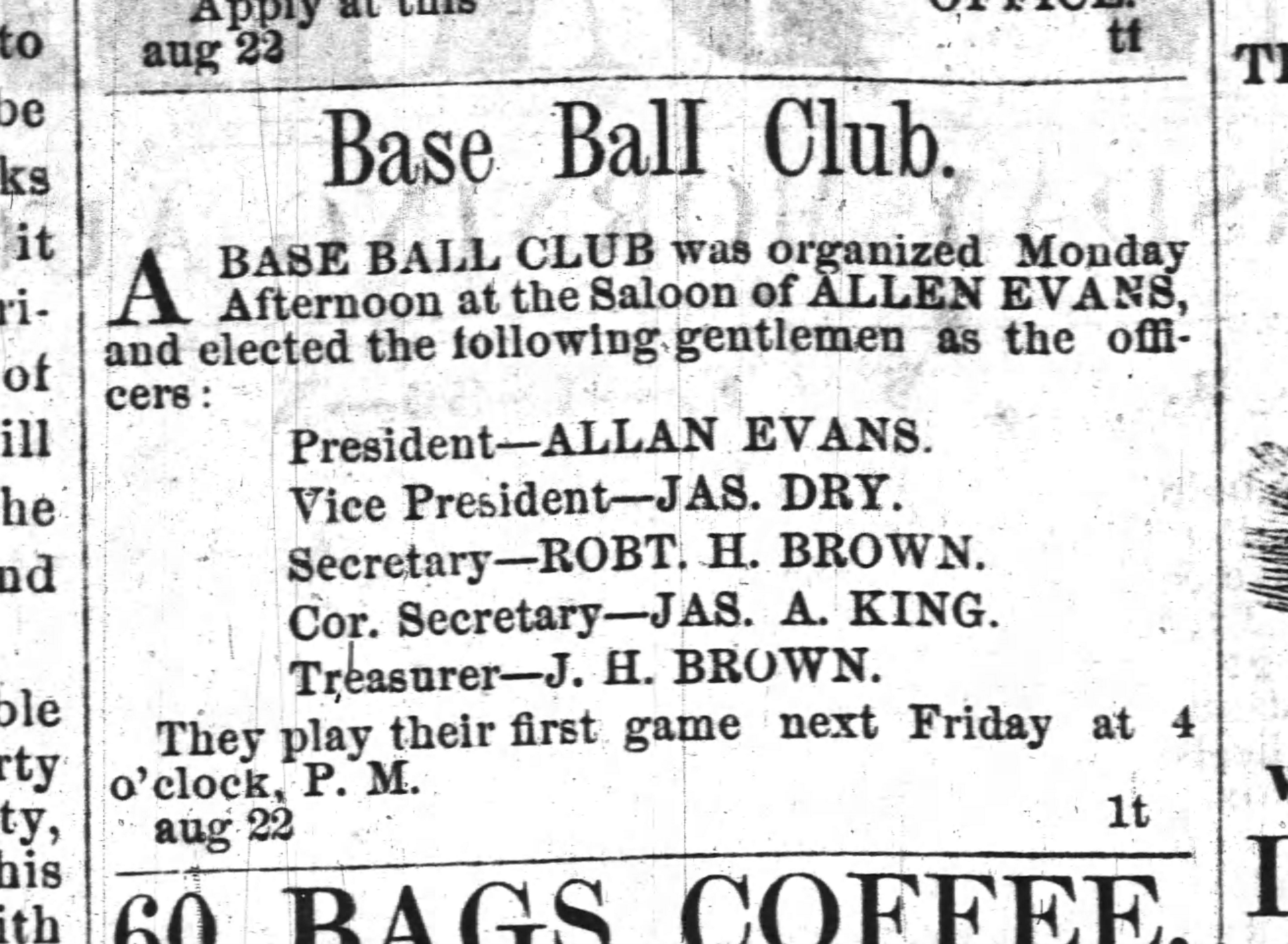
But more than 30 years before, in 1867, Wilmington became one of the select few cities in which, apparently, the first organized base ball (two words back then) team materialized was black. Stated the Aug. 22, 1867, Wilmington Post:

“We are glad to chronicle the fact that a Base Ball Club has been at last organized in this city. On Tuesday evening last, a number of the colored young men met at Allen Evans’ saloon for this purpose. … An election for President and Secretary of the club was held, which resulted in the choice of Allen Evans as President and Robt. H. Brown as Secretary. A committee of five was selected to select suitable grounds, which committee are to report at a a meeting to be held this evening. It was resolved that the organization be known as the Osceola Base Ball Club and the first meeting for practice will be held on Friday … “

Unfortunately, I couldn’t immediately come across much additional information about the Osceola Club of Wilmington, but in the wake of its formation, other aggregations, black and white, popped up throughout the city over the last few decades of the 19th century, during which base ball coalesced as the American pastime and the country lurched, with starts and fits, through the rocky process of Reconstruction.

This was a time when African Americans in the South could be and were elected to positions of power in their local, state and federal governments. Buoyed by the Republic Party and the steps toward racial equality it pursued, black citizens found a level of achievement and access to power that had heretofore been only a pipe dream, especially in the antebellum South.

It didn’t last into the 20th century, of course, but for a couple brief decades, African Americans were, for the first time in many parts of the country, held on more or less equal footing as whites. For example, in Wilmington, Robert H. Brown, who was elected secretary of the Osceola Base Ball Club, served a spell as a city police officer.

But in Wilmington, it was Allen Evans, the president of the Osceolas, who was arguably to most successful African American in the city, one of the leading Republican activists in the region and a successful Wilmington businessman.

Over the years, Evans operated a barber shop, a grocery store and a liquor saloon. He’s listed in the 1866 income tax rolls as both a liquor dealer and a retail seller; in the 1875 city directory as a grocer; in the 1870 federal Census as barber; and in the 1880 Census as a grocer and barber.

In those last two, interestingly, Evans is reported as a “mulatto,” probably the progeny of a white slave holder and a black slave. In fact, it seems like he was a slave who purchased his own freedom before marrying his wife, the former Charlotte Meashey.

For example, the journals of Salmon P. Chase — the sixth chief justice of the U.S. Supreme Court, U.S. treasury secretary under Lincoln, and a former governor of and U.S. senator from Ohio who was a strident opponent of slavery — detail one of Chase’s trips through the South, including a stop in Wilmington, where he was met by a local group of black citizens, including Allen Evans, whom Chase described as “a smart young fellow barber by trade — bought himself & had conveyance made to his wife who was free …”

Evans was, in fact, a prime candidate to lead an early African-American base ball team. At the time, black ball clubs were frequently helmed by representatives of the emerging African-American middle class, in which barbers, saloon operators and retail sellers, much like Evans, were held in very high regard.

In addition, the leaders of early black base ball clubs frequently doubled as local political leaders and social activists, many of whom were involved in the nascent civil rights movement. In fact, these leaders sometimes melded the two — base ball and civil rights — with the former being viewed as a vehicle for promoting the latter.

While it’s not clear if this was specifically the case with Allen Evans and the Osceola Club in Wilmington, there’s no doubt that Evans was a well respected political operative, even admired by many in the white community, albeit probably grudgingly. For example, the April 5, 1870, issue of the Wilmington Daily Journal stated:

“The name of Allen Evans has been put forward by himself and friends as a candidate for the Legislature. Allen is a colored man, and one who has always conducted himself properly and becomingly. Without wishing his election we prefer a hundred times seeing him in the Legislature to such carpet-baggers as Gizzard French. During a life-long residence here Allen has shown a most proper deportment.”

True, that paragraph is saturated with condescension, paternalism and a subtle bigotry in today’s light, but for a Southern daily paper just five years after the Civil War, such a statement was downright progressive.

Four years later, the Wilmington Daily Star proffered a similar backhanded compliment, with the requisite amount of 1870s snark:

“Allen Evans is a candidate for the nomination as one of the Board of County Commissioners. He is the first modest Republican we have seen.”

There’s no doubt that Evans was active in Republican and African-American politics; in December 1868, for example, he was one of the organizers of a New Hanover County convention of local black citizens to nominate representatives to a similar national gathering.

That’s not to say that it was always an easy haul for Evans; his name popped up in an unsavory vein in the papers here in there. For example, in August 1871, a man connected to Evans’ saloon was murdered under seedy circumstances; in March 1874 he was accused of fencing stolen goods, a charge he refuted; in April 1876 one of his sons was nearly incinerated by an accidental home fire; and portions of his various businesses were damaged multiple times by other fires.

But by the time Evans reached middle age in the 1880s, he had become such a respected member Wilmington’s African-American community that, in February 1881, he opened a new banquet and event hall at the corner of Fourth and Brunswick streets to the public, arguably the crowning achievement of Evans’ life of business endeavors. In covering the grand opening of Minnie’s Hall — it was named after one of Evans’ daughters — the Morning Star dubbed Evans “one of our prominent and energetic colored men.”

Just more than a year later, Evans died at roughly the age of 48 on April 13, 1882, at his residence. A funeral was held the following day at First Colored Baptist Church. In its April 15 issue, the Morning Star reported:

“Allen Evans, whose death was recorded in our last issue, was one of the most prominent colored men in the city. He was owner of considerable property, and was a shrewd business man, being the proprietor of a large store on the corner of Fourth and Brunswick streets, with a hall above it. He was at one time leader of an excellent colored band in this city, and was a man of considerable intelligence. His funeral yesterday was largely attended by the colored people of the city, the colored masons, to which he belonged, escorting the remains to the grave.”

It was the conclusion of an unfortunately brief but busy and accomplished life that included the founding of Wilmington’s first organized base ball team, one of the first endeavors in the state of North Carolina to merge the newfound freedom of African Americans with the burgeoning national pastime.

In Gorée’s story, echoes of Ferguson

The story of semipro Chicago baseball manager Fred Gorée is precisely a story of the harsh realties of African-American life intersecting with the sport of baseball.

It’s also a tale from decades ago that resonates so much today, 90 years later, because of what’s still occurring on a frighteningly high level.

When Gorée was killed Aug. 1, 1925, by two bullets from the gun of a St. Louis County, Mo., deputy constable, during what, on the surface, seemed like a routine traffic stop for speeding, it caused historical ripples that are felt today when, from Ferguson, Mo., to Baltimore, young African-American men and women are dying either while in police custody or at the end of a law enforcement officer’s gun barrel.

But those ripples have, for nine decades, also run through Fred Gorée’s family — which has roots in Lincoln Parish, La. — and descendants, who to this day believe that, despite what Fred’s death certificate says, he was a black man cut down in cold blood by a white cop.

“My grandfather was murdered by the police,” says Joyce Elmore, one of Fred Gorée’s familial progeny. “He had a very fancy car, and the officer didn’t believe it was his car. [The officer] followed him and told him to get out of the car. They got into an argument because [the officer] treated him very badly, he shot him, then left him for dead in a ditch.

“Then,” she adds, “the police officer took his car and did a little joyriding. He didn’t call for an ambulance or anything. He just killed him.”

Joyce’s description of what happened that night comes second-hand, a tale passed down through her family’s generations.

It also differs wildly from what was reported at the time, at least by the mainstream media, who seemed to fire off articles that parroted the official line coming from the St. Louis County Constable’s Office.

That law-enforcement report had Gorée, in his Buick, was speeding along at 48 miles per hour, then refused to be taken to the police station for 20 hours of detention and questioning. Gorée then allegedly tried to wrest deputy constable Patrick Bennett’s gun from Bennett, a physical scuffle ensued that rolled the pair down an embankment and soon caused two shots from the gun to enter Gorée’s body. He died less than two hours later at a private residence.

Within a mere 24 hours of Fred’s death, an inquest into the killing was conducted, and a grand jury cleared Bennett of any wrongdoing stemming from the incident. The coroner in the case listed “justifiable homicide” on Gorée’s death certificate, essentially writing off Bennett’s actions as self-defense.

But Joyce Elmore tells a very different opinion of her progenitor’s death. In ensuing posts, I’ll try to go into more detail about both Fred Gorée’s life and about his death, but today I’ll just relate the feelings of a woman who never had a chance to meet her grandfather because of what happened on that dark country road near St. Louis more than 90 years ago.

Joyce Elmore is positive her grandfather’s sudden, violent end was shrouded with and soaked in a distinctly racial overtone, one of a white police officer doing what today would be called racial profiling. Missouri, she says, has always had the mindset of a Southern state, and St. Louis that of a Dixie city.

“It was racially motivated,” Joyce says of Fred’s death. “It wasn’t justifiable [homicide] as far as I’m concerned.

“There is no justice,” adds Joyce, who lives in San Jose, Calif. “In Missouri, black people have always been treated like dirt. [Fred] was in the wrong place at the wrong time. They beat him up, shot him and stole his car. It was another racial murder in the South.

“This [social and racial dynamic] goes way back, and it’s continuing, and unless something is done, it’s going to continue. [Law enforcement] has been doing it for so many years. They just play it off.”

Self-defense or whitewashed lynching?

The_Springfield_Leader_Mon__Aug_3__1925_

“Justifiable homicide by a gunshot wound.”

That’s the cause of death listed on Louisiana native and Chicago resident Fred Gorée’s St. Louis County, Mo., death certificate. It was signed on Aug. 3, 1925, with date of death stated as two days prior.

The document also said the determination of the cause of death involved an inquest.

Meanwhile, a jury was clearing the deputy constable involved in the incident of any wrongdoing in the late-night, roadside scuffle that caused the officer to fatally shoot Gorée, who was on his way with his semipro baseball team, the Chicago Independents, to play a reported barnstorming game in St. Charles, Mo., depending on the source.

The news of Gorée’s death practically flew under the radar; the black press, even, failed to report much about an incident that, to this day, has Gorée’s descendants searching for any information about their progenitor’s fate.

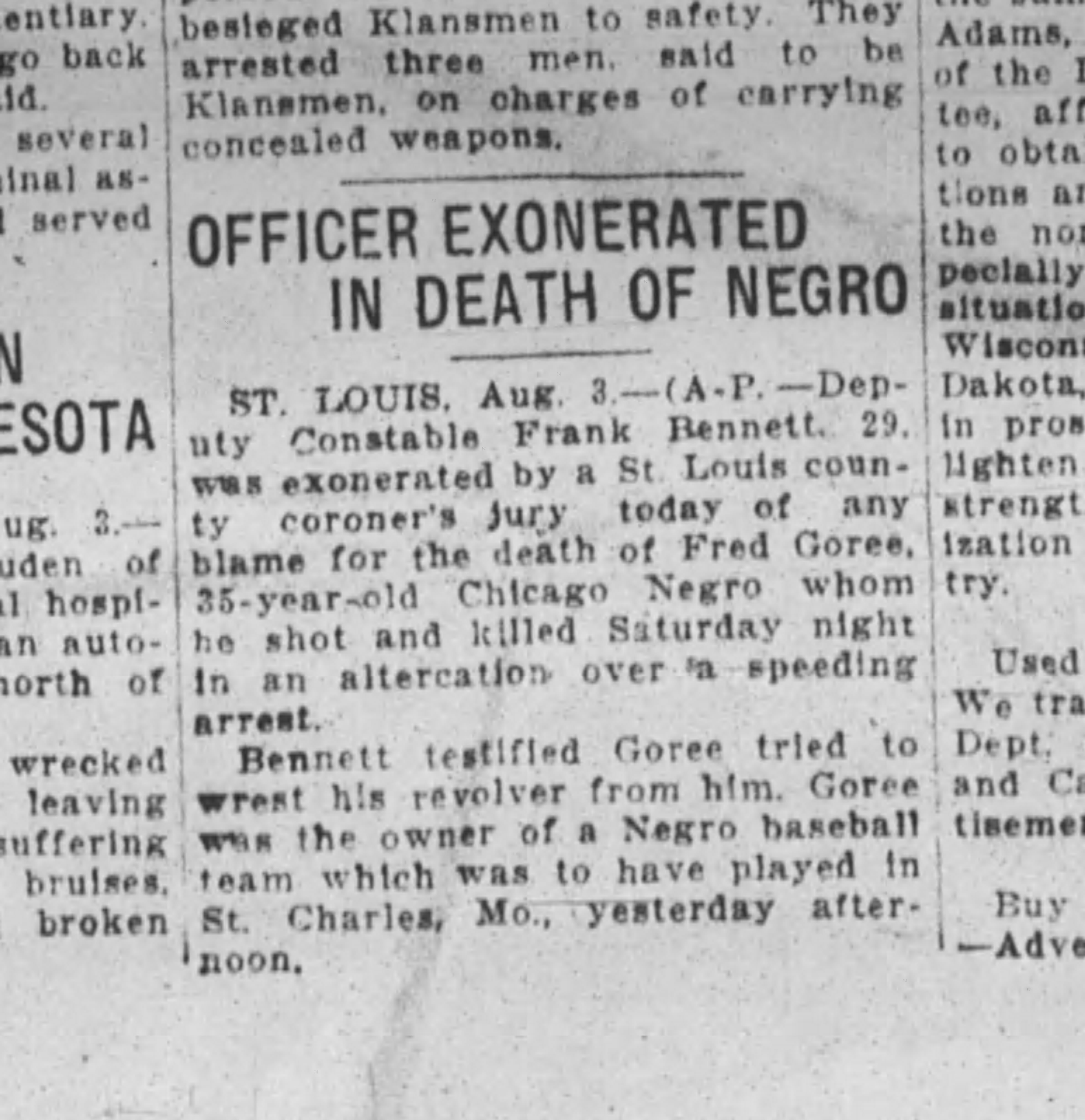
Here’s an excerpt of an Associated Press report on the court’s determination:

“Deputy Constable Frank Bennett, 29, was exonerated by a St. Louis County coroner’s jury today [Aug. 3] of any blame for the death of Fred Goree, 35-year-old Chicago Negro whom he shot and killed Saturday night in an altercation over a speeding arrest.

“Bennett testified Goree tried to wrest his revolver from him. Goree was the owner of a Negro baseball team which was to have played in St. Charles, Mo., yesterday afternoon.”

(To clear things up, Gorée wasn’t 35 when he was shot — at least not according to his death certificate, which lists his birth date as Jan. 6, 1901, making him about 24.5 years old at the time.)

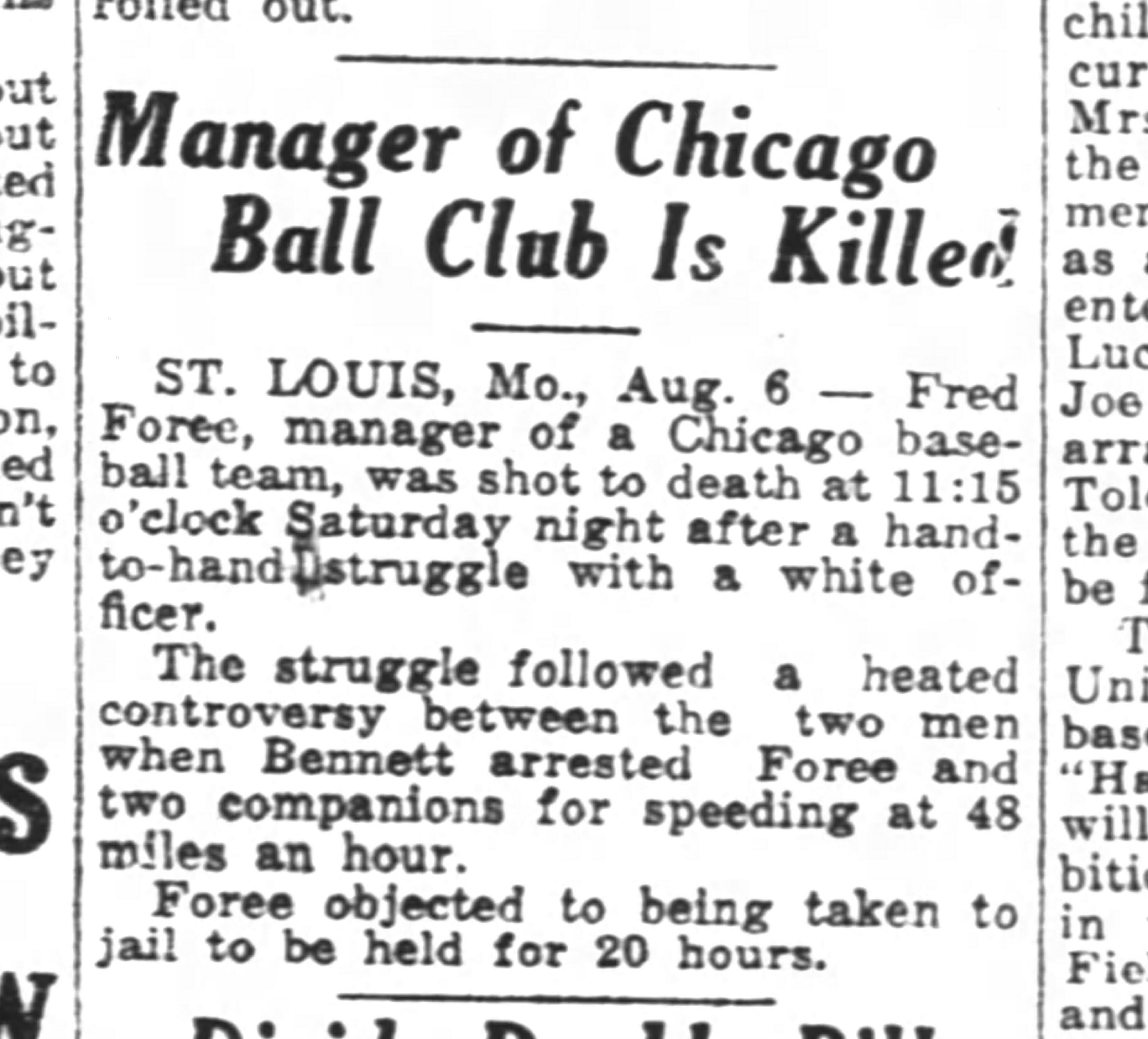
But what the African-American media reported was a tad bit different. This is what the Pittsburgh Courier said:

“ST. LOUIS, Mo., Aug. 6 — Fred Foree [sic], manager of a Chicago baseball team, was shot to death at 11:15 o’clock Saturday night after  hand-to-hand struggle with a white officer.

“The struggle followed a heated controversy between the two men when [Frank] Bennett arrested Foree and two companions for speeding at 48 miles an hour.

“Foree objected to being taken to jail to be held for 20 hours.”

Note that the Courier, an influential and popular African-American newspaper, reported the race of the officer, something articles in mainstream media outlets failed to do. In doing so, the Courier clearly insinuated — and quite rightfully so — that the killing might certainly have taken a racial turn.

The Pittsburgh paper’s story also stressed that Gorée asserted himself in refusing to be questioned and held for 20 hours — nearly a full day, which could, to some, seem unreasonable, especially for something as minor as a speeding ticket.

What’s worse, Gorée, who was buried in Lincoln Cemetery near Chicago —Section 23, Lot 17, Row 2 — in what may be an unmarked grave, a situation that’s all too familiar to Negro League historians who routinely come across segregation-era African-American baseball figures who suffer such indignity in death.

(I called Lincoln Cemetery to confirm that Gorée was, in fact, buried there and whether his grave has a headstone. The woman I spoke with said he was at the facility, but she couldn’t say if the burial spot was unmarked. She also couldn’t divulge any further details about the grave, including who owns the plot, etc.)

Which leaves us with this: was Gorée’s death the result of self-defense on behalf of Deputy Bennett, or was it essentially a law-enforcement lynching — one that could have been swept under the rug — at a time when the St. Louis area had, in some ways, a Southern mindset, where African Americans were second-class citizens?

The_Pittsburgh_Courier_Sat__Aug_8__1925_

I was first tipped off to this story by Ron Auther, a fellow Negro Leagues researcher specializing in African-American baseball west of the Rockies and along the West Coast. Ron has a great blog here about those subjects, and it was in researching a story for his specialty that he tripped over a short article in a California newspaper about Gorée’s death.

Ron subsequently wrote this blog post about what he found, and as you can see, it elicited a great deal of feedback from several of Mr. Gorée’s descendants, who expressed both sadness and hope that the mystery surrounding their ancestor could be resolved — and that Fred’s grave can at long last be marked, perhaps by the nationally known Negro League Baseball Grave Marker Project.

Details of the incident that claimed Fred Gorée’s life much too soon still remain sketchy, but an Aug. 2, 1925, AP report does shed some light on what happened — or at least the story told by the police. Unfortunately, the archived newspaper in which I found the report has much of the right side of the article folded over, making it tough to decipher the entire context of the story. But here’s what the article reported, more or less (and keep in mind that this dispatch came before the coroner’s jury’s decision to exonerate Bennett):

“Fred Foree [sic], a negro, 35, manager of a Chicago baseball team scheduled to play with [a] St. Charles, Mo., team today, was shot to death late last night by Deputy Constable [?] Bennett of St. Louis County after a hand to hand struggle for the officer’s revolver.

“The struggle followed a heated [?] controversy between the two [?] when Bennett arrested Foree [and] two negro companions for speeding 48 miles an hour on the St. Charles road near here [St. Louis].

“Foree to be taken to [?] and held 20 hours as a suspect. Bennett refused to heed his pleas [?] the negro struck the officer [on the] head with his fist. The officer drew his pistol.

“In the struggle, which rolled [the] men over a six-foot embankment, the negro was shot twice in the stomach. His companion [?] in the automobile under command and assisted in removing Foree [to] the home of a physician, where he died within two hours. An inquest will be held tomorrow. The dead [?] negro and his two companions, Frencher Henry of Chicago and Harold Gaulden of St. Charles [were] on their way to Effingham, Ill., [to] get part of the baseball [team?] stranded there.”

Mr. Gorée’s death certificate states that he died on Pattonville road in St. Ferdinand township in St. Louis County.

Now, the article above doubtlessly only includes the Constable Office’s side of things. But what about the other side, the views of Fred Gorée and his baseball charges about what occurred that fateful night?

In my next post about Fred Gorée, which will hopefully come by the end of the week, will take a look at the man and his life — his roots in Lincoln County, La., his involvement with baseball and, hopefully, his life in Chicago — a life that led up to a tragic, controversial, violent ending on Aug. 1, 1925.

Then, after that, I’ll come back to Mr. Gorée’s death and try to take a closer look at what did happen that night.