Just had this article come out in Delaware Today about the whereabouts of Delaware Negro Leaguer Ed Stone, about whom I’ve blogged occasionally:
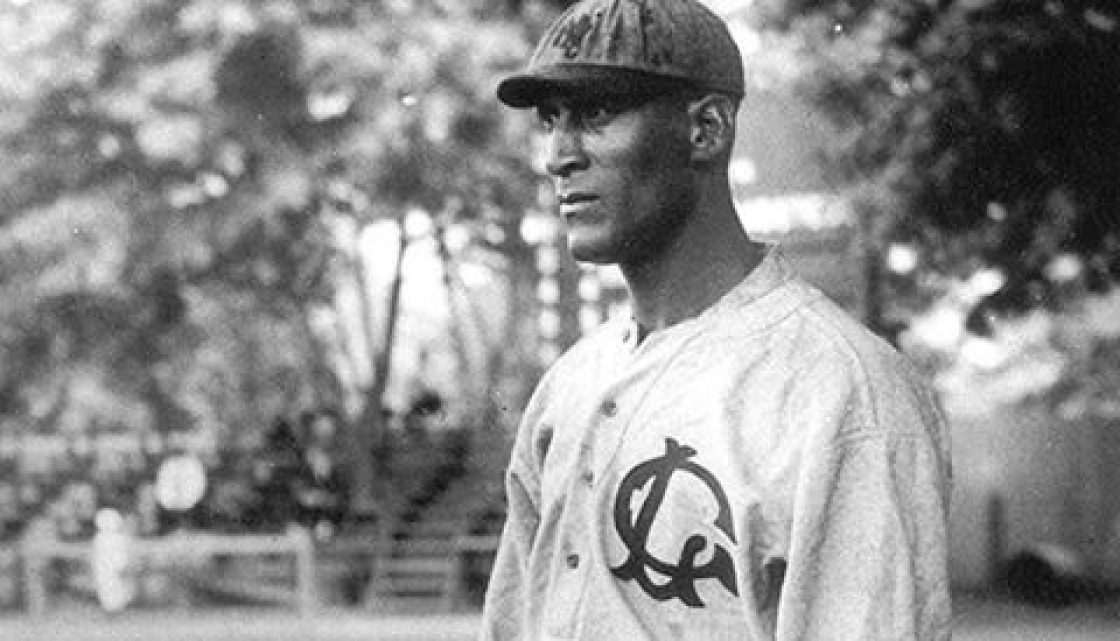
Just had this article come out in Delaware Today about the whereabouts of Delaware Negro Leaguer Ed Stone, about whom I’ve blogged occasionally:
Today I had published this article published in philly.com about the 1940 Philadelphia Stars’ spring training and how radically it differed from the preseason camps of today’s MLB teams. It was neat reading and writing about how chaotic the whole process was 75 years ago. Many thanks to editor Lou Rabito for green-lighting the article and to Courtney Smith for once again graciously providing comments for one of my stories.
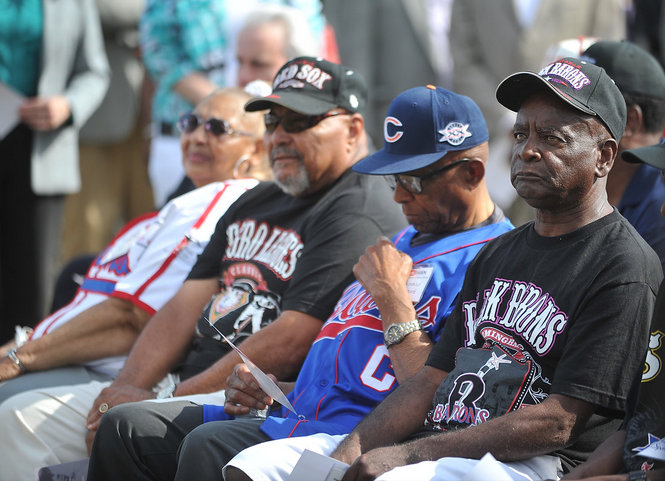
Former players at the groundbreaking ceremony for the Birmingham museum
What perhaps intrigues me the most about the new African-American baseball museum being built in Birmingham, Ala., isn’t that it will feature artifacts and items from players from the top-shelf Birmingham Black Barons and other big-name ’Bama natives like Satchel Paige and Willie Mays.
It’s that the facility, the brainchild of Dr. Layton Revel of the Center for Negro League Baseball Research, will keep a largely regional and local focus that includes, most fascinatingly for me, the vibrant, lively industrial leagues that sprang up in the wake of the city’s rapid development of factories and foundries.
It was those intensely competitive industrial circuits that featured not only excellent semipro baseball (and helped provide factory jobs for working-class African Americans), but gave birth to dozens of talented fellows who went on to the big time, including organized baseball, after proving their mettle on Birmingham’s sandlots.
“There’s more to the history of black baseball than just the Negro Leagues,” Revel says. “A lot of the industrial teams were proving grounds for players. What we’re saying is that it’s an important part of the history. You can’t forget the grass roots, where these guys started.”
How good were some of these industrial teams? One of them, the 1942 American Cast Iron and Pipe Co. (ACIPO) team that featured future big-time greats like Piper Davis and Artie Wilson, went a mind-boggling 83-5.
The intensely local focus and inclusion of all levels of Birmingham hardball will be what separates the new facility with the longstanding, existing Negro Leagues Baseball Museum, which is more national in scope.
The new building has been a labor of love for Revel, who says the museum should be ready for its grand opening ceremony in a few months. After several lengthy funding snafus and roadblocks, such challenge appear to have been surmounted, and construction is well underway and will hopefully be completed by the start of May, Revels says.
After that it will take about six weeks to install the facility’s exhibits, story boards and memorabilia, which will be the final big step toward the museum’s grand opening.
But before the doors to the new building swing open for the first time, Birmingham will play host to the sixth annual African-American baseball players reunion, which is slated for May 26-27 and will include a luncheon and other events that will give fans a chance to mingle and talk with living players from both the Negro Leagues and Birmingham’s industrial leagues. Every event on the menu for the weekend is free and open to the public, Revel notes.
Last year a total of 84 players made the trek to the Alabama city for the fifth edition of the reunion, and Revel hopes for just as many this year. However he knows that the Negro Leagues community has suffered the passing of numerous former players over the last year, which might cut into player attendance at this year’s reunion.
For example, the great trailblazer Minnie Minoso spoke with Revel recently and said he would definitely be in attendance at this year’s gathering. But since then, Minoso has died, a development that will only add to the bittersweet nature of the reunion.
“That’s why it’s so important to meet these men while they’re still alive, to interview and talk with them,” Revel says. “But we still have a lot of ballplayers alive. If you’re interested in Negro League baseball, now is the time to do this.”
For more information on both the new museum and the upcoming reunion, keep checking back at http://www.cnlbr.org or email Revel at drrevel@cnlbr.org.
I think I’m going to step back a bit from the down ‘n’ dirty, heavy research for a couple weeks, maybe, and write some points involving interviews with people, photos, updates on events and links to other cool stuff. The basic journalist in me is kind of coming out now, and I’m kind of wanting to do interviews instead of combing through databases (databasi?) and looking at microfilm while trying not to get motion sick.
I also have a long-term project on which I’d really like to focus for a little while; while it doesn’t involve the Negro Leagues, it does involve African-American sports history. I’ll give a hint: Basketball Hall of Fame inductee.
In this post, I want to include some links for other nifty stuff that’s going on. First and foremost is the registration packet and information for the 17th annual SABR Jerry Malloy Leagues Conference this August. You can find registration links, PDFs and information here.
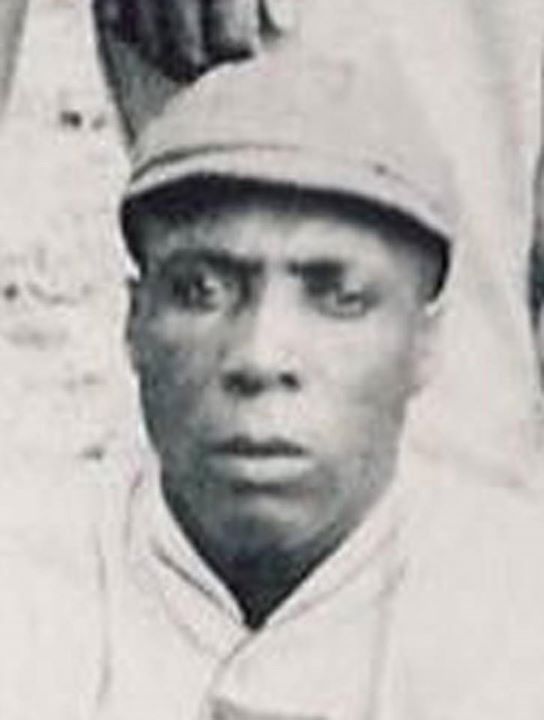
Another item I’d like to offer up is this Facebook story on the impending grave marker ceremony for the legendary George “Rabbit” Shively in Bloomington, Ind. This story holds particular interest for me because I spent a total of seven and a half years in Bloomington as an undergrad and grad student at IU-Bloomington.
Finally, here’s a press release — 2015 March Press Release – They Played for the Love of the Game — for a fascinating exhibition on Minnesota’s rich African-American baseball heritage at the Ramsey County Historical Society Gallery’s Landmark Center in St. Paul, Minn., that’s running there from now until June 7. The free exhibit has been spearheaded by Minnesota blackball writer and researcher Frank White, whom I interviewed for an upcoming article I wrote for City Pages newspaper about the 1909 St. Paul Colored Gophers.
So, if you’re around Bloomington, the Twin Cities or the Steel City, take a day or more to check this stuff out!
I got an email this evening from a gentleman named Mark Aubrey, who was very gracious and complimented my work, and I, needless to say, am honored and humbled.
Mark has several blogs that he writes, including a couple about baseball history in East Tennessee. He touches on all kinds of subjects, including college baseball and the 19th-century game, and the stuff he finds is pretty darn neat.
This post in particular caught my attention, for obvious reasons — it’s about African-American baseball; in this case, the 1913 team at Knoxville College.
It seems to me that baseball history at HBCUs is a woefully unexplored subject, and Mark’s post has inspired me to look into the history of hardball at NOLA’s two HBCUs, Dillard and Xavier. That’s also not to mention the larger HBCUs in the Pelican State, like Southern, Grambling, etc.
So check out Mark’s stuff if you can. It’s pretty cool.
Taking a little break from Dave Malarcher for a few days, I wanted to give an update on the Wesley Barrow grave marker. I was also very fortunate to have a short talk with Mr. Paul Lewis, who played under Barrow circa 1950 for the New Orleans Black Pelicans, at that time a semipro team.
With the grave stone, Gretna Councilman Milton Crosby said he’s going today to pay the balance on the stone cost, and he’s got a couple sturdy guys volunteering to help get it in the ground.
Once the marker is at the site and situated, that just leaves the dedication ceremony, which is slated for Saturday, April 25 at 2 p.m. at the New Hope Baptist Church cemetery. Councilman Crosby has lined up a minister to give a prayer and dedication, and I’m pulling together a few people to say a few words.
One of those people will be Mr. Paul Lewis, who played second base for the 1949 New Orleans Black Pelicans, one of the later incarnations of that squad. The team was skippered by Wesley Barrow, who by that time had roughly 30 years of organized baseball under his belt.
“We played all over Louisiana, Mississippi, Florida, everywhere,” Mr. Lewis said.
He said the Skipper had such a charismatic and electric personality that people were drawn to him.
“If you ever met Wesley Barrow, you never forgot Wesley Barrow,” Mr. Lewis, who is 88 years young, told me last night. “He was also one of the nicest fellows you could ever meet. He always had a great attitude with everyone he met.
“I learned from Wesley Barrow how to be a man,” he added, “and to treat people right, to have the right attitude with all mankind.”
I’ll keep coming back with updates on the situation, especially when we get the grave marker in the ground and when I’ve got a press release ready in preparation for the dedication ceremony. Keep checking back for details!
If you’ve been checking into my recent posts about the ancestral background of Gentleman Dave Malarcher, you might have noticed comments at the end of a couple of the posts from great nephews and nieces of Dave and how they’ve traced his ancestry back to slavery in Virginia!
One of Gentleman’s great nephews and I have since been trading emails, and I’m scheduled to call him tomorrow (Saturday) afternoon. I’m super psyched. It means I’ll finally fill out a huge part of the Dave Malarcher picture with a big assist from his descendants. So a huge thank you already to them.
This also means that I should have several major posts about Gentleman beginning next week. For now, I’ll drop a neat little tidbit about Malarcher post-baseball career, from when he was a successful real estate agent in Chicago.
In his retirement, Dave became active in fighting for justice and equality for African Americans in the Windy City, especially when it came to housing. He was a member in and officer of the Dearborn Real Estate Commission, a local, grassroots effort to achieve those goals.
In summer 1942, for example, he was a member of a four-man committee from the association that, according to a press story, “met with the local administrator of the Rent Control Division … to discuss the question of jobs for colored in the division and its police regarding colored. …
“The administrator promised that colored will receive an equitable share of jobs as investigators, clerks and field men …”
That administrator, Earl Howard, according to the article, “expressed astonishment … at the small number of complaints with had originated on the Southside. He pointed out that the division has been established in Chicago primarily to prevent victimizing of colored.”
The Dearborn group, which was named after its base of operations on Chicago’s Dearborn Street, remained active throughout 1942 and beyond — in September of that year the board, according to a press report, launched a “drive to obtain greater colored representation as agents and employees, in the Federal Home Loan Bank Agency …”
A couple months later, the Dearborn panel urged Negro Schools and colleges to introduce courses in real estate principles, real estate management and real estate law.
In the late 1940s, the Dearborn group performed numerous group services, including collecting complaints from local residents about an embezzlement racket perpetrated by a gang of housing administrators, three of whom were arrested; protested the lack of police presence in black neighborhoods after an arson; launched a concerted effort to stop alleged racial prejudice on the part of a federal housing authority again African-American home seekers and builders; and created and began, according to an American Negro Press article, “its long-planned Negro Home Building program, which is expected to involve $8,000,000 in Chicago’s Negro communities within the next 12 months. … The program, designed to spur financing among Negroes, got underway … with a clinic on mortgage credit … ”
In addition, the “president of the Negro organization announced that members of his group have applied for a charter permitting them to establish another Negro Federal Savings and Loan Association in Chicago.” The leader, Bolin V. Bland, is quoted as saying, “If Negroes are to be a part of this country they must own some of it. Home ownership gives every individual a feeling that he has a concrete stake in this country.”
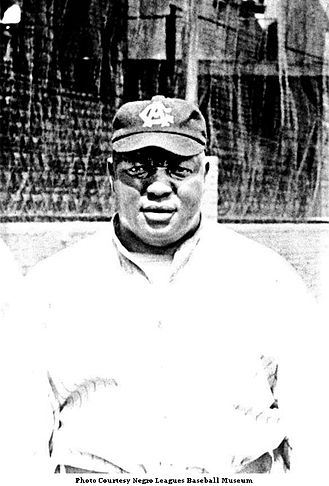
Yesterday I discussed a couple letters from Dave Malarcher about the pitching prowess of the Chicago American Giants’ ace pitcher from the 1920s and ’30s, Bill “Willie” Foster. Today I’m gonna shift to Bill’s big brother, the great man himself, Andrew “Rube” Foster, and how highly Malarcher regarded Rube as a manager and a mentor.
Quite simply, Gentleman Dave believed Rube Foster was perhaps the greatest figure in Negro Leagues history, especially when it came to the big man’s managerial acumen. Here’s an excerpt from a narrative Malarcher told to Negro Leagues historian and documentarian John Holway:
“Rube was the greatest baseball genius that ever lived. I say Rube was a greater manager than any manager in the Major Leagues. Yes, greater even than John McGraw. I’ve looked at Major League teams from 1920 until now, and I have never seen one who played the kind of ball Rube played. Not the diversified game, you know.
“… I learned from Rube how to put [players] in condition and then how to direct them, which makes me know that Rube was the greatest of the two [between Indianapolis’ C.I. Taylor]. Rube was a master, he was a master. After I became manager [of the Chicago American Giants] I used to win so many ball games the fans used to say to me, ‘You’re a greater manager than Rube.’ You know what I said? ‘I’m just doing what the master taught me.’”
Dave went on to recall how Foster wrote to the former while Dave was touring Europe on a military team after the end of World War I. In the communiqué, Rube urged Malarcher to join the American Giants once Dave’s tour of duty had been completed.
Dave jumped at the chance to do so, and he related to Holway how, when he came back Stateside after the war, Dave made a beeline for Chicago, where he met Rube and asked the big man — “all the ball players called him Jock” — for a little scratch to go to New Orleans “”to see my mother and my sweetheart … I would like to borrow $75.’ …
“He just rolled up the top of that desk and reached in the drawer: ‘There it is.’ He gave it to me just like that. He didn’t ask any questions, he didn’t say whether he wanted me to play with him or not. Smart enough to know that that’s it; I’ve got me a ball player. He didn’t even talk contracts or anything. That’s all, we talked about other things. Oh God, it really broke my heart to see an honest man. Well, you know, a grateful heart …”
Gentleman Dave also felt that Rube saw the “big picture” when it came to the eventual integration of organized baseball and the inevitable eventuality that African-American players would, someday indeed, get their chance to shine in the Majors. In a June 1972 letter to other former Negro Leaguers urging them to fill out Hall of Fame questionnaires, Malarcher wrote:
“… It is a fact that ‘Rube’ Foster — at one time the greatest attraction in baseball, outside of the Major Leagues — refused a handsome offer to join and play on a white unorganized (called ‘Semi-Pro’) team. He … stated that it was his duty to remain with and maintain Negro baseball playing standards equal to Organized Baseball and The Major Leagues, in order that Negro players would be equal to the opportunity when the bars were let down. Thus ‘Rube’ had faith in the justice of America, and the sportsmanship of white America to eventually emancipate the black baseball player in our National Pastime.”
In his own filled-out questionnaire for the Hall, Malarcher attributed pretty much all of his success as a manager to his mentor. Here’s what he wrote in answer to the question, “What do you consider your outstanding achievement in baseball?”:
“That I was selected by Andrew ‘Rube’ Foster, in my opinion, the greatest manager of all time, black or white, and that, employing his baseball techniques, training and strategy, I, as his successor manager of the great American Giants, won five pennants and world champions [sic] out of seven years as manager … and that when I became manager, there was never any dissension on my teams, proving the fact that it is possible to have and maintain complete harmony in baseball and other athletic aggregations.”
That’s all in addition to all the glowing praise Malarcher bestowed on the Master in various Negro Leagues books, beginning with “Only the Ball Was White” and in various other interviews Dave gave over the years before his death in 1982.
As a final note, it’s worth pointing out that Foster held Malarcher in high esteem as well, as evidenced by a copy of the contract Malarcher signed with Foster and the American Giants that’s housed among the David Malarcher papers at his alma mater, New Orleans University/Dillard University; the contract states that Malarcher will receive a salary of $225 a month between April 15 through Oct. 1, 1926, with a $500 bonus at the end of the year.
And no, I didn’t have a copy made of the contract when I was coming through the Malarcher files at Dillard, a fact for which I’m now kicking myself.
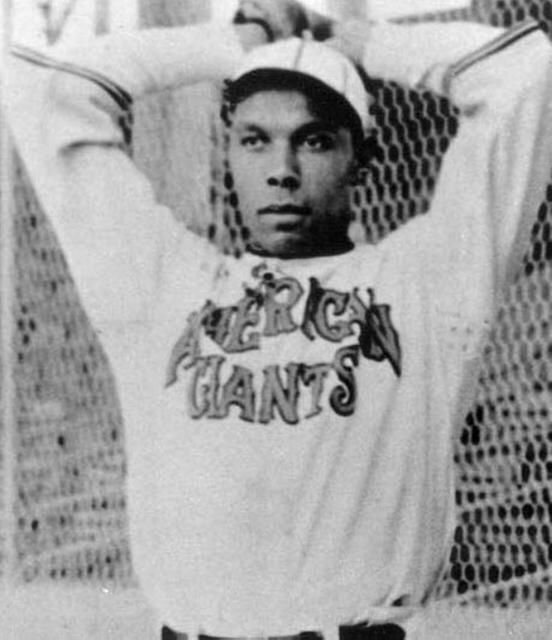
Bill Foster
For the next couple posts, I’m going to stick with the Dave Malarcher theme, but I’m going to back off the heavy, depressing stuff about slavery and such matters and actually just talk a little baseball, believe it or not.
The first item up is a letter I uncovered at the Amistad Research Center at Tulane University. It’s part of the Old Timer’s Baseball Club collection — files donated by local NOLA blackball and education fixture Walter Wright, the founder and president of the club and, while he was alive, a leading “keeping of the flame” of the memory of the Negro Leagues in these parts.
The 1968 letter is from Gentleman Dave Malarcher, who was then living in retirement as a real estate agent in his adopted “second hometown” of Chicago, to Wright, describing what Dave believes was one of the greatest displays of pitching he ever witnessed — a effort put on by future Hall of Famer Bill “Willie” Foster while both Foster and Malarcher were with the famed Chicago American Giants. In the letter to Wright, Gentleman called it simply “Willie’s greatest single performance in the box, and my greatest thrill as a manager.”
He describes the year when the two Negro National League split-season champs — the American Giants and the K.C. Monarchs — played a nine-game playoff to determine who would go on to the Negro World Series against the best team in the East. That would have been the 1926 season, when Foster at one point reeled off 23 straight W’s.
The Windy City-ites fell behind four games to one — the Giants’ lone win was a series-opening victory by Foster — and found their backs up against the wall. But Foster won the sixth game, and Chicago triumphed in the seventh clash to bring the the series within four games to three, with a single-day doubleheader left to decide the victors. Thus, wrote Dave to Walter:
“Willie shut them out in the first game. He was so good, I made him keep warming up behind the grandstand to pitch the second game. The great ‘Bullet’ Rogan had pitched that first game for the Monarchs. When I announced that Willie would pitch the second game, Rogan — who managed the Monarchs — announced himself to pitch the second game for Kansas City. He was anxious to beat Willie. Willie shut them out 5 to nothing in that second game, winning the league championship for us. It was a thrill indeed! One which I shall never forget. It was the great speed, curve and drop ball, all with the masterful change of pace — his easy style of pitching, and his great condition which enabled him to pitch so successfully through that long series and so often.”
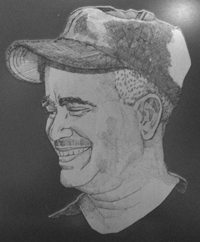
Walter Wright
The American Giants would go on to win the Negro World Series by beating the Atlantic City Bacharach Giants in eight games.
Later in 1968, Malarcher penned another letter to Wright about Bill Foster, one that elaborated on the superstar hurler’s overall greatness. The occasion for the second letter was the announcement by the New Orleans Old Timer’s Club that it would honor Foster at its annual reunion all-star game later that year at Pontchartrain Park (at a facility that has since, of course, been re-dubbed Wesley Barrow Stadium). It gave Malarcher a chance to explain “my high regard for him as a man, a gentleman, and a baseball pitcher in our league and under my management.” He then added:
“Willie’s entire career in our league was under my management and in the years that the Chicago American Giants were — as they had always been — the foremost and greatest team in baseball. And during all of those years, Willie was my ace pitcher. He was the man I always assigned to win the first game of all series of games, in order to get out in front in the series. And this we did, in order to have him come back and pitch the fifth and final game. Thus, his marvelous speed and curve ball and change of pace — along with his superb physical condition — he was always in shape — made him the greatest and foremost asset to this great organization.
“… I am able to say with certainty that Willie Foster was the greatest pitcher of our times. And he would have been a superstar in the Major Leagues at that time.
“The ‘change of pace’ is the true art of pitching, and Willie was the perfect exponent of that art. Let me make this clear and understandable to the layman’s mind and the inexpert observation of the of the baseball fan. Willie threw a fast ball, and then a fast, fast ball, and then a fast, fast, fast ball, and then conversely he threw a slow ball, then a slow, slow ball, and then a slow, slow slow ball. … and in the curve ball, breaking to the side angle and downward [and] the ‘drop ball.’ And all of these changes of speed in the same motion, with the same delivery. It is masterful pitching! he left many a great hitter standing at the plate with his bat on his shoulder expecting it to come fast when it came up to him slow. Or expecting it to come slowly, when it came so fast it was in the catcher’s mitt before he could get his bat down.
“I write you all of these things because I want you and the others there to really have some idea and thought of the real and true greatness of the man you are honoring.
“I have said to many times and to many fans, since we are now in the Major Leagues, that the Major League owners and managers are missing and losing the greatest exponent of the art of pitching by not having Willie Foster as a pitching coach, to teach the many young pitchers I have seen today, and the recent years in the leagues with no acts or knowledge of the art.
“I am very grateful to you for this opportunity to tell the public concerning this truly great pitcher!”
The letter, I feel, is both high praise for one of the greatest hurlers in baseball history, as well as a testament to the writing prowess of Gentleman Dave Malarcher. It also, though, demonstrates how tight-knit the New Orleans Negro Leagues community was, even years after integration and with memories already starting to fade.
The fact that Dave Malarcher, one of the greatest third basemen and, more importantly, best managers in the game, would take so much time from his hectic life as a real estate agent in Chicago to pen a heartfelt letter to Walter Wright, who, although he was certainly an influential legend here in New Orleans, was never a star in the “big time” Negro Leagues, reflects a NOLA brotherhood of blackball players that I’m still learning to grasp and appreciate.
There’s just something about this city and this state when it comes to blackball that’s difficult to explain, beyond stating simply that it’s one of the most fascinating sports phenomenon that I’ve ever been around and witnessed.
In the next post or two I’ll continue with some more baseball-focused posts featuring comments from Gentleman Dave Malarcher before I dive back into his ancestry and socioeconomic background here in LA …
“Le Chevalier Louis Malarcher fled the [Haitian] revolution in St. Domingue and established a plantation on the East Bank of the river in St. James Parish. Malarcher became one of the most cruel slave owners in Louisiana. An enormous number of slaves ran away. Two of his slaves were killed in the slave revolt of 1811.”
— “On to New Orleans!: Louisiana’s Heroic 1811 Slave Revolt,” by Albert Thrasher
“Slavery here as elsewhere had its attendant evils, but there is little to prove that the slaves were grossly mistreated. Certainly the abundance of the St. James Plantations provided enough food, clothing, and care for all.”
— Cabanocey: The History, Customs and Folklore of St. James Parish,” by Lillian C. Bourgeois
Seem like something doesn’t jibe there? It certainly appears like it doesn’t. But then let’s add another quote from Thrasher’s book about the “German Coast” slave result along the Mississippi River and into New Orleans proper that became the largest slave uprising in American history:
“What was most remarkable, was that several of those listed as being killed or executed were owned by planters whose plantations were in St. James (Malarcher, Chapduc) and upper St. John the Baptist (Bechnel, Daniel). This fact supports the conclusion that the revolt was started up in St. James Parish.”
Using Thrasher’s book — which is extremely comprehensive and research-based, with many supporting evidence and documents — I, I have to say, come to the conclusion that Lillian Bourgeois’ book, which includes only one chapter on the massive institution of slavery that existed in the sprawling sugarcane fields of antebellum St. James Parish, is basically an apologist’s take on a thoroughly reprehensible social, cultural and economic atmosphere that permeated that parish before the Civil War.
In addition, Thrasher’s well supported tome makes it clear that the Chevalier Louis Joseph Malarcher, a French nobleman, treated his slaves horribly — horribly enough to cause them to play a part in the 1811 revolt.
So why is this important to the story of Negro Leagues legend Gentleman Dave Malarcher? Well, the surname says it all — the baseball great was descended from the slaves who witnessed and experienced horrors while owned by the Chevalier like chattel. In fact, it’s also quite possible that David Julius Malarcher himself was a direct descendant of the Chevalier or one of the latter’s sons, who very well might have used their female slaves as mistresses at best and as rape victims at worst. (I previously detailed this connection in this post.)
Gentleman Dave Malarcher was born and raised, for much of his childhood (before he moved to New Orleans to attend New Orleans University), in St. James Parish, one of Louisiana’s bastions of slavery. (I traced his ancestry to St. James in this post.)
Chevalier Louis Joseph D’Asprement Malarcher was indeed a wealthy man and an extremely successful sugar planter, possibly by building on the business skills he learned as a sugar planter in Haiti before the successful slave revolt there. According to the 1810 U.S. Census, he owned 40 slaves; by 1830, that number had increased to 57.

1820 U.S. Census
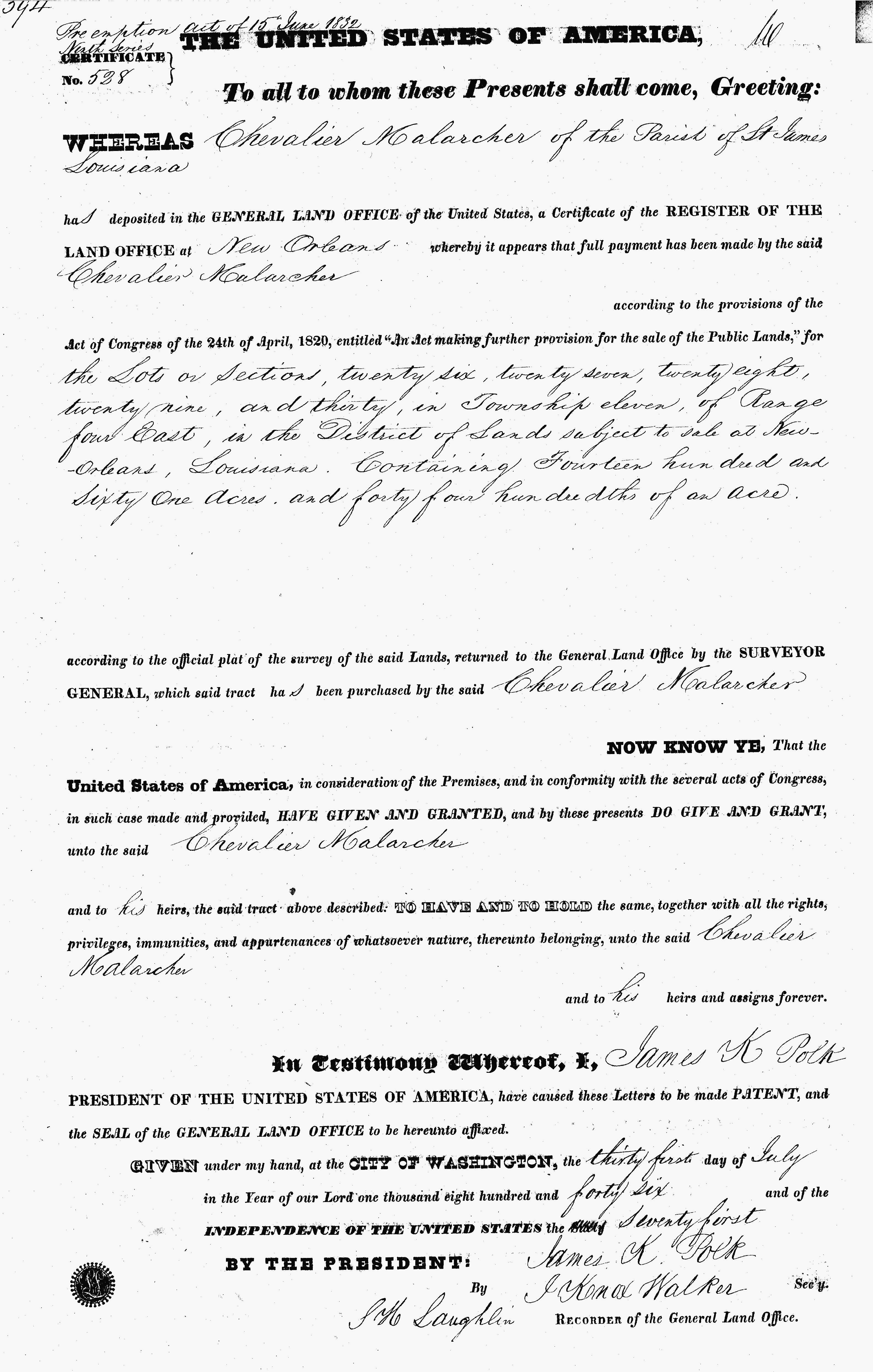
By the 1840s, the Chevalier and his estate — the records I have, via ancestry.com, say he himself died in 1841 in the hamlet of Convent in St. James Parish at the age of 87 — had amassed enough wealth to, in 1847, possess 1,461 of previously public land, a transfer approved by President James K. Polk himself:
Louis also didn’t flinch at shelling out shekels for his human property. In 1805, he purchased a slave named St. Pierre for $340, or nearly $5,300 in today’s dollars. That might have been a lot of money for “property” at the time, but to buy a human being for any price, let alone that much money, just reflects how inhuman slavery was and how cavalier slaveowners were.
As a side note, the seller is listed as Jean Druilliet. That could be a distorted spelling of Jean Druilhet, who would go on to become the grandfather-in-law of the Chevalier’s son, Adolphe, who inherited the family business from Louis after the latter died in 1841. (More on Adolphe later.)
The uprising of 1811 — as well as the fact that it involved at the very least two of his slaves — certainly didn’t deter the Chevalier from buying more and more slaves, and for greater and greater amounts of money. In 1815, for example, he purchased a 35-year-old man named Michel for $1,100, or almost $14,000 today. One of his most exorbitant purchases was a 30-year-old man dubbed Ned (as a group of five inventoried slaves) in 1812, just a year after the uprising, for $1,900 — $26,000 today.
Thrasher’s assertions that Malarcher was one of the most vile slaveowners in Louisiana could be supported by the large number of slaves who tried to escape from his plantation. Thrasher includes in his book advertisements and notices — personals, basically — of dozens of slaveowners posting rewards for lost “property,” and a lot of them are underwritten by the Chevalier. Here’s an example, posted in the Moniteur newspaper in April 1809:
“MAROON SLAVE: There left from the plantation of the undersigned, on March 29 … young negro, named APOLLON, of Congo nation, five feet, three inches, twenty-two years, good figure, name of owner tattooed on chest, speaks French and English, attired in blanket coat and black Kerseymere trousers. It is assumed he went to New Orleans. Honest reward to finder who will return him to M. Claude Treme, New Orleans, or to the undersigned on his plantation …”
Other ads include language that bluntly describe the treatment to which many slaves were subjected. One posting from April 1813 lists the escape of a male Creole “stamped on the breast C. Malarcher, has his tongue split.”
Some postings featured authorities announcing the capture of runaway slaves belonging to various masters, including one such ad in May 1816 announcing the capture of two runaways from the Chevalier’s plantation. One of them, a 30-year-old named Jack, had managed to evade capture for two years before being caught in New Orleans. The announcement describes Jack as “of a weak constitution, a thin long face, has the end of the right ear split, and a wart on the right arm, four feet and eleven inches high …”
In the 1840 federal Census — the last one taken before Louis’ death — he is listed as owning 55 slaves. The document also includes one free white male between the ages of 20-29. That was most likely the Chevalier’s son, Jean Baptiste Adolphe Malarcher, the successor to Louis’ business and plantation. My next post will discuss Adolphe and his children, a family that went through the Civil War and lost their slaves and thus, in a dose of poetic justice, much of their wealth.
 The Negro Leagues Up Close