The Cuba Effect

torriente

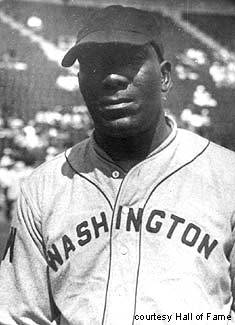
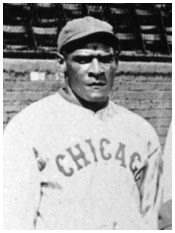
Blackball great and Hall of Famer Cristobal Torriente, arguably the greatest beisbol player Cuba has ever produced.

Regardless of exactly how President Obama’s recent relaxation of economic sanctions against Cuba and a possible movement toward normalizing relations between the island nation and the U.S. plays out, there’s no doubt that baseball historians — folks who frequently see modern political machinations as irrelevant to their line of work — are salivating at the potential for historical research into what is easily the Cuban national pastime as well.

Much of the baseball-and-Cuba-related conversations being bantered around now have focus on what could happen now, today. How will this affect the pipeline of Cuban baseball talent onto American shores and ultimately into MLB? How much will modern baseball in both countries benefit — or, perhaps, detract from — the quality of current play in both countries?

But what absolutely also needs to be considered is the doors that could be blown open on historical baseball research, and that could happen most profoundly in the field of African-American baseball history. There’s already a group of almost two dozen baseball researchers, many of them Negro Leagues specialists, that’s coalescing to take a boat trip to the island country for the purposes of historical documentation.

If Obama’s overtures toward Cuba possibly continue blossoming, that initial trickle of hardball researchers trekking to Cuba could become a flood. Imagine what we could learn about the rich but politically hidden heritage of baseball among the Cuban people if we could freely take a 30-45 minute plane ride from Miami to Havana?

It seems like many, many American sports fans don’t comprehend how HUGE baseball is in Cuba, how MASSIVELY it permeates Cuban culture at every level. It’s nothing like any of us now living have experienced in our lives in America. Even with the outsized popularity of the NFL in the U.S — and the NFL is the king of American sports right now — it still doesn’t come CLOSE to matching the Cuban obsession with baseball.
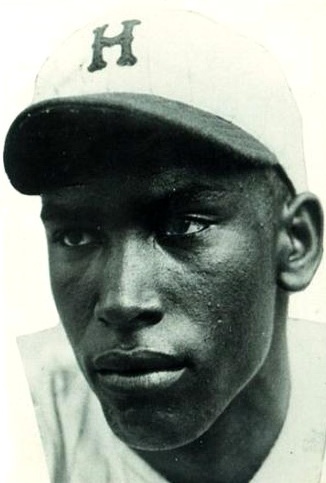
DihigoMartin

Martin Dihigo, another legend from Cuba

The next thing is that that obsession has been cultivated for well over a century, well before Fidel or Raul Castro were even born, let alone ruling the island with an iron Communist fist. Before the Marxist revolution on the island, American players — especially black ones — very frequently made the journey to Cuba to play in the winter leagues there, or even in the summer leagues, where Negro Leaguers were treated like heroes and often paid much better than they ever could have been in the Negro National and American Leagues.

For Negro Leaguers, Cuba — and, to be true, much of the rest of Latin America — represented not only a huge opportunity for financial enhancement, but also a chance, at least for a few months a year, at social respect and dignity on a scale that was unimaginable in the U.S. at the time.

As longtime Associated Press columnist Jim Litke told PBS Newshour a few days ago: “It used to be, quite frankly, sort of a wintering season for a lot of the great Negro League players, because Cuba allowed black players around 1900.”

(Of course, Cuba itself also has had and continues to have its own racially-based divides, with Cubans of African ancestry, i.e. descendants of sugar plantation slaves, often fighting for true equality with other, lighter skinned, Latino Cubans. Those are schisms that, to my understanding, were and are sometimes at best hidden and at worst encouraged by the Castro regime.)

So many legendary Negro Leaguers played in Cuban leagues at one point or another that the research possibilities that could be opening to us are, to many of us, mind-blowing, quite frankly. I’m not sure I’d want to go to myself — although if the opportunity for a free or heavily subsidized trip presented itself for me, I’d probably jump at it — but for many of my colleagues, it’s an opportunity that just cannot be passed up, and shouldn’t be. It’s something that for so long seemed unimaginable, something that was just never going to happen for a long, long time. And now it could, very soon.

Or maybe not. Obama has already faced considerable uproar over his moves, and that will only heighten in passion and influence.
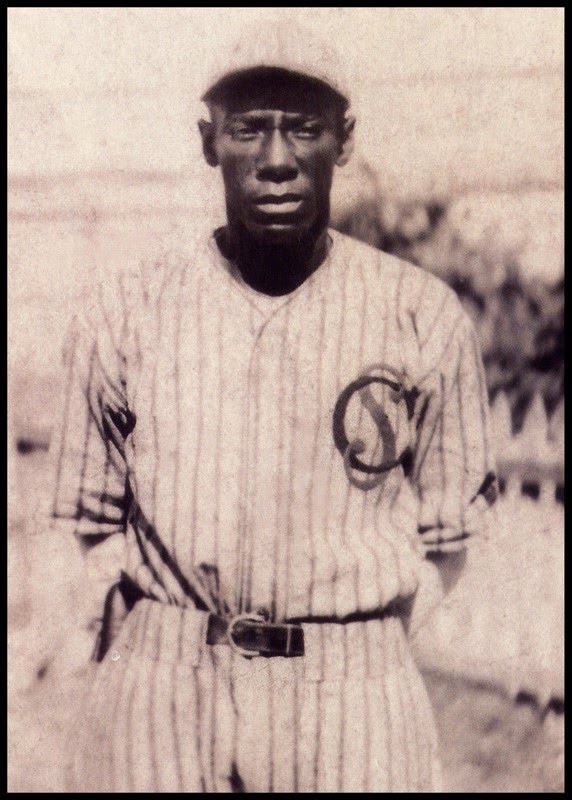
SantaClara1

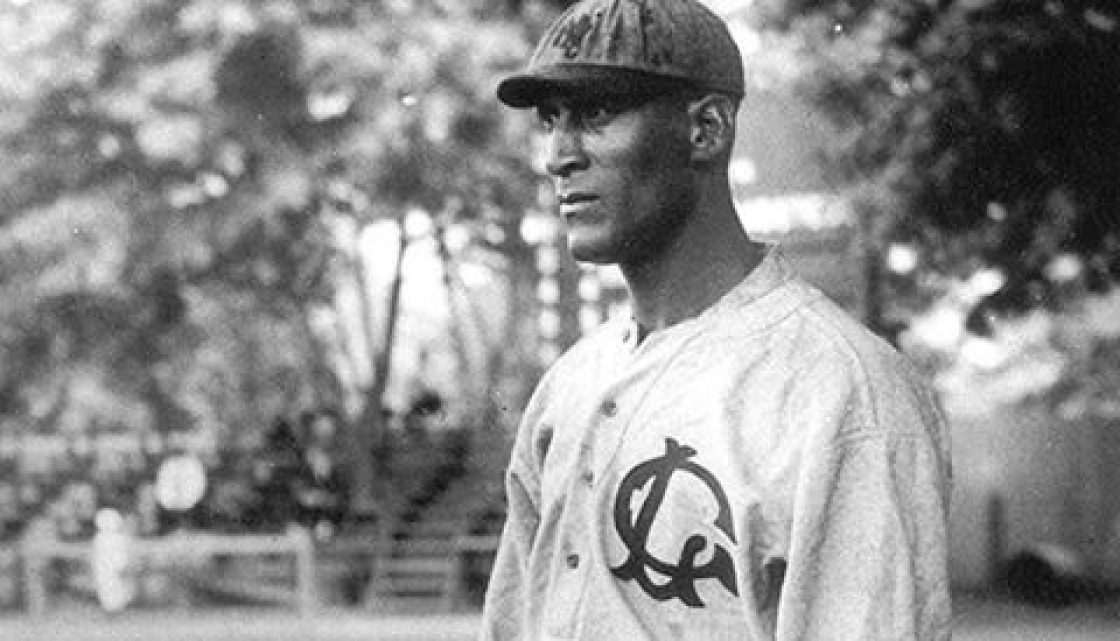
And Jose Mendez

But as historians, a lot of us try to put petty modern politics aside when we do our job — we realize that the historical big picture is so much wider and more all-encompassing than whatever politically-motivated sniping occurs today. We realize that the continuity, unpredictability and ever-progressing motion of history is, in a way, what really matters. The passage of time never, ever stops, and, as a result, never does the tenuous state of current international sociopolitical affairs. History is about facts, but it’s also about nuance, neither of which, it so often seems, are qualities modern American politicians ever grasp.

While it can always be interpreted in many ways, fundamental history cannot change. It’s eternal, rock solid, etched in stone, so to speak. As a result, we need to learn about what has happened to help us not just figure out what will happen, but change and direct what will happen.

And baseball history, although admittedly just a small part of it all, adheres to those ancient truths and cultural progressions as much as any aspect of American and Cuban culture. It’s a beautiful thing, really, when you take a few steps back. A beautiful, beautiful thing. More from Litke:

“People in the U.S. don’t always know, as you mentioned in the introduction, the game goes back 100 years there. It was a rallying point when they fought a war of independence with Spain because the Cubans didn’t want to go to the bullfights. They wanted to play baseball.

“So it became a very, very important symbol in that society a long, long time ago.”
The backbone of the game

On this Christmas Eve, I’ll try to say happy holidays with an upbeat, feel-good post courtesy of old-time Philadelphia Tribune sports columnist Ed Harris, who, in July 1940, wrote an eloquent exposition on the massive importance of the legions of semipro and sandlot squads that formed the backbone of the grand American game, especially in the shadows of the racial curtain.

I came across Harris’ column while I was doing research for a story I wrote for Pennsylvania Magazine, kind of a broad survey of the Negro Leagues in the Keystone State. While poking around for the story, I found the existence of the Pennsylvania Colored Baseball League in 1940, a collection of (eventually) five eastern PA semipro teams with high hopes for a long-running type of feeder system for the Negro League “bigs” like Hilldale, the Philly Stars and others.

6046.6785

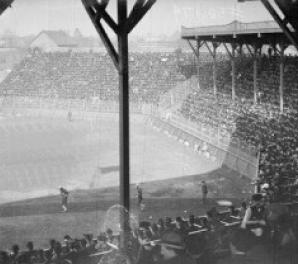
Hilldale Park

The PCBL, unfortunately, only lasted one season despite the best of intentions and lofty plans. But in his July 1940 piece, Harris did his best to support the league by extolling the virtues lower-level hardball. Harris’ column was prompted by a PCBL showcase contest at prestigious Hilldale Park, where the “little guys” got to shine on one of the Negro Leagues’ biggest stage. Here are a few excerpts from the column, loaded with enthusiasm, optimism and respect for the so-called scrubs who toiled below the surface of big-time ball:

No doubt and it is our sincere hope Hilldale Park, full of hoary tradition and memories in its own right, will once again be filled to the brim with anxious and enthusiastic spectators.

Baseball as it fills our view is more than likely to resemble the A’s, the Phillies or the Philadelphia Stars. These clubs and the others like them dominate the baseball horizon and are first to catch our view when we scan the scene.

But behind and underneath it all, the solid foundation on which all baseball is built, are the little clubs, the sandlot teams, the semi-pro clubs, the minor leagues.

The broad and solid foundation of the diamond sport is represented in clubs in these categories.

Were it not for the little fellow, the big fellow would not be. It seems that way in all walks of life and it is particularly true in baseball. The clubs of the Pennsylvania league are somewhat higher in stature than other clubs but they are part of the many on which baseball depends. …

Out of these games come the big-league stars of today and tomorrow. They start down, way down, with some neighborhood playground team and slowly begin their way towards their destiny. Some of them don’t have to wait long, very few of them though. Most make the routine way through playground, sand-lot, semi-pro until word of the ability of the particular player gets to the ear of someone who handles a big-time club. …

The small and often obscure teams nurture and feed the game. Unheralded and unsung they do their work day by day during the hot summer months. The destinies of each of these little teams are just as important as those of the first-class clubs. Whether we hear about them or not they exist and as long as they exist baseball can live. …

So take a run out there [to Hilldale Park] Sunday. It will serve a two-fold purpose. You’ll be seeing a good game in a good cause and you will get a chance once more to sit within the walls of Hilldale Park. Time will not was away the tradition, the history of Negro baseball written on these wooden fences. Even as once you saw the greats of Negro baseball, you will be seeing the dawn of careers that will someday rival the great names you remember today.

Well, well said Mr. Harris. You described exactly why I love doing what I do. And to everyone else … happy holidays!

Bad news on Barrow marker

Got some bad news about the Wesley Barrow grave marker effort …

Apparently the cheapest stone is $200 more than our one donor has pledged, so we need more help buying a burial marker for the unmarked grave of one of New Orleans’ most vital and influential Negro Leagues figures.

If there’s anyone out there who would like to and be able to help out, please email me at rwhirty218@yahoo.com. Whatever anyone can do would be incredibly appreciated in this season of giving!

An NC league that never got off the ground

I know I said I’d wait until early next week to start blogging again, but I just couldn’t stay away. 🙂 I got the bug again. I miss it!

I’ll start off with a little bit about an example of one of the facets of Negro Leagues research that truly fascinates me — all the seemingly “little” semipro, sandlot and industrial leagues that came and went over the years. A great deal of them were specifically regional in nature, encompassing and including cities in a limited geographic area, often in spots from which you’d never imagine any sort of higher-level baseball circuit sprouting.

And, unfortunately, despite the best of intentions and the level of excitement behind their creation, many of these league’s last only one or two years tops, and a lot never got off the ground at all. I tripped across an example of this existing in the late 1940s in the coastal plains of North Carolina.

A little background … I was raised (as I’ve annoyingly yet proudly mentioned many times before) in Rochester, N.Y. But when I was a junior in college, my father and step mother moved to a small city in eastern North Carolina called Rocky Mount. As a very important side note, Rocky Mount was the hometown and lifelong residence of the great Buck Leonard.

When I graduated at Indiana U., I decided to head to NC and see what life was like there. I eventually spent two years living and working in Tarboro, N.C., which itself has its own surprising Negro Leagues connections, as my article here in the Raleigh News & Observer demonstrates regarding Hall of Fame hurler Bill Foster.

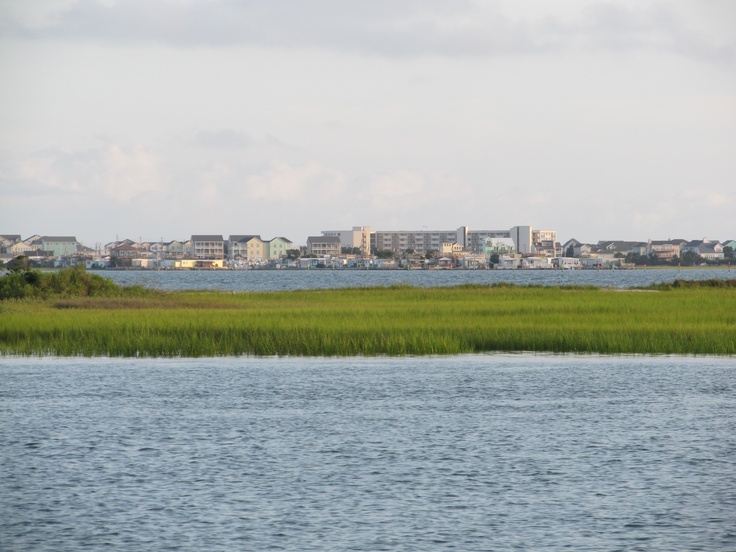
Since then, I’ve moved around all across the country, and my parents moved first to Raleigh, then to Atlantic Beach, N.C., for their retirement years. I visit my folks there occasionally, and I’ve gotten to know the region, dubbed the Crystal Coast, a little bit. The area includes Carteret County and one of its biggest burgs, Morehead City, which is across Bogue Sound from Atlantic Beach.

7873364d35d0f3d21fa443e6be8bf64e

Bogue Sound and Morehead City

And since I’ll be visiting my parents in AB over the holidays, I was pondering going to a local library and reviewing some regional newspaper archives to see if the region has any history of African-American baseball. As preparation for that process, I did some internet researching for baseball in Morehead City, and in doing that, I tripped across …

The East Carolina Baseball League.

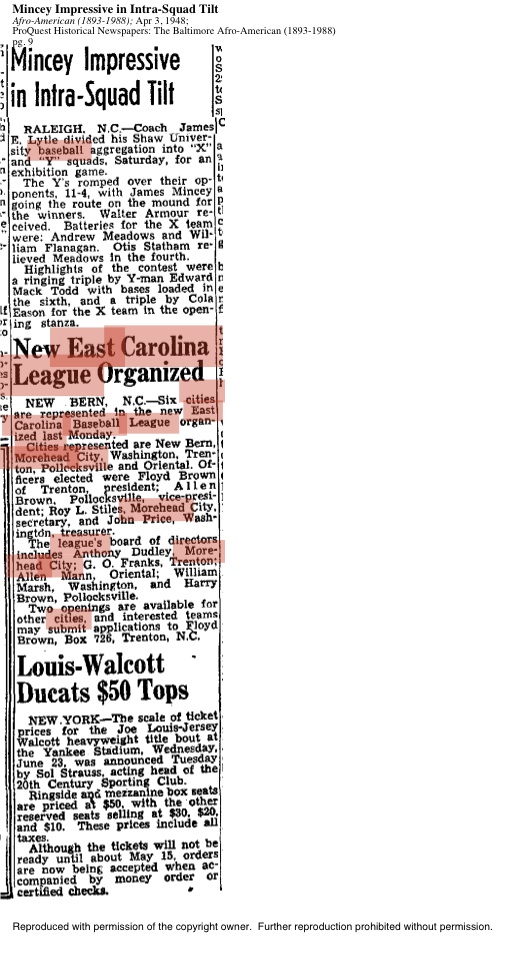
In early 1948, a year after Jackie Robinson debuted in Brooklyn, six small cities — a few of them little more than small towns, in fact — in the coastal plains of North Carolina decided to put up teams in the nascent ECBL, including New Bern, Morehead City, Washington, Oriental, Trenton and Pollocksville.

out-6

To be honest, I’d never even heard of those last two communities, and I’ve only vaguely heard of Oriental, mainly because of its un-PC name (at least for this day and age). These towns were perhaps bigger and more important six or seven decades ago than they are now, of course, but from this 21st-century perch, it seems unlikely that such small communities could sustain any sort of organized baseball circuit.

But that’s what’s special about the world and history of baseball — the imaginations and ambitions and move of the game that permeates every level of society, including in the African-American community.

Apparently, representatives from the half-dozen municipalities met in New Bern in late March to organize the new loop and chose its first slate of officers: Floyd Brown of Trenton, president; Allen Brown of Pollocksville, VP; Roy Stiles of Morehead City, secretary; and John Price of Washington, treasurer. The board of directors included Morehead City’s Anthony Dudley, Trenton’s G.O. Franks, Allen Mann of Oriental, Washington’s William Marsh, and Harry Brown of Pollocksville. In addition, at the time of the loop’s creation, the founders were seeking two more teams as well.

out-5

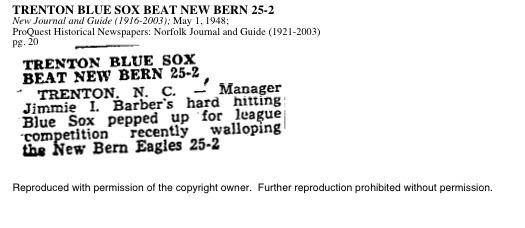
Unfortunately, however, it appears the grand plans for the East Carolina Baseball League turned to dust almost immediately and the league never got off the ground — I couldn’t find any more references to it in various online archives, and the only game report I could find on a contest between two of the cities in the league in 1948 was a 25-2 beatdown the Trenton Blue Sox put on the New Bern Eagles in late April. I couldn’t determine if those two teams were even each city’s representatives in the ECBL.

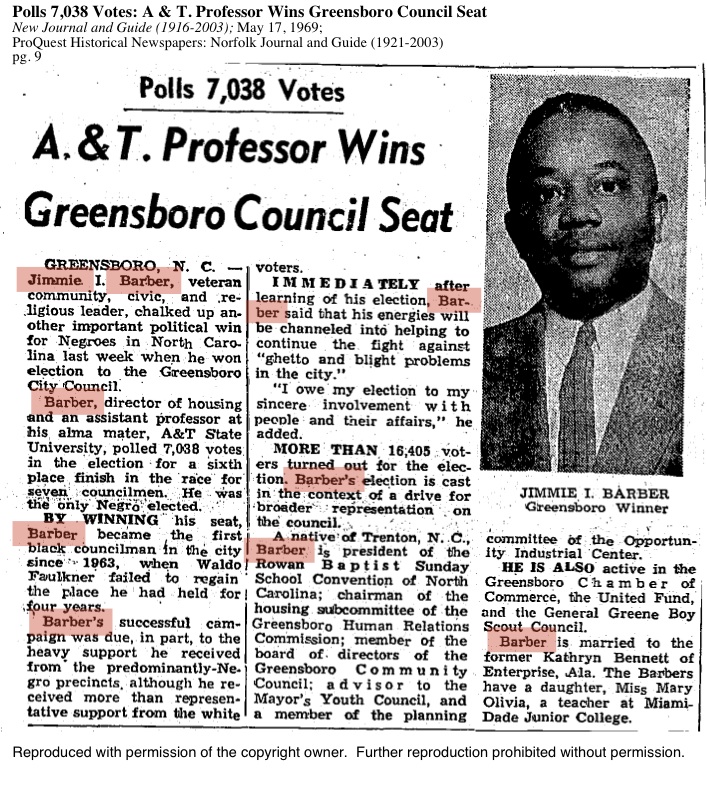
But it looks like the Trenton Blue Sox were a fairly established semipro team in that town, with a history stretching back to at least 1939, when the Norfolk New Journal and Guide reported on the Sox’ 3-0 win over the Jacksonville Giants and 6-5 trimming of the Camp Patterson Yellow Jackets. Around that same time of July ’39, the Blue Sox inked solid-hitting shortstop Jimmie Barber, then a sophomore at North Carolina A&T in Greensboro, for the rest of the season.

Barber seems to have stuck around with the Sox, who went 18-4 during the 1939 season, when they were managed by Floyd Brown, who would become the president of the failed ECBL in ’48. Barber eventually took over the managership of the team, including during the 1948 campaign.

That year, in addition to their win over New Bern, the Blue Sox beat a team from Red Hill and a squad called the Jacksonville Pepsi Cola Joint. That last opponent most likely represented the Pepsi Cola Bottling Company in Jacksonville, N.C., a small city that is best known today for being the home of Camp Lejeune U.S. Marines Corps base. (Actually, the Pepsi Cola company itself was founded in New Bern, which I did not know, so Jacksonville, N.C., just a little ways away, who have been a natural spot for a Pepsi bottling supply company.)

The Blue Sox lasted until at least April 1952, when the New Journal and Guide reported their season-opening, doubleheader sweep of the Oriental Hornets. At the time, Jimmie Barber was still the manager.

Actually, Barber was a native of Trenton native who was quite active in his hometown community. But, perhaps more importantly, he went on to become a professor and dean of men at NC A&T as well as a Greensboro city councilman. He now has a city park named after him.

out-4

And that, gentle readers, is something else that enraptures me about black baseball history — the fact that the sport so often served as a springboard for and a precursor to the civic success and impact of so many African-American men (and women!). Blackball wasn’t just about a sport, a simple game. Its influence reached into so many aspects of American life and society — and not to mention geography — that it simply cannot be shrugged off as an “unfortunate” historical anomaly or anachronism from a time when equality for all men and women was a farce and falsehood.

And it’s pretty cool that a supposedly obscure town like Trenton, N.C., played a large part in creating the Negro League painting on the canvass.

Might need a little break

Howdy. I might need to pull back for a few days on the posts. I’m started a new PT job this week, and it’s a lot more physically demanding than I was expecting. Combine that with the facts that I’m 1) woefully out of shape, and 2) getting old, I think I need this week to get used to being wiped out physically in the evening.

I’m also trying to work on some long-term, longer-form projects that I’d like to focus on for a week or so. As a result, I think I’ll take this week and take a break from the ol’ bloggin’ thang. But I’ll be back early next week, even though it’ll be holiday week. I promise.

Many thanks, again, to everyone for reading, and I apologize for this brief respite. I’ll be back soon!

Obscure yet glorious … the week ahead

As I’ve stated several times — and as exemplified, for example, by my fascination with the Berkeley International League — it’s quite often the little details, the fine grain of sands on the beach of baseball history that enrapture me and jog my attention.

And frequently, I happen across such subjects — some might admittedly call them minutiae — via either sheer curiosity, dumb luck or a combination of both.

And just as frequently, these topics involve such obscure amateur, industrial and semipro leagues that they have been lost in the historical haze for decades. I don’t say that to puff up my own importance in writing about them; rather, my intention is to show how enthusiastic and optimistic the people involved in the leagues, lives or other happenstances at the time and how important they each were to their contemporary geographic regions and social circles.

The fact that these leagues often came and went in the blink of an eye is somewhat irrelevant; it’s the enthusiasm, optimism and faith in their hopeful success that is what makes baseball history truly remarkable and so fun to explore. When it comes to baseball, hope always springs eternal, whether it be in the formation of semipro black circuits in the 1930s or today, every February when major league pitchers and catchers report. Those involved think they are on the brink of something grand, and it’s that belief alone that does indeed make every hardball venture grand. It’s not whether an adventure succeeds or not that makes it wonderful. It’s the spirit behind it that truly does.

But I digress … I recently tripped across two such African-American league ventures that I’d like to share a little bit about this week — the 1940 Pennsylvania Colored Baseball League, and the 1948 East Carolina Baseball League.

Those two items could represent the bulk of my posting this week, but hopefully there’ll be two or three other things:

• An update on the effort to purchase and place a grave marker at the burial site of NOLA baseball legend Wesley Barrow.

• An update/refresher on the investigation into the 1925 murder of a Harlem man that might very well have somehow involved three Negro Leagues superstars — Dave Brown, Frank Wickware and Oliver Marcell.

• And possibly — possibly — an exploration into the veracity of the legend that Ty Cobb refused to take BP from Cannonball Dick Redding. Two great Georgians in what would have been a duel for the ages … if true.

A U of R (baseball) trailblazer

beatricehoward

This is just a little thing, perhaps a self-indulgence, based on my love of my hometown, Rochester, N.Y. …

While I was in the Roc between grad school and moving to NOLA, I frequently wrote for Rochester Review, the University of Rochester alumni magazine, for which I remain eternally gratefully, especially to editor Scott Hauser.

As a result, I developed an affinity for the university even though I wasn’t an alumni and had no official connection to it other than my high school football coach and one of my teammates coached there briefly. I also covered several events at UR’s Fauver Stadium, like high school pigskin and such.

Because of my work for Rochester Review and my current dedication to the Negro Leagues, I’ve been wondering for a while now if the university and black baseball ever intersected.

For example, it’s fairly well known that the New York Black Yankees called Rochester home during the 1948 Negro National League season, the last year of their existence. I’ve been curious whether the Black Yanks might have trained at the campus pr perhaps even played exhibition games against the UR varsity squad.

Or did any Negro Leaguers attend and possibly play for the university? Or, who was UR’s first African-American varsity baseball player?

So far, in my limited, long-distance, cyber research from the Big Easy, I’ve found no such links. But what I did find is a pretty cool little nugget.

It turns out that the first black woman to graduate from UR was Beatrice Amaza Howard, a Rochester native who appears to have received two degrees from the institution, a BA in 1931 and a grad degree two years later. She went on to a long, very respected career as a teacher.

And, while she was matriculating at UR, Beatrice lettered for the … women’s baseball team! She received her “R” in 1931, according to the 1931 university yearbook. (She’s not pictured in the team photograph in the publication, however.)

“In the spring time a young girl’s fancy turns to — baseball, or course,” the yearbook stated. “After Easter the indomitable urge comes on, and out come bats, balls and bases, regardless of rain, shine or snow.”

32848_B094046-00328

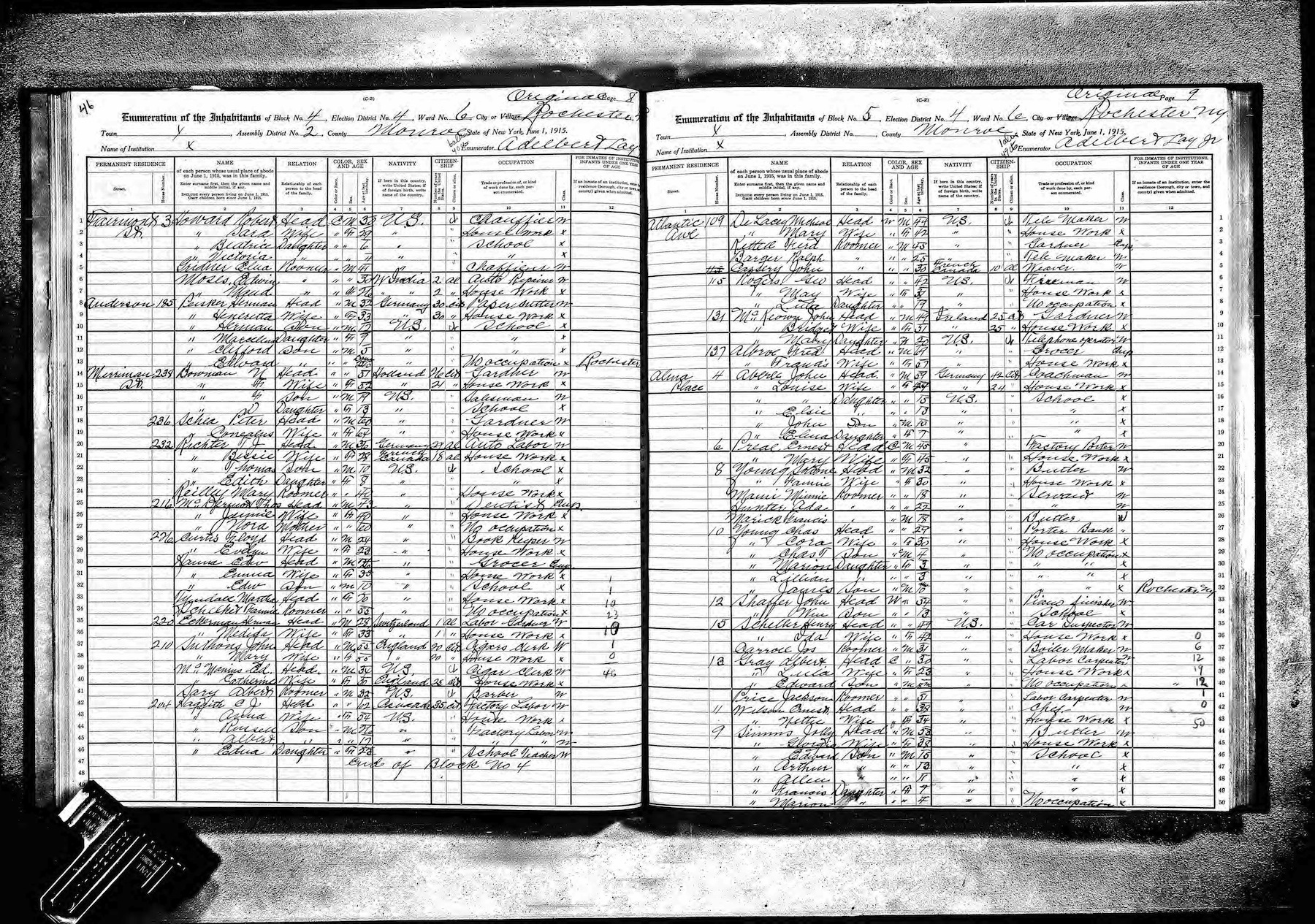
1915 NYS Census for the Howards

Beatrice Howard was born to Robert and Beatrice Howard in about 1909 in New Jersey and grew up in a largely white, middle-class neighborhood in the city of Rochester. Robert was a chauffeur for a UR trustee, while Beatrice was a high achiever at East High School — she was class valedictorian — and earned a scholarship to the university. Both her parents were from Virginia, where they each graduated from the Hampton Institute. Beatrice had one sibling, younger sister Victoria.

Beatrice eschewed attending an HBCU, telling a newspaper at the time that while black schools offered more in terms of social opportunities, “white” schools like UR had higher academic standards and learning facilities. In addition to playing baseball at the university, she was also on the basketball team.

In an interview for the Spring-Summer 1993 issue of Rochester Review, Howard — then Beatrice Howard Hall, post-nuptials — said she found adjusting to a white college fairly easy, with no major issues; in fact, she attended UR with many of her East High classmates.

“I was accustomed to having the same friends all the way through, so for me, that wasn’t any kind of problem,” she told the magazine. “Also, I suppose, your experiences depend on the way you conduct yourself and the way you look, too.”

Again, nothing earth-shattering, and Beatrice Amaza Howard’s story is fairly far afield from what this blog is usually about, but thanks for allowing me this return to my home stomping grounds in Rah-Cha-Cha.

Does Ed Stone’s wife hold a clue?

In an effort to locate outfielder Ed “Ace” Stone’s grave, I’ve tried to do a little research into his wife, the former Bernice Baskerville. I actually found a neat Web site put together by a relative of the Baskervilles, Denise-Oliver Velez, who explores her ancestry.

According to the Web site, Ed and Bernice Stone has two children, Edward Jr. and Linda. In an initial communication with Mrs. Oliver-Velez, she suggested I talk with the younger Ed, but she added that she doesn’t remember where Ace might be buried.

Bernice, according to multiple documents, was born in New Jersey on Oct. 26, 1912, to James and Letitia Baskerville, both of whom were born and had roots in Virginia. The couple raised their family in Newark. James was a horseshoer at a blacksmith shop.

The family lived in a racially mixed neighborhood, including next door to a large clan of Jewish, Russian-Polish immigrants who spoke, according to the 1920 Census, “Yiddish.”

4313334-00981

1920 U.S. Census for the Baskervilles

The 1920 Census lists the the entire Baskerville family as “mulatto.” As of the 1930 federal report, they were still living on a diverse street, with several whites, including two  households of Russian and Polish Jews. James and Letitia had four daughters: Mae, 19; Bernice, 17; Ethel, 15; and Janette, 10. By that time, both Mae and Bernice were toiling as elevator operators. The entire family, interestingly, is recorded as “Negro.”

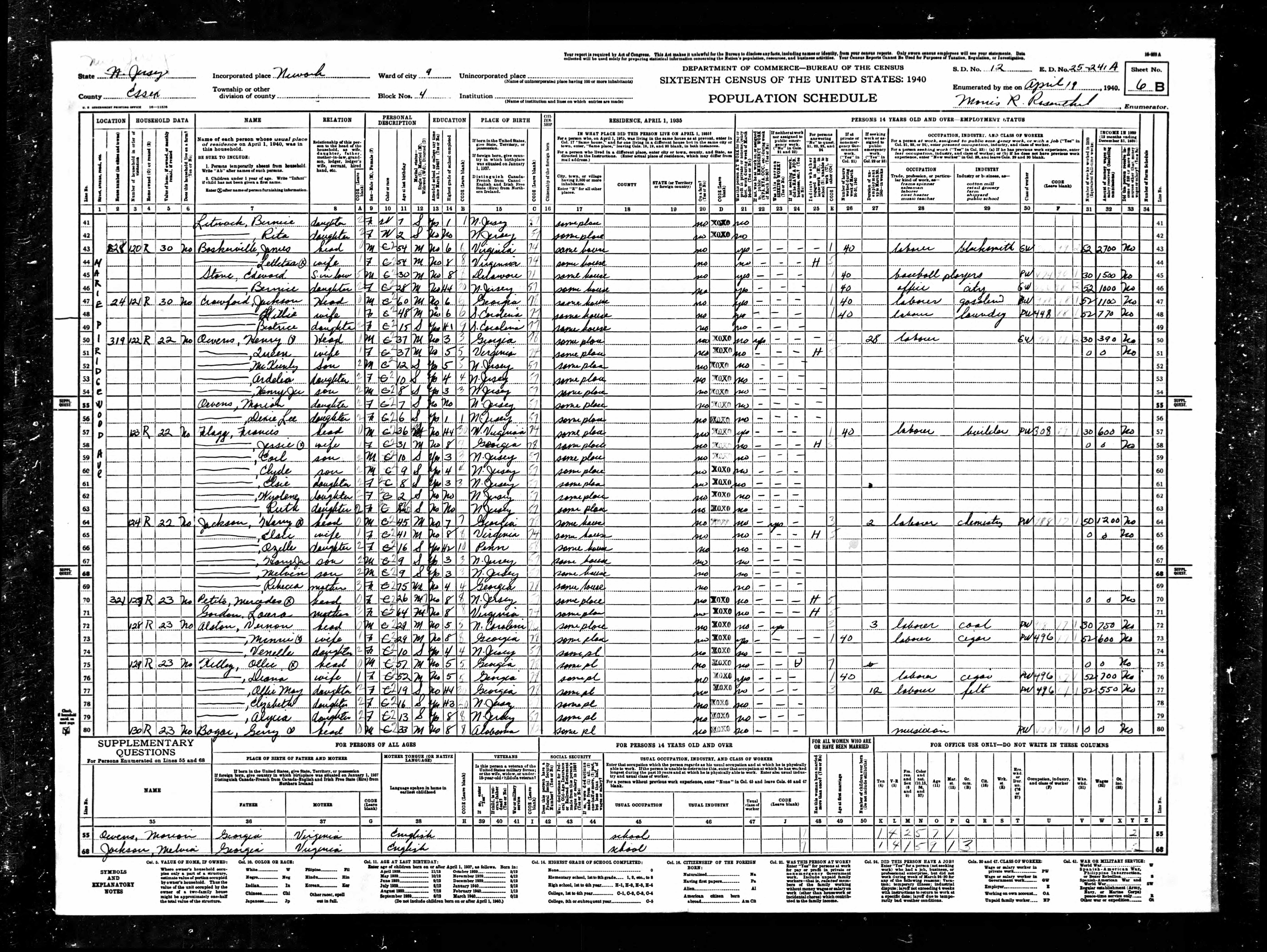
By 1940, Ed Stone and Bernice Baskerville were married and living with James and Letitia in Newark; Stone, at various times in his career, played for the Newark Eagles and Atlantic City Bacharachs, making in natural for the couple to meet in Jersey.

m-t0627-02419-00047

1940 U.S. Census for the Baskervilles and Stones

The extended family was now residing in an apparently all-black neighborhood, with James Baskerville still laboring at a blacksmith shop, while Ed is listed as a “baseball player” and Bernice was working in an “office.”

Ed Stone spent much of his baseball career south of the border, in Latin America, and Bernice appears to have traveled with him on numerous occasions, according to multiple ship and flight manifests from the 1930s and ’40s. Some of the voyages were to and/or from Cuba, others between Puerto Rico and New York, yet others to and and from San Antonio.

What happened to Bernice and Edward from then on is a bit fuzzy, but I’ve only done limited research. In 1983, when Ed died in New York City, public records have Bernice living in Wilmington, Del., Ed’s hometown. At some point after that, Bernie moved to Las Vegas, where she died on Nov. 14, 2007. I have yet to hunt down an obituary.

So, the long and short of it is that while I’ve filled in some of the picture, I still really have no idea where Ed “Ace” Stone is buried. Again, if anyone has any ideas or knowledge …

One side note: It’s clear Ed died in New York City, but the borough is unclear; one record says the Bronx, another says Queens …

How did Cannonball start his career?

redding_dick_1

One facet of Cannonball Dick Redding’s life and baseball career — aside from his sordid, 1948 death in a Long Island mental hospital — that’s been gnawing at me has been how, exactly, he picked up America’s pastime and the way in which he got his start as a legendary fastball flinger.

Biographies of him seem to be clouded as to this matter. How did he go from an Atlanta youth with familial roots in rural Georgia to Negro Leagues greatness? That’s been hard to pin down.

Scattered bios of him feature a rather fantastical story about mythically famous major leagues manager John McGraw being blown away by Redding’s talent when the later pitched batting practice for McGraw’s New York Giants as the major-league club passed through Atlanta.

These biographical sketches — perhaps largely begun by an early essay John Holway did about Cannonball’s life based on an interview with Redding’s contemporary, Jesse Hubbard — claim that Redding’s prowess at the G-men’s batting practice in 1911 prompted McGraw to bring Cannonball north with him. McGraw then allegedly hooked the youthful Georgian up with black baseball legend Sol White, whose Philadelphia Giants were just starting to become an Eastern power, and off Redding went on a stellar, easily Hall-of-Fame-worthy hardball career.

52813a_lg

John McGraw

But the historians and enthusiasts I’ve spoken with either discount that tale or have never even heard of it before. Indeed, there’s no proof whatsoever that anything like that actually happened. It’s also unclear how McGraw would have known White well enough to convince the season African-American baseball veteran to sign Redding up for the nascent Philly Giants. Although White sometimes wrote about the irascible Giants manager in the former’s newspaper columns and even lauded McGraw’s racial open-mindedness on occasion, there’s no hint that the two were personal friends or anything.

What seems more likely is that White and the Philadelphia squad themselves picked Redding up as they moved through Atlanta. But if that was the case, how did White see Cannonball in the first place?

Did Redding play for the semipro Atlanta Deppens that then played an exhibition against Sol’s team? That’s another possibility. But again, I haven’t found any articles or box scores from Deppens games that include Redding, who was apparently known in Atlanta as “Spaniard” for unclear reasons.

Then there’s the notion that Dick hurled for the Morris Brown College baseball team. However, I called an archivist in Atlanta specializing in historical collections from regional HBCU’s, and no Morris Brown yearbook lists Dick Redding as an enrolled student or baseball player. In addition, no contemporary articles or box scores of MBC games feature any reference to a Redding.

So what’s the deal? This seems like a major gap in the Cannonball Dick Redding story — verifiable and/or documented proof of not only started playing baseball but how he reached the big time.

The Negro Leagues community loses a shining light

I only formally met Dick Clark once, but it was one of the biggest honors and thrills of my life and career as a researcher and journalist. One of the major movers behind SABR’s Negro Leagues Committee and the Jerry Malloy Conference, Dick was respected and beloved by all who knew him, making his passing on Monday a sad, sad occurrence for our community. Read current committee co-chair Larry Lester’s testimonial commentary on Dick’s death here.