Giraffe?

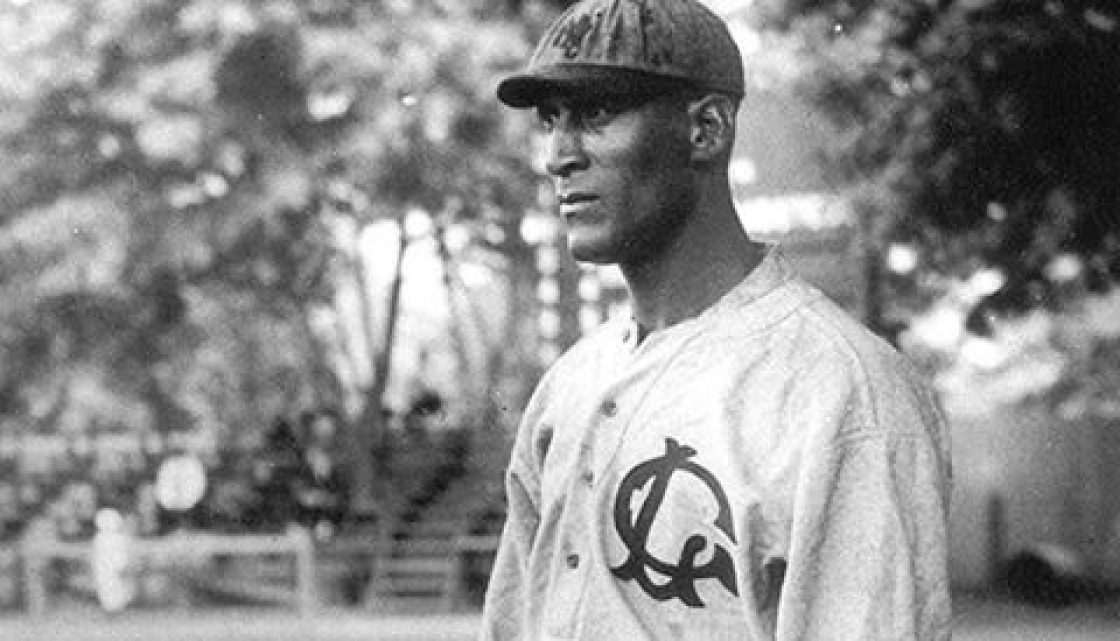
Here’s kind of a little follow up to my article on philly.com and my previous posts about Cyclone/Smokey Joe Williams. Bill Staples Jr., whom I quote in the Philly story, sent me an interesting article from the San Antonio Light newspaper in 1907, Williams’ first year in paid baseball when he played for the San Antonio Black Bronchos.

The article is from the Aug. 6 issue of the Light, in which the paper previews an upcoming series of games between the Bronchos and the Birmingham Giants, the “colored champions of the south.” Here’s one of the paragraphs from the story:

“The opening game will probably be pitched by Giraffe Williams, the human Gatling gun, and Black Cat and the Austin Demon will be seen in the affray. …”

Giraffe! So before being Smokey Joe, before being Cyclone Joe, the future Hall of Fame pitcher was … Giraffe? It appears so. 🙂

Another note about Williams’ time with the Black Bronchos, one that is especially pertinent to me, Mr. N’Awlins … According to the Indianapolis Freeman, which was pretty much a national African-American newspaper at the time, in June 1909, the Bronchos hosted the New Orleans Black Eagles and thumped the Big Easy visitors in two games, 5-0 and 9-1. From the Freeman’s article:

“Unable to get any kind of action against the locals, the Pelican crowd was outclassed all the way. Their pitchers were slaughtered, and they were unable to get at either Cyclone Joe or Spider Moonie in the two battles.

“Cyclone was the big breeze on the strip in the first game. he allowed one little skinny hit and fanned fourteen batters. …”

The poor Eagles never knew what hit ’em. They certainly weren’t the first aggregation to be humbled by the Cyclone, and as we well know, they weren’t the last …

Another unmarked grave

I had a dream a few nights ago, one that was, for me, a very lucid one, and it was quite simple: I found Wesley Barrow’s grave in my dream.

I waffle back and forth when it comes to the interpretation of dreams as possible omens of the future, but what happened in the last couple days, culminating Friday afternoon, inched me closer to being a believer in such Freudian hokum.

Yesterday, with the help of city of Gretna Councilman Milton Crosby, I did indeed find Barrow’s grave, this time in real life. After months of futile searching through New Hope Baptist Church Cemetery, I located where the local hardball legend — player, manager, mentor to countless young black men over the span of 30-plus years — is interred.

And it is what I had feared: Barrow’s grave is unmarked. Here it is:

IMG_0826

Quite simply, I want that to change. It must change.

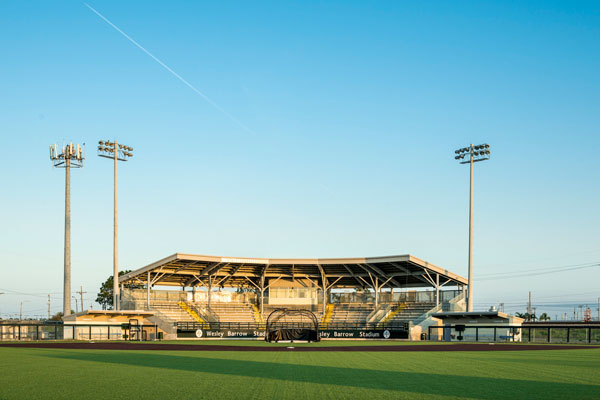
True, Barrow, whose blackball career spanned just about the entire country, Baltimore to the Pacific Northwest to Hawaii and back to New Orleans, does have a beautifully rehabilitated stadium named after him here in the historic African-American neighborhood of Pontchartrain Park — below is a photo of the stadium.

wb-1

But being buried in an unmarked, anonymous grave — and with another man, Jim Skillet, whose name is also absent from the burial site — robs such an influential man of  a certain amount of much-deserved dignity in death.

While we were standing at the grave, Councilman Crosby told me a little bit about Wesley Barrow’s life, death and influence on the councilman himself, who, it turns out, played for Barrow on a team sponsored by the Blue Room restaurant.

“Wesley Barrow taught me a lot,” Crosby told me. “I learned a lot from him. He was a great coach and a great man.”

Unfortunately, the councilman said, because the skipper traveled so much in pursuit of his storied managerial career, Barrow never really had a chance to truly lay down roots here in NOLA, meaning he didn’t have much of a family left when he died of a heart attack on Christmas Eve, 1965.

Because of that, there was no one to pay for anything in the way of a dignified grave, including a name marker. New Hope Baptist Church in Gretna appears to have taken his body into its cemetery as an act of charity; Councilman Crosby said the career baseball man wasn’t even a congregant of the church.

The councilman theorizes that Jim Skillet was some sort of distant relative of Barrow’s who died with equally paltry means and was interred with the skipper.

Crosby, who is a New Hope parishioner, recently took control of the cemetery and immediately set about launching an ambitious — and, so far, quite successful — beautification and rehabilitation effort at the historic burial grounds.

Councilman Crosby said he would love to see the placement of a grave marker at Barrow’s burial spot, as well as a formal dedication ceremony, which he said would attract dozens of people, especially local men who played under and were tutored by Barrow.

“I could round up all of them guys,” he said with an enthusiastic grin.

Crosby estimated, from what I recall, that buying a stone for the grave would cost between $100 and $150, which I feel could easily be raised from community groups and local businesses.

So what say you, New Orleans and anyone else who reads this? Can we do it? If you think we can, leave comments on this blog or, even better, e-mail me directly at rwhirty218@yahoo.com.

Winfield Welch and his Travelers

When we last left our intrepid hero, Louisiana native and legendary Negro Leagues manager Winfield Welch, he was wrapping up his first season as the pilot of a major New Orleans team, the Black Pelicans, in 1930. That season ended in somewhat of a fizzle, with the Pels enduring a brutal trip to Bogalusa and a no-show in a home contest with the Houston Black Buffalos.

But Winfield regrouped in 1931, taking what was left of the previous campaign’s Black Pelicans and transforming them into his own squad, known as Welsh’s Travelers. (The Louisiana Weekly consistently misspelled his name early on in his career.)

Welch’s creation, however, didn’t put an end to either the Black Pels nor Welch’s connection to his former team. Entrepreneur A.L. Moss took over the Black Pelicans name as president of a whole new squad under that moniker — rights to the Black Pels name changed hands numerous times over the decades — by Welch and his Travelers continued to travel in the Pelicans bus from 1930.

The name Welsh’s Travelers was apparently bestowed upon Winfield’s 1931 aggregation by Earl Wright, sports editor of the Louisiana Weekly newspaper. The aggregation was led by a robust pitching rotation, paced by Boguille, “Iron Man” Moseley, “Black Diamond” Pipkin and our old friend “Iron Claw” Populus.

The Travelers quickly became one of the elite African-American barnstorming squads in the NOLA region, beginning with, ironically, a trip to Bogalusa, the site of an ugly confrontation with an allegedly “dirty” Bogalusan squad and a local, racist police officer.

After that 1930 contest, Welch indignantly declared, “We will be experiencing zero weather in July and August before I take a baseball team or any other aggregation to play against one representing Bogalusa in that town again.”

Welch’s umbrage with that troubling affair apparently didn’t last long, though — his Welsh’s Travelers began the 1931 campaign with an early April trip to … Bogalusa. The NOLA clan ended up splitting the resulting two-game series, dropping the first tilt 15-3 when the local squad, according to Wright, “knocked the cover off the ball” on hapless Travelers hurler Dickie Mathews over five innings.

Wright added that the Bogalusan “big bats did overtime duty and the Tigers shelled [Mathews] from the hill …” Travelers fireman “Squatter” Benjamin came in and stopped the bleeding, but it was too late.

The second contest, turned out to be a flip from the first one, with Welch’s clan turning the tables for a 12-8 triumph behind the batting prowess of Labat, going 6-for-6. A player named Muse starred in the field for the NOLA aggregation. Wrote Wright:

“Monday found ‘Red’ Boguille holding down Bogalusa and Welsh’s hirelings whanging the agate at a merry clip. They won this game, 12-8, and knocked Payton out of the box and worked on Laurent, something awful.”

“Whanging the agate at a merry clip.” Gorgeous early 1930s sportswriter prose. 🙂

But, most important, Welch found this jaunt to Bogalusa much more pleasant than the previous year. Scribbled Wright:

“The visiting team from New Orleans was well satisfied with the treatment accorded to it in Bogalusa.”

The Travelers’ performance up through that point seemed to impressed officials with the Texas-Louisiana Baseball League, who welcomed Welch’s squad into the fold in late April. The Travelers opened league play with a massively successful trip to Port Arthur, Texas, where they swept the locals in a three-game series.

From there, it was on to northeast Louisiana to face the Monroe Monarchs, a burgeoning Southern powerhouse. The Travelers didn’t fare very well, however, going 1-2 against the home squad. Boguille secured the visiting clan’s only triumph in the series.

948f3222-3a39-4e78-bedb-76b9ac105842

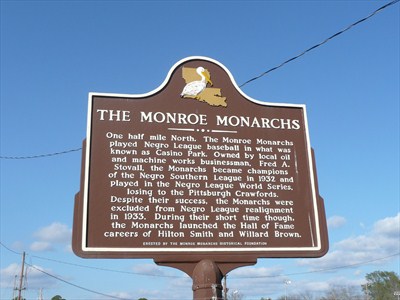
The historical marker noting the location of the Monroe Monarchs’ famed Casino Park, where Winfield Welch’s teams would have played when they visited Monroe.

A month later, the Travelers rebounded by taking two of three from the Dallas Black Giants on the road, then again journeyed to Monroe to square off against the tough Monarchs, who had become something of a farm team for the big-time Kansas City Monarchs.

Welch’s bunch had better luck on this trip to northeast Louisiana, beating the host squad 4-3 in the first game of a twin bill and staying knotted at 0-0 in the second, rain-shortened clash.

The Louisiana Weekly contended that “Welsh’s Travelers [were] continuing their brilliant playing,” thanks partially to the influx of “five college men from various Southern institutions. They play fast baseball and when couple with the older heads … form a formidable nine.”

In late July, the Travelers took a 5-4 decision from the Corpus Christi Big Hits when Iron Claw Populus relieved his brother, Adam, the team’s starting twirler who got shelled early and often. The Claw plugged the leaks and guided his squad to the triumph.

Early August brought this result, reported the Weekly, which also had apparently renamed the squad yet again:

“‘Lucky’ Welsh’s Black Pelicans went a long way toward squaring the count with the Natchez Giants, or Coca-Colas as they’re known in some sections of Mississippi, by taking a pair of the three-game series played with the invaders Saturday and Sunday in Heineman Park.

“The two victories made up for for the pair the Pels dropped to the Giants in Natchez last week …”

Winning hurlers for the NOLA bunch were Iron Claw and “Lefty” Degree, while hard-luck Adam Populus took the only loss of the three-game set.

The following week, Welch’s squad engaged a local NOLA sandlot team, the Melpomene White Sox, in what turned out to be a contest divided into two distinct halves. The Sox maintained a somewhat surprising 5-3 lead into the seventh frame, but then the rechristened Black Pelicans went on an overwhelming hitting spree to cap off a 17-5 victory in the first game of a doubleheader despite a pair of controversial calls by the umpires.

The second contest … What can be said about the second contest other than, “Wow!” Twenty-two runs in two innings. That’s how badly the Welshmen spanked the hapless Sox. And that, apparently, is all they needed, because a Melpomene pitching change plugged the Pels up after the merciless barrage. Reported the Weekly:

“With a 22-0 score staring him in the face ‘Lefty Lee’ pitched like a fool and stopped the Birds dead in the midst of their barrage. They didn’t get a hit off him in the five innings he pitched, nor did a man reach second base.

“The Sox tried feebly to catch up with the Welshmen, even to the extent of raking up four runs in the second semester, but all to no avail. Welsh’s luck peice [sic] had seen to it that the left-handed twirling wizard was found too late and the game simply ended 22-5.”

The Weekly’s coverage of Welch’s 1931 aggregation dropped off after that, and 1932 brought the skipper’s move to Shreveport, where the Napoleonville native took the helm of that city’s Black Sports. Thus launched another phase in Welch’s climb to the top rungs of the Negro League managing world, and that’s where I’ll pick up next time.

But in one final note for this post, it’s worth mentioning how shifting the sand was upon which the NOLA blackball scene was built. While the Negro Leagues remained a vibrant, crucial piece of African-American life in the city, the fact that, for example, the Black Pelicans name changed hands twice during the 1931 campaign, and that Winfield Welch was able to so easily appropriate the 1930 Black Pels lineup for his Travelers — and then Pelicans again — squad at the start of ’31 season reflects the malleability of said hardball scene.

That slippery reality is, perhaps, one reason why the Crescent City never really became a nationally known hotbed of blackball activity despite the fact that it was indeed a very lively, exciting and wonderfully varied atmosphere. Because of that, the national black press might have had a hard time covering Big Easy baseball because grasping onto something solid and stable was almost impossible at times. Thus, I think, is one of the tragedies of NOLA blackball …

The Cyclone, Philly and racial identity

Here’s an article I just had published on philly.com about Cyclone Joe Williams, his time in Philadelphia and his Native-American roots, a topic I’ve been exploring for some time. The story discusses the complicated, murky issue of racial and ethnic identity in the first few decades of the 20th century.

Dis, dat and d’udder …

… as our N’Awlins boy, Dr. John, would say …

Just a few notes here. I’ve got some (hopefully) big stuff brewing, and I’ll post it up here as soon as possible. Updates on Wesley Barrow’s (and possibly Alex Albritton’s) graves, another Groundhog entry, another season in the career of Winfield Welch, a story or two coming out elsewhere …

In the meantime, here’s a few items you should check out:

• The Negro Leagues Baseball Museum is in the last day or two of its fundraising Yard School of cool, collectible memorabilia. Here’s the museum’s Facebook page;

• Colleague and mentor Larry Lester’s latest story — his Satchel Paige experience;

• The re-dedication of J.B. Spencer Park here in Gretna, La.;

• Gary Ashwill’s neat post about Steel Arm Davis.

The Ground Hog

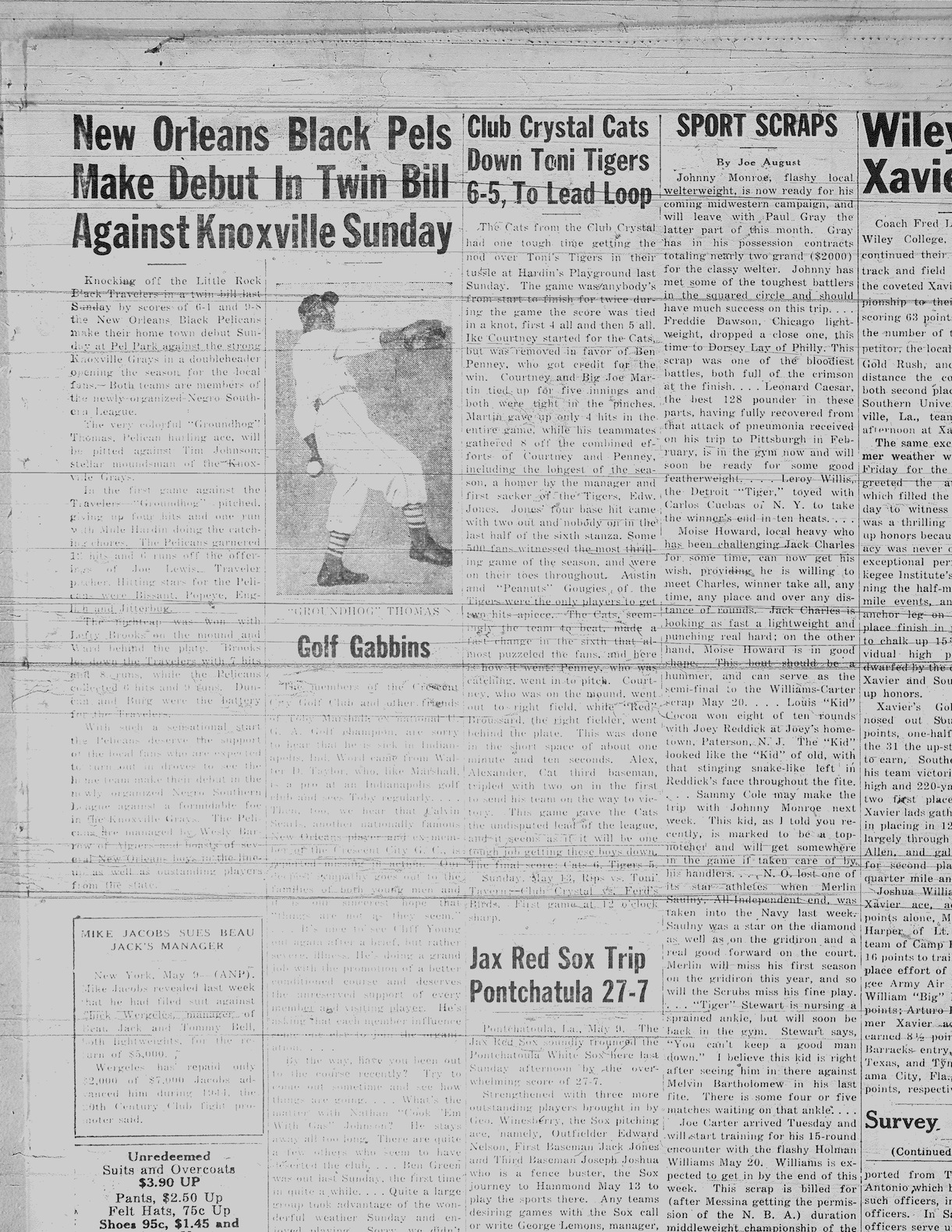
“A great Kenner White Sox Team playing in their home park in Reserve, La., Sunday, May 31, for the first time before over 3,000 fans downed the mighty Ground Hog and his Houma Giants by a score 7-3. The Hog was in there all the way and don’t forget that he was as great a hog as ever.”

That’s from the June 6, 1942, issue of the Louisiana Weekly. It’s one of the first prominent references I’ve fund to the man who would go on to become Frank “Groundhog” Thompson, a pitcher of some renown for the Birmingham Black Barons, Homestead Grays and Memphis Red Sox.

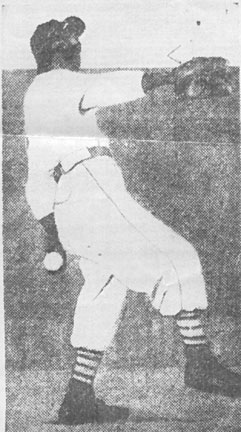
Why was he called Groundhog? Apparently because he was one of the fugliest guys to ever put on the flannels and climb the pitcher’s hill. He was short and squat — reputedly 5-foot-2, 150 pounds — with a scar on his lip and a chipped bottom tooth protruding upward.

He had what was then called a harelip, a term that has become outdated and offensive and is now called a cleft lip and/or palate, and odd, off-center eyes. Here’s a photo of him that was frequently used in the Louisiana Weekly:

groundhog3

And this is how renowned Amsterdam News columnist Dan Burley famously described Thompson after Thompson debuted at the Polo Grounds in fall 1945 to an explosion of guffaws and hoots of derision that quickly turned to wild cheers after fans saw that this sawed-off half-pint was for real:

“The guy was so runty he looked like the tip of a sweet potato sticking out of the ground as he took his stance on the pitching slab. The fans at the Polo Grounds that Sunday gave him a big roar of laughter at the sight of the run pitcher W.S. Welch, pilot of the Negro American League Birmingham Black Barons sent in against the New York Cubans … But when Frank (Groundhog) Thompson started firing that streak-like pitch across the plate , retiring Cuban batters one by one, the roar of laughter based on his unorthodox appearance changed to waves of applause for his pitching skill. Thus a new mound  star was born.”

Burley noted the southpaw’s somewhat goofy, three-step pitching motion, calling it “a peculiar windup that looks authoritative. He waves the ball with an Italian flourish, something like an operatic star.” Dubbing Thompson a “sensational pint-sized lefthander [who] has one of those rags-to-riches backgrounds sports writers like,” Burley predicted great things for Thompson in the Oct. 13, 1945, Amsterdam News after watching the new hurler that day at the Polo Grounds:

“Fittingly, it was in New York where heroes in sports come to be ‘reborn’ that Thompson demonstrated his ability, and now he looms strongly as Negro baseball’s next great mound artist, moulded along the lines of the immortal Leroy (Satchel) Paige, Smoky Joe Williams, Cannonball Dick Redding, and Bullet Joe Rogan. The $40,000 a year earned by Paige may be exceeded by the Groundhog who has scored a bulls-eye with fans wherever he has appeared.”

Alas, like many great prognostications of fantastic future greatness, Burley’s forecast for Thompson’s career eventually turned sour. While the Groundhog had a serviceable, decade-long career in the Negro bigs — peaking in 1953, when he narrowly missed a pitcher’s “triple crown” in league play for the Barons — he obviously never became the next Satch, Bullet or Smoky Joe.

In fact, after retiring from baseball in 1954, he reportedly “faded into obscurity,” according to a few sources. That appears to be true, from what I’ve found, too — nothing. I can’t find a single thing that definitively describes his fate after walking away from the game in the mid-1950s.

But the further truth of the matter is that Thompson’s entire life, especially his origins, are one big mystery. Just like the second half of his life, I haven’t uncovered a single thing that conclusively pins down where he came from until a mention of him appears in the June 28, 1941, Louisiana Weekly. Thompson was pitching for the Giants of Houma, La., a small city in bayou country about 60 or so miles southwest of New Orleans.

062841

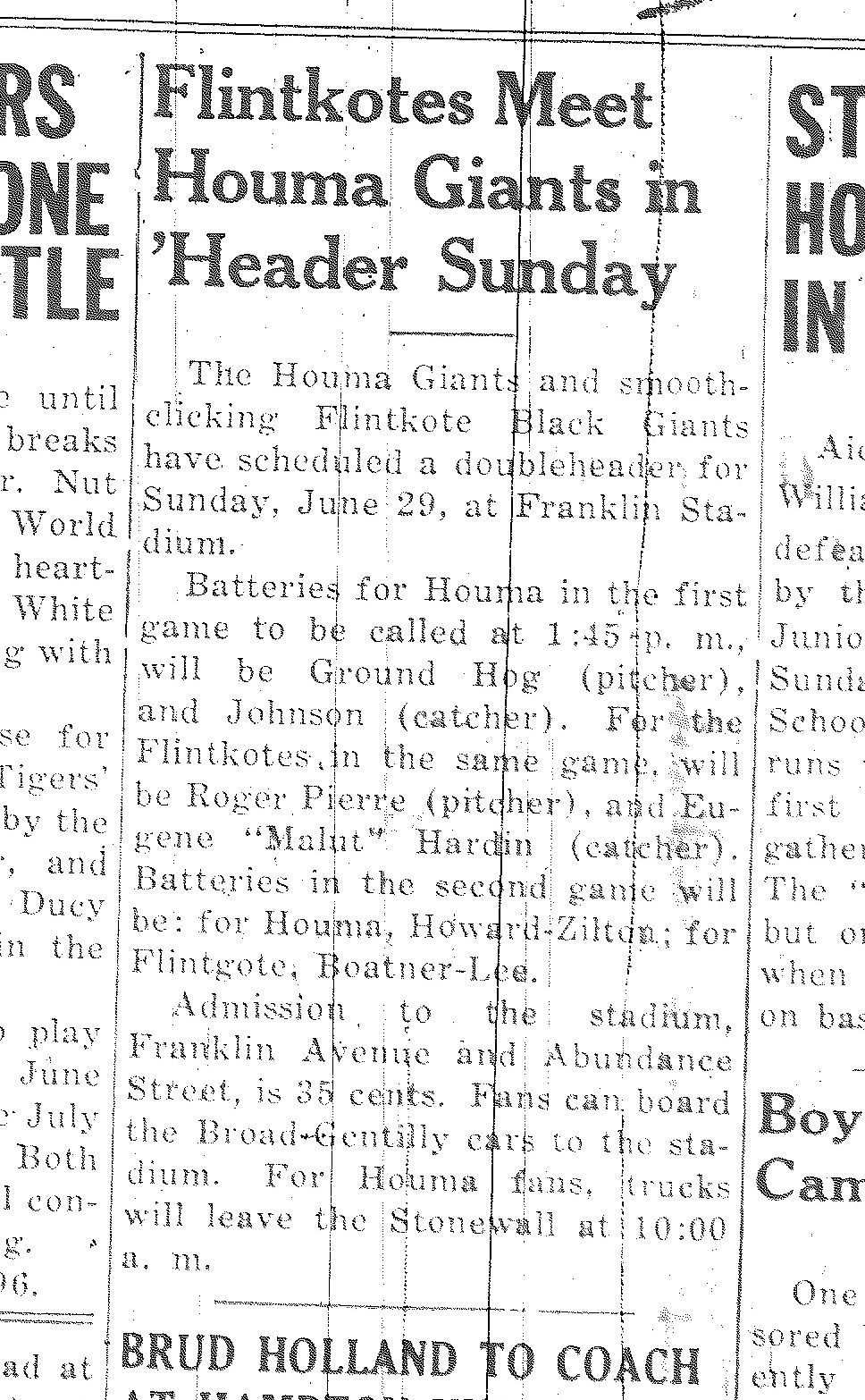
He’s mentioned in a short article previewing the Houma Giants’ upcoming doubleheader with the Flintkote Black Giants, a team sponsored by the Flintkote manufacturing company, a once-nationwide firm that originally produced roofing materials like asphalt shingles and later branched out into other construction products like — yeek — asbestos. Flintkote had plants in Louisiana; it’s recently been going through bankruptcy proceedings in the present day.

Here’s the exact paragraph in the Weekly article:

“Batteries for Houma in the first game to be called at 1:45 p.m. will be Ground Hog (pitcher) and Johnson (catcher).”

In the newspaper’s next issue, the publication reports what happened in the game:

“In a spine-tingling mound duel Dan Boatner of the Flintkote Giants bested ‘Groundhog’ Thompson of the Houma Giants, in the first tilt of a doubleheader played by the two teams … ‘Mule’ Hardin’s big bat banged out the hit that gave Dan Boatner the edge in the first contest, when two men scored on his single through the box in the sixth frame.”

Thompson’s regional renown grew from there, and by mid-1942 the local black press had taken to calling him “the mighty Groundhog.” I’ll go more into the ‘Hog’s rise to fame in and around New Orleans in an ensuing post.

070541

Now, I’ll attempt to discern and glean anything I can about Thompson’s roots. However, several factors in that quest are problematic, the first and probably the most important being what, exactly, Frank the Groundhog’s last name was.

That’s because, beginning in 1943, the Louisiana Weekly began referring to him as Groundhog Thomas. That ran through at least July 1945, when the Hog hitched on with the New Orleans Black Pelicans.

And it wasn’t just the local NOLA press that was calling him Frank Thomas. National scribes were also affixing that surname to him in 1946, such as an apparent wire-service article in late March of that year, when our old friend, fellow Louisianian Winfield Welch, signed Groundhog up for the traveling Cincinnati Crescents.

The second major stumbling block is where exactly Thompson — for the purposes of clarity I’ll call him by his more well known moniker — came from. Modern biographies list his birth date as Oct. 23, 1918, but I’m not sure how that date was conjured.

But it’s the location of his origin that’s truly puzzling — modern bios refer to his hometown as “Maryville, La.,” but, as baseball-reference.com points out, there is no such town in the Pelican State. News reports from the day — especially Burley’s 1945 article — seem to relate that Thompson simply came from Houma and was recommended as an up-and-coming talent to Abe Saperstein by Houma scout Irving Picou. Saperstein then hooked Thompson up with the Black Barons and their pilot, Welch.

But no additional background on Thompson was ever really given. It’s as if he mysteriously leaped out of Houma into the national spotlight.

(Further muddying the waters are articles in the ’80s by Atlanta Daily World columnist Chico Renfroe hinting that Thompson emerged from the popular, talent-rich and influential Birmingham industrial leagues, not the swamps of Louisiana.)

So what’s the real story?

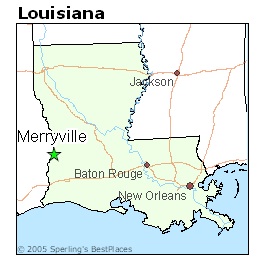
Well, for one, there might not be a Maryville in Louisiana, but there is a Merryville, La. It’s a town of (now) about 1,100 in Beauregard Parish on the western edge of the state. Beauregard Parish neighbors Texas and is located between the Louisiana cities of Lake Charles (to the south) and Shreveport (to the north).

Merryville_LA

So Merryville isn’t exactly close to Houma — more than 200 miles away, roughly. But at least it offers a certainly plausible hometown for Thompson.

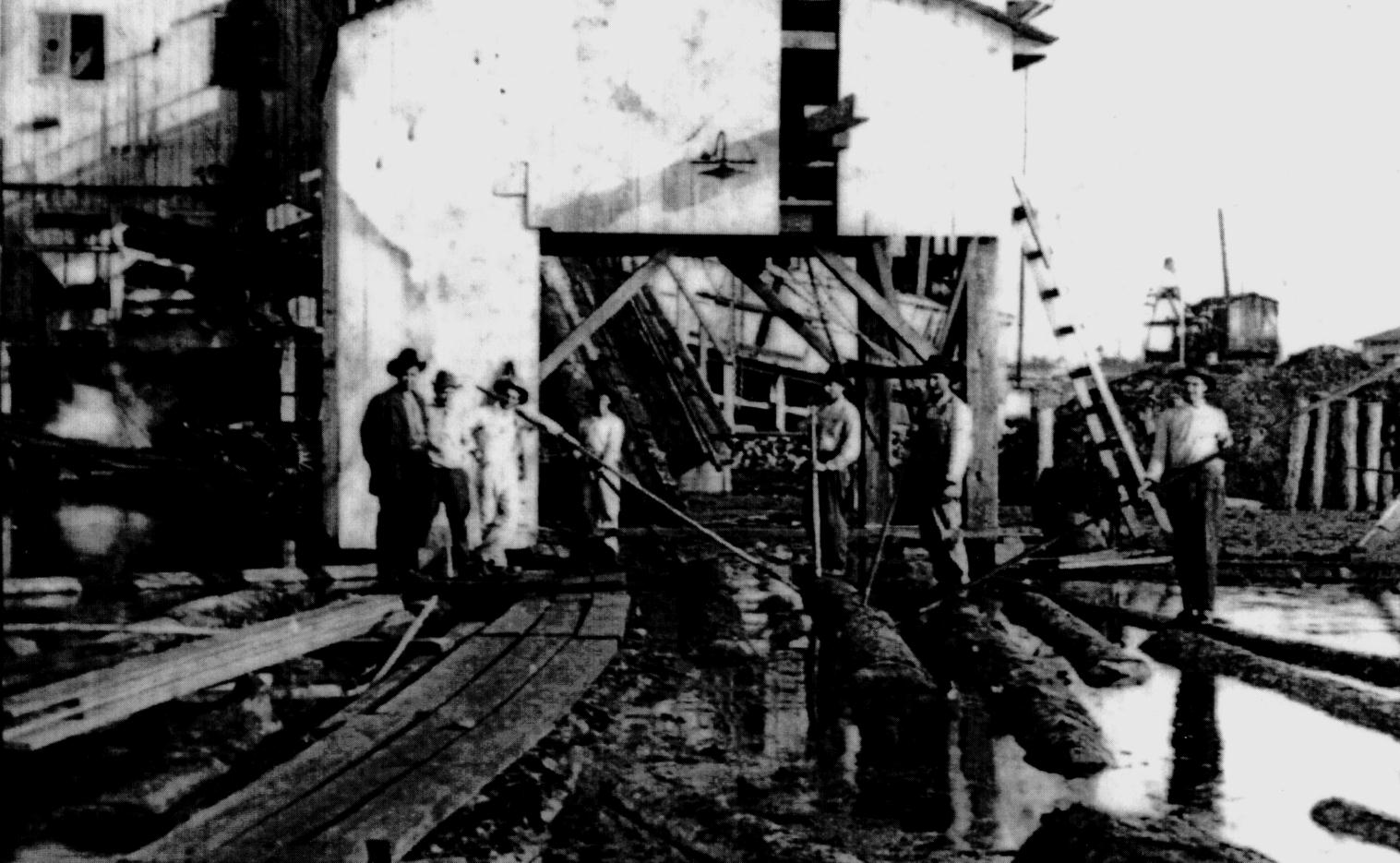
On top of that, in the first few decades of the 20th century, Beauregard Parish was home to several major saw mills that employed hundreds, if not thousands, of African Americans, many of whom came from across the south, from Texas to Alabama, to find jobs in them.

LNGVIL5

Construction of a Beauregard Parish sawmill (from www.library.beau.org)

In addition, there are numerous Thompsons and Thomases listed in Census records from around that time in Beauregard Parish, including Merryville proper, so Groundhog’s parents definitely could have been living there at the time of his birth.

But, alas, I’ve found no Frank Thompsons or Frank Thomases that would definitely match Groundhog’s rough birth date, either in Beauregard Parish, Houma or New Orleans.

So, in addition to what exactly happened to Groundhog Thompson — or Thomas — after baseball, there’s really no solid evidence of his life before he started pitching semi-professionally in Houma. One day soon, I hope to take a drive to Beauregard Parish and see if I can dig up any birth records for Groundhog. That would give us his real name, birth date and, hopefully, the names of his parents, which would greatly aid in starting to piece the rest of his life together.

We’re (hopefully) on our way!

50812a

And we need your help!

Yesterday (Thursday) I met with Dave Sachs and Tim Grubbs, the New Orleans Zephyrs’ director of media relations and director of broadcasting, respectively. Dave has always been a fantastic guy to deal with, a really big help when I was working at the Advocate, and Tim is kind of the director of the Zephyrs-sponsored New Orleans Professional Baseball Hall of Fame, which has been in existence for roughly 10 years.

The NOPBHOF has always been, truthfully, a source of irritation for me because if its complete lack of pre-integration African-American players, managers, owners and promoters.

That, to some extent, is certainly not the NOLA Hall’s or the Zephyrs’ fault; so little is known about the Negro League scene here in the Big Easy and, indeed, across all of Louisiana. That ignorance is both local as well as, honestly, national — many historians, researchers, writers and enthusiasts in the modern Negro Leagues community have no idea that New Orleans was indeed a blackball hotbed from which great things sprang. When I’m pretty much the national “expert” on New Orleans and Louisiana Negro Leagues, it’s basically by default because no one else has studied it or even acknowledged it.

(The one exception, however, has been longtime New Orleans sportswriter Ted Lewis, who worked for the Times-Picayune for years until the soulless company that owns that paper unceremoniously laid him and hundreds of others off. He’s now the head NOLA sports guy for the upstart New Orleans Advocate daily newspaper. For decades Ted has been just about the only guy writing about figures like Dave Malarcher, Oliver Marcell, Willard Brown, Johnny Wright and other great blackball figures from Louisiana and New Orleans, so much respect and thanks to Ted for keeping the flame alive for so long.)

Dave Malarcher

Dave Malarcher

Ever since I first wrote this article for the T-P back in 2009 — before the paper betrayed the city that loved it — I’ve worked to bring light to the Negro Leagues scene in New Orleans and educate people about what a rich blackball tradition existed here.

Once I moved down here in February 2012, those efforts have gone into overdrive, and lately I’ve seen a great deal of success and progress. The first positive sign came a couple weeks ago at the semi-annual meeting of the Louisiana SABR chapter, at which I raised the need to research and honor Louisiana Negro Leaguers and educate the public about them. At the meeting, which I wrote about in this post, I received a great deal of support and enthusiasm from the other members, which left me elated.

My next step came yesterday, when I meet with Dave and Tim of the Zephyrs about promoting the Negro Leagues through two primary means: 1) Getting more Negro League figures inducted into the NOPBHOF; and 2) Exploring the possibility of a Negro Leagues Night at a Zephyrs game.

And, once again, I came away from a meeting with a great deal of optimism, nay, ebullience. Dave and Tim were extremely receptive to the possibilities of both ideas. Regarding the Hall of Fame, they were honest in saying that they like to look for living inductees who can actually be personally honored in a ceremony. Lacking that, they like to at least have family members to receive the induction honor in their progenitors’ absence.

Needless to say, option B will have to be the case here. The Zephyrs inducted Herb Simpson last year, who was a perfect selection to “crack the historical color line” of the NOPBHOF. A successful and groundbreaking professional ballplayer on several levels of the sport — especially the top Negro Leagues and the minor leagues — Herb is also thankfully and wonderfully still alive and kicking.

So now the challenge becomes this: Find New Orleans Negro League figures who deserve induction into the local Hall, and especially ones that have living and reachable descendants.

The obvious place to start, for me, is to induct promoter/owner Allen Page, who was black baseball in New Orleans for 30 years and who was an extremely influential figure on the national Negro League stage. Plus, many of his children, including my good friend Rodney, are still alive and eager to help educate people about their legendary father.

But beyond that, there are just so many Negro League greats who were either from New Orleans or played here on their way to the blackball big-time — Dave Malarcher, Oliver Marcell, Johnny Wright, J.B. Spencer, Groundhog Thompson, Winfield Welch, Peanuts Davis, Wesley Barrow, sportswriter Eddie Burbridge, to name a very few.

Wright-grays

John Wright

And Dave and Tim of the Zephyrs were very enthusiastic about doing what they could to honor as many such figures as they could. I was thusly tasked with coming up with a list of Negro League candidates and brief bios stating their qualifications.

Which is the first thing with which I need your help — if anyone has any suggestions I haven’t mentioned, please let me know, either by leaving a comment on my humble little blog or emailing me at rwhirty218@yahoo.com.

(My thought — or my dream — would be to have an initial induction class of two: Allen Page and Dave Malarcher, in my mind the greatest Negro Leagues manager to come out of this city, with Winfield Welch and Wesley Barrow close runners-up. The greatest player from New Orleans would, in my humble opinion, be Oliver Marcell, but, well, he might not be the best candidate to break the barrier, given that no matter how brilliant he was on the field — and he certainly was brilliant — he was, personality-wise, well, an irascible, short-tempered, jerk with a strong affinity for the bottle. Maybe not the best PR move to induct him first, especially when he have Gentleman Dave Malarcher, Marcell’s complete polar opposite, as a viable option.)

Now, on the second goal rattling around in my head — a Negro Leagues Night at Zephyr Stadium — the prospects are a bit iffier, not because the Zephyrs aren’t willing to do it — both Dave and Tim thought that, theoretically, it could be a great idea.

But they key word there is “theoretically.” The three of us agreed that no matter how well intentioned, if it’s not done well, a Negro League Night could end up being a disastrous insult instead a glorious, much-deserved success.

Dave, Tim and I also agreed that to do it right, “we” would need money, i.e. sponsorship, that could, for example, put together a video montage and buy or at least rent Negro League jerseys for the players to wear.

So, I left with the feeling of a second task — find money! And that’s the second area in which I need your help. If any of you have any connections or any ideas whatsoever about where we could get sponsorship — businesses, individuals, non-profits, etc. — please send them my way.

So that’s where we stand. I — and the Zephyrs — need your help! I feel like we are on the cusp of something really great and special. We just heed a little aid and encouragement and, well, money, to get there. Please help, and many, many thanks in advance! Many thanks as well to Dave and Tim being gracious enough to meet with me and for being so receptive to my thoughts. Guys, I hope it’s OK that I use the team logo at the top of this blog. If it isn’t, it’s totally cool, I can take it off. 🙂

Napoleonville, hardball hotbed

36177104

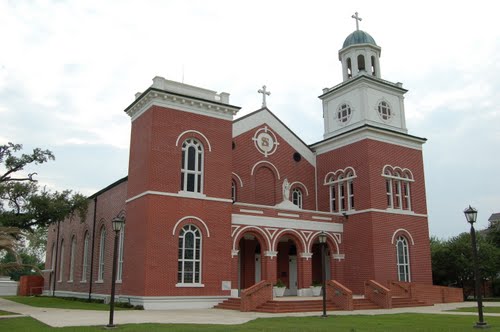
St. Anne Church in Napoleonville

Winfield Welch, who at one point in the 1940s was considered the finest manager in the Negro Leagues after guiding the Birmingham Black Barons to two Negro American League crowns in a row, hailed from the minuscule — 2010 population 660 — town of Napoleonville, La., the seat of Assumption Parish.

I’ve been researching and writing about Welch’s life and career — in addition to this blog, I’m working on an article about Winfield for Acadiana Profile magazine — and in the process, I’ve been slowly learning about the skipper’s hometown in the bayous of southeastern Louisiana.

Today, I’ll try to go into a little detail about the black baseball scene in Napoleonville. It’s quite true that all of these teams were of the sandlot level (at best) and are such not merely obscure, they’re as minuscule as — lame poetic metaphor ahead — single grains of sand on the vast beach of the history of America’s pastime.

But to me, what makes these Napoleonville teams so reflectively important is that each of those grains of sand are crucial parts of the entire, beautiful beach, every one contributing, in its own small way, to the grandiose stage of baseball. Or something like that. 🙂

The usually brief existence of these town-based aggregations is significant because, at one point, just about every similar small town in the nation had teams like that — black teams, white teams, Native-American teams and, as the recently discussed Berkeley International League shows, Asian teams.

Louisiana was no different, including when it came to Jim Crow blackball. There were likely hundreds of nines that clashed with those from nearby towns, took weekend road trips through the bayou to play opponents, and even issued challenges to all comers through the media, including the New Orleans-based Louisiana Weekly. (I’ll talk about such a bold issuance soon in an upcoming post about half-pint hurler Ground Hog Thompson and his origins as a pro pitcher with the Houma, La., Red Sox.)

Naturally, newspaper coverage of black teams from Napoleonville — which is about 75 miles west of N’Awlins — was spotty, with ebbs and tides. First of all, it almost goes without saying that the region’s white papers barely mentioned black sandlot teams at all.

Beyond that, the black media — namely, the LW — often didn’t have sufficient staff to consistently report on small-town hardball action. Plus most of such reportage depending on the various team managers and/or owners calling in, telegraphing, whatever, the results of their games. Finally, we’re talking about a time period — the 1930s and ’40s — that included first a Great Depression and then a World War, both tremendous events that easily could have prohibited even the formation of teams in tiny hamlets like Napoleonville, La.

Before we take a look at some Nap’ville squads, it should be noted that newspaper coverage of the day frequently didn’t include players’ or managers’ first names, which makes it hard to pin down their exact identities. For historians, it is, to say the least, somewhat frustrating bordering on maddening.

Thus, let’s begin our tour through Nap’ville blackball history by zeroing in on the summer of 1931, beginning in May, when the Napoleonville All-Stars hosted the Donaldsonville, La., Black Sox and squeezed out an 8-7 triumph over the visitors. The All-Stars hit Donaldsonville pitcher Murray hard, with Williams going 4-for-4 with three runs and three RBIs.

The same issue of the Weekly that includes that game report features a short article on a nameless Napoleonville team — possibly, again, the All-Stars — that welcomed the Thibodaux Black Pelicans and topped the Birds, 5-2.

The paper states that the Pels “were forced to eat out of Terry’s hand for a while Sunday evening, when the Napoleonville ace fanned 14 Pels, then fell victim to an onslaught of base pelts that suddenly jumped to 10 in number. He finally won out, 5-2, however.” A pitcher named Calon mounted the hill for Thibodaux — a nearby bayou city that served as the birthing locale of legendary (and legendarily short-tempered) Negro Leagues third baseman Oliver Marcell — giving up 14 “safeties” while “standing up” five. (You gotta love the archaic baseball terminology of the day. My favorite baseball words of all time are for pitchers: “chucker” and “twirler.”)

A month later, Donaldsonville exacted revenge on the “Naps” with a 4-3 victory at the Donaldson Fair Grounds. (Donaldsonville is the seat of Ascension Parish, which is southwest of Assumption. Its 2010 population was roughly 7,400.) “The battle was a heavy-hitting affair,” inked the Weekly, “but due to the splendid support given the chunckers [sic], the game was thrilling all the way.”

Two weeks later, the All-Stars again clubbed Thibodaux, this time by a 9-5 count and “led by the terrific slugging of Hayes,” who mashed three triples and a double on the Black Pels. A guy named Johnson also pounded a homer for the Naps, while “Mitchell, doing mound duty for the Pels, was smacked freely throughout the fracas while Allen, on the hill for [Napoleonville], delivered nicely in the pinches.”

Then, on Independence Day weekend, the All-Stars continued their victory march by taking a home twin bill against the Donner Athletics, 14-6 and 5-2. Harkening back to my last post, about wacky Pelican State monikers, the second contest featured a Donner hurler named, simply, Chicken.

The two-set series wasn’t without a squabble, though — apparently the A’s weren’t happy with the scoring and resulting reportage of the game. Sayeth the Weekly:

“A report from Donner has it that the Athletics dropped the July 4th game by a 12-6 score and should have won the second title, 2-0 instead of losing, 5-2.”

(Donner is an unincorporated community in Terrebonne Parish, which is southeast of Napoleonville, Donaldsonville and Thibodaux, near the coast.)

The Napoleonville All-Stars returned in 1932 and again garnered a decent amount of coverage from the Louisiana Weekly, starting with a four-paragraph article on a season-launching organizational banquet. Reported the paper:

“Prospects are exceptionally bright for a good baseball team in Napoleonville this season. There should be a number of powerful nines and the strongest of them will, no doubt, be the Napoleonville All-Stars who were given a chicken and spaghetti supper last Thursday night in the club rooms.

“The club, owned by Charles Gipson, will have a new and well thought of manager in the person of Henry Wise, an old head in the game. Wise succeeds Lenox Charles who retired after an exceptional season with the Stars last year.”

It was then reported that Charles was staying on as the squad’s business manager and that “the pitching staff at present looms up as Joe Ayo, Eddie Hayes, J.D. Kelson and ‘Iron Man’ Putley.”

A little detour for some info on the Naps’ 1932 personnel … Wise, the skipper, was born in roughly 1891 (according to the 1900 Census) and apparently raised in Assumption Parish by his grandmother, who was birthed way back in 1850.
004120171_00781

By the 1910 Census, Wise, at the tender age of 19, was toiling as a railroad laborer and had a blossoming family of his own, including 18-year-old wife Rachel and 1-year-old son Percy.

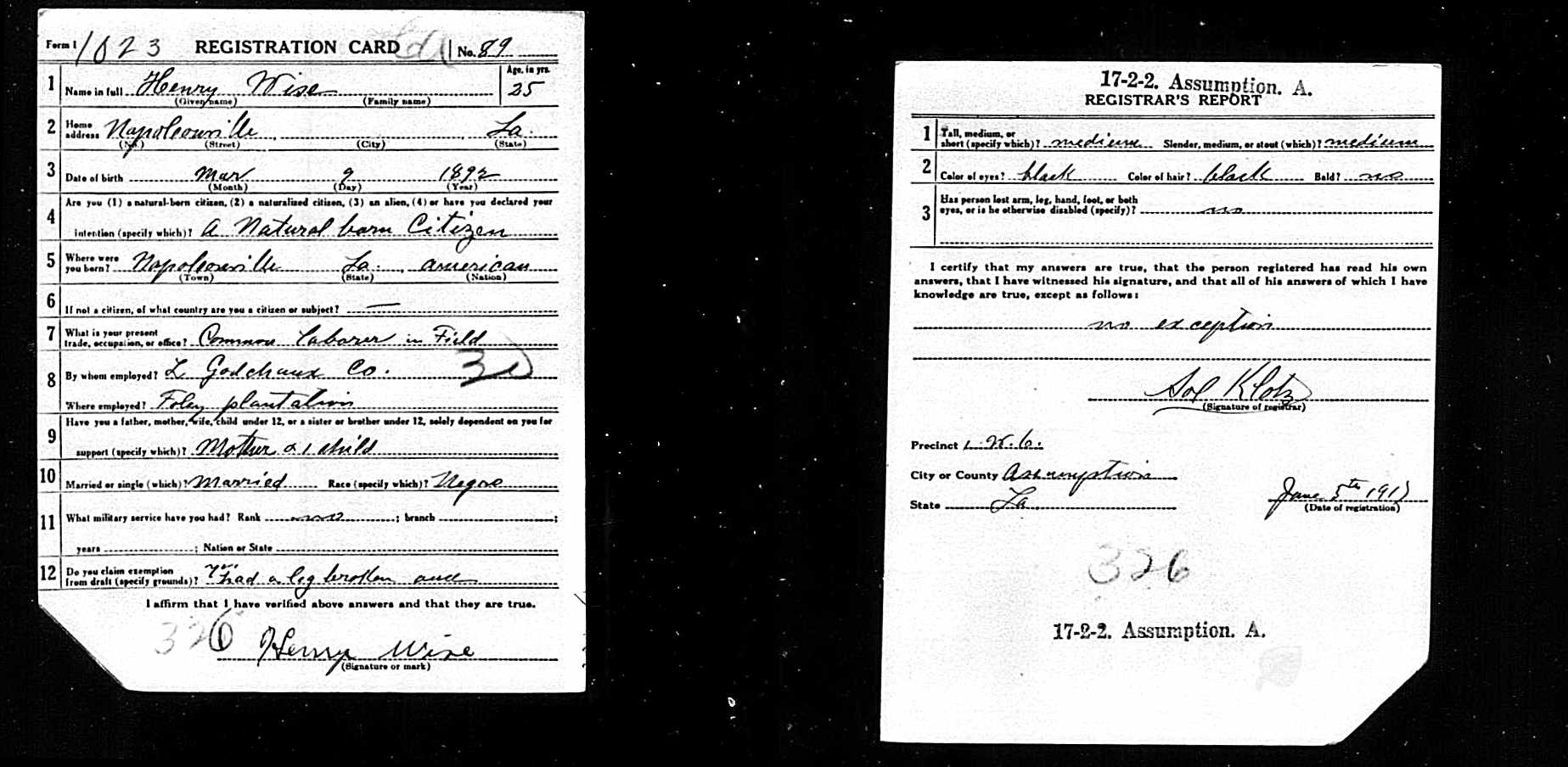
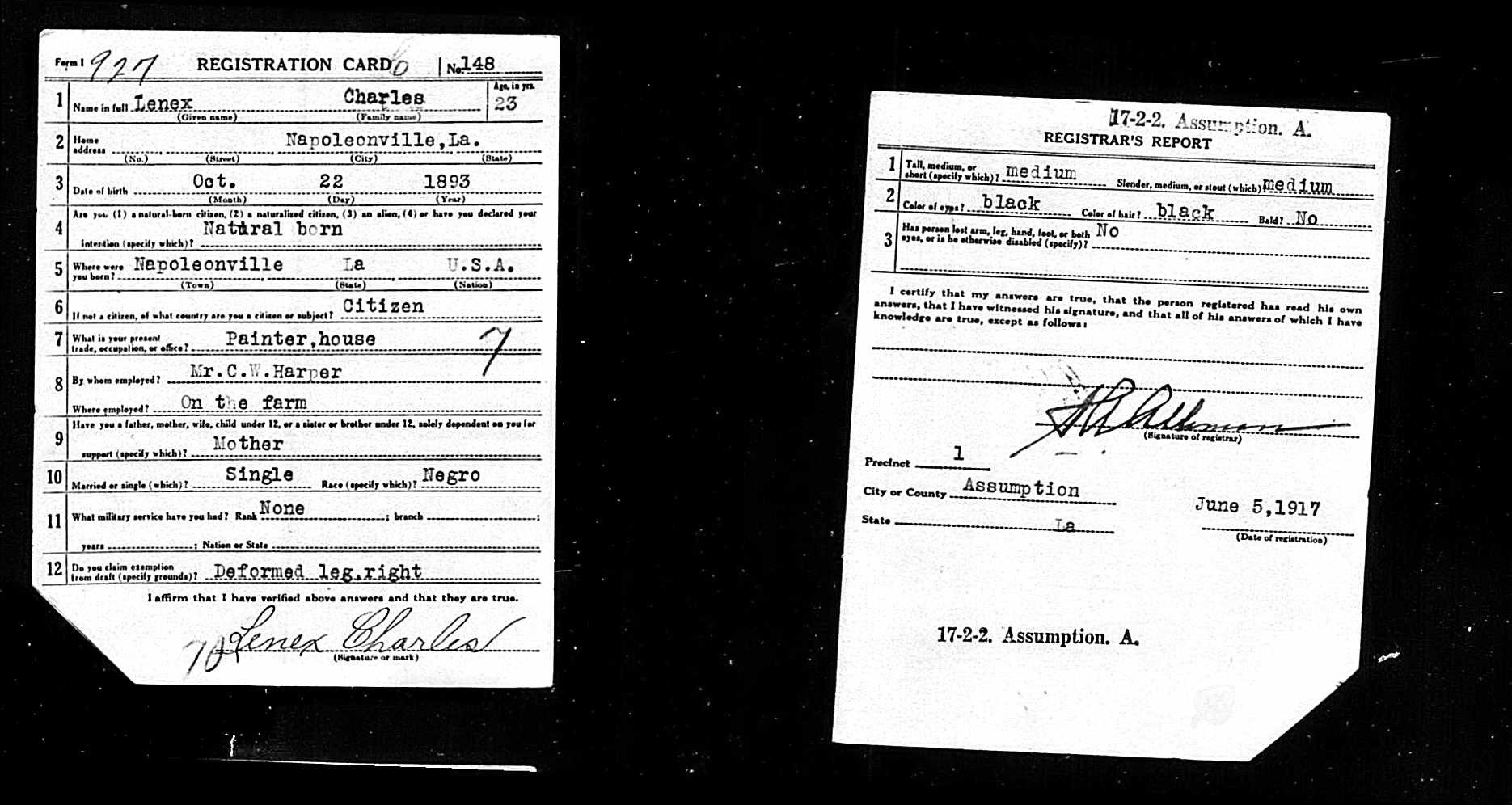
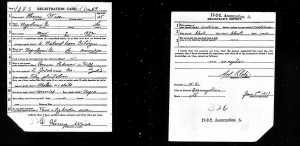
Henry’s 1917 World War I draft card states that he was born on March 9, 1892, and was living in Napoleonville as a farmhand on the Foley plantation. He unsuccessfully claims an exception from the draft because he “had a leg broken once.”
005150725_04645

But he appears to then have divorced Rachel and entered into a second marriage with a woman named Kate and was raising niece Amelie. (I can’t make out his occupation on either the 1920 or 1930 Census reports.)
When Wise filed his World War II, he again listed March 9, 1892, as his birthdate and Napoleonville as his residence. By now, though, he’s self-employed.

Lenox Charles, meanwhile, the All-Stars’ field manager-turned-business manager, was born around 1895, was raised by mother Celine Jones, and worked as an insurance collector in Assumption Parish, all according to the 1930 Census.

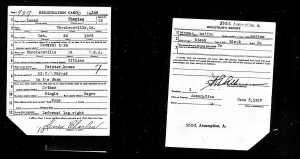
But Charles’ World War I draft card gives his birth date as Oct. 22, 1993, and spells his name as “Lenex.” The card lists him as a house painter “on the farm” for a “Mr. C.W. Harper.” He’s single and claims a draft exemption due to a “deformed right leg.” Hmmm.
005150725_01533

Charles’ draft card for the Second World War again pegs him as a Napoleonville resident, but it now gives his birth date as Oct. 22, 1895. He’s listed as single and unemployed.

And what about Ed Hayes, the ace of the Naps’ pitching staff? A farm laborer with a wife, Mary, Hayes, born circa 1912, went on to enlist in the Army in Assumption Parish in December 1942 as private. In civilian life, he appears to have been married, with a grammar school education and an unskilled job at a manufacturing business.

But I digress … The ’32 Naps immediately got down to business, picking up where they left off by once again swamping the Donaldsonville Black Sox, this time by an 11-3 tab on Easter Sunday.

About a month later, the All-Stars hosted an unidentified squad named the Cardinals and thoroughly pounded the Redbirds, 13-4, with three round-trippers.

Thus ended the Weekly’s coverage of Napoleonville hardball teams not just for the rest of 1932, but apparently until June 1935, when scribe Cliff Thomas, in his “Hits, Runs and Errors” column, reported that the Napoleonville Black Cats pulled off a ninth-frame rally to beat an aggregation simply dubbed the Regulars by a 9-7 count.

Over the next decade, a handful of Napoleonville teams drifted in and out of the newspaper’s pages while, at the same time, the town’s most famous son, Winfield Welch, was climbing the ranks of black baseball skippering, from New Orleans semipro teams to the great Black Barons units.

It’s kind of fascinating to track these two parallel story lines — those of Welch and of his hometown’s scrub teams. To me, what it shows is that even in the most humble of locations, from the most obscure civic wellsprings, can emerge big-time baseball legends because, it seems, baseball is always in the cultural blood, from town to town to town, not only across the Bayou State, but across the country.
The (nick)name game

042145 Claw

We have an Iron Claw sighting!

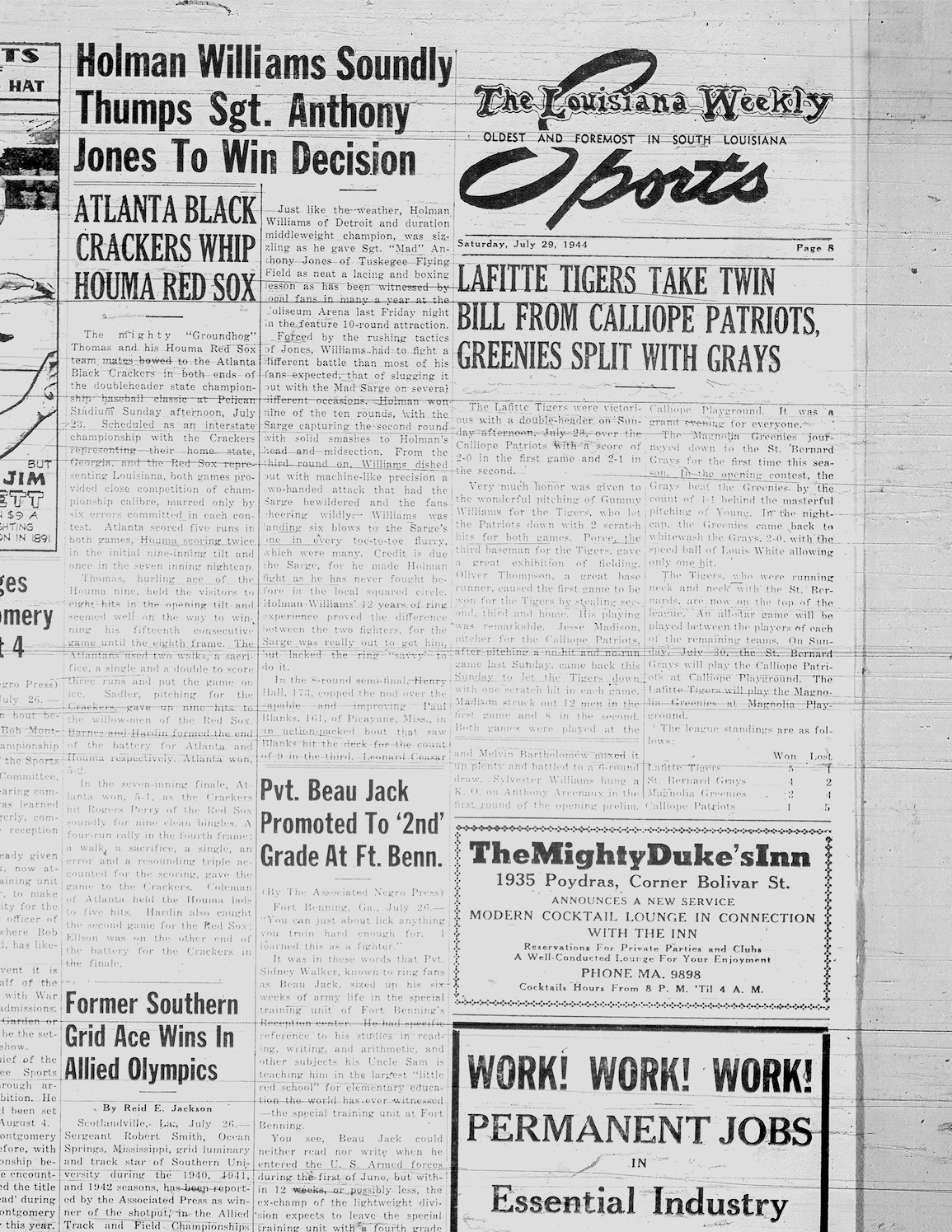
As I was perusing microfilm of the Louisiana Weekly newspaper from the mid-1940s, I came across the above article, which includes a reference to a New Orleans player who, I had thought, vanished into history after a shining couple sandlot seats.

That would be none other than one-armed pitcher Edgar “Iron Claw” Populus.

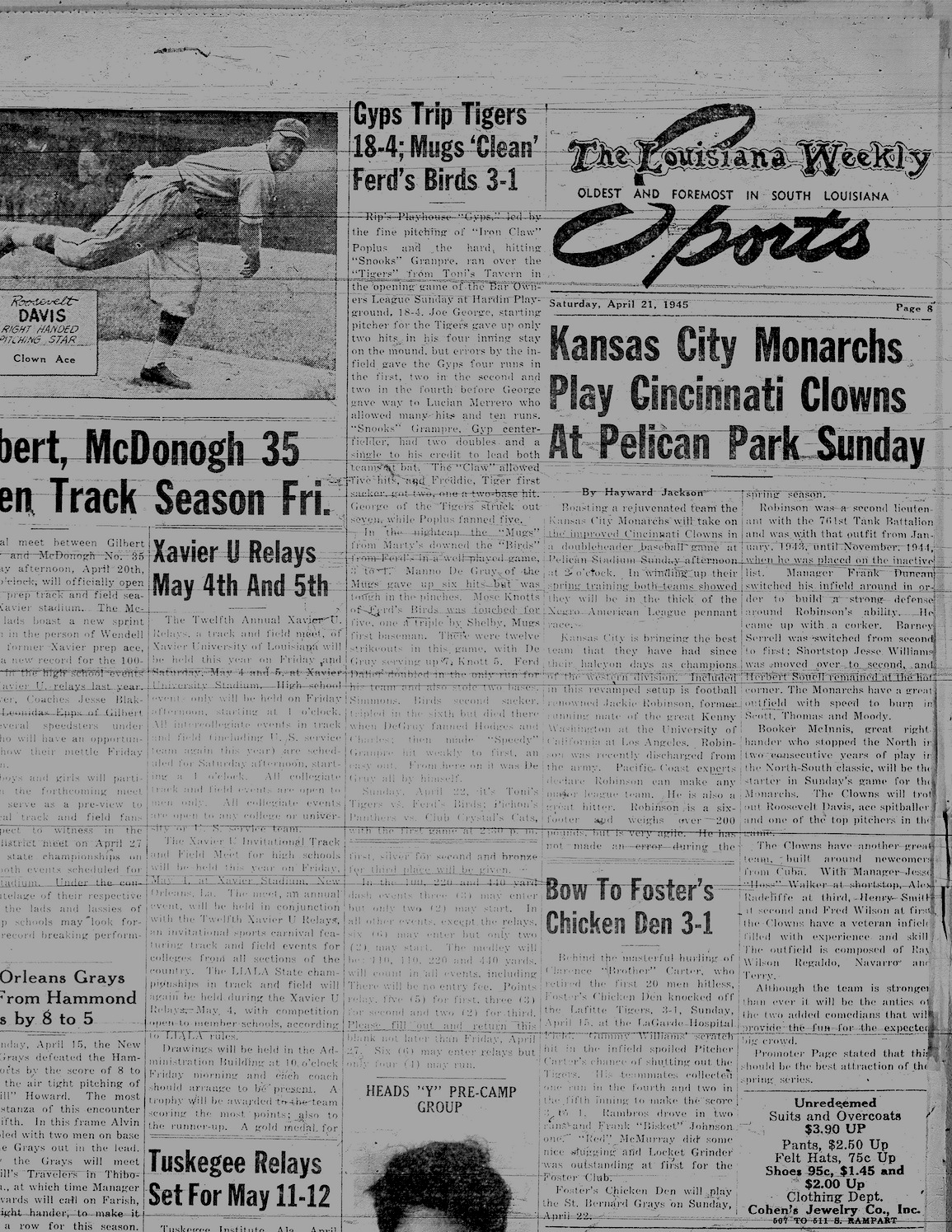
His name pops up in an April 21, 1945, article on something called the New Orleans Bar Owners League, which included (most likely) amateur teams like Rip’s Playhouse Gyps, Toni’s Tavern Tigers, Marty’s Mugs and Ferd’s Birds.

Apparently the article is a cover the intracity league’s opening-night twin bill, and Populus, with named misspelled “Poplus,” took the hill for Rip’s Gyps, pitching the rollicking squad to an 18-4 crushing of Toni’s by allowing just five hits and posting five K’s. Toni’s at one point sported a player named “Peanuts” Gougies. Another team in the bar league was proferred by the Crystal Club.

I couldn’t find any more immediate references to Iron Claw in the Weeklys from 1943-45, so apparently once again he disappears into the historical ether, only to appear decades later in police blotters as an alleged illegal bookie.

But the article doesn’t just feature an Iron Claw appearance. It also reflects what is turning out to be the New Orleans blackball community’s amazing propensity and aptitude for creating a rainbow of unique nicknames.

We, naturally, can begin with some of the homegrown products who made the big-time Negro Leagues as famed manager “Lucky” Winfield Welch, stumpy pitcher Frank “Groundhog” Thompson (or Thomas, depending on the article), Robert “Black Diamond” Pipkins and, of course, Edward “Peanuts Nyasses” Davis.

But this article here also shows that just about every weekend warrior in NOLA also had quirky monikers. The story refers to players dubbed Snooks, Speedy and a first baseman named, simply, Freddie. (“Snooks,” by the way, appears to have been quite the popular nickname; it also belonged to local blues legend Fird “Snooks” Eaglin.)

051245

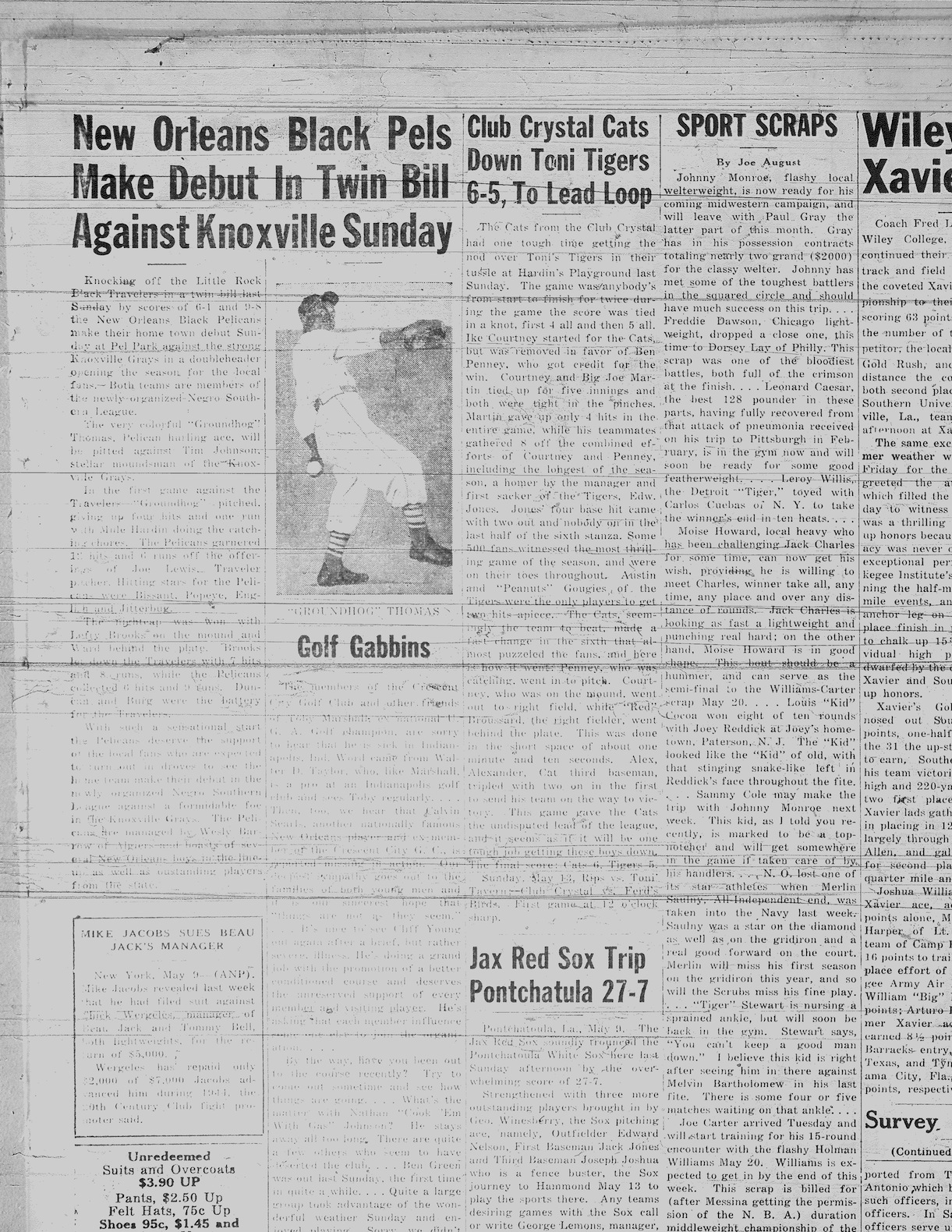
Other Louisiana Weekly articles I ran across last week featured stories on other city amateur, sandlot and semipro leagues and teams — baseball and softball) had additional nutty names for both players and their teams’ commercial sponsors or ownership. There were nines from Foster’s Chicken Den, which included guys like “Dog” Turner; the Rose Room, featuring Red Buster; the Jitterbug Red Sox, with phenom hurler “Speed Ball” Hayes; and the Pepsi Cola Stars, with twirler “Bob Cat.”

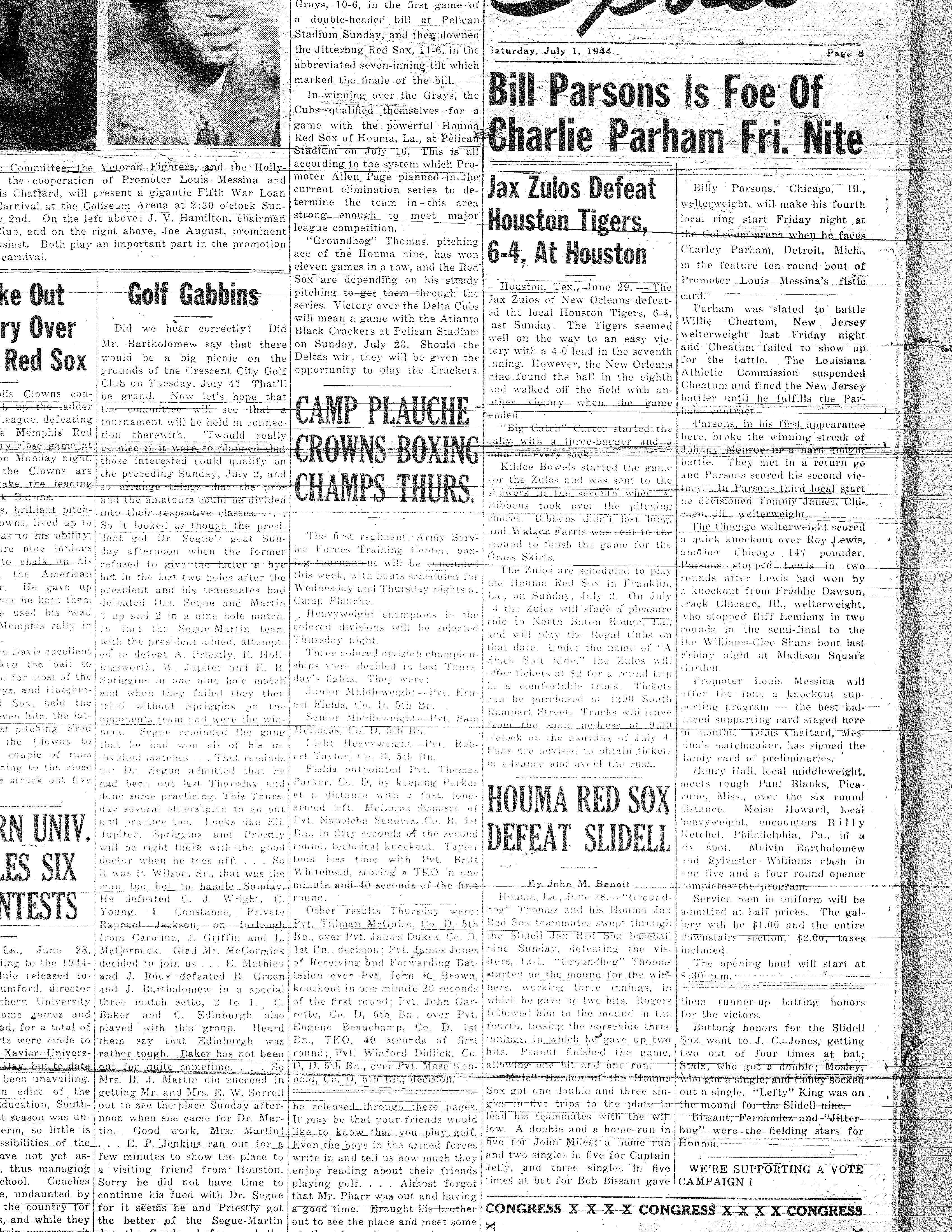
But in my mind, a candidate for best moniker in New Orleans blackball history goes to the Jax Zulo Hippopotamus, who existed in the mid-1940s. Jax was a NOLA brewing company that produced locally renowned beer and soda.

070144

The Hippopotamus, meanwhile, were a comedy aggregation in the vein of the Ethiopian Clowns or various Zulu Giants squads, i.e. blackface, grass skirts, the whole, ahem, nine. Players, for example, were dubbed String Bean Speedy and the slightly-less-goofy Kildee Bowers. However, Kildee’s “last name” was misspelled “Bowels” in one article I found. Eek.

072944

Finally, over time New Orleans was the locale of leagues of teams from the city’s various housing projects, like Melpomene, Lafitte and Calliope. Players on these teams included Gummy Williams and the relatively pedestrian Big Joe Martin, who did double duty by suiting up for a team in the projects league.

Are you ready for … more Louisiana?

051245

Get ready, folks — the upcoming week will feature more New Orleans and Louisiana-based posts. In a way, I apologize for being so Pelican State-centric lately. I just have so much great stuff I’ve come across. Next week I’ll hopefully write a lot about Hall of Famer Cyclone Joe Williams, his roots in Texas and, especially, his Native-American heritage, in honor of Native-American Heritage Month.

But for now, it’ll be more news from the bayou, including, hopefully/possibly:

• Another reflection on Napoleonville, La., native and Negro Leagues legendary skipper Winfield Welch’s hometown featuring the history of African-American semipro and amateur clubs from the burg;

• Reporting on my meeting this Thursday with officials from the Triple-A New Orleans Zephyrs and the New Orleans Professional Baseball Hall of Fame about finally honoring and recognizing local Negro League stars like Dave Malarcher, Oliver Marcell and, of course, Winfield Welch;

• An update on the situation with Wesley Barrow’s grave (I’m going to hound the New Hope Baptist Church about the subject and try — try — to attract media attention);

• The tale of a local pitcher named … Ground Hog;

• A possible look at the Louisiana roots of Malarcher, who was born in rural St. James Parish, educated at New Orleans University, played for local semipro teams, evolved into a sturdy star for big-time Negro League teams and, most importantly, became the protegé of Rube Foster himself, inherited Rube’s position as manager of the Chicago American Giants and guided the squad to further greatness.