Still no dignity in death

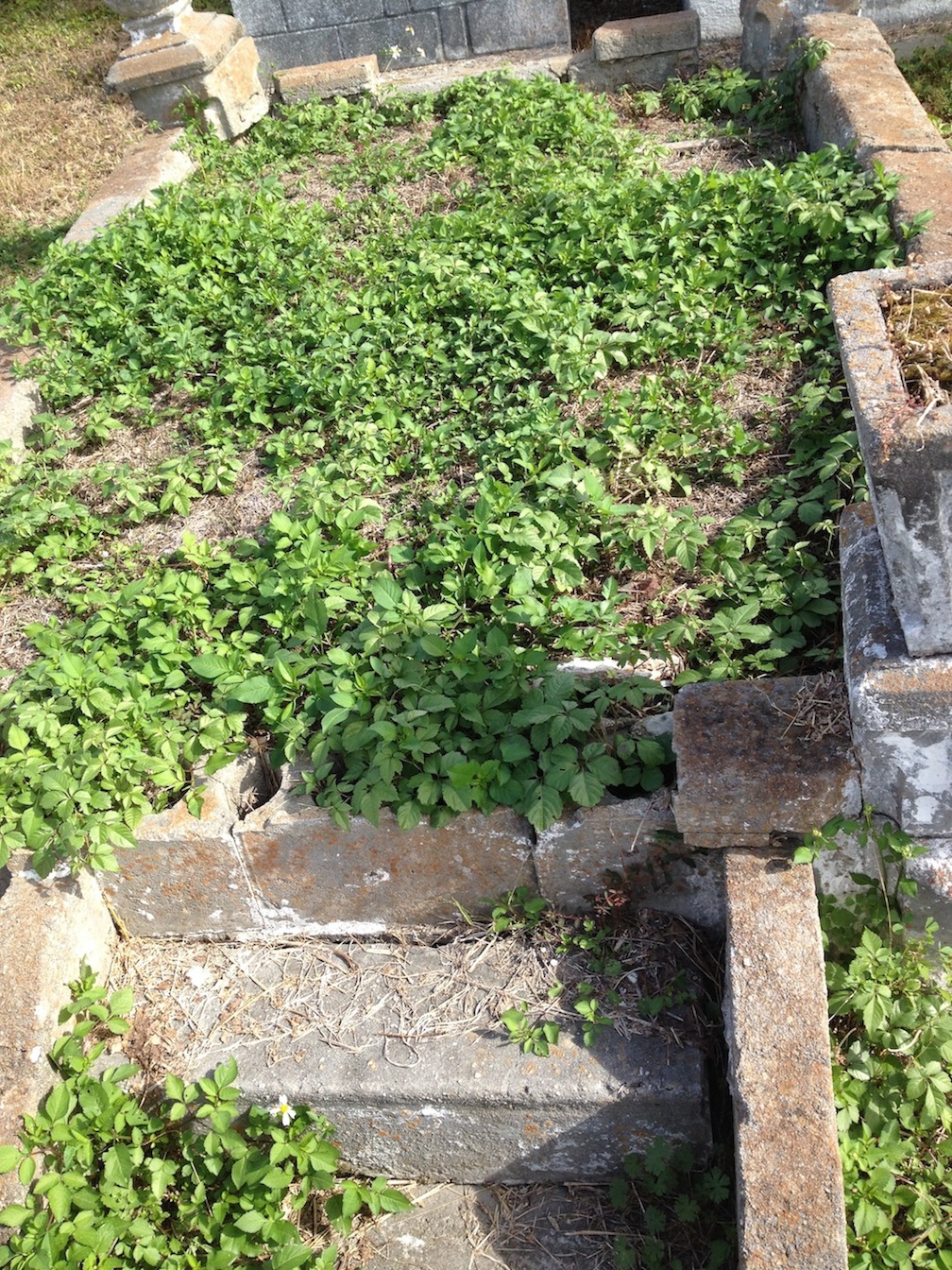
IMG_0769

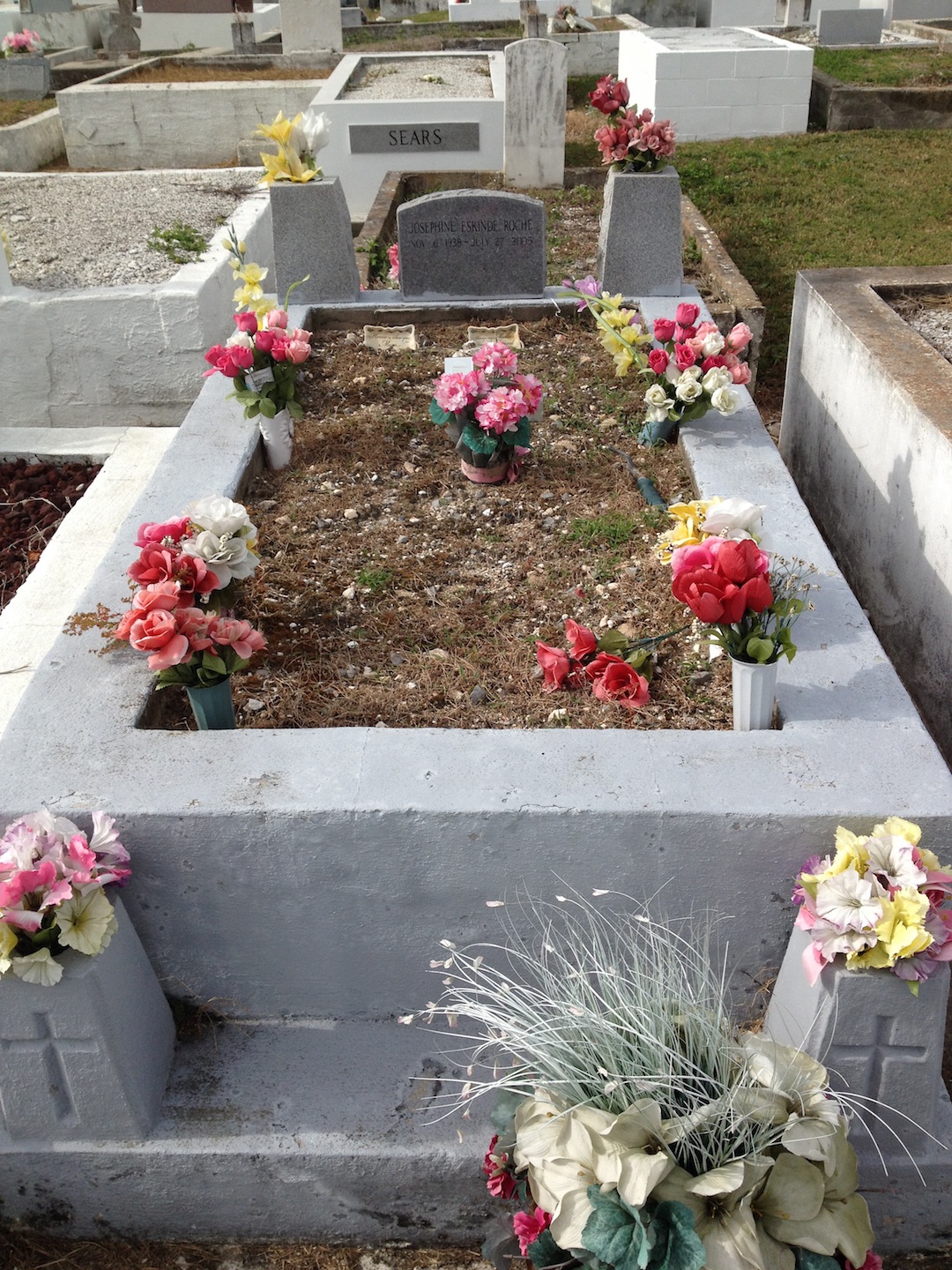
That’s a picture from New Hope Baptist Cemetery in Gretna, La., about a half-mile from my house. It could be local Negro Leagues legend Wesley Barrow, a famed manager around these parts. But it might not. Who knows whose final resting place it is?

Yes, prepare for more morbid and macabre here, but this is a topic that just sticks in my craw. Several months ago, I wrote this post about how I combed through the cemetery looking for Barrow’s grave in what turned out to be a fruitless search. It was quite disheartening and, indeed, depressing, not just because I could find the grave of local hero Barrow, but because it gave me an up-close look at the plight of African-American cemeteries, not just here in the NOLA area, but across the country.

IMG_0779

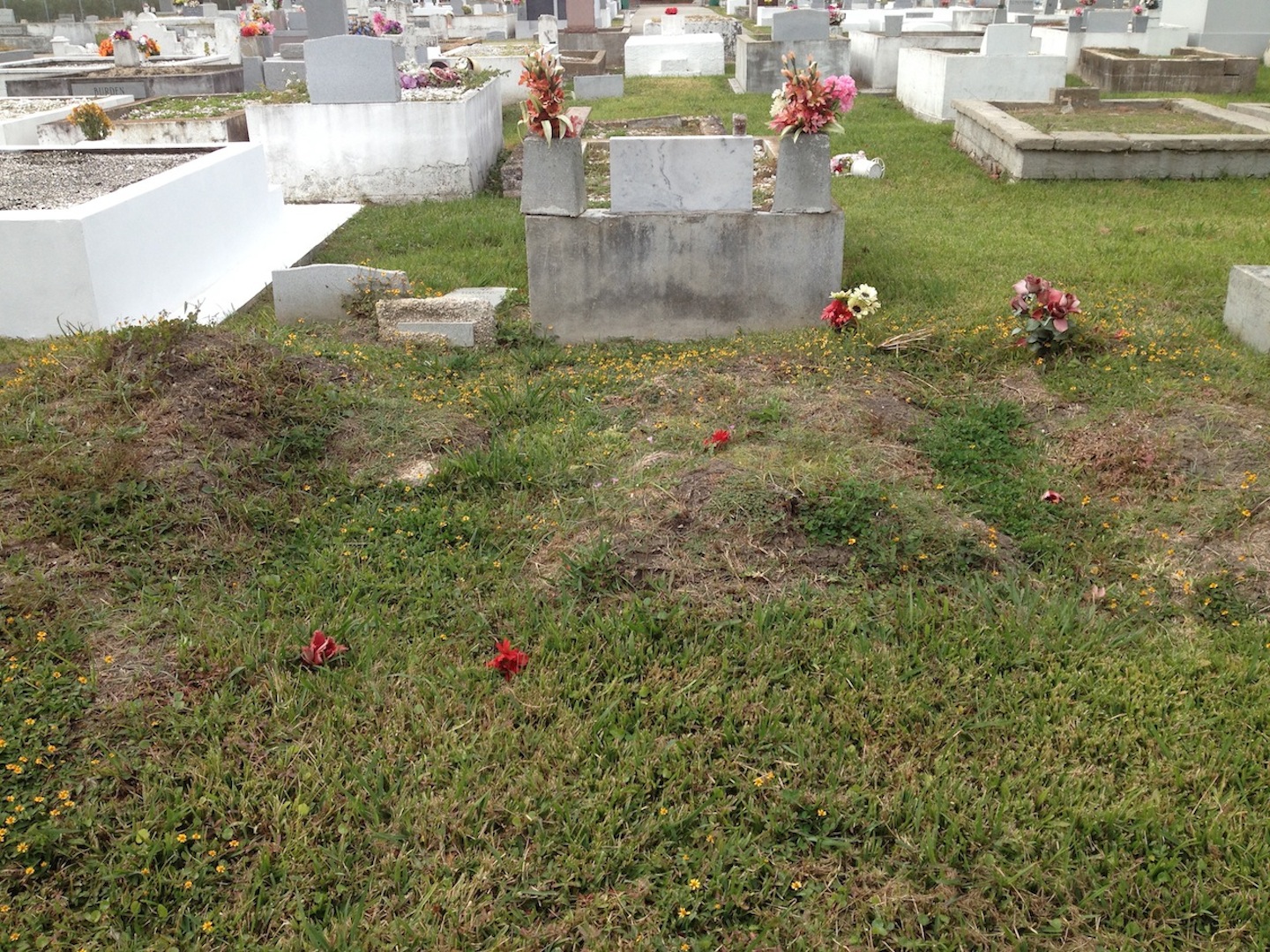
Another grave from New Hope cemetery

Over and over again, we see that historic black cemeteries, for whatever reasons, have fallen into disrepair and, in the process, that’s left the burial places of countless Negro League heroes unmarked and neglected. It’s given rise to the wonderful, nationally renowned Negro Leagues Baseball Grave Marker Project and other grass-roots movements to place markers at the graves of forgotten blackball stars.

I’ve done a few articles about the NLBGMP’s efforts and success here and here. This article, especially, was heartrending, because it also examined the sad state of the historic Frederick Douglass Memorial Park cemetery on Staten Island, which, in addition to being home to the previously unmarked resting place Sol White, had become a complete mess thanks to a tragic lack of funds and community involvement.

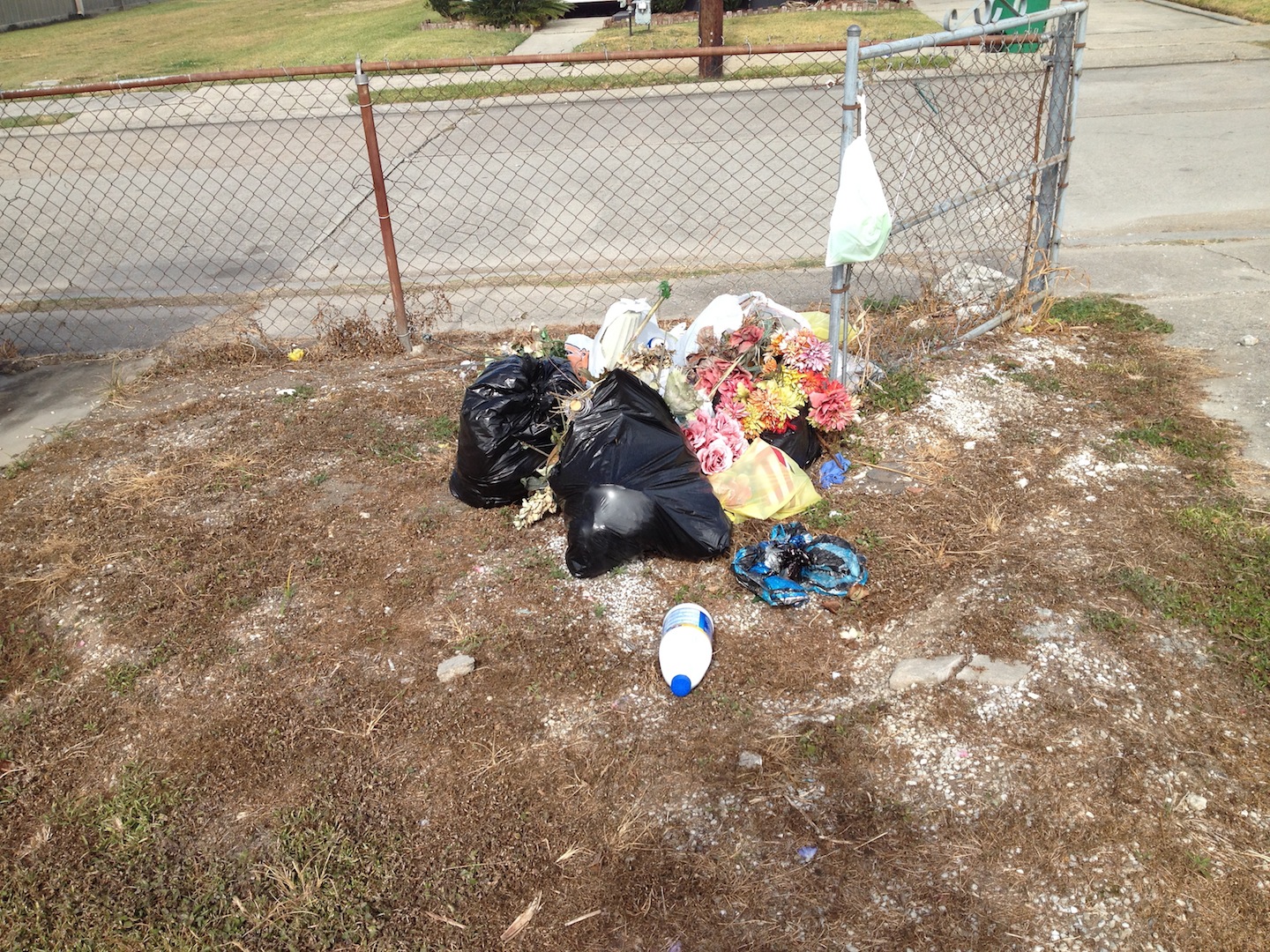
IMG_0773

A pile of garbage at New Hope

That, perhaps, is what has happened here in Gretna at New Hope Cemetery, and in the process has apparently hidden the grave of Wesley Barrow, who has a stadium named after him here but nonetheless still, in some ways, can’t find dignity in death.

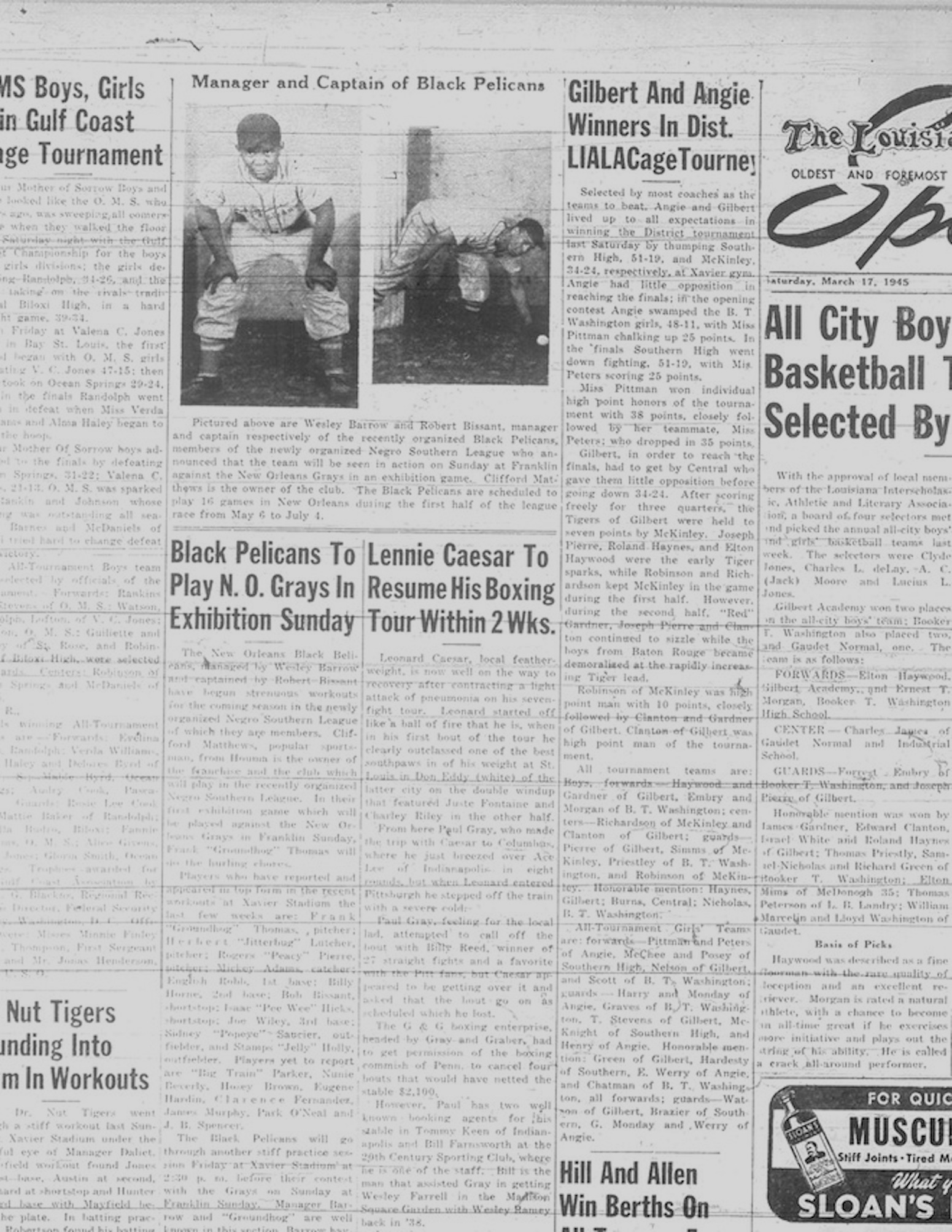
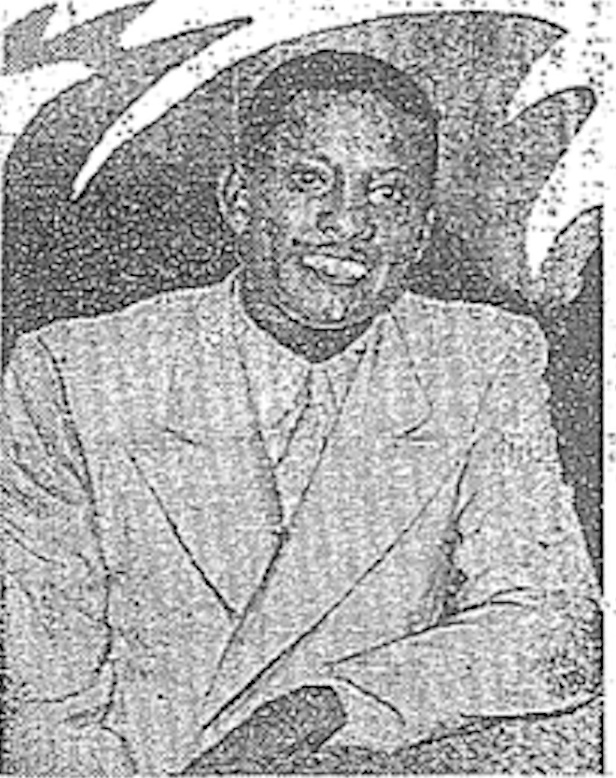
Here’s a page from a March 1945 issue of the Louisiana Weekly, the local African-American newspaper, showing an article and photo of Wesley Barrow, who was taking over the manager duties of the New Orleans Black Pelicans, the local entry in the Negro Southern League:

031745

During his lifetime, Wesley Barrow was a popular, influential father figure to countless young black players and youth. I want to find his grave and hopefully help bring some final respect to his legacy.

Recently I’ve been seeing some upkeep and maintenance work being done at New Hope cemetery, so I decided to take another walk through the burial grounds, which happens to be right across Lafayette Street from a McDonald’s at which I’m now writing this post.

And indeed, since my last post, at least half of the cemetery has been spruced up, as evidenced by inspiring photos like these:

IMG_0743IMG_0766

But in other spots, there’s still garbage strewn everywhere, including beer and liquor bottles, tipped over grave stones, and rows of plain, overgrown, unmarked, unkempt burial mounds like these:

IMG_0764

IMG_0760

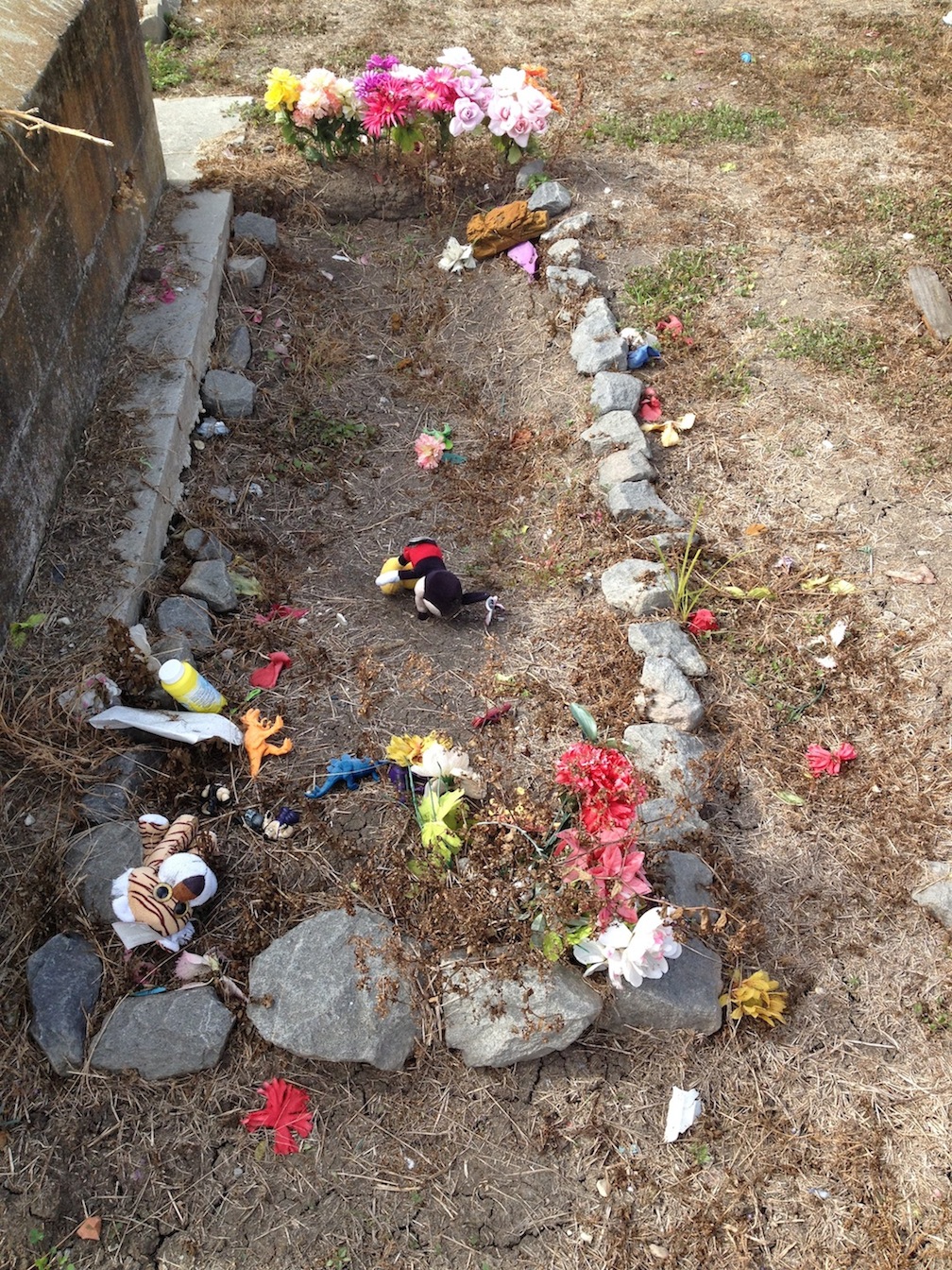
Other aspects of the cemetery are simply heartbreaking, such as the fact that so many of the graves are for dozens and dozens of military veterans who deserve more than this. And then there are crushingly bittersweet burial spots like this one of a child, circled by flowers and covered with plush toes, like an orange tiger and Mickey Mouse:

IMG_0771

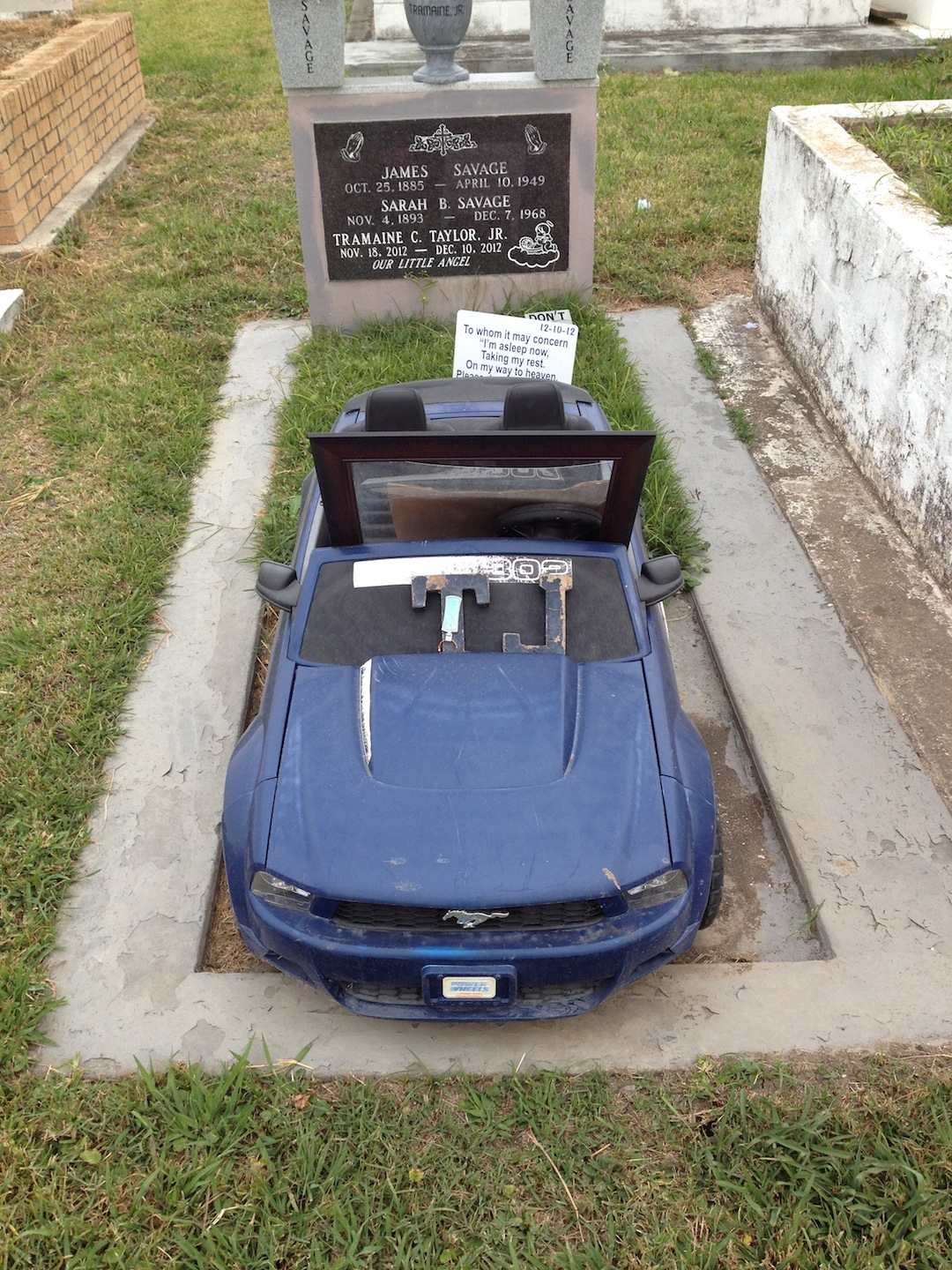
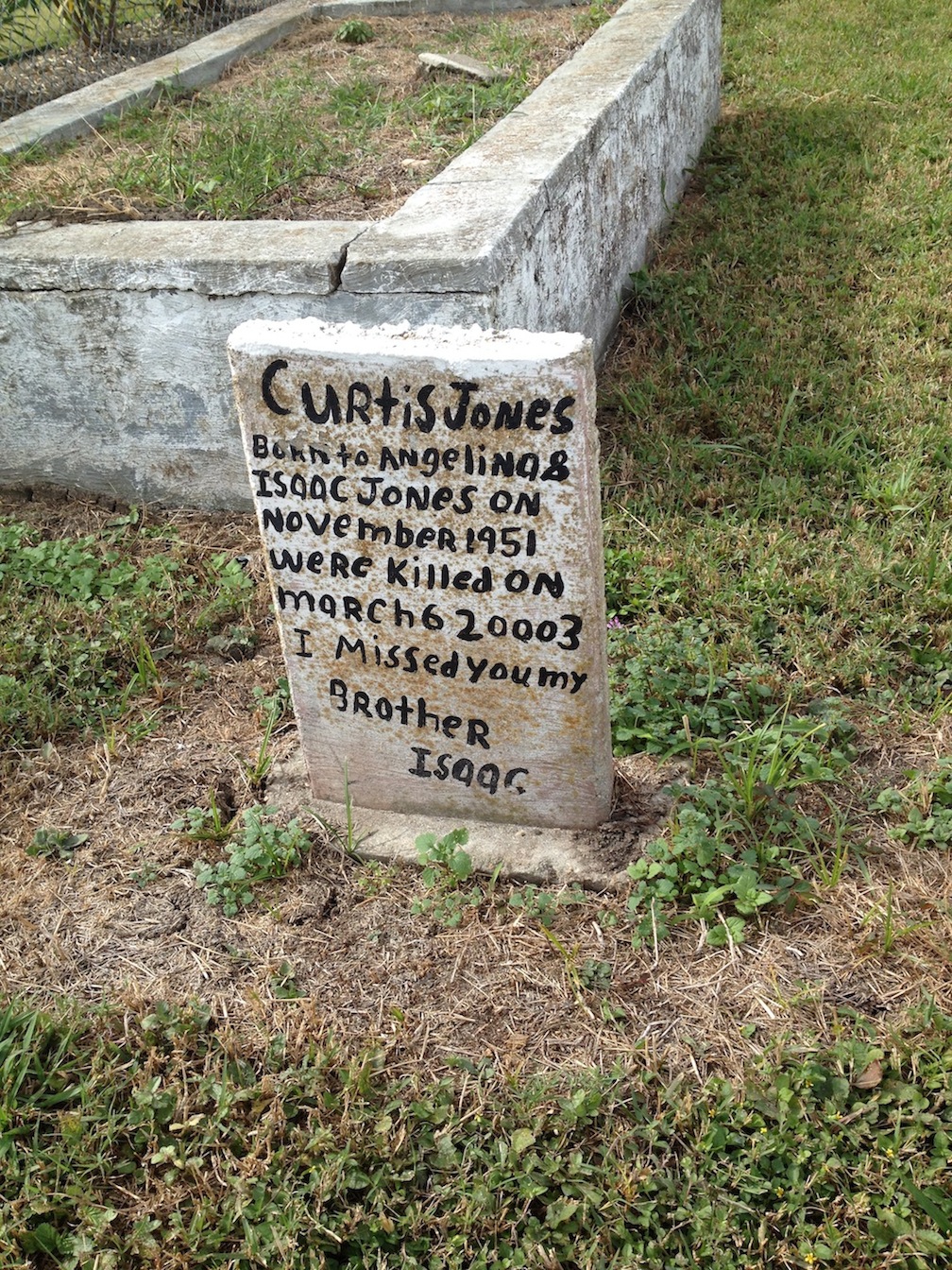
But this one is the one that truly tore apart my heart, because it was so personal and so tragic:

IMG_0768

But where is Wesley Barrow? Once again, I couldn’t find him. Now, there could be explanations for this: I have the wrong cemetery; I simply overlooked his grave; or his grave is marked but the stone is so faded or obscured that I couldn’t see it.

But in a way, I fear the worst. And I want to change that, but I’ll need help. If there’s anyone out there who can add to this effort or at least provide information, please leave a comment on this blog or e-mail me directly at rwhirty218@yahoo.com.

Jimmy Bonner in his home state

1-5JIyUcL3jF88F0gzUnfcOg

Jimmy Bonner

Mansfield, La., isn’t a huge city — as of the 2010 Federal Census, its population was a shade over 5,000 — but it’s the county seat of DeSoto Parish, which is south of Shreveport, in the northwest corner of the state. Mansfield is perhaps best known as the location of a significant Confederate victory in April 1864. It was also home to Mansfield Female College, the first women’s institution of higher learning west of the Mississippi River.
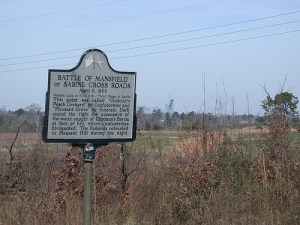
LA-P-4 - Battle of Mansfield or Sabine Crossroads, Mansfield, Desoto Parish

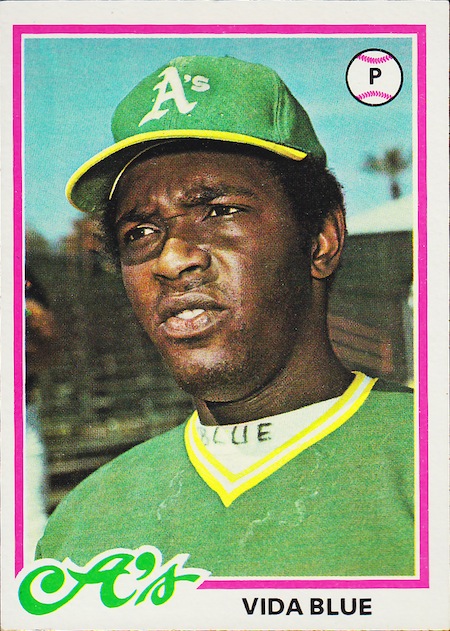
Baseball-wise, the grand metropolis of Mansfield is the hometown of longtime major league pitcher and 1971 AL MVP and Cy Young winner Vida Blue. But it’s also the original stomping grounds of another significant, yet largely unknown baseball figure, this one a trailblazer in a different country: Jimmy Bonner, the first African American to play professional baseball in Japan.
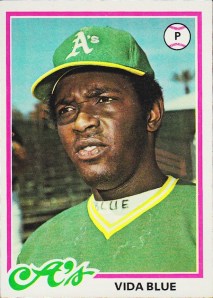
blue

This post by Gary Ashwill details the career of Bonner, who eventually moved to, settled in and died in Alameda County, California, where he enjoyed a largely semipro tenure that included — surprise! — a stint in the Berkeley International League. I wrote a brief introductory post to Bonner here following Gary’s one.

There was also quite a lively discussion on Rod Nelson’s Facebook page.

Once I found out that Bonner was a native of the Pelican State, I felt obliged and, indeed, eager to explore his roots in Mansfield and DeSoto Parish.

Turns out, however, that those roots are extremely murky, which, of course, isn’t unusual for underappreciated black ballplayers of the early 20th century like Bonner.

So what exactly did I find about the groundbreaking player’s connection to Louisiana …?

First off, it’s possibly important to note that a fairly decent majority of Mansfield’s modern residents — more than 64 percent — are black, making the fact that the city has produced multiple standout African-American baseball players over the decades not all that surprising.

Now, down to James Everett Bonner. Birth date: It appears to be, according to multiple sources (including the California Death Index) to be Sept. 18, 1906 (which means he shares a birthday with my sister, née 1976, exactly seven decades later).

Bonner’s mother was Martha A. Lewis, whose background is shrouded in mystery. The first confirmed appearance in the U.S. Census is 1920, when she and three of her children are living in Mansfield on Gibbs Street with a blend of white, black and mixed-race neighbors. Martha, who is stated as 38 years old with no listed occupation.

Key to the listing, though, is the that she’s widowed, as well as the fact that her children have different surnames. There’s James Bonner, 13, and Bessie Lee Bonner, 15. But there’s also Mamie Goldsmith, 9.

The presence of three last names in the same house — one with a mother and three kids — is just plain confusing.

The 1930 Census lists Martha living with just Jimmy Bonner; their stated ages are (I think, if I’m reading the handwriting correctly) 45 and 22, respectively. But now Martha Lewis is listed as … divorced. The document also states that she’s a laundress with a family, while Jimmy is noted as a tailor in a shop.
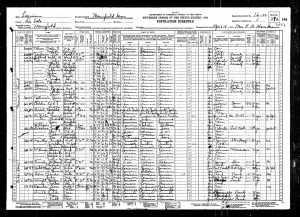
4584874_00811

There’s also another hitch in the 1930. While James Bonner appears to be living in Mansfield, La., there’s also a James Bonner noted in … Oakland, Calif., in Alameda County, where Bonner eventually settled for his hardball career. And this James Bonner is eerily similar to the one we “know” — he’s 21 years old, black and a native of Louisiana!

But there’s something else that’s quizzical — this second James Bonner is listed as living with Edward and Lee Freeman and identified as their — get ready — stepson.

However, in my cursory research on Bonner’s background, I haven’t come across that surname in anything other places in relation to Jimmy Bonner. I suppose it’s feasible that Bonner was splitting time between the two locales, but the two Census pages — the one of Mansfield and the one for Oakland — were filled out only nine days apart in April 1930.

Now, speaking of crazy surnames … let’s get back to Bonner’s mother, Martha Lewis and how she a) had children with different last names, and b) is listed in one Census as widowed and the following one as divorced.

According to a (somewhat) handy dandy, bare-bones profile of her I found on Ancestry.com, Martha Lewis allegedly had at least four children with up to three men. In the profile, two of those men are stated as husbands — Peter Bonner (no other information given), with whom Martha had Jimmy as well as Lang Bonner, né 1900; and Rory Goldsmith (born 1880), with whom she birthed Mamie Lee Goldsmith in 1911.

One more child, Bessie Lee Bonner, who is listed as living with Martha, Jimmy and Mamie in Mansfield in 1920, is stated in the profile as the child of an unknown father.

Talk about a family in knots. A guess is that Lewis was Martha’s maiden name, i.e. original surname. But if that’s the case, she never took the name of either of her listed husbands, and she never passed her her own name to any of her children. What???

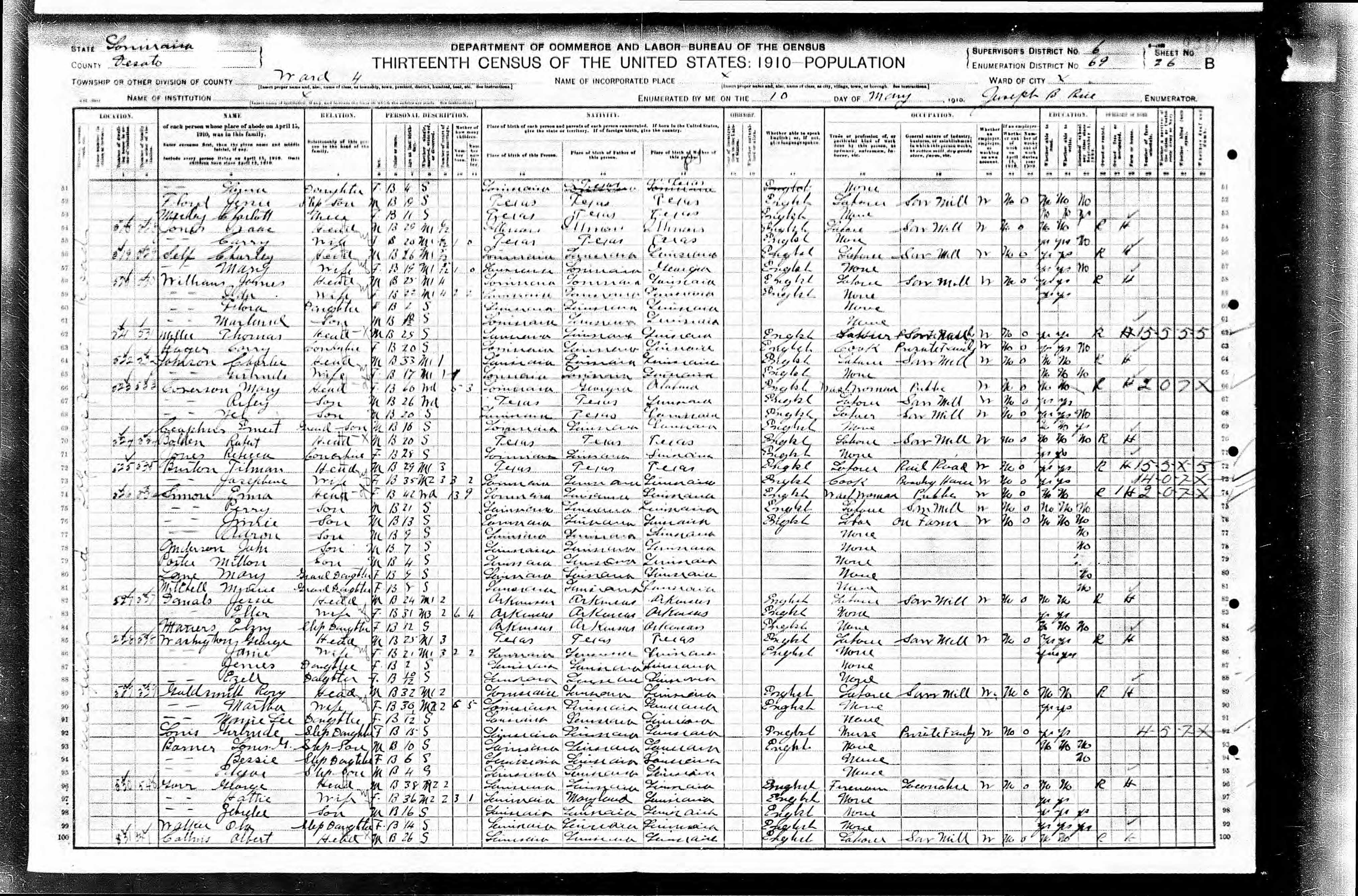
Perhaps — perhaps — things are cleared up a little bit with the 1910 Census, when Bonner’s mother is listed as 30-year-old Martha … Goldsmith! The wife of none other than 32-year-old Louisiana native Rory Goldsmith! They’re living in DeSoto Parish (not in Mansfield proper, it seems) with their daughter, Mamie Lee Goldsmith, as well as four kids listed as Rory’s stepchildren.
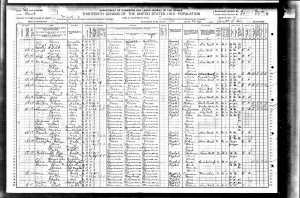
photo 1

But the children have two different surnames: Gertrude (I think) Louis, 15; and three with the last name of Bonner, including Bessie, 6, and two other kids — I honestly can’t make out their names, but neither of them appear to be Jimmy or James — ages 10 and 6, both boys.

Martha and Rory are listed as having been married for two years, with the marriage being the first for Rory — who’s stated as a laborer at a saw mill — and the second for Martha.

That clears up the picture a little … a little. It appears as though Martha Lewis married this Peter Bonner (for whom I could find no immediate record), who most likely died after having several children with Martha, who then married Rory and had Mamie Lee. I honestly have no idea who this Gertrude is — yet another child of Martha’s by another man? Quite, quite confusing.

(Incidentally, Rory shows up as 4-year-old Roy Goldsmith in DeSoto Parish, the son of Julius and Juana Goldsmith, both listed as “laborers.”)

OK, what if we shift over the Jimmy Bonner’s wife, Lillian? Will things get any more “normal”? Well, yes, but only marginally. According to the California Death Index, Lillian was born in Louisiana on Aug. 21, 1907.

The index lists both her mother’s maiden name and her father’s surname as Victor, which is a little strange.

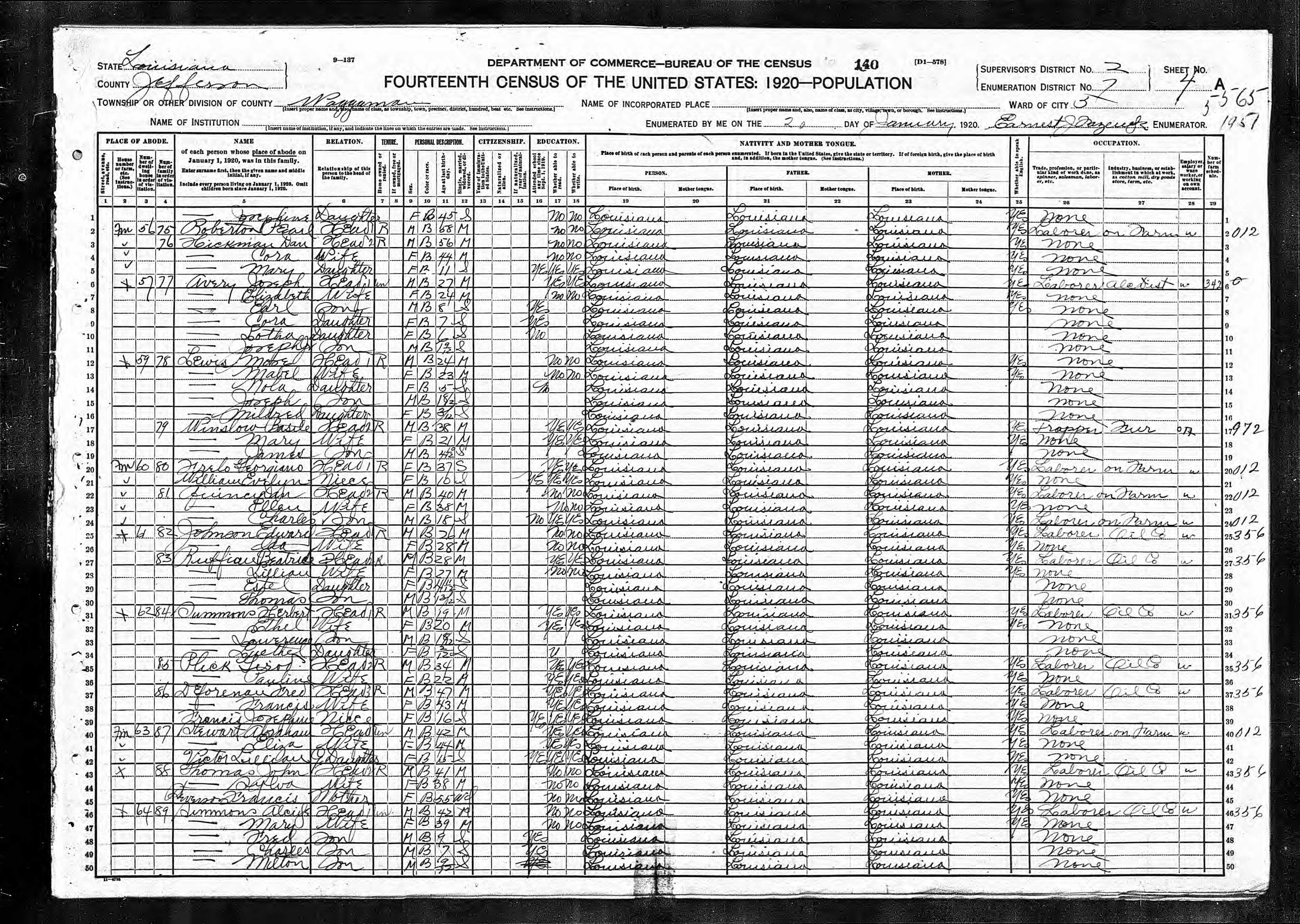
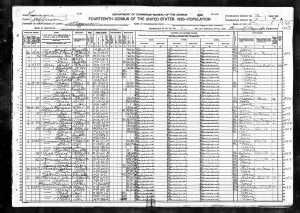
Lillian was raised as Lillian Victor, not by her parents but by her grandparents, Abraham and Eliza Stewart, in the unincorporated community of Waggaman in Jefferson Parish, which is across the river from New Orleans and also the parish in which I live.
4300970_00284

Both Abe and Eliza were also Louisiana natives, born in roughly 1878 and 1876, respectively. In the 1920 Census, Abraham is reported as a farm laborer, but by 1940, he went into business for himself, opening a barbershop.

It’s not immediately clear how and when Jimmy Bonner and Lillian Victor met or got married, but it was apparently sometime in the 1930s, because by the 1940 Census they’re married and living in Oakland, with Jimmy officially working as a railroad porter.

Jimmy died in 1963, while Lillian died in 1984, both in Oakland, it seems.

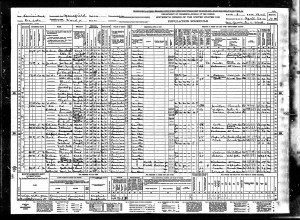
One final note … The 1940 Census lists Martha Lewis as living in Mansfield, still on Gibbs Street, with Mamie Lee Goldsmith. Martha is now 61 and widowed again while toiling as a cook in a private home. Mamie Lee is 29 and working as a home servant.
m-t0627-01395-00338

That’s what I have so far regarding Jimmy Bonner — trailblazing black ballplayer in Japan in the 1930s and mainstay in the Bay Area semipro hardball scene — and his roots in Louisiana. But I’ll keep at it and work to piece more of it together, hopefully soon …
Heritage of heroes

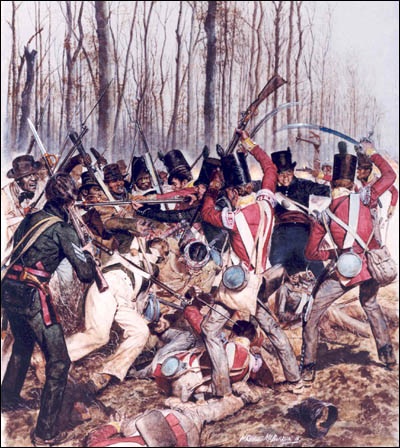
veterans-commemoration-free-men-of-color-militia-pic

Free men of color in the Battle of New Orleans.

The story of New Orleans native and one-armed pitcher Edgar “Iron Claw” Populus would be fascinating by itself. Taken on its own, Iron Claw’s tale — fleetingly becoming an unstoppable sandlot hurler in NOLA blackball circles in the early 1930s — has been enough to enrapture at least this scribe.

But once one looks into Populus’ heritage, one finds an amazingly rich, complex, interwoven tapestry of Creole culture, freedom and bondage in the New Orleans area stretching back to at least the 1750s.

New Orleans has always been … different from much of the rest of the South in terms of race and ethnic relations. In the city’s antebellum years, there was a large population of free, mixed-race people of color called Creoles, descendants of African slaves and their French and Spanish masters.

Creoles held a unique place in early 19th-century NOLA society, often enjoying more (yet still limited, of course) freedoms than other people of African descent. There was a sizable Creole merchant middle class, and mixed-race culture in many ways mirrored that of white society.

One way that was so, apparently, was in military service for the various governments, i.e. French, Spanish, U.S., in charge of the region. On that count, Edgar Populus’ direct family line was studded with men who served their country as free, mixed-race Creoles.

Go back to the Civil War, when Iron Claw’s great-grandfather, Armand Populus, fought first in the Confederate Army (quite possibly because he was coerced into it) when he enlisted in the Louisiana 1st Native Guards Infantry Regiment as a private.

But Union forces took New Orleans early in the war, in 1862, at which time Armand seems to have switched signed and become a blue coat. He enlisted as a private in the U.S. Colored Troops, Company D, 74th Infantry Regiment, which had begun as the 2nd Louisiana Regiment Native Guard Infantry in October 1962 and assigned to the defense of New Orleans.

That regiment became the 2nd Regiment, Corps d’Afrique in June 1863 before evolving into the 74th Colored Regiment in April 1864 and again assigned to the defense of the city. This is what Armand Populus originally enlisted in. The regiment took part in several expeditions from Fort Pike over several months.

LAM123_4-0126

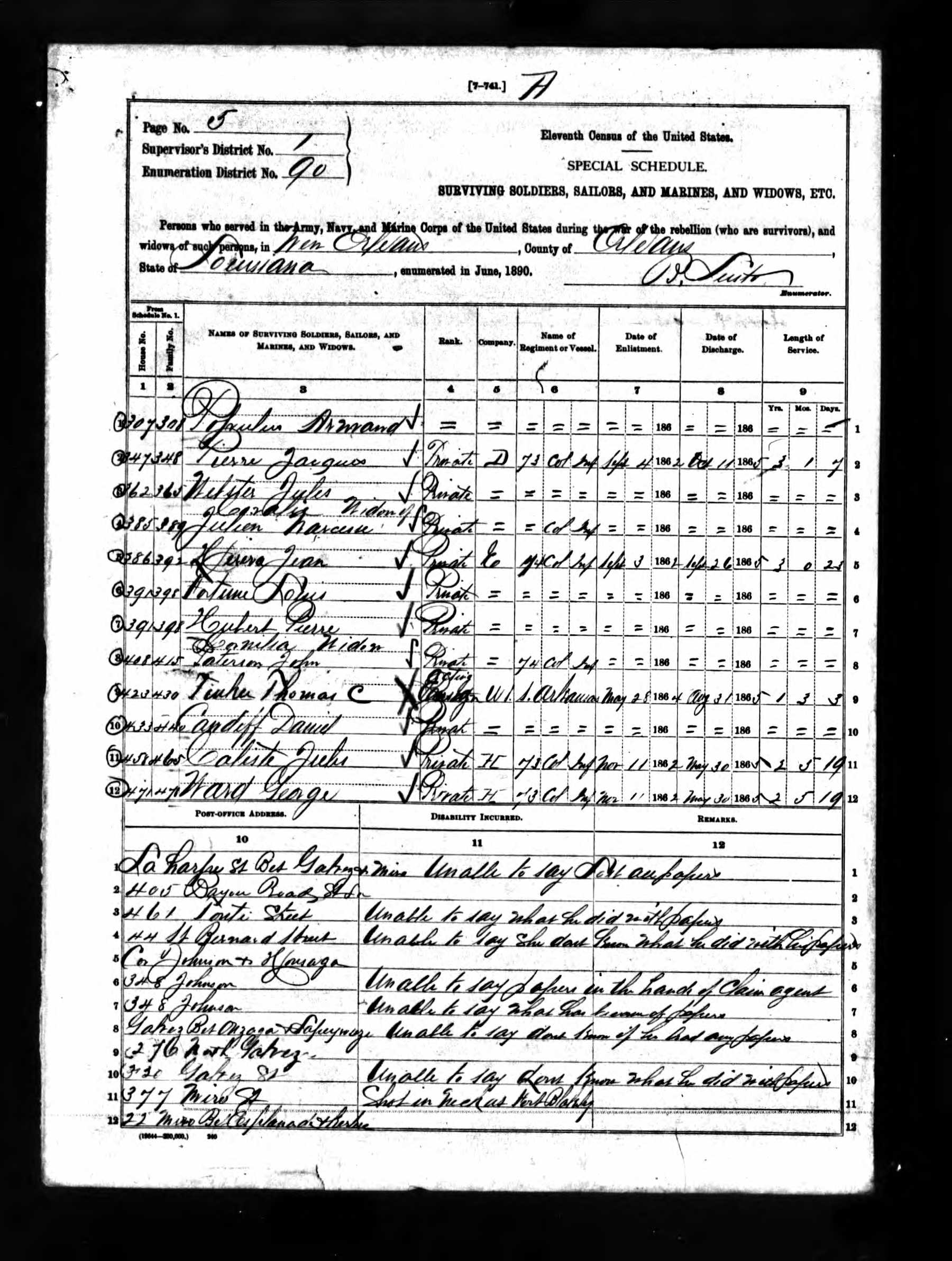
1890 surviving soldiers Census sheet listing Armand Populus.

In July 1864, the 74th was consolidated with the 91st Colored Infantry Regiment, and Armand appears to have re-enlisted in this regiment toward the end of the war, again as a private. But the end of 1865, with the war over, the regiment seems to have mustered out.

Armand Populus, a mason by trade (like many members of the Populus family tree), live a relatively long and fruitful life, from roughly 1839 to 1906. He and his wife, the former Natalie “Amelie” Decoudreaux (sometimes spelled Decoubeau or other variations), had Edgar Populus’ grandfather, Lucien (eventually Lucien Sr.), in roughly 1854.

Armand remained connected to his Civil War service, appearing in an 1890 Census of surviving soldiers in New Orleans and living on Laharpe Street, and filing for veterans benefits as an invalid in 1897.

But the Populus family tradition of military service goes back even further, to the War of 1812, when the state of Louisiana reluctantly re-mustered black militias that had been established by the previous French and Spanish governments but had been disbanded once Louisiana was transferred to U.S. control. The white leaders and citizens, prompted by the slave revolt in Haiti, feared a similar uprising at home if they armed men of color, even in the service of their country. The U.S. commander of the defense of New Orleans, famed general and future president Andrew Jackson, eager recruited and praised free black soldiers who helped fend off British attacks on the city.

Thus enters the story of Vincent Populus, né about 1759, quite possibly as a slave of Miss Juana Kerroley Miears (other spellings exist), wife of Luis Populus. Juana Kerroley (and, by extension, Luis Populus) appeared to own numerous slaves who were given the surname Populus.

One of those, according to Louisiana slave records from 1719-1820, was a “mulatto” named Vicente, born in roughly 1759. That date matches up with New Orleans death records for a Vincent Populus, who died in 1839 and was reported to have been birthed in about 1759, making the likelihood that Vicente and Vincent were one and the same.

Once Juana Miears Kerroley died, she passed on the vast bulk of her estate to her widower, Luis Populus, who subsequently appears to have then freed most, if not all, of the willed slaves, probably including Vicente/Vincent. Vincent Populus would became one-armed baseball pitcher Edgar “Iron Claw” Populus’ great great great grandfather.

Likely born a slave, Vincent Populus went on to great things, especially when the War of 1812 rolled around and Louisiana reluctantly formed African-American militias. Many free blacks, including Creoles, jumped at the chance to serve, some in hopes that outstanding military records would lead to more freedoms and rights in society. Penned Jonathan D. Sutherland in “African Americans at War: An Encyclopedia”:

“African Americans believed that their continuing participation in the defense of the United States would result in gaining the freedoms and rights of other citizens. It should be remembered that the vast majority of African Americans did not at this time enjoy the rights enshrined in the Constitution, but the very real hope was that if they flocked to the flag to maintain U.S. independence, Congress and the public in general would recognize that African Americans were equal to their white counterparts and deserved to be valued as they were.”

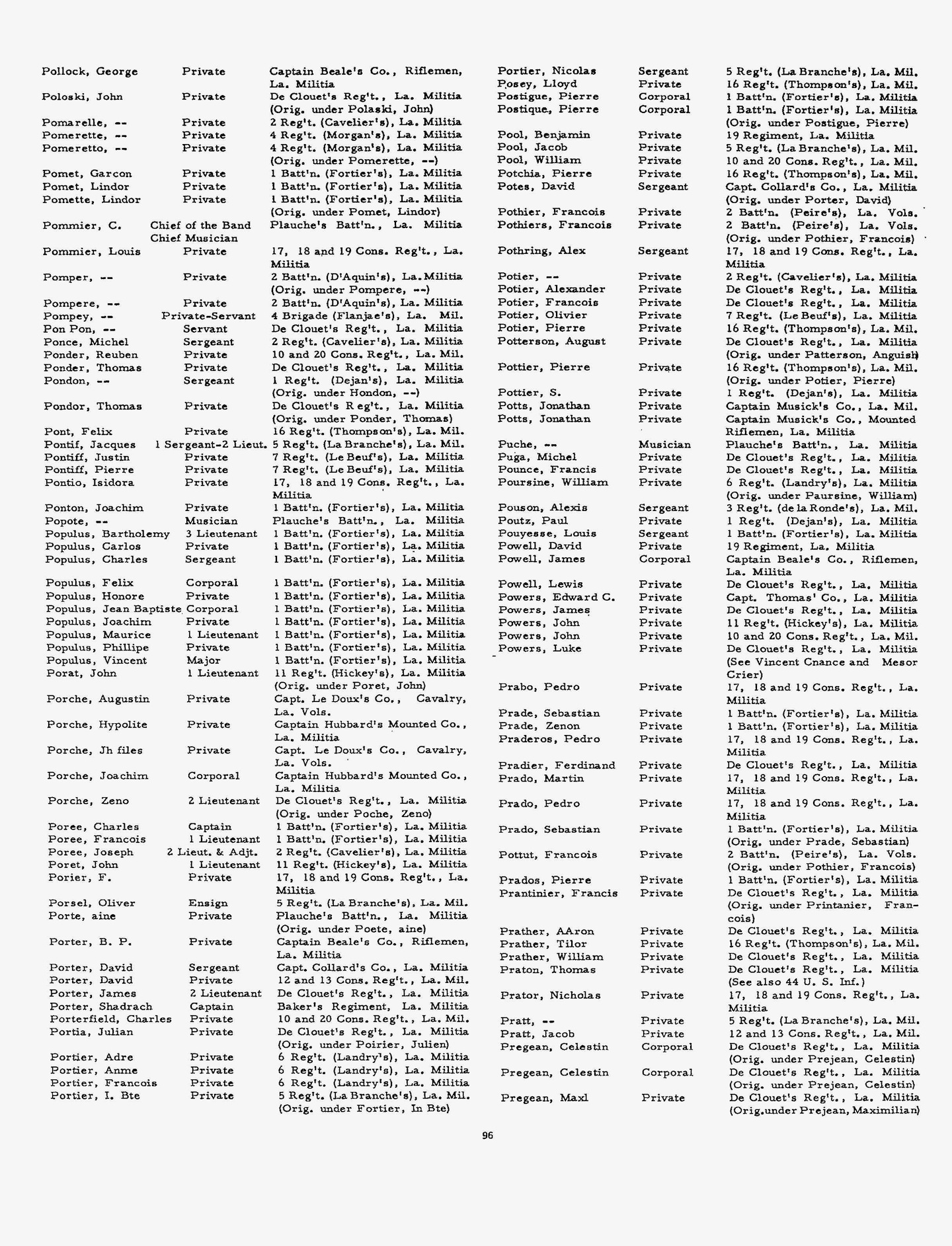
Vincent Populus became one of the first black military officers in American history when he joined the 1st Battalion of Fortier’s Louisiana Militia, an organization of free black soldiers that had been disbanded in 1804 soon after the Haiti revolt but then hastily reorganized in 1814 to help defend New Orleans from the British.

LASoldiers1812-001994-96

List of free black soldiers during the War of 1812, including Maj. Vincent Populus.

Vincent followed Isidore Honoré, also a free African American who was commissioned to the battalion as a second lieutenant, itself a groundbreaking move. Populus became the ranking black officer of the group of 350 free men of color and the first African American to be given the field rank of major in the U.S. Army.

(It’s also worth noting that at least nine other Populuses joined the battalion, some attaining ranks of lieutenant, corporal and sergeant.)

Vincent Populus’ military service seems to have added to his prestige and place among free Creole society in the first several decades of the 19th century. In her book, “The Strange History of the American Quadroon: Free Women of Color in the Revolutionary Atlantic World,” Emily Clark describes how affluent Creoles often followed strict societal mores when it came to coupling and marriage.

That included Vincent Populus and his brother, Maurice, both of whom arranged marriages for several of their daughters. Ironically, though, Clark writes, Vincent himself never married his lifelong partner, Marianne Navarre.

Vincent (and likely Marianne) had a son, Vincent Jr., in about 1812, who continued the Populus line down to Edgar, i.e. Iron Claw. Vincent Sr. died on Sept. 23, 1839, a quarter-century after he made military history.

In a postlude, the proud, successful and highly praised battalion in which Vincent Sr. served was disbanded a few years before his death, again because of white racism and fears of a black/slave insurrection. Wrote Bernard C. Nalty in his book, “Strength for the Fight: A History of Black Americans in the Military”:

“Heroism was not enough, however, to save the black militia. White self-confidence reasserted itself, as did the racism that pervaded American life. After all, true Americans need not follow the example of the Spanish or French, themselves lesser peoples, and rely on blacks for their protection. In 1834, a revision of the militia law sounded the death knell of the black militia, which would not be resurrected until the coming of the Civil War.

“Nor did the U.S. Army recognize the contribution of the black volunteers to the victory at New Orleans, for whites alone were eligible to serve in the Army’s ranks. Once again the government had turned to blacks in time of peril, accepted their aid, and then spurned them. …

“White Americans,” Nalty concluded, “remained blind to the military contribution of blacks.”

Winfield Welch and the Black Pels

On Napoleonville, La., native Winfield Welch’s journey to the Negro Leagues big-time — he managed the Birmingham Black Barons to two straight Negro American League titles in the 1940s and became what the one paper called the best manager in the business — his first big break as a skipper appears to have come in 1930, when he took over the reins of one of the many incarnations of the New Orleans Black Pelicans.

This is back when the local NOLA media was consistently misspelling Welch’s last name as “Welsh,” and when Welch, who moved from the country town of Napoleonville to the big city of N’Awlins in search of hardball fame and steady work, was making the transition from slightly above-average outfielder (like his stint with the local Pullman Porters squad) to manager-on-the-rise.

And 1930, it appears, is when that transition went into overdrive when he started skippering the Black Pels. The season began in March and April, with Welch still seemingly remaining just a player for the Pelicans.
However, according to the local media — namely the Louisiana Weekly black newspaper — he was already accruing a reputation as a guy with a knack for making the best of key opportunities on the diamond. Wrote columnist “Safety” Williams in the April 12, 1930, Weekly (the numerous ellipses, grammatical quirks and poor math are in the original):

“And observe, dear neighbors, from now on its Winfield ‘Lucky’ Welsh … I know Welsh is a smart ball player … (in fact I believe him the smartest on the club), but since Welsh can’t hit, Dame Fortune, or rather her twin, sister, Lady Luck, is sweet on ‘Lucky.’ … Monday Winfield collected three singles, a sacrifice hit and walk in his four trips to the rubber … He is surely the best fielder in the fold … Those sensational catches he made Saturday and Sunday, and his fielding in general, makes him plenty valuable … I wonder if the gentleman who refuted my statement that Welsh was a cracking good fielder after Saturday’s game, was in the stands Sunday and Monday, while ‘Lucky’ was snagging ’em right and left in the right field territory.”

Welch’s big chance then arrived about a month and a half later, when he was tabbed player-manager of the Black Pels after previously serving as captain of the club. In its May 24, 1930, edition, the Louisiana Weekly reported that the move came at a meeting of the officers of the Black Pelican Baseball Club, when the organization declared that Welch “now has the full reins on the team on and off the field.”

The paper continued:

Fred Caulfield, veteran pilot, whose position ‘Lucy’ [sic] is understood to have filled, was shifted to that of Business Manager of the club. Welsh plays in the left wing of the outer garden.”

Welch was subsequently greeted with a harsh lesson in how tough it is to pilot a club, especially in the 1930s world of semipro and professional black baseball, when the Houston Black Buffaloes took both ends of a doubleheader from Welch’s Black Pels. That prompted Welch to determinedly right the ship as quickly as possible, reported the Weekly’s Earl Wright, most immediately for an ensuing six-game series in Waco:

“Manager ‘Lucky’ Welsh is determined that but very few more ball games will be lost after the fashion of Sunday’s melee and if the new pilot’s faith in his ability to pull the Birds through is to be taken with the same degree of seriousness in which Welsh breathed it, then Waco is going to be a neat lot of stepping stones on which the Black Birds will ascend to a better Tex.-La. League position.”

As late spring flipped to early summer, the Black Pelicans continued to flap their wings through the Texas-Louisiana League campaign, taking a game from Houston but dropping a pair on exhibition contests to the Lake Charles Lincoln Giants.

By mid-June the Pels had a 9-8 mark and were stationed in third place in the six-team league. Different players were stepping up to the plate for young manager Welch, including hurlers Bissant, Allen and the legendary Diamond Pipkins, as well as backstop “Shorty” Walker and a hard-hitting second-sacker named Collins.

A week later, the Birds took over second place behind high-flying Houston, and Welsh reinforced his growing reputation as a firm-handed manager, releasing pitcher “Pepper” Blanks for the latter’s affinity for the bottle, among other managerial moves. Reported the LA Weekly:

“Winding up we flag the change in the Pel play since ‘Lucky’ took the reins. The Birds have come out every one of the series with at least an even break and the last Tex.-La. League standing we lamped, had ’em holding down the second place berth with a .524 average.”

Added the paper, expounding on Welch’s moniker:

“Folks have inquired of us why we nicknamed Winfield Welsh ‘Lucky.’ Well here is one reason for the christening. Welsh, at one time, was regarded as a pitcher’s crip, but by using his cranium for other purposes beside a rest for his hat, he developed the habit of getting on. Lamp his position at the pan and you’ll not wonder why Welsh gets so many walks. Then, watch him come up in a pinch and smack a sweet little single that brings in the tallies.”

Welch was already putting his inherent inventiveness on display in early July of 1930, when officials of the various clubs in the Texas-Louisiana League prepared to gather in Houston for the circuit’s mid-season meeting. Even though the Houston Black Buffs appeared to have rather safely won the loop’s first-half pennant, Welch was working the angles, asserting that his squad were the rightful owners of the first-half flag.

Winfield’s argument? That the Buffaloes had forfeited enough games that, taken together with the Black Pels positive head-to-head record with the Lone Star squad, it should place the Pelicans at the top of the heap.

Welch also pointed to an alleged, general failure of the league’s various team managers to submit timely and adequate game reports to the media, which further skewed the squads’ winning percentages.

On the field, though, Welch and the Birds spent much of July on the road, only occasionally dropping into the Big Easy for a handful of home contests. Jaunts included one to Monroe, La., for a lengthy series with that city’s Monarchs, and late in the month the Pels ventured to Bogalusa to clash with “Slim” Moore’s Kelly Tigers to compete for what the Louisiana Weekly billed as the “colored baseball championship of the state.”

The paper further claimed to have received a correspondence from Welch that, the Weekly stated, “the Birds are still pounding the onion at a terrific clip and just can’t be stopped.” Thus, in addition to sharpening his on-field acumen and his boardroom boldness, Welch was developing a knack for PR that seems to have resulted in a very harmonious relationship with the Louisiana Weekly and its sports editor, Earl Wright.

Welch’s flair for the dramatic was upheld, at least in the ensuing three-game stint with Bogalusa in which the Pels swept the whole trio of contests. But what was perhaps even more significant that the final scores was Welch’s perfectly-pitched claims that the Bogalusans tried to play dirty pool.

“We will be experiencing zero weather in July and August before I take a basebal team or any other aggregation to play against one representing Bogalusa in that town again,” the Aug. 2 Louisiana Weekly quoted Welch as saying. The paper’s writer continued:

“There you have ‘Lucky’ Welsh’s opinion of a visiting contestant’s chance of getting a sporting break in the little village.

“The Black Pel manager got his fill last Sunday when a ‘country cop’ came out on the field in the seventh inning while Welsh was protesting a decision which ‘Lucky’ claims was outright Jesse James stuff, and threatened to beat him over the head with his pistol of he didn’t go out into the field and play ball.”

When the white Bogalusa police officer asked who the Pels’ manager was, Welsh allegedly butted the cup in the chest with his head, prompting the badge-holder to go off on Winfield.

“Well listen here,” the Weekly quoted the officer as saying. “You n—–s [in the article that word was spelled out] can get away with that sort of stuff in New Orleans, but you can’t do it here. Now get back out there and play ball or I’ll knock your black head off with this gun.”

The writer continued, asserting that through the series between the Tigers and the Birds, white Bogalusans continuously tried to “scare” the Pelicans, but Welch used such attempts as fuel for his own players’ fire in their drive to the state flag.

Welch concluded, he told the Weekly reporter, that “Bogalusa’s no place for our people, and I’ve played my last game there. I don’t see how as brilliant a ball player as [Bogalusa’s] ‘Slim’ Moore and those other city boys can put up with that bunch.”

The roughing up the Pelicans reportedly received in Bogalusa must have tuckered them out, because they subsequently dropped three games out of four in a home series against the Houston Black Buffs.

After that mid-August debacle, local coverage of the Tex-La League and the Black Pelicans petered out, finishing with an announcement in the Oct. 4, 1930, Weekly that neither the Pels nor the Black Buffs showed up for a billed Sunday doubleheader at New Orleans’ Heinemann Park. Stated the paper: “A large crowd eagerly and patiently awaited the two teams that failed to put in an appearance.”

That type of erratic behavior was typical among pre-integration African-American teams, which often lacked the steadily sufficient financial and administrative support to complete schedules or even make it to games as planned. Such was life in the shadows of the game, where black players, managers, owners, umpires and officials were forced to adjust on the fly and roll with the punches, of which there were many, even for a burgeoning managerial star like Winfield Welch, Napoleonville native.

In a final postlude that also serves as a prelude to the 1931 season, in which Welch grabbed a firm hold of the Pel rostered and morphed the majority of the 1930 squad into a “new” team for 1931, Welsh’s Travelers. The ’31 campaign for Welsh’s squad began where? Bogalusa. Winfield’s swearing to never again visit that city lasted, oh, nine months. But the 1931 season is, quite possibly, yet another story …

The week upcoming — all Louisiana, all the time

Starting tomorrow (Sunday), I’ll have a whole week of Louisiana and NOLA-based posts, mostly about three subjects: Napoleonville native and manager extraordinaire Winfield Welch and his hometown; the war hero ancestors of comet-through-the-sky, one-armed pitcher Edgar “Iron Claw” Populus; and the Louisiana roots of Jimmy Bonner, the first a African American to play professional baseball in Japan.

So buckle up, folks, for a weeklong trip through the Bayou State’s African-American baseball history, starting tomorrow with a piece on Winfield Welch’s first big year as a manager — the 1930 New Orleans Black Pelicans.

Support from SABR

This morning I attended my first meeting of the Schott- Pelican chapter — i.e. the Louisiana/NOLA chapter — of the Society for American Baseball Research, and I had smashing good fun.

I, by and large, stayed quiet, a little nervous and content to sit and listen. I was welcomed with open arms and hearty handshakes, and chapter organizer Derby Gisclair said he and the rest of the crew were glad for some fresh blood, especially someone who could bring a different perspective like the Negro Leagues to the group.

In fact, I was given an assignment: Write the trivia quiz that is ritual for S-P Chapter meetings, with a focus on the Negro Leagues. Derby suggested that half of the quiz be local/Louisiana-based, and half be national in nature. Sounds pretty cool to me.

So, all in all, I left the Holiday Inn Westbank extremely encouraged about the future inclusion of the city and the state’s rich African-American hardball history in the group’s efforts.

I definitely have several goals in mind on which I would like to ask my fellow chapter members for help, such as getting more pre-integration black figures into the New Orleans Professional Baseball Hall of Fame and even perhaps a Negro Leagues Night at a Zephyrs’ game. That, needless to say, would be a dream come true.

So many thanks to everyone who greeted me with a smile and firm handshake this morning. I hope I can contribute, in some small way, to the chapter’s work, even if I am a journalist. 🙂

Emptying the hard drive, Part II

Here are a couple more unpublished stories I’ve written for various publications only to have them summarily rejected or subsequently ignored. It’s one of the frustrating realities of freelance journalism — you can receive a slew of assignments, but every once in a while, your effort goes for naught, for whatever reason, and your product doesn’t get published. Meh …

So I’m opening up the dustbin and unloading these rejects on y’all. 😛

I dumped the first pair in this post, and here’s a couple more, each one a profile of one personality in the history of African-American baseball. They’re both in PDF format, and there’s no illustrations, and they’re both pretty long, so hopefully they won’t be tooooooooo dull. 🙂

This one is about Charles H. Sheldon, a black business magnate and colorful character in late-19th century Evansville, Ind. One of his ventures came in the late 1880s, when he operated a base ball (two words at that time) aggregation based in that city:

An Evansville dandy

This second article profiles the man who is arguably, at least on a national scale, the most well known Negro Leaguer from the Big Easy, Johnny Wright. Why is he so well known? Because he was signed by the Brooklyn Dodgers a couple months after Branch Rickey famously inked Jackie Robinson in late 1945.

Thus triggered an ongoing debate that exists, full-fledged, to this day: Was John Wright, who never made it out of the minors, signed because Rickey truly believed he had the talent to eventually join the big-league club, or because Rockey simply wanted to provide Jackie with a fellow African-American as Jackie, Rickey’s “chosen one,” dealt with the racism and other challenges of being a trailblazer?

And if the former is the reason why Wright was signed, why didn’t he actually make it to the majors? Many believe he simply crumpled under the pressure, unable to handle the burden that Robinson did so memorably and admirably. Others, though, say the Homestead Grays ace simply didn’t have, at least talent-wise, what it took to become a major-league pitcher.

But this article below, I tried to focus on Wright’s roots here in the Crescent City and his lifelong connection to his hometown:

Wright NOLA

Well, in a couple hours I’m off to the semi-annual meeting of the Louisiana chapter of the Society for American Baseball Research, and I’ll try to issue a report later tonight or tomorrow. I’m also working on the next installment of the Winfield Welch story …

Some stuff from my files …

Because I’m going through some personal stuff right now, I’m not sure how much I’ll be able to write in terms of new stuff over the next few days, maybe a week. However, never fear, I have some items I can post here and there in PDF form.

Just about all of them are articles I submitted over the past few years that were either rejected or just fell into the black hole that is an editor’s desktop. The PDFs are sometimes long, with no pictures or other graphic elements, and many of them are someone dated, i.e. they were written a couple years ago, all of which I apologize for. But I hope you like them anyways. 🙂

The first couple I’m putting up there today have a Mississippi theme. One was gathered from the players and owners panel that took place at the 2012 SABR Jerry Malloy conference in Cleveland, in which Minnie Forbes, the last surviving owner of a major Negro Leagues team, spoke:

Forbes

This next one I researched and wrote during and after a visit to Jackson, Miss., in 2012. It’s a brief overview of the pre-integration African-American baseball scene in that city and to some extent the entire state of Mississippi:

Jackson Negro Leagues

Enjoy!

A macabre tale for Halloween

Philadelphia Inquirer_1940-2-5_p1

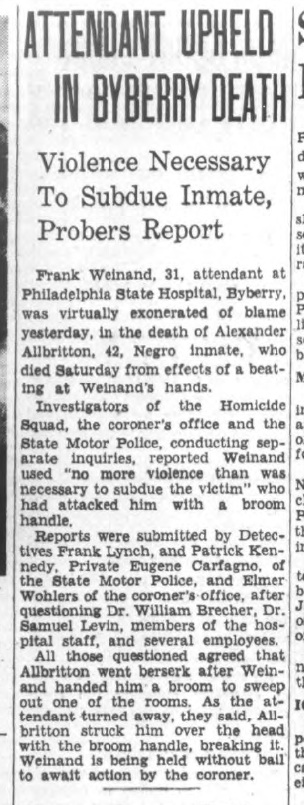
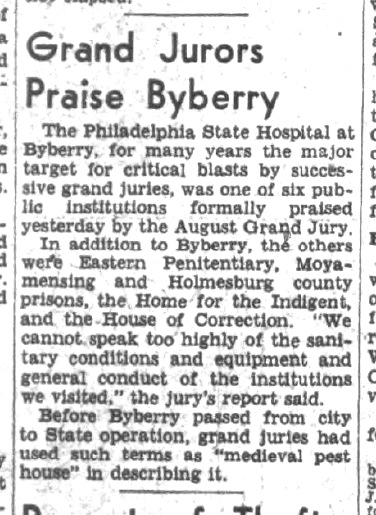
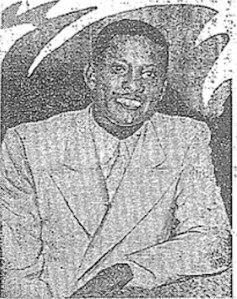
Just had this published on philly.com, a chilling take for All Hallow’s Eve. It’s about former Negro Leagues player Alex Albritton and his violent death in a Philadelphia mental hospital more than 70 years ago.

There are a handful of thoughts I wanted to add that I couldn’t fit in the story … First off, many thanks to Gary Ashwill for tipping me off to this topic. He, as usual, has been a huge help.

A few other reflections on the Albritton story, many of them stemming from some of the biased contemporary coverage of the day, much of which seemed to place the blame for Albritton’s death on him himself, not the attendant and/or the deplorable conditions and staffing at the hospital. The mainstream coverage also made sure to point out repeatedly that Albritton was a “Negro” without further discussing the obvious racial dynamics and undertones of the incident.

Philadelphia Inquirer_1940-2-6_p6

Many of the articles stress that Albritton was in the violent ward and subtly hint that he almost deserved the beating because he spuriously and without warning broke a heavy broom handle over the attendant’s head, causing a huge gash in the latter’s scalp that needed stitches.

Granted, such biased reporting reflects the general attitude of the media of the day that overall refused to question authority, especially that of government. It also is part of a consistent belief — one that still lingers to this day — that both the mentally ill and African Americans, especially men, are prone to instability and violence almost by nature.

Philadelphia Inquirer_1940-8-24_p13

All articles from 1940 issues of the Philadelphia Inquirer and courtesy Gary Ashwill.

Une raison d’etre

This post really isn’t about actual research or writing or history or anything. It’s about the researchers and writers and historians themselves. And I’ll be as delicate as possible as I write …

As I delve deeper into my still-nascent career as a Negro Leagues journalist and researcher, I’ve had three general goals: have fun, help inform people about the rich history of African Americans (and occasionally other ethnicities — I’m looking at you, Lip Pike) in baseball, and try to make a living.

On the first count, I can unequivocally say I’ve achieved it. On the second count, all I can say is I hope I’ve been able to do even a little bit of good. On the third count … no comment.

“No comment.” I heard that a lot in my previous life as an investigative news reporter. I encountered a lot, too, much of it stuff that made me shiver, feel like I had to take a shower after work, and just shake my head with an ever-growing resigned cynicism.

(And I’m not counting being a huge fan of the Indiana University football team. But doing that has has pretty much the same affect. One bowl invite in 21 seasons! C’mon, how hard is it to win six games?!?!? Six games!)

Yep, much of the work I have done in my journalistic career has made me a die-hard, disenchanted cynic.

I’ve just seen too much greed, fear, selfishness, jealousy and downright paranoia not to be one. I long ago lost any hope and faith in our government, our economic system, our religions, our educational facilities, our law enforcement, our military … pretty much all of society, quite frankly.

That’s what 10 years as an investigative journalist has done to me. Not to get too esoteric, but I’ve lost faith in our species, in humanity itself.

That’s why I had to stop what I was doing. I couldn’t be around any of that anymore, couldn’t write or report about it. It was killing me, and I grew to loathe it. I walked away. Done. I’d been, as the Metallica song says, broken, beat and scarred. And in many ways, it’s been for the rest of my life.

But I found my salvation somewhere. I found a place and a state of mind and a community and a life’s purpose that in many ways brought me back to life, renewed my faith in the possibility of basic human goodness, courage and passion.

The Negro Leagues.

More specifically, researching, writing about and sharing the story of the Negro Leagues. In this pursuit, I’ve found a community of folks who have the joy and the enthusiasm and the togetherness that I’d thought had disappeared completely from our society. There’s an atmosphere of sharing and open-heartedness and charity that has enriched my life and, at least in some small way, renewed my zest in my career and my relationships.

However, every once in a while, I see some of the stuff from my old life seep to the surface. Little flashes of distrust. Touches of envy. Hints of animosity.

These times are very limited in general, mind you, and certainly are compared to the dirty political and business world in which I immersed myself for so long.

But regardless, each time I see such moments, I feel a reflexive twinge of sadness, a fleeting remembrance of my painful past life. And it’s very disheartening.

However, I know that nothing can be a perfect utopia. Such things don’t exist and never will, certainly not on this plane of existence. Even if the Negro Leagues has given me hope in humanity, I know that all of us are, indeed, only human. Nothing and no one existence today is perfect.

And that’s probably a good thing, too. If everything and everyone was perfect, for what would we strive? Toward what goal would we work, what purpose would be have? Imperfection and the challenges it brings are why we live life — to face them and overcome them, then go on to the next challenge.

And regardless of any differences we might have, we are all united in the same purpose: To, shall I say, spread the gospel, the truth, the wonderfulness of the Negro Leagues and the African-American experience in our national pastime.

I should note, nay, stress that the Negro Leagues haven’t been my only source of inspiration and strength. My family, friends and loved ones have kept me afloat, kept me moving forward, kept my spirit up countless times. Without them, I would be nowhere, and for that I am eternally and fervently grateful.

Likewise, though, I’m also unbelievably grateful for everyone who has supported me, encouraged me and just plain befriended me in the Negro Leagues community, and there definitely have been many. I feel so blessed to have come into contact with so many people who exude so much love, support and grace. It’s come close to divinity for me.

It has, quite simply, kept me alive. All of you have. Thank you. 🙂