Should “natural causes” be sufficient?

redding_dick_1

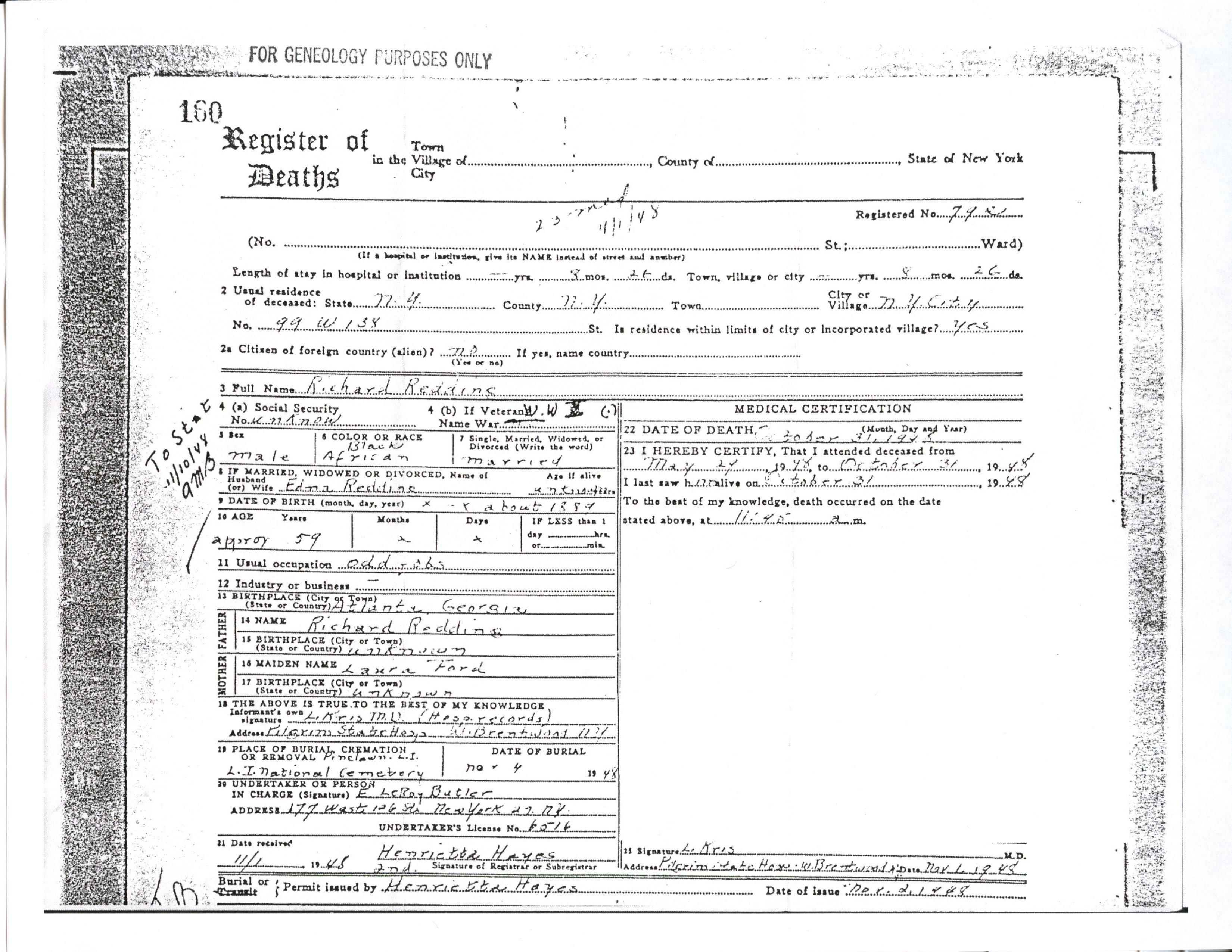
In the days following this post I put up, a lively discussion popped up on the Malloy conference Facebook page about whether the fact that the great fireballer Cannonball Dick Redding, according to an unredacted death certificate, died from syphilis at Pilgrim State mental hospital in Islip, N.Y., on Long Island in 1948.

While Pilgrim was indeed notorious for poor living conditions, questionable medical practices, and shoddy and at times violent treatment of patients at the facility, Redding’s death certificate appears, at least on the surface, rule out any foul play in his heretofore unknown cause of death.

Redding_Richard_DC-1948

But Professor James Brunson at Northern Illinois University made some very valid points and somewhat sharp criticism on the fact that my blog indicated that Redding died from the long-term psychological effects of a sexually-transmitted disease. Professor Brunson, an expert in the representation of African-American ballplayers in the mainstream media, believes that by revealing syphilis as the cause of death only reinforces the negative stereotype of the hypersexual —and, therefore, dangerous — black male in America. It was this image and representation, for example, that was, some argue, the real reason for the century-long existence of Jim Crow segregation in the South, i.e. the desire to keep “colored brutes” away from fair white maidens.

Hence, Professor Brunson feels that simply saying Redding died of “natural causes” at a mental hospital is sufficient, that there is no need to further reinforce negative stereotypes of African-American males.

However, I argued — and Dr. Ray Doswell at the Negro Leagues Baseball Museum very gently supported this argument — that the cause of death, regardless of what it is and how politically correct it might or might not be, is relevant to the chronicling and piecing together of the final years, months and days in the life of a legendary Negro Leagues pitcher who some put on a par with Satchel Paige and Joe Williams. Facts are facts, and all of them, ugly or not, must be known to provide a complete picture of any person’s life and unfortunately premature death.

(In addition, just saying “natural causes” prompts readers, historians, etc., to naturally wonder, “OK, well, what does that mean? What type of natural causes?”)

I also referred to my tendency — call it the Fox Mulder effect — to suspect conspiracies and resulting cover-ups of said conspiracies. I put forward the theory that the doctors and staff at Pilgrim knew that the stereotype of a hypersexualized black male not only existed, but was prevalent and feared, and those doctors possibly used that negative image to cover up what could have been the true cause of Redding’s death — foul play, mistreatment or lack of treatment. There are enough discrepancies — many of them very subtle — between the two death documents that cause me to suspect the Cigarette Smoking Man (or at least the powerful powers-that-be that he represents in general) had a role in all this.

Further, I lamented the fact that Redding’s syphilis went undiagnosed and, therefore, untreated for so long that it caused his premature death. That speaks to a tragic gap in medical care between the haves and the have-nots, who, both in the 1940s and still running into today, are often African Americans. Perhaps the real racism in this story is not the reinforcement of a stereotype but the idea that Dick Redding died because he was poor and black and didn’t have access to the type of health care that could have saved his life in the first place.

Also factoring in here, I believe, is the stigma that historically — and, sadly, contemporarily — was and is still attached to mental illness. While treatment and views of mental illness have certainly improved since Redding died in 1948, nearly seven decades ago they were primitive and all too often tragic. How much, we must ask, has this really changed by 2014?

I subsequently sought the input from Gary Ashwill, who received the unredacted copy of Cannonball’s death certificate in the first place. I asked him if he was buying this official “syphilis” line. Gary answered that, with the lack of any hard or even circumstantial evidence to the contrary, he’s inclined to accept the death certificate at face value.

But Pilgrim State Hospital had a very macabre history when it came to the treatment and fate of patients, with mysterious deaths — and occasionally brutal — deaths taking place.

(That fact, by the way, will hopefully lead to a new post about a player to whom Gary tipped me off — Alex Albritton, a pitcher for the Hilldales and other squads who was, in fact, beaten to death in a Philadelphia asylum in 1940. More soon.)

So, what are your thoughts on all this?
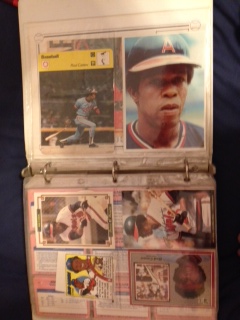
Panamanian Negro Leaguers?

photo 5photo 2photo 1

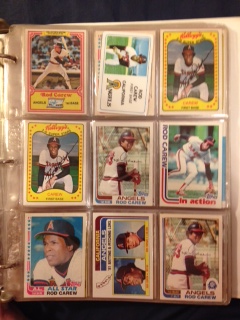
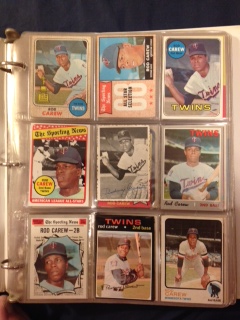
Jumping off from my previous post … does anyone know of any Negro Leaguers from Panama? I ask because when I was a kid I was a HUGE Rod Carew fan, and I collected just about every card and other memorabilia and ephemera I could get my hands on. I still have the collection today, and I’m hesitant to sell it because it was such a labor of love (and a fair amount of allowance savings), and I feel like I should donate it to a museum or charity or something.

Anyway, it got me to thinking about possible Negro Leaguers from Panama, if anyone knows of any …

Calling David and Jesse L. !!!

tumblr_lyvudbPtmb1qheo83o1_500

David and Jesse L. — call me!!!

So as I’ve mentioned before, I’m a huge fan of “The X-Files,” for better or worse. I particularly like the episode from season 6 called “The Unnatural,” about an alien in the 1940s who defects from his people because he falls in love with the game of baseball.

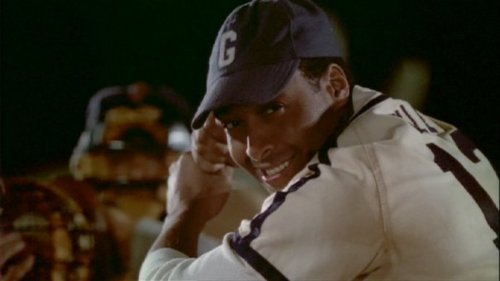
In order to hide his true nature from the authorities, he takes the form of an African-American player for a barnstorming Negro Leagues team called the Roswell Grays (a reference to both the great Homestead Grays as well as the notorious mythology of a crash of an alien ship at Roswell, N.M., in 1947).

jessemartin__120914173927

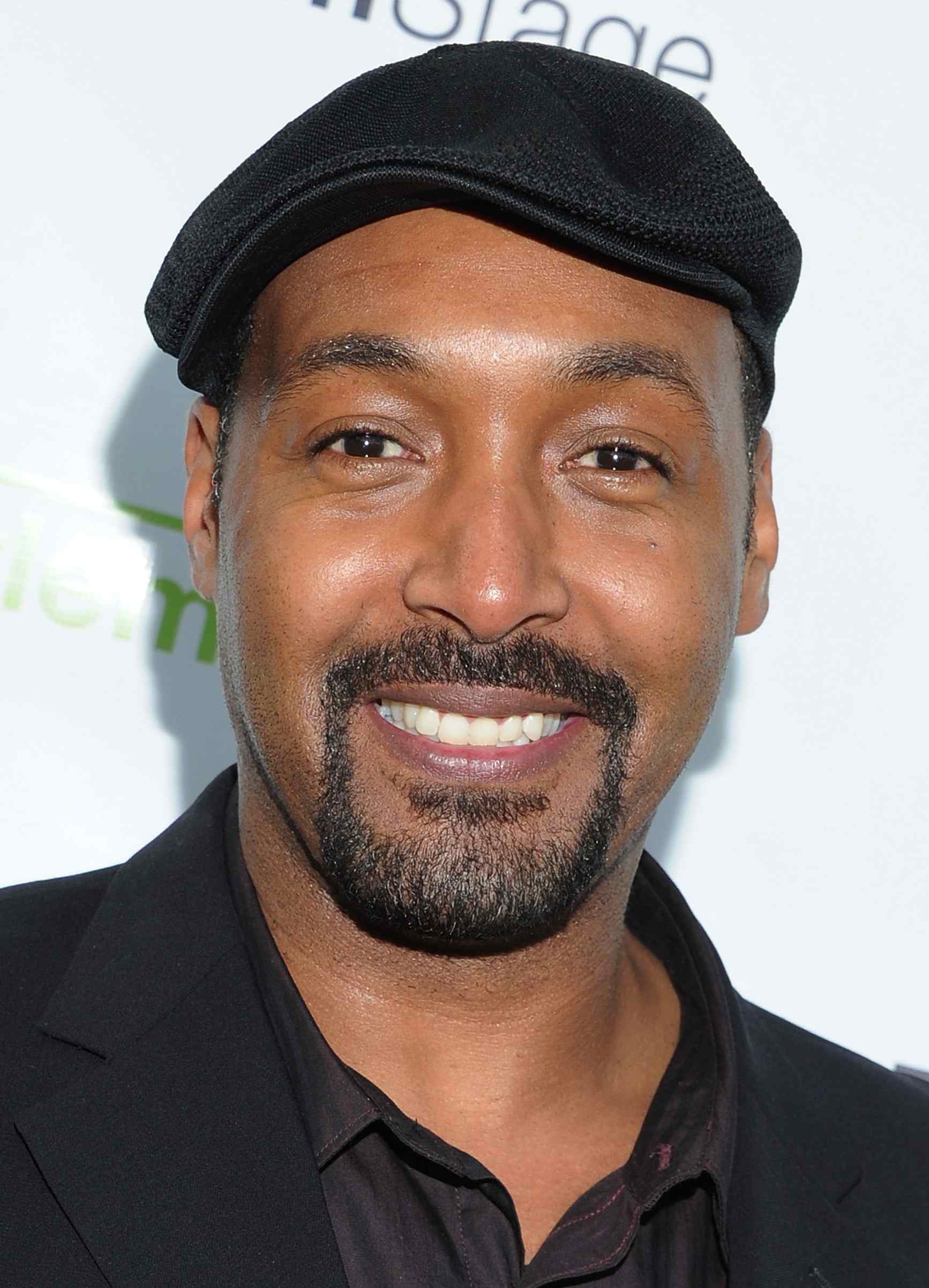
This alien, played by the very handsome Jesse L. Martin (in his pre-“Law & Order” days), is hunted by other aliens because they believe he betrayed them by joining human society and shunning his “true race.” The character is named Josh Exley, a power-hitting catcher very obviously modeled after Josh Gibson.

(The episode also posits that all the great players — including Mantle, Ruth, Williams and other whites — were all actually aliens. Yeah, it’s “The X-Files.” It’s weird.)

That’s all I’ll say about the plot of the episode — I don’t want to play spoiler. But I highly, highly recommend it, because it’s both a touching tribute to the racism faced by Negro Leaguers as well as an installment in the series’ overarching mythology about an impending alien invasion of Earth. Again, keep in mind that this is a sci-fi series based on complex, weird conspiracy theories.

david-duchovny

But the episode was written and directed by series star David Duchovny, aka FBI agent Fox Mulder, and Martin delivers a stellar performance. It’s actually a very heartbreaking, bittersweet tale, and from the time it aired 15 years ago, it’s gotten rave reviews and has been consistently ranked in the top 10 greatest “X-Files” episodes ever.

So … one of my wild dreams has been to interview Duchovny and/or Martin about the episode. So if but some extremely slim and random chance that either or both of them read this, please contact me!!!

Louisiana SABR meeting — I’m there

OK, I’m going to write a few scattershot posts today, just some random thoughts that have been rattling around in my head. Or maybe that’s the hamster on his squeaky wheel …

First up … the somewhat semi-annual meeting of the Louisiana Schott-Pelican chapter of the Society for American Baseball Research is scheduled for Nov. 1 at the Holiday Inn Westbank. I’m planning on raising a minor ruckus about the complete, shameful and persistent ignorance and lack of understanding about the very rich heritage of African-American baseball in New Orleans and Louisiana as a whole.

The very fact that the local SABR chapter is named the Schott-Pelican chapter — in obvious reference to the New Orleans Pelicans, the city’s long-time minor league baseball team that, along with its league, the Southern Association, stubbornly refused to integrate right up until their demise in 1960 — is insulting.

I’ll give a report of the meeting if I do get up the gumption and follow through on my plans for the meeting. I’m trying to attract media attention to it.

So, if there’s anyone reading this who lives close to NOLA and has an interest in the Negro Leagues here and across the state, drop me a line at rwhirty218@yahoo.com.

Holy cow! A Cannonball answer at last!

Redding_Richard_DC-1948

Thanks to the patience and persistence of Negro Leagues researcher extraordinaire Gary Ashwill, we finally have an answer to how fire-throwing pitcher Cannonball Dick Redding died in Pilgrim Psychiatric Center/Mental Hospital on Long Island on Halloween 1948.

That’s because Gary FINALLY received an unredacted copy of Redding’s death certificate. The cause of death? Syphilis of the central nervous system. There’s also some illegible text under other portions of “cause of death,” with a statement that a test was performed, but for what reason or to what result is illegible.

As noted before, the certificate is signed by Dr. Ludwig Kris, a resident psychiatrist at Pilgrim, who lists the duration of the condition as “unknown.” But there’s also an entry under “other conditions,” but it’s also illegible, except for a word that seems to be syphilis or something close to it. However, the duration of  condition is also listed, unlike the primary cause of death, with the figure being one year, nine months and two days, which is longer than Kris states he attended to Redding. It’s somewhat odd that the major cause of death doesn’t state a duration, but the “other condition” does.

I can try to have a little more comment on this in the coming days, but right off the bat, it could be worth noting that this is a different form than the one Gary, I and others previously had. This one is a “certificate of death,” while the earlier one (shown below) is a “register of deaths.”

img001

Aside from the differences in format of the two documents, they do share much of the basic information, although the handwriting in this new document is visibly much poorer than the first one (and I say that as someone with notoriously horrible handwriting himself).

One other note: If syphilis was indeed the cause of death of the great Dick Redding, it’s almost the exact some thing that caused the passing of the great Rube Foster, as revealed in Larry Lester’s recent book. Foster, who started out as one of the best pitchers of the early 1900s before becoming the grand architect of the formal Negro Leagues.

The Speed League … in print!

Just had this article come out in San Francisco Weekly, an alternative newspaper in, well, San Francisco. I’m pretty proud of it — much time, effort, research and revising went into it:

http://www.sfweekly.com/sanfrancisco/berkeley-international-league-baseball-byron-speed-reilly/Content?oid=3188878

Speed-ing back to action

Wow, it’s been almost two weeks since my last post, so my many apologies on that count. I had a couple deadlines, and my mom had major surgery — she pulled through just fine and feels great — so I was a bit preoccupied with some other stuff.

But I feel ready to get back in the game — put me in, Coach, as it were — and let’s start, actually, with a little track action …

I’ve been wondering what happened to Byron “Speed” Reilly — the mastermind behind the Berkeley Colored League and the Berkeley International League — after about 1940 or so, because all references in the media to either league pretty much dry up by that year.

Why? Well, it seems Mr. Reilly really was a sports Renaissance man, and he allowed his attention to drift after the BIL kind of faded away. Or maybe the BIL and Speed’s baseball promotion career ended because he just lost interest. Or maybe the Depression, then the war, necessitated the ceasing of his career as a baseball mogul. We don’t know at this point.

But … what did happen to Speed? The answer: It looks like he truly lived up to his nickname when he took up a sort of second career as an … auto racing announcer, record keeper and official.

b9c3f7977d7a4eada152263edc32b684_thumb

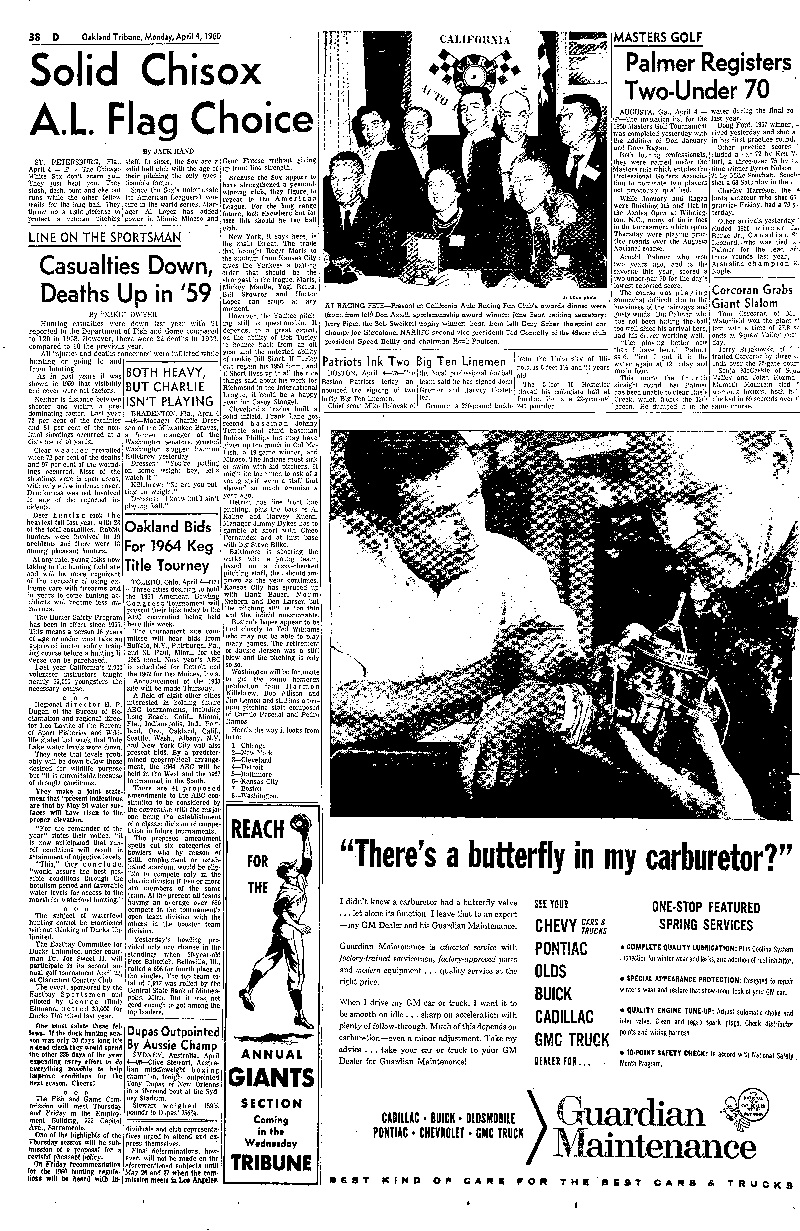
A page from the April 4, 1960, Oakland Tribune, featuring a group photo including Speed Reilly at the top of the page.

In the ’40s he did a few other things, like serve as an emcee at Northern California boxing matches and, beginning in spring 1946, organize and promote an inter-city high school basketball all star game with a Gilbert D. Eaton. After the event, the pair sent a thank-you note to the Oakland Tribune for help putting the game on. “The contest, say the two gentlemen, was a tremendous success and will be an annual event,” Trib sports editor Lee Dunbar wrote.

But by 1947, Speed was fully into the car racing scene. He had an almost-daily show, “Race Results and Sports with Speed Reilly,” on KLX radio, and in July 1948, new Tribune sports editor Alan Ward called Reilly a “tub thumper for auto races at the Oakland Stadium …”

By 1953, Reilly had re-styled his radio show on KLX and now called it, “Speedway News with Speed.” An April 1953 article in the Oakland Trib stated:

“The program features auto racing results from speedways and interviews with leading drivers and owners.

“Speed is an old hand at sports announcing. His racing broadcasts go back to the Old Neptune Beach days when he did the midget racing program from that speedway.

“He came to KLX in 1942 to broadcast fights and wrestling.”

Two years later, though, Reilly ran into a little medical issue. Reported the June 9, 1955, Tribune:

“Friends of Byron (Speed) Reilly, Oakland boxing writer, master of ceremonies and radio announcer, will be happy to learn the doughty warrior is recovering at the Merritt Hospital from an operation. He should be able to leave the hospital in a few days.

“For awhile [sic] Reilly, if not actually on the verge of a kayo, was groggy. Numerous pints of blood were needed to save him. He should be back in action in three or four weeks.

“Reilly writes columns for Pacific Coast boxing periodicals. For years Speed broadcast … the Oakland fights for KLX, the Tribune station.

“Reilly’s a good man at the microphone or in front of a typewriter.”

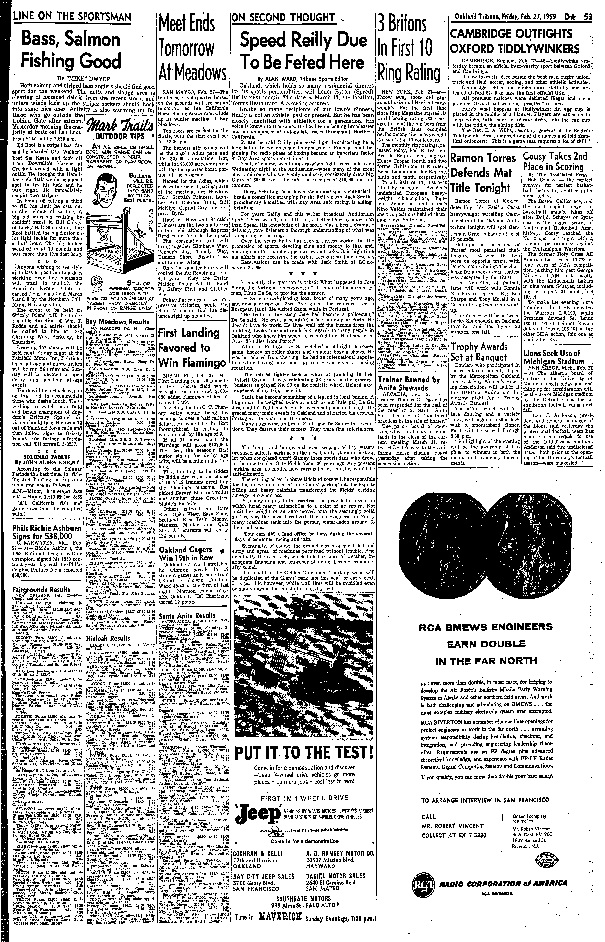
Speed also founded the California Auto Racing Fans Club, which rewarded him for his efforts in January 1959 with a “special trophy.”

0a367e1d9e464e82b4aa832367f16294_thumb

Two months later, Reilly was honored again, this time with a testimonial dinner at Topp’s Restaurant in Oakland. Reported the Tribune’s Ward:

“Unlike so many recipients of our town’s dinners, Reilly is not an athlete, past or present,” wrote Ward. “But he has been closely  identified with athletics for a generation. His voice is known to thousands. He has been a boxing broadcaster and an announcer at automobile races throughout Northern California.

“It can be said Reilly pioneered fight broadcasting here, long before television made its appearance. From a small beginning the radio phase of boxing became an important factor in Bay Area sports entertainment.

“That, of course, was in an era when fights were held each Wednesday night at the Auditorium — when many of the great ones, and some who were only mediocre, consistently drew big. Gates of $8,000 were the rule and receipts of $18,000 not uncommon. …

“For years Reilly and this writer broadcast Auditorium fights. There wasn’t, and still isn’t, a better blow-by-blow man than Speed. His knowledge of the sport, plus a brisk, dramatic delivery, gave listeners a thorough understanding of what was transpiring in the ring.

“Over the years Reilly has been a tireless worker for the promotion of sports, devoting time and money to that end, making countless public appearances and talks. It is high time his efforts are receiving the public recognition they deserve.”

Unfortunately, Speed’s wife, Vivian, died in October 1961. But he kept grinding it out work-wise, and early in 1962, he was named editor of the Referee, a boxing and wrestling magazine.

But on July 12, 1967, Byron “Speed” Reilly succumbed to a long illness at the age of 65 in his beloved Oakland. In the Haywood Daily Review a week later, columnist Al Auger, a frequent co-announcer with Reilly at car races, rhapsodized eloquent about the man who brought so much to the East Bay:

“For I don’t know how many years, it seemed that to attend an auto race in the Bay Area meant you would be hearing the rasping voice of Speed Reilly over the public address system.

“Byron ‘Speed’ Reilly was the voice of auto racing in the Bay Area. Last Wednesday, this voice was stilled at the age of 62 [sic] after a long illness.

“Thinking back to the years of my youth, I can vividly recall the many races at so many tracks, such as the old Oakland Speedway, Pachoco, Antioch, etc., where Speed held his verbal court.

“It wasn’t until much later when I got so deeply enmeshed in the sport that I realized that nowhere could you find anyone who knew more about the race cars, drivers, officials and traditions of racing than the little man sitting hunched over the microphone in the announcers booth.

“You also realized no one could love the sport more.

“Just a few months ago — at the indoor midget races, his frame wasted by the lingering sickness, a surgical mask to keep out the stinging fumes of rubber and fuel — ‘Speed’ would be at start-finish every night.

“Between races it was as if nothing had changed as he would talk about the drivers and their car’s performances. A good word here for a skillful display, a sharp, disdainful criticism for a poor job and it was very seldom he was wrong.

“‘Speed’ was a 100 percent sports-oriented man, through his public relations firm in Oakland and the hundreds of East Bay fights he covered with a blow-by-blow description on the radio.

“Outside his work, his pet was the California Auto Racing Fans Club (CARFC), which he founded as an outlet for the fans lo have a truly personal connection with the sport.

“Since that time, many similar clubs throughout the country have emulated ‘Speed’s’ brainchild.

“Having worked the business end of a mike at races, I know it is far from an easy task to bring a word-picture of an auto race to the spectators, one that keeps everyone knowledgely [sic] informed as to what’s going on lap after lap.

“Byron ‘Speed’ Reiily made it seem very easy.”

The (Kokomo) Devils inside, Part 2

Kokomo-Indiana-BartsCarStore

So by the end of May 1919, the Kokomo (Ind.) Black Devils — the “side project” of white, well-to-do clothier, athlete and socialite Charley Lyons — had lost arguably their two best and most popular players, George Shively (who is currently the focus of a grass-roots recognition movement in his hometown of Bloomington, Ind.) and “Circus” John Byers, both of whom had moved on to what they viewed as greener pastures.

But the resilient Devils forged ahead without the star pair, bravely facing opponents despite their personnel losses. And along the way they might have “caused” the death of Kokomo’s popular white minor-league team — or so claimed certain factions of the Hoosier State media.

The Kokomo Daily Tribune appears to have given somewhat decent coverage of the Devils’ activities. In the paper’s May 27, 1919, issue, the publication urged locals to attend “the big ball game to be held at Athletic park Friday, May 30, Frankfort vs. the Black Devils. If you want to see some real sport come and enjoy the game.”

However, those spectators who took up the Tribune’s advice were probably disappointed by an extra-inning, 9-7, loss by the Lyons crew. The news of the clash even made some minor waves in the big city of Indy, there the May 31, 1919, Indianapolis Star reported: “The McDougall Kitchen Cabinet team of Frankfort defeated the fast local colored Black Devils here … in the eleventh inning.” The Kokomo club gave up a whopping seven runs in the final, fatal inning.

In the same issue, the Indy Star announced that that city’s powerful professional club, the ABCs, were slated to cross bats with the Devils, a contest that concluded with a 14-10 loss of the visiting Lyons bunch.

The series of losses apparently prompted Lyons to again shake things up, stated the June 7 Kokomo Tribune, which reported that “[T]he Lyons Black Devils have reorganized and will play Frankfort, Ind., Saturday …”

The demon squad then engaged in another game on Independence Day, which prompted the Tribune to report giddily:

“Kokomo is not going to be entirely without a place to go on the ‘Glorious Fourth’ … Athletic park is to provide the setting for a rather notable baseball game. The erstwhile Black Devils colored squad have [sic] been shaken down and shaken up and new talent added until it has seen itself transmogrified into the Hoosier Giants. Charley Lyons with his well known characteristic of going the whole route with anything he undertakes whether it be taming a Ford or building up a ball team, has paired neither pains nor expense to make the Hoosier Giants the best semi-pro aggregation of talent in the state of Indiana. The confidence that he and his dusky players have in their ability is best testified to by the formidable club they are scheduled to cross bats with here on the Fourth — the celebrated Greys of Peru.”

The paper then stated that after that encounter, the Giants would clash with Kokomo’s minor-league white team, the Red Sox, “and from then on much will be heard from the colored team, very likely, until the close of the season.”

With that impending duel with the Sox, thus began the apparent, and probably latent and subtle, despair racism in north central Indiana, a state that in many ways was Southern in nature in terms of race relations and attitudes.

The July 2, 1919, Middlebury (Ind.) Independent blared in a headline of the coming of “The Famous Coons of Great Renown” in anticipation of the arrival of another black team in the state, the Elkhart Giants. The Middlebury article refers to an advertisement flyer published to hype up the Elkhart squad that gushes about the comedy routines pursued by the Elkharts and compares that aggregation to the Black Devils in that respect,” which seems to subtly reinforce the minstrelsy view of African-American clubs.

On July 3, the Kokomo Tribune again plays up the city’s “colored” team’s Independence Day encounter with the Peru Greys, a clash, the paper asserted, “which doubtless will be a big drawing card, since it will be the first local appearance of Charley Lyons’ reorganized colored baseball team which has picked for its debut here one of the very fastest baseball clubs in the state against which to [showcase] its ability and diamond prowess — the fast Peru Greys.”

Added the paper:

“Incidentally, Mr. Lyons announced today that he had decided to retain the original name of ‘Black Devils’ for the clash, they having evinced demonic qualities which are said to be so much more than ‘gigantic’ that he concluded the appellation of ‘Hoosier Giants’ was inadequately descriptive.”

However, alack and alas, the Devils couldn’t live up to such hype, losing to the Greys, 7-1. In reporting the defeat, the Tribune used terminology that wasn’t exactly progressive but was also somewhat sympathetic:

“The Black Devils were black enough but not sufficiently devilish in their Fourth of July game at Athletic park.

“But they have a pretty good alibi. Three of their star performers were lured to the cool recesses adjacent to Lake Manitou …

“Thus decimated, the Devils proved to be easy picking for the swift and classy Peru Greys …

“Which was too bad, in a way, because one of the best crowds that has filled the grandstand and bleachers of Athletic park this season turned out with the expectation of seeing a real for sure ball game, and disappointing them was not the least thing for the sport that could have happened. …

“That the colored team can play a high grade of baseball even from their poor showing Friday. Without reflecting upon the ability of the substitutes who were pressed into service at the last moment, it was the absence of the trio of talent mentioned that made the contest one-sided. The team-work that comes from through practice and playing together can not be found in a pick-up squad, and team-work means a victory half-won.”

Then came big “disaster” for Kokomo — the city’s supposedly beloved white minor-league squad, the Red Sox, folded, although they did it in a blaze of glory by, in their final game, defeating the very team that many pundits felt somehow led to the Sox’ demise.

Leading the way in this thinly veiled racist lamenting was the Logansport (Ind.) Pharos-Reporter, which alleged that somehow the relatively positive and substantive coverage by the Kokomo paper of the Devils killed the Red Sox:

“But now, outside towns and red-blooded lovers of the national pastime what has transpired to shove the once fast Red Sox into oblivion, and in its stead a ratter [sic] colored club to cavort on the Athletics field where once the proud and game Red Sox were the idols of Kokomo fans.

“Why, you ask? Well here’s ‘why!’

“The Kokomo papers for what reason is quite beyond us withdrew their support of the Kokomo Red Sox a couple of years ago, it is stated. … What we do know they have failed to support one of the best-drawing semi-pro clubs in Indiana, which was an asset to Kokomo in more ways than one.”

The article then rambles about how the support of local media is crucial to buoying and encourage support for baseball teams among the town populace. Those assertions are then followed by this description of the Tribune’s allegedly “biased” coverage of the Devils-Sox game:

“But the Kokomo papers seem to be blinded by all this: they give a second ratter [sic] outfit more space in a publicity way than they have accorded the Red Sox in years.

“In the half-column write-up of the Kokomo Black Devils, the scribe who wrote it was either misinformed or wasn’t handling the truth with much care …”

The writer, who only goes by the pseudonym “Tutes,” then again calls the Devils a “second-rater” club and somehow asserts that the Tribune had adopted the Black Devils as that paper’s squad — “their own team” — and generously excused what the Logansport publication called a poor showing by the Devils. In essence, “Tutes” claims, the Tribune was hugely biased in favor of a lousy “colored” team.

Oddly enough, however, the Kokomo Tribune’s subsequent coverage of the Black Devils trailed off immensely after that. Several possible reasons for this declining editorial trend exist. Perhaps the Kokomo publication was stunned and otherwise negatively affected by allegations of bias toward a black team and sheepishly dropped any perceived support of the Devils. Or maybe the Devils themselves fell apart financially and disbanded.

Any cause isn’t clear. But clarity is unfortunately something that is frequently lacking when examining history.
Fortunately, there is much more history to explore when it comes to Kokomo African-American baseball. While this series of articles on the Black Devils was originally spun off of the recent developments involving the unmarked grave of Negro Leagues star George Shively in Bloomington, Ind., once one delves into the backstory behind the Kokomo squad with which Shively briefly associated himself, a rich saga unfolds.

And next up in the telling of that saga is the life and legend of the Devils’ eccentric white owner, Charley Lyons …

Winfield Welch and the Pullman Porters

PullmanPorter

A Pullman porter

In this next installment of the saga of Napoleonville, La., native Winfield Welch — who eventually became one of the finest managers in big-time Negro League ball with the Birmingham Black Barons in the 1940s — I’ll look at his early years in New Orleans while playing for an aggregation of local Pullman porters, especially in coverage of the laborers’ teams in the local African-American paper.

The cultural and socioeconomic dynamics of Pullman porter society make up one of the most fascinating and crucial chapters in the bootstrapping, self-uplifting development and advancing of the African-American condition in the South. For our purposes, it’s important to note that athletic clubs often sprang from the porter society as a means for socializing, recreation and bonding experience among the black workers who toiled at the profession.

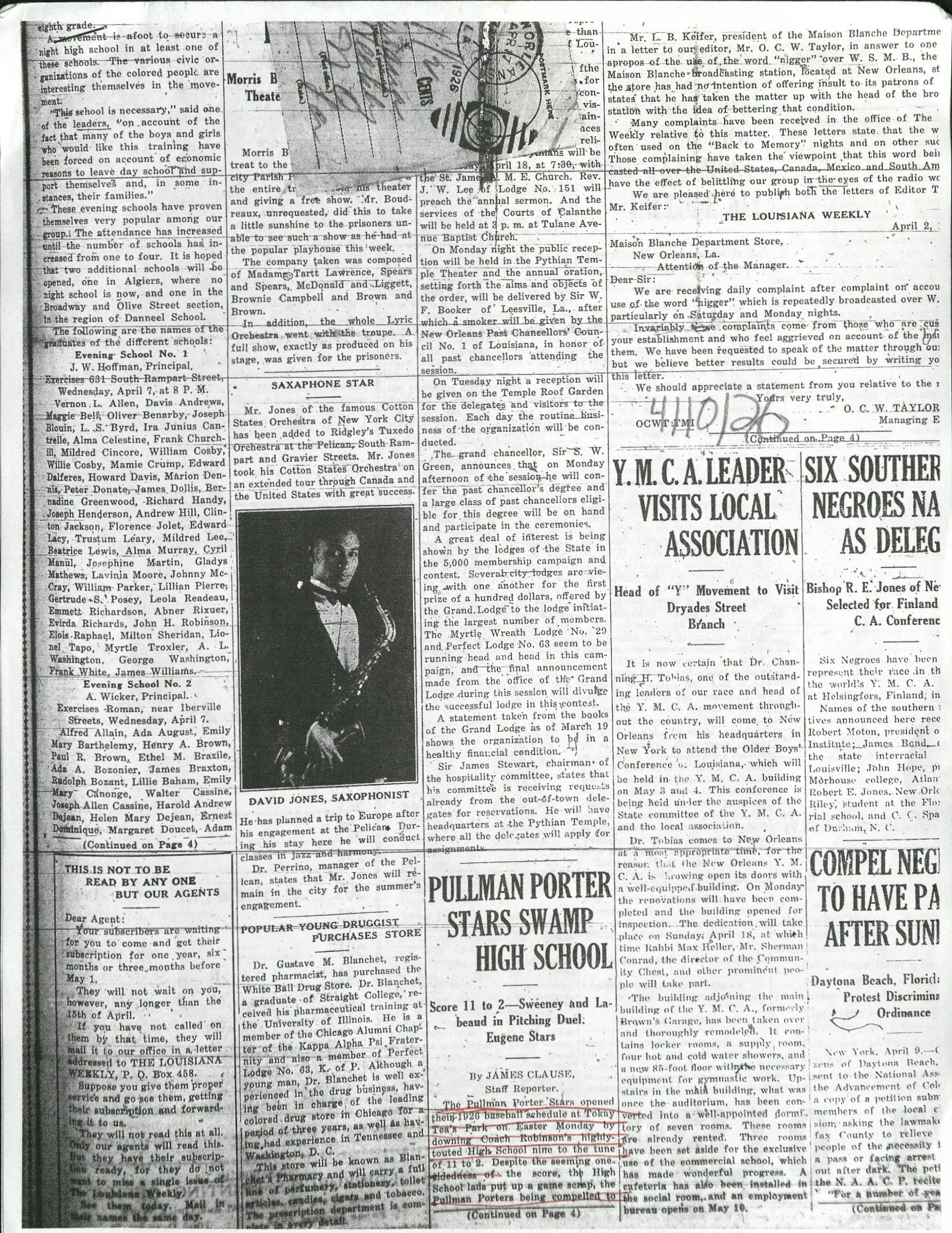
The Louisiana Weekly (hereafter called LW) started publishing in 1925, and an article on the front page of the April 10, 1926, issue announces that the local team of Pullman porters — African Americans who basically worked as butlers for white patrons on the Pullman rail lines — defeated the McDonogh High School nine, 11-2, at Tokay Tea park, a ball field located in the developing Broadmoor neighborhood. The squad of porters apparently went by the moniker of the Pullman Porter Stars.

KIC Imageee

Playing for the porters? “Welsh, l.f.” Given that a) the New Orleans media misspelled Winfield’s name pretty much the whole time he was active in baseball in NOLA; and b) the 1930 federal Census lists Welch as a Pullman porter in the Big Easy, that’s in all likelihood Winfield Welch tasting some of his first baseball action — or at least first action that was documented — in the big city.

The 1926 LW article states:

“Under the direction of Coach L. Thomas and Mr. J. Wolf, the organizers of the Pullman Stars, plans have been perfected to have the strong Pullman nine tour the West and East. Mr. Wolf has been in touch with Pullman headquarters in Chicago and the officials are furnishing the local team with a private Pullman car, with all necessary equipment, from upper and lower berths to sumptuous drawing rooms. Yes, the Pullman Company is proud of its hard-hitting colored team, and this great corporation is showing it to the world. The Stars have arranged important games at Lafayette, Houston, San Antonio and Dallas. The Eastern invasion will include Atlanta, Montgomery, Jacksonville and cities along the Atlantic seaboard.”

Less than a year later, the LW reported that Winfield’s brother, Arthur, had moved to New Orleans from Napoleonville with his wife, which seemingly would help Winfield feel more at home in the Crescent City.

In 1928, Winfield Welch was still suiting up for the Pullman squad, and the Aug. 25, 1928, LW — which was gradually increasing its sports coverage as the 1920s progressed — announced that the porters had pasted an aggregation from Port Arthur three games in a row, 2-0, 13-5 and 6-0, all of them held in NOLA’s Heinemann Park.

Welch — name spelled correctly — is mentioned once, toward the end of the article, when the anonymous reporter appears to state that Welch took the mound and held the Port Arthurs hitless in the third contest. (However, lineups aren’t listed, so Winfield might have been making pretty catches in his regular outfield slot.)

Another notable mention in the article is that Robert “Black Diamond” Pipkins pitched the second game for the Pullmans; Pipkins thus was apparently near the start of a long, colorful career in blackball, both locally and nationally. I hope to one day examine Black Diamond up close. One day …

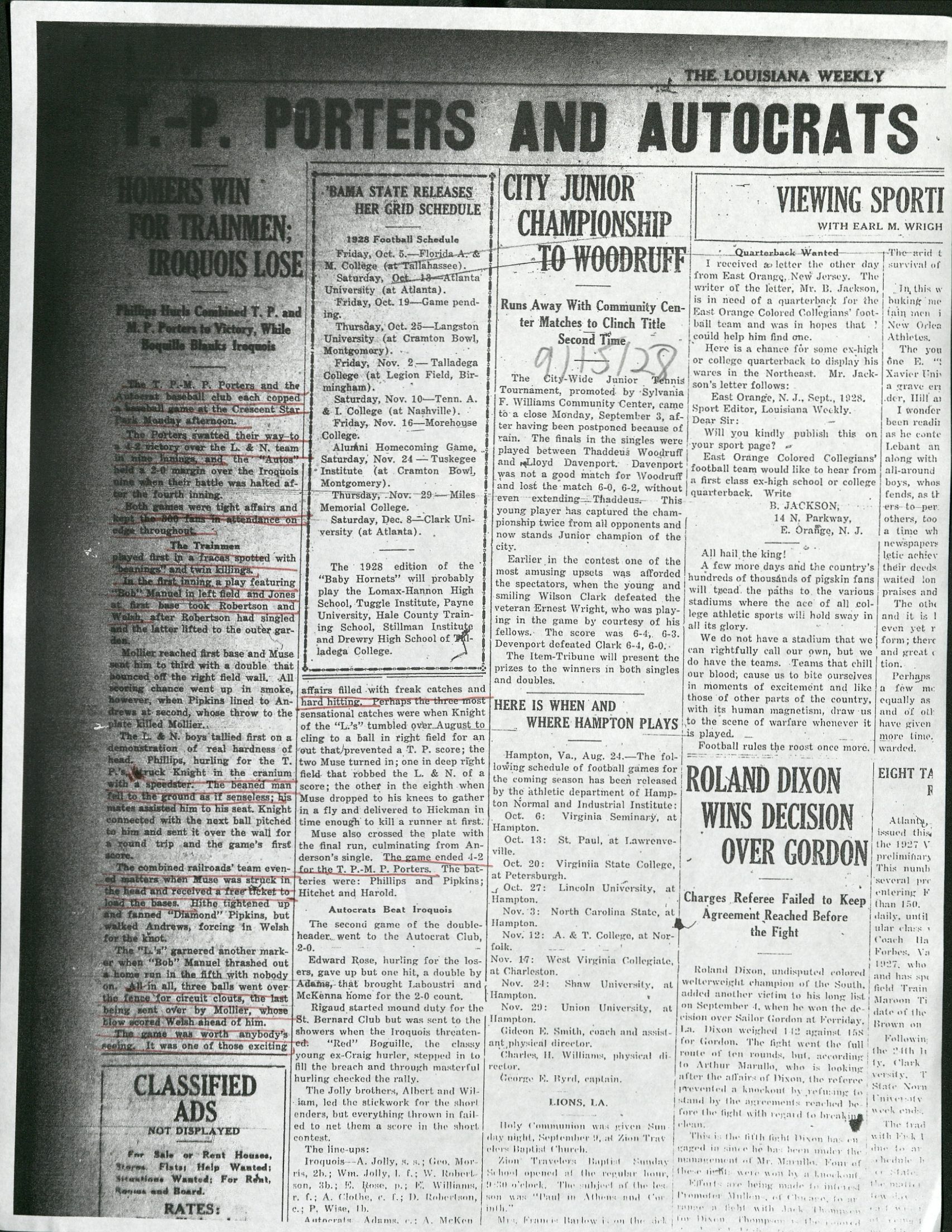
Anyway, the Pullman Stars wasted no time getting back in action. Just three weeks later, reported the LW, the porters used the long ball to send a team of Louisville & Nashville railroad line workers to a 4-2 defeat — or, as the LW said, “swatted their way” to victory — at Crescent Star Park. The paper reports the porter team as the “T.P.-M.P. Porters,” and the clash was part of a double bill, with the second contest coming between the Autocrat and Iroquois teams.

“Both games were tight affairs and kept the 500 fans in attendance on edge throughout,” stated the Weekly. “The Trainmen played first in a fracas spotted with ‘beanings’ and twin killings.”

The article mentions “Welsh” is mentioned twice, once describing a long fly out by him to centerfield, the other referring to a run he scored on a home run by a teammate named Mollier.

“The game was worth anybody’s seeing,” the LW reported. “It was one of those exciting affairs filled with freak catches and hard hitting.”

KIC Imagee

The next mention of Winfield Welch/”Welsh” in the LW comes in April 1929, when he’s no longer with the Pullmans but instead hooked on with the Algiers Giants, a longtime semipro team in a neighborhood across the river from N’Awlins proper. In fact, Welch would later return to the Giants, but this time as the manager. However, his trip back to the Westbank, as the “other side” of the river is called, took a lot of twist and turns along the way. But, as per usual, that’s for another post, another story …

Incidentally, the hardball played by New Orleans Pullman porters was actually mentioned occasionally in the mainstream white press in the city, especially in the Times-Picayune in late summer 1924. The Aug. 24, 1924, T-P reported in a headline, “Pullman Porters to Play Baseball,” almost as if the concept of “colored” men playing the national pastime was quizzical. Followed was a one-paragraph brief:

“Three days of baseball will be played at Bissant’s Park … by teams composed of colored Pullman porters. The Pullman Porter Stars will play the Pullman Porter Wonders on Saturday afternoon, while the Pullman Porter Stars play the Pullman Porters of San Antonio … on Sunday afternoon. On Labor Day, the Pullman Porter Stars will tackle the Houston … Pullman Porters. There will be music for dancing after each game.”

The white paper further talked up the event — albeit in a short, two-paragraph story — a week later, when it claimed:

“It is stated that the colored visitors from Texas have one of the best teams in that section of the country and the winner of today’s game will be the champions among the Pullman Porters of the South.”

The contest between the local Pullmans and the San Antonio club, the paper said, “is attracting much attention among the followers of this class of semi-pro baseball.”

Unfortunately, things didn’t go well for the local porter bunch — the Stars lost the first game to the Texans, although they managed to end up with a 6-6, extra-inning tie in the following clash. The locals then tied the Houston Pullmans 7-7 in a contest ended by rain and followed up with another shortened contest, this one called in the third inning because of darkness.

The local Pullmans again hit the field in mid-October 1924, reported the T-P, when the Pullman Porter All-Stars crossed bats with a squad from the Illinois Central line in the centerpiece of an annual “field day” at Bissant Park that also included other games and pastimes. Of the baseball game, the T-P said:

“These two baseball teams are among the strongest of the colored semi-pros and some excellent sport should result when they face each other.”

This time, the local porters fared much better, clobbering the Illinois Centrals 14-4.

The Times-Picayune continued to sporadically give (a minimal amount of) ink to the Pullmans, such as Sept. 7, 1925, article describing ever so briefly how another local semipro club dubbed the New Orleans All-Stars downed the porters 8-5 in the second game of a doubleheader at Bissant’s Park.

One thing that really needs to be explored in depth is the connection to and involvement in athletics, especially baseball, in the lives and society of Pullman porters, who did a thankless job that, however, ended up giving rise to a large portion of a burgeoning black middle class in the early 20th century.

For more information on the socioeconomic developments and improvements to African-American life that arose from porter culture — as well as all the sacrifices that were made and indignities that were suffered along the way — here and here and here are some books to check out.

The Iron Claw, Part 1

It was apparently a rather ignominious second half of life for someone who, for a handful of all-too-brief years, established himself as one of the most … unique shooting stars in the New Orleans Negro Leagues firmament.

Edgar Populus, in the early 1930s, was known as “Iron Claw,” most likely because he had, well, just one arm. Let’s just say I’d love to somehow, someway dig up a picture of this guy. At the time, he was the Depression-era equivalent of Jim Abbott, a pitcher of considerable promise that manifested itself early but seemingly burned out as quickly as it arose for public viewing.

In fact, Iron Claw was still a mere teenager when he burst onto the NOLA blackball scene in 1930 and, more fantastically, 1931, when he reeled off a string of dominating shutouts in the late spring and early summer.

His seemingly inexplicable prowess on the mound — dude had one arm! — enraptured the local African-American press and sporting public. Take this from the May 30, 1931, issue of the Louisiana Weekly in its coverage of a clash between two local sandlot teams:

“Thousands of fans stood spellbound Sunday afternoon while Edgar ‘Iron Claw’ Populus stood the Corpus Christi Giants up with two scattered hits and shut them out 8 to 0, for the Southern Stars on the Corpus Christi grounds.

“The one-armed pitcher gave up three walks and contributed to his team’s battery movements by clouting a triple. …”

A triple?!?!? The pitcher lacking an appendage crushed a three-bagger! That. Is. Insane.

Unfortunately, 1931 seems to have proven the zenith of Iron Claw’s career; he is mentioned in fewer and fewer media reports after that, and it looks like he was out of the game by the mid-1930s.

And it was all downhill from there — on a very steep hill. Between 1940 and 1961, Populus was arrested on at least four separate occasions on charges of running gambling handbooks out of bars. In other words, he was a horse bookie (which makes somewhat sense given that New Orleans is home to the Fair Grounds, a fairly substantive and nationally known racing track).

Then, in 1974, the bar at which he was working (apparently for his non-criminal job as a bartender), Cuccia’s on Allen Street, was robbed by a pair of gun-toting knuckleheads who made off with nearly $13,000 worth of cash, jewelry and a $5,000 cashier’s check that belonged to … Edgar Populus. He also had more than $1,600 in cash swiped.

And 16 years before that — in between gambling busts — Edgar’s mother, Antonia, and his brother, Adam (who also pitched a bit on the sandlots way back in the day), died within 10 months of each other in 1958. Edgar’s father, Antoine, passed away in 1973.

But at least all three of them — as well as Edgar and Adam’s grandfather, Lucien Populus Sr. — were afford at least some recognition in death, coming in the form of standard obituaries in the New Orleans Times-Picayune.

When the once-great Iron Claw died in August 1983 (I have yet to pin down an exact date of death), his passing wasn’t mentioned in the T-P or Louisiana Weekly at all. But with apparently no children and all of his immediate family gone, there might have been nobody around to take care of details after Edgar died. That would indeed be tragic for a man who already faced life with a disability.

Edgar “Iron Claw” Populus, though, was a New Orleanian through and through. His family appears to have gone back numerous generations in NOLA as Creoles — mixed-raced southern Lousianians — who, as big city residents, weren’t shackled by slavery or sharecropping like so many of their brethren in the state’s rural areas.

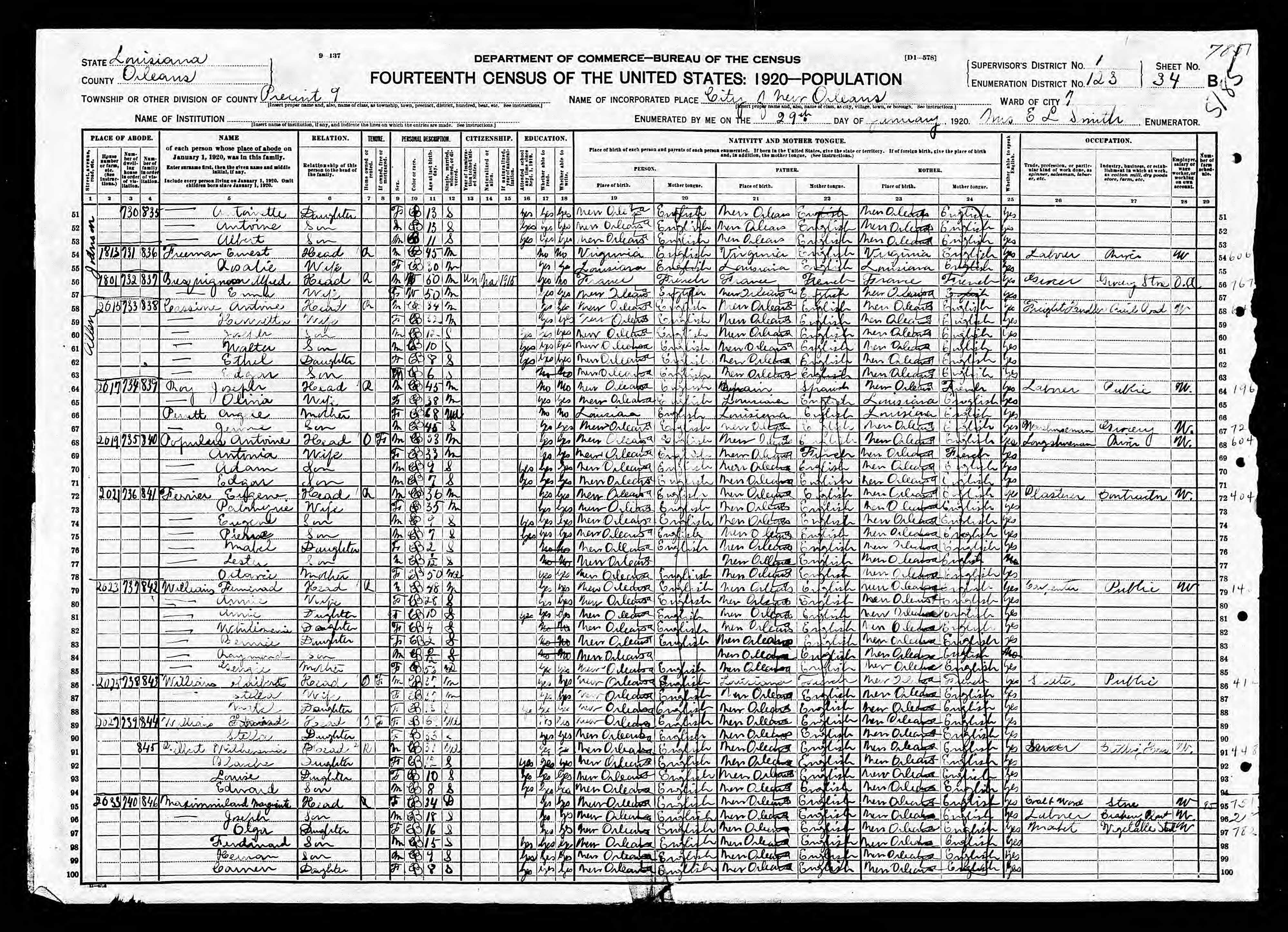
4231232_00459

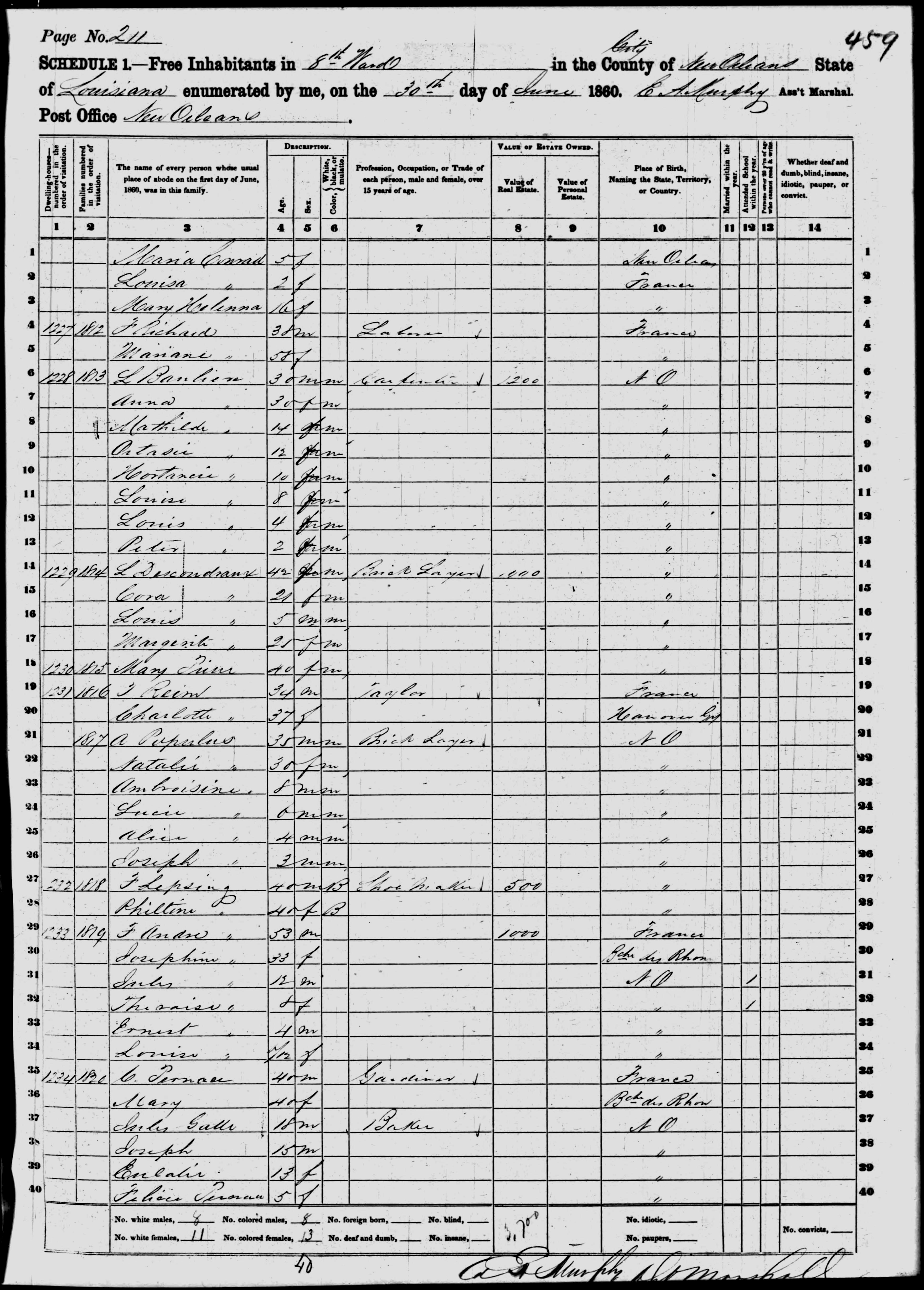
Page of the 1860 Census that shows Edgar Populus’ ancestors

I’ve been able to, as time permitted, trace Edgar’s family back to the 1860 Census in New Orleans and the respective families headed by two of his great-grandfathers. By 1900, the two strains of Iron Claw’s family were living within a block or two of each other, the Populuses on St. Bernard Avenue and the Oliviers on New Orleans Street.

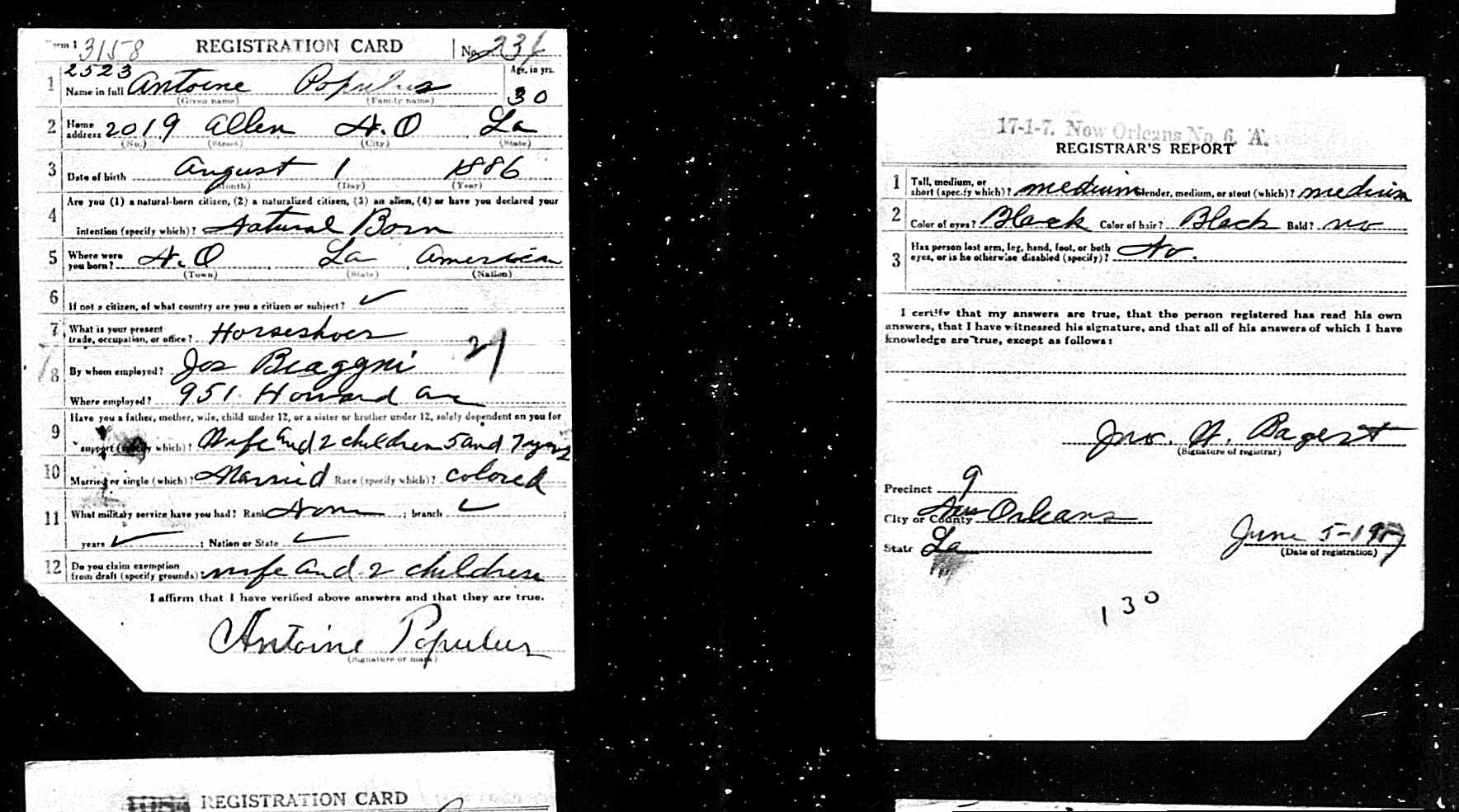
In fact, the two fams are listed on the same 1900 Census sheet, in the city’s Ninth Precinct. The Populus clan was headed by the aforementioned Lucien Sr. (né circa 1852), a bricklayer, and his wife, Mary (born roughly 1858). The couple rented their home and had, at the time, a whopping eight offspring living with them, including 14-year-old Antoine, Edgar and Adam’s father. According the Antoine’s WWI draft card, he was born Aug. 1, 1886, a date that’s backed up by Social Security records.

Just around the corner, Edmund Olivier owned his own home and worked as — in an emerging familial theme — a bricklayer. (In fact, Lucien Populus’ father was also a brick mason.) Edmund’s birthdate is listed as unknown, although in previous federal tallies his birth year is pegged in the early- to mid-1850s, and multiple death records state it as 1855.

In 1900, Edmund (or Edmond) Olivier and his wife, Louise (born 1853), have eight kids, just like the Populuses around the corner. One of them is 14-year-old Antonia Oliver. New Orleans birth records have Antonia coming into the world on June 13, 1886. (That birth record, though, lists her full name as Marie Antonia Olivier, and it also misnames her father as Edward, a fact that causes some genealogical confusion given that Edmund, Antonia’s dad, in fact had a brother named Edward.)

Because of the close geographical proximity of the two families, it’s probably no surprise that Antoine and Antonia hooked up. The pair were married Aug. 28, 1908, and settled into wedded life in the city’s Sixth Precinct, Antoine working as a blacksmith and Antonia as an at-home dressmaker. Antoine later took up as a longshoreman, a very common job for Creoles and blacks in NOLA at the time.

4300976_00562

005152057_00310

Along came Adam in 1911, followed by Edgar two years later, although multiple records list the future “Iron Claw” with a birthdate of April 28, 1912. Then, in the 1930 Census, both sons are still living with their folks, but by now both of them, still teens, were toiling as plasterers, while Antoine is dubbed a “laborer.”

‘Round about then is when the baseball careers of both Populus boys got off the ground … But that’s for Part 2 of the Iron Claw saga …