One final Redding plea!

redding_dick_1

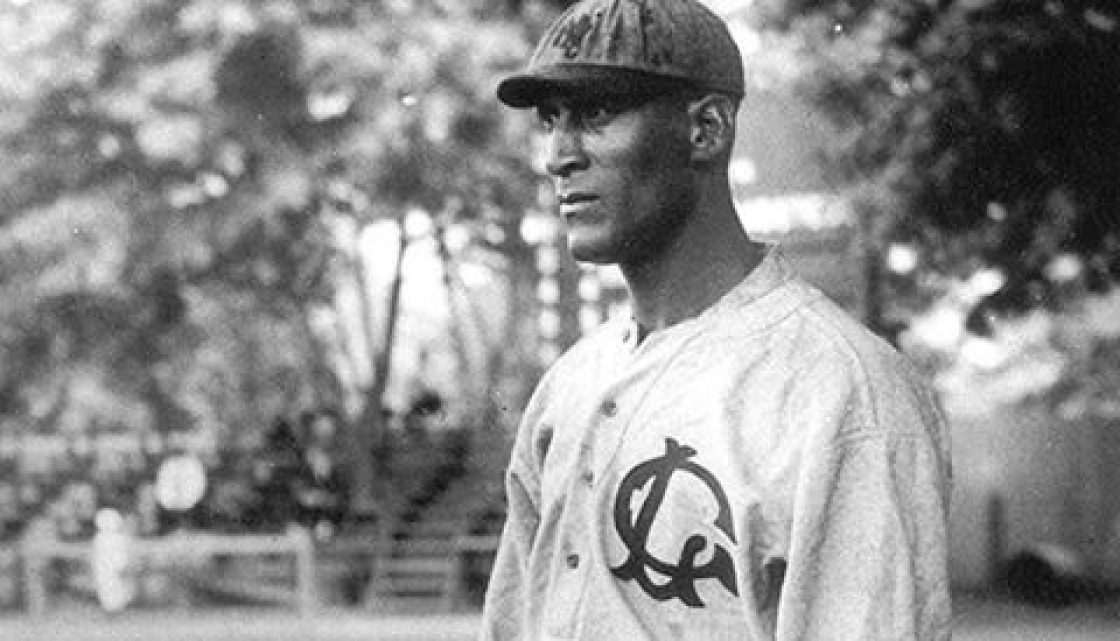
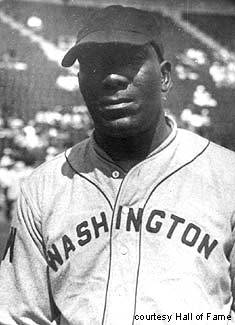
OK, all, it’s crunch time for Atlanta native Cannonball Dick Redding, a Negro Leagues hurler extraordinaire who, some experts feel, was the equal of Hall of Famers Cyclone Joe Williams and Satchel Paige.

I just got assignment on the Negro League pitcher with the blazing fastball who mysteriously died in a Long Island mental asylum in 1948. The article will be for Long Island Pulse magazine, and in one final attempt to find ANYONE who might know exactly what happened to Mr. Redding — in particular, why he was committed to Pilgrim State Hospital and how he died — I’m sending out this post.

I’m especially looking for anyone who might be a relative or descendant of Cannonball in Atlanta who has any knowledge of this, or possibly anyone who worked at the hospital (or any descendants of such employees) who might have any idea what happened.

My article is due next Friday, Aug. 15, so if there’s anyone in the woodwork out there, please comment on this page or, if you want more privacy, e-mail me at rwhirty218@yahoo.com. Many thanks!

Hamtramck Stadium dedication

o_18pmndavhheu12171gl26lp19atv

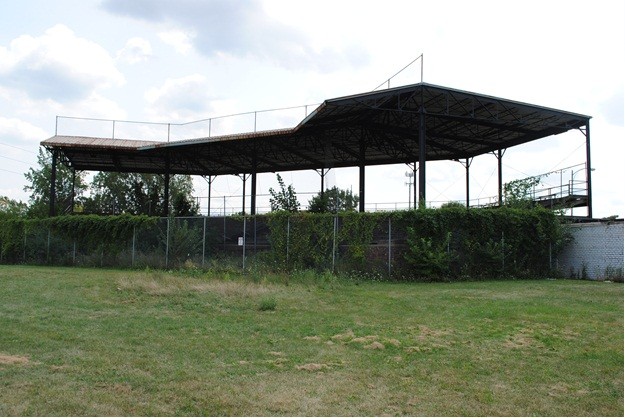
For those of you who either live in the Detroit area and/or are going to the SABR Jerry Malloy Conference in Motown next week, if you can, check out the dedication of an historical marker at Hamtramck Stadium, one of the few remaining venues in the country that actually hosted Negro Leagues games. Check out this link (it’s where the above photo came from):

http://www.hamtramckstadium.org/

While I’ll be going to the Malloy conference, my flight to Detroit doesn’t get in until after the ceremony Thursday, so I regretfully won’t be able to make it. However, I’m sure people will be taking pictures — and hopefully it will garner media coverage as well — so I’ll be sure to put up lots of photos and links from the event after it happens. Be there if you can!

Yellowhorse Morris, Van Dyke House of David mound ace

harold_morris

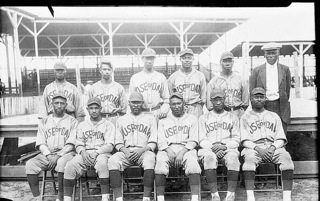
Harold “Yellowhorse” Morris, via Seamheads

In the continuation of a theme from my previous post on the Van Dyke Colored House of David, I’m finding even more examples of how the African-American baseball world was at both a vast universe and a small world. In terms of opportunities to play for all-black teams, there were many, many, and at several levels — pro, semi-pro, amateur, industrial, etc.

But in terms of how many pre-integration African-American players, managers and other figures frequently crossed paths, they formed a complex yet fascinating tapestry of black, and baseball, heritage.

Before I go game by game through the Van Dykes’ landmark 1934 season, I’ll look at a few of the players on the team. I’ve written about aggregation owner/promoter Harry Crump a couple times before, and, frankly, the more I dig, the more discrepancies I discover about Mr. Crump. There could very well be two different Harry Crumps who lived in or near Sioux City, one originally from Missouri and one born in Kentucky.

In addition, it appears that the Harry Crump of the Van Dykes, whichever Harry it was, ended up in Minneapolis, where he brought his franchise and seems to have settled and had a blossoming family. But Mr. Crump will be the subject of a future post.

Now, the players … I’ve been able to nail down three complete names from the 1934 Van Dyke team — pitcher Harold “Yellowhorse” Morris, Sandy Thompson and Jim Truesdale. I’ve uncovered a whole bunch of last names without first monikers; sports journalism of the 1930s frequently just listed last names in game reports, unfortunately.

For now, first up is Yellowhorse Morris, who definitely crossed paths with all kinds of Negro League figures I’ve touched on or written about before. Right away, I’ll note that I’m not sure how he got his nickname, but I haven’t consulted various books about him yet. It goes without saying that it sounds much like a Native-American appellation.

We’ll start in 1924, when Morris — who was born in February 1900 in Oakland, Calif., according to Seamheads, and I’ve been able to confirm his roots in the Bay Area — first started cropping up in newspapers. The April 19 Pittsburgh Courier states that “Harold Morris (Yellowhorse), said to be the find of the year, who hails California as his home state, arrived” the the Kansas City Monarchs camp), weighing 200 pounds, and still a youngster, having just passed the voting age, Morriss’ [sic] actions remind one of Bill Gatewood.”

The Sept. 20, 1924, Pittsburgh Courier then lists him as a pitcher for the “East-West Classic” (in reality the ad hoc Negro League World Series) for the Monarchs, and several other sources assert that he did pitch for Kaycee at one point or another in his career. It’s with the Monarchs in 1924 that his fate intersected with some of the all-time greats, including Jose Mendez, Bullet Rogan, Newt Allen, Walter Moore and Frank Duncan. The opposing squad, Philly’s Hilldale Daisies, was also, of course, stocked with legends, like Judy Johnson, Biz Mackey and Louis Santop.

But Morris didn’t stay with the Kaycees very long — in 1925 he signed up with the Detroit Stars, becoming one of the aces on the Motowners staff for fabulous manager Bingo DeMoss. In late June of that year, for example, Yellowhorse presided over a 7-2 thrashing of Indianapolis. The Pittsburgh Courier stated that Morris “pitched a masterly, game, allowing but six scattered hits, and at no stage of the game was he in danger.”

Later in the ’25 season, Morris also saw duty as a reliever. He appears to have stayed with the Stars into the 1928 season; in early August 1927, for example, he dominated the Memphis Red Sox in the first of a four-game series in Memphis, winning 6-1 and giving up only five hits.

By March 1928, Yellowhorse Morris was apparently being viewed as a major comer in Negro League baseball. Asserted the March 15, 1928, Philadelphia Tribune:

“Yellow Horse Morris, crack pitching star for the Detroit Stars, is going to have a great season according to reports received from the coast. Morris has developed into one of the game’s real stars.”

In September 1928, a passenger ship register has Morris traveling from Honolulu to L.A., but the reasons are unclear.

After that, Yellowhouse seems to have marked a precipitous decline. By 1930, he was relegated to cleanup mound duty for the Chicago American Giants, relieving — and here’s more meeting with legends by Morris — future Hall of Famer Bill Foster, among others.

After that, Morris’ tenure in the big time was just about finished. He cropped up again in 1934 with … the Van Dyke Colored House of David in Sioux City, where he appears to have been the ace of the pitching staff. However, a semipro touring team based in small-city Iowa with largely fake beards could be considered somewhat of a step down from the great Kansas City Monarchs and Chicago American Giants.

However, both Morris and Truesdale were apparently booted from the Van Dyke squad in late summer, before the Davids launched a massive barnstorming tour of the West Coast. Said the American Negro Press in September after a 9-3 HoD victory over an Oakland club team: “Dean twirled for the winners, being burdened with most of the mound duty since Harold ‘Yellowhorse’ Morris and Jim Truesdale were cut loose from the team just before reaching California.” A reason for the summary cutting isn’t given.

Morris seems to have taken that disappointment in stride, returning to his native Bay Area and immersing himself in the local semipro scene, beginning with — here’s that whole crossing paths thing again — Byron “Speed” Reilly’s Berkeley International League, when he pitched for Reilly’s squad, the Athens Elks.

Skip ahead about nine years, and we have Morris putting together a black all star aggregation starring none other than Satchel Paige on the mound. The squad clashed with another all star squad, this one led by the equally fantastic Bob Feller, where they in Oakland’s PCL stadium.

The next season, Yellowhorse Morris encounters … Jesse Owens and Abe Saperstein! And the entire rest of the West Coast Negro Baseball League, which I’ve written about numerous times, including here and here, as well as in all of my scribing about NOLA’s own Herb Simpson, who played for Seattle’s WCNBL squad.

Morris co-owned the San Francisco Seal Lions. After the Lions swept the Los Angeles White Sox in a late May twin will, the Cleveland Call and Post (probably using a wire service) reported:

“The efficient manner in which the San Francisco club is being run by Co-Owners Hal King, San Francisco sportsman, and Hal (‘Yellowhorse’) Morris, the latter a sensational pitcher in organized Negro leagues in the east for a number of years, and manager Cleo (‘Baldy’) Benson, is proving an incentive for the other five clubs in the circuit.”

But by June the Lions’ momentum was sputtering, and they found themselves in third place with a mark of 10-12, while the Oakland Larks were way out front with a record of 14-3. However, the Call and Post was still optimistic about Yellowhorse’s team, asserting that “it seems certain a ding dong second half is in the offing” partially because “San Francisco is improving right along …”

Unfortunately, the WCNBL didn’t last the summer, and the Sea Lions reverted to a touring team. But Morris was back in the limelight a few years later, when he morphed into a talent scout for the PCL San Francisco Seals, who were one of four teams to snap up young black stars in early spring 1945. The Seals inked fastball artist Percy Fisher, whom the Courier tabbed “a ten-strike discovery,” with “Yellowhorse Morris, celebrated Negro National League hurler of yore, recommend[ing] Fisher to the Seals.

Morris’ hardball acumen and experience was quickly recognized by bigwigs in the majors, and in April 1949 the Cubs inked Yellowhorse to a scouting deal. Stated the ANP under the headline, “Chicago Cubs Get Wise, Hire Morris as Scout”:

“Most recent development reported from the Cubs’ front office is the signing of Yellowhorse Morris, ex-pitcher for the Chicago American Giants, Detroit Stars and Kansas City Monarchs”

“Morris, who works out of San Francisco, knows baseball from way back, having played with both Negro and white teams and mixed aggregations.

“Old Yellowhorse played with the Monarchs when they won the first Negro World series, later joined the Detroit Stars and chalked up 26 wins against four defeats to top the circuit.

“Yellowhorse never was a man to let moss grow between his cleats. He pulled out of the motor city and did a two-year stint with the Chicago American Giants, but even Chicago couldn’t hold him.”

The article gives the impression that after leaving the Chicago men, he went on to bigger and better things. That could be a matter of opinion. According to the article, he spent two years “on a mixed team in Wildrose, N.D., and the following two barnstorming with the Gilkerson Union Giants. He called it quits after another year with the Negro House of David nine, named the Van Dykes.

“Since then,” the paper continued, “he made quite a name for himself as a talent scout and developer of raw material in the Bay area. And that’s where the Cubs heard about him.”

In June, the Chicago defender claimed Yellowhorse had jumped to the South Side of the Windy City, scouting for the White Sox? Who was by his side? None other than John Donaldson, the near-mythical king of black baseball in Minnesota and the rest of the upper Midwest, as well as the shining star of the famed All Nations aggregation.

By this time, Morris was also receiving ink in the mainstream press, albeit two decades past his prime as a player. In August 1949, Oakland Tribune sports columnist Emmons Byrne asserted that Morris went through a training camp with a Salt Lake City minor league team: “Chief Yellowhorse had a cup of coffee with the old Salt Lake club” but was released.

Emmons cited Morris as an example of the top quality talent organized baseball on the West Coast missed out on because of segregation, calling him a “top flight flinger.”

Emmons claims that began his pro career in Oakland with hotel owner Steve Pierce’s Colored Giants of West Oakland. When Pierce picked up stakes and bought the Detroit stars, the columnist went one, “Yellowhorse joined him.”

According to Emmons, at the time (1949) Morris was managing a pro team in Florida, “the name of which escapes me.”

After that, Morris drops of the radar and fades into history. I’d love to find out exactly why he was axed by the Van Dykes — or, if maybe was the case, he just bolted, figuring his playing career had fizzled out.

We might never know unless we find a descendant or relative. Which, of course, is a huge recurring theme among Negro League researchers … “If we could only find someone living …”

Next up for the Van Dyke Colored House of David of Sioux City, Iowa: Sandy Thompson, who shows up in 1935 in … New Orleans! I’ll tell about it soon …
 

The Van Dyke Colored House of David

download

(Photo courtesy of Craig Lewis)

One of the facets of African-American baseball history that’s always fascinated me is how that there were so many streams and centers of blackball activity sprouting up, thriving and traveling across the country, and how so many of those seemingly individual strands of the American pastime actually intertwined and co-mingled.

Exactly that happened on Sept. 9, 1934 — nearly 80 years ago — when the Iowa-based Van Dyke Colored House of David launched their first West Coast swing when they played the Athens Elks of the Berkeley Colored League in San Francisco. Wrote the American Negro Press in late July 1934:

“The Van Dyke Colored House of David baseball team will make their debut in this section on September 9, when they meet Byron (Speed) Reiley’s [sic] Athen Elks Stars of the Colored Berkeley League.

“The game is scheduled for the Coast League Park in Oakland and as it will be the only game for the Admission Day fans to attend, a crowd of over 5,000 are [sic] expected.”

A few months ago, I wrote about the Berkeley Colored League and its enigmatic sponsor, promoter and entrepreneur Byron “Speed” Reilly in this post. Reilly was quite a character, not only owning baseball teams and serving as commissioner of regional hardball leagues, but also toiling a wire service correspondent and a music and entertainment promoter. He had his fingers in a lot of pies, so to speak.

Then there was Harry Crump, an African American who, eight decades ago, brainstormed a remarkably unique and quite possibly off-the-wall idea: Take the concept of the famed, bearded House of David barnstorming religious team and create a “colored” version of the Davids, gathering together talented African-American players and, on occasion, adorning them with fake beards.

The concept was either ingenious or insane. But what’s more, Crump hatched this plot in Iowa, of all places. That might seem to enhance the oddity of it all, but it actually made sense, because the Hawkeye State actually had a very thriving African-American baseball scene, and the Van Dykes greatly added to the richness of that tradition.

Craig Lewis, an entrepreneur in the Charleston, S.C., area, knows about the Colored House of David because his grandfather, Will Ollie Davis — whom everyone knew more colloquially as “Frisco” — played for the Van Dykes while he lived in Kansas City, a fact of which Craig Lewis is extremely proud.

“It’s a part of history,” Craig says. “Not everyone can say they had a relative who played professional sports.”

The phenomenon of an African-American version of the traditional House of David — which was based in Benton Harbor — was apparently not a unique one, with multiple editions of the black bearded bunch cropping up in addition to the Van Dykes. That includes the Cuban Colored House of David, which appears to have operated circa 1930 and, like the famed Cuban Giants of the late 1800s,  had relatively few actual Cubans on the roster.

The phenomenon of the Colored House of David was chronicled by historian and Kent State University professor Leslie Heaphy, one of the chairs of the SABR Negro Leagues committee, in her essay, “Barnstorming Across America: The Colored House of David”:

“One team that filled its schedule each year with 100s of games but did not belong to any league was the Colored House of David.

“The Colored House of David borrowed on the popularity of the white traveling team … who grew their hair long because of their religion and formed a baseball team. None of the members of the colored team were associated with the religious sect in Michigan. In fact, in combing through newspapers trying to put together the story of the Colored House of David there appears to have been more than one team playing under that moniker. In the late 1920s and early 1930s a club came from Cuba and used the name the Cuban or Colored House of David and then there was the team called the Van Dykes or the Original Colored House of David, so named for the famous artist and his beard which one paper claimed was also formed in 1930.”

The Van Dyke House of David lasted well into the late 1940s, perhaps under different management that kept the tradition alive roughly a decade and a half after it began. Negro Leagues player Ernest Johnson, who hit the prime of his career with the Kansas City Monarchs from 1949-53, told author Brent Kelley in the book “I Will Never Forget” that it was the Van Dykes who gave him his start in professional ball, from 1947-49″

“Well, mainly we covered more of the Midwest. We played everybody. Back in those days just about every town of any size had their own baseball team. During that time, especially in Minnesota and Iowa, you had a lot of teams that were stocked with college ballplayers and guys that had been to the major leagues or been in minor league ball and they were playing in these smaller towns. That’s who we played.

“With the House of David we were paid on a percentage:60-40. No meal money, just 60-40.”

Johnson began with the Davids when he was just 18, a youngster out of Chicago who became friends with the Van Dykes business manager at the time, an ex-Negro Leaguer named George Bennett. In ’49, the Van Dykes crossed paths with the K.C. Monarchs in Des Moines, Iowa, and word of mouth got back to Dizzy Dismukes of the Monarchs that Johnson could play some good ball. At that point, Johnson hooked on with the Kaycees and hit the prime of his career.

For some, though, the Van Dyke Colored House of David would be their highest rung on the ladder of their baseball careers. Among that group was Craig Lewis’ grandfather, Will Ollie Lewis, who once in a while revealed tidbits of his ballplaying days with the Davids.

“He told us a little bit,” Lewis says. “It wasn’t very detailed. I could imagine he could have played in the major leagues if the opportunity had’ve been different back then. He played with Satchel Paiges, people like that.”

The Van Dyke Colored House of David was the brainchild of Harry Crump, a Missouri native born in roughly 1902 who grew up with his uncle and aunt, William and Ada Brown, in the town of Sedalia in Pettis County, Mo. By the time of the 1915 Iowa State Census — actually since about 1909 or so — he had moved to Des Moines for schooling.

IowaStateCensusCollection1836-1925ForHarryCrump

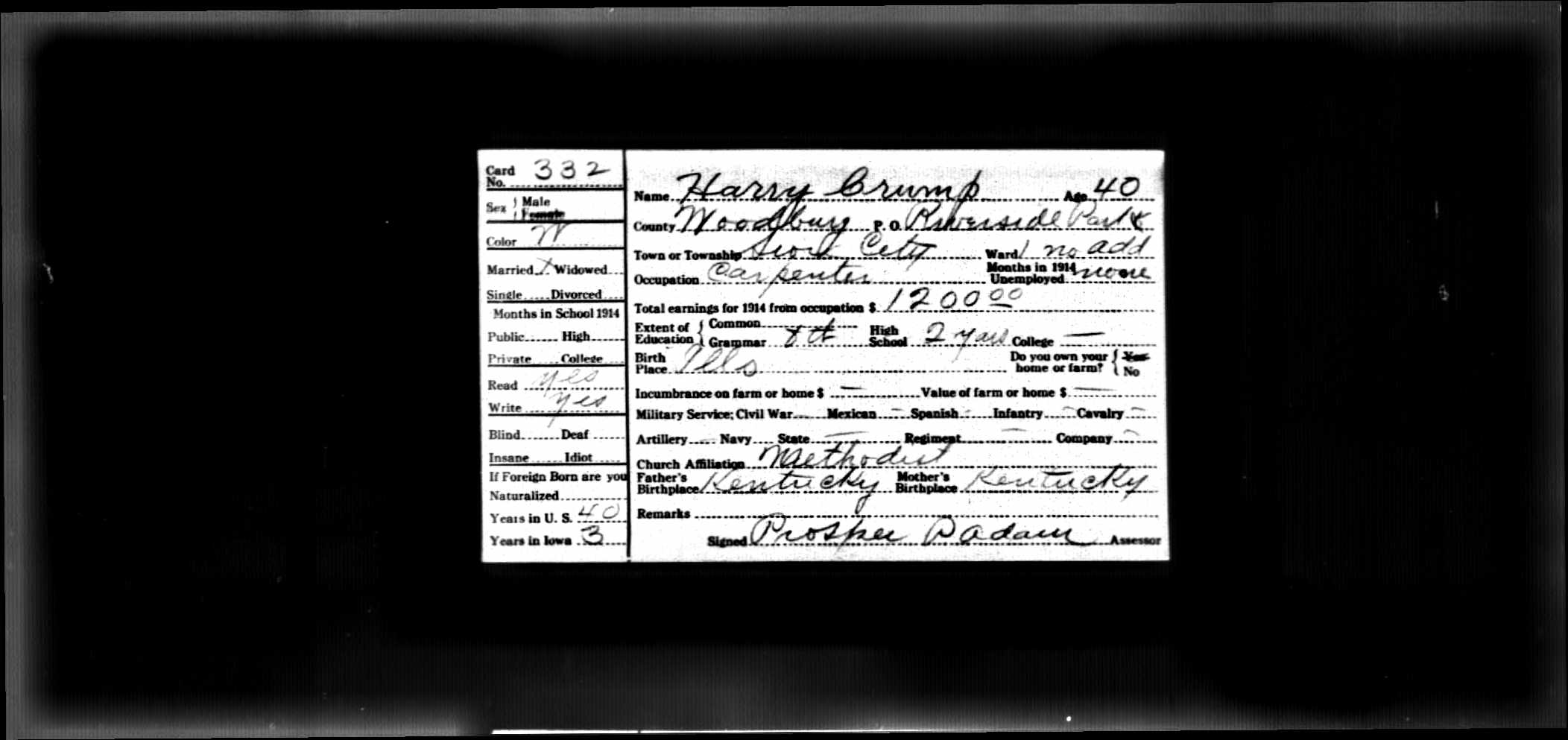
Harry Crump’s 1925 Iowa state census card

By the time the 1925 state census rolled around, Crump was married to his wife, Naomi, and living in Sioux City at the tender age of 22. He listed his occupation as “carpenter.”

But his census form for that year differed a bit from the one 10 years earlier. In 1915, Crump had identified himself as a Missouri native, with both his parents hailing from that state as well. However, a decade later, Crump stated that he was born in Illinois and his parents came from Kentucky. And unlike in 1915, when he didn’t identify himself with any official religion, Crump in 1925 called himself a Methodist.

The 1925 state census also revealed the way Crump portrayed his racial identity throughout his life. In essence, it shifted constantly. When he was living with his aunt and uncle in 1910, the federal Census noted he was “mulatto.” By for the 1915 Iowa head count, he was “black.” But then, by 1925, he was identifying as “white.”

The shifting identifiers seem to indicate that he was probably a very light-skinned black who could pass for white but who often identified himself as black as well. Such disparities were absolutely common decades ago, when African Americans found it better to pass for white than face the prejudice and bigotry that came with being black.

Crump’s changing racial self-identity was again on display in the 1930 federal Census, when he was still living in Sioux City as a lodger. For that count, he listed himself as “Negro” and also, strangely enough, as single, with no trace of Naomi. And he was also portraying himself and his parents as natives of Missouri again. The 1930 Census stated that he was a “laborer” at “odd jobs.”

That set the stage for the formation of the Van Dyke Colored House of David in the ensuing few years. In my next post about the Van Dykes (which will hopefully come soon), I’ll chronicle what appears to have been the team’s first big season as a barnstorming unit, 1934.

A tradition dies in Tarboro

In 2002, The Daily Southerner newspaper of tiny Tarboro, N.C., published an article on Negro Leaguer and Tarboro native Hubert “Bert” Simmons. The article is including in this page about Simmons at the NLBPA Web site.

Tarboro was also the home of Hall of Fame Negro League pitcher Bill Foster, for a couple decades, a tale I detailed in this article in the Raleigh News & Observer. For a while, Foster played semi-pro ball for a team in the traditionally African-American town of Princeville, which is just across the Tar River from Tarboro.

You’ll notice that in the N&O story I quote former Daily Southerner sports editor and Princeville native Calvin Adkins.

I say “former” because Calvin is no longer working for The Daily Southerner. In fact, no one is anymore. The Daily Southerner shuttered its doors in May, an event detailed in this article in the Rocky Mount Telegram.

The Southerner had roots that traced back almost 200 years. Now it’s gone for good.

Why am I writing about this? Because I got my first professional gig at the paper when I got out of college way back in 1995. While I was in Tarboro, I met Calvin, which whom I have since been lifelong friends. I also met other dear friends during my stay by the Tar River, including Josh, Tonya and Robert.

When I learned of the Southerner’s closing from Calvin last night, I was shellshocked. I was like a knife had been driven into my heart. It hurt. It hurt badly. I loved the Southerner. I will always have fond memories of it. Tarboro and Princeville were unique, special places.

Bert Simmons knew that, as did Bill Foster. They probably read the Southerner, too, one in a while. Now no one is. RIP a grand institution.

A couple final Herb posts

Here are links to two blog posts about the trip Herb Simpson, his nephew Felton Glapion and I took to Seattle. Both posts are for Seattle Magazine:

http://www.seattlemag.com/article/negro-leaguer-marks-triumphant-return-seattle

http://www.seattlemag.com/article/part-ii-negro-leaguer-marks-triumphant-return-seattle


The doctors in charge, Part 1

OK, now that I’m back in NOLA from Seattle and recovered from our amazing trip, time to stretch out the boundaries and get back to some serious and non-Louisiana business.

First up is my most consistently harped-on subject, Cannonball Dick Redding’s death in a Long Island mental asylum in 1948. I’ve written a slew of posts about this in the past few months, so I won’t include links to all of them, but here’s where things basically stand …

Well, actually, “stand” might be an appropriate term for things, because I’m at a standstill, at least until either: 1) a relative or descendant suddenly pops up; 2) I hear back from the national military archives; or 3) I get an official letter of declination for release of records from Pilgrim State Hospital. That last one would only be a formality at this point, but I always like to have things in writing.

However, because I’m stubborn and obsessive and on’ry, I don’t want to let this rest, and I’m still looking for any avenue of investigation. Thaaaaaaaat led to …

The doctor who signed Cannonball Dick Redding’s death certificate. Macabre, yeah probably. But, as it turns out, somewhat intriguing.

The death certificate dated Nov. 1, 1988., is signed by a doctor named “L. Kris,” with an address at Pilgrim State Hospital. The document says the doctor “attended deceased” from May 24 of that year until Oct. 31, when he “last saw him alive on October 31, 1948” and that “To the best of my knowledge, death occurred on the date stated above, at 11:45 a.m.”

As has been reported by me and a few others before, the cause of death is completely blanked out — or, as they say in officialdom, redacted.

Turns out “L. Kris” is Ludwig Kris, a staff psychiatrist at Pilgrim. Now, trust me, I personally know how important, knowledgeable and well-roundedly trained psychiatrists are. They’re MDs, which means they go through the same schooling as any medical doctor, from a heart surgeon to a dermatologist to Dana Scully. (X-Files dork alert!)

But you still have to wonder how qualified a psychiatrist — who specializes in disorders in the brain, not the corporeal body, per se — would be to do what Kris did with Dick Redding. Look at it this way: Would you trust, say, a podiatrist (i.e. foot doctor) to perform delicate brain surgery? I’m not sure.

That certainly doesn’t imply that anything deliberately hinky went on. But it does beg the question of whether a hospital with 20,000 patients would be staffed well enough to treat physical ailments like cancer or heart disease/attack, etc.

But apparently Ludwig Kris did, in fact, “attend” to Dick Redding for several months, which means one of three things: Either that’s when Redding was first committed to the hospital — May 24, 1948 — or that’s how long Kris treated him for any mental illnesses, or that Redding started suffering from a physical ailment that required attention beginning that date. Which, again, circles back to the paragraph above.

(On a side note, I’m just now fully realizing something else about the death certificate — all the spaces for location of death, i.e. town/village/city, county, address, ward) are left completely blank. Empty. Kind of weird. Was this done in a huge hurry? Or was this type of death so routine at Pilgrim that all that stuff was just common knowledge?)

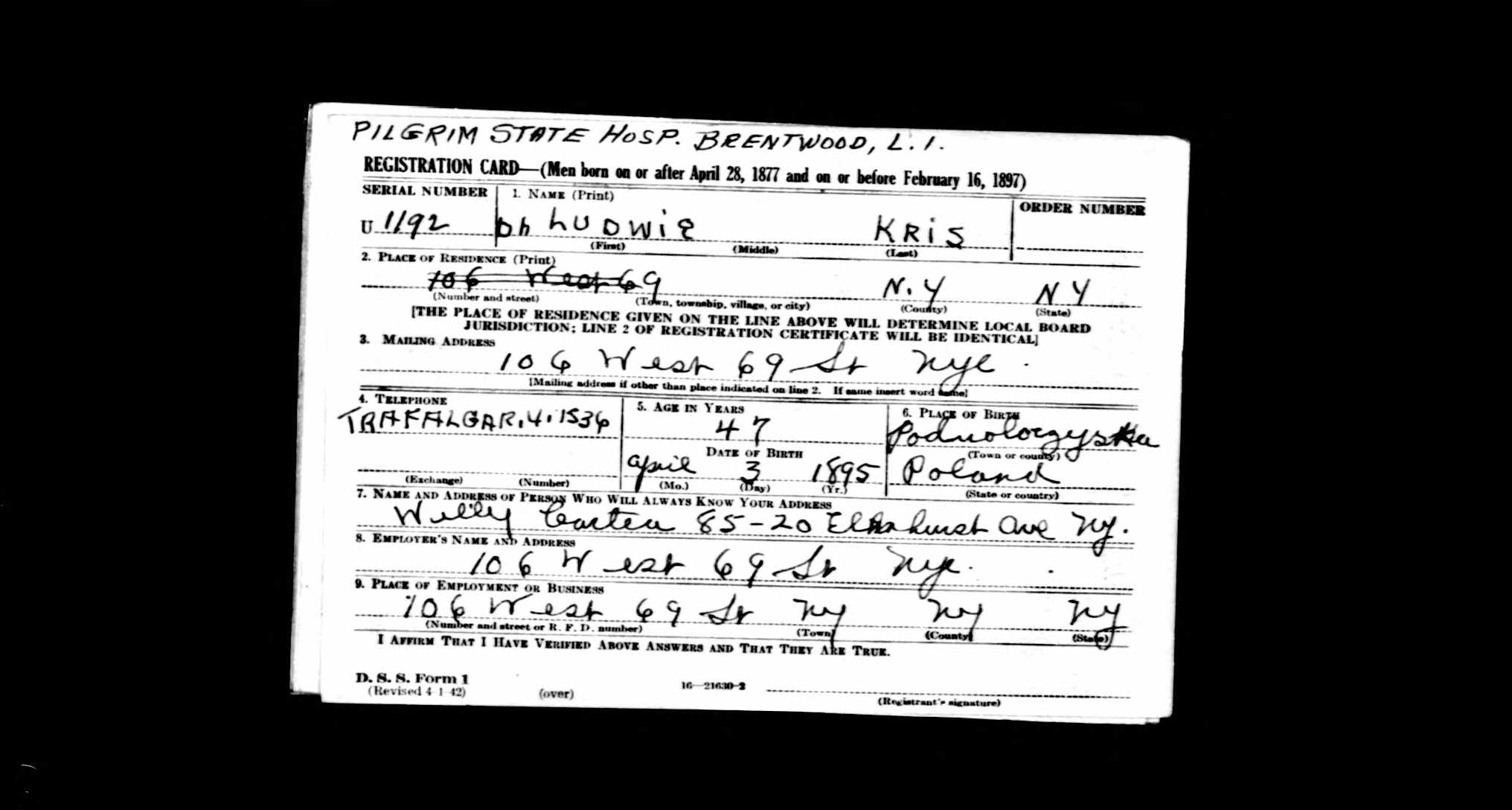
But about the doctor … Ludwig Kris was born, according to WWII draft card, on April 3, 1895, in Podwoloczyska, Poland, and is listed on a ship manifest as “Hebrew” under race or people and as a “physician” under calling/occupation. He was bilingual, speaking German and English.

NYT715_6495-0677

Ship manifest listing Ludwig Kris and family

NY-2368083-0746

Ludwig Kris’ draft card

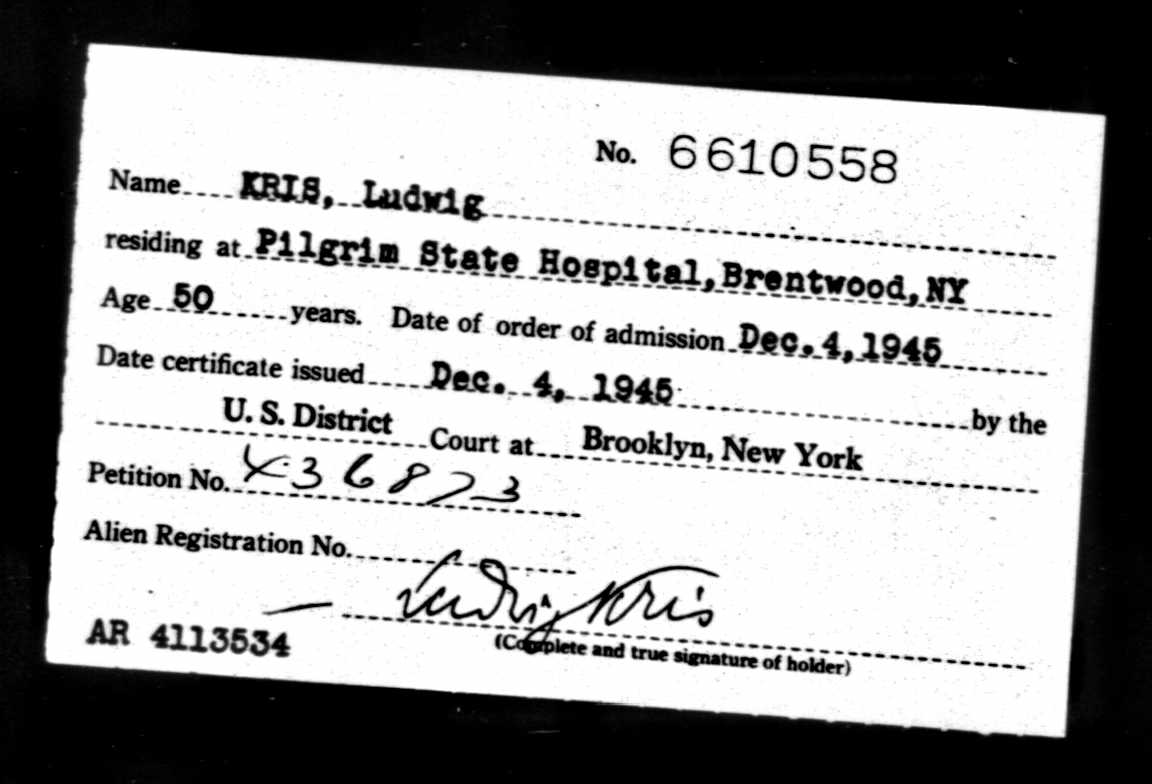
Kris appears to have immigrated to the U.S. in August 1940, which is certainly understandable given what was happening in Poland, and especially to Polish Jews, at the time. He was naturalized as a U.S. citizen five years later, on Dec. 4, 1945 at the age of 50 in U.S. District Court in Brooklyn.

On his naturalization form, Kris’ residence is listed as “Pilgrim State Hospital, Brentwood, NY.” But on his 1942 draft card, his address, as well as place of employment, is stated as 106 West 69th St. in NYC.

M1164_81-4136

Dr. Ludwig Kris died in 1950, just five years after becoming an American and two years after attending to a legendary Negro Leagues pitcher’s death. Other than that — you know, the whole med school, escaping Nazis, emigrating to another country, becoming a successful doctor thing — his life in the U.S. seems pretty mundane.

Well, at least certainly compared to his wife, who appears to have been a bigwig in New York psychiatry circles.

Else Kris was also a psychiatrist, and was also an emigre from Europe. According to the same ship’s manifest on which her husband is listed, Else was born in Czernowitz, Romania. Her occupation is “doctor” and her race/people is “German.” Both she and Ludwig are listed as citizens of Germany. Interestingly, Else is the only German listed on the manifest sheet; everyone else is “Jewish” or “Hebrew.” Again, interesting given what was happening in Europe at the time.

As yet another side note, also immigrating with the couple was their son, 8-year-old Hans Robert Kris, who was born in Vienna, Jewish and a Germany citizen. But in a way, it isn’t a side note, because take a look at his country of birth: At first it was listed as “Austria,” which was then crossed out with “Germany” written in its place.

The national origin and citizenry of all three Krises reflects a continent — and, soon, a world — in turmoil, with “national borders” changing constantly and national and ethnic identity becoming more important than perhaps ever. For example, Hana Kris at first identified himself as Austrian, but technically, thanks to Der Furher, in August 1940 Austria was part of Germany.

The fact that the Krises could very well have shifted locales so much and ultimately moved to the U.S. because they were fleeing fascism and genocide. And that is made even more intriguing given that Else Kris was an ethnic German married to a Jewish man. But Czernowitz, her hometown, has a deep heritage of Jewish residence and culture; at one time it was a very popular destination for Eastern European Jews.

SDC14883

SDC14946

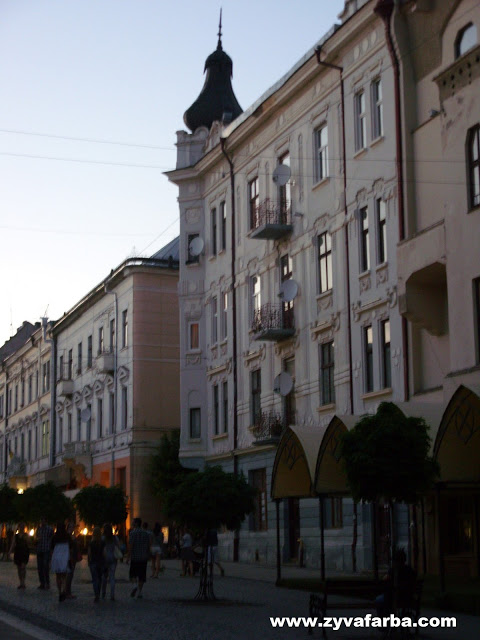
Scenes from modern Chernivtsi, Else Kris’ hometown

In addition, today Czernowitz is known as Chernivtsi and is a city in … western Ukraine, which once again, with current developments, brings us back to issues of ethnic and national turmoil.

And, aha! Today, Podwoloczyska is an urban settlement known as Pidvolochysk in … Western Ukraine! That, of course, explains how Else and Ludwig met — they’re from the same region in Europe, a region that seems to have shifted “nationalities” numerous times over its history, including, most recently, spending decades as part of the Soviet Union.

It also could be worth mentioning that because Ludwig Kris was probably being sadistically persecuted for his Jewishness, he might have been sympathetic to African Americans (including Dick Redding), who also knew — and continue to know — about bigotry and racism.

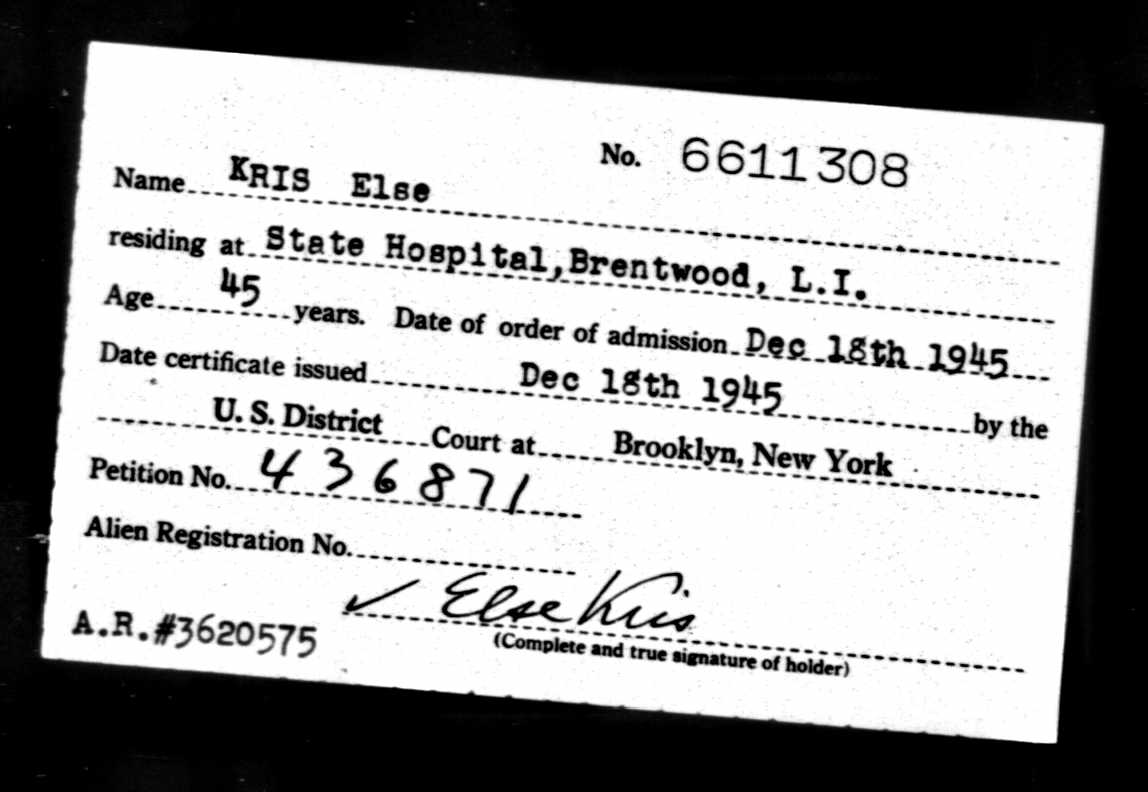
But I digress … according to U.S. Social Security records, Else Kris was born on May 24, 1900, and died in July 1975 in Hallandale, Fla. She was naturalized as an American citizen on Dec. 18, 1945, exactly two weeks after her husband, in Brooklyn. Her naturalization card lists her residence as “State Hospital, Brentwood, L.I.”

M1164_81-4139

Once Else arrived in the U.S., she launched an extremely successful career in psychiatry as well as sociology. In addition to immigrating to the States as a medical doctor, she later earned an MA in sociology and became a faculty in Adelphi College‘s Department of Sociology, becoming in the 1950s one of the leading experts in the reintegration of formerly institutionalized sufferers of mental illness.

But in the 1940s, Else Kris was the senior psychiatrist at Pilgrim State Hospital, where she and other hospital officials apparently went out of their way to prove that the facility was not a “house of horrors.” But more on that coming up soon in Part 2 …

Seattle postlude: Stories, links, photos, notes

101_0124(1)

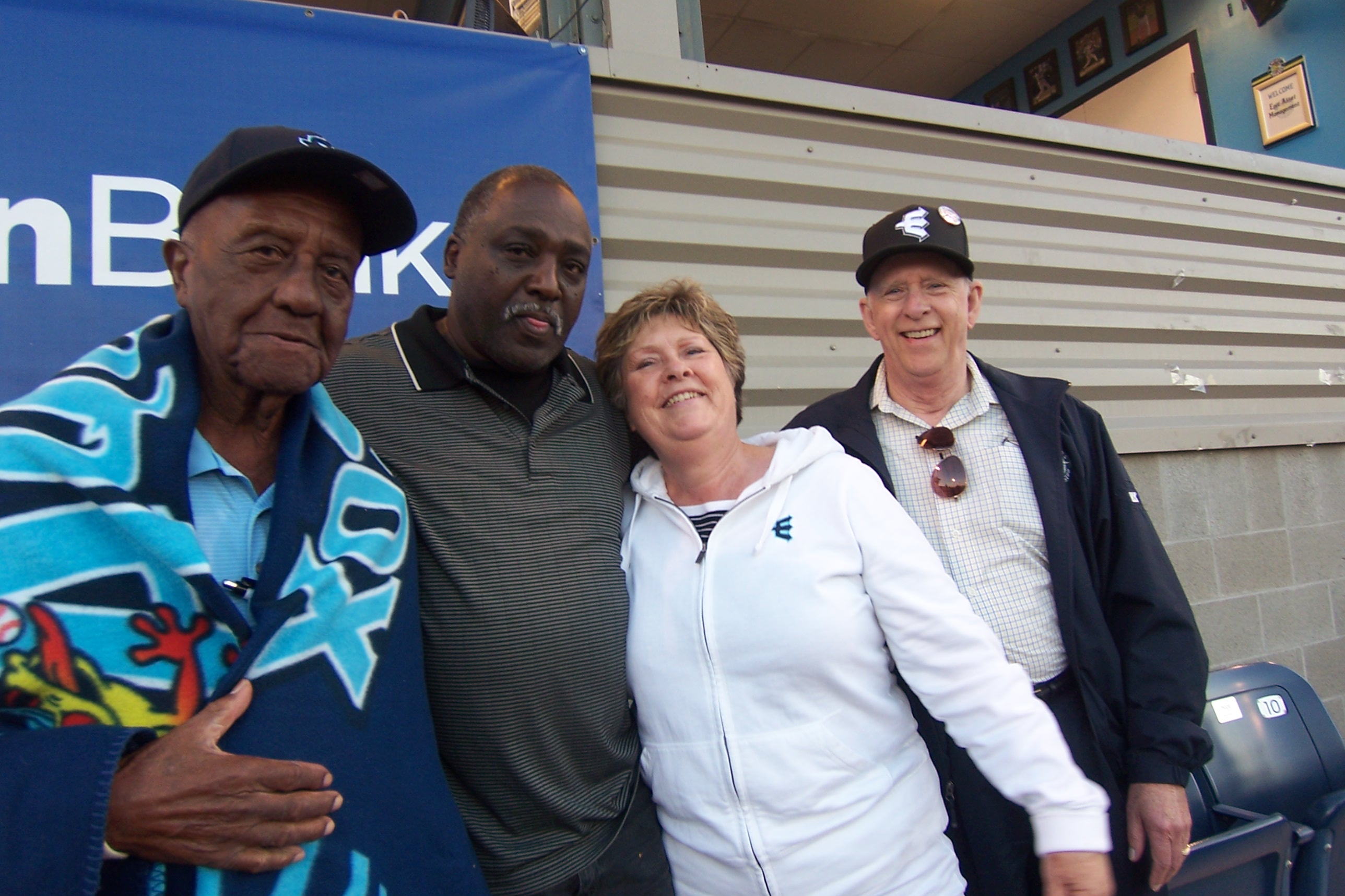
Just wanted to put a few finishing touches on my reports about the trip to Seattle that Herb, Felton and I started a week ago now. One of the things I wanted to post was the above picture, which was taken by RBI Club Commissioner Bob Simeone at the Everett AquaSox game Saturday. On the left are Herb and Felton, while at the right are our hosts for the day, Dave and Kathy Hope. It was a phenomenal experience at the game, especially because I’m particularly fond of minor-league baseball.

Also … here’s a link to a story I did for sportspressnw.com about Mariners third base coach Rich Donnelly and his personal connection to black baseball trailblazer Moses Fleetwood Walker.

And here’s a link to a blog post I wrote for Seattle Magazine’s Web site. I’ll have a second post coming out on the publication’s site soon.

One more link, this one to a story by blogger Mikaela Cowles about the RBI Club luncheon last Friday that recognized Herb.

Finally, I want to thank everyone who has e-mailed me since the three of us returned home a couple days ago to thank us for coming and express what a pleasure it was to meet us all. The feeling is definitely, definitely mutual. 🙂

Quite a special day

Where do you begin describing a day like we had today at Safeco Field? I have to get myself packed up to leave pretty much first in the morning with Herb and Felton, so for now I’ll just include a couple pics and a handful of scattered thoughts …

Here’s the first pic:

photo

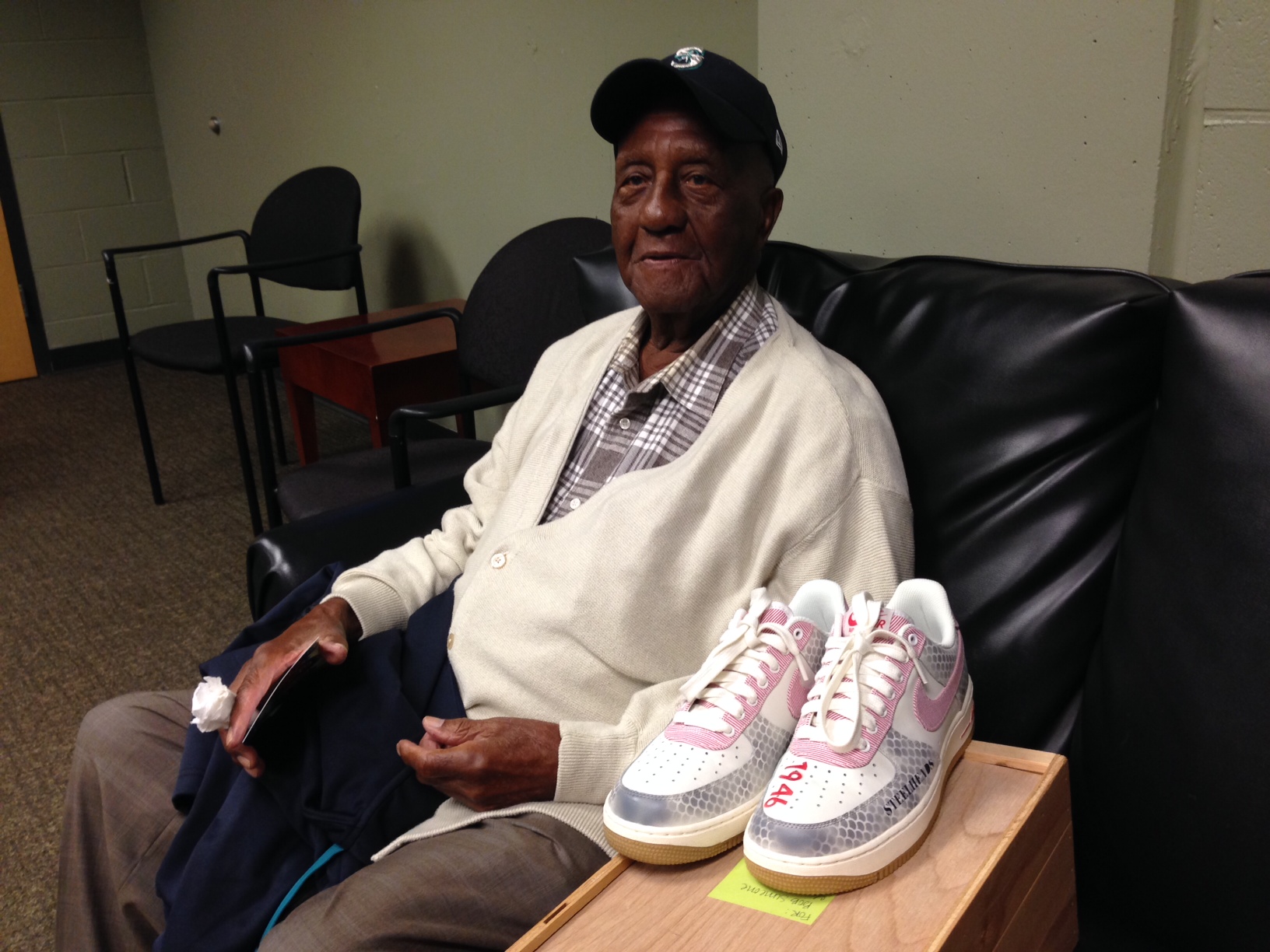
This is pretty cool. Local Seattle artist Mikie Magnusson created that pair of Nike Airs specially for Herb to honor his appearance at the Mariners’ African-American Heritage Day and everything he has achieved in life. The shoes are emblazoned with phrases like “1946,” “Steelheads” and “WCNBL.”

“I was really surprised,” Herb just told me at the hotel. “This was really nice.”

The photo is courtesy of RBI Club Commish Bob Simeone.

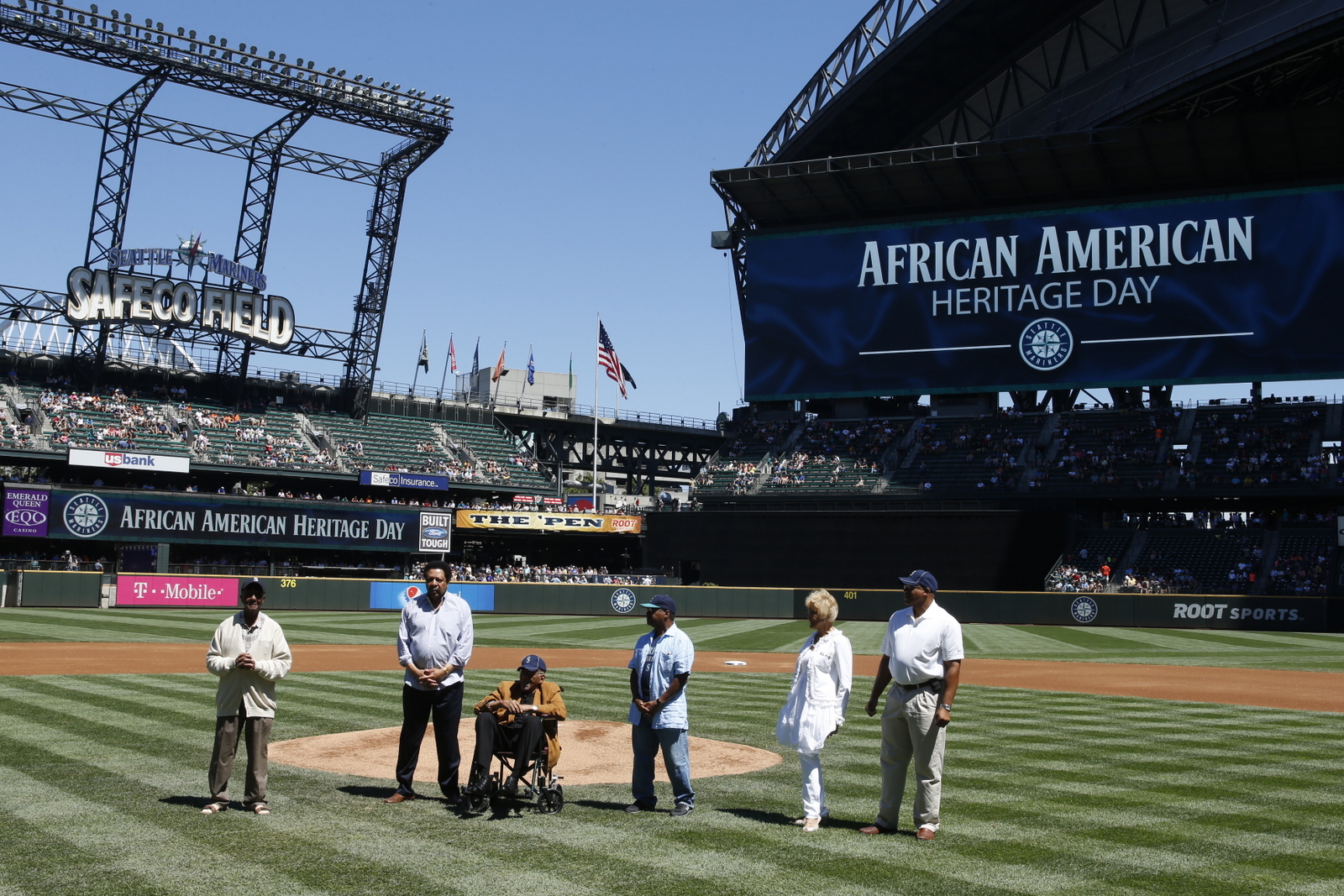
Here’s the other photo, taken by team photographer Ben VanHouten of the on-field ceremony featuring a Herb and a slew of other Seattle black trailblazers. The ever-handsome Mr. Simpson is there on the far left:

_Q9U6119-001

It was another absolutely gorgeous, gorgeous day at the ballpark — crystal-clear blue sky, no clouds in sight, low 80s … What more could you ask for?

Like I said, I’ll try to write more when I get home tomorrow or Tuesday, but here are a few are a few general thoughts:

• First and foremost, if there’s one message I’d really like to get across, it’s that Mr. Herbert Simpson is one cool dude. And if you ever talk to him, ask him about his Satchel Paige story. 🙂

• Everyone associated with the Mariners has been absolutely wonderful. In addition to the RBI Club officials and members I’ve mentioned before, I’d especially like to thank Tim Helvy, the team’s media relations director who gave me an assignment about Herb for the official team magazine! Also, many, many thanks to Rebecca Hale for all her help and patience with me. I know I was a pest, but she was always willing to go out of her way to help me. Finally, thanks to the wonderful security/hospitality woman who was so kind and got me where I was going. She made a point of telling people to be extra helpful with me because it was my first time in an MLB press box.

• Also thanks to Art Thiel at SportsPressNW.com for giving me not one, but two assignments this weekend.

• Even more thanks here, these to Mariners third base coach Rich Donnelly, who took time before today’s game to be interviewed by me about his connection to African-American baseball groundbreaker Moses Fleetwood Walker (story at SportsPressNW.com to come).

• Thanks to all of you for reading my babble!

• Thanks to Lori, the love of my life, for all of her support and encouragement. I couldn’t have done this without her.

• Finally, it was good to see that the lineups of both teams today included several African-American players, which is definitely a good sign given that the last couple decades have seen a precipitous decline in the number of American blacks in the game. The resurgence of the popularity among the African-American community is so, so good to see.

OK, that’s all for now. I’ll be back in a day or two …