Lizzie leads to Charlie leads to … the other famous Cannonball

murphy

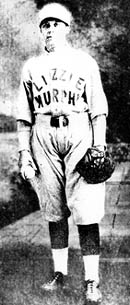
I don’t really remember how I tripped over the story of Lizzie “Spike” Murphy (above, via www.exploratorum.edu), a Warren, R.I., native who, via spunky but very respectable play, became known as “the Queen of Baseball” in the 1920s and ’30s. She played in All Star contests and other exhibition games with and against Major Leaguers before she retired to a life of a married mill worker. She became something of a semi-pro legend in New England, where she won the admiration of female and male hardball fans because of her talent and grit. From the entry on her in the “Encyclopedia of Women and Baseball,” edited by Leslie Heaphy and Mel Anthony May:

“Elizabeth ‘Lizzie’ Murphy was a serious full time ballplayer, not a dabbler or a part timer.” Referring to a slew of other famous early women athletes, the book states that “Most of these women were, like Lizzie Murphy, serious players who would have liked to have the chance to play regularly in the major leagues — real baseball players who were born too soon.”

I write about Murphy now especially because the 50th anniversary of her death is coming up on July 28.

But the trivia fact about her life that triggered my attention the most was that, on at least two occasions, she reportedly crossed into the world of the Negro Leagues and African-American baseball. One story has it that she once successfully faced the great Satch. From the Web page of the town of Warren Sports Hall of Fame:

“Lizzie once singled off the legendary Satchel Paige when he was pitching for a black baseball team in New York. When asked if Satchel had gone easy on her, the great Josh Gibson said that Satch didn’t want to be charged with a hit by a woman of any color.”

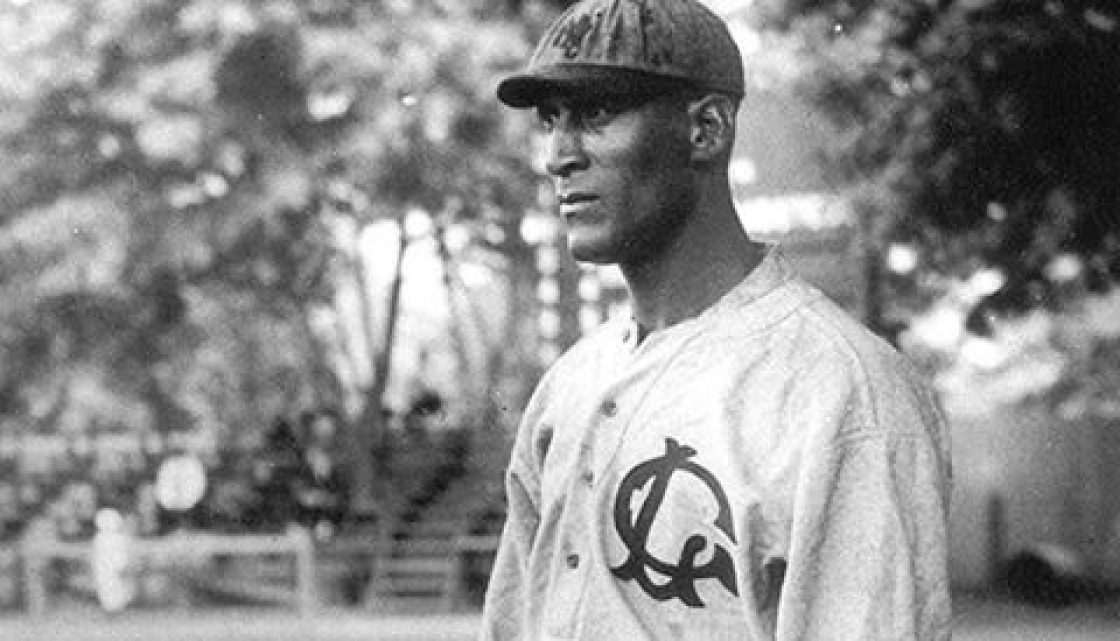
The most fascinating, and possibly mythical, event of Murphy’s storied career was when she reportedly played first base for an African-American team called the Cleveland Colored Giants when the squad toured her native Rhode Island. But if such an event did take place, it seems to be clouded by mystery, quite possibly a legend that grew and grew over time, to the point that many bios of Lizzie repeat the assertion numerous times.

With the 50th anniversary of her passing approaching, I decided to dig into this story and try to nail down the truth. Unfortunately, I was unable to. There were a few reasons for this failure. One, to be honest, I’m still learning the science of hardball research, what Gary Ashwill wonderfully calls baseball archaeology. But more importantly, I couldn’t come across a single article — at least not in several online newspaper databases — that definitely reports on the alleged incident.

But the third and most confounding reason is that, in the early 1930s when Murphy supposedly accomplished the feat, there were at least four blackball teams that incorporated the name of the Cleveland Giants or Colored Giants floating around.

The most famous is, of course, the Cleveland Giants, that Ohio city’s representative in the big-time Negro National League. The Giants replaced the financially doomed Columbus Blue Birds in mid-1933 but didn’t fare any better, folding at the end of that NNL season. Because of the Giants’ existence in 1933 and the propensity of top-level black teams to supplement their revenue via extensive barnstorming, many believe it was for this team that Lizzie Murphy, who was white, appeared.

I tend to disagree with this assessment, partially because another woman, Isabelle Baxter, an African-American woman who did play for an apparently different Cleveland Giants team in 1933. According to the June 17, 1933, Cleveland Call and Post:

“Isabelle Baxter, clever little girl second baseman, playing this season with the famous Cleveland Giants, featured in the opening game of the season at Hooper Field at Cleveland when the Giants easily trounced the strong Canton Clowns, 14 to 8. Miss Baxter took five fielding changes, her only bobble coming when, after a spectacular stop back of first base, she pulled Tom Ponder off the bag with a wide throw. At the bat she hit safely once and drove two hard-hit balls to the outfield.”

Then there was the Cleveland Colored Giants, apparently a semipro team based in the same Ohio burg for a couple decades. They were headed up by a Portsmouth, N.H., native called Charles Tilley, who starred in football and baseball at Portsmouth High School around the turn of the century and became something of a folk hero in those parts. This aggregation toured New England extensively, which is no surprise given the team’s owner’s nativity in the region.

Then, and most frustratingly, there was actually a team dubbed the Cleveland Colored Giants based in … Rhode Island, possibly Newport. D’oh! Are you kidding me? The team is outlinde in an essay, “Black Grays and Colored Giants: Black Baseball in Rhode Island, 1866-1949,” by Robert Cvornyek. This Cleveland Colored Giants, writes Cvornyek, were headed up by “the father of Rhode Island black baseball,” Dan Whitehead, who “served as the state’s earliest and most successful promoter of the black game.” White formed the original Providence Colored Giants and “the state’s own Cleveland Colored Giants.”

It’s these two touring squads  — the Ohio one and the Rhode Island one —  that create the most confusion about which team Lizzie Murphy played for, and exactly when she did it, if she even did at all. New England newspapers of the day, especially those in Rhode Island, make mention of a touring Cleveland Colored Giants team but don’t specify whether they were referring to the Ohio team or the Rhode Island team.

The Aug. 26, 1937, Boston Globe, for example, gives a brief report on the town team from Belmont, Mass., plastering the Cleveland Colored Giants 9-0. But it doesn’t specify which Cleveland Colored Giants. And what about the Cleveland Colored Giants that played the Winchendon Springs AA team near Fitchburg, Mass., in August 1940? The Aug. 17, 1940, Fitchburg Sentinel doesn’t specify, although the paper’s article does note that these Colored Giants had toured the Midwest, West and even Cuba, journeys that seem much more likely for a team from a bigger city like Cleveland, Ohio, than from Newport, R.I.

Now, we can probably assume that the CCG’s (yeah, I’m lazy, so I’m abbreviating) that got clobbered by the Erhart Kramers, 15-2, near Elyria, Ohio, in August 1953 were the CCG’s from the Ohio city; while there have been reports that the

Ohio Colored Giants frequently toured New England, I haven’t come across any reports asserting that the Newport, R.I., CCG’s ventured to Ohio. And, it’s safe to assume the Cleveland Colored Giants who played in the Ohio NBC state tournament in July 1948 were, um, from Ohio. Ditto the CCG’s that played a pair of games in Steubenville, Ohio, in July 1933. According to a write-up in the Steubenville Herald-Star:

“Some of the stars with the Giants are ‘Specs’ Roberts, former Pittsburgh Crawford player, and a pitcher with a submarine  delivery; Satan Taylor [ed. note. Yep, that’s what his name appears to be], rated a whiz of a first baseman; Stevens, who is reputed to have as much speed as Lefty Groves [sic]; Dixon, catcher and manager of the club, formerly caught with the Chicago American Giants, and is regarded as one of the smartest men in colored baseball circles.”

Meanwhile, the Cleveland Colored Giants that played the Philadelphia Giants in Providence, R.I., in May 1930 were certainly the Rhode Island one. How do we know? Because the May 8, 1930, Philadelphia Tribune states that these CCG’s were led by Dan Whitehead.

You need a scorecard to keep track of all these teams. Maybe an abacus, too. Or Pictionary.

Now, of course, none of this solves the question of Lizzie Murphy playing a game for a team called the Cleveland Colored Giants sometime in the 1930s. It would probably take getting one’s hands on archives of the Warren, R.I., newspaper, Lizzie’s hometown, or maybe finding and talking to a living relative of hers.

But while that conundrum remains cloudy, I was thrilled when, during my research on this, I came across Charlie Tilley, owner and manager of one of the Cleveland Colored Giants floating out there in the first half of the 20th century. As mentioned above, Tilley was born in either 1879 or 1880 (depending on which document you view) and became  a multi-sport star in Portsmouth, N.H., where he and his family were some of the only African Americans in the northern New England city.

Tilley, his wife, Alice, and their kids moved to Cambridge, Mass., sometime in the 1920s and spent several decades in the land of Hahvahd, where Charlie opened a billiard parlor. In fact, both Alice (in 1956) and Charles (two years later) died in Cambridge. Below is a 1940 Census sheet listing the Tilleys in Cambridge:
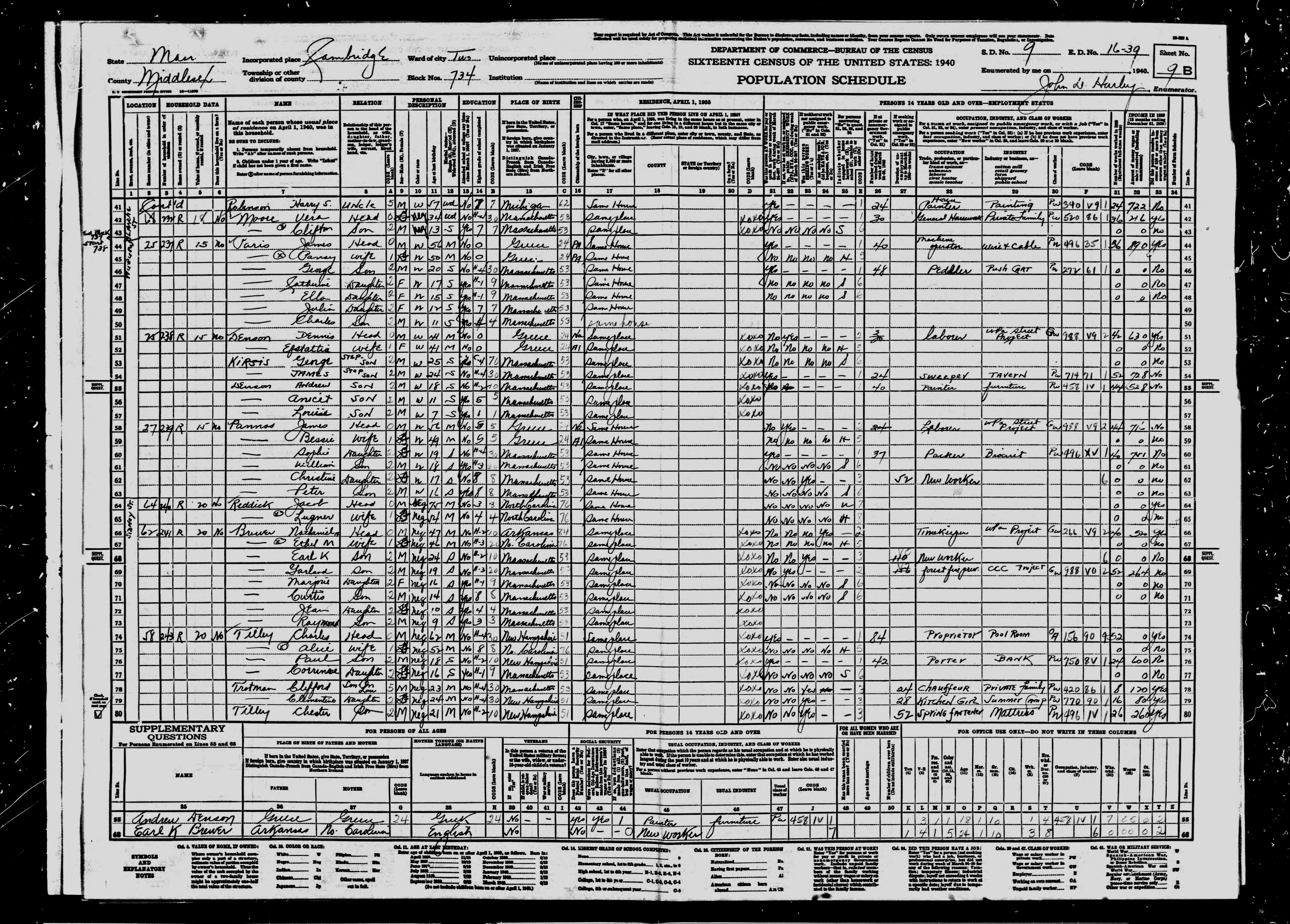
m-t0627-01683-00789

But Tilley’s hometown never forgot him, and he remained a legend in Portsmouth his entire life. He returned to the city in 1924 to take part in an old-timers baseball game; the Portsmouth Herald declared that “Tilley, former P.H.S. star, and who later played with the Portsmouth team, will be seen covering the ground in the vicinity of second base in old time form.”

When Tilley died in Cambridge on Memorial Day 1958, word of his passing wound its way back to his hometown, where the paper mourned his death, including a column by sportswriter Bob Kennedy.

In 1937, though, might have been Tilley’s finest day in Portsmouth, when he came through with his Cleveland Colored Giants. First of all, it’s here that we attain one of the only clues that Tilley’s CCG’s were, in fact, the ones from Ohio. In the July 16, 1937, issue of the Portsmouth Herald, the arrival of Tilley and his team is previewed:

“Charles Tilley, a former well known Portsmouth athlete, who has been away from this city about 15 years, was here today renewing old acquaintances. Mr. Tilley now makes his headquarters in Cleveland, O., and is manager of the Cleveland Colored Giants, a professional baseball team.”

This seems like an “aha!” moment, but here’s the rub: I can’t find any official records placing Charles Tilley in Cleveland, Ohio, at any point in his life, including in the 1930s. It just seems a little strange; if a New England kid were to start a team in a burg named Cleveland, it seems more logical that it would be Cleveland, R.I., another New England town.

But who am I to question the Portsmouth Herald? Let’s just take this article on faith.

Anyway, about two weeks later, Tilley’s CCG’s did indeed make a stop in Portsmouth, a visit the hometown hero clearly relished. Per the July 27, 1937, Herald:

“Eddie Neville questioned the genial Charlie about the strength of his club and the latter merely smiled and said: ‘Do you think I’d bring a poor team with me when I am making my first appearance in my own home town?’

‘And just to prove it to you,’ continued the former PHS star, ‘if the game isn’t satisfactory, I’l take but $40 guarantee instead of our agreed $55. Meanwhile I’ll bet you’ll want us to come back before the season is through.'”

Unfortunately for Charlie, he had as much luck as another famous Charlie did when that one tried to kick the stupid football (auuuuggghhh!) — the Colored Giants lost to the local squad, the Merchants, after the home team battered three Cleveland hurlers for a whopping 20 hits in the July 31 clash.

But it still turned out to be a glorious homecoming for Tilley, who was feted by the crowd of about 1,000 fans before what the Herald called “a two and one-half hour slug-fest.” Tilley, reported the paper, “was presented with a travelling bag by Mayor Kennard E. Goldsmith in behalf of local friends.”

One final anecdote in the  Lizzie Murphy-to-Cleveland Colored Giants-to-Charles Tilley story, a tale that, if one was playing a game of “six degrees of New England baseball folk heroes,” would be pretty nifty, in my opinion. I also appears to connect Charles Tilley to an infamous team from Beantown, the Boston Black Sox.

539w

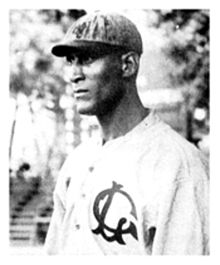
In the first week of September 1943, the Black Sox, fronted by legendary submarine hurler Cannonball William Jackman — who gained great fame in New England and now stands as one of the most underrated and overlooked greats of black baseball history — came to Portsmouth but lost to a team of all-stars from the New Hampshire city. (Jackman is shown above, via boston.com, as an older version joshing with a youngster.)

However, about two weeks later, the Black Sox, lead by Jackman, returned to Portsmouth and turned the tables on the locals, pounding the all-stars 14-2 to gain a fair amount of revenge.

What was intriguing about this visit was a column by Kennedy in the Sept. 20, 1943, Herald that discusses Tilley as … the manager of the Black Sox and the fantastic Cannonball Jackman! According to Kennedy:

“Cannonball Will Jackman had a chance to cluck and cackle following yesterday’s game with the Sunset league All-Stars. Two weeks ago it was a different story but it was also a different Sunset league team that played for Portsmouth.

“Shortly before the game yesterday afternoon Charlie Tilley came over to check the lineups and present his array. Charlie said:

“‘You watch that team today! They won’t lose any game this afternoon.’

“Being an old Portsmouth resident as well as a great football player, we had to believe the gentleman. After the first inning, we could see old Charlie sitting over on the Black Sox bench with an ear-splitting grin. Jackman was hot and so was the rest of the team. He could rest easily and, perhaps even have a short cat nap, during the rest of the game.”

I know it was a long, twisty yarn I just spun, but I hope you enjoyed it. I certainly delighted in researching and writing it. Thanks to Leslie Heaphy for the suggestions and hints along the way.
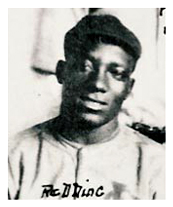
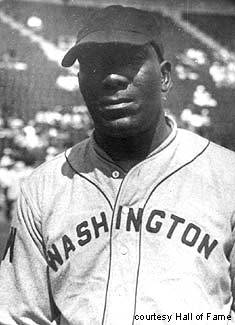
Dick Redding’s last civilian home

redding

Something’s been bothering me about Cannonball Dick’s death certificate — or at least the redacted version of of said document. On the certificate, his “usual residence” is listed as 99 West 138th Street in Harlem, where he supposedly lived before he was committed to the massive and notorious Pilgrim State Hospital psychiatric center on Long Island. He died there in 1948 under allegedly mysterious circumstances, and my efforts — with the aid of several others — to come up with why the great pitcher was shipped to Brentwood in Suffolk County as well as exactly died have been fruitless.

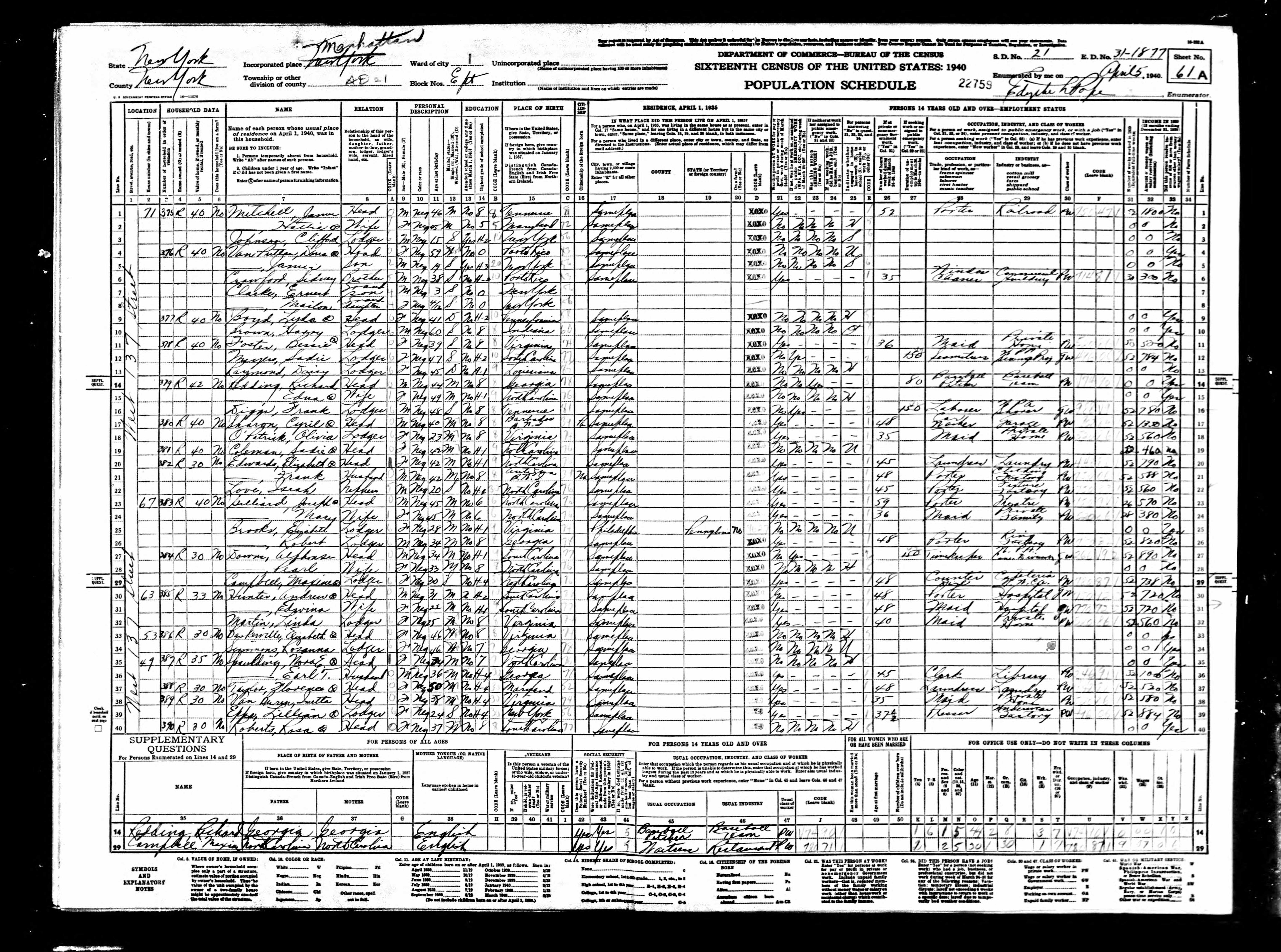
So, I thought, maybe there’s a key piece of information about the address listed on his death certificate. However, that address shows up on no other records I’ve found about him, his wife Edna or her apparent second husband, William Wortham. It comes up out of the blue. The last address I could find for Dick and Edna, for example, comes in the 1940 Census, which is an apartment building at 71 West 137th, a block away.

m-t0627-02669-00883

I did some digging and apparently that address, 99 West 138th, and an adjoining one, 100 West 138th, are now a condo/apartment complex that has changed hands several times since the mid-1960s — that’s as far back as New York City’s register of deeds online records go — including being owned by a community development corporation.

So it’s apparently a fairly large building. In fact, here’s a picture of it today. The picture makes it seem pretty standard for a rapidly redeveloping Harlem.

But in the past, 99-100 West 138th — where Dick Redding was living when he was committed — might have had a little more notorious reputation. For many years in the first half of the 20th century, the property was owned Daniel Mudrick, a Russian immigrant who ran a laundry at the location.

But that might not have been all Mudrick was running at that spot: In February 1932, in the midst of the Great Depression, the 47-year-old Mudrick was arrested for running numbers, including trafficking in “policy” slips. Mudrick’s home address is listed in an article in the Amsterdam News as 45 Audubon Ave. Mudrick was busted after the arrests of two other people at the laundry shop on charges of holding policy notes. One of them was 56-year-old Thomas Elliott of 101 West 138th — right next door.

Mudrick died in 1949, about a half-year after Dick Redding passed away on Long Island.

But the address was also home to similarly murky activities and shady characters. In August 1936, 15-year-old Edna Blakely, who lived at the address, drowned in the nearby Harlem River. An investigation declared the incident a suicide, but Edna’s mother insisted that her daughter was murdered. Here’s a link to that article:

Mudrick 101

At another point, William Hanna, 55, a dock man who lived in the building, was sentenced to 30 days in jail and a $450 fine for welfare graft, while in another incident, 25-year-old Wilhelmenia Green was treated at Harlem Hospital for arm lacerations after a fight with unidentified persons in front of 100 West 138th. And at least two more residents were arrested at different times for holding policy slips, but they were acquitted and/or released.

But, as is becoming standard with this research, all of this may be interesting, but it still tells us pretty much nothing about the fate of Cannonball Dick Redding. In fact, it only raises more questions: Why was he living in a possibly seedy apartment building? Was he living alone? And how did he end up going from there to Pilgrim State Hospital to die?

Unbelievably frustrating …

What’s the deal, NYPD?

I know I’m probably expecting way too much out of a massive bureaucracy with a, shall we say, less-than-stellar reputation for community and media relations, but it’s been exactly a month since I e-mailed a formal Freedom of Information request for release of all information and documents related to the murder of Harlem resident Benjamin Adair in 1925. It’s been suggested that three famous Negro League players — Oliver Marcell, Dave Brown and Frank Wickware — were at least at the scene when Adair was gunned down.

Well, I called the NYPD public relations office and was gruffly told that they have no way to track every single FOI inquiry that comes their way — it probably numbers in the hundreds, if not thousands — and that I’d be contacted when a determination has been made. The guy with whom I talked said there’s no timeline for when that decision will come down.

So I basically got the brush off. But, having dealt with police departments in my previous life as a news and investigative reporter — although none of those PDs have been near the size of NYC — I know that you have to keep on them in order to get any result/reaction at all. So on it goes …

Who the heck is Frank Smallwood? And who is …?

220px-Williams_Cyclone_Joe

In a continuation of this post, I’ll explore — or try to, anyway — why Cyclone Joe Williams is buried in Lincoln Memorial Cemetery in obscure Suitland, Md., along with two guys who seemingly have no connection to him whatsoever, Maryland native Frank Smallwood (1868-1946) and Virginia native Moses Crockett (1878-1955).

First off, there’s no indication that Cyclone lived in Maryland, and he likely never visited it unless he swept through briefly because his wife, Beatrice, was originally from the D.C. area (D.C. is only a single mile from Suitland). Second, Suitland is about 230 miles from New York City, where Williams spent his last years and where he died. The small Maryland town (pop. about 26,000) is, to say the least, a LOT farther away than that from Cyclone’s birthplace and youth stomping grounds in southern Texas.

As a jumping-off point, I’ll use fellow researcher and Cyclone enthusiast Bill Staples’ thought that Williams ended up entombed with Smallwood and Crockett because those two have some connection to Beatrice, who is listed in various Census reports as originally hailing from either D.C. or Virginia, i.e. somewhat to very close to where Smallwood and Crockett were from.

I tried to do a little digging about Smallwood and Crockett and ended up finding out very little concrete about the latter but a fair amount about the former.

To sum up things before going into exquisite (maybe) detail, I discovered that Suitland, Md., is Smallwood’s hometown, which answers, at least on the first level, why Smallwood is there. I also uncovered that Smallwood might have been a naughty boy who occasionally ran afoul of the law.

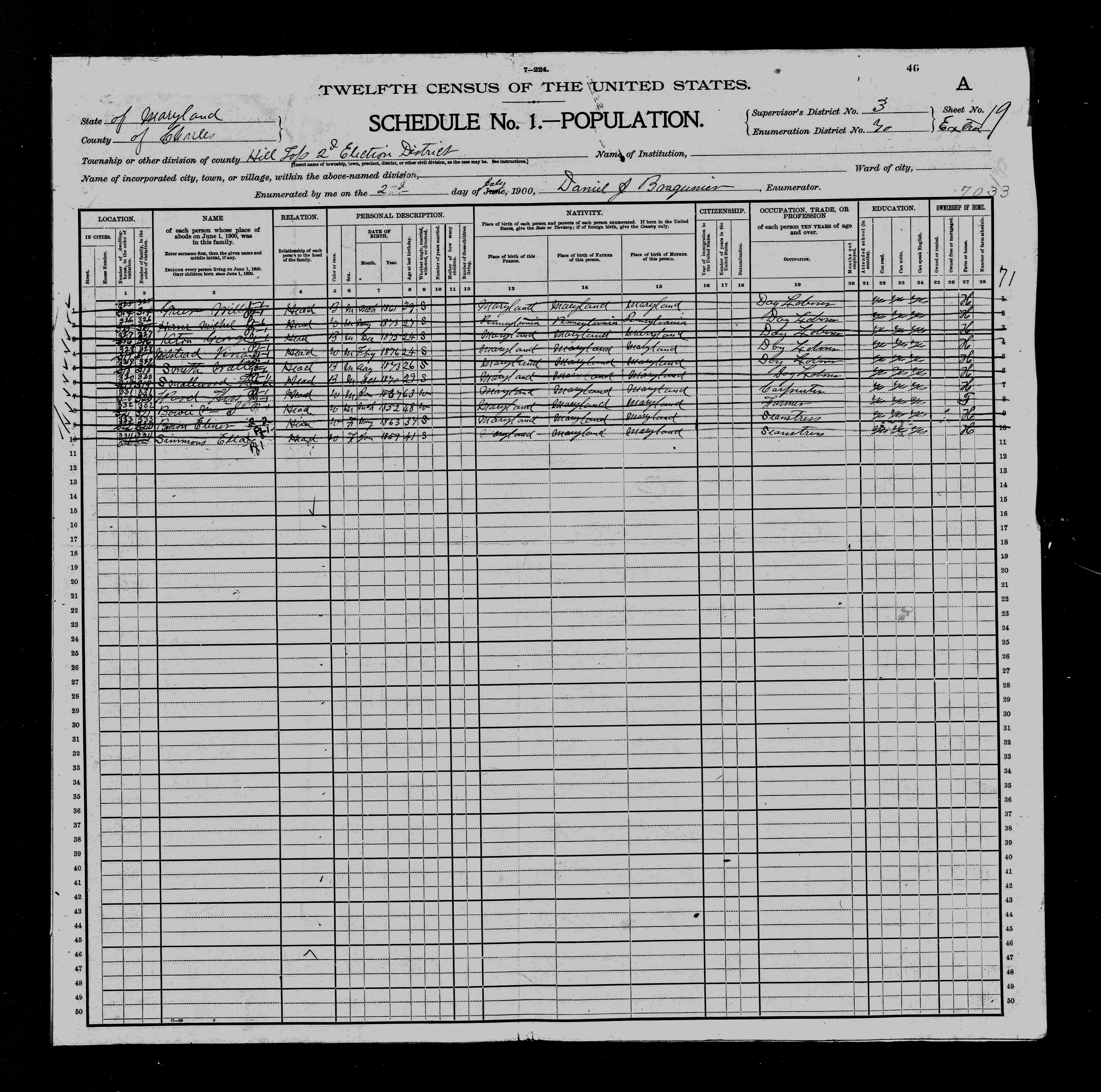
To start, Frank Smallwood shows up in the 1880 Census as the 4-year-old son of and F. Smallwood and Maria Smallwood in Prince George’s County, Md., where Suitland is located. Frank has three younger brothers, while his father is listed as a farmer who’s apparently employing a lodget to help out. Frank’s entire listed family is from Maryland.

1880UnitedStatesFederalCensusForFrankSmallwood

Frank turns up, sort of, in the 1900 Census in Charles County, Md., which neighbors Prince George County to the south. Frank is the 29-year-old (so, according to this, né about 1871) head of a one-person household. He’s listed as a “day laborer.”

But there’s a few, shall we say, oddities about the listing. First of all, he’s amidst a whole bunch of people (black and white, male and female) in a similar situation to Smallwood — they’re all heads of one-person households, which several of the males also described as “day laborers.”

The second weird thing: Every single entry/person is crossed all the way out. What?!?!?

1900UnitedStatesFederalCensusForFrankSmallwood

OK, move on to the 1910 Census … there’s a 45-year-old (so born around 1865, which is somewhat different than the 1900 Census, but still fairly close) Maryland-born African-American Frank Smallwood in Washington, D.C., with a 31-year-old wife named Emma (robbing the cradle, are we?) from Virginia. It appears to be the second marriage for both of them. Frank is listed as a janitor, while Emma is a servant for a family. They are, interestingly, almost the only non-whites on the page.

This is where things get somewhat interesting. The March 9, 1916, Washington Post, under “The Legal Record” heading, states that a Frank Smallwood just pleaded guilty to grand larceny. The March 21 issue of the paper states that Smallwood was sentenced to one year at Occoquan Workhouse in Prince William County, Va. In both articles, Smallwood’s lawyer is an E.M. Hewlett, which is a possible path for further investigation.

The workhouse — later renamed Lorton Reformatory — was established as a detention center for D.C.’s criminals. It also had a notorious reputation for housing “rabble-rousing” women active in the suffrage movement. And it didn’t just house them — it possibly brutally abused them. In fact, in 1917 (just one year after the article), more than 70 suffragists were confined at Occoquan after an “illegal” picket. The center didn’t close until 2001.

So Frank Smallwood is, essentially, in a working prison. Aha! That could account for Smallwood’s odd listing in the 1900 Census — he was in a similar facility for previous criminal activity. But why are the names crossed out?

Now, in 1917, an African-American, Maryland-born man named Frank Smallwood registered for the draft. But the draft card is — and this seems to be a trend with Mr. Smallwood — weird. One, “don’t know” is written in the space for date of birth, and “don’t know-Maryland” is listed as his place of birth. There is no contact person listed, or any family at all — the card says he’s single (no Emma?). We should note here that the card says he can’t read or write, and he certifies his mark with an X.

U.S.WorldWarIDraftRegistrationCards1917-1918ForFrankSmallwood

The register then states that he pursues “farm labor” on the farm of a C. Jensen in LaPlata, Md., which is the county seat of … Charles County, where he was probably imprisoned in 1910, according to that year’s Census. More than likely, Jensen contracted with some governmental agency to use his farm as a workhouse for convicts. That’s another avenue to explore.

On to the 1920 Census, in which Smallwood is listed with wife Emma (counted as 53 and 43 years old, respectively) in an entirely black neighborhood on 44th Street in D.C. Frank (still a Maryland native) is a fireman at a railroad shop, and Emma (still Virginia-born) is a “chairwoman” at some short of “dept.” (I can’t make out the preceding word.)

Then, in the 1930 Census, Frank (58 yo) and Emma (49 yo) appear to be living in the same neighborhood as 10 years earlier. Frank is a fireman at the “U.S. Treasury” and Emma is a housemaid.

Then there’s a coda — the June 28, 1935, issue of the Danville Bee includes a front-page article about a second man, “Frank Smallwood, colored” who escaped from some sort of criminal detention center along the Dan River. From the article:

“Smallwood had been doing time since November 18 last being convicted of assaulting a railroad man with an iron bar when the latter sought to prevent the breaking open of a box car. He still had three months to serve.

“He was missed from the kitchen detail at supper time and it was estimated that he had escaped about an hour earlier.”

Danville is now an independent city along the Dan River. It was also the location of a Confederate detention center for captured Union soldiers during the Civil War.

I could find no other further record of Frank Smallwood.

So to circle back — at long last after my ramblings — Hall of Fame pitcher Cyclone Joe Williams is buried with an apparent repeat criminal in said criminal’s hometown in Maryland.

But a bunch of questions remain. The first one, of course, is why we should care about all this? I can only answer for myself — because hopefully it will shed some light on the Cyclone’s personal life, especially in his final years and why he’s buried where he is.

The second question: If we go aaaallllllll the way back to the original theory that Smallwood and Crockett are buried with a legendary baseball player because the first two are somehow connected to Williams’ wife, Beatrice, we still have no real answers to that specific question. None of this links Beatrice to Smallwood, and it doesn’t tell us much about Moses Crockett, at least not yet.

That touches on a bigger mystery — who the heck is Beatrice Williams, the Hall of Fame hurler’s wife. Because so far, I’ve uncovered just about jack squat about her. But that’s for a future post …

(Hopefully) big stuff coming

Just a quick note to say I’m working on a bunch of pretty good stuff that I plan to have up over the ensuing three days, by the end of the week. It’ll be revolutionary, blow-you-mind stuff that will land me an interview on The Daily Show.

Well, no, not really. But a guy can dream …

Goodbye, Mr. Padre

I know this isn’t directly Negro Leagues-related, but I had to note the shocking passing of my favorite all-time MLB player, Tony Gwynn. He was one of the classiest guys in the sport for a long, long time, he remained committed to one franchise, and he was the best pure hitter in the majors since Ted Williams, who himself agreed with that assessment, if I’m correct.

I wrote a paper in grad school about news coverage of Tony Gwynn, and I have an authentic Gwynn Padres jersey. I almost never wear it because I’m worried I’ll get ketchup or something on it (I’m prone to messing handling of sammiches, don’t ask), but tomorrow I will wear it proudly.

Here’s a link to an article on Tony’s passing on the BHOF Web site.

Judy Johnson, 25 years later

011013-sports-hall-of-fame-baseball-pop-judy-johnson
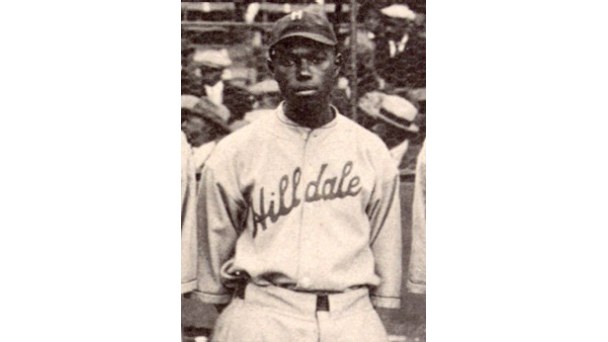
Here’s an article I just had published last week about the 25th anniversary of the death of Hall of Fame third baseman Judy Johnson on philly.com. Because the story is for a Philadelphia outlet, it focuses on his prime years with the legendary Hilldale Club of Darby, Pa.

And, before I sign off here, I just want to say happy Father’s Day to all the dads out there!

A death certificate … sort of

img001

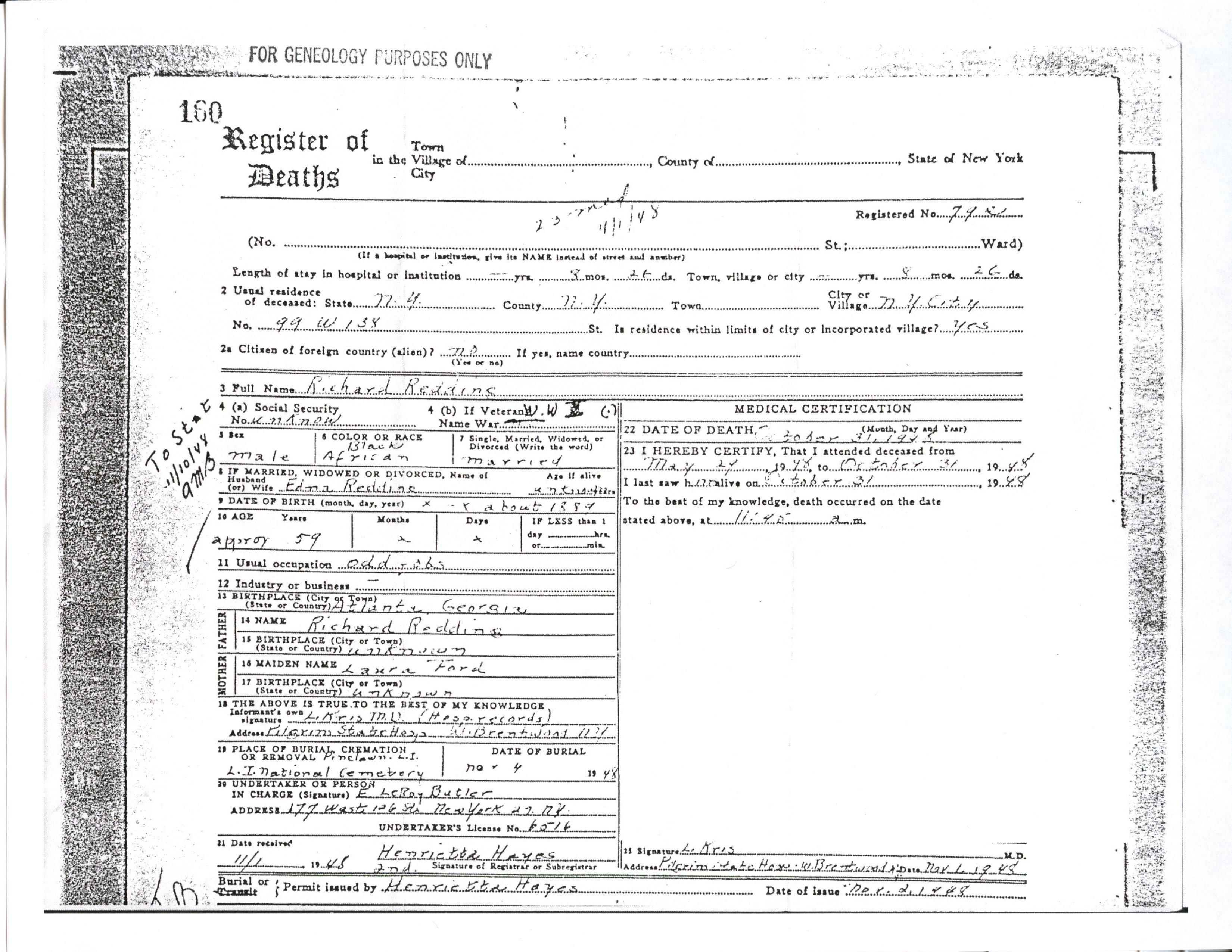
This, my friends, is Cannonball Dick Redding‘s death certificate. I finally have it, courtesy of Jim Overmyer (many, many thanks to him, btw).

Or it’s most of a death certificate. While it pretty much confirms that Dick Redding was a patient at the notorious Pligrim State Hospital — which is a step toward the truth — the actual cause of death is blanked out on the document, as was the case for Sol White, who died in neighboring Central Islip State Hospital, another psychiatric center.

The certificate does, however, include some interesting stuff. It notes that he was a veteran of WWI, but it doesn’t include an eact date of birth, stating only that it was “about 1889.” The certificate says he was 59.

A few of the entry blanks are filled out with “unknown” — the birth place of both of his parents, as well as his widow, Edna’s age. But through other research, we are able to show that both of Dick’s parents, Richard Sr. and the former Laura Ford, were born in Washington County, Georgia. We also know that Edna was about 60 when she died in 1951.

Moving on, we see Dick’s date an time of death: 11:45 a.m. on Oct. 31, 1948 (Halloween!). His occupation is listed as “odd jobs.”

To me at least, the most interesting facet of it is that it states how long Cannonball had been in Pilgrim — eight months and 26 days. So, the question remains: Why was he put there?

When I talked to Jim Overmyer yesterday, he offered a few thoughts. He said commitment to a mental hospital was often “the default action for someone having [any] mental problems, which could include dementia.”

In the certificate, his listed regular address is 99 W. 138th Street in Harlem. That address doesn’t show up on any other documents that I have, but I’ll do some more digging.

So, in all, we have some answers — how long Dick Redding was in Pilgrim and that he WAS there, date of death confirmed, etc.
But those answers only lead to more questions.

Will it ever be possible to secure an uncensored death certificate or, alternately, Cannonball’s hospital records? Jim Overmyer isn’t optimistic.

“New York State has very strict laws about that,” he says. “You just can’t get at those hospital files. Believe me, I’ve tried. It’s really hard, almost impossible.”

Making some Cannonball calls

Image

This week I’ve been making a bunch of calls and filling out forms to find out what happened to Cannonball Dick Redding in Pilgrim State Hospital on Halloween 1948. With assists from fellow SABR member Jim Overmyer and from Elyse Hill of the Atlanta Metro chapter of the Afro-American Historical and Genealogical Society, and by trying certain sources yet again, here’s what I’ve tried to do.

First, I keep trying to call the Leroy Butler Funeral Home in Harlem, which is the parlor that held funeral services, etc., for Cannonball after he died. And, has happened for seemingly dozens of times now, the phone just rings and no one answers. Arrgh!

I also annoyingly called, once again, the records offices of Pilgrim State Hospital to again follow up on my request to have Dick’s records released. The official with whom I usually speak was, as always, very courteous, friendly and apologetic when he told me the same thing he’s told me the last three times I’ve called — it’s still being processed in Albany. And Albany, he noted yet again, is a tangled bureaucracy that really doesn’t have a clear process for handling such requests.

In fact, he told me this time that my request is something he’s never seen before during his tenure at Pilgrim — a non-relative making such an application. He added that he and other state officials hopefully won’t make me go through too many hoops (a nice thought, but unlikely), especially because the records I’m looking for actually might not exist anymore! “We may have the stuff, we may not have the stuff,” he said frankly. “Frankly, this is the first time we’ve even had something like this.” So I guess I can, well, feel flattered that I’m treading new ground, but that doesn’t change the fact that this bureaucratic Keystone Cops routine is getting old.

(Jim Overmyer gave me a personal example of how intractable and stubborn the NYS Office of Mental Health can be … When he tried to obtaining information about a hospital baseball team — one that didn’t include any patients whatsoever, just employees and townsfolk — he got stonewalled nearly to death.)

He then suggested I look into obtaining death records from the Islip Town Clerk’s office, which, he said, would have such documents because Pilgrim hospital is in Islip. “If he died at Pilgrim,” the official said, “that’s where the records would be.” So I downloaded and filled out an application for the Islip avenue, but the instructions warned that only immediate family or people with a documented, officially approved right to the records will be successful. I’m guessing that saying I’m a journalist and baseball researcher won’t do the trick. In fact, when I called the clerk’s office, the woman with whom I spoke was extremely curt and blunt, saying that staffers there aren’t even allowed to talk about the process itself over the phone. Welcome to Long Island, folks.

I then followed up on some advice given to me by Elyse Hill at the Atlanta AAHGS chapter. Noting that the funeral services of Cannonball’s mother, Laura Redding, in 1934 were handled by Cox Brothers funeral home in Atlanta, she said the parlor is still in business. Why not give them a call, she suggested?

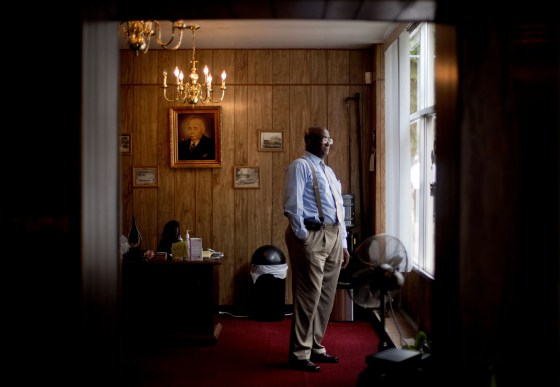
(As it turns out, Cox Brothers, located on Auburn Avenue, is the city’s oldest black-owned funeral home. Below is a picture from thegrio.com of the business’ owner, Carlton Webb, in his office.)

Image

So I called Cox Brothers, and I got some pretty good information. The gentleman with whom I spoke at Cox was effusively, ebulliently helpful even though I could almost hear his jaw drop when I asked if they had records from a funeral in 1934. I was hoping that, if Cox had such records, it might indicate a next of kin for Mrs. Redding, which could be another avenue for me to explore.

After about 15 minutes of searching the home’s files, he called me back and said, yep, they did still have those records, even though they were 80 years old. A lot of the information he subsequently gave me — Laura’s parents’ (and Cannonball’s grandparents’) names, her address in the city, that she was a house domestic, etc. — I already knew.

But he told me that she died on Aug. 24, 1934, and was buried six days later in Chestnut Hill Cemetery. The cause of death? Acute nephritis, more commonly known as inflammation of the kidneys. She was 52 years old, he said. He also said that, interestingly enough, the entire funeral service process for Laura Redding cost a whopping $63, which, even 80 years ago, was peanuts. “It was a cheap funeral,” he said.

He also lamented the fact that, as was apparently the case with Laura Redding, she died without many people even caring, including, seemingly and sadly, her famous baseball-playing son.Such situations, he said, lead to forgotten legacies and clouded history. “When you’re dead and gone, that’s it,” he said. “People don’t know nothing.”

So, what about the big question: Laura Redding’s next of kin? When we talked about that, the conversation got a little unclear. He said the reported informant/relative was one Minnie Tate, which quickly piqued my interest. Laura’s daughter (and Dick’s sister), was Minnie Redding, who, prevailing knowledge has said, had no offspring or spouse. But with a different last name, was she perhaps married — and, perhaps perhaps, did she have children?

Unfortunately, I couldn’t find much record online at all of a Minnie Tate in Atlanta, beyond a couple token city directory listings in the 1930s. (Minnie Redding died in January 1970, according to Social Security records.)

So, while I did learn a lot of fascinating stuff about the death of Dick Redding’s mother — a bargain-basement funeral, bad kidneys, etc. — my ultimate goal seems to have been left unfulfilled — I didn’t uncover any new leads on a living relative of Cannonball who could tell me how and why he died in a New York insane asylum.

A reason for Ted Strong’s marker-less grave?

newscan0039

Photo from the Center for Negro Leagues Baseball Research

Last week I contributed an article to the South Bend Tribune about Ted Strong Jr., who recently received a burial stone thanks to the Negro Leagues Baseball Grave Marker Project. In the article, I pondered why Strong, who served during World War II, didn’t receive a military burial and marker. I was told by a few sources that, basically, the family never asked.

There’s been a few comments posted to the story since it was published, and here’s an interesting one by a military chaplain named David Kriegel from the Naval Postgraduate School. It’s quite interesting and enlightening (I tried to edit it as little as possible):

As the Chaplain for ONE of our local volunteer military honor burial teams I can shed some light on why someone may not get military honors

We first are volunteers.

The local funeral homes know to contact us if the relatives and families request a military burial. The funeral director SHOULD ask if the deceased was in the military and if the family wants a military ceremony

The funeral director then contacts us and we provide a service, rifle volley taps and fold the flag.

If no one knows the deceased was a veteran, he/she dies unknown say in an accident, no one claims the body, we volunteers have no way of knowing the person was a veteran.

I do not believe the government, though required to provide honors to a veteran, has any means in place to provide it or funds to pay for it. Local volunteers from Veterans of Foreign Wars Posts and American Legion Posts volunteers. The Army, Navy and Marines, Air Force do at times send two military members to present the flag. The Marines do the best job for Marine Veterans, sometimes sending as many as six Marines to provide services, along with our volunteers.

Definitely food for thought.