Cannonball’s grandfather, “Uncle Mose”

redding_dick_1

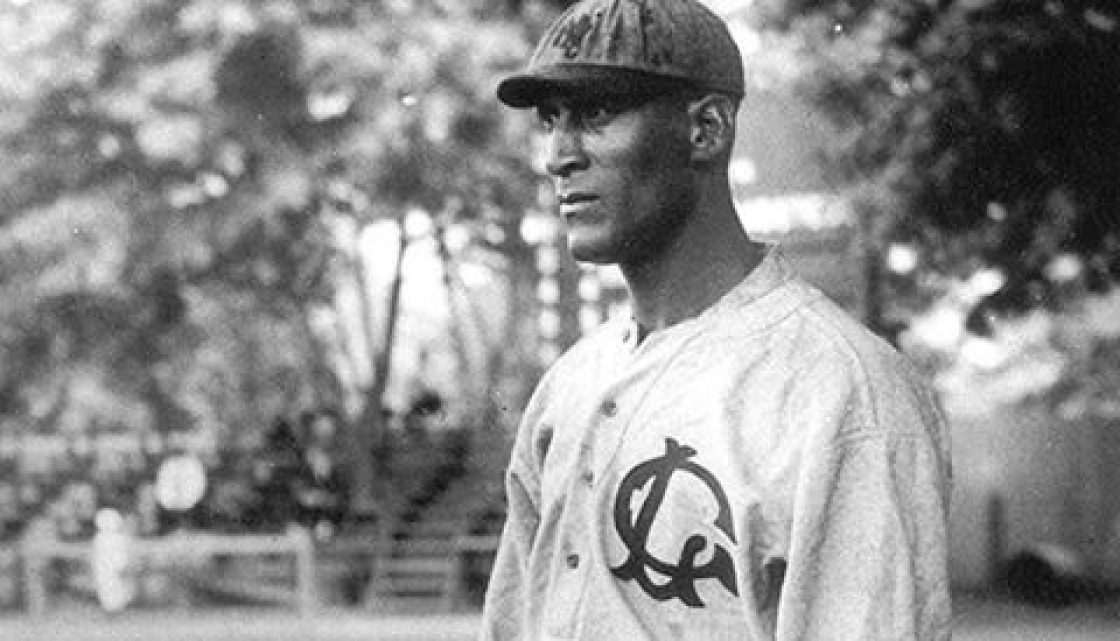
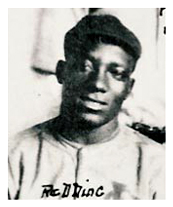
I am seemingly going to the end of the earth — or at least the limits of Ancestry.com — to somehow find any living descendant/relative of Cannonball Dick Redding (above, via www.mlb.com). To be honest, it’s driving me bananas. It’s seriously making my head spin. I’m reduced to maybe trying to find a descendant of Dick Redding’s widow’s second husband — if he was even her husband at all.

Dick Redding and his wife Edna didn’t have children, and apparently neither did either of his siblings, Leon or Minnie. Since Dick Redding is buried in Long Island National Cemetery — he served in the Army during WWI — I called the cemetery offices to see if they might have any sort of death record, and they claimed they didn’t. And it’s extremely difficult getting personnel records out of the U.S. military.

As a matter of fact, just now I tried calling the LIN Cemetery again and asked if there was any way they would have records of cause of death for a veteran. I was told, rather tersely, that no, national cemeteries don’t ask for death certificates or anything like that. They just need proof that he (or she) was a veteran, and that’s good enough for them. “We don’t require death certificates,” this soldier told me. “Those are the property of the family.” So I guess that’s that.

Anyway, I also took a flyer and tried looking up the last name Redding in the Atlanta white pages … only to find there’s more than 100 Reddings listed. So I then attempted to find anyone in the city of Atlanta government or administration named Redding. No luck. I guess I can try the Atlanta Chamber of Commerce, the local African-American museums and/or the Atlanta SABR chapter.

Gary Ashwill has graciously helped me try to procure death records for Redding from New York State, so we’re holding out hope that will turn out well. However, having been born, raised and lived in New York State for much of my life, it’s still hard to fathom the ineptitude and inefficiency of the NYS government bureaucracy.

While I try to sort all this how … somehow … I am finding out some fascinating stuff about Dick Redding’s family roots. That means, namely, his maternal grandfather, Moses Ford. Some backstory …

I’ve found very little out about Cannonball’s paternal side of the family. The pitcher was a Junior — his father was Richard Redding, or some variation thereof (in the 1910 Census, for example, he’s listed as Richard Reden).

But that’s as far back as I’ve been able to go. Richard Sr. was born in (roughly) 1855, so he was most likely a slave at birth. He married Cannonball’s mother, the former Laura Ford, on March 3, 1883, in the Washington County, Ga. (The marriage record spells Richard’s last name as Reddin.) Washington County is a fairly rural county in east central Georgia. The county seat is Sandersville.

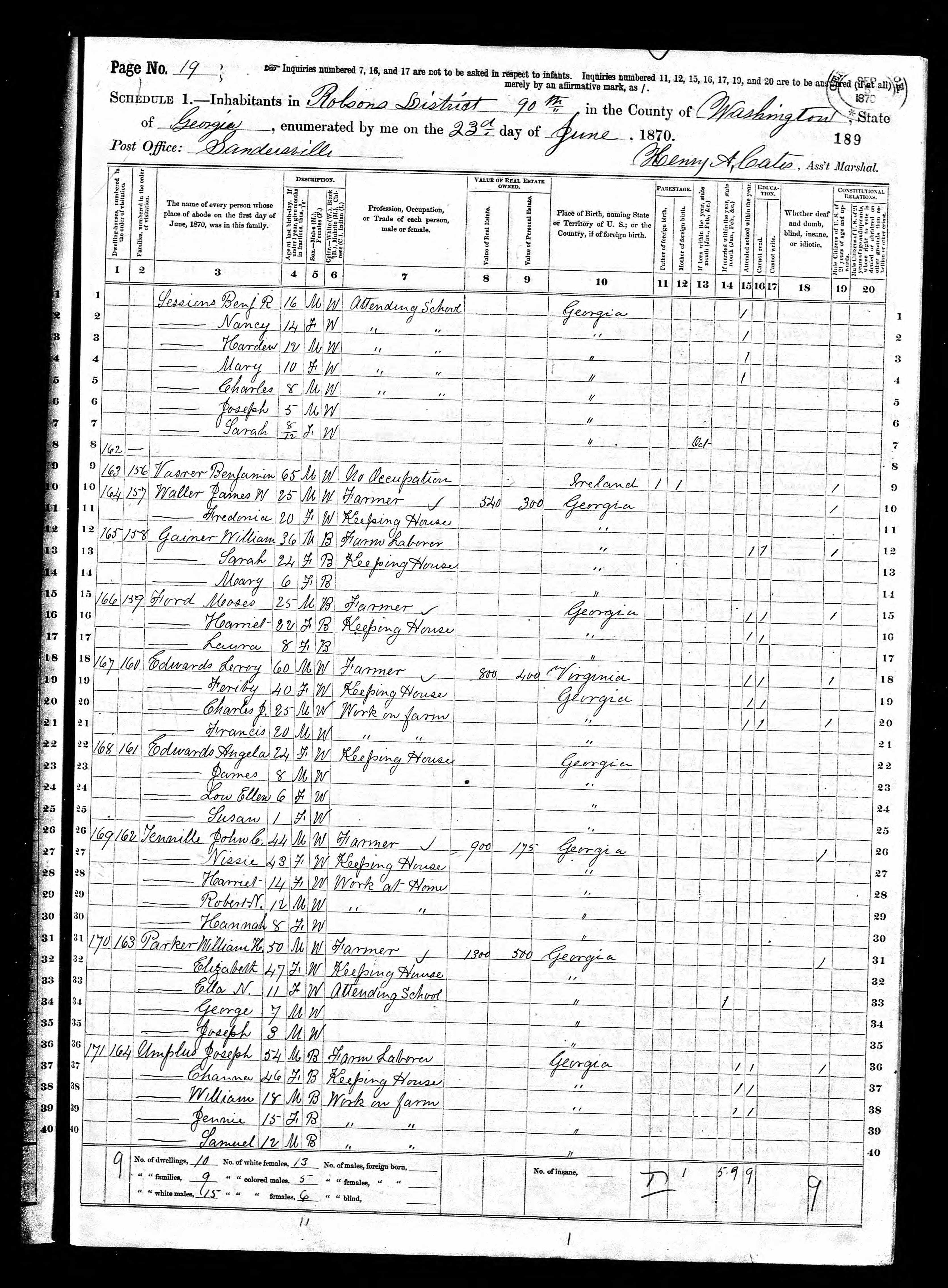
Sandersville is the hometown of Laura Ford, Cannonball’s mother. She was the first child of Moses (or Mose) and Harriet Ford. The 1870 Census states that Laura was born in roughly 1862 — so, again, she was in all likelihood born into slavery. Here’s that record:
4263644_00057

That Census record reports that Moses Ford was born in about 1845, while Harriet was birthed about three years later. Moses is listed as a “farmer,” i.e. a dirt-poor sharecropper. The family is also listed in Washington County in the 1880 Census, with Mose a “laborer” and Harriet a “servant.”

But then Laura Ford married Richard Redding Sr., and the whole clan moved to Atlanta. Because the vast majority of the 1890 Census was destroyed by fire, the next time the Reddings turn up in the Census is 1900, and there’ a little oddity at that point. The 1900 document lists Laura as a single mother of Minnie, Richard Jr. and Leon on Ellis Street. I couldn’t find Richard Sr. in the Census.

But then, in 1910, Richard Sr. is back with the family. Richard Jr. — Cannonball — was born in 1893 (or 1895, depending on what military record you’re looking at).

But to me, the most intriguing part os what happened to Moses Ford, Cannonball’s maternal grandfather. When he came to the ATL, he settled on Houston Street, presumably with Harriet. He got a job as a janitor at the local post office, where he proceeded to become a long-serving, beloved figure in the USPS.

When Moses Ford died in early March 1918 — just about the time his famous grandson was heading off to war in Europe — the Atlanta Constitution ran a glowing obituary about “Uncle Moses”:

Moses 1

The story was a lengthy four paragraphs long, an amount of ink that, at the time, was unheard of for a major white metropolitan daily. That the paper even mentioned the death of a “common” black laborer was stunning. But the fact that the publication gave so much space to the death of an African-American janitor is incredible.

The article, of course, while earnestly trying to offer praise to a black man at a time when lynchings in Georgia were commonplace, is laced with an underlying and subtle paternalism and recalcitrant racial superiority that identifies “Uncle Moses” as what would have been called, at the time, “a good Negro.” Here’s the first paragraph:

“There was real grief in all the departments of the Atlanta postoffice yesterday when it was announced that old Uncle Moses Ford had ‘gone where the good darkies go,’ and scores of the old attaches of the service were not ashamed of their tears.”

OK, that paragraph is just, just … loaded with such … Set aside the fact that the article called this supposedly beloved figure a “darkie” is appalling enough. But it also implies, quite insultingly, that there are two heavens — one for whites and one for the “good Negroes” who toe the line and, essentially, “know their place.” If you do that, then you’ll be lucky enough to go to darky heaven.

“Uncle Moses,” the article continues, “had been a faithful employee of the postoffice for more than a quarter of a century and all were proud to call him friend.” The article then reveals that Moses Ford had been a slave of the Renfroe family and “had never declared himself free.” I’ll give you time to slap your forehead in amazement.

Moses was appointed to the position of janitor by Col. J.W. Renfroe when the latter began serving as postmaster, and “Uncle Mose” went on to serve under seven postmasters.

However, the last paragraph is actually somewhat encouraging and heartening to the modern reader, because it offers some insight into the level of what seems to be actual, true respect for and trust in Moses Ford on the part of his white employers and colleagues:

“Old employees state that he had probably carried millions of the government’s money to the banks, as it had been the custom for years to accompany the cashier and help carry the deposits and many officials had been in the habit of getting Uncle Mose to do their banking business for them.”

The memory of Moses Ford was also long-lasting in Atlanta. When Moses Ford’s daughter (and Cannonball Redding’s mother) died in August 1934, the Atlanta Daily World, an African-American paper, ran a short story under the headline, “Former Local Baseball Star Loses Mother.”:

NONE200

In addition to offering some fascinating nuggets about Dick Redding’s youth — he was “somewhat of a colored mascot for the Atlanta Crackers and was well known for his pitching ability. … The management, at one time, it is said, deplored the fact that ‘Spaniard’ was a black boy and could not use him in their games” — the piece also recalls Moses Ford:

“Mrs. Redding is the daughter of Mose Ford, once a popular janitor at the United States Post Office here. Mr. Ford was affectionately called ‘Uncle Mose’ until his death.”

Ultimately, does any of this reveal any new avenues of investigation to find any living relatives of Cannonball Dick Redding? Most likely not. But another intriguing question is how much Cannonball knew about his familial roots, including his much honored grandfather, “Uncle Moses” Ford.

By all appearances it looks like Dick Redding left Atlanta — and possibly his family — for the baseball big-time and never looked back. I suppose he couldn’t be blamed for such a decision if he made it. Why associate with a place where your grandfather, despite (allegedly) gaining the love, respect and trust of the white powers-that-be, still be called a darky?
The ageless Algiers legend

Image

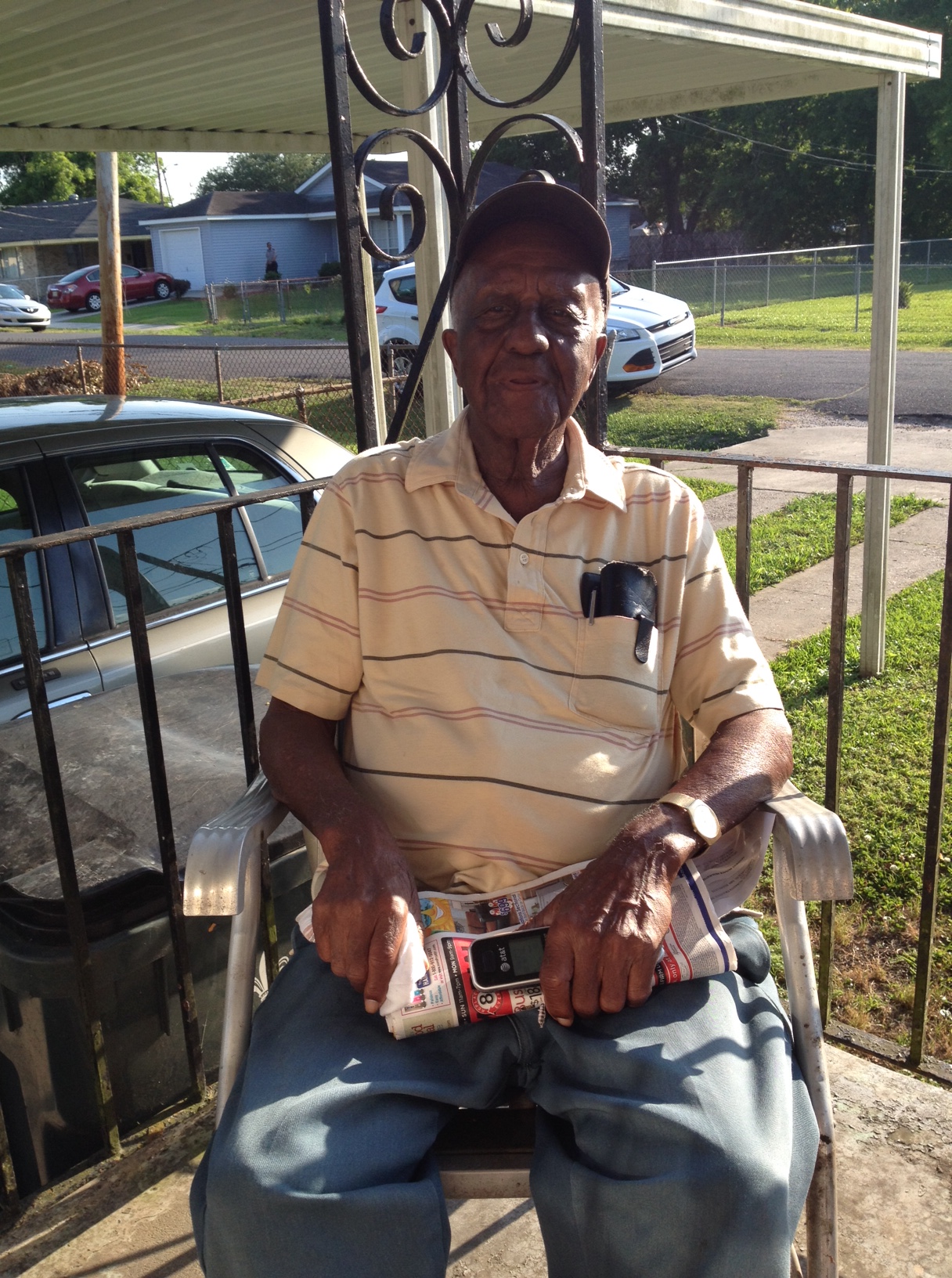
Last night I had the honor of visiting 93-year-old local Negro Leagues legend Herb Simpson at his home in the Algiers section of NOLA. The occasion was an interview for a handful of stories I have in the works.

I’ve been to Herb’s house about a half-dozen times, and each it time it’s quite a thrill. Herb is a man of few words, and when he has his hearing aid out he has a little trouble picking up what you’re saying, but he just has such a calm, tranquil, charismatic presence about him that every single time I’ve connected with him, I’ve had a blast.

Our topics of discussion ranged from his time with the Spokane Indians in 1952 and the Oakland Oaks in the 1954 preseason (both minor league teams), to his recent, groundbreaking induction into the New Orleans Professional Baseball Hall of Fame.

I was especially eager to ask him about his brief tenure in Oakland, which, to my knowledge, had been unknown to the general public. I uncovered a few articles in the black press and the Oakland Tribune detailing his time with the Oaks during spring training. he didn’t make the team and was sent back to the Albuquerque Dukes, with whom he enjoyed several fine seasons.

Regarding the NOPBHOF, Herb was gracious and modest, as usual — “It was real nice,” he said of the ceremony last month — but he also expressed a mixture of puzzlement and irritation when he related how the Hall of Fame plaque he was promised by the Triple-A New Orleans Zephyrs still hasn’t arrived. He was told it would take two weeks. It’s now three-plus weeks and counting.

(For previous blog posts about Herb and the upsetting lack of Negro Leagues in the NOPBHOF, go here and here.)

The last think I asked him as we sat on his sun-soaked porch was how he’s managed to live so long. He initially said two words: “Through Christ.” He then added, “I don’t smoke, and I’ve done all the things I’m supposed to do. When I had to go to school, I went to school, and when I had to go to church, I went to church.”

Is there a link between two Georgia Peaches?

As my mind swims and muses, a thought alights on my gray matter … I’ve been writing a lot about the ignominious, mysterious and tragic fate of legendary Negro Leagues pitcher (and should-be Hall of Famer) Cannonball Dick Redding.

Cannonball is a Georgia native, raised in the ATL. But my all-time favorite singer and (in my contrarian opinion) the greatest soulster of all time, Otis Redding, is from Macon, Ga.

Two famous African-American Reddings from the same state. Hmmm … could there be a distant familial connection between the two? Perhaps they are both descended from the same slaveholder or slaveholding family …

It would take an extreme amount of work and historical digging to establish such a link, with the chances of coming up empty, or at least unclear, fairly high. But wouldn’t it be something, though?

And to add to the lofty notion, remember that the Big O died a tragic death as well, just like Cannonball. Eerie … or just coincidence? Or a simple dream? But, as Otis said, “I’ve got dreams to remember …”

Image


Cannonball Dick Redding

Image


The Big O (via http://www.otisredding.com)

Youth springs eternal — and diverse

Image

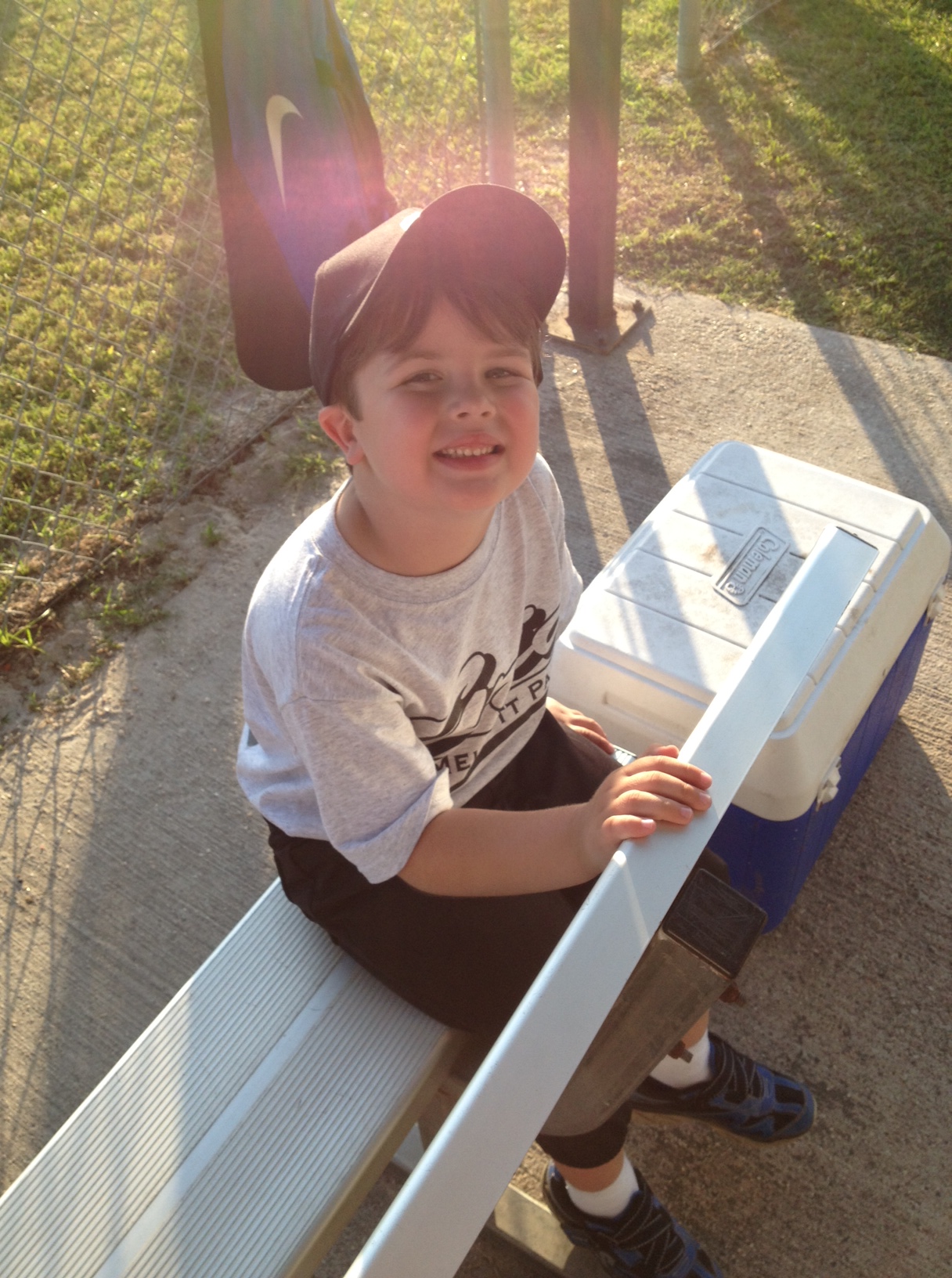
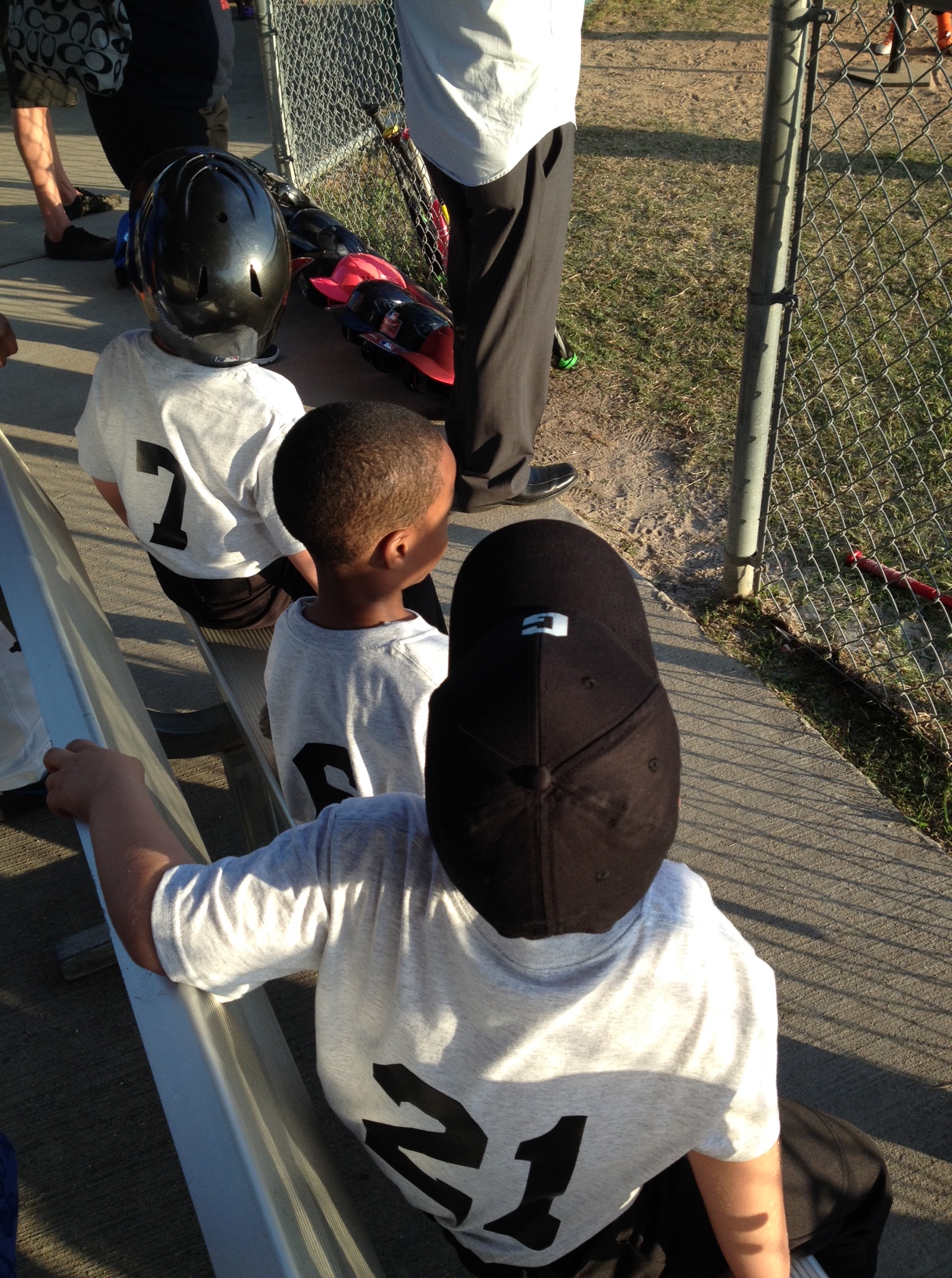
This is my soon-to-be stepson Eli at his City of Gretna, La., rec department T-ball game last night. I wanted to post this for three reasons: One, this is a baseball blog; two, I’m very proud of him; and three, see this photo:

Image

This is the back of Eli’s head whilst he sits on the bench waiting for his turn to bat. But next to him is one of about a half-dozen African-American kids on his team, the Orioles (who wear old school Baltimore-style hats). Given the magnitude of ink that’s been written over the last 20 years about black youth gradually abandoning the sport of Josh Gibson, Rube Foster, Jackie Robinson and Willie Mays, it’s extremely encouraging to see so many African-American kids taking up the game just about as soon as they can hold a real bat.

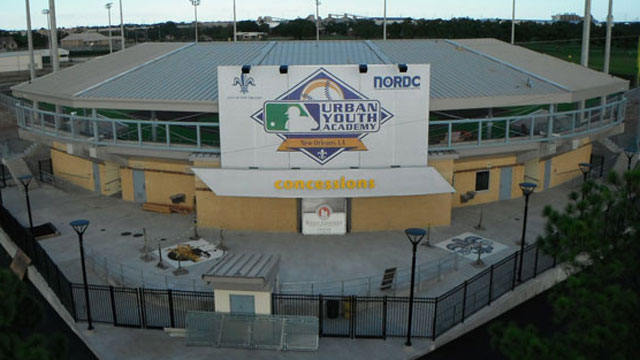
Maybe this is the first fruits of the labor of Major League Baseball’s newest Urban Youth Academy at Wesley Barrow Park in New Orleans …


A dollop of backfire for Satch

Maybe it’s my obsessive-compulsive disorder. Maybe I’m just fascinated by the arcane, taken in by minutia, gripped by Cliff Clavin fever.

But for whatever reason, little details in baseball history clasp onto my mind and drive me to investigate them to the fullest extent of my abilities, resources and patience.

So when I came across — and I don’t remember how or when or where — the fact that Satchel Paige, ever the hardball mercenary, took the mound for a team called the El Paso Mexicans in the famed California Winter League, an integrated loop outside of the confines of so-called “organized baseball,” in March 1935 for, it appears, a single game, my brain latched onto it.

Image

Apparently, as the CWL was nearing the completion of its season, Paige bailed on Tom Wilson’s powerhouse Philadelphia Royal Giants and climbed the hill for a Latino team called the El Paso Mexicans because, as author Mark Ribowski wrote, “the best ballplayer not in the major leagues manifestly believed that he was too big for blackball …”

Image

Tom Wilson, via NLBPA.com

Ribowski noted in his book, “Don’t Look Back: Satchel Paige in the Shadows of Baseball,” that the Elites were cruising toward another CWL title thanks to Satch’s still-growing hurling prowess.

Satch, however, didn’t seem to give a damn about that, because on March 7, 1935, left the Giants and pitched for the El Pasos. Such itinerancy has always grated on me when it comes to evaluating Paige’s legacy.

True, Satchel definitely wasn’t the only Negro Leagues player who jumped from team to team in a constant quest for a larger paycheck, and you really can’t blame them, given the often shaky, loosely structured and financially perilous state of blackball throughout its existence.

But Satch elevated team disloyalty to an art form, but in March 1935, it came back to bite him in the butt. His “former teammates,” the Royal Giants, trounced the supremely arrogant Paige and his one-off Latino backers, 7-2, in the first game of a doubleheader at Los Angeles’ White Sox Park.

According to an article in the March 9 Pittsburgh Courier by ace reporter and promotor James Newton, who said the Elites “gave Satchell [sic] paige a surprise party.” Newton added:

“Paige, who was pitching for the El Paso Mexicans club, started in great shape by striking out three batters in the first inning and the first man to face him in the second inning, then the fireworks started.”

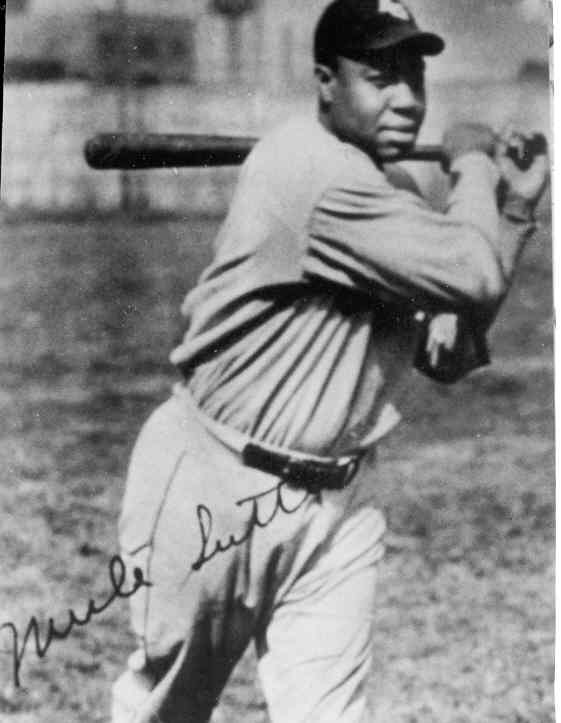
Satchel was pounded for 12 hits despite fanning 11 batters. The Giants’ Jim Willis, according to the March 9 Chicago Defender, “turned in a superb pitching performance giving only five hits and fanning ten batters” without giving up a single walk. The Giants were led at the plate by — no surprise here — Hall of Famers Mule Suttles, Turkey Stearnes and Cool Papa Bell.

Image

Mule Suttles, via The Baseball Guru

Making the outcome of the contest all the more ironic — is that the right word? — Paige’s ball-tossing duplicity was hyped in the media weeks before the contest actually took place. Stated a Feb. 22 report in the LA Times: “Making his final appearance of the winter season, Satchel Paige, lanky colored pitching star, will hurl for the El Paso diamond nine against the Royal Colored Giants Sunday at White Sox Park in the opening tilt of a double-header program.”

D’oh! Sorry, Satch. Hubris does have a way of humiliating even those on the loftiest of perches.

This is also not designed to cast dispersions on the El Paso Mexicans. If I was J.L. Wilkinson — or Gus Greenlee or Cum Posey or Ed Bolden or, heck, just about any team owner/manager, not excluding even reluctant heads of white teams — and I could afford to bring arguably the greatest pitcher in the history of the game, you think I wouldn’t?

You bet your fanny I would.

The El Pasos were long-time members of the CWL and seasoned veterans of international baseball. They endured many drubbings and cellar-dwellings in the CWL with a battle-worn valiance and determination. Wrote William F. McNeil in his book, “The California Winter League: America’s First Integrated Professional Baseball League”:

“The Negro league teams at times appeared to be AAA quality, and may occasionally have been major league quality. At Other times, their roster was closer to a AA level. Some of the white teams, like Pirrone’s All-Stars, the White Kings, and Shell Oil, occasionally fielded teams of at [sic] AAA caliber or higher. But other teams like the Mexican All-Stars, El Paso, and some San Diego teams, were frequently low level minor league teams.”

The El Paso Mexicans existed at least as early as 1930, when the LA Times reported that the squad split a doubleheader with the All-Stars at White Sox Park. A February 1934 article in the Pittsburgh Courier stated the “El Paso Club is made up of some of the greatest Mexican players in the world.”

The LA Times reported a month later: “With Nick Salazar pitching, the El Paso Mexicans, champions of the southern republic, will play a double header against the Davis Perfection Bread nine at White Sox Park today.”

The confectionary went the extra mile for the event, too: “As a treat to the fans, 800 bags of doughnuts will be given to them as they enter the gates.”

In October 1938, the Mexicans played on the road against Santa Barbara, making the team’s competitive existence at least roughly a decade long.

Wanted: A living person who could talk about Cannonball

Image

And now, the long-promised next installment of the mystery of Cannonball Dick Redding‘s (above) 1948 death at Pilgrim Psychiatric Hospital in Brentwood, Long Island …

The challenge, so far, has been to find a first-person source — ideally a family member/descendant of the star Negro Leagues fireballer or someone who knew and/or treated him at Pilgrim — to try to fill the holes in the narrative. So far, that attempt has been futile. Redding himself didn’t have any children of his own with his wife, Edna, and none of his siblings appear to have any descendants either. That in and of itself severely crimps the goal of finding a living, breathing source on the matter.

As for uncovering a fellow patient or staff member from the late 1940s, I would doubt that many at all are still alive, and if they are, they’d probably be at least 90 or so, which doesn’t lend itself to crystal-clear memories.

That leaves the option of trying to find non-direct descendants of Cannonball, perhaps in-laws or relatives of Edna Redding. But in those terms, there seems to be a mystery as to Edna’s background as well as her post-Cannonball life. I’ve been trying to find out where exactly she came from, i.e. her familial roots, as well as what she did after she became a widow in ’48.

That process has exposed a very curious mystery …

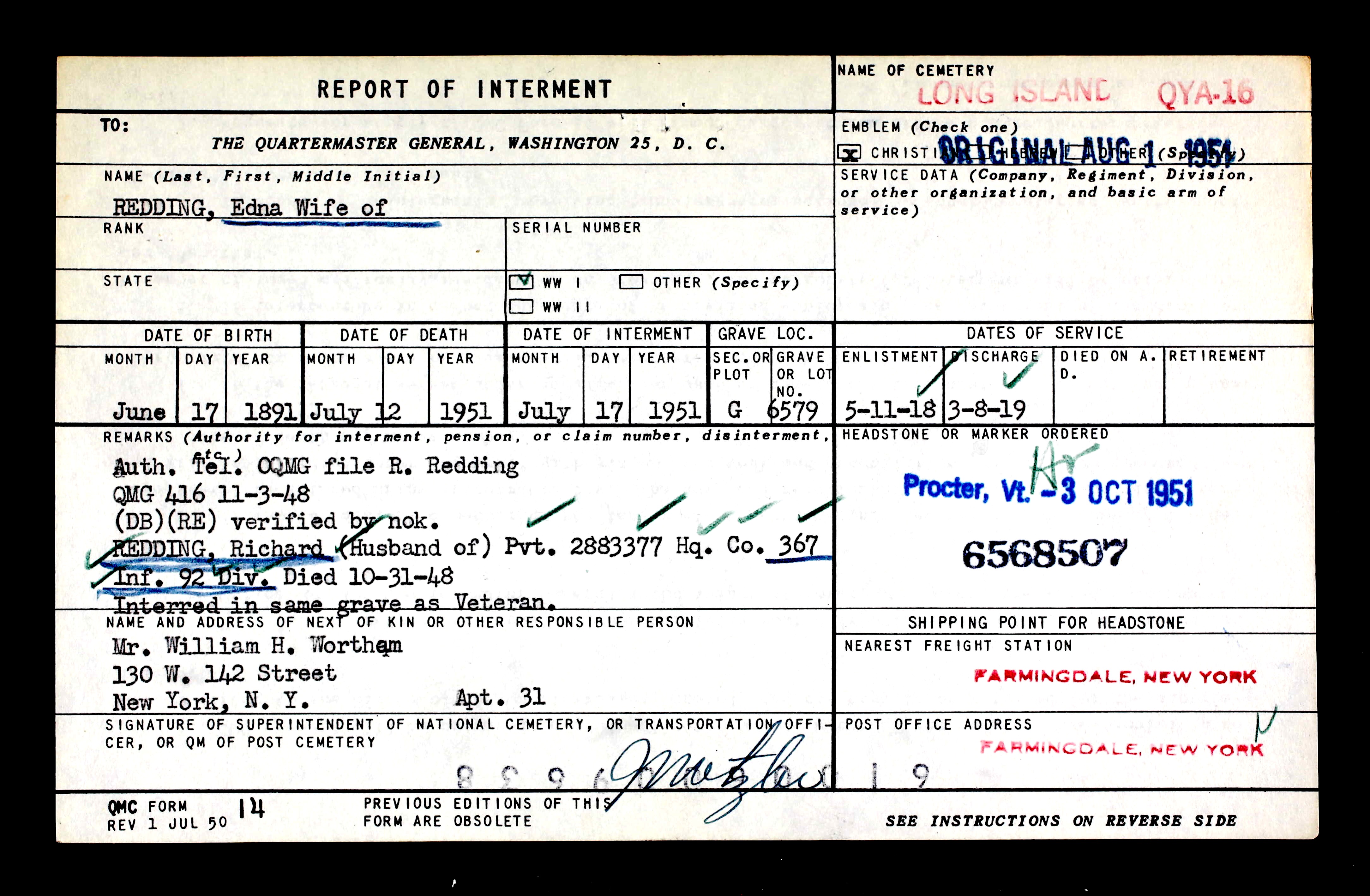
Dick Redding died at Pilgrim on Oct. 31 — Halloween!!! — 1948 and, thanks to his Army service in WWI, was buried with honors at Long Island National Cemetery. When Edna died in July 1951, less than three years later, she was interred with her husband at the national cemetery, as shown on this interment card:

Image

But records of Edna’s death and burial list a William H. Wortham as a the next of kin/other responsible person. One of those documents states that Edna was the wife of Wortham. If that was the case, Edna apparently bounced back from Dick’s death and got remarried pretty darn quickly.

And while I’m not calling her a gold digger … Wortham was a self-made rich man who accumulated wealth through real estate brokerage. He was married to the former Susan Payton, who died in January, 1953 — AFTER Edna Redding died. All of that seems to indicate that … William H. Wortham, who apparently was the second husband of Dick Redding’s widow Edna, was a bigamist. Why would Edna Redding go in for that?

Another puzzler is Dick Redding’s draft registration card, which he filled out in about 1942. In the line asking for the person who would always know his address, Dick Redding didn’t put his wife, Edna. Instead, he listed his sister, Minnie Redding, who lived two streets down from Dick and Edna in Harlem. Why wouldn’t Dick list his wife? Given that Edna Redding, on the surface, seems to have remarried — to a very wealth man, William Wortham — very quickly after Dick’s death and that Dick said he was closest to his sister, not his wife, Edna, were Dick and Edna estranged in the 1940s? If so, that could explain why Dick Redding might have simply been dumped at Pilgrim State Hospital in the mid-1940s or so — his wife, perhaps, didn’t want to deal with him or wanted him out of the picture.

But hold on here. What if Edna Redding wasn’t William Wortham’s wife, but one of his blood relatives? If that was the case, it could provide another avenue — albeit a somewhat iffy one — to look for a living person who might know what the heck happened to Cannonball Dick Redding in Pilgrim hospital.

In the 1940 U.S. Census, which lists Dick and Edna Redding living together on West 137th Street in Harlem (William Wortham and his wife, the former Susan Payton, were on 142nd Street). It also states that Edna was born in North Carolina in roughly 1891.

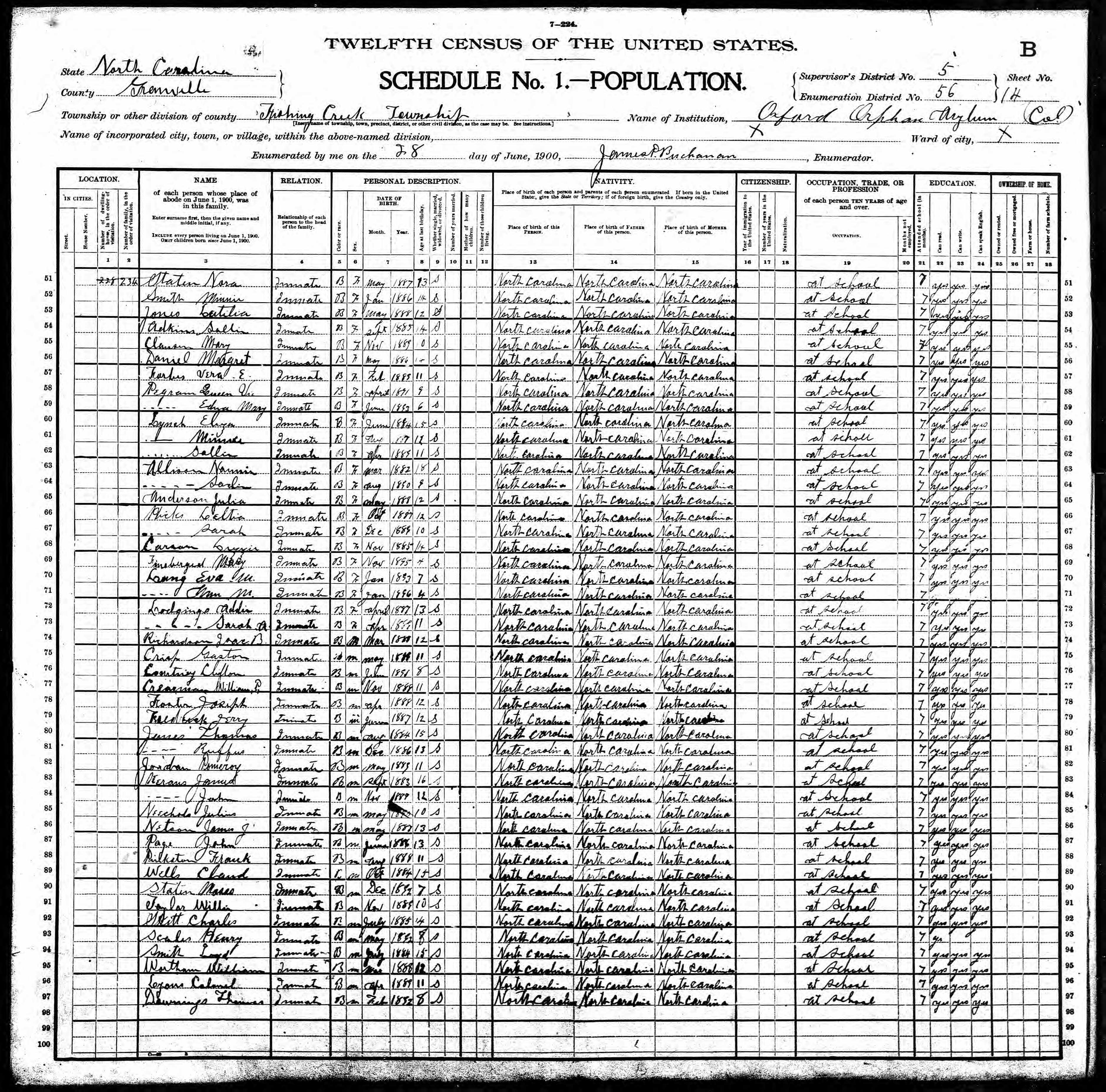
As it turns out, William H. Wortham was also born in North Carolina, and, apparently, from extremely humble beginnings. The 1900 U.S. Census lists 12-year-old William Wortham dwelling in the Oxford Orphan Asylum in Fishing Creek Township, North Carolina:

Image

In the same year, an Edna L. Wortham is listed as living in Raleigh, N.C., the 12-year-old daughter of Merrian and Eliza Wortham.

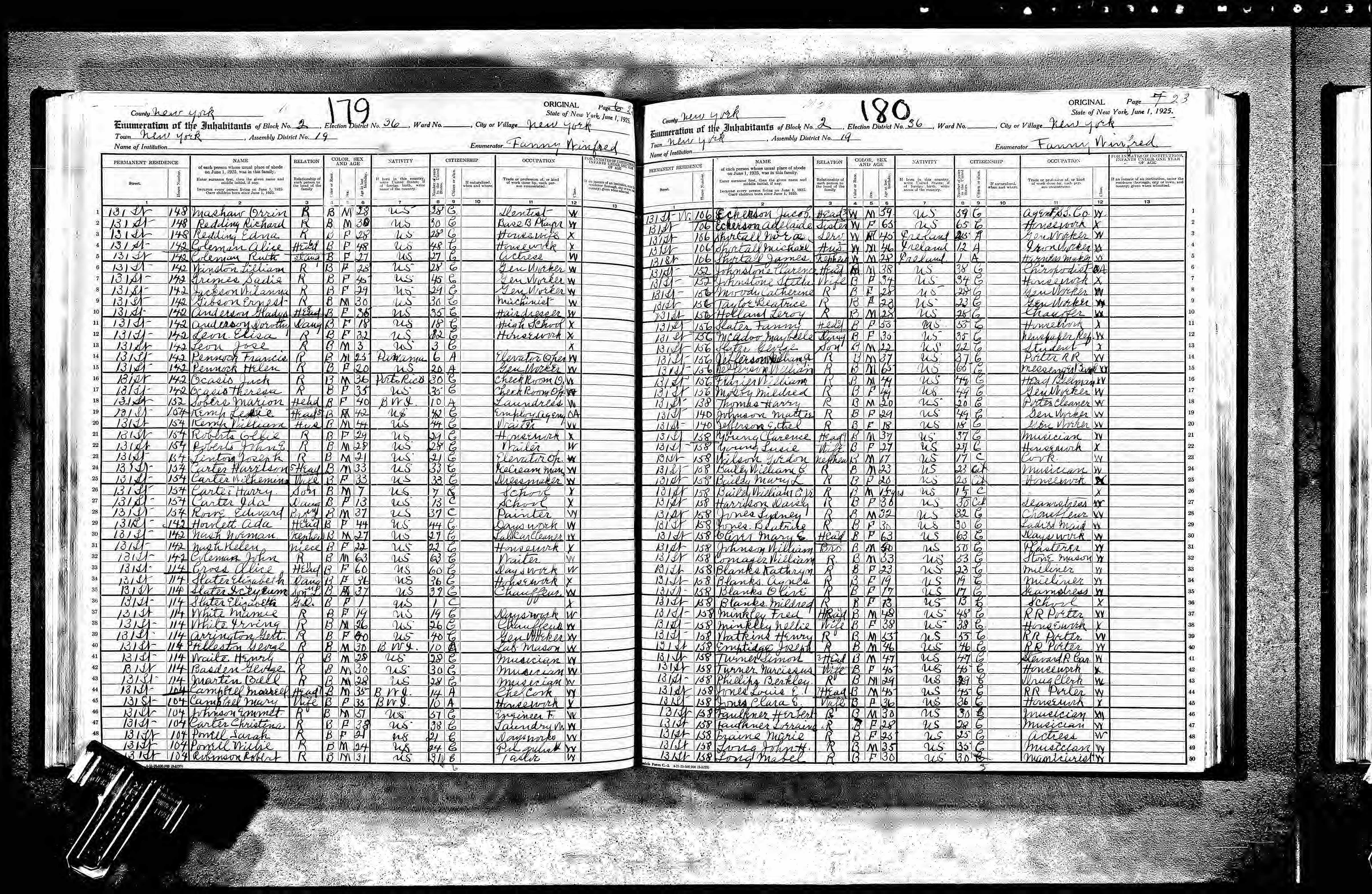
Then, two and a half decades later, the 1925 Census lists Dick and Edna Redding — at 30 and 28 years old, respectively — living together in Harlem on 131 Street:

Image

All of that provides circumstantial evidence that the eventual Edna Redding, wife of Negro League star pitcher Dick Redding, was, in fact, born Edna Wortham and was some sort of relative of real-estate mogul William H. Wortham, a possible fact that would lend itself to another whole avenue to find someone living who could talk about Dick Redding — one of his in-laws.

Of course, additional questions do remain … Why did Dick Redding list his sister, not his wife, as his contact on his draft card? Why do death records state that the widowed Edna Redding was the wife of William H. Wortham?

I’ll keep at this. In the meantime, I’ll issue a call for anyone who might have known Cannonball Dick Redding or would know anything about his time, and eventual death, in Pilgrim psychiatric hospital.

Update on progress of Dick Redding hospital records

Being someone who infamously lacks patience, especially when I have deadlines approaching, I decided to call Pilgrim State Hospital to find out the status of my request for release of records for Negro League legends Sol White and Dick Redding, both of whom died in NYS psychiatric hospitals in the mid-20th century.

I postal mailed formal requests for said release of records about a month ago and was subsequently told that all further communication with the matter would be made via postal mail. Right. Like I have the patience for that.

So today I called the Pilgrim records department — which houses historical records for the two Long Island hospitals at which Sol and Dick were committed — and asked about the status of my requests. I was told by an administrator that, basically, it could take a while. Why? Because, he said, it’s basically out of his hands at this point and on the desks of bureaucrats in “different offices,” most of which are in Albany, the capitol of New York. He said, “Any hold up in the the process will be a hold up in the whole system.”

That system apparently includes a “group of people” who make such decisions about the release of this type of files. He said there is currently a “backlog in information requests” and that my request is “a strange case because [the request] is not being made by family members or other genealogical researchers.”

Other than that, he acknowledged that he’s basically out of the look at this point and that I’m at the mercy of the glorious, tangled, inefficient bureaucracy known as the New York State government. Yippee.

While all this is pending, I PROMISE I’ll have a big post tomorrow about more details of Cannonball Dick Redding’s last years and the developments that took place in his family immediately following his death. In my quest to find any sort of living descendant of his, I’ve come across some very peculiar and seemingly conflicting records about the subject. So come back tomorrow if you can.

Ben Adair 1925 murder update — the dreaded FOIA request!

Just a quick update on the progress toward nailing down what exactly might have happened on the night in 1925 when a Harlem resident named Ben Adair was murdered by an as-yet unknown assailant in the apparent presence of three Negro Leagues stars — Oliver Marcell, Frank Wickware and Dave Brown …

I called the NYPD looking for the Cold Case unit. I was bounced to the Press Relations office, which in turn directed me to the Records Department office that handles Freedom of Information Act requests, a process I was hoping to avoid.

The Freedom on Information Acts in various states are ultimately very good things, because they force government agencies to turn over files and documents to the public that would otherwise be hidden from public view. Usually the FOIA process is used by investigative reporters who are looking into possible corruption, wrongdoing or other hinky business behind the walls of bureaucracy.

But FOIA can also be used by historians to force government officials to dig through long-forgotten archives that are collecting dust in some warehouse or other storage place. That process is almost certainly no fun for said officials, because it’s most likely a pain in the butt.

But it’s also a pain in the butt for historians and researchers who must wait patiently while those government bureaucrats to root through piles and piles and boxes and boxes of yellowing documents and files. That doesn’t include any fees the person making the FOIA request must incur for the process. Overall, it can be quite a challenge for everyone.

Sooooo, that’s what I’m going to do today — formally e-mail my FOIA request to release any and all NYPD records related to the 1925 murder. I’d say stay tuned, but it might be a while …

Sol White dedication Web page

Larry Lester has created a page on his Web site devoted to the recent ceremony on Staten Island that dedicated the new grave marker at Sol White’s burial place. Check it out here. The pictures and everything else on the link say more about the event than I ever could on this blog.

Memories of the Skipper

OK, this is absolutely the last one today … It’s just so good that I really want to get it in ASAP.

I’m frequently in touch with Rodney Page, son of Allen Page, who was pretty much the patriarch of the African-American baseball scene in New Orleans for almost a half-century. In my mind, Allen Page’s contributions to and influence on the local baseball picture is terribly unrecognized and overlooked. Maybe that will change after this. We shall see.

The Pages, including Allen’s offspring, were intimate friends with Wesley Barrow, a manager and mentor for decades who ranks right along side Allen Page in terms of importance here. About a week or two ago, I blogged about the depressingly shoddy state of the cemetery in which Wesley Barrow is buried. I forwarded the link to the blog post to Rodney, who in response had nothing but warm recollections and fond memories of the skipper.

Image

In fact, Rodney was asked to contribute a brief essay about Wesley Barrow when the baseball stadium in Pontchartrain Park was rededicated a couple years ago in honor of Barrow and the arrival of Major League Baseball’s latest Urban Youth Academy, which is now headquartered in Wesley Barrow Stadium. Rodney shared with me what he wrote for that special day:

A DISTANT MEMORY OF WESLEY BARROW

08-24-2012

 The ball field was on the West Bank on a road near the river, nothing fancy, yet a place for fans and players to gather and enjoy a Sunday afternoon of baseball.  It was a hot, sunny, Sunday afternoon during the summer of 1964 and the stands are packed with at least several hundred fans.  I’m not certain who drove us across the river as my dad no longer had an automobile. At my father’s request, I had been invited to play with Wesley Barrow’s semi-pro team that day. 

Hearing the crack of the bat, I drifted back slightly towards the left-field fence with my eyes clearly focused on the baseball coming swiftly towards me.  Upon catching the ball, I immediately and in one motion stepped into my throw to home plate.  It was a beautiful throw – a Roberto Clemente type, or so I thought.  Yet the voice and words came quickly:  “Little Page, hit the cut-off man.”  It was the teaching and the words of Wesley Barrow.  And yes, that would have been the correct throw, instead of the spectacular.  It was a basic fundamental of baseball related to throws from the outfield.  Always aim for the cut-off man for a relay or the ball to reach the catcher/plate on the bounce.  It was the call to attention and proper mechanics.  It was the strong, firm, yet affirming voice sharing the finer points of his craft.  It was Wesley Barrow, baseball purist and the man who had a love affair with baseball.  Even the times when the game did not love him back, his love for baseball remained unconditional and enduring.

This is now a very distant yet profound memory, cherished in the recesses of my heart, mind soul and spirit.  It is an infrequent memory that was re-awakened by the Wesley Barrow Stadium dedication.  I knew him well as he was frequently around the many baseball promotions of my father, Allen C. Page.

Wesley Barrow – a baseball purist; a love affair with baseball.  A good man, a good soul!  May his love for the game of baseball continue beyond the pearly gates.

Many, many thanks to Rodney for being willing to share his touching tribute to a man who, like Rodney’s father, helped the NOLA blackball scene thrive for decades.