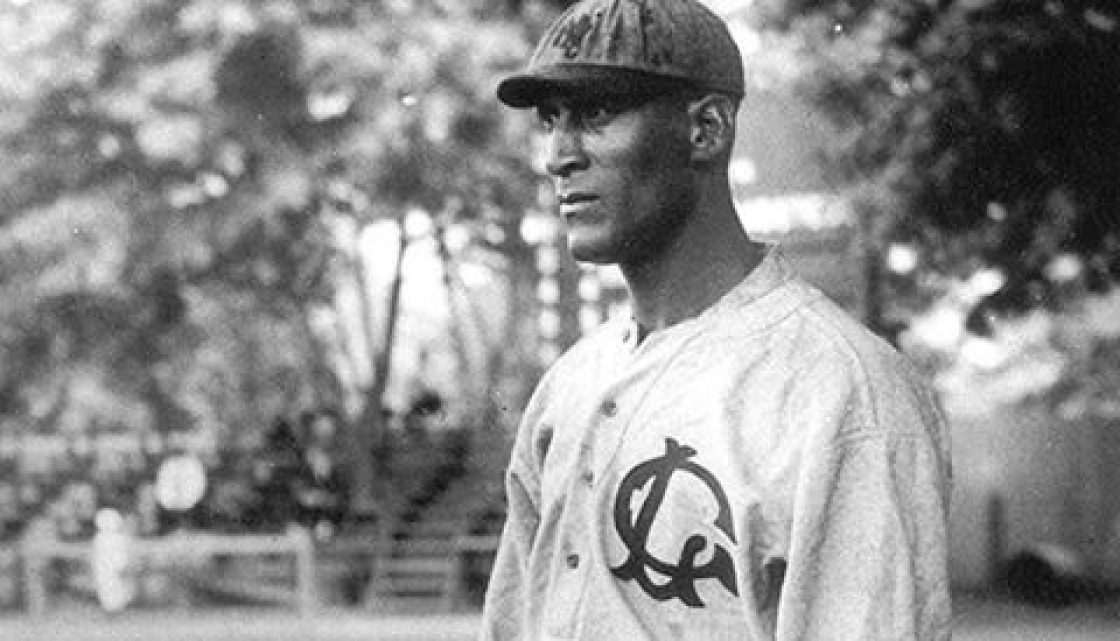
The recent Jerry Malloy Negro Leagues Conference in Louisville concluded informally with, as we say here in New Orleans, a lagniappe of baseball history and paying of respects to a legendary local Negro Leaguer who many believe belongs in the National Baseball Hall of Fame.
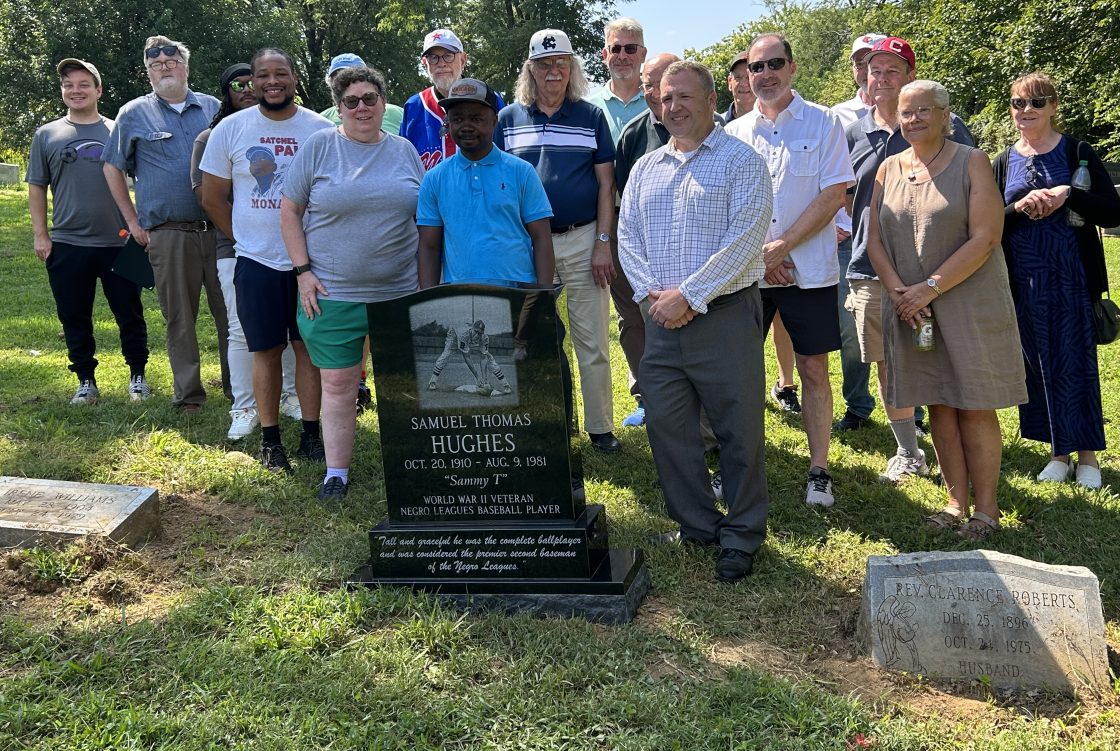
About 15 or so people gathered at Louisville Cemetery on Sunday, Aug. 10, to dedicate a new tombstone on the grave of Sammy T. Hughes, one of the best, most well rounded second basemen in Black baseball in the 1930s and ’40s.
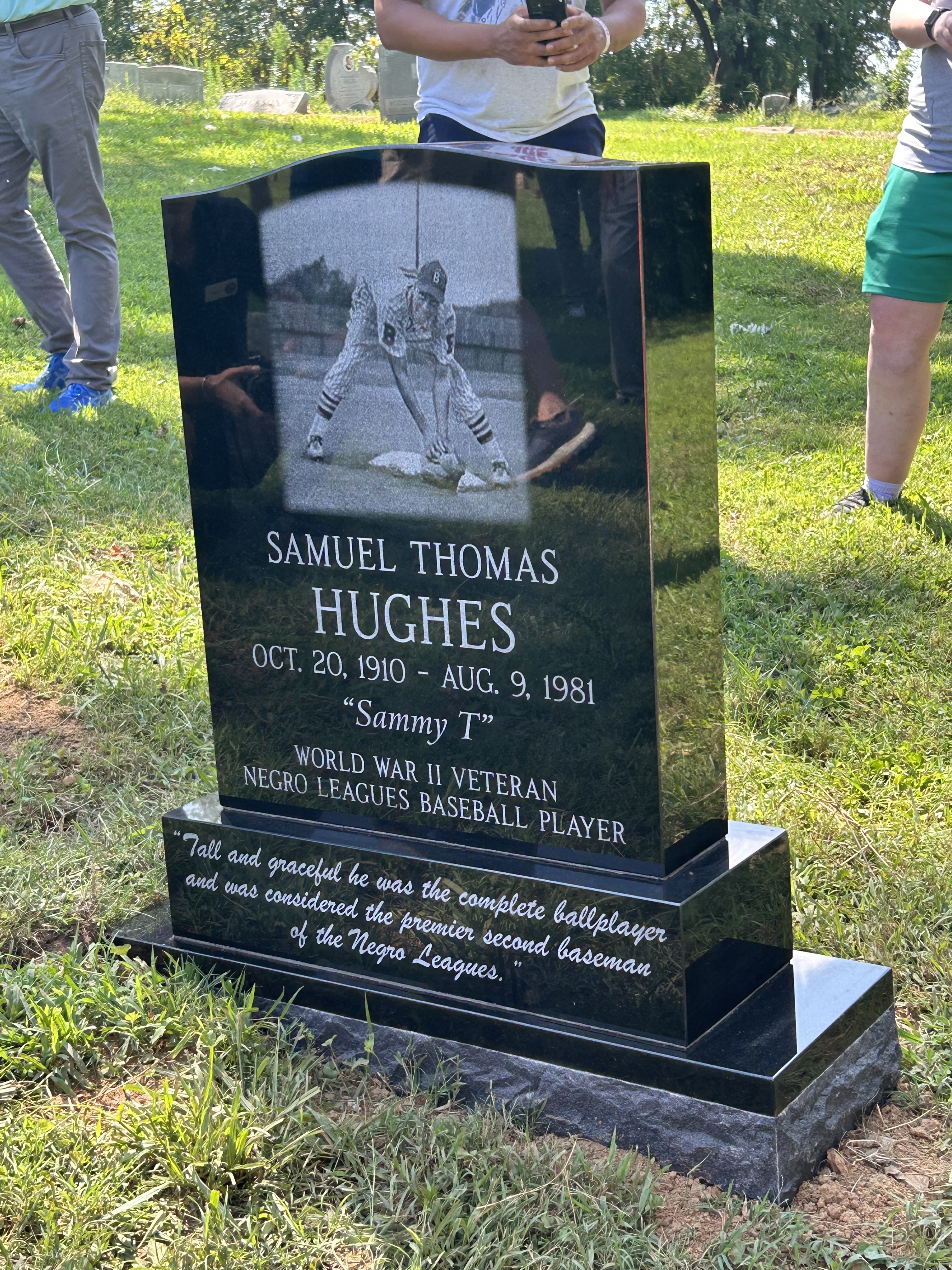
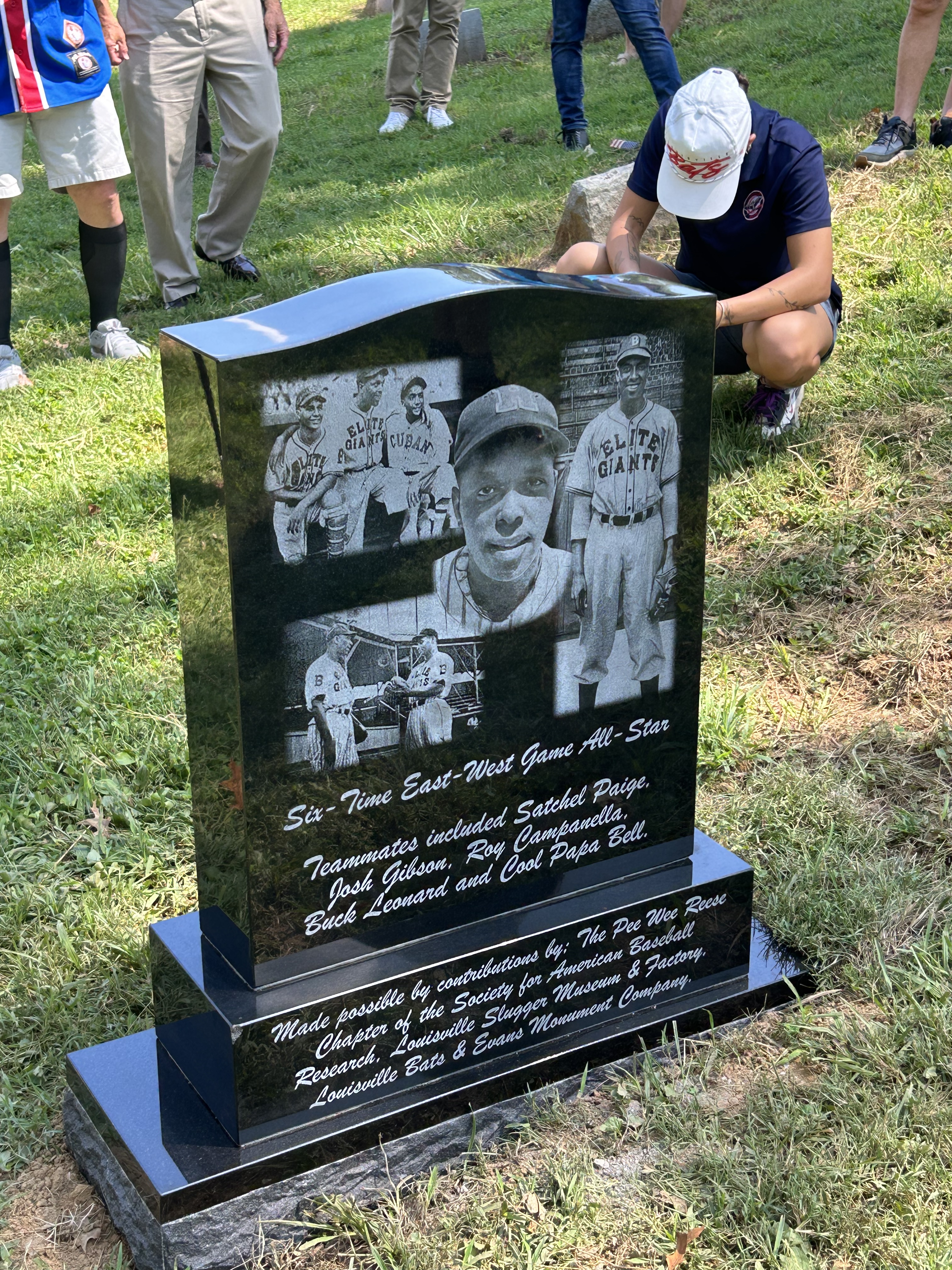
The headstone was the product of SABR’s Pee Wee Reese Louisville Chapter, said chapter president Chris Betsch. Discussion of such a project began a couple years ago, Betsch said, but the effort really picked up steam when the Louisville Chapter learned that it would host the 2025 Malloy conference.
The small gathering at Hughes’ grave began with SABR Negro Leagues Committee chair Leslie Heaphy reading a proclamation from the City of Louisville declaring Aug. 10 as Sammy T. Hughes Day in the city.

Betsch, during brief comments to those gathered at the cemetery that day, then said he first learned about Hughes a few years ago, when a similar effort resulted in a new headstone being placed at the grave of another Louisville Negro Leagues great, Felton Snow, in Eastern Cemetery.
Betsch said Hughes was one of the top three keystone sackers in Black baseball history, and, as such, deserves to be inducted in Cooperstown.
“Maybe someday we can rectify that,” he said.
He added that if Hughes had had such a beautiful new headstone years ago — as well as long deserved recognition from baseball and its fans — Hughes might have received the call from the Hall of Fame already.
“If he had this year’s back,” Betsch said, “maybe Louisville would be honoring Hall of Famer Sammy Hughes. You never know.”
Unfortunately, he added, “[h]e died at a time when a lot of Negro Leaguers were being forgotten.”
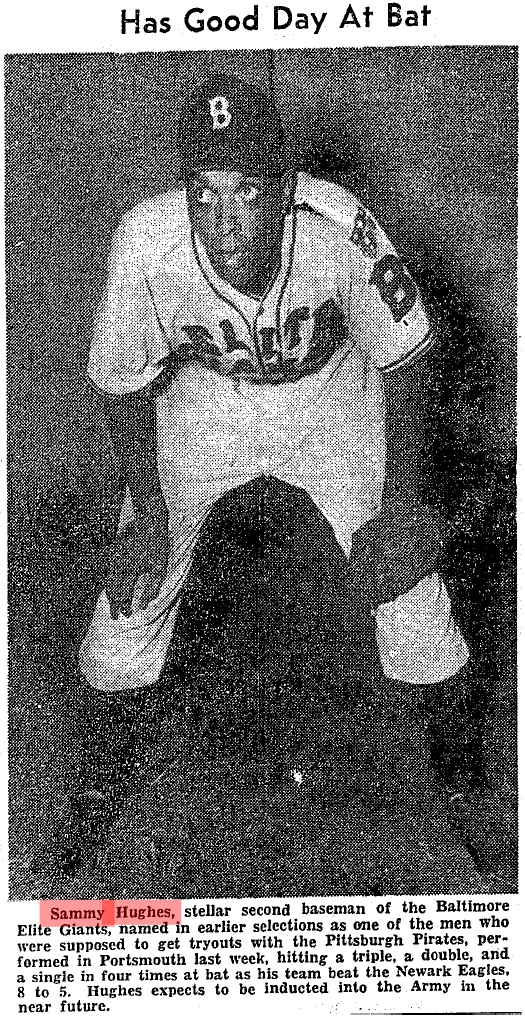
Hughes died on Aug. 9, 1981, in Los Angeles at the age of 70. He began his semipro baseball career in his teens on local Louisville teams in the late 1920s before becoming a major leaguer in 1930 when the Louisville Black Caps joined the Negro National League.
He eventually landed with the NNL’s Nashville Elite Giants and established himself as a star second baseman with the franchise for the next decade as the team moved to Columbus, then Washington, then, finally, Baltimore in 1938.
Hughes helped the Elites with the second Negro National League pennant in 1939, over time playing with several other sterling handball heroes on the Elites like Snow, Roy Campanella, Biz Mackey, Leon Day, Joe Black and Jim Gilliam, the last of whom Hughes tutored at second base before Gilliam went on to star for the Brooklyn/Los Angeles Dodgers. Sammy also ended up being voted to eight East-West All-Star Classics and played in five of them.
Hughes also starred for several all-star exhibition teams over his career, including an aggregation of the some of the best players in Black baseball that crushed the competition and won the title in the prestigious Denver Post Tournament in 1936.
Sammy also shined in other leagues across North America, including the trailblazing California Winter League and the upstart Mexican League. But perhaps Hughes reached the most recognition in his lifetime in 1942, when he was one of three Negro Leaguers — the others were pitcher Dave Barnhill and Baltimore teammate Campanella — invited to a tryout with the Pittsburgh Pirates.
At the time, Hughes was viewed as solid candidate to crack the color line. Norfolk New Journal and Guide sports columnist Lem Graves Jr. wrote that Hughes “is rated as one of the best in the business,” adding that the second baseman “gets our stamp of approval for this opening try.” The Cleveland Call & Post likewise stated that “Hughes is brilliant at his fielding position and is good with the stick as well.”

Unfortunately, and also perhaps unsurprisingly, the tryout never happened, meaning Hughes came agonizingly close to becoming the one who would integrate Organized Baseball, several years before Jackie Robinson did.
After a two-year stint in the Army during World War II, Hughes, despite trying to restart his baseball career, never played at his peak level again, retiring after the 1946 season and settling in Los Angeles for his later years.
Although never receiving adequate due for his baseball greatness during his lifetime, in the years since Hughes has gradually been recognized more and more as the Negro Leagues have gained their own long-overdue recognition and honors.
In his autobiography, “20 Years Too Soon,” longtime Negro Leagues catcher Quincy Trouppe named Hughes as one of the Blackball players who could have made the Majors if given the chance. Trouppe also listed Hughes as a utility infielder on Trouppe’s “Number One All-Time Team.” (George Scales was the assigned second baseman on Trouppe’s team.)
In a 1978 newspaper article, groundbreaking author John Holway listed Hughes as one of the 10 Negro Leaguers “most eligible” for induction into the NBHOF, writing that Hughes was “one of two top second basemen in blackball annals — Campanella says the best.” (Holway also interviewed Hughes for the former’s most influential books, “Black Giants.”)
The Baltimore Sun, in a retrospective of that city’s connections to and involvement in the Negro Leagues, stated this about Hughes: “The premier second baseman in the Negro Leagues was a solid contact hitter and magnificent fielder.”
I think a lot of people’s feelings about Hughes can be summed up by writer and artist Gary Cieradkowski, who wrote an excellent biography of Sammy T. at his Web site, in which Gary powerfully advocates for Hughes’ inclusion in the Hall.
“Every time the Hall of Fame convenes one of their Negro League committees,” Cieradkowski wrote in April 2024, “Sammy T. Hughes’ name makes the conversation, but he’s always pushed aside for players of seemingly lesser talent who played for better-known teams or had friends among the powers-that-be. Someday the Elites’ second baseman may get the recognition he deserves, but until then, Cooperstown is not complete because Sammy T. ain’t in there.”
 The Negro Leagues Up Close
Truly a great marker!!
LikeLike