There’s been a lot of stuff happening lately in the world of Negro League scholarship and fandom. For example, the SABR Negro Leagues Committee is gearing up for its annual Jerry Malloy Conference, scheduled this year for June 18-21 in Memphis.
On my end, the John Bissant grave marker project continues to move forward; we’ve got the text for the marker written, and we’re in the process of finding a contractor to produce the stone. In addition, the Schott-Pelican Chapter of SABR here in New Orleans is working to put together a Negro Leagues Day at a Tulane University baseball game next month (more on that later).
And this past Saturday, Feb. 28, the Josh Gibson Foundation/Negro Leagues Family Alliance – which was co-founded and now headed by Sean Gibson, Josh Gibson’s great-grandson – hosted its regular Negro Leagues webinar, this one on the topic of getting more Negro Leaguers inducted into the National Baseball Hall of Fame. The webinar featured presentations by Negro League advocates and aficionadoes Ted Knorr and Gary Gillette of our 42 for 21 committee.
Meanwhile, along those lines, on Wednesday, March 4, the 42 for 21 committee formally proposed a major revision to the Hall’s Era Committee system, which historically has been completely inadequate and unjust toward potential Black figures from the segregation era. I’ll discuss that in my next post, which hopefully will be posted this upcoming Monday morning.

But right now, I’m going to give the lowdown about the webinar this past Saturday, and I’ll just dive right into it, because there were a bunch of sharp, pointed and passionate comments by several people, all along the lines of righting an ongoing wrong being stubbornly perpetrated the Hall of Fame.
Sean Gibson hosted the webinar, and he began by noting that the Family Alliance fully supports the efforts of 42 for 21 and the overall Hall of Fame push.
“We support this effort of getting more Negro League baseball players into the Hall of Fame,” he said. “The mission of the Negro Leagues Family Alliance is to always try to do our best ti use our name and brand to help other Negro Leagues players’ family members to advocate for them and causes like this. I just want to say on behalf of the Family Alliance, we do support this effort.”
The webinar really kicked into gear with longtime SABR Negro Leagues Committee member Ted Knorr giving a comprehensive rundown of the painfully convoluted, tortured history of the various panels and voting bodies, running back to the selection and induction of Satchel Paige in 1971, that were successively formed and disbanded that have elected, or failed to elect, segregated-era Black players, managers, executives, pioneers and umpires.
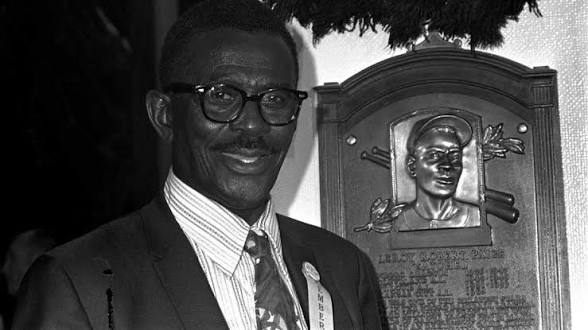
Ted also listed the various polls done by Negro Leagues experts over the decades aimed at selecting the all-time greatest Negro League figures, beginning with the famed 1952 Pittsburgh Courier poll of writers, players, managers and other experts at the time.
Ted’s listing of these polls included several that have recommended which segregation-era African-American baseball figures need to be inducted into the Hall as soon as possible, up through the “42 for 21” vote taken in 2021 by a group of Negro Leagues historians, writers, researchers and scholars.
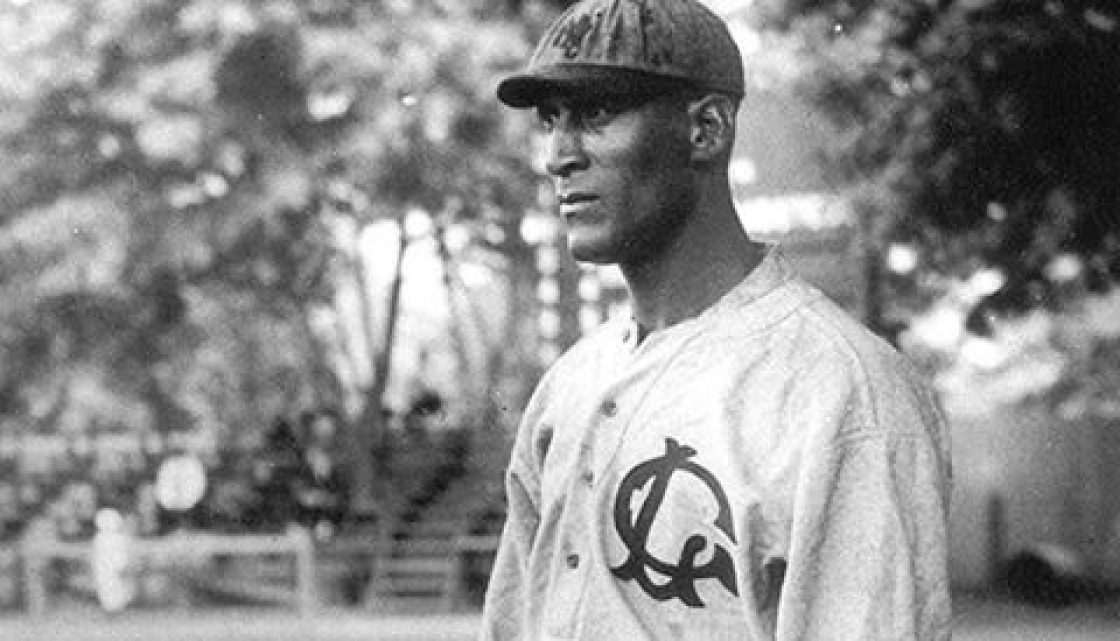
Given how detailed Ted’s presentation on these committees and polls, I won’t summarize them in the post, but you should absolutely watch it with this link, which is also given above. However, I will include Ted’s rundown of the current 42 for 21 top 10 of segregated-era Black baseball figures who need to be inducted into the Hall. The current list is minus the three men who were listed in the original 42 for 21 list that have since been inducted by the Hall – Bud Fowler, Buck O’Neil and Minnie Minoso.
Here’s the countdown of the list of 10:
- Tied for 9th: Outfielder Spotswood Poles and second baseman Newt Allen;
- 8th: 19th-century slugger Grant “Home Run” Johnson;
- 7th: second baseman Dick Lundy;
- 6th: manager Vic Harris;
- 5th: owner/executive Gus Greenlee;
- Tied for 3rd: multi-positioned John Beckwith and pitcher John Donaldson;
- 2nd: pitcher “Cannonball” Dick Redding;
- 1st: outfielder Rap Dixon.

Overall, Ted noted:
“There’s going to be a wide range of opinion, and I think everyone in this room, and every open-minded person, realizes that a four-and-a-half to one ratio doesn’t do a good job of educating the public on the history of baseball. It’s my view, and this is just my opinion, that talent and achievement among Negro League players could fill 58 to 80 plaques in the gallery. There at 28 at present. That’s a shortfall.”
I also liked a comment that Ted made as an aside to his presentation – he noted that the induction of Fowler, O’Neil and Minoso in 2022 was celebrated by Negro Leagues advocates and gave us hope that more segregation-era Black figures would soon follow that trio into the Hall.
Unfortunately, Ted said, “It obviously misled us for the next four or five years.”
Gary was next up in the webinar, and I think I’ll conclude this post with his complete comments that he made Saturday, because his words some up the beliefs of many of us:
“Many thanks to y’all for joining us today. You’ve heard what my colleagues Sean Gibson and Ted Knorr have to say, and I hope that you have been impressed by the recitation of the historical evidence. It is undeniable that Black players from the National Pastime’s Segregated Era are substantially underrepresented in Cooperstown.
“I have some additional comments I’d like to offer for your consideration. Unfortunately, I don’t believe that — in the memorable words of the Captain in ‘Cool Hand Luke’: ‘What we’ve got here is … failure to communicate.’ Communication between the Hall of Fame and the baseball public is just fine; what is not fine is the Hall’s defense of its careful gerrymandering of its electorate.
“The carefully chosen words and the actions of the Hall of Fame speak clearly to their apparent goal of restricting future election of Black players, managers, executives and umpires from the Segregated Era to the Hall.
“Weirdly, while critics of proposals to elect more Negro Leaguers to the Hall often decry the supposed ‘quota systems’ of these initiatives, it’s actually the Hall itself that is intent on enforcing an informal, but strict, quota system of its own.
“If you think that’s unfair, I ask you: When has the Hall of Fame been proactive when related to including Negro Leaguers, as opposed to being reactive to public pressure?
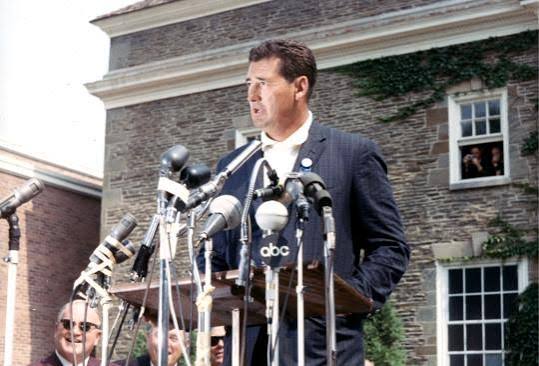
“I’d like to see a show of hands for all those who think that, absent Ted Williams’s unexpected and brave plea at his 1966 induction, the Hall would not have taken another decade or more before setting up its first Negro Leagues Committee.
“No hands? As I expected, we all know that it was only the major public embarrassment that an icon like Williams could generate that forced the Hall to act. Yet unbelievably, the Hall initially proposed a new, Jim Crow Hall: a ‘separate but equal’ wing for the Negro Leaguers. The Hall was quickly forced to retreat from that indefensible position after a tidal wave of criticism.
“Even then, the attempt to constrict the number of Negro Leaguers continued, as the Hall pressured its initial Negro League Committee to disband after electing only nine players – not coincidentally, those nine neatly filled out a starting lineup with one player per position. (That lineup was enabled by the convenient assignment of versatile great Martin Dihigo to the keystone sack.)
“What will it take to get the grand panjandrums in Cooperstown to lower the de facto barriers they have set up to prevent more Black Hall of Famers from the Segregated Era from being added to the hallowed Plaque Gallery – the sanctum sanctorum of the National Pastime?
“No one knows for sure, but it certainly won’t happen without another sustained public outcry about the ridiculously unfair structure of the Era Committees. Let me read to you the exact text from the Hall of Fame’s Web site describing the history and function of the Era Committees:
“‘ERA COMMITTEES ELECTION’
“‘The Era Committee has been a part of the Hall of Fame voting process since the first class of electees in 1936, with the first Era Committee electees coming in 1937.
“‘The Era Committees, formerly known as the Veterans Committee, consider retired Major League players no longer eligible for election by the BBWAA, along with managers, umpires and executives.’
“Notice anything? One of the salient facts about the various incarnations of the Veterans/Era Committee system is its almost complete failure to elect any Negro League managers or umpires. Is anyone capable of keeping a straight face when they say that a half-century of segregated baseball could not produce one Hall-worthy manager or umpire? Really? Seriously? Pull the other one!
“As for Segregated Era executives, the Veterans/Era Committees have elected only one executive, Black baseball titan Rube Foster. What about the other four executives elected, you ask? Effa Manley, Alex Pompez, Cum Posey and J.L. Wilkinson were elected in the special 2006 process, not by any Veterans or Era Committee. What about Sol White, Frank Grant, Bud Fowler and Buck O’Neil, you point out – all of whom are shown as Executives on the Hall’s official Web site? They are more aptly described as Pioneers, one of five categories for induction, but that category has essentially been abandoned by the Hall for no good reason.
“The sad truth is that only Rube Foster – a no-brainer selection whose greatness even the brainless could recognize – is the only executive, manager or umpire from the Segregated Era that has been allowed through the bronze portals of the Hall in the half-century since 1971.
“When Satchel Paige was finally inducted into the Hall of Fame in ‘71, he said in his speech that ‘there were many Satchels and many Joshes.’ We can forgive his rhetorical hyperbole there, and one can easily argue there was no pitcher as great as Paige and no player as great as Gibson.
“Paige’s point, however, is spot-on. There were many great Black players in the Segregated Era – far more than have since been immortalized in bronze in Cooperstown. It’s great that underappreciated outfielder Pete Hill has a plaque, yet the brilliant but almost unknown outfielder Rap Dixon does not. Shortstop Pop Lloyd was inducted in 1977, and Willie Wells in 2006, but King Richard, the great shortstop Dick Lundy, has been excluded along with Grant ‘Home Run’ Johnson – perhaps the best Black player of the 19th century. Intimidating, flamethrowing hurlers like Paige and Joe Williams have been honored, but Cannonball Dick Redding remains on the outside, virtually anonymous.
“In conclusion, I’d like to repurpose an oft-referenced phrase from American history that seems appropriate to describe the Hall of Fame’s history in this regard. In the Supreme Court’s precedent-shattering Brown v. Board of Education ruling in 1954, the Court ordered that segregation should be ended ‘with all deliberate speed.’ Unfortunately, that unclear language gave enough latitude for recalcitrant Southern states to disingenuously drag out the desegregation process.
“It has now been 55 years since the legendary Satchel Paige took his rightful place in Cooperstown, yet we are still struggling to end discrimination against the great Black players.”
 The Negro Leagues Up Close