Editor’s note: This is the second part of a three-part series on the New Orleans Creoles. The first installment is here.
We’ve covered the Creoles’ barnstorming, charity and other non-league contests. Now, we have to look at the team’s actual Negro Southern League games and the Creoles’ performance in the circuit.
But just like most years and most leagues in Black baseball, the NSL’s in-circuit season was irregular, unpredictable and nigh near willy nilly.
By the time the dust cleared and the 1947 Negro Southern League season wrapped up, there was, not completely unexpectedly, a lack of clarity as to who’d won the darn thing.
Thanks to the same challenges that plagued Black baseball and their leagues, teams and players for decades and at all levels of the game – erratic news coverage, incomplete or altered game schedules, small crowds, team-jumping players – the conclusion to the 1947 Negro Southern League campaign is a little cloudy, to say the least.
And the Creoles had for themselves a front seat on the roller coaster ride.
The Crescent City team opened its league schedule on May 11, with a doubleheader at Little Rock, where they split with the Memphis Blues, a club that existed for a single year in 1947 and played in the NSL for that season.
(As was usually the case in the Negro Leagues, NSL teams often played at neutral sites as a way to maximize revenue by bringing the gameday experience to different places, including those that currently didn’t have a team in the loop.)
After two more divided road series – a doubleheader against the Atlanta Black Crackers that the foes split, and a 2-2, four-game set with the Raleigh Tigers at different venues in North Carolina – the Creoles arrived in the Smoky Mountains of western North Carolina in the first week of June to face the Asheville Blues, the defending NSL champs.
Unfortunately, the Blues flexed those superpower muscles and swept the four-game set, and it didn’t get much better after that – a four-game series at Chattanooga against the Choo-Choos ended with the home team taking the set, three games to one.
Then came an example of a frequent practice that made the Negro Leagues wholly unique in professional baseball at the time – an extended, paired road trip, in which two teams accompanied each other on a jaunt to different locales, often across multiple states, as a traveling attraction, a road show of shorts.
In this case, the Creoles traveled with the Black Crackers, beginning with a doubleheader in Atlanta on June 15; the clubs ended up splitting that twin bill, then headed west.
Where, finally, at long last, the Creoles came home.
The Big Easy boys had their league home opener on June 17 at Pelican Stadium against Atlanta, and The Louisiana Weekly of June 14 stated that the event would hold tremendous significance for local baseball fans.
Pelican Stadium
“Two long months of endurance and waiting by New Orleans fans will end on Tuesday night when the Creoles clash with the strong Atlanta Black Crackers at Pelican Stadium,” the paper said. “This will mark the first time a stable, chartered league [in recent years] has had a representative from New Orleans.
“Twice on occasions in the past,” the article added, “New Orleans has had entrants in semi-organized circuits. … In days past it was such names and officials as Moss, Geddes and [Fred] Caufield [actually spelled Caulfield] that vanguard the movement to establish New Orleans as a baseball city.
“Tuesday and Wednesday nights, Allen Page will trot out one of the greatest young teams ever assembled and certainly one of the best that ever wore a New Orleans uniform.”
Thanks to, ahem, cracker jack pitching, the Creoles won both contests, held on consecutive nights. In the Tuesday game, the Creoles’ Cuban ace, Wenceslao Gonzales, hurled a four-hit, 1-0 shutout, and Billy Horne scored the lone marker on a Cracker fielding error in the sixth inning. An estimated 5,100 folks showed up to see the game.
Arizona Republic, May 28, 1954
The following night, New Orleans pitcher Wild Bill Chapman allowed six hits and only a lone tally in the first inning, followed by airtight, shutout ball the rest of the way in a 6-1 triumph. With the win, the Creoles (by my calculation) moved ahead of Atlanta and into sole possession of third place in the NSL, behind first-place Asheville and second-place Jacksonville.
The two clubs then embarked on their pair journey through the South and headed north and west to Shreveport, where the Creoles nipped the Crackers, 8-7, in a contest played on the home diamond of the white Shreveport Sports of the Texas League.
New Orleans then swept a doubleheader over the Black Crax in Houston and followed up by edging out the Atlanta aggregation, 3-2, in 11 innings at the American Legion ball field in Longview, Texas, on June 24.
Beginning in late July, the Creoles faced a grueling slate of league games that at some point paired them against (in order) Nashville, Chattanooga, Asheville, Raleigh, Jacksonville and Nashville again. The regular-season league schedule didn’t conclude until the last week of August.
And during those roughly six weeks, the Creoles enjoyed only eight home dates at Pelican Stadium in New Orleans. The rest of the time, the Big Easy lads were scheduled for contests at Longview, Texas; Alexandria, La.; Baton Rouge, La.; back to Longview; El Dorado, Ark.; again to Longview; another one in Longview after a quick trip home; El Dorado; Houma, La.; Shreveport, La.; back to Houma; to Nashville, Tenn.; and to Dayton, Ohio.
A couple notes on that schedule:
Only three of all those games were played at the home field of the Creoles’ given league opponent. That would be the ones for the last series, at the famed Sulphur Dell in Nashville against the Nashville Cubs.
Those contests at Nashville were billed in advertising in The Tennessean newspaper as “official championship playoff games,” but I’m not sure why. It could have been a series to determine the winner of the NSL second-half pennant and the right to play the first-half winner and defending champion Asheville. (More on that in the third and final installment of this blog series.)
While numerous games being played at neutral sites certainly isn’t surprising in the slightest for the Negro Leagues, I don’t know why these particular locales were chosen. However, since Shreveport is in northwest Louisiana, Longview is in northeast Texas, and El Dorado is in southwest Texas, all three of those places are relatively close to each other, which might have facilitated traveling between them. As to why Dayton was selected, your guess is as good as mine.
Houma is only about 60 miles and an hour’s drive to the southwest from New Orleans. The medium-sized town was at that time home to the Houma Indians, a team in the low-level, professional circuit Evangeline League, which, despite its rookie-level status, was an extremely colorful, beloved, scandal-plagued league contained entirely in the southern half of Louisiana.
Remember that this is a Black team traveling through the South at a time when segregration was still in full effect, which often meant rickety vehicles, sketchy hotels and meals grabbed on the fly wherever they could. It was a trying existence for the team, players and management.
As a way of concluding this installment, we’ll take a look at the off-field measures of success for a baseball team – gate receipts, attendance and public support? Did the Creoles draw good crowds, or did the local community not give the type of attention to the club that the Creoles for which the Creoles were hoping?
Basically, it was solid, but it certainly could have been better, something on which The Louisiana Weekly then-sports editor Jim Hall emphatically expounded in his regular column from July 26, 1947.
Coming shortly after the Creoles drew just 2,300 spectators to a doubleheader at Pelican Stadium against Chattanooga, Hall’s piece lamented the languid state of Black baseball in the Crescent City and the African-American citizenry’s apathy toward the situation.
We have one team (Creoles) that can play their games in Pelican Stadium and we don’t fully support it. Fans, colored baseball needs you and ‘Brother’ it needs you very badly.
Jim Hall, Louisiana Weekly columnist
“Judging from last Sunday’s twin bill affair at the Pelican Stadium,” Hall penned, perhaps, lots of the baseball fans or followers don’t know about the New Orleans Creoles … For years, local fans have been shouting the question, when are we going to have a home team, a team which will represent our city in one of the organized leagues in our country? …
“Now that the out-of-town teams games have been cut down and one of the baseball magnets [Page], who by the way, is a colored citizen, has invested nearly $10,000.00 in a baseball team called the New Orleans Creoles, which is a member of the Negro Southern League, the attendance is still fading. …
“At the present time,” Hall added, “there is [sic] some twenty baseball teams in New Orleans without a place to play their games, these teams must stay on the road and play their games. We have one team (Creoles) that can play their games in Pelican Stadium and we don’t fully support it. Fans, colored baseball needs you and ‘Brother’ it needs you very badly.
“In New Orleans, there is little incentive for colored players to give their best to baseball when the home town [sic] fans will not come out and see the team in action. Whether the [white] New Orleans Pelicans win or lose, the crowd is always giving full support. Why can’t the colored fans support a team of their own?”
That, unfortunately, is a common theme running through just about the entirety of African-American baseball history in New Orleans. In 1947 specifically, those citizens who declined to support their own Negro League team missed one helluva conclusion to the season. That, plus a focus on three of the 1947 Creoles themselves, will be in our next, final installment of this series.
New Orleans Creoles owner and Negro Southern League president Allen Page. (Photo from the Amistad Research Center.)
In January 1947, The Louisiana Weekly newspaper in New Orleans announced that Allen Page, a longtime sports promoter, baseball impresario, hotelier and businessman, was busy forming a new hardball team for African-Americans in the Big Easy. Dubbed the Creoles, the new organization was slated to start spring training in late March, and, reported The Weekly, “Page … is now signing up ball players” and “inviting all young baseball players … to contact him at the Page Hotel, 1038 Dryades St. …” The article also noted that the team’s home field would be at Pelican Stadium.
Two months later came the arrival of the Creoles’ first manager – 41-year-old Harry Williams, a respected, longtime Negro Leaguer who started his career in the top levels of Black baseball in the early 1930s and for 15 years or so hopped around to several clubs. He got into managing circa 1943, serving piloting tenures with, most recently, the Baltimore Elite Giants and New York Black Yankees.
The 1947 New Orleans Creoles’ season began, anchored by Allen Page, whose long-term impact on the National Pastime, both in NOLA and through the whole Black ball world, has been immense, as his son, Rodney Page, wrote a few years ago in a short article/tribute to Allen.
“The true story of Allen Page is his indomitable spirit, which speaks to the heart of self-reliance, self-definition, and self-determination,” Rodney wrote. “He transcended and excelled despite the shackles of the Jim Crow South and overt racism in America. A legacy of firsts was in his DNA.”
As alluded to the introduction to this post, one of Allen Page’s boldest, most daring moves as an owner and operator during his several decades in New Orleans previously owning and running several franchises earlier in his career, such as the Black Pelicans and Crescent Stars, was the launching of a fairly successful Negro minor league team just as integration had started the process of teams in Organized Baseball poaching the top talent from the Black circuits.
According to contemporaneous media coverage – particularly in The Louisiana Weekly – the New Orleans Creoles of the late 1940s were reliable members of the Negro Southern League who fared pretty well on the diamond, in the stands and out among the public.
The Creoles also reportedly maintained a working relationship with the Negro National and Negro American leagues, which makes sense, given the NSL’s ox thinking was the inclusion of women in the Creoles’ lineups, the highest-profile of which was doubtlessly Toni Stone, an infielder (usually second base, specifically) who starred for the Creoles in 1949 and later for the Negro American League’s Indianapolis Clowns.
Stone wasn’t the only woman to grace the rosters of the late-1940s New Orleans Creoles; in 1948, for example, Page brought aboard outfielders Fabiola Wilson, a former student-athlete at Xavier University of Louisiana in New Orleans, and Gloria Dymond, from Southern University in Baton Rouge. All of that was several years after Georgia Williams pitched for the Creoles in 1945.
There was one more female New Orleans Creole in the late 1940s, but we’ll save her for our next post about the club.
For simplification purposes, this post will largely focus on the New Orleans Creoles’ 1947 season, their first in existence under Allen, so we’ll now return to the narrative begun at the start of this post …
I’m going to try very hard not to get bogged down in too many specifics about the ’47 Creoles and just zero in on a few developments and trends that highlighted the season for the New Orleans crew.
In terms of significant developments or occurrences, there were two I want to point out. The first came in late April, when Page managed to wrangle in five players from the stellar Cuban professional league, including catcher Francisco “Frank” Casanova and pitcher Wenceslao Gonzales, the latter of whom I’ll examine in a little more depth in my next post about the 1947 Creoles.
“In an attempt to place a team in the Negro Southern League that is worth[y] of the great sport loving city that is New Orleans,” stated the April 26, 1947, issue of The Louisiana Weekly newspaper, “Allen Page, owner of the local league entry, has the services of five outstanding players” from Cuba.
The newspaper noted that the signing of the five Cuban ringers was facilitated by Alex Pompez, the owner of the Negro National League’s New York Cubans team. Pompez, a National Baseball Hall of Fame inductee, was close friends with Page and visited New Orleans frequently. The Weekly also stated that, essentially, the Creoles were a farm team for the NNL squad.
Alex Pompez
The inking of the five Cubans underscored the diverse locales from which Page plucked the members of the ’47 Creoles, reported the newspaper, which added, however, that the team’s roster was also stocked by much local talent, too.
“Although first preference for berths was given to local boys,” the paper said, “the lack of proper response and the refusal of candidates to report [to the team] consistently have forced … Williams to bring in many of the players who have written in from all over the country. However, despite the fact that players from Indiana, Illinois, Pennsylvania, Alabama and Ohio have been grabbed the spotlight [sic], at least six Louisiana youths, including four New Orleans lads, have showed [sic] enough to warrant at least four starting berths.”
The second major development in the Creoles’ season took place occurred on an executive level. Upon the death of then-NSL president Tom Wilson in late May 1947, Page was selected to succeed the revered Wilson, who had been a team owner and league executive in multiple Negro professional loops for nearly 30 years.
In covering the NSL’s season organizing meeting in Nashville (the home of the league-member Cubs) in late May, newswire reporter C.J. Kincaide noted the election of Page as league president.
“Mr. Page is no new figure to baseball,” Kincaide wrote. “In addition to being a successful businessman in New Orleans, he has been a promoter of baseball for a number of years and is well-known and highly respected by owners and managers of both the Negro American and National Leagues.”
In his article, Kincaide quoted Page himself, who told the reporter that “we have a big job to do, if for no other reason than for Tom Wilson who all baseball men loved and respected.”
While it was certainly an honor – and an assumption of significant responsibility – for Page to be elevated to the head of a far-reaching organization, he had assumed similar league executive positions before, and he would later, a fact that reflected how respected and capable he was for shepherding numerous teams into a functioning operation spread out of several states at a time in history when the long overdue integration of Organized Baseball was starting to gradually chip away at the viability of Black baseball.
Pundits from around the country chimed in with their thoughts of and hopes from Page’s ascension to league president, and what it might mean for the NSL. Referring to the building of a new edition of the NSL, seasoned journalist and columnist for the Pittsburgh CourierLucuis Jones wrote that Page was tasked with “[b]ringing the Southern League in its own [as] a two-year overhauling job.” He added that Page was an excellent choice to succeed Wilson, calling Page a “nationally-known team owner and sportsman,” and the scribe reported that Page thought that “a powerful … six-club circuit in which all the clubs are within a 500-mile radius of each other is a better financial proposition … and much more [stable] than an eight-club league” in which some teams must travel more than 500 miles and possibly barnstorm on the way in order to play every other league team.
Jones further outlined Page’s thoughts about the future of the NSL, noting that the new president said the league’s players must be aware of the importance of putting quality teams and exciting play when they take the field.
Every club cannot have a winning outfit. But every team can hustle and display sterling sportsmanship.
Allen Page, stated to columnist Lucius Jones
Jones penned that Page “stated firmly that effective at once, every club must require its players to hustle throughout every game and cease their ‘umpiring.’ Failure to adhere to these directives may bring fines or suspensions or both. ‘Every club cannot have a winning outfit,’ said Mr. Page … ‘But every team can hustle and display sterling sportsmanship.’ This will win the public anywhere, any time, [sic] it’s good box office and it’s a fool-proof way to get the cash customers …” to come to games.
Aside from these two events – the Creoles’ recruitment of Cuban players to beef up the team’s roster, and Allen Page becoming league president – the 1947 Creoles season marked a trend followed by Page and his teams over the course of several years.
Namely, that Page brought aboard women to his baseball operations, either as coaches or players, making him, and the women he signed for his teams, early trailblazers in women’s sports.
Although previous baseball history featured a bunch of women’s teams, both Black and white, that had played, often by barnstorming, America’s pastime – and, especially, the famed All-American Girls Professional Baseball League during World War II – Page was one of the very first baseball figures to sign individual women to his otherwise male teams.
That was especially true of his New Orleans Creoles teams of the late 1940s. The most famous woman recruit, of course, was Toni Stone, an infielder who suited up for the 1949 Creoles before moving on to the Black baseball big time with the Indianapolis Clowns.
Toni Stone
In addition to Stone, New Orleans native and former Xavier University of Louisiana student Fabiola Wilson and Gloria Dymond, who had attended Southern University, to take the field for the Creoles in ’48.
However, there was another women plucked from the ranks to play for the Creoles – former UCLA student-athlete Lucille Herbert – sometimes referenced by her married name, Lucille Bland – to act as one of the team’s on-field base coaches in 1947, a move that caught the attention of local fans and national journalists. I’ll discuss Herbert in more depth in an ensuing post.
On top of these factors, like countless other Black baseball teams at that time, the Creoles did their fair share of barnstorming across the country, and in 1947, the Crescent City club took several weeks in July to head north and east to take on various diverse aggregations on the way.
After a bus breakdown in Delaware and a few game cancellations and rescheduling, the Creoles played semipro teams in several Northeast states and locales, including Union City, N.J.; eastern Pennsylvania; Wilmington, Dela., where they played the similarly barnstorming Cincinnati Clowns; and in New York City, where they lost a pair of games to the famed Bushwicks of Brooklyn and crossed bats with their NSL rivals, the Asheville (N.C.) Blues as part of a doubleheader at the Polo Grounds. (Unfortunately, the Creoles did a figurative face-plant on the big stage, losing to the rival Blues, 15-2 in front of 9,000 spectators. The second game of the doubleheader was a showdown between the NNL’s New York Cubans and New York Black Yankees, with the Cubans winning the contest.)
The Creoles trekked back to the Crescent City in time for a home series with the NSL Nashville Cubs beginning July 13, but not before stopping in the City of Brotherly Love for a tilt with the Negro National League’s Philadelphia Stars. That clash ended in the 12th inning with the score knotted at 5-5; the teams ran up against the city’s midnight curfew, forcing the game to be called and left unsettled. The highlight of the affair was a grand slam by Creoles right fielder Fred McDaniels.
Other road trips made up a further significant amount of the Creoles’ schedule, including early-season warm-up exhibitions in McComb, Miss., against a squad from Hammond, La.; a conflagration against the Cinderella Sports in Monroe, La.; a trip to Grambling, La., to square off against the Grambling State University team; contests at various spots in the Pelican State against fellow Louisianian teams from Lake Charles and Shreveport; and showdown in Selma, Ala., against a team from that city.
Alabama Citizen, May 24, 1947
Even many official NSL league games were held on the road in neutral locations. When the Creoles ventured to North Carolina during the last week of May to face fellow NSLers the Raleigh Tigers, games weren’t just played in Raleigh proper. The teams also faced off in Clinton and Goldsboro. And the Creoles crossed bats with league powerhouse Asheville at different cities and towns in the Tar Heel State.
The Creoles also ventured into the Lone Star State a couple times to play both Texas squads and NSL rivals at neutral sites. In mid-June, for example, they made their way north and west, first to play another of their NSL foes, the Atlanta Black Crackers, in Shreveport, La. They beat the Black Crax 8-7 in front of more than 3,000 fans, then headed to Longview, Texas, where they were scheduled for another game with the Crackers.
As with other teams Negro League teams, the 1947 Creoles at times traveled with an NSL rival, the Atlanta Black Crackers and the always-league-leading Asheville Blues, a situation the Creoles employed when venturing to east Texas via games at Shreveport or Little Rock, Ark.
The Creoles returned to northeast Texas in late June-early July, to, among other tasks, take the field against league opponents the Chattenooga Choo Choos, as well as an East Texas all-star team comprised of players picked from various semipro clubs in Texas, particularly in the eastern side of the state. The Creoles beat the picked nine, 7-3.
It also must be noted that I couldn’t find the results of several Creoles games as previewed in newspapers across the South – such as apparently scheduled contests in Macon, Ga., in June; Hickory, N.C., also in June; Longview; and elsewhere. But again, such willy-nilly plans and scheduling often never worked out in the Negro Leagues, and teams picked up games – both in-league and barnstorming or exhibitions – whenever and wherever they could.
Hence, when accumulated into a whole baseball season, all of these highlights sort of reflect the colorfulness, unpredictability, resourcefulness and adaptability that were so common with pre-integration African-American baseball.
The Creoles and their owner, Allen Page, employed creativity when battling the uncertainty and roadblocks that constantly popped up for teams in at all levels of the Negro Leagues. In that way, they were very much a typical Black baseball enterprise, especially those that took place in the late 1940s and into the ’50s, when integration was gradually but steadily eroding the Negro Leagues’ cultural importance and fiscal bottom lines.
Sprinkled throughout the Creoles’ season were a handful of other events, including a charity game in late June against a collection of all stars from other local clubs at Pelican Stadium. Benefitting the New Orleans Mardi Gras Association, the contest pitted the Creoles against a squad composed of players from the New Orleans Black Pelicans, Dr. Nut Tigers, Algiers Giants, Regal Tigers, Kenner White Sox and other aggregations.
The all-star roster was led by catcher Lionel Decuir, who played several seasons in the Negro League big-time with the Kansas City Monarchs and others, and the one and only Robert “Black Diamond” Pipkins, a well traveled, highly sought after baseball mercenary of sorts who, like Decuir, broke into the Black majors, specically with the Birmingham Black Barons.
The benefit game ended with the Creoles’ 14-3 drubbing of the all stars, with the highlight being an inside-the-park home run by the Creoles’ Oliver Andry, a stubby but fiery team sparkplug whom I’ll examine, like Herbert and Gonzales, in an ensuing installment. The day featured other events, including a youth baseball clinic by Manager Williams for about 260 youngsters.
With all that said, how did the New Orleans Creoles do on the diamond and at the gate? How good were they in action and attendance?
Well, it’s a little hard to say. We’ll look at that in the next post on the Creoles.
“Unquestionably, Robinson and the sport which after a long and contemptible delay has employed him, stand as the key hopes in the discovery, some day, of the utopia of true democracy.
“Like no other individual, the Trumans and the Joe Louises notwithstanding, Jackie Robinson occupies the role of national benefactor, for who can dispute the assertion that the creation of tolerance and understanding will make for a stronger, united America.
“Alone, Robinson represents a weapon far more potent than the combined forces of all our liberal legislation, in the war on the tawdry facade of American hatreds.”
As is probably well known to readers of this blog, a week or so ago the U.S. Department of Defense, in its rabid pursuit of the elimination of the concept of Diversity, Equity and Inclusion – or, for short, DEI, which has became one of the latest buzzwords the right has glommed onto, weaponized and repeated ad infinitum like squawking parrots – stunningly took down the page on the DoD Web site that features an article about Jackie Robinson and his time in the military during World War II.
DoD Trump/Hegseth toadies removed other articles and pages featuring the feats and landmarks of various people of color, women and other trailblazers in their military services, including information about the Native-American code-talkers, without whose essential contributions the Allies very well might not have won World War II so decisively.
After a passionate and righteous outcry from the public, the DoD backtracked and posted all the deleted pages again, claiming that a couple worker bees had mistakenly taken them down. (It was certainly no surprise that Defense Secretary and Trump stooge Pete Hegseth shamelessly passed the buck and blamed lower members of the administration, gallingly failing to take responsibility for the “error,” but failing to take responsibility for anything bad is a solidly-minted Trump calling card.)
I won’t go into further details about the embarrassing incident, and I don’t need to elaborate on Jackie Robinson and his immense legacy with the American public. What is most immediately pertinent to this column is the overall devastating American crisis caused by the Trump administration’s pettiness, cruelty and hubris.
I’ll set aside for now the fact that Trump’s “friend” – I place the word in quotes because I’m guessing both Trump and Elon Musk have no actual friends – has indiscriminately, devastatingly, arbitrarily and sanctimoniously devastated the federal government, and the individuals who make it run as part of their living, by blindly firing government employees.
I’ll put on the back burner the way the Trump administration has spuriously, childishly and practically burned every bridge the U.S. had with its closest allies, damaging international relations in ways that will take decades to repair.
The issue most pressingly at hand with this article is the Trump administration’s ignorant, racist, sexist and homophobic attacks of DEI – again, a term of which many conservatives have no actual understanding, and one that has because only the latest catchphrase that many conservatives wield, often quite flippantly, in the public arena without even thinking about the true purpose and meaning of diversity, equity and inclusion.
No. 42
Any reference to the achievements and concerns of the nation’s women and people of color – as well as, more importantly, the devastating decimation of federal programs that for decades have targeted the unique, chronic, tragic challenges facing the powerless in this country – has been scrubbed from the administration.
That appalling, bigoted attitude and set of actions will inevitably filter down to the American public, especially in terms of what is taught in public education at all levels – something that states like Florida and Tennessee began with their laughable and cowardly implementation of laws meant to combat “wokeness” – another parroted term, of course, that conservative leaders and pundits bandy about and employ like Pavlov triggering his dogs.
And such a vicious attack on ideas, programs and actions aimed at truly providing disadvantaged, oppressed populations in this country opportunities that have for centuries been denied them, and that prevent all Americans from learning about the actual history of the United States, including its warts, of which there are quite a lot, will have tragic, far-reaching repercussions.
Which brings us back to Jackie Robinson; specifically, legendary journalist Sam Lacy’s 1946 commentary about the baseball trailblazer’s potential impact on American society, politics and culture.
Lacy – who, as I’ve explained before, is my journalistic hero – was incredibly prescient with his words in the May 11, 1946, issue of the Afro-American, for, in many ways, he described exactly what Jackie turned out to be – a key bellwether and impetus of the coming Civil Rights Movement.
Sam Lacy
Like Lacy wrote, No. 42 became not just a trailblazer, but a hero to millions and the embodiment of justice, fairness, equality and tolerance in a country that for so long had failed to provide such to all of its people – and, harsh truth be told, that America continues to sadly fail to do.
So when someone at the Department of Defense, whoever it may have been, removed the article about Robinson from the department Web site, they attacked not just Jackie, his life and his legacy, but also the very ideas and values of tolerance, justice and quality that this country must strive to achieve to at long last transform this country into a truly great one, a nation that actually lives up to the notions expressed in its sacred documents and repeated, often with a shameful amount of hypocrisy, by its leaders for multiple centuries.
I sometimes hesitate to post articles on this blog that discuss major sociopolitical issues and events beyond the scope of simply the Negro Leagues and the history of African-American baseball, because, although I frequently drop hints of my progressive beliefs, I want this space to offer not just a critique of such issues and events, but also a celebration of the way men and women of color bravely, persistently and optimistically forged their own way in the American pastime during a time of brutal, unjust segregation and discrimination.
I want this blog to be about the triumphs and achievements that comprised Black baseball history, the joys and celebrations, the camaraderie and the contributions to American history as a whole.
As such, I’ll conclude with not so much a lamentation of the dire situation in which the United States finds itself, but a call to action for all my readers to fight back against the ignorance, hatred and arrogance coming from the top, to rebel courageously against the negativity and triumph over it in a way that celebrates and trumpets the ideas of diversity, democracy, fairness and equality – in baseball, baseball history and society as a whole.
At this moment, we have an opportunity to show the world that we will not abide by bigotry and blindness, that we as a country can and will truly become that beacon on a hill, that we reject ignorance, discrimination and the foregoing of true justice.
We cannot and will not be cowed. We will not be denied. We will not buckle and run in the face of fear, hatred and oppression. We’ll fight, and we will win, in the name of justice, democracy and righteousness. We are brave, we are right, and we will win. We. Will. Win.
Black baseball history is, shall we say, fraught with complexity, nuance and the blurring of the lines between unique and ostentatious, creative and exploitative.
In a sport and a society that segregated ethnicities, relegated people of color to the sidelines and the shadows, and wielded hate and injustice as (often lethal) weapons, Black baseball players, managers, executives, journalists and fans often had to scrimp, save and scratch out a living. Teams and their owners were virtually forced to use creativity, flexibility and daring to find success and financial survival.
And sometimes, well, that led to some pretty ugly, embarrassing solutions and situations, ones that, out of fiscal desperation, exploited racial stereotypes and demeaning antics to maintaintain solvency and relevance.
That was certainly the case in New Orleans, where, perhaps more than any other community in America, blended, mixed and muddled the boundaries of race, class and ethnicity. This was, and is, a city known for its boisterous, bacchanalian celebration of Mardi Gras in a weeks-long, city-wide party that culminates with one club’s fabled parade of marching men wearing blackface and tossing coconuts to the hollering throngs that line the streets.
The annual Zulu club’s parade embodies both the joie de vivre of an entire city and the tangled, thorny, delicate historical and sociiocultural balance and backdrop in which New Orleans’ multihued, multicultural population lives and quite often thrives.
Now, enter one of New Orleans’ most peculiar baseball ventures ever – the Jax Zulo Hippopotamus.
Quite likely modeled on the Zulu Cannibal Giants – a largely barnstorming club that traveled the country and that had several different iterations in the 1930s and ’40s. The Giants exploited racial and cultural stereotypes of Africa and Africans to elicit laughs while playing decent baseball. Their schtick included wearing blackface and other face paint, putting on grass skirts, playing barefoot and adopting ridiculous “African tribal” names like Limpopo, Nyassess, Taklooie and Wahoo.
In an example of how tangled and scattered the Zulu Cannibal Giants’ story was, one version of the team was actually purchased by two New Orleans entrepreneurs, Ernest Delpit and Charles Henry, who moved the club’s base of operations from Schenectady, N.Y., to the Big Easy in 1936 and used the Lincoln Park ballfield as a home grounds for the Giants.
Now, whether there’s any tangible connection between the 1930s Zulu Cannibal Giants of New Orleans and the Zulo Hippopotamus is unclear, and I haven’t had the opportunity to explore the complete history of the former. (Also unknown is any possible connections between either team and the famed Zulu Social Aid and Pleasure Club and its hugely popular Mardi Graskrewe and parade.)
However, the two teams’ M.O.’s were very similar in terms of reducing themselves to outrageous racial caricatures that, looking back with 2025 eyes, were embarrassing and degrading but that, at the time in the 1940s, were quite profitable and popular.
Anyway, the first mention in local Crescent City media of the Zulo Hippopotamus that I found was the June 20, 1942, edition of the New Orleans States newspaper, which reported that the new aggregation would be sponsored by the locally based Jackson Brewing Company, makers of once-popular but now gone Jax beer.
“The team will be called the Zulo Jax Hippopotamus and will be dressed in Carnival (or Mardi Gras) style,” the paper noted, adding that the club was still seeking a few more players.
Louisiana Weekly, July 18, 1942
The Zulos apparently were scheduled to make their debut July 4 in a road doubleheader against a team in Bogalusa, a town in Washington Parish about 65 miles north of New Orleans across Lake Pontchartrain.
However, I couldn’t find any record of those contests actually taking place, so it looks like the Hippopotamus were introduced to the world when they stepped onto Hi-Way Park in New Orleans to face the Ryan Stevedores, a local club composed mainly of Mississippi River dockworkers, called stevedores.
In the lead up to the clash between the Zulos and the Ryans, the July 11 issue of the States called the Hippos “[s]omething new in Negro baseball” and that they “will be dressed in black uniforms and grass skirts [and] will wear wigs and comedianlike [sic] faces.”
The paper listed the team’s lineup, in which the players used goofy, supposedly “African” aliases like Zupotamus, Zipanter, Hippo and Zulk.
The unit’s second baseman, Joe Wiley, was a local star who ended up being dubbed Bozo for the Zulos. It also appears that another well traveled regional favorite, Kildee Bowers, played right field under the alias “Big Chief” Kobo.
The earliest reference of the Zulo Hippopotamus I came across in The Louisiana Weekly newspaper is the publication’s July 18, 1942, when it reported on the “newly organized baseball team” and its 6-4 win over the Ryan Stevedores in the Zulos’ debut contest July 11. (A doubleheader was originally scheduled, but the second game was called because of darkness.)
“The Zulos[,] wearing black uniforms and kinky wigs and comedian like faces[,] have some of the best players in their city in their club, each bearing a nick name [sic],” the paper stated, noting that the Hippopotamus’ “Denzo” earned the W on the mound.
The newspaper added that the Zulos were already looking forward to further action on the diamond.
“For the benefit of baseball fans who did not get a chance to see the Zulos in action at Hi-Way Park last Sunday will have a chance to see them in action on July 19 at Hi-Way Park,” reported The Weekly. “This is to be one of the interesting [sic] games of the season, because the Ryans want revenge and the Zulos will try to keep them from getting that revenge and not break their start of a winning streak.”
Jax beer sponsored many Louisiana baseball teams, including the Zulos.
The mastermind behind the creation and management of the Zulo Hippopotamus was Jacob White, a Mobile, Ala., native who worked as a longshoreman on the New Orleans docks. The team’s headquarters was 1200 S. Rampart St., which, according to various documents, was White’s residence, which placed them in the Central City neighborhood.
That’s the only reference I found to the Zulo Hippopotamus in The Weekly 1942, and in 1943, I couldn’t find any reference to the team until very late in the season – the end of October, to be precise. That’s when the Zulos squared off against the Jax Red Sox of Houma, La., a town about 60 miles to the southwest of New Orleans in Terrebonne Parish, for what The Weekly described as the “state championship” of Black baseball.
The Houma club was led by sawed-off half-pint pitcher Frank Thompson, nicknamed the Ground Hog because he was reportedly a squat 5-foot-2, with a cleft palate, a scar on his lip, and a broken, jagged bottom that protruded like an upside down tusk.
But Thompson’s unusual physical appearance belied his substantial talent on the mound; for the better part of the 1940s, the Hog was a frequently dominating pitcher in New Orleans and the entire region. He was so good that he spent four seasons in the big time, pitching for the Birmingham Black Barons of the Negro American League and the Homestead Grays of the Negro National League, compiling a cumulative record of 12-10 with a 3.51 ERA and an ERA+ of 113.
The Red Sox were for several years a formidable semi-pro team overall, too, and had posted a reported record of 23-2 in 1943 heading into the scheduled showdown with the Zulos.
But the Hippopotamus wasn’t just a collection of clownish stereotypes the Zulos boasted a virtual who’s who of New Orleans Negro League legends, beginning with the Skipper himself, Wesley Barrow, the greatest manager in New Orleans Black baseball history. In The Louisiana Weekly, Barrow was referred to as “Weslie Barral,” and his Zulo “name” was Big Chief Foozy. I am unfortunately not making that up.
The Zulo lineup was absolutely loaded. At shortstop was New Orleans native Billy Horne, who spent time in the top levels of Black hardball, primarily with the Chicago American Giants and the Cleveland Buckeyes. His Zulo character’s name was Zupater.
Patrolling left field was Gretna, La., native J.B. Spencer, who usually played in the infield, including with the dynastic Homestead Grays, the New York Black Yankees and the Birmingham Black Barons. Spencer received the Zulo moniker of Zulk.
John Wright (not with the Zulo Hippopotamus)
And, perhaps most significantly, the Hippos had pitcher John Wright, a New Orleanian who is most widely known as a staff ace for the 1940s Homestead Grays dynasty, and as the second African American signed to a Major League Baseball contract, following Jackie Robinson to the Brooklyn Dodgers organization. Zuba was Wright’s name with the Zulos.
According to The Weekly, the Zulos got a late start to the season but still managed to bring a record of 10-1 into the game with the Red Sox; the Hippopotamus, for example, had just beaten and tied the Gulfport, Miss., Black Tarpons.
(Interestingly, both teams in this “state championship” clash were sponsored by Jax Brewery, a less than surprising situation given that Jax sponsored many area baseball teams over the years, Black and white, pro and semi-pro.)
Between the star powered novelty of the Zulo Hippopotamus and the captivating character who was Frank “the Mighty Ground Hog” Thompson, the clash was a marketing goldmine for Allen Page, New Orleans promoter extraordinaire and successful entrepreneur, who booked the teams into Pelican Stadium for Oct. 24.
In the end, the Zulos proceeded to claim what was billed as the state championship for 1943 by beating the Houma club, 2-1, in the first of two scheduled games. Roughly 2,300 folks turned out the Pelican Stadium for the games and saw Wright go the distance on the mound for the Hippos and secure the win. Although the second game was called because of darkness, with Houma leading 9-3, The Weekly declared that Page and Zulos owner Jacob White “were convinced that the fans were satisfied at the way those boys performed.”
The Zulos then wrapped up their ’43 season with an 8-2 win over the Mobile, Ala., Black Shippers on Nov. 14 in another matchup arranged by Allen Page.
However, despite their success on the field and (apparently) at the gate, the deeply problematic nature of the Zulos’ clowning schtick and the way it pandered to ugly stereotypes of people of color didn’t win everyone over as fans. In the Nov. 20, 1943, edition of the Cleveland Call and Post, an unnamed sports columnist tore into the Hippos’ degrading conceit (warning about bizarre punctuation and text stylization):
“I notice that two of ‘our’ teams will play a baseball game in New Orleans Sunday afternoon. … They are the MOBILE BLACK SHIPPERS and the (hold your breath, please!) – JAX ZULU [sic] HIPPOPOTAMUS — (you may relax now.) Yep! Those are the names of the teams. And I thought ‘Ethiopian Clowns’ was bad enough.
“Do You ever stop to wonder why Negro teams have to adopt such unearthly names? Maybe it helps their playing ability???? It also ‘helps’ our reputation as a race of clowns.”
It’s a blistering critique of a team – and the idea of pandering to the lowest common denominator – that now, eight decades later, seems not just offensive, but actually culturally regressive.
(News of the Zulos’ existence and gimmick reached the mainstream media in other parts of the country as well, including the Associated Press, one of whose columnist, Romney Wheeler, found the novelty team somewhat amusing. “And a bright note for baseball: the Zulu Hippos, and newly formed negro [sic] team, left New Orleans for its first game dressed in mardi gras [sic] costume – the first time this season any club has felt the need of rejoicing clothes,” Wheeler penned in July 1942.)
The Town Talk (Alexandria, La.), Aug. 6, 1947
The 1944 season involved a handful of Zulo games, includingh a season-opening road loss to the Black Shippers in Mobile; a 0-0 tie with the Gulfport Black Tarpons in Pascagula, Miss.; several more games against the Houma Red Sox; a 7-0 whitewashing of the Regal Cubs in Lodbell, La., a contest that drew about 1,200 spectators; a one-run triumph over the Port Gibson (Miss.) Adds; a defeat in Slidell, La., at the hands of the Jax Red Sox of New Orleans (this Jax team appears to be a different one from the aforementioned, Ground Hog-guided Houma Jax Red Sox); and a 6-4 victory over the Houston Tigers.
The most significant development of the 1944 Zulos campaign came in May, when Robert “Big Catch” Carter, a popular, well regarded local outfielder and manager whose most respected tmanagerial stint (or at least the one I know the most about) was with the Metairie Pelicans, a top-quality semi-pro baseball club based in the small city just to the west of New Orleans.
According to the May 20, 1944, Louisiana Weekly, Carter more or less volunteered to take over the piloting reins of the Zulo after watching the Hippopotamus lose to the Houma Red Sox, 20-4, at Pelican Stadium in a rare mound loss for Ground Hog Thompson.
The newspaper opined that with Carter, the Hippos could look forward to a markedly brighter future.
“The Zulos played a good game of baseball, and the fans in Houma were well pleased with the airtight game,” the publication stated. “The Zulos are in much better shape than they were when they met the Red Sox at Pelican Stadium May 7 and lost the game, 20-4.”
The newspaper said that Carter “watched the game [and] … immediately offered his services to strrengthen the club. … [and] has already added some new players to the team, and from the way he feels about the matter he only needs a shortstop, then the fans of New Orleans will have a team to be proud of.”
The ensuing seasons for the Zulo Hippopotamus baseball team (I was able to look through The Louisiana Weekly archives up through 1947) unfolded in much the same manner as the first couple years of the club’s existence – mostly road games across Louisiana and into Mississippi, including games in Lake Charles, Alexandria, Rosedale, Shreveport and White Castle, La.; and Jackson and Hattiesburg, Miss.
Exactly how long the Zulo Hippopotamus lasted as a coherent group of athletres is unclear; like I previously noted, I only went through old newspaper archives up through 1947, and given that Negro Leagues records and statistics were always spotty at best, and that by the 1960s or 1970s, we might not be able to readily find out the length of life possessed by the Zulos.
What is known, though, is that a lot of players came through these two talent pipelines – and although many of the details are either a complete mystery or ride, the tale of the New Orleans Zulo Hippopotamus, a weird little baseball team that dreamed big and made its complicated, weird mark on a city that itself is just a little weird and an awful lot complicated.
Editor’s note: Earlier this month, the National Baseball Hall of Fame’s Classic Baseball Era Committee elected Dick Allen and Dave Parker to enter the Hall. While both Allen and Parker definitely deserve their induction into the hallowed confines of Cooperstown, the two Black candidates from the segregated era of the national pastime, pitcher John Donaldson and manager Vic Harris, weren’t selected for induction – and, in fact, received less than five votes each.
The failure to elect Donaldson and Harris means that it’s now been nearly 20 years – since the massive 2006 class of pre-integration African-American figures – that no such early African-American players have earned a place in the Hall of Fame.
The continued snubbing of such worthy segregation-era players prompted me to get the thoughts of good friend Ted Knorr, a Negro Leagues historian and longtime member of SABR’s Negro Leagues committee. Below are those thoughts, lightly edited for clarity.
Ted Knorr: It is an extraordinarily important topic and an area where the biggest beneficiary – even more than long dead players – will be the National Baseball Hall of Fame and Museum. I intend, hope and trust that nothing of what follows is seen as critical but rather suggestive. Thanks for the time.
Before addressing your specific questions, I must respond to the big picture.
There are 137 Hall of Fame players debuting prior to April 15, 1947, and playing in the traditional Major Leagues; according to the Hall of Fame’s yearbooks and Web site, there are only 28 players in the Hall of Fame based on Negro League play – an almost 5-to-1 ratio.
That’s despite the fact that, by virtually all accounts, Black stars [at the time] defeated the white Major League stars [in exhibition games] more often than not. Such a gap in Hall of Fame Black players cries out in 2025 for serious attention, if not total closure.
Now to your questions.
Ryan Whirty: Why do you think Donaldson and Harris not only weren’t elected to the HOF, but also received so few votes overall?
TK: I note that Donaldson/Harris got at least 75 percent against them versus the requisite 75 percent for them required for induction. Seventy-five percent for induction was going to be difficult for all the deceased players not named Richie or Dick. The members of the committee and the deserving names on the ballot doomed the Negro Leaguers.
RW: Do you think everyone on the committee knew enough about Donaldson and Harris to vote objectively and fairly regarding the two candidates?
TK: Clearly not. For candidates of that stature to receive at most eight votes (combined) informs all of us of [committee members’] knowledge about that pair. To be fair, however, with seven or eight deserving candidates on the ballot and a prohibition against voting for more than three, it would have been very difficult to get more inductees than what they did.
RW: Why or why not?
TK:Larry Lester, Leslie Heaphy [both respected Negro League scholars] and, I assume, Steve Hirdt certainly had the requisite knowledge [of Donaldson and Harris]. Of the other [voters], I’m not so sure.
RW: Many Negro Leagues researchers, writers, historians and fans have consistently and for many years for a more transparent, fair and inclusive Hall voting system, one that adequately realizes, acknowledges and sincerely wants to remedy the extreme, disproportionate dearth of segregation-era Black members of the HOF. But has the Hall been even bothering to listen?
TK: The BBWAA vote is more transparent than it ever has been, although that is likely more due to certain intrepid baseball historians, researchers and fans who have done preemptive questioning of voters, which removed most of the mystery in that set of voters.
Now, with a much smaller and higher profile set of voters [on the Classic Baseball Era Committee], it is more difficult to probe their opinions. By delaying the announcement of the ballot until early November and announcement of the voting panel membership until even later (almost last minute), the Hall does all it can to prohibit such [public scrutiny] with the era committee’s ballot.
By delaying the announcement of the ballot until early November and announcement of the voting panel membership until even later (almost last minute), the Hall does all it can to prohibit such [public scrutiny] with the era committee’s ballot.
Thus, I think the Hall remains consistent in the approach [to induction] that it’s had since 1936, with any openness [in the process] either beyond their control or due to outside pressure.
I do feel the Hall of Fame component of The National Baseball Hall of Fame and Museum needs to get past 2006 to the same degree that Major League Baseball has. After 2006, again according to the Hall’s Web site/yearbooks, the number of Negro League Hall of Famers has been stuck on just 28, while Major League Baseball has declared seven specific Negro Leagues and spans as Major and also included Negro League statistics into the Major League canon.
Action speaks louder than exhibits. The 2000-2006 work of the combined efforts of both MLB and the Hall of Fame that resulted in both 17 new Negro League Hall of Famers and paving the way for today’s continually improving Negro League statistical database needs a revival.
RW: What is the solution to this recurring, unjust method of Hall selection? How can we finally achieve racial parity in the Hall’s inductee membership? What will it take to finally, at long last, achieve full justice for the African-American men and women who pursued America’s pastime before 1947?
TK: The first thing to do is to determine what full justice or racial parity means. As I began to allude to above, the Museum component of the NBHoF & M has done spectacular work. Its exhibits for 40 years have been great, their new exhibit continues such, and the East-West Classic [exhibition game] in ’24 was a thing of beauty (not sure if they plan on continuing but not doing so would be an unforced error). In addition, inviting SABR’s Negro League Committee (i.e. the Jerry Malloy Negro League Conference] to hold their annual convention was another 2024 achievement.
However, let us be real … it is a great museum, one of the world’s best sports museums, but to the common baseball fan it is a HALL OF FAME first, and the five-to-one ratio of traditional Major League players debuting under segregation to 28 Negro Leaguers in the Hall sends a bad (and incorrect) message, one I trust can be rectified, in quick order, by (ideally with MLB’s financial involvement, perhaps by providing funds directly to Seamheads and Retro sheet [databases], as they did to the Negro League Researchers and Authors from from 2000 to 2006) revisiting the highly-successful-among-historian-types approach (if not the average fan; who after all is the most important target group then and now, the group that the NBHoF&M, as a 501 c 3 educational non-profit, is to educate, and one that’s becoming more and more diverse, i.e. non-white, annually).
But back to the question. Despite the resulting disparity, I feel that there should be at least 55 total Negro League players in the Hall of Fame – five per position plus 15 pitchers. To get there, beginning next December, I recommend a ballot of at least 21 candidates (ideally 39 in honor of the 2006 effort, which concluded with that many not elected by that year’s election process) should be considered, on an up/down vote, by a 12- or 16-person, diverse, knowledgeable voting panel.
These 21 candidates can be found in the 20 remaining on the ’06 ballot, plus Vic Harris. In the only change from 2006, I’d recommend that failure to garnish 75 percent should remove the candidate from the next ballot. I see no reason why such elections should not take place as early as next December and continued annually until justice is reached.
Again, at least 55 total segregation-era Black players – 28 of whom are already inducted – would be justice in my mind, but I’m one person and I’m sure opinions will vary on the number of Negro League players that should be in the Hall. (The 75-percent requirement will remain thus ensuring that no one is inducted who’s not deemed deserving.)
In closing, at 74, I’m very aware that I’m not the same judge on this topic that I was even a decade ago; accordingly, I’m not a candidate for that voting panel but … I’d love to assist the National Baseball Hall of Fame & Museum in developing both a diverse, knowledgeable voting panel and a 39-person candidate ballot.
It is great that Dick Allen and Dave Parker were elected, but I’m disappointed.
While Dave Parker isn’t my favorite candidate for the Hall of Fame, I’ve warmed up to his case and appreciate the Committee electing a living candidate. Fellow selection Dick Allen is a great example. Allen died in 2020, between consecutive cycles finishing one vote shy of election.
The fact that Tommy John finished third is a clear indication that the Committee focused on living candidates—which is admirable. But that is only a small part of the responsibility of this Committee. The Classic Baseball Era encompasses nearly 150 years of baseball — from the origins to 1980.
Furthermore, it is the only Era Committee that needs to consider players, managers, umpires, pioneers and executives all on one ballot (the Contemporary Baseball Era Committee is split into two ballots — one for players and one for non-players).
It’s too much baseball for one ballot.
As a Negro Leagues researcher, I was thrilled to see that the door was finally re-opened to Negro Leagues candidates in 2021 through the Early Baseball Era Committee. This committee covered candidates of all categories through 1950 (but unfortunately was only scheduled to meet once per decade).
Negro Leagues candidates were not eligible at all between 2006 and 2021 (15 years!) and then were only going to be reviewed every 10 years. The Classic Baseball Era Committee changed that cycle to every three years, but increased the scope of the Committee while shrinking the ballot to eight names.
There are two key issues I have with the state of Negro League candidates and the Hall of Fame. The first is that there is not a single Negro League candidate inducted as a manager. There are, of course, candidates from other categories (like Rube Foster, an Executive/Pioneer) who managed.
But nobody is in as a manager. That made Vic Harris such an obvious candidate this time around. He not only hit .300 over a 25-year career, he was also a seven-time pennant-winning manager for the Homestead Grays. Hall of Fame calls do not get easier than this. He came close in 2021, but lost all momentum this year.
This brings me to my second issue: there has not been a Negro League candidate inducted as a player since 2006. That is despite the incredible amount of statistical research happening that culminated with the Seamheads Negro Leagues database being included by Baseball Reference, MLB and others.
Fowler and O’Neil, both great choices, are in as Pioneers. Even the candidates that come close are not due to their major-league statistics. While Harris was a great player, his career as a manager is his first bullet point. While Donaldson has eye-popping numbers, they were outside of the “majors.”
Side note on Donaldson — he can be pretty polarizing due to the fact that his incredible stats happened against non-major teams. I happen to still think he is Hall-worthy based on his importance as a barnstorming pioneer and his wild success and fame there. He just isn’t my No. 1 priority as a candidate.
So what’s the solution? I’m not sure yet. Maybe the non-player ballot should be for all of history rather than 1980 to present. Maybe 1980 is too recent, and moving the dial back to 1970 would help. Maybe it is working as intended, with the focus being on recent and living candidates.
There are very few candidates from the white majors between 1900-1950. So I cluster the Classic Era into three types of candidates: 19th-century pioneers, Negro Leagues players and non-players, and post-integration stars that have been overlooked (your Ken Boyers and Luis Tiants).
Personally, my highest priority of the three is the Negro Leagues because they went so long without being eligible, have seen the most research that impacts cases, and are way behind their white contemporaries in terms of Hall population. I think you could induct 10 to 20 with no issue. Some say 40+.
Who do I like? I think the Hall has identified many. Vic Harris is the best manager candidate, but Candy Jim Taylor should also be inducted. Executive Gus Greenlee seems way too important to the Negro Leagues story to not be in Cooperstown.
But we are a long way from that. It’s not working.
Thanks for reading. If you’d like to talk to me about this topic for an article or a podcast, I would jump at the opportunity. This is very important to me (and to a lot of families).
Editor’s note: The following article was graciously written by friend and fellow Negro Leagues fan Johnny Haynes. It’s a concise, on-point evaluation of the two segregation-era Black players on the National Baseball Hall of Fame’s recently-released ballot of candidates for the Hall’s Classic Baseball Era Committee.
Earlier this month, the Baseball Hall of Fame named eight players for consideration in the next class to be enshrined in Cooperstown. Much has been written about six of the men, but knowledge of the two Negro Leagues nominees seems to fall woefully short outside of Negro Leagues research circles. I will attempt to distill as much as I can into a more complete picture of the two pioneers up for selection into baseball immortality: John Donaldson and Vic Harris.
By Johnny Haynes, Article Contributer
John Donaldson’s groundbreaking career received some introduction to a new generation of fans in the popular MLB The Show video game series. His career spanned more than 30 years, though most of it occurred outside the confines of the organized Negro Leagues. By the time Rube Foster was organizing the first Negro National League in 1920, Donaldson was nearly 30 years old and had been pitching for more than a decade. As an aside, it was Donaldson who suggested naming the Kansas City entry the “Monarchs,” according to owner J.L. Wilkinson.
A brief statistical snapshot only tells a sliver of John Donaldson’s story; a casual fan looking up his statistics would find a .296 batting average in 817 at bats spread across five seasons. His recognized pitching statistics appear more mediocre: a 6-9 record and 4.14 ERA in just 22 games. According to Baseball-Reference, his comparable statistics place him closer to the likes of 1920s Indians backup outfielder Pat McNulty. The Seamheads version of his records paint a clearer picture but still only accounts for eight seasons of mostly independent ball.
However, one must consider the impact of John Donaldson on the game before and after his appearance in the “major leagues.” For decades after Cap Anson’s boycott of a game featuring Black players led to the infamous “gentleman’s agreement,” Donaldson remained an anomaly – a Black player on white teams. In addition, his barnstorming appearances on the All-Nations and Monarchs B side teams helped draw in fans and keep the lights on.
Admittedly, competition was mixed, but The Donaldson Network, which has chronicled the most complete snapshot of any Negro Leaguer’s career, lists him with 413 wins and 5,081 strikeouts across all levels of competition. For a stretch of time, no-hitters for Donaldson were nearly a yearly occurrence, including three in a row in 1914 and four in 1915. Double-digit strikeout totals were even more frequent on days he started.
John Donaldson
Perhaps his achievements can be best measured in the accounts of his peers and the media of the day. So important was his appearance in a game in August 1925, a fan set up a camera and began filming as he worked on the mound. Consider that cameras in those days were expensive, cumbersome and rare. One can assume that the nameless fan that day was keenly aware of the greatness in front of him.
The highest honors were bestowed by his contemporaries. In 1943, Hall of Fame pitcher Grover Cleveland Alexander, who spent years on the barnstorming circuit alongside Black players himself, described Donaldson as among the greatest he had ever seen.
According to Buck O’Neil, he also pioneered the use of the slider, later teaching it to Satchel Paige.
In the waning last days of the Negro Leagues, the Pittsburgh Courier saw fit to name an “All-Time All-American” team in 1952. Of the seven pitchers named, only Donaldson is not in the Hall of Fame.
A bittersweet end to his administrative career post-integration is his tenure as the first Black scout for the Chicago White Sox. In an illustration of the quota system in major league baseball throughout the post-integration landscape, younger players such as Willie Mays and Ernie Banks were sometimes intentionally overlooked. It was the signing of Banks to the crosstown Cubs that led to his resignation and disgust with
*******
The second name on the list is even lesser known among baseball fans: Vic Harris. It’s worth noting that in MLB’s brief write up of Harris, they noted that Harris’ “exact numbers are hard to pin down,” which should elicit a chuckle from anyone in the baseball research community who has been studying the game for a long time.
Consider 19th century star Cap Anson. MLB notes that his hit total is 3,011, Baseball-Reference credits him with 3,435, and ESPN has a tally of 2,995. This discrepancy arises from a brief rule in which walks were hits and the inclusion of earlier portions of his time in the National Association. The Hall of Fame itself lists the Baseball-Reference numbers in his biography page.
As for Harris, a retrospective look at his career statistics is more complete than Donaldson’s, but I will admit that they too require additional context to understand clearly. Aside from brief stints with other teams early in his career, including the Cleveland Browns and Chicago American Giants, Vic Harris played for all three of Pittsburgh’s Black major league franchises: the Keystones, Crawfords and Grays. It is with the Homestead Grays that he made his greatest impact on the game.
A register of everyone he managed lines up with a list of nearly every recognizable great player in Black baseball history: Leon Day, Satchel Paige, Buck Leonard and Josh Gibson are just a few of the names on a list that includes 13 members of Cooperstown. This and his record places Harris among the all-time greats to ever manage in the major leagues — regardless of race, era or league.
At the plate, Harris also maintained a steady presence in the Grays lineup. Mostly playing leftfield throughout his career, his currently listed statistics in league play include a .303 batting average, 738 hits and an OPS of .798 over 17 seasons. How’s all that for “hard to pin down” numbers?
As for my personal thoughts on the selection process in general: these two pre-integration Black men have deserved their due for a long time, as have many other players, managers and executives from that time in baseball history. The players on this ballot are all certainly deserving of consideration, but they benefit from playing in a time in which their careers occurred in an integrated game with much more exposure due to readily available accounts including television and radio.
Outside of the timeline and geography defined as the Negro Major Leagues, Harris made additional impacts as a coach on the 1949 Baltimore Elite Giants (who won an additional title following the merger between the NNL and NAL) before ending his career in 1950 after a season with the Birmingham Black Barons. In addition, Harris managed in the Cuban and Puerto Rican winter leagues.
Most baseball fans are aware of the likes of Dave Parker and Luis Tiant for this very reason. To include Donaldson and Harris among better known names — who come from a different time period — threatens to bury and diminish their accomplishments again.
Let’s keep in mind that the Negro Leagues were only recently recognized as a major league caliber operation by the same establishment that kept them out for 60 plus years, and the recognition occurred after most of the people who took part were dead. Coincidentally, another worthy post-integration Black nominee, Dick Allen, also faces consideration after he is dead. To be selected, a player must appear on 75% of the total ballots. All that said, it is my hope that the voters (who have yet to be revealed) do the right thing and select both in December.
For Satchel Paige, 1937 was, shall we say, an unusual baseball season. And given the unpredictable, chaotic, whirlwind life that was Satchel’s, that’s saying something.
After all, it’s not every year that a star baseball pitcher signs up for a dictator’s baseball team and spends a few months in the Caribbean flinging fastballs with the vague threat of physical violence lingering literally just beyond the foul lines.
But that’s what Paige’s summer of ’37 was like when he pitched for the team owned by Dominican Republic strongman Rafael Trujillo and, by the skin of his teeth, helped Ciudad Trujillo win the Dominican league championship. It was a grueling, hair-raising experience for Satch and the Negro League compatriots he convinced to come with him to the DR, especially when Trujillo stationed armed troops around the stadium to make sure the Americans won the championship or else.
But this post will be about how the city of New Orleans fit into Satchel Paige’s nutty 1937.
In one way, the Big Easy did play somewhat of a crucial role in Satchel’s epic voyage to the Dominican Republic – as Averell “Ace” Smith details in his excellent book about the Negro Leaguers who played for Trujillo in 1937, “The Pitcher and the Dictator,” details, it was in New Orleans that Satchel met with representatives of the Trujillo regime and agreed to come pitch in the Dominican Republic.
It might be worth noting that Paige’s spring had already been a little turbulent by the time he arrived at the Dominican Republic in May, namely because he jumped his contract with Gus Greenlee’s Pittsburgh Crawfords of the Negro National League; a fact that ticked off Greenlee and the other power brokers of Black baseball in the States. (In fact, Paige’s clandestine meetings with Dominican agents was facilitated by the fact that Satchel was already in New Orleans with the Crawfords for spring training games.) An article in the May 1, 1937, issue of the Chicago Defender reported that in addition to protests from Greenlee and other NNL officials, “complaint has been made to the president of the Dominican Republic … about player theft from Race baseball clubs.”
This was after a bizarre instance in which rumors started floating around that he was in ill health and near death after what the Chicago Defender termed “an auto mishap,” scuttlebutt that was swiftly shown to be untrue.
But the Crescent City also figured further into Paige’s epic season in ’37 because the legendary hurler actually took the mound for a New Orleans team on his way back from the Caribbean, a fact I’d previously not recognized.
Paige was certainly not unfamiliar with New Orleans; throughout his illustrious career, Satch visited the Big Easy often. He allegedly pitched for the New Orleans Black Pelicans early in his career (circa 1925), something I explored in this ancient blog post; and he pitched a few times in the annual North-South All-Star game, held in New Orleans by promoter Allen Page (more on him in a bit). Later in his life, Satchel came to the Big Easy to take part in one or two of the local Old Timers Baseball Club’s annual reunion and old-timers game at Barrow Stadium.
And, with the arduous experience in the DR safely behind him, Satchel Paige – along with his “personal catcher,” Bill “Cy” Perkins – flew out from Hispaniola, headed Stateside. His destination? Why, New Orleans, of course, where he had signed on to pitch for the New Orleans Senators.
The who?
The New Orleans Senators, one of the numerous teams founded, managed, owned and/or operated by the aforementioned Allen Page. I’ve discussed Allen Page many times on this blog, and it’s still not enough, because Page is, in my mind, indisputably the most important figure in New Orleans Black baseball history. As an entrepreneur, baseball magnate, executive and sports promoter, Page is unrivaled in the Crescent City.
And in 1937, he owned the New Orleans Senators, for whom he’d lured Satchel Paige to pitch after the latter’s epic Dominican journey.
The one, the only, Satchel Paige.
Managed by George Sias and previously known as the New Orleans Black Pelicans (one of many team incarnations under that moniker), the Senators played pro and semipro teams in the city, from around New Orleans and into neighboring states. In July of 1937, they squared off against the Oakdale White Sox from Oakdale, La.; later that same month, The Senators grabbed a pair of wins over the Alexandria Black Sports from Alexandria, La., as examples.
The Senators played their home games at Lincoln Park, a private, paid-admission amusement park for the city’s African-American population created in 1902 by the Standard Brewing Company that included a ball field, rides, a skating rink and even hot air balloon ascensions. In addition, the park featured concert and performance facilities, at which early jazz greats like Buddy Bolden, Bunk Johnson and Freddie Keppard played, and that hosted vaudeville shows and prize-fighting. Benevolent societies, labor unions and civil-rights groups also coalesced there.
Thus, wrote Kevin G. McQqueeney in his master’s thesis at the University of New Orleans, titled, “Playing with Jim Crow: African American Private Parks in Early Twentieth Century New Orleans”:
“Lincoln Park, similar to parks in the nineteenth century previously discussed, thus served as a space for African Americans to congregate and advocate for more equal treatment. Parks would later serve as venues for rallies and marches during the Civil Rights era in New Orleans, but their significance for African American identity formation can be seen in this time period, and date back to enslaved gatherings in Congo Square.”
But, McQueeney added, “The park existed until approximately 1930, but its role had changed; during the latter half of its existence it was used primarily as a location for African American baseball league games.”
The Louisiana Weekly excitedly reported on Paige’s imminent arrival. Satchel was scheduled to land in New Orleans from the Caribbean at 6:30 a.m. Saturday, July 18, and added:
“… Satchell [sic] Paige, regarded as the greatest Colored pitcher in the world, will be accompanied by his catcher, Perkins, and will form the batteries in one game for the New Orleans Senators in their doubleheader against the Austin Black Senators …
“Satchell [sic] Paige needs no introduction to Crescent City fans. He has pitched to tremendous crowds here in the past. …”
The Times-Picayune, New Orleans’ most popular newspaper, likewise praised Paige and did a decent job of hyping up his reputation before the contest, noting that Satchel “is hailed as the greatest negro [sic] pitcher in the history of baseball” and that Paige “will show his dazzling speed and curves” in the first game of a doubleheader against the Austin club at Lincoln Park.
The T-P seemingly spoke with Cy Perkins, Paige’s catcher, who asserted, according to the paper, that “Paige’s fast ball [sic] looked just as fast to him as [Bob] Feller’s. He said that Paige gets better as he goes along and is as strong in the ninth inning as in the first. … Perkins says Paige’s fast ball [sic] floats in when pitched overhand and has a wicked bend when from sidearm.”
Bill “Cy” Perkins
The Austin Black Senators, meanwhile, had existed off and on and under several iterations and in various leagues, for several decades. The 1937 version was managed (at least at first) by L.S. Cobb and played its home games at Samuel Huston College, a small, private HBCU located right in Austin and now named Huston-Tilletson University. (The school is not to be confused with the much larger, public university Sam Houston University near Houston.)
The 1937 Black Senators seem to be a very tough team, beating various Texas semipro and company nines all spring and summer. In June ’37 the Kansas City Call dubbed the Austin club “one of the strongest semipro teams in the southwest,” while the Corpus Christi (Texas) Caller-Times wrote that the Black Senators were “regarded as one of the strongest semi-pro teams in a state.” The paper added that the team “recently was reorganized and now is at full strength.”
When it came time for Satch to toe the rubber and face down the Austin club, he didn’t disappoint, and despite periodic rain and a resultingly disappointing sized crowd, he definitely sent the New Orleans fans home happy.
The best pitcher in Black baseball hurled four near pristine innings and fanned nine Austin batsmen, including striking out the sides in both the second and third innings. His fantastic flinging paced the home team to a 5-1 win over the hapless Texas lads.
“Seldom has pitching of the brand Paige displayed been seen here,” exclaimed The Weekly. “Though he gave up one hit in the first inning, his dazzling speed and puzzling curves had the Austin batters up in the air throughout his stay on the mound. Coupled with a deceptive change of pace [pitch], it was an exhibition worth going miles to view.”
The New Orleans Senators, with Paige on the mound, were then scheduled to host at Lincoln Park a team called the St. Louis Giants in a contest in which Satchel was advertised to be pitching all nine innings. Unfortunately, that big event had to be called off after several Giants were injured in a bus accident.
Allen Page. (Photo from the Amistad Research Center)
(It’s unclear which team the advertised “St. Louis Giants” were, exactly. Some media reports implied that they were members of the Negro American League, but St. Louis’ representatives in the NAL in 1937 were called the Stars, not the Giants. Several articles in 1937 in the St. Louis Argus, a Black newspaper, referred to a “Titanium St. Louis Giants,” which could have been a company team representing the titanium dioxide plant in St. Louis operated by the National Lead Company. Later on in the ’37 season the Argus reported that a team called the “Old St. Louis Giants” team was being formed for exhibition games, including one against the Titanium aggregation; this “old” team was reportedly made up of Black baseball old timers who played for the first St. Louis Giants, a powerful professional Black team from the first two decades of the 20th century. That original Giants team eventually morphed into the original St. Louis Stars, one of the charter teams of the first Negro National League under Rube Foster. But I digress.)
Paige completed his brief post-Trujillo foray with the New Orleans Senators concluded on July 28 of the ’37 campaign by traveling with the Senators to his hometown of Mobile, Ala., to face the Mobile Red Sox. The Louisiana Weekly reported that Satchel pitched four innings with 12 strikeouts – yes, that’s every out he got against the Alabama squad – against only two hits. A crowd of roughly 1,400 showed up to watch the hometown hero perform his feats, and after the game, Paige reportedly stayed in his hometown for a short visit.
Further details about exactly how Satch hooked up with Page and played for the Senators are somewhat murky. Averell includes no information about the New Orleans Senators gig; in his book; neither does Larry Tye in his definitive biography of Paige, “Satchel: The Life and Times of an American Legend.” Moreover, Satchel himself says nothing about the New Orleans Senators stint in his famous autobiography, “Maybe I’ll Pitch Forever.”
However, there is another wrinkle in the tale that is known – that when Paige returned to the States from the Caribbean, he was facing a ban from the formal Negro Leagues for jumping his contract with the Crawfords. Many of his Negro League compadres also were threatened with a ban.
So Satchel gathered many of them together – largely, like him, blacklisted baseball fugitives and “desperadoes,” as Tye calls them – to form a barnstorming club called the Trujillo All-Stars, designed to provide Paige and his peers a little income while they waited out the drama over their blackballing. The team was soon renamed as the Satchel Paige All-Stars, and they turned out to be somewhat successful, winning the Denver Post tournament, the prestigious national showcase of the best in semi-pro baseball.
While other versions of the “Satchel Paige All Stars” did play once in a while in New Orleans and/or against New Orleans clubs at other locales in the country, I’m not sure if this version – the 1937 one formed from the rebellious crews that bolted the American Black leagues for the Dominican Republic – did actually play in New Orleans.
The St. Bernard Housing Project earlier in its life. (Photo from the Louisiana Digital Library)
With my previous post, about New Orleanian turned Hawaiian Fred Ramie, I’m going to try, at least through the end of the year, focusing this blog on the history of Black baseball in New Orleans and Louisiana.
I’m also going to attempt to keep posts much shorter than I have been over the last few years. While 6,000-word diatribes can be very valuable and needed for certain subjects, I also know that there’s only so much material that readers should be asked to slog through over and over again.
One of the reasons for the shift in focus is how, over the last several months, I’ve been going through microfilm of the Louisiana Weekly archives from various years, and I’ve been finding a treasure trove of cool stuff that I really want to write about and to bring to my readers.
And one of the historical trends I’ve noticed is the formation, and attempted formation, of all kinds of locally based leagues, playoffs and competitions on a city, regional and even interstate level.
I’ll start exploring that theme with the year 1944 (80 years ago) when at least four such organized competitions took place, beginning with the one most fascinating to me – the Inter-Project Athletic League, in which four housing projects throughout the city of New Orleans competed against each other, including softball.
Here’s how journalist Roberta Brandes Gratz described the early New Orleans projects in the June 22-29, 2015, issue of The Nation magazine:
“New Orleans was one of the first cities in the country to get public housing, with six projects in place in the early 1940s. These were solid, well-crafted brick structures of three to five stories, often with tile roofs, front-entrance grillwork, solid wood floors, and separate entrances for small clusters of apartments. Many of them stood around courtyards with shade trees and paths. As a style, they became the model for the many private garden apartments that followed.”
The Calliope Projects were located along what is now Earhart Boulevard in Central City, more or less a stone’s throw from the area that would eventually house the Superdome. The Magnolia Projects were located in the Central City neighborhood, to the west of downtown. The St. Bernard Projects were located in Mid-City, with Bayou St. John and what is now City Park to the west, Dillard University to the east, and the Fairgrounds close by on the south. The Lafitte Projects were located in the famed Treme neighborhood, bordered by the French Quarter to the immediate southeast.
Together, these “big four” New Orleans developments housed thousands and thousands of residents – enough for each projects to form its own softball team. And within just a few years, these teams, representing neighborhood pride, joined to create the Inter-Project Athletic League in June 1944.
According to the July 1, 1944, issue of The Louisiana Weekly, “[T]he purpose of the League is to stimulate wholesome interest in all forms of athletics and to develop a closer inter-project tenant relationship.”
I discovered this nugget of softball competition while combing through the archives of the Louisiana Weekly from 1944. The league launched during the summer of that year with four teams – the Lafitte Tigers, the Magnolia Greenies, the St. Bernard Grays and the Calliope Patriots.
Each team had its own “home grounds” baseball/softball diamonds – on expansive playgrounds – with games shuffling among the four, mostly on Sundays.
The Louisiana Weekly reported that “[a]dmission to all games is free, so show good will [sic] and let’s have a crowded park at all games at all times.” The July 15, 1944, issue of The Weekly, in reporting on the Tigers’ 7-3 win over the Greenies, and the Grays’ 5-0 triumph over the Patriots, stated that “[b]oth games were played before a very large and enthusiastic crowd.”
The July 22 edition of the paper included an article covering the previous weekend’s game.
“The crowd was very large at both games,” the article stated. “For a very good evening of enjoyment and good softball playing [,] visit the playgrounds where there is a game between two of the Inter-Project league teams.”
The league recruited leading activists and educators to guide the organization. Selected as the first president of the league was Sheldon C. Mays, a teacher first at the private Gilbert Academy and then at a public school, Valena C. Jones Elementary.
Mays was also a prominent community leader, giving speeches and school graduations, serving as a field executive for the Boy Scouts, and chairing community committees and organizations that advocated for fair housing and the advancement of Black leadership in New Orleans.
Sheldon C. Mays, second from right, and the other early staff at the Lafitte Projects.(Photo from CreoleGen.)
Mays also served as the assistant manager at the Lafitte Project, then as manager of St. Bernard and Calliope in succession.
Also brought on board to provide stability and exposure for the new Inter-Project League was Clement MacWilliams, a prominent Civil-Rights reporter for The Louisiana Weekly. “Mac,” as he was known by many in the city, was also a Boy Scout leader and a youth mentor at both the Magnolia development and the New Orleans Recreation Department.
MacWilliams’ role in the community, especially his experiences as a reporter and writer, made him a natural choice to help lead the softball loop, primarily by doing media relations and public outreach, including a column in The Weekly during the league’s second season in 1945.
While I haven’t been able to delve into this topic in depth like I’d ideally want to, the Lafitte and St. Bernard clubs were the class of the 1944 Inter-Project Athletic League, with those two battling for first place all season.
Each team seems to have had an ace pitcher who could completely shut down opponents’ lineups during any given game. The Patriots, for example, had Jessie Madison, who hurled a no-hit, no-run gem against the Greenies, while the Tigers went to battle with “Bo” Augustine and “Gummy” Williams able to put the clamps on their foes.
The season wrapped up in late summer with a pair of barnburners between the two top clubs, St. Bernard and Lafitte. First, on Aug. 27, in what The Weekly dubbed “one of the greatest battles of the sport season,” Lafitte edged St. Bernard, 4-3, in 11 innings at the Grays’ home field. The narrow triumph vaulted the Tigers into first place with a 7-3 record, topping the Grays’ 6-2 mark.
However, St. Bernard turned the tables on Lafitte with a 6-5 triumph in the de facto title game, held at Calliope Playground on Sept. 17.
Following the end of the season, an all-star team was chosen by the public from the three other teams in the inter-project league.to play a postseason game against the champion Grays, xxxxxxx won that contest, xxxx.
The League enjoyed its second season in 1945, with a couple of major modifications. First, a fifth member was welcomed into the circuit – the Jackson Barracks, which has been the headquarters of the Louisiana National Guard for nearly two centuries.
Located in the Lower Ninth Ward of New Orleans, Jackson Barracks, at the time of the Inter-Project League, had shifted to temporary federal control and became an outpost and point of embarkation for soldiers being shipped overseas.
Soldiers at Jackson Barracks, 1933. (Photo from Louisiana DigitalLibrary.)
But in terms of the city’s housing projects, the admission of Jackson Barracks into the Inter-Project League proved disastrous, athletically speaking. The Guardsmen claimed the regular-season pennant at 6-1 and played 4-2 St. Bernard, the 1944 champ, in the title game.
The championship clash proved to be no problem for the military men, who crushed the Grays, 5-1, on July 29, 1945. The Weekly stated that “[T]hose orange clad clouters from Jackson Barracks gave an exhibition last Sunday of some of the best slugging of the year.”
That brings up the second significant adjustment for the Inter-Project League’s second season – the projects teams played squads from other community organizations and local businesses throughout the season, mostly as exhibitions. And while the housing teams played their schedule, a separate city league composed of independent squads was playing.
Among these independent teams were Foster’s Chicken Den, the Harlem Crusaders, the Southern Knights of Labor and Toni’s Tavern, but it was the Club Crystal squad from the 20th Century Athletic Club, as the best independent squad in the city, that trounced the Jackson Barracks aggregation, 7-1, at Lafon Playground. According to The Weekly, nearly 3,000 fans turned out to see the title game on Aug. 5.
Following the city championship showdown, the Club Crystal team on Aug. 25 squared off against an all-star team made from various players from each of the five Inter-Project League clubs; the Crystals won that game, too, this one by a count of 8-1.
Throughout the 1945 softball campaign, MacWilliams contributed a periodic softball highlights column in The Weekly, and after the lid was closed on the 1945 summer softball season, his newspaper piece reflected on the season that was, with a particular focus on his hope that Inter-Project athletic training and competition could provide the city’s young men – the ones fighting the war abroad and the ones who remained home – with the type of structure, discipline and physical activity that might make those men stronger and more equipped to contribute positively to society.
“I have been doing a great deal of thinking,” MacWilliams wrote in a regular softball column the newspaper, “about the future of our boys, the ones that are home and the ones that will return. Much can be done for them if the ones who have the power would only do something. I, personally, love sports, most any kind and will do whatever I can to help the game. If any attempt is made to improve conditions for our boys you can bet your life that I will be in there pitching.”
Louisiana Weekly, July 15, 1944
“Mac” also listed eight developments or changes that he would have liked to see if and when inter-project and intra-city play kept going. Among this eight-point wishlist were local businesses taking more of an interest in local sports through team sponsorship or other bottom-line boosting support; seeing more young women take up sports; and creating and construction a “Negro Recreation Center” in the city.
For the purposes of this blog, the individual desire from MacWilliams’ list that carried the most significance for the city and its Black residents and businesses was increased involvement in young adult recreational sports by the city’s semipro and pro baseball managers in young men’s sports, especially softball and baseball. Wrote MacWilliams:
“I would like to see the Negro baseball managers take an interest in our youngsters. These boys are the future teams but they need plenty of help from those who know baseball.”
I’m not sure if the Inter-Project Athletic League remained active in the years after 1945, and if so, how much and for how long. I didn’t have a chance to look much beyond the ’45 season.
Unfortunately, by the 1980s, the Crescent City’s housing projects had largely deteriorated and become rife with crime, with much of the strife the product of gang violence, the crack cocaine and AIDS epidemics, and the devastating effects of Reaganomics. In addition, by that time the city’s projects had become inhabited almost entirely by people of color, a dynamic that reinforced the racial and class segregation and stratification that captured African Americans in the same cycles of poverty that the projects were supposed to eradicate in the 1940s.
When Hurricane Katrina came through in 2005 and destroyed much of the city, many of the projects’ buildings had been closed or razed; Katrina effectively finished off what were innovative and influential public-housing developments.
Within a few years after Katrina, the vast majority of all the buildings in the “big four” developments were torn down and marked for redevelopment. In their place came brand new, grant-funded, government-backed developments, including mixed-income and mixed-use housing, such as townhouses and other dwellings. Whether such post-Katrina housing efforts have worked in improving life amoung disadvantaged communities remains up for debate.
As my blogging production slows to a trickle — and, perhaps, to a temporary halt at some point — I did want to revisit one of my posts from, geez, August 2020 about the bunch of New Orleans Negro Leaguers who ended up in the Great White North — Broadview, Saskatchewan, to be specific — in the 1930s.
This group of Pelican State ringers helped make the Broadview Buffaloes of the Southern League in Saskatchewan an absolute juggernaut for three seasons, from 1936-1938, racking up pennants and attracting fans in droves during the brief but balmy summers on the Canadian prairies.
Those Pelican Staters in Saskatchewan included Eugene Bremer, a New Orleans lad who pitched for several Big Easy teams in the 1930s before eventually cracking into the Negro League majors with the Memphis Red Sox, Kansas City Monarchs and Cleveland Buckeyes; Lionel Decuir, a catcher and centerfielder from N’awlins who later played briefly with the Cincinnati Tigers, Pittsburgh Crawfords and Kansas City Monarchs; pitchers Red Boguille and George Alexander, whose careers mainly took place in Louisiana; and the gentleman who’s the subject of this post, Freddie Ramie.
But other Black ballplayers engaged in the annual seasonal migration from the States up North across the border, where legalized segregation didn’t exist (or at least on a much smaller scale as in the U.S.) and players (and, at times, managers) of color were treated with a lot more respect than they could ever find in the United States, especially in the South, where the aforementioned group of Louisiana fellows toiled for much of their careers.
“Going over [some] records …, I realized that all these great players from the Negro Leagues played here, as well as a few major-leaguers and some pretty good local players,” Swanton told the Winnipeg Tribune in 1996. “Satchel Paige pitched for Minot Mallards of the ManDak League in their first three games against Brandon, Carman and a team in Minnesota, and he didn’t give up any runs, striking out 11 or 12 players.”
And segueing from that, one perfect example of this desire to play in the Great White North, especially in Western Canada, was the relative flood of former Negro Leagues who enjoyed the twilight years of their careers playing in the ManDak League, an independent minor league encompassing teams in – you guessed it – Manitoba and North Dakota. Many a former Negro Leauguer spent a season or more plying their trade in the ManDak, a phenomenon that’s chronicled quite well in the book, “The ManDak League: Haven for Former Negro League Ballplayers, 1950-1957,” by Swanton.
So, as such, the experiences of the Louisiana lads in Saskatchewan were not completely out of the ordinary.
(To that point, it should be noted that the Pelican Staters weren’t the only Black ringers the Buffs imported from the States; several other standouts were lured north of the border to help Broadview steamroll the competition. In many games, African Americans outnumbered native Canadians in the team’s game lineups, with Black players making up two-thirds of the Broadview scorecard or more. Such a situation further underscores how Canadian baseballers held more progressive views on race than us here in the U.S., and how canucks were willing and even eager to plumb the ranks of the Negro minor leagues in their quests for championships.)
But back specifically to the Pelican State chaps in Saskatchewan in particular. Bremer was one of the first Louisianians to sign up for action in Saskatchewan, and he was subsequently joined or followed by Decuir, Alexander, and Red Boguille.
The aforementioned players suited up in various combinations in various years for Broadview between 1936-38, the years for which the Buffaloes were inducted into the Saskatchewan Baseball Hall of Fame. Some of them did don the spikes for Broadview in the years before that sterling three-year period, and one or two after that stretch as well, and we’ll get into the post-1938 years a little bit later in this post.
I won’t detail each player’s performance in each of those three glory years — that would be a veritable book in the making, and I don’t want to get bogged down in the minutiae of stats and records and game-by-game analysis. (Instead, more information about them is featured at the end of this post.)
However, I will do so for one guy heretofore unmentioned in this post, the guy whose life arc is, to me, the most fascinating and colorful, and he will now become the focus of this blog installment:
That singular man was named Fred Ramie.
Born on Dec. 10, 1918 (some sources say 1916), in New Orleans to Joseph M. Ramie Sr., a mail carrier, and Leona (Levere) Ramie, Frederick Joseph Ramie had two brothers, August (born two years before Fred) and Joseph Jr. (born six years after Fred), known as Milton. At other points in time, Joseph Sr. was a self-employed beer deliverer, called a drayman; some sources list the senior Ramie as a section hand, or track maintenance man, for a railroad company.
Freddie spent much of his childhood growing up at 1957 Law Street, which was actually just catty corner from Crescent Park, where the New Orleans Crescent Stars played for several years in the 1930s. (The ballpark was one of the first in the city constructed specifically for Black teams and fans; it was the brainchild of the great Pete Robertson, about whom I’ve been researching and writing for a couple years. Check out a couple of my posts about him here and here.)
Freddie apparently started playing baseball as a youth, and by his teens he was suiting up for some of the most prominent Negro League teams in New Orleans, particularly with the Crescent Stars.
In spring 1934, for example, the Louisiana Weekly lists him pitching for the Crescent Stars while still a teenager. The April 14, 1934, issue of The Louisiana Weekly states that he took the mound for the Crescent Stars, who were members of the Negro Southern League) in the second game of a doubleheader against the Chicago American Giants (sometimes referred to as Cole’s American Giants at the time) of the second Negro National League. Ramie seems to have earned the victory in an abbreviated, five-inning game that the Stars won, 4-1. The American Giants won the first game of the DH.
Fred Ramie’s World War II draft card.
(The doubleheader was part of a scheduled eight-game exhibition series between the two clubs. At that time, the Negro Southern League was generally considered a minor league, and the American Giants were likely playing the Crescents and other minor Southern teams as part of the Giants’ spring training. While the American Giants were past their glory days in the 1920s under Rube Foster, the Windy City club was still good. During the series against the Crescent Stars, four men who would eventually earn induction into the National Baseball Hall of Fame – Turkey Stearnes, Mule Suttles, Willie Wells and Bill Foster – saw action for the Giants, and the team was managed by the illustrious Louisianan, “Gentleman” Dave Malarcher, a disciple of Rube Foster who was 39 in 1934. The Crescent Stars, meanwhile, were stocked with a bunch of local and regional talent. In addition to Ramie, the team boasted manager/outfielder Red Parnell, infielder Tom Muse, pitcher Milfred Laurent and Pepper Bassett, who would eventually earn renown as the “Rocking Chair Catcher.” The Stars were coming off a successful 1933 season, during which they won the NSL second-half pennant and lost to the American Giants in a so-called “world series.”)
Ramie was still with the Crescents Stars a month later, when they hosted the Monroe Monarchs, another NSL team that was based in Monroe, La., a small city in the northeast section of the state. According to the Weekly, Ramie pitched the front end of a doubleheader with the Monarchs; the Stars claimed the first game, the Monarchs won the second. The first contest included a relief stint on the mound by Monroe’s Hilton Smith, who would go on to star in the Negro majors for many years and be inducted into the NBHOF in Cooperstown.
The 1934 Crescent Stars season also included extensive road trips, and Ramie was there for the ride. The Stars’ tour of ’34 brought them, with Ramie, to places like Chambersburg, Pa.;Belmar, N.J.; and even Brooklyn, N.Y.
(Interestingly enough, the Crescents’ barnstorming edition for 1934 also now included Lloyd “Ducky” Davenport, an outfielder from the Big Easy who went on to star in the Black baseball bigtime with several teams, including the Philadelphia Stars, Memphis Red Sox, Birmingham Black Barons, Chicago American Giants and Cleveland Buckeyes. Also on the roster by this time was aforementioned NOLA pitcher Gene Bremer, about local lad who eventually made good in the Negro League big time with clubs like the Memphis Red Sox, Kansas City Monarchs and Cleveland Buckeyes.)
Fred played for a variety of local New Orleans teams in the mid-1930s, including the Jr. Black Pelicans in 1935. I’m not completely sure if the Jr. Pels had any connection to the regular Black Pelicans, but regardless of that, Ramie proved to be a solid pitcher for the Juniors; in July 1935, for example, he pitched the Jr. Pels to an 11-2 win over the Southern Sluggers at Crescent Park, and a few weeks later he took the mound in the Jr. Pels’ 8-6, come-from-behind victory over a team called the Krazy Kats.
But, like many players in New Orleans at the time, Ramie also hopped around from team to team, something evident in the summer of ’35, because in addition to the Jr. Black Pelicans, Fred also suited up for the Algiers Giants. For example, Freddie was unable to hurl the Giants — the premier team on the Westbank of New Orleans — to a win against the Southern Stars, who topped the Giants, 9-7, at Westside Park. That Algiers was fairly stacked, too, with local stars Lionel Decuir, Diamond Pipkins, Dickey Matthews, Tom Muse and Herman Roth as manager.
Another club for which Ramie played was the St. Raymond Giants, a semipro team likely sponsored by St. Raymond Catholic Church.
It looks like 1938 was a pivotal year for Ramie in terms of his development as a world traveler. In April 1938 he was on the roster of the Crescent Stars as a left fielder, joining famous local players like Percy Wilson, George Sias, Raoul “Red” Boguille and Black Diamond Pipkins.
By June, however, Fred had migrated up north to join the Broadview Buffaloes in Saskatchewan, along with buddies Lionel Decuir and Red Boguille.
Lionel Decuir
“Making good in a big way are young baseball players from New Orleans now playing on a Canadian team,” reported The Louisiana Weekly.
“… Ramie and Bougille [sic] alternate in pitching and fielding,” the paper added. “Both have been running up great records as pitchers and due to their efforts, their team, the Broadview Buffaloes, are now leading the Southern League in Canada and seem headed for a pennant.”
The paper noted that Ramie had pitched a 12-inning, 8-7 win for the Buffaloes, and The Weekly noted that all the Louisiana lads “are pounding the apple hard for extra base hits and are well liked.”
The Louisiana Weekly then reported, in its Aug. 6, 1938, issue that Fred was still shining for the Buffaloes. Under the headline, “Freddie Ramie makes good on Canada team,” the paper stated that Ramie was “enjoying a brilliant season as a pitcher for the Broadview Buffs in Canada. He has compiled the good record of 9 wins, 3 losses and two ties.”
Saskatchewan newspapers have Ramie, along with Boguille and Decuir, playing for the Buffaloes as early as late May; fellow Louisianian George Alexander also eventually joined that trio in Broadview that season.
The June 18 issue of the Regina Leader-Post reported that Ramie pitched well in a tough, 3-1 loss to the Regina Army and Navy Senators, stating that “Lefty Ramie did a neat job of chucking for the Buffs and gave up only seven hits altogether to play a big part in the best game of the season …”
On June 22, the Broadview battery of Ramie and Decuir helped the Buffaloes win the annual exhibition tournament in Watson, Saskatchewan; the Buffs came out on top of the 16-team fray.
When he wasn’t on the mound, Ramie held down left field for the Buffs admirably.
The Buffaloes ran away with the championship of the Southern League (located mainly in the province of Saskatchewan, it looks like), thoroughly overwhelming the other teams in the circuit and prompting some observers to grumble that Broadview was so good it shouldn’t have been in the league. The Louisiana-laden Buffs also played a bunch of exhibition games that season, including several holiday tournaments and some showdowns against barnstorming Negro League teams. (For a more detailed rundown of the Buffaloes’ years with the Louisiana players, check out my earlier post.)
In August 1938, following the end of the season on the Canadian Plains, Ramie and fellow New Orleanian George Alexander returned to the Big Easy to play for Fred Caulfield’s Jax Red Sox semipro team, a stint that included what The Louisiana Weekly dubbed a city/state Negro championship series with the New Orleans Sports.
Fred continued his career in baseball during the ensuing few years, mainly in New Orleans. In 1939, he began the season with the semipro New Orleans Sports, who were managed by Clarence Tankerson (who was an important figure on the city’s Black baseball scene for many years) and also featured Lionel Decuir catching.
Interestingly, as a side note, in April 1939, Louisiana Weekly sports editor/columnist Eddie Burbridge reported that “Freddie Remy [sic], local hurler, may go to California soon to slam ’em over the plate for a West Coast ball club. May pitch in Texas first.” However, I haven’t had a chance to really look into whether Fred actually took advantage of such far-flung options.
Regardless, by mid-spring, Fred had jumped to the Jax Red Sox, and by the end of the season, he’d hooked on with the Shreveport Black Giants, who were piloted by the great Winfield Welch.
During the middle of the 1939 campaign, however, Fred had a chance to return to the Canadian plains, courtesy of the just-mentioned Winfield Welch. Because on this new journey north, Ramie didn’t suit up for the Broadview Buffs or any other Canadian teams – he came as a member of the Crescent Stars, who undertook an extensive barnstorming trek that brought them to the Great White North.
This version of the Crescent Stars was piloted by Welch, who probably recruited Ramie and the rest of the roster to undertake the epic road jaunt around the continent. Such barnstorming tours were nothing new to Welch, who a few years earlier had led an aggregation called the Shreveport Acme Giants, who were another mostly-on-the-road team that also wound its way north, traversing the U.S. Midwest and entering into Canada. Some of the players from that Acmes team – including Gene Bremer, Red Boguille and Lionel Decuir – were among the group of New Orleanians who ended up jumping to the Broadview Buffalos and other Canadian teams.
In 1939, though, it was as a New Orleans Crescent Star that Fred Ramie crossed the northern border into Canada. The rambling team played several games in Saskatchewan and Alberta. One of Ramie’s best mound performances on the jaunt was a July 9, 1939, clash with the similarly barnstorming aggregation, the famous House of David team, who were based in Michigan at a religious commune. Ramie pitched three-hit ball in the Stars’ 4-0 victory. The game was held in Edmonton, Alberta.
Unfortunately, Fred wasn’t as fortunate in a return game with the Davidites in Edmonton two days later – he had to exit the game in the sixth inning after suffering an injury two days earlier.
After criss-crossing the Canadian Plains, Ramie and the Crescent Stars made a bunch of stops for more games in the States as they apparently made their way back to the Big Easy, including places like Albion, Wisc.; Belleville, Ill.; Charles City and Clinton, Iowa; and Escanaba, Mich.
(For this stretch of play, Ramie often played in the outfield on days he didn’t pitch, a trend he began and continued through much of his career.)
It appears that when the Welch-led Crescent Stars returned to Louisiana from their extended travels, Welch turned them into another version of the Shreveport Giants for the remainder of the season, and Ramie was along for the ride.
In 1940, Ramie played for the Algiers Giants, a powerful, long-standing Negro Leagues team based across the Mississippi River on the Westbank. Also on the team was Big Easy baseball legend Wesley Barrow, who anchored the Westsiders behind the plate. That season, Ramie also pitched a little bit for another Westbank club, the Tregle Pets.
Freddie continued with the Algiers Giants for the following two seasons, when the club was sponsored by the Dr. Nut company, which produced a popular soft drink. The Algiers club also featured Eugene Bremer, as well as two young prospects who would go on to greatness by breaking into the Black baseball majors – Herb Simpson and J.B. Spencer. Lionel Decuir also played for Algiers at this time.
Ramie seems to have left New Orleans for Hawaii in the mid-1940s; he first appeared in the Honolulu media as a ballplayer in 1943 and married his first wife, Lily Kealoha Kamana, a native Hawaiian, around the same time the same year. They had their first child, son Ronald Joseph Ramie, a little more than a year later.
But before we delve into Fred’s life and career in the 50th state, it’s important to give a rundown on the history of baseball on the islands, beginning with the military teams composed of U.S. soldiers and sailors stationed in Hawaii.
Another significant part of Hawaiian hardball history is the Hawaiian Winter Baseball League, a short-lived – it existed from 1993-97, and from 2006-08 – minor circuit somewhat similar to other winter leagues like the integrated California Winter League (1910s-1940s); the famed Cuban League (1878-1961), where white, Black and Latino talent flocked in the winters to form some of the greatest baseball teams of all time; the Puerto Rican Winter League, founded in 1938 and still going today; Jorge Pasquel’s renegade Mexican League (1940s); and other circuits in Latin America.
While the Hawaiian Winter League didn’t have the historical significance of those early leagues, it still proved a popular entity in Hawaii and attracted talented then-prospects like Todd Helton, Jason Giambi, Buster Posey, Aaron Boone and Ichiro Suzuki.
MLB.com writer Matt Monagan gave readers a reflective look back at the Hawaii Winter League, including quoting former Hawaiian Winter Baseball League owner Duane Kurisu.
“We carried a vision that went beyond baseball. …,” Kurisu said. “We felt that our role could be to develop the tools of Aloha, which included characteristics like trust, confidence, character and community.”
There was also the Hawaii Islanders of the Triple-A Pacific Coast League. The squad existed from 1961-87 and maintained affiliations with several major league clubs, and it won the PCL titles in 1975 and ’76 as the top farm team of the Padres.
The PCL franchise began as the Sacramento Solons, who moved to Hawaii in 1960 to become the Islanders. They ended their 27-year existence in the 50th state prior to the 1988 season, when they moved to the mainland to become the PCL’s Colorado Springs Sky Sox. (The franchise currently exists as the Double-A San Antonio Missions in Texas.)
“But in between their coming and going,” wrote Hawaii Advertiser reporter Stacy Kaneshiro in 2009, “the Islanders brought a lot of memories.”
The Shop 99 baseball team, Pearl Harbor Civilian League champion for 1945. Fred Ramie is second from left in the bottow row. (Honolulu Star-Bulletin, June 6, 1945)
Noting the roller-coaster existence of the team, both at the turnstiles and on the field, Kaneshiro added that “[i]n their heyday, the Hawaii Islanders were like the opening [of] Dickens’ ‘Tale of Two Cities’: The best and worst of times.”
The AJA perhaps represents the multiculturalism and ethnic diversity of Hawaii, with the organization uniting players and teams from just about every background – Native Hawaiians, Polynesians, Japanese, Chinese, Filipino, Portuguese, and Black and white ones from the mainland.
While the AJA – formally known as the Hawaii State Americans of Japanese Ancestry Baseball Tournament – began more than a hundred years ago as a baseball outlet for Hawaiians of Japanese descent, it has since blossomed into a prestigious yearly event that brings together baseball-loving Hawaiians of all ethnic backgrounds. Reporter Bart Wright wrote in a 2019 article for the Hawaii Tribune-Herald:
“Baseball has forever been popular on the Big Island, but the community structures they knew back before World War II, the leagues, ballparks, the games themselves, are mostly all gone, if not forgotten.
“‘We had so many different ethnic groups and they all wanted to play baseball,’ said Royden Okunami, president of the Hawaii entrant in the four-island AJA baseball league. ‘Every (sugar) plantation had their own team, with everyone eligible, no matter where you came from, but then they also had a Chinese team, Filipino and Portuguese teams, and, of course the Japanese team.’”
Wright also quoted an AJA administrator, Curtis Chong: “All these things that occurred in the past, the plantation lifestyle, the laborers in the fields being the ballplayers, the way they formed the leagues so they could play, all these things we represent in a living memorial. We could have put up a monument, but instead, we have a living memorial, something that keeps building on itself, honoring the past in the present.”
So where does Fred Ramie fit into all of this?
One of the first baseball teams for whom Fred Ramie played after moving to Hawaii. This is a team from the Pearl Harbor Civilian Baseball League, with Ramie in the second row of this photo, third from right. (Honolulu Star-Bulletin, May 8, 1943.)
It appears as though Fred moved to Hawaii in the 1940s, well before the territory was admitted to the union in 1959, and he wasted no time in immersing himself in the islands’ baseball scene.
In the spring and summer of 1943 – roughly two years into the U.S.’ involvement in World War II – Ramie took part in the newly organized Pearl Harbor Civilian Baseball League, made up of employees and other civilian members of the Naval base community. Ramie played for the Shop 99 team, which was composed of workers with the Ship’s Service and Maintenance division, and he helped guide the squad to the league championship that inaugural year. Fred swatted two home runs and was picked for the left field spot on the league’s first-team all-star lineup.
For several ensuing years, Freddie Ramie suited up for the Pearl Harbor Civilians’ Navy Yard team in various leagues in and around Honolulu; in 1946, while playing for the PHCs in the Federal Employees baseball league, Ramie earned all-star team honors as an outfielder.
In 1947, it appears that the Honolulu Baseball League was sort of shoved out of the spotlight on the islands by the relatively new Hawaii Baseball League, and Ramie and many of his teammates and peers made the jump between leagues. Ramie, who’d already gained a fair amount of attention from local baseball connoisseurs, competed for the reigning HBL champion Braves team as an outfielder. Unfortunately, in July ’47, Fred broke his collarbone, hampering his participation in the rest of the season.
Two years after that, Fred played for the unfortunately-named Injuns team in the annual Hawaii Baseball Congress tournament in spring 1949, and he ended up winning the tourney’s batting championship, going 10 for 20 for an average of .500.
Over the next several seasons, Ramie transitioned from outfielder to pitcher, climbing the hill regularly, just like he did in the 1930s and early ’40s for various African-American teams in Louisiana and beyond. When taking the mound for the Tigers team in the HBL at that time, Fred was used mainly in relief.
By 1957, a new circuit had come together, the Puerto Rican Baseball League, operated by the Puerto Rican Athletic Association, and Fred Ramie was part of it, playing for the Kondo team. In ’57, the PRBL ran from January to April, and Fred made the most of it by winning the batting triple crown, hitting at an eye-popping clip of .571 and driving in a league-leading 12 RBIs, while tying for the league home run tallies with two.
Ramie repeated as PRBL batting champion in 1958 with a mark of .526 while playing for the Kondo Auto Paint Shop team. He also smacked three homers, drove in 18 runs, slashed 30 hits and clubbed seven doubles, the latter two figures also leading the league. Two years later, Ramie signed on as the field manager for the Rican Giants team, and in 1962 he served as the league’s vice president and returned to the top of the PRBL batting heap in by swatting a league-leading .538 on 14 hits in 26 at bats for the Rican Giants.
By the early 1970s, Freddie, then well into his 50s, was coaching his children in local baseball leagues. In 1972, he coached the Maka-Pointers team to the State Senior Little League championship; the aggregation included Fred’s son, Vernon Ramie, a 13-year-old lefty, who won the title game, 7-0, over the Kainalu team, striking out 11 and allowing only two walks.
But just because Fred was now immersed in coaching newer generations of baseball fans, doesn’t mean he himself quit playing on the diamond. Later in the ’70s, Ramie excelled in the senior softball community. His club, named simply the Hawaiians, won the Hawaii state senior softball championship. At the conclusion of the 1979 season, Freddie was named circuit MVP, an accomplishment he repeated in 1983 while leading his team to its fourth straight Hawaii Senior Citizen Softball crown.
Honolulu skyline
Two years later, Freddie co-coached the island of Hawaii’s team to the Seaweed Kealoha Fall-Winter Slow-Pitch League championship.
While living in Honolulu, Fred worked as a civilian electrician at the Pearl Harbor Naval Shipyard; a 1944 news articles reported that Ramie, at the time an electrician third class, was one of 15 people who received a commendation for their role in salvaging ships that were sunken or damaged in the devastating attack by the Japanese on Dec. 7, 1941, that pulled the U.S. into World War II. He also worked for the City and County of Honolulu.
Ramie had four children in Hawaii ii in addition to his first child, Ronald; the other kids included son Vernon (Vern) Ramie, and daughters Leimomi Ramie (later Ronstadt post-marriage) and Michele. (More on Vern and Ronald in a bit.)
Fred lived in several areas in Honolulu – which is on the island of O’ahu – during his life. The 1950 federal Census, for example, lists him on N. King Street (keep in mind that Hawaii was still a U.S. territory in 1950, nine years before it became a state).
(Interestingly, the document also lists Ramie as Puerto Rican, although I haven’t been able to find any information or detail on the Ramies’ exact cultural heritage, besides that both of Fred’s parents were born in New Orleans. In the 1930 Census taken in the Crescent City, Fred and his parents are listed as “Negro,” but the 1950 Census states that Fred was Puerto Rican.)
When Fred first got married, he lived on Waialae Avenue, the main street in the Kaimuki neighborhood. (Kaimuki eventually became where Chaminade University of Honolulu is located, having been founded in 1955. College basketball fans might recognize Chaminade as the host of the annual, midseason Maui Invitational tournament. Kaimuki is also the location of Kapi’olani Community College.)
The Ramies also lived on Leilani Street, located in Honolulu to the northwest of Kaimuki and closer to Pearl Harbor in the Kalihi neighborhood. (Kalihi is the home district to Tulsi Gabbard, who served in the U.S. House of Representatives from 2013-2021 and was the first Samoan-American and first Hindu to serve as a voting member of Congress and is currently a leading candidate to join Donald Trump’s 2024 campaign ticket as the vice presidential nominee.)
Finally, Fred and family lived on Awawa Street in the Wakakilo neighborhood in the planned community of Kapolei, which is informally dubbed “the second city of O’ahu,” even though it is technically located in and governed by the city and county of Honolulu. It’s also near the historically vital and culturally rich Ewa Beach, on the southern shore of O’ahu to the west of Pearl Harbor.
By an unfortunate turn of bad luck, the Ramies’ home at this address was destroyed by a fire in 1973; according to news reports, the fire was caused by children playing with matches, with the blaze doing $42,000 worth of damage. Luckily, no one was hurt.
Frederick Joseph Ramie passed away on Jan. 15, 1999, at the Kaiser Foundation Hospital in Honolulu. His obituary in the Honolulu Advertiser newspaper called him an “all-star baseball player with Hawaii Major League, Puerto Rican League and Makule League.”
Another way Fred Ramie built his lasting legacy is through his family, teaching his kids to love the sport of baseball as much as he did. That imparting of diamond knowledge took hold most in his son, Vern Ramie, who was born in Hawaii in 1958 to Fred and Lily.
For his cumulative minor-league career, Vern hit a very respectable .275/.401/.456, with 50 round trippers, 77 doubles, 13 triples and 233 RBIs. He scored 214 runs, swiped 16 bases and posted excellent fielding percentages of .993 as first base and .964 in the outer garden.
After retiring as a player, Vern remained in the game and, like his father, has spent many years passing on his knowledge and love of the game, especially at Kamehameha-Kapalama High School, his prep alma mater, where he piloted the team to five state title games and seven state semifinals, winning it all in 2003 for the state championship. In a coaching career that ran from 1991-2013, he also skippered the school to five Interscholastic League of Honolulu titles.
In 2013, Vern Ramie also received the Chuck Leahey Award in 2013, given to a person who has made significant lifetime contributions to the sport of baseball in the state of Hawaii.
Aside from his high school coaching career, in 2014 Vern co-founded the 808 Baseball Academy, where he and the other staff tutor and coach young men and women from Hawaii, Japan and the Mainland in baseball and softball. The academy — which also features Honolulu native, former New York Met and Nippon Professional Baseball standout Benny Agbayani — hosts hopeful baseball stars at its field and facility in Waipahu.
As further evidence that the Ramie family had baseball running through its veins, Vern’s older brother, Ronald, who was born in 1944, enjoyed a few years in the San Francisco Giants farm system in the 1960s, including stops in Lexington, N.C.; Salem, Va.; and Decatur, Ill.
Way back a couple years — this post has been on the burner for too long — I tracked down Vern Ramie and interviewed him over the phone about his father and the ways Fred Ramie influenced Vern’s own career in the national pastime.
“Baseball is a way of life in the Ramie family, all generated from him,” said Vern, who added that Fred coached his kids in the Hawaii Little Leagues. “Baseball is in our DNA.”
In fact, both Ronald and Vern filled out questionnaires for a study by William J. Weiss, a publisher and statistician based in San Mateo, Calif. The forms assessed the complete baseball careers of each study participant, from youth, high school, college to professional.
On his questionnaire, circa 1980, Vern Ramie lists his positions as first base and outfield, and that he started with the Makakilo Little League and the Waipahu American Legion. He attended and played for Kamehameha High School, where lettered in football and basketball in addition to baseball, before heading to the U. of H., then the semipros and pros.
When answering the question of his greatest thrill in his baseball life, he wrote:
“My biggest thrill was playing for the USA All-Star team in Japan in the summer of ’79. We lost [their] first 3 games then came back to win the next 4 to win the series.”
On Ronald Ramie’s questionnaire, dated 1963, Ron states his position as outfield and that he attended and played baseball, plus football and track, at Farrington High School. He also participated in the police activity league and American Legion baseball.
Ronald wrote that his most interesting experience in high-school or college baseball was seeing a high-school teammate club four home runs during the state high-school playoffs. His personal goal for himself was “[t]o play Big League baseball someday.”
To the question of his “most interesting or unusual experience” from throughout his entire tenure in baseball, he listed a game from the previous summer in which he smacked two homers and drove in seven runs in the American Legion regional playoffs.
Ron Ramie
By the time Vernon was born in 1958, Fred had already been in Hawaii for well more than a decade, and the elder Ramie rarely reflected on his baseball roots in New Orleans or in Black baseball, his son said.
“He didn’t talk a lot about his playing time in New Orleans,” Vern told me. “He never really went into a lot of detail about it.”
However, Fred was extremely proud of his hometown and stayed close with his relatives in the Big Easy.
“He loved it there,” Vern said. “All of his family was still there, and he still went back to see them. He tried to get back as frequently as he could, maybe one or two times every year. I always remember how happy he was to come home and see everyone.”
(Vern noted that there’s less members of the Ramie family still in New Orleans; many of them left during Hurricane Katrina and decided not to return.)
Well, that’s the story of Fred Ramie, the man who traversed the North American continent over the roughly six decades he spent in the sport of baseball. From segregation in New Orleans to the lonely prairie in Saskatchewan to the sun-kissed sand of Hawaii, Fred spent his life lacing up his spikes for dozens of teams on various levels of play. In the end, I’d say, he represented his hometown very well, showing folks across the continent what a N’Awlins kid could do on the diamond, and he, perhaps best of all, passed that passion for America’s pastime down to his own kids.
Postlude
While this post focused on Fred Ramie, I feel bad giving short shrift to some of the other local lads who played for the Buffaloes, because each one of them is fascinating in their own right. The life and career of Gene Bremer has been fairly well documented, largely because he’s the one who had the longest, most illustrious career in the Negro big leagues, so I’ll suggest the comprehensive compendiums of him and his career here and here for more information.
Thus, here’s a short rundown of the additional Louisianians in Saskatchewan:
Lionel Decuir, while not as illustrious as Bremer, enjoyed a decent career in the top-level Negro Leagues, including two as a backstop with the Kansas City Monarchs in 1939 and 1940; he received tens of thousands of votes in fan balloting for the East-West All-Star game each of those seasons. He also suited up for the South team in Allen Page’s annual North-South All-Star game in New Orleans.
A native New Orleanian, Decuir played locally in the Crescent City with the Caulfield Red Sox, New Orleans Black Pelicans, the Algiers Giants, the New Orleans Sports and the Dr. Nut Tigers (yes, that’s the real name, from the team’s corporate sponsor, the Dr. Nut soda company), among other clubs. Decuir also played quarterback for the Brutes team in New Orleans’ semi-pro sandlot football league.
Boguille, from what I can tell, never broke through to play with teams in either the Negro American or Negro National League, but he likely played against those top-level aggregations when they journeyed to New Orleans, either as part of spring training in March and April, or post-season barnstorming tours in September and October. He seems to have been a few years older than the other New Orleans lads who went to Saskatchewan, having started his semi-pro/pro career in the Crescent City in the early 1930s. In the years in the Big Easy before his time in Saskatchewan, Boguille hurled for the Rhythm Giants, the Crescent Stars, the Algiers Giants and the Caulfield Ads, as well as the Shreveport Acme Giants. (More possibly to come about the barnstorming Shreveport Acme Giants and the way they served as a conduit for Louisiana players to pass through from New Orleans to Broadview.)
I wasn’t able to really dig much into the story of George Alexander; I just never had the time to root around for his, umm, roots. But I know he did frequently lace up the spikes locally for the Jax/Caulfield Red Sox, a team managed by businessman and N’Awlins baseball mogul Fred Caulfield and sponsored by the Jax Brewing Co., proud makers of Jax Beer, a Big Easy favorite. His peak with the Red Sox came between 1939-40, and, according to a 1944 Chicago Defender dispatch, Alexander turned down an offer to join the Cleveland Buckeyes in favor of signing up for the Army, advancing to corporal and serving in New Guinea in 1944.
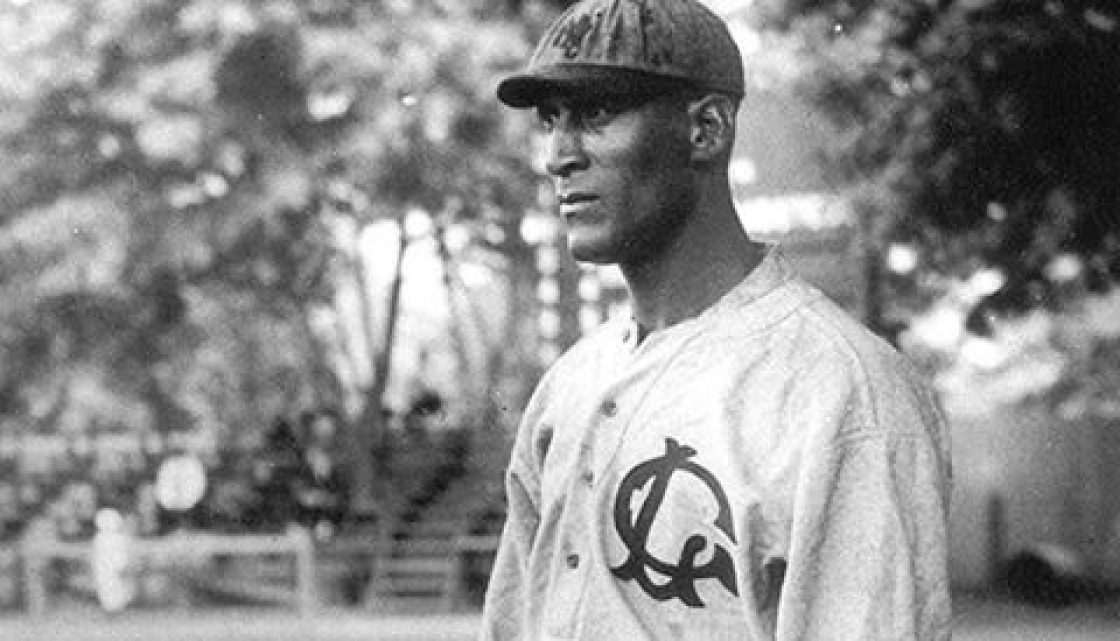
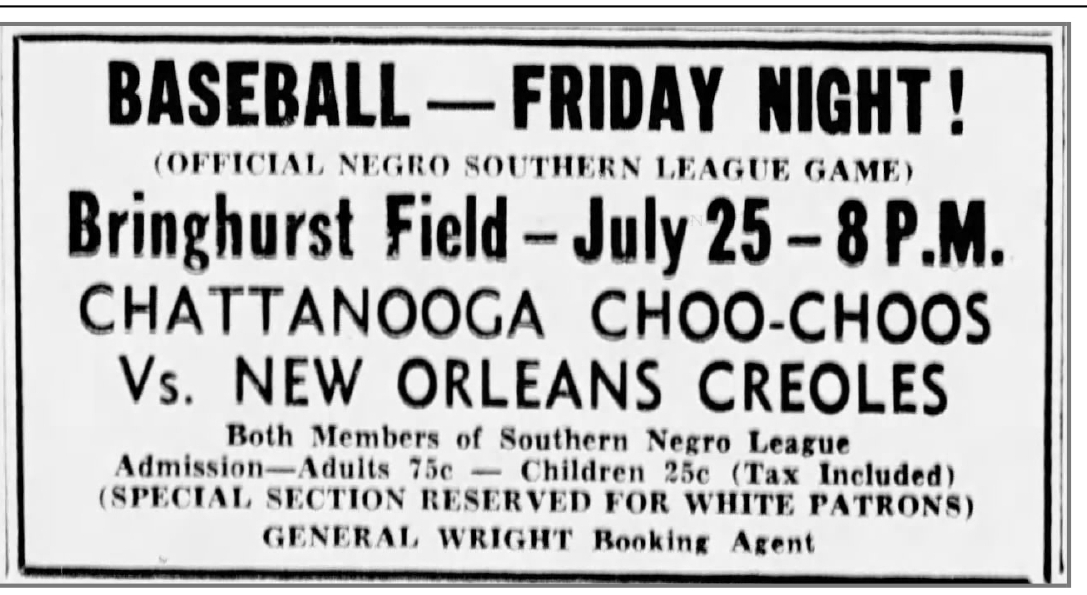
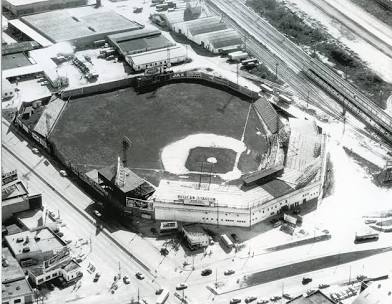
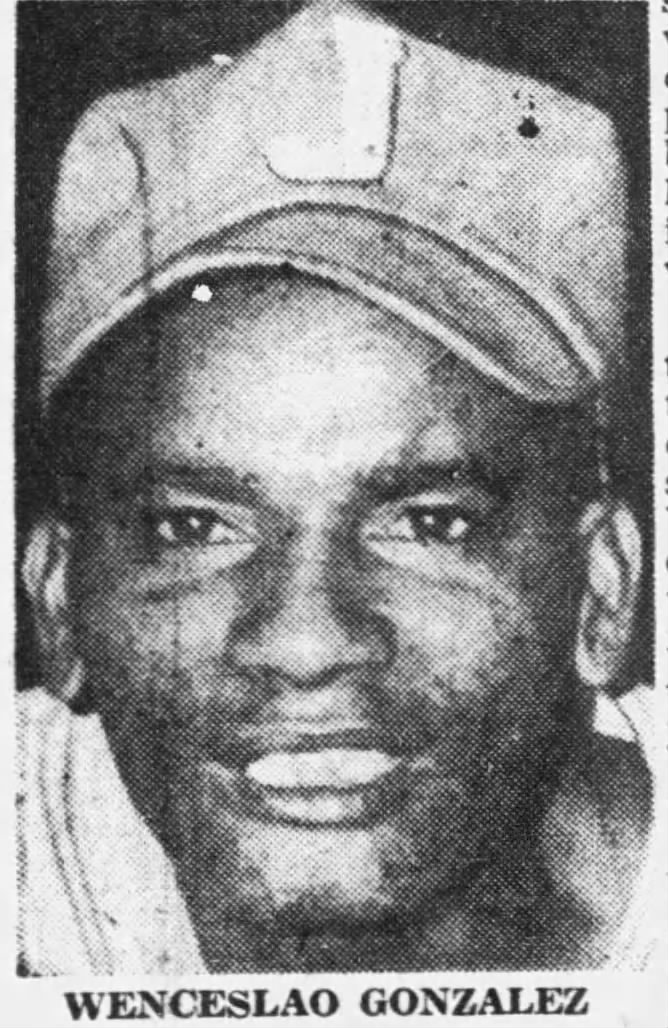
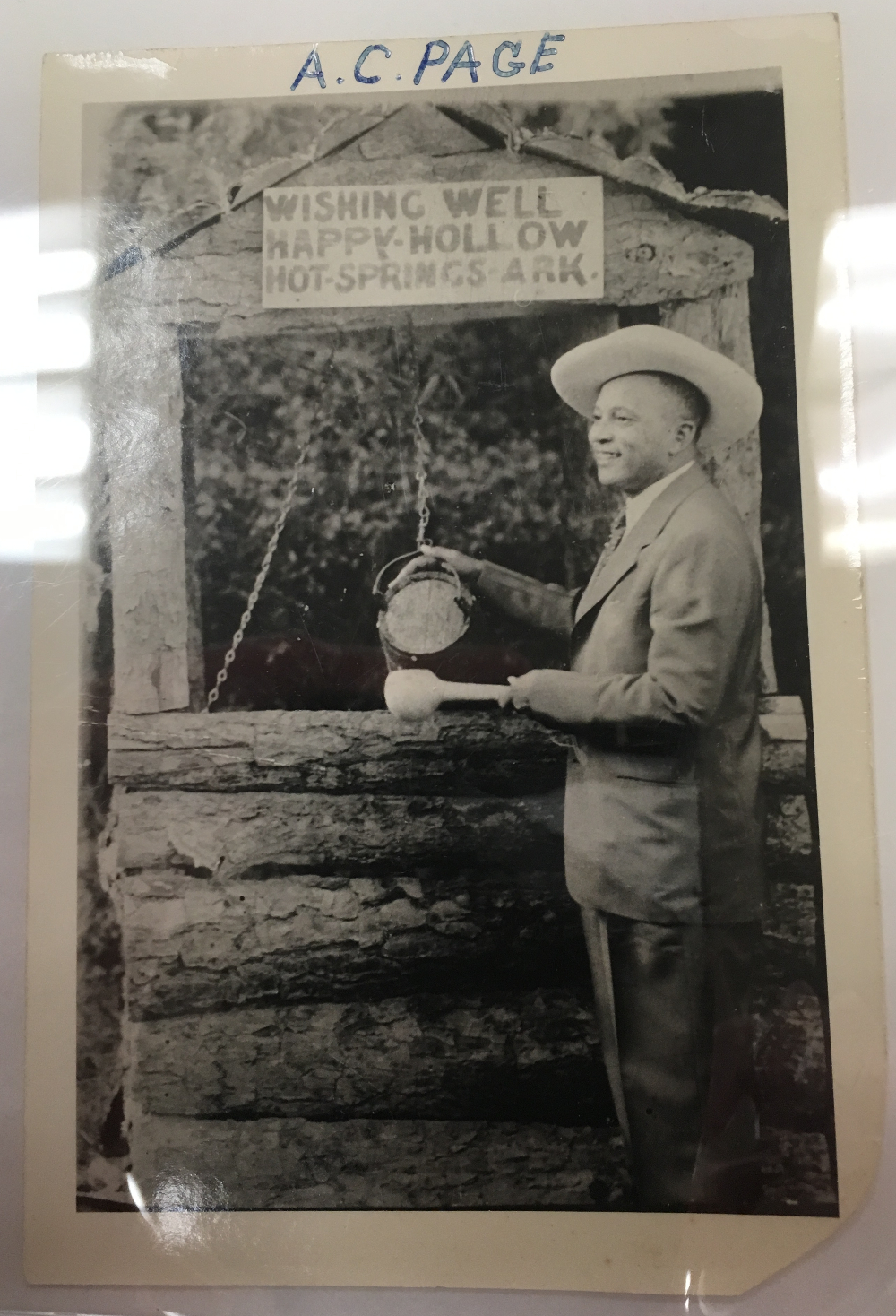
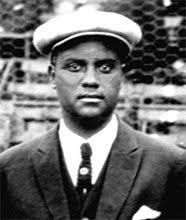
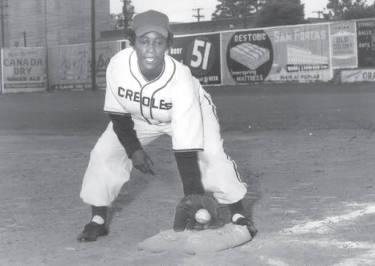

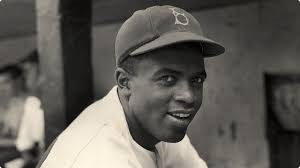

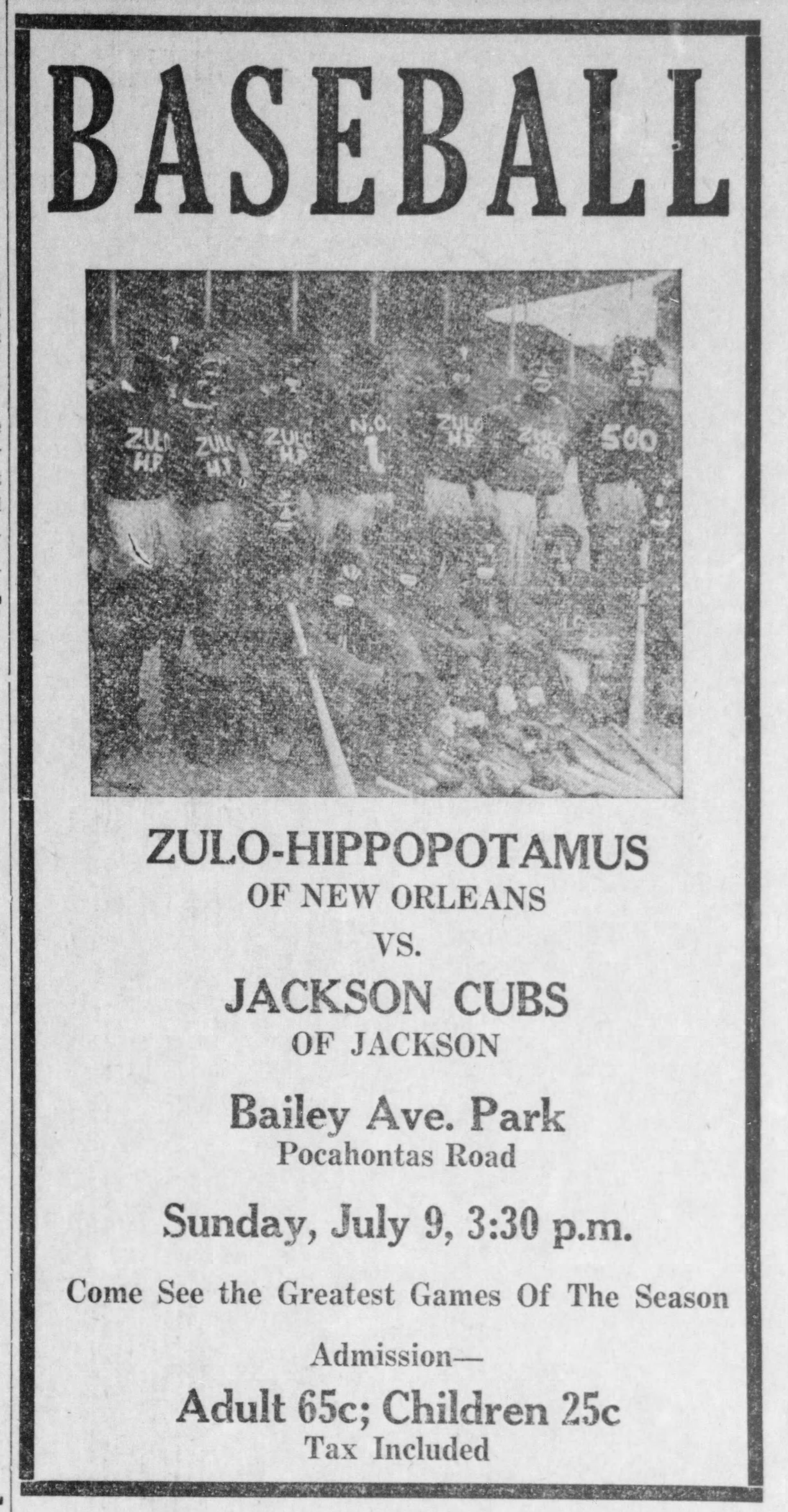
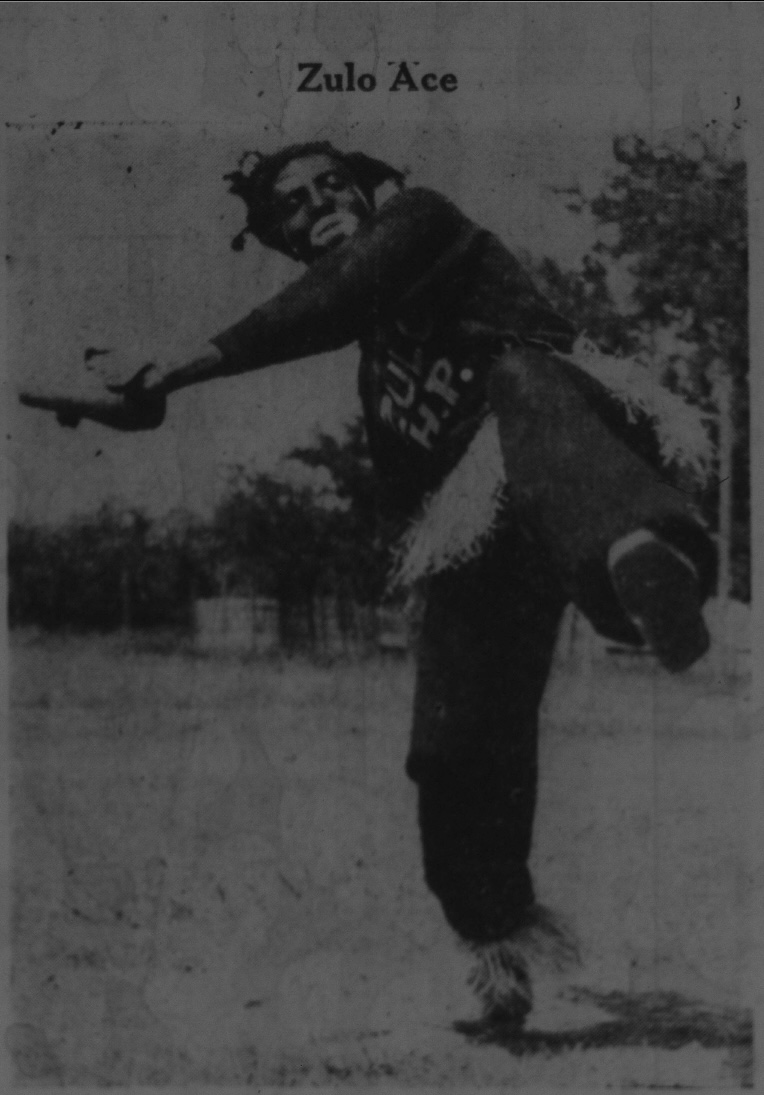
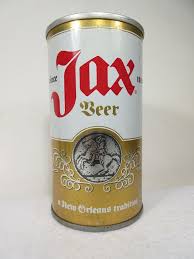
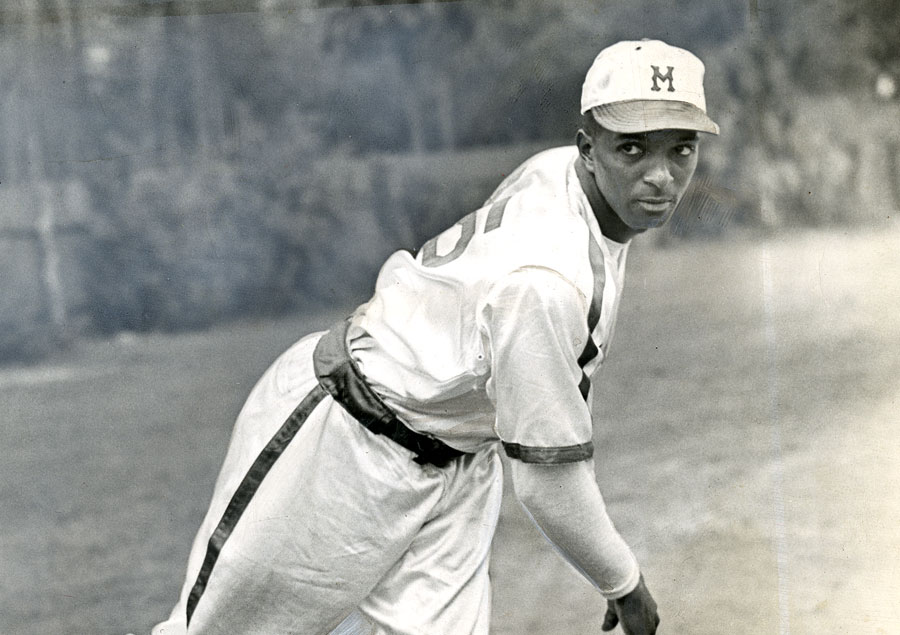
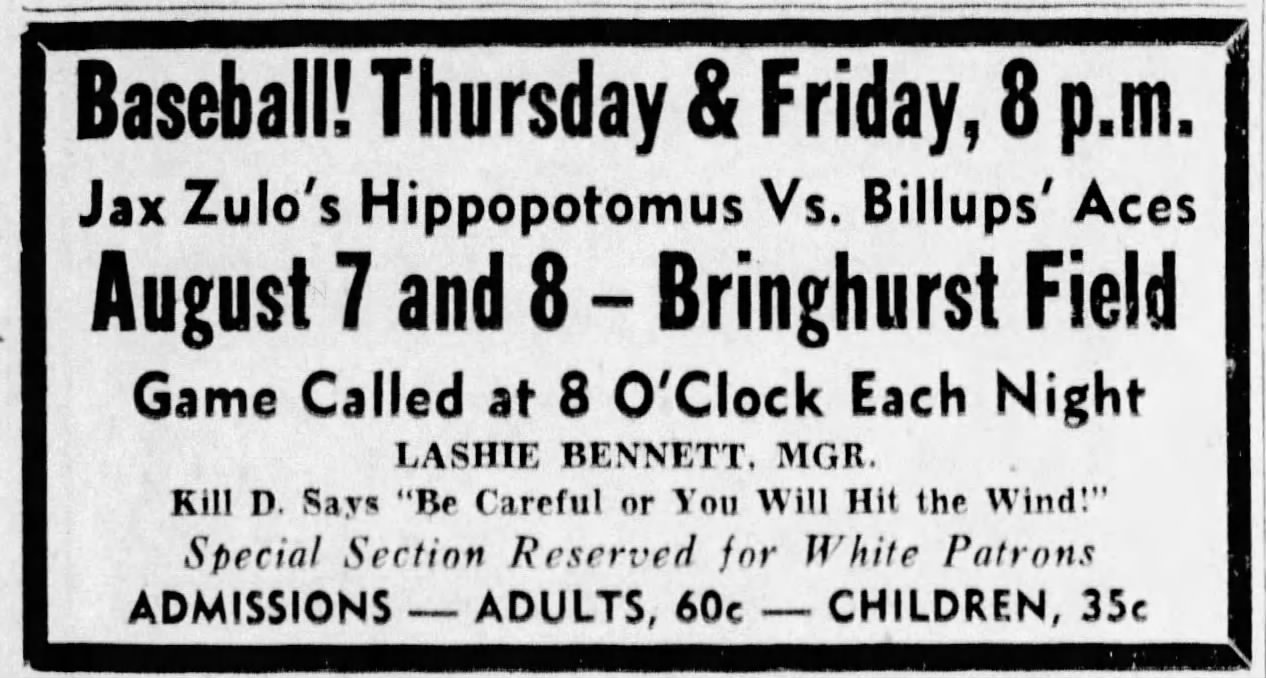
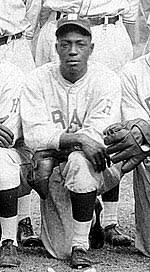
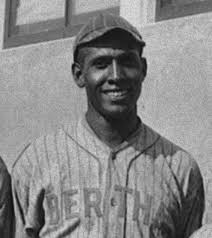
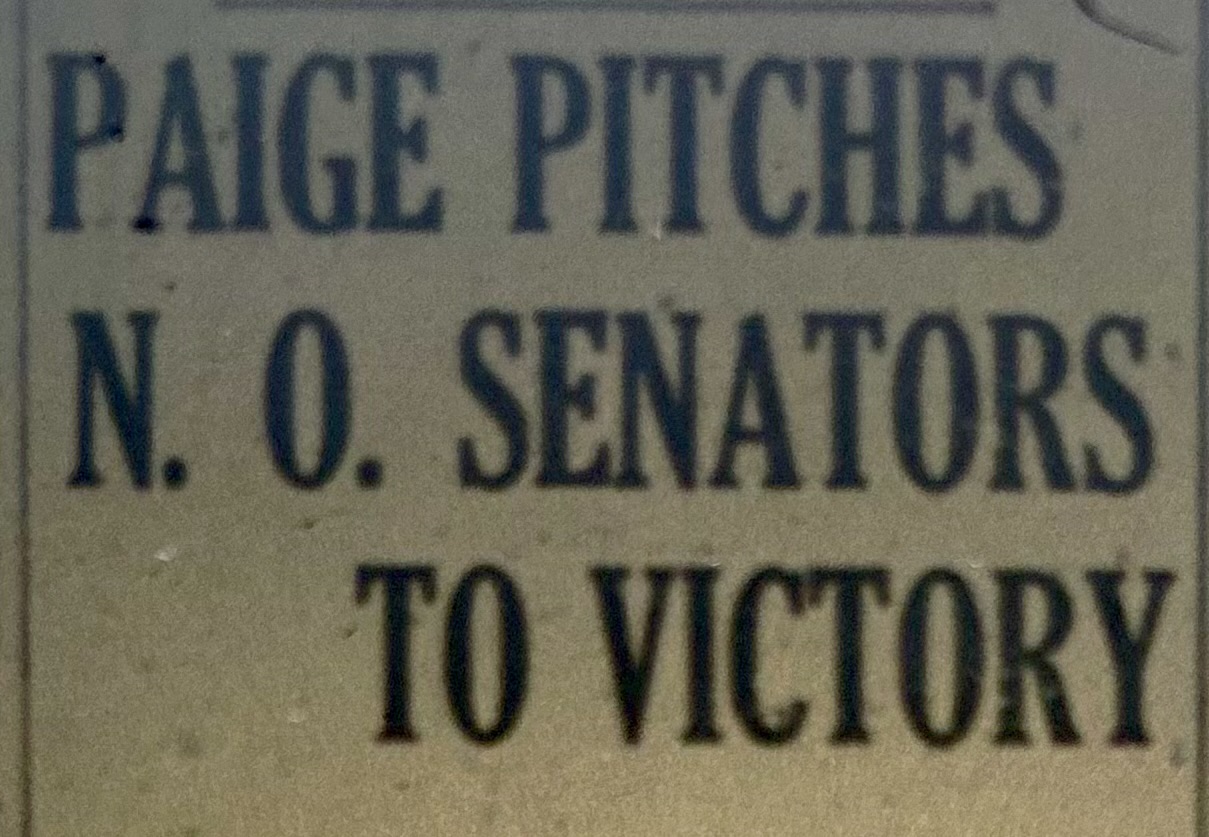
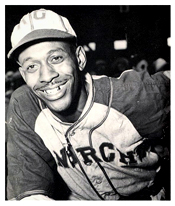
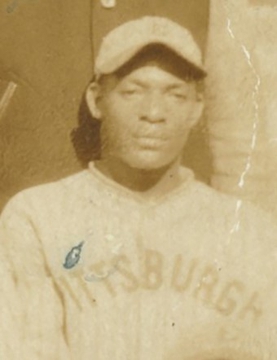
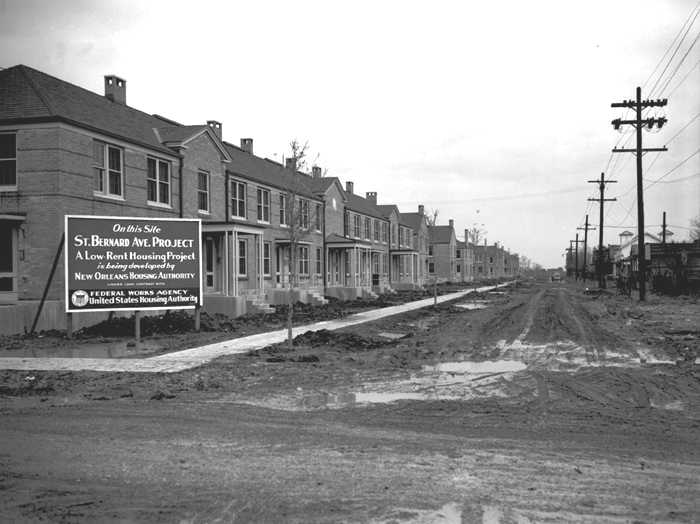
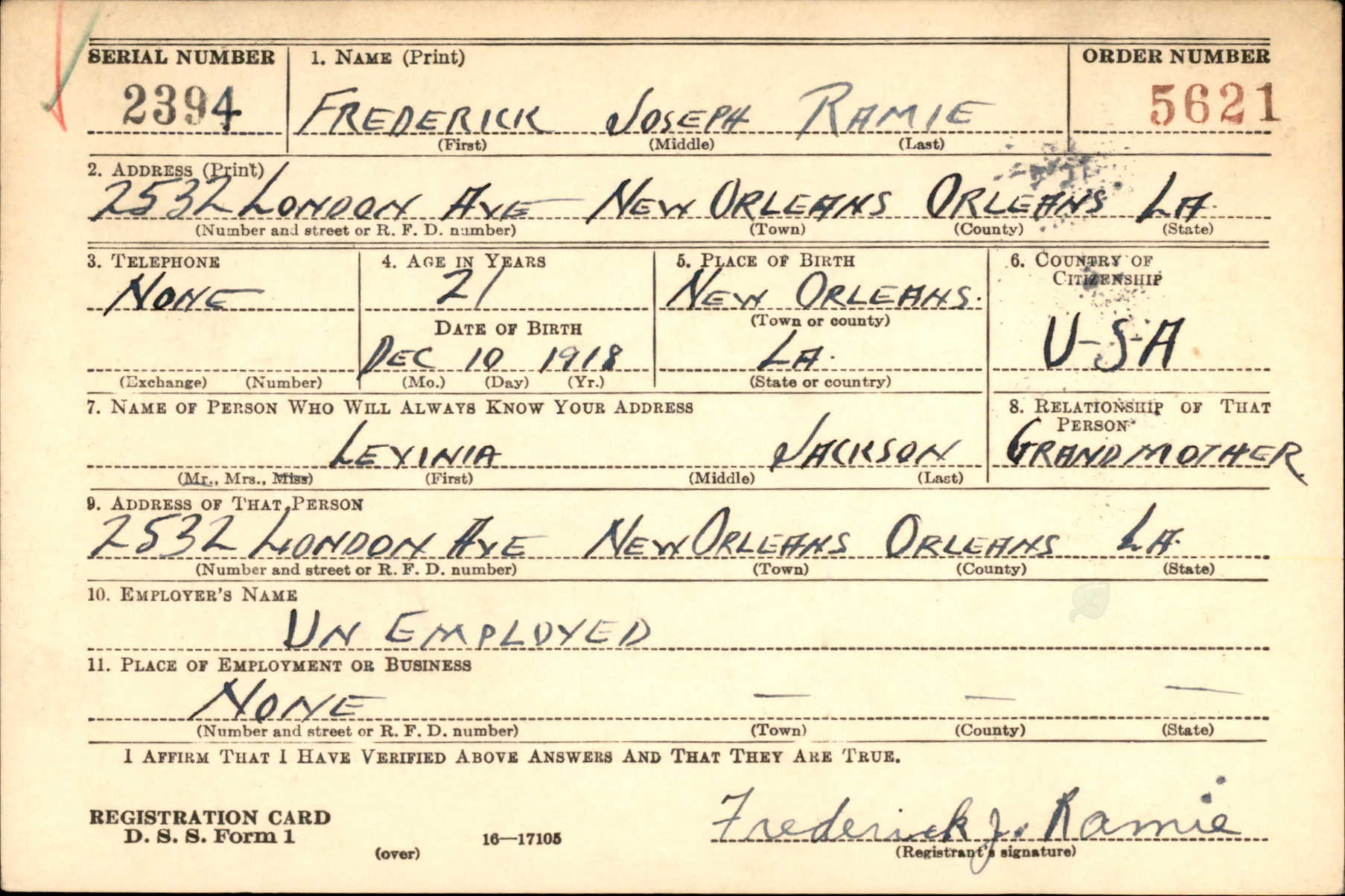
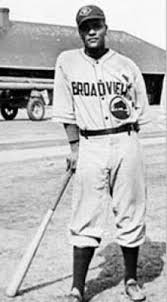
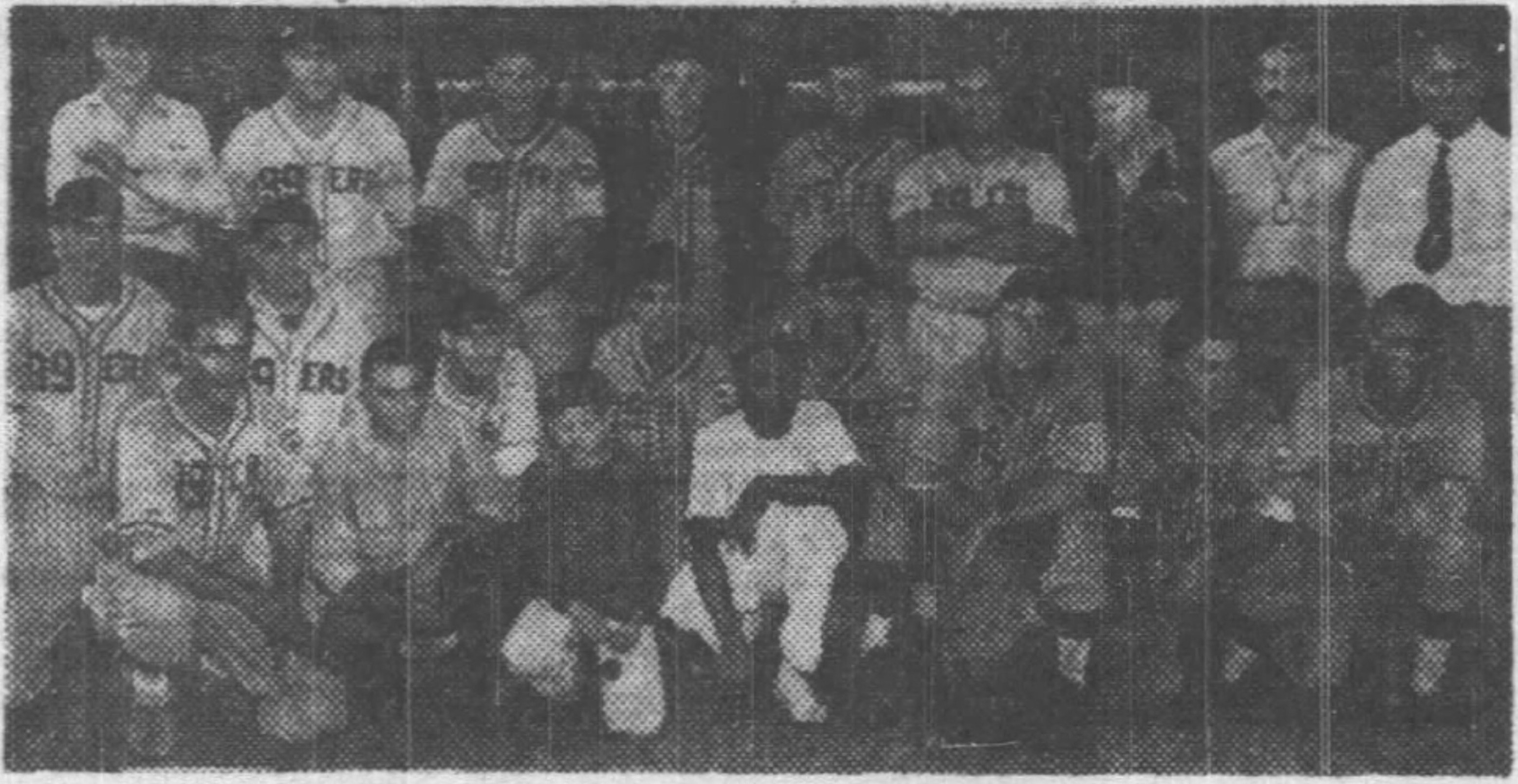
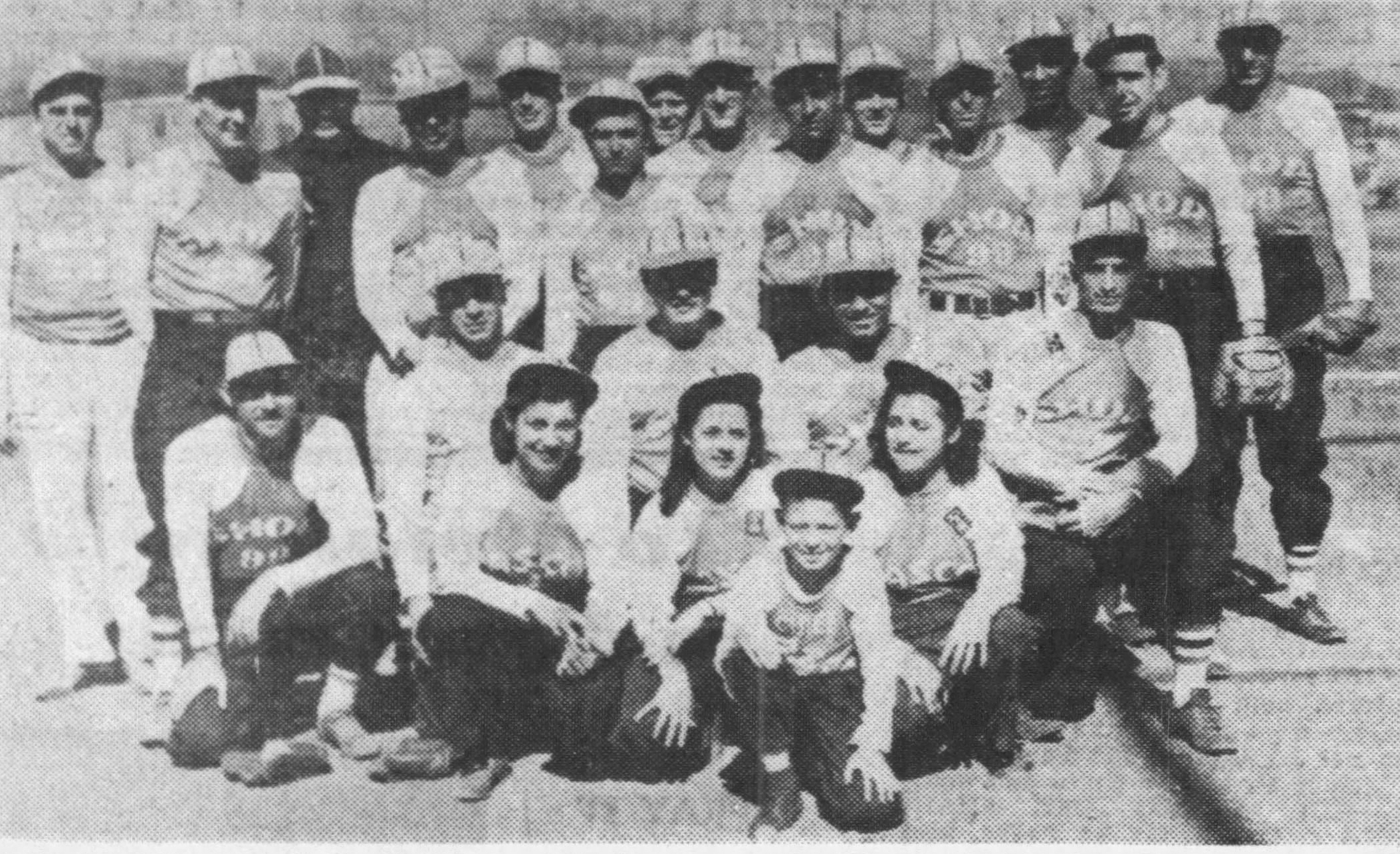

 The Negro Leagues Up Close