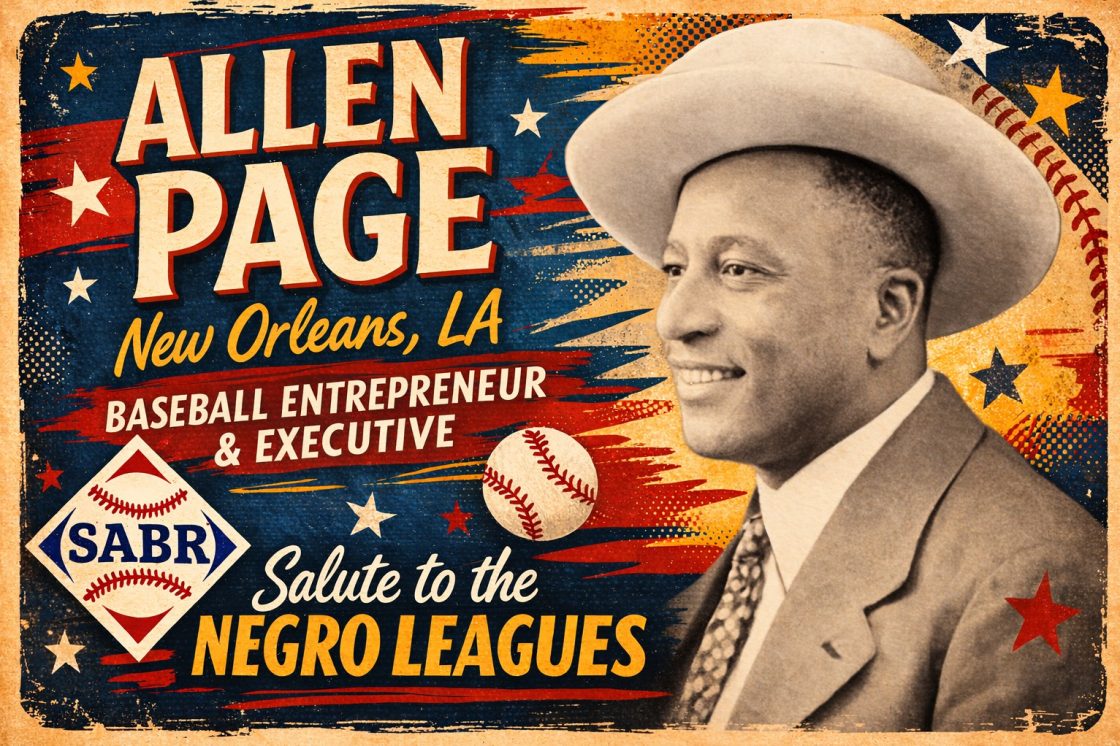

To wrap up coverage of the recent SABR Jerry Malloy Negro Leagues Conference, I’ll highlight some of the other presentations and other events from the four-day smorgasbord of Black baseball history.
(For earlier coverage on this blog of the recent conference, check out this, this and this. The latter linked post is by guest writer Keith B. Wood, who gives an overall view of our Memphis experience, including the opening meet-and-greet at the Withers Collection Museum & Gallery, the Memphis Redbirds game Friday night, and the bus tour of local landmarks Thursday afternoon.)
On Thursday, conference committee member and local Memphis host Dr. Keith B. Wood welcomed those in attendance – the total number of people registering for at least one event of the conference topped 100 – by urging us to continue digging into and proclaiming the true story of African-American baseball.
“There are so many stories that need to be told,” Wood said. “That’s why we’re here. We need to find those stories, and tell those stories.”
Wood noted how in recent years and across the country, there’s been a concerted effort to once again shunt African-American history to the shadows and prevent Americans from learning about those sories.
As a result, he said, those in attendance at the conference must “push back [and] tell the truth.”
We then watched the engrossing documentary, “Black Diamonds, Blues City: Stories of the Memphis Red Sox,” about one of the most overlooked but locally beloved Negro Leagues franchises.
The film covered the entire history of the team, which existed from 1920-59, including its formation, its purchase by the Martin brothers, the championship season of 1938, the landmark status of Martin Stadium, the politics and bigotry that eventually drove team owner and community leader J.B. Martin out of the city, and the team’s bittersweet demise following the integration of baseball. The documentary featured interviews with many former players, community members and fans, musicians and family members, and it was narrated by actor Samuel L. Jackson. The acclaimed documentary was written and directed by University of Memphis professor Steven John Ross.

The following day we dived into the presentations – this earlier post discussed the ones about the Red Sox, and highlights of some of the other presentations included:
- One by James Brunson titled, “Memphis Slow Grind Blues: Eureka-Eclipse Blackball Rivalry, 1884-1888,” in which he touched on some of cultural factors that impacted “colored” base ball (two words in the 1880s) in Gilded Age Memphis, especially the early emergence of blues culture and “blues people”; popular (and often derogatory) images of African Americans; the Robin Hood mentality; and, of course, the rise of Jim Crow. Brunson also discussed his own familial connections to the Bluff City, and he displayed paintings he created for the Memphis conference.
- Gary Gillette highlighting the importance and success of Martin Stadium at Lewis Park, which Gillette called the greatest example of a Black-owned and operated facility that hosted top level Negro Leagues games. Gary noted that Martin Stadium, the longtime home of the Memphis Red Sox, stood out from the seven other such ballparks because of its relatively large capacity, its profitability and particularly its continuous ownbership by the Martin brothers, which ensured the stadium’s stability.
- An attempt by Tom Thress to unravel a baseball mystery: Who pitched for the 1942 Cincinnati Clowns under the name Matchett? Thress explained that at the same time Jack Machett was pitching for the Kansas City Monarchs, a player named “Matchett” was appearing in box scores for the Clowns. Tom laid out all the details of the case, and while he was unable to come to a definitive answer to the question, he chronicled a fascinating, compelling tale.
- Retired sports broadcaster and University of Memphis professor Curt Hart talking about interviews he had during his journalism career with several former Negro Leaguers, including Joe B. Scott, Ted “Double Duty” Radcliffe, country singer Charley Pride and none other than the great Satchel Paige.
- Author Chris Jensen relating the triumphant and tragic tale of Octavius Catto, an early pioneer of both Black baseball and Civil Rights in the United States, who was murdered in Philadelphia on Election Day 1871 because of his efforts to expand African-American suffrage. Catto takes his mournful place in Jensen’s new book through McFarland, “Tragedy in Black Baseball: Early Deaths of 136 Negro Leaguers, 1871-1950.” During his presentation, Chris also touched on the stories of four other saddening entrants in his book. “It’s a book I wish didn’t have to be written,” he said.
- A comprehensive, statistical breakdown of the post-integration careers in so-called “organized baseball” of Black baseball players by Clem Hamilton. His presentation featured detailed, quantitative analyses of the fates of dozens of African-American trailblazers in the national pastime at every level of professional organized baseball, from the majors down to the low minors. Hamilton’s breakdown of the men’s fates included those high-profile stars whose careers continued relatively unabated, to those who saw their careers disrupted, delayed or even ended.
- Ted Knorr’s presentation of – who else? – Rap Dixon and the legend’s performance in 1927 as part of an all-star team of Negro Leaguers’ tour of Japan. The main theme of Ted’s analysis of Rap’s superlative showing in Japan was how Dixon displayed his mastery of each of the fabled “five tools” that make for a complete, all-around ballplayer – hitting proficiency, hitting for power, speed/baserunning, fielding and arm strength. As Ted’s written summary of his presentation said, “Dixon did not just play baseball in Japan – he expanded the game’s imagination of what was possible.”
- A thought-provoking talk titled, “Home Field Heritage: Preservation of Place for Negro League Baseball,” by Julia Bucci, a graduate student studying historic preservation at Pratt Institute in Brooklyn, N.Y. For her presentation, Bucci zeroed on five former Negro Leagues ballparks – Rickwood Field in Birmingham, Ala.; Stars Park in St. Louis; McCormick Field in Asheville, N.C.; Hinchliffe Stadium in Paterson, N.J.; and Cooper Stadium in Columbus, Ohio – that each served as a home field for a Negro Leagues team at either the pro or semipro level and are still standing in some form. For each of the five case studies, Julia discussed the importance of each facility to local cultural heritage and historic preservation.
- A talk by University of Memphis history professor Aram Goudsouzian underpinned by a basic theory – that for many, Aram said, “[Satchel] Paige is the vehicle [through which] white people understand the Black baseball past.” Goudsouzian related how Paige’s folksy, homespun demeanor post-retirement might have made him new legions of white fans, it occurred concurrently with the development of Black pride and Black Power, through which many African Americans resisted the type of “safe” depictions of Black culture such as Satchel.
- The tale of the early interracial base ball games in Kingston, N.Y. – located in the Hudson Valley region north of New York City – between the Black Rondout Seniors and the white Excelsior Club in August 1867, as told and examined by Daniel Torres. Torres noted how the series of contests between the two teams came during the Reconstruction Era and just months before the earliest moves toward segregation in base ball took place. Significantly, Torres related, the Rondout Seniors-Excelsiors games showed that such athletic encounters weren’t so much bold social statements or protest, as they were routine, pastoral, community-based functions of that time and place.
- The concluding presentation of the conference by Alan Cohen, who perhaps appropriately wrapped up the discussion slate with a summary and update of the enormous Negro League Homerun Project, a massive understaking that’s so far tallied well more than 7,000 Blackball dingers and could very feasibly be on its way to 8,000-plus.

But I wanted to single out one presentation in particular, one that brought an unorthodox yet sublime approach to researching and interpreting Black baseball history – through first-person poetry as spoken by one of the greats of the game themselves.
In his presentation, poet Loren Broaddus read selections from his forthcoming book, “Wasn’t Any Maybe So – Poems through the Voice of Newt Allen,” the all-time great second baseman (and should-be Hall of Famer) for the Kansas City Monarchs.
Loren’s book covers almost the entirety of his life, including his career in the game and his life outside of it. With the poems, Newt Allen (through the pen of Broaddus) narrates his life with poems about meeting his wife, the travails of barnstorming baseball, enjoying jazz clubs on the road and costly fielding errors, among an array of other life events. The volume is bookended by poems inspired by a late-in-life interview Allen gave with writer Mary Still.
Broaddus told the conference attendees that much of his inspiration for “Wasn’t Any Maybe So” come from how Allen and his Negro Leagues compatriots adjusted to and overcame the systemic challenges that constantly hindered their lives and careers.
“I’m always amazed at how they navigated that, and even thrived in that,” he said. “Just the creating they did in a very difficult situation to do so.”
The main portion of last month’s Malloy conference concluded, as the gatherings always do, with the awards dinner on Saturday night, at which time the winners of each honor are announced.
But first came the Significa Contest finals, featuring the last three competitors standing, so to speak, and after the dust settled, Tom Thress had won his third title in four years, with Kevin Johnson coming in second for the second year in a row, and Wade Parker admirably taking third.
Thress’ third title ties Ted Knorr for most wins by living players (the late, great Dick Clark is the all-time leader with a whopping nine titles). Knorr says he’ll return to active competition in 2027, which could set up a possible showdown with Thress, who beat Knorr by four-sevenths of a point in 2024. Knorr will doubtlessly be out for revenge in ’27.
The banquet concluded with the annual awards, of which the 2026 recipients were:
- Normal “Tweed” Webb Lifetime Achievement Award – Dr. James Brunson III
- Robert Peterson Recognition Award – John Graf, Paul Debono
- John Coates Next Generation Award – Karen Swanson, Chris Jensen, Scott Orris
- Fay Vincent Most Valuable Partner Award – Dr. Keith Wood
I’ll wind down this post/summary of the Malloy Conference by quoting a letter to the conference attendees by City of Memphis Mayor Paul A. Young, who wrote that the city was happy to share its Black baseball history with those at the conference:
“Memphis holds a deep and meaningful connection to this history, and it is especially fitting to welcome you to a city that proudly reflects the cultural significance and contributions of Negro League Baseball. As you engage in thoughtful discussion, learning and fellowship, we hope you also take time to experience the vibrant culture, history and hospitality that define Memphis.”